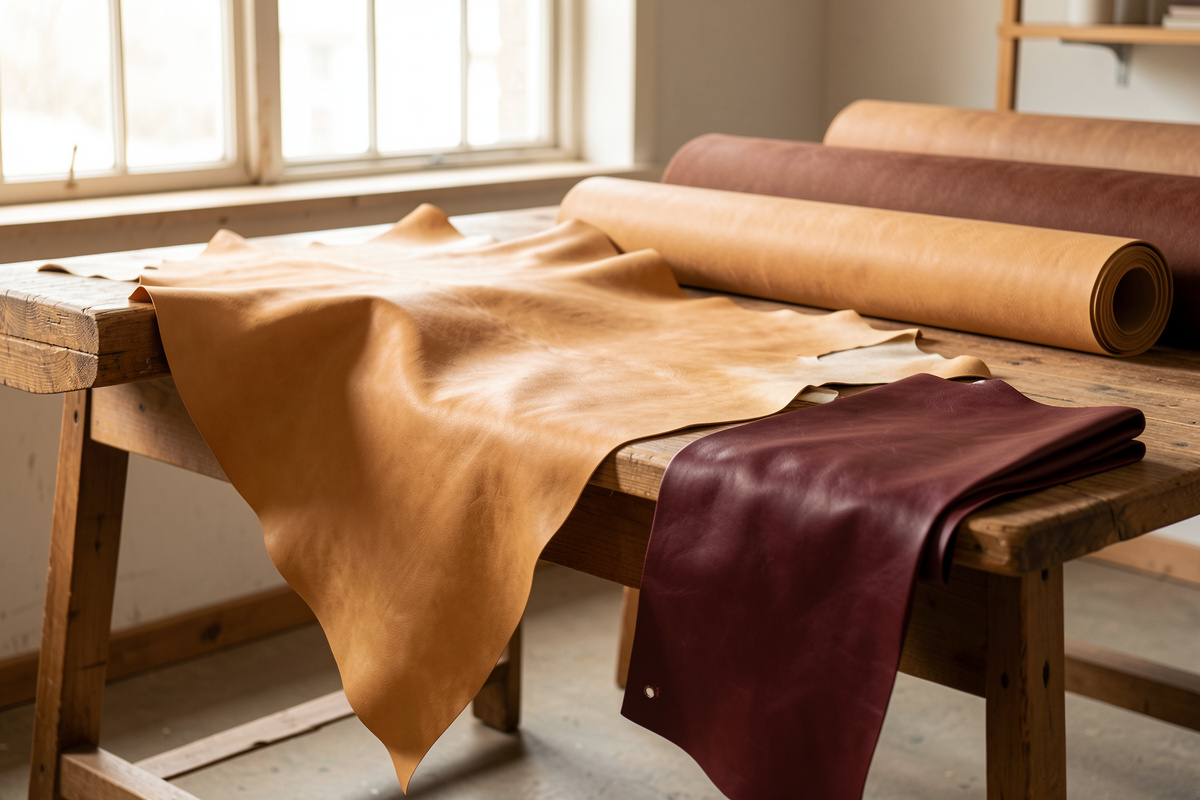
Garment leather is soft, lightweight chrome-tanned hide built to drape and flex for clothing and soft goods, while upholstery leather is large, supple panel hide finished to survive…
Garment leather is soft, lightweight chrome-tanned hide built to drape and flex for clothing and soft goods, while upholstery leather is large, supple panel hide finished to survive years of sitting, rubbing and sunlight on furniture and car seats. They are cousins, not twins. Both are tanned for softness rather than the stiff, tool-able body of veg-tan, but they are graded, weighted and finished for very different lives.
I came to both of these the long way around. My bench is built for hard veg-tan work — wallets, belts, knife sheaths, the slow burnished-edge stuff — so the first time I cut into a soft 2 oz lambskin for a jacket panel it fought me like wet paper. Garment and upholstery leather reward a different set of habits, and this guide is the one I wish I had read before I wasted half a hide learning them. It is the hub for the whole cluster; the deep how-tos branch off from here.
Garment vs Upholstery Leather: What Actually Separates Them
The dividing line is purpose, and purpose drives every spec that follows. Garment leather is tanned thin and soft — usually 1.5 to 3 oz (0.6–1.2 mm) — so a finished jacket folds at the elbow without cracking and a pair of gloves wraps the hand. Upholstery leather is also soft, but it is selected and finished for abrasion, light-fastness and easy cleaning, and it comes in much larger panels because a sofa cushion or a seat bolster needs unbroken area.
Both are almost always chrome-tanned (or chrome-free “wet-white” for some auto suppliers), which is what keeps them supple. If you have only ever worked the firm vegetable-tanned shoulders most leathercraft starts with, read my breakdown of chrome tan vs veg tan leather first — the tannage difference explains almost everything about why these hides behave the way they do. The short version: veg-tan tools, molds, dyes and burnishes; chrome-tan stays soft, takes color in the drum, and will never slick an edge the way veg-tan does.
That single fact reroutes your whole process. You do not bevel and burnish a garment edge — you turn it, bind it, or leave it raw and skived. You do not wet-form an upholstery panel — it has no memory for a shape. Trying to treat soft leather like veg-tan is the number-one beginner mistake, and it is worth naming up front because it quietly ruins more projects than bad stitching ever will.
How Garment Leather Is Made and Graded
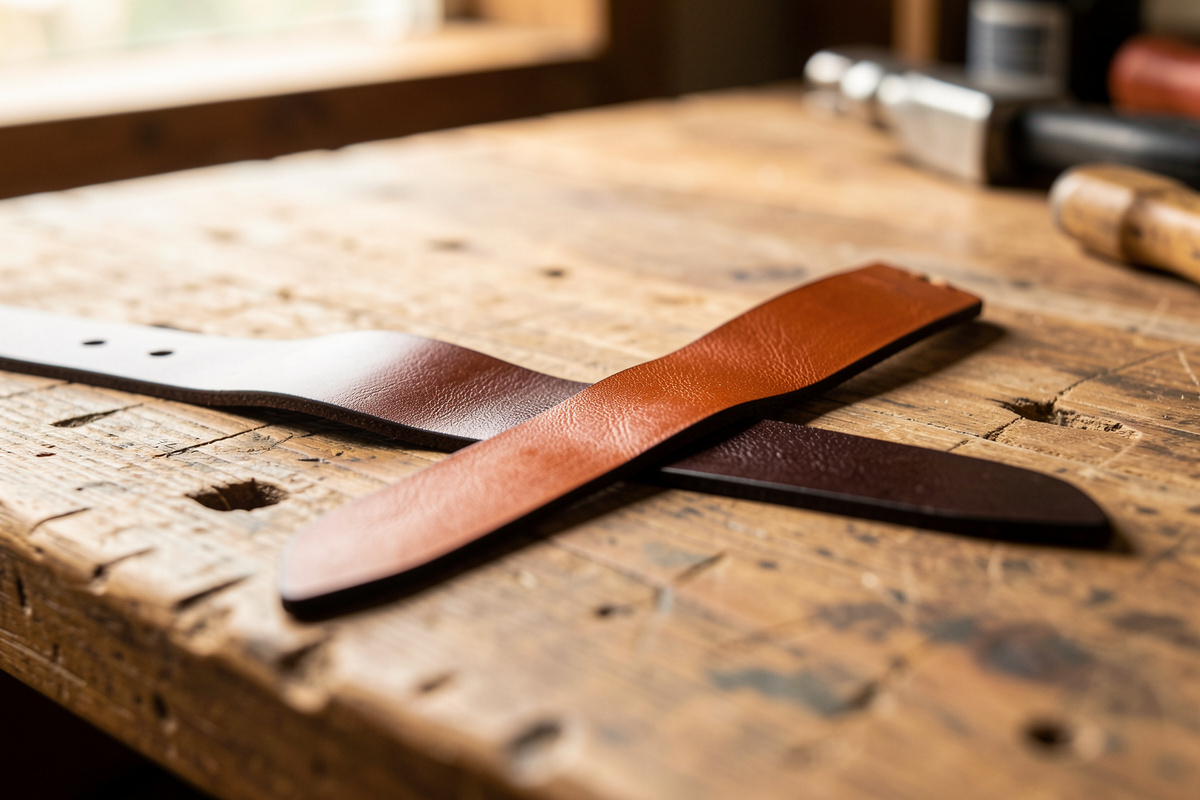
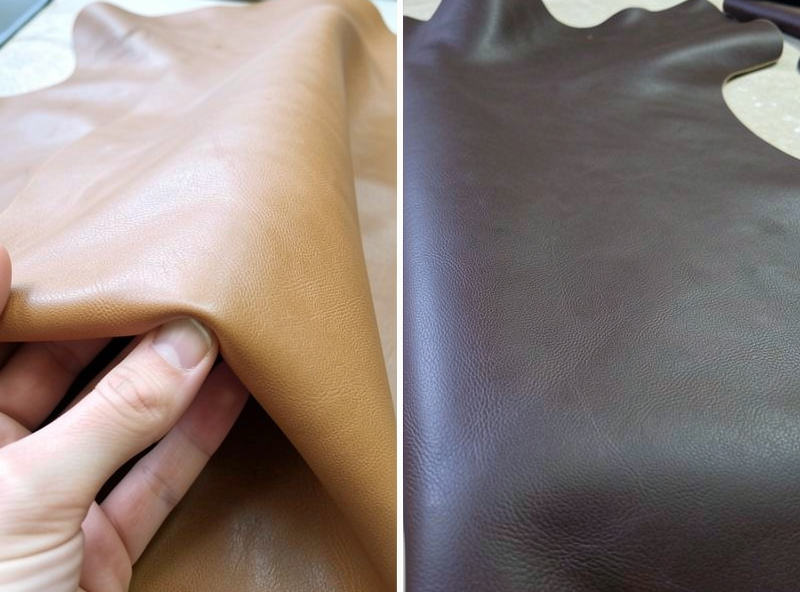
Garment leather covers a family of hides: lambskin and sheepskin for the softest, most drapey jackets; goatskin (often sold as kidskin) for gloves and tougher garments; calfskin for structured pieces; and cowhide split or shaved thin for heavier jackets and work wear. The common thread is temper — that loose, falling hand that lets cloth-like movement. A good garment hide should feel almost like a heavy fabric, not a board.
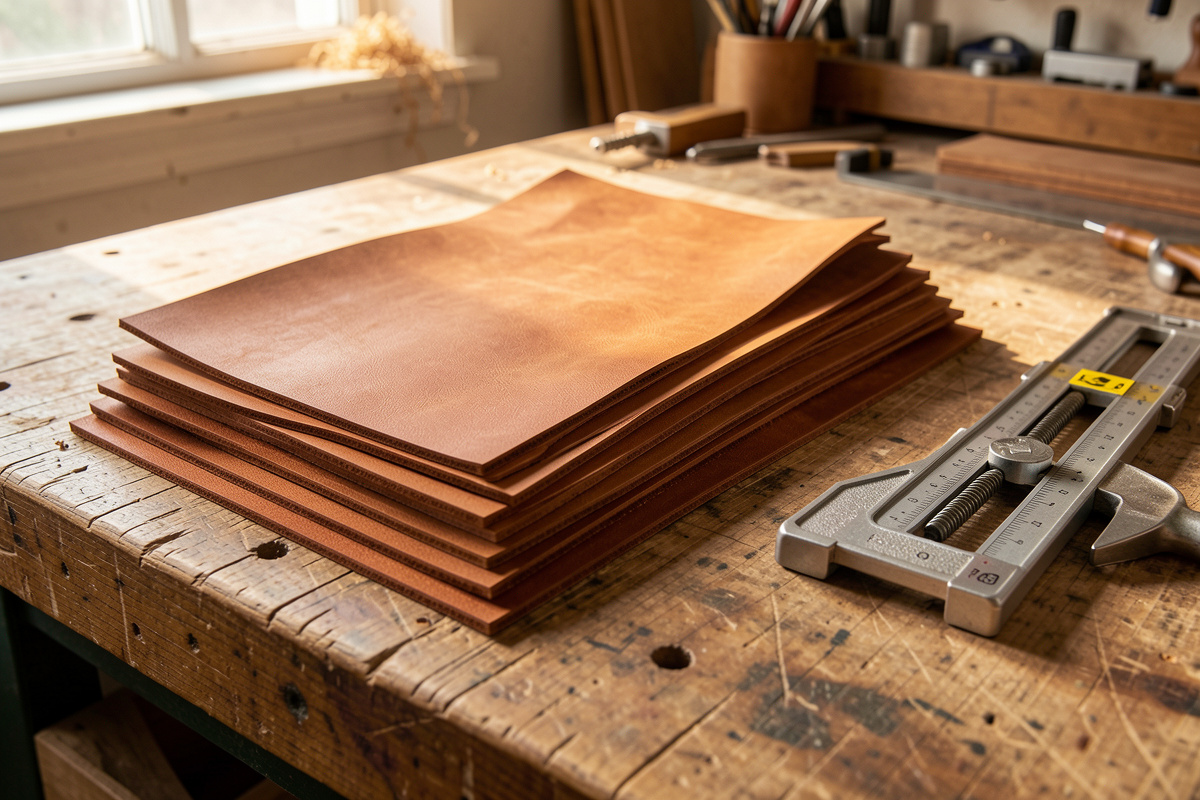
Weight is where people get burned. Garment leather is thin on purpose, and the supplier sells it by area (square foot) far more than by the ounce, because thinness is assumed. When a weight is given, 2–3 oz is the typical garment band. My leather thickness chart in ounces to mm is the reference I keep taped to the bench — one ounce equals roughly 0.4 mm, so a “3 oz” garment hide is about 1.2 mm, which is already on the heavy end for a soft jacket.
Grain matters too. Full-grain garment leather keeps its natural surface and ages beautifully; corrected and embossed grains are smoother and more uniform but flatter in character. If you are unsure what you are actually holding, my guide on testing real leather vs bonded and PU walks through the cut, smell and stretch checks I use — a lot of cheap “leather” jackets are bonded scrap with a printed surface, and you do not want to spend hours sewing that.
Choosing Upholstery Leather: The Finish Tiers
Upholstery leather is graded mostly by how it is finished, and that finish decides durability, feel and price. The four tiers you will meet, from most natural to most protected:
- Aniline: dyed all the way through with no surface pigment. The most natural look and feel, develops a patina, but stains and fades the fastest. Beautiful on a low-traffic chair, risky on a family sofa.
- Semi-aniline: aniline dye plus a thin protective topcoat. The sweet spot for most furniture — keeps much of the natural hand while resisting spills and light.
- Pigmented (protected): a pigment layer and clear topcoat over the grain. The most durable and uniform, the easiest to wipe clean, and the standard for high-use furniture and most factory work.
- Pull-up: aniline leather treated with oils and waxes so it lightens where it flexes. Gorgeous, lived-in, and the same surface behavior I cover in my piece on pull-up leather patina and how to care for it.
Automotive leather is its own branch of the upholstery family — almost always heavily pigmented and topcoated, because a car interior bakes in sun and gets climbed on daily. That protection is exactly why cleaning it is a different job from cleaning a natural sofa, which is why I split cleaning automotive leather into its own guide.
Weight, Temper and Area: Reading the Spec Sheet
Here is the comparison I give anyone choosing between these leathers for a project. The numbers are the working ranges I actually reach for, cross-checked against how each leather is sold.
| Attribute | Garment Leather | Upholstery Leather | Veg-Tan Goods Leather |
|---|---|---|---|
| Typical tannage | Chrome (sometimes chrome-free) | Chrome / wet-white | Vegetable |
| Working weight | 1.5–3 oz (0.6–1.2 mm) | 2–4 oz (0.8–1.6 mm) | 3–10 oz (1.2–4.0 mm) |
| Temper (hand) | Very soft, drapey | Soft but stable | Firm to rigid |
| Sold by | Square foot, by hide/skin | Square foot, large panels/full hides | Square foot, shoulders/bends/sides |
| Edges | Turned, bound or skived | Turned, piped, or seamed | Beveled, sanded, burnished |
| Takes tooling/molding? | No | No | Yes |
| Best for | Jackets, gloves, bags, linings | Sofas, chairs, car seats, cushions | Wallets, belts, sheaths, holsters |
The row people skip is “edges.” On veg-tan I spend real time on the bevel-to-burnish sequence I describe in my leather edge finishing guide; on garment and upholstery leather that whole ritual is replaced by turning the edge over and stitching it down, or running a clean seam. Same craft, completely different finish strategy. And for the general background on tannage, grade and weight across every hide, my types of leather overview ties it all together.
Cutting and Sewing Soft Leather Without Wrecking It
Soft leather moves under the blade, and that is the first thing to respect. I cut garment and upholstery leather on a self-healing mat with a fresh rotary blade rather than a head knife, because a pulling cut drags thin hide out of true. Cut on the grain side up, weight the hide flat, and accept that you will use more blade than you do on firm veg-tan.
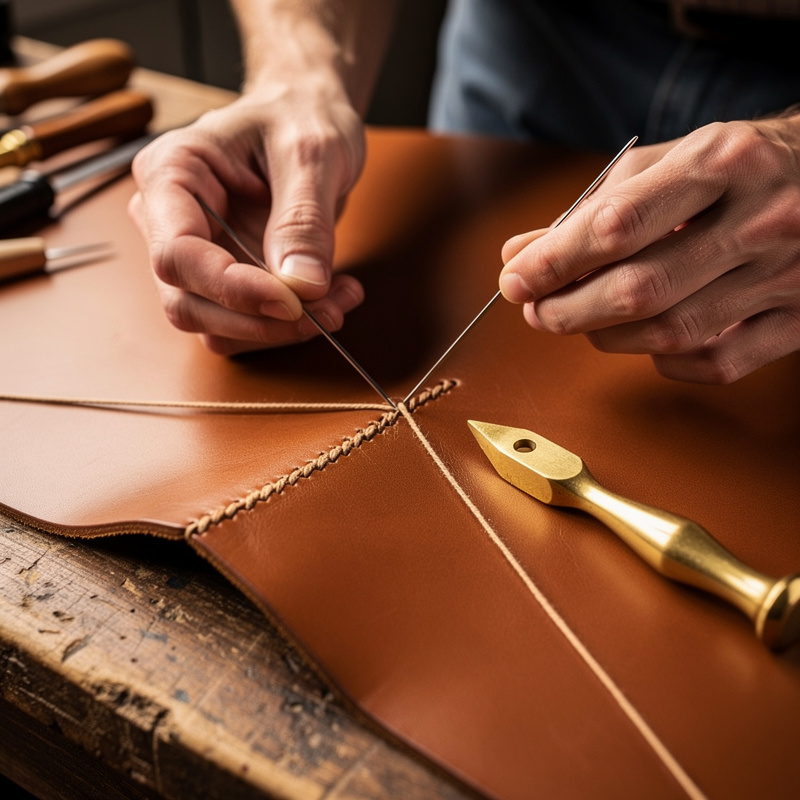
Stitching is the other big shift. Hand saddle stitch is still my default for small soft-leather goods, but at jacket and upholstery scale a machine earns its keep — the seam lengths are simply too long for two needles to be sane. I lay out the trade-off in saddle stitch vs machine stitch, and if you are choosing a machine for this work, my honest picks are in best sewing machines for leather with the technique side covered in the machine sewing leather guide. Whatever you stitch on, thread choice matters — see best thread for leather stitching for matching thread to leather and needle.
For assembly, contact cement and basting tape do most of the holding before you sew, because pins leave permanent holes in leather. My rundown of the best glue for leather covers what bonds soft hide without stiffening the seam. The full step-by-step for soft-leather construction lives in working with garment leather, and the specialized repair case — taking in a jacket that no longer fits — is its own guide, leather jacket alterations.
Selecting Upholstery Leather for a Project
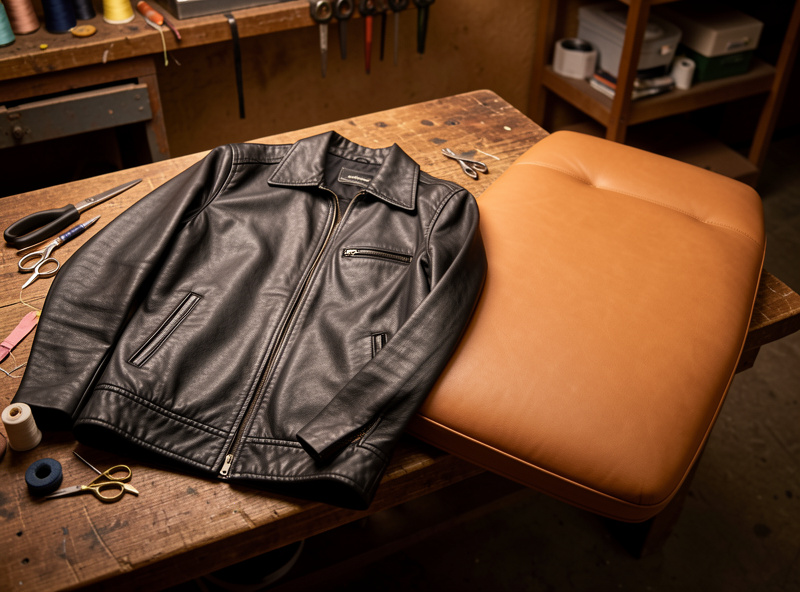
When I help someone pick upholstery leather, the questions are always the same: how much traffic, how much sun, do kids or pets use it, and how natural a look do you want. High traffic plus sun plus pets points straight at pigmented or semi-aniline. A statement reading chair in a shaded corner can carry full aniline and earn its patina. The full decision framework — including hides-per-sofa math and how to read a tannery’s grade letters — is in upholstery leather selection.
Buy more than the calculator says. Upholstery hides carry natural range marks, neck wrinkles and brand scars, and on large panels you cut around them, so usable yield runs well below the stated square footage. I budget 20 to 30 percent over the pattern area for anything with big uninterrupted panels. It feels wasteful until the first time a fly bite mark lands dead center on a cushion top.
Caring For and Repairing Soft Leather
Garment and upholstery leather live hard lives, so care is half the craft. The finish tier decides the routine: pigmented and automotive leather wipe clean with a damp cloth and a dedicated leather cleaner, while aniline needs gentler, less frequent attention and a conditioner that will not darken it unevenly. My general guide to cleaning leather goods and the broader leather care and restoration bench guide cover the products and the order of operations.
Repair is where this cluster gets practical. The three big real-world jobs each have their own walkthrough: leather car interior restoration for cracked, faded seats and worn bolsters; repairing leather furniture for scratches, peeling topcoat and seam splits on sofas and chairs; and cleaning automotive leather for the weekly maintenance that prevents most of that damage in the first place. If you ever need to recolor a faded panel, the dye principles carry over from my leather dyeing guide, though soft leather usually wants flexible pigment and acrylic rather than penetrating spirit dye.
Where to Buy Soft Leather Without Guessing
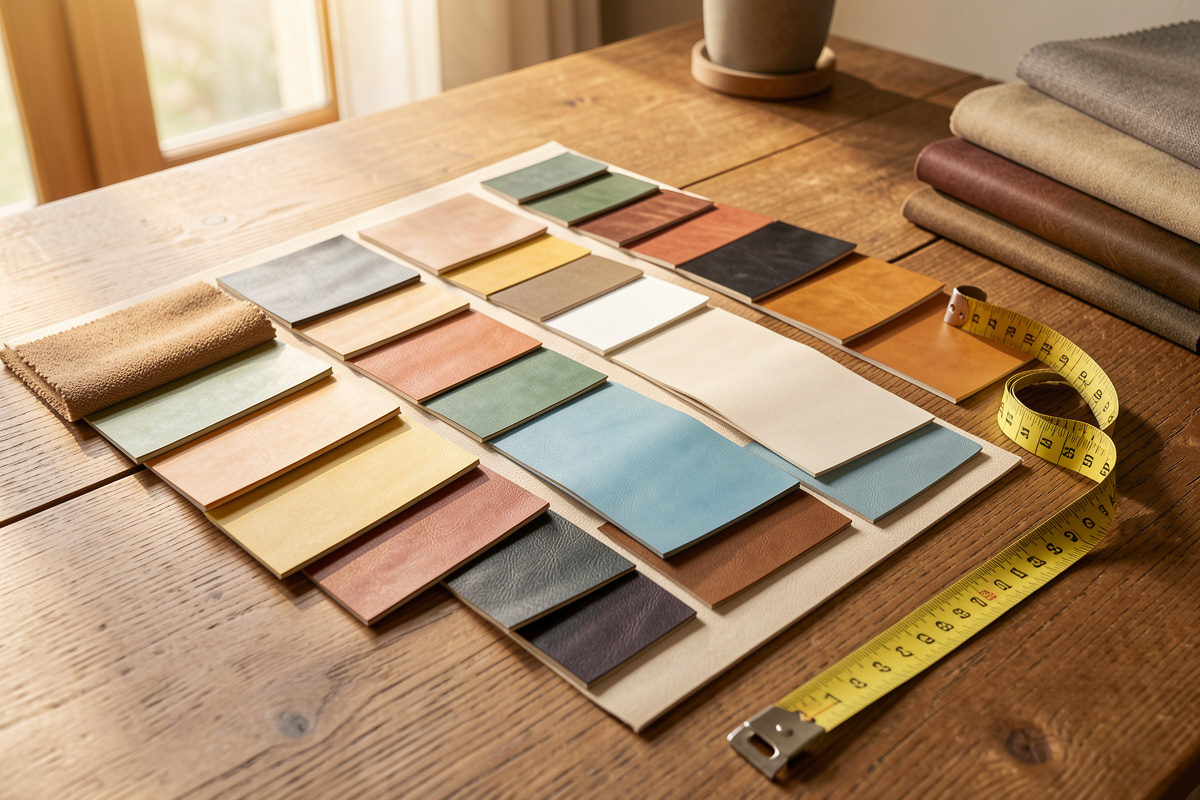
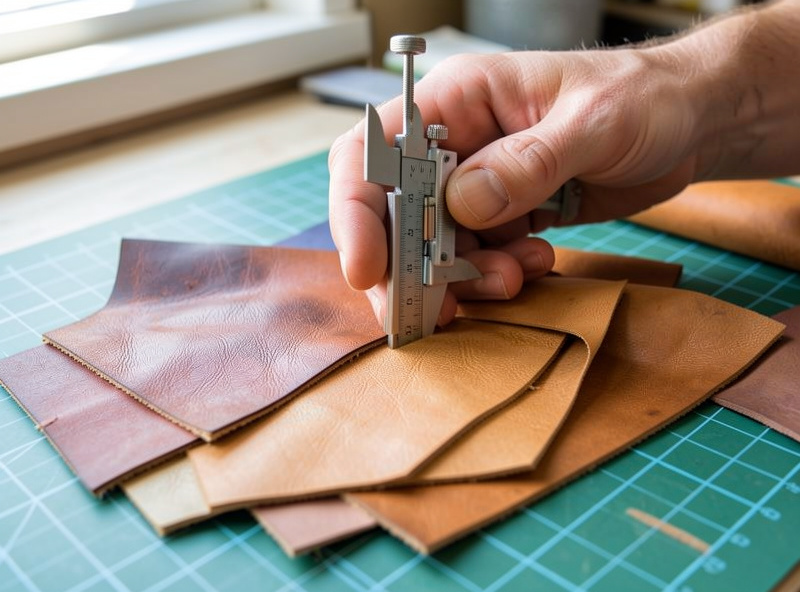
Buying soft leather sight-unseen is how most people end up with the wrong hide. The single best habit is to order samples before committing to a full hide — reputable suppliers will send swatches, and a swatch tells you the temper, the grain and the finish tier in ten seconds of handling that no product photo ever will. For garment work I want to feel the drape; for upholstery I want to see how the topcoat takes a fingernail scratch.
Hobby-scale suppliers like Tandy and Springfield Leather sell garment skins and upholstery sides by the piece, which is the sane way to start before you commit to wholesale hides. When you scale up, the dedicated upholstery houses sell by the full hide and grade them by surface defects, so read the grade definitions on each supplier’s own page rather than assuming a letter means the same thing everywhere. Whatever the source, confirm three things in writing: the weight in ounces, the finish tier, and whether the square footage quoted is gross hide or usable area. Those three numbers prevent almost every bad order.
The Workshop Crossover: Make Your Own Soft-Leather Tools
This is where leathercraft meets the rest of my workshop. I do not tool or burnish soft leather, but the bench still benefits from the printer and the laser. I cut clean, repeatable patterns for jackets and cushion panels by lasering them out of template board, which beats tracing a paper pattern a dozen times and watching it drift — the same approach I cover in my laser-engraved leather project guide and the CNC-cut leather patterns guide.
The FDM printer earns its place too: I print pattern weights, hole-spacing guides and little registration clips that hold slippery panels in alignment before the glue grabs. The same printer that prints my veg-tan edge slickers prints these jigs — same tool, different bench, same workflow. If you want to push further into laser-cutting templates and panels, my sister site LaserBeamForge goes deep on settings, and PrintForge HQ covers the printed-jig side. You do not need any of this to sew a jacket, but it is the kind of edge a single-niche bench rarely reaches.
The Mistakes I See Most Often
Three errors account for most of the ruined projects and disappointing buys I hear about. First, buying the wrong stiffness — ordering a firm 5 oz veg-tan side for a jacket because the price looked good, then discovering it will never hang right. Match temper to purpose; a jacket wants drape, a wallet wants body. My best leather for wallets piece shows the opposite end of that spectrum for contrast.
Second, ignoring the finish tier on upholstery. A gorgeous aniline hide on a sofa that takes daily abuse will look tired in a year; a pigmented hide on a showpiece chair throws away the character you paid for. Match the finish to the life the piece will live.
Third, treating soft leather like a project for veg-tan tools. The swivel knife, the stamps, the edge slickers I printed for my burnishing work — none of them belong anywhere near a garment hide. Different leather, different bench, different toolkit. Knowing which is which is most of the skill, and it is exactly what the rest of this cluster is built to teach.
As an Amazon Associate I earn from qualifying purchases. When a project calls for it, a flexible leather conditioner for furniture and auto and a set of leather sewing machine needles are the two things I would not skimp on for soft-leather work.
Frequently Asked Questions
Is garment leather the same as upholstery leather?
No. Both are soft chrome-tanned leathers, but garment leather is thinner (1.5 to 3 oz) and made to drape for clothing, while upholstery leather is finished for abrasion and light resistance and sold in large panels for furniture and car seats.
What weight is garment leather?
Garment leather usually runs 1.5 to 3 oz, which is roughly 0.6 to 1.2 mm thick. It is sold mostly by square foot since thinness is assumed; 2 oz is a common, very drapey jacket weight.
Can you tool or burnish garment and upholstery leather?
No. Both are chrome-tanned and stay soft, so they will not hold a tooled impression, mold to a form, or burnish a slick edge the way vegetable-tanned leather does. Edges are turned, bound or seamed instead of beveled and slicked.
What is the difference between aniline and pigmented upholstery leather?
Aniline leather is dyed through with no surface pigment for the most natural look, but it stains and fades faster. Pigmented (protected) leather has a pigment and topcoat layer, making it far more durable and easy to wipe clean, which is why it is standard on high-use and automotive seats.
How much upholstery leather do I need for a sofa?
Plan for more than the bare pattern area because hides carry scars and range marks you cut around. I budget 20 to 30 percent over the measured area for large uninterrupted panels, which usually means several full hides for a three-seat sofa.
Should I hand stitch or machine stitch a leather jacket?
Machine stitch. Hand saddle stitch is excellent for small soft-leather goods, but jacket and upholstery seam lengths are far too long to hand stitch sanely. A walking-foot or compound-feed machine with leather needles is the practical tool at that scale.
Related Guides in This Cluster
- Working With Garment Leather — cutting, gluing and sewing soft hide from the bench.
- Upholstery Leather Selection — finish tiers, grades and how much to buy.
- Leather Jacket Alterations — taking in, shortening and refitting a jacket.
- Leather Car Interior Restoration — reviving cracked, faded seats.
- Repairing Leather Furniture — scratches, peeling and seam splits.
- Cleaning Automotive Leather — the weekly routine that prevents damage.