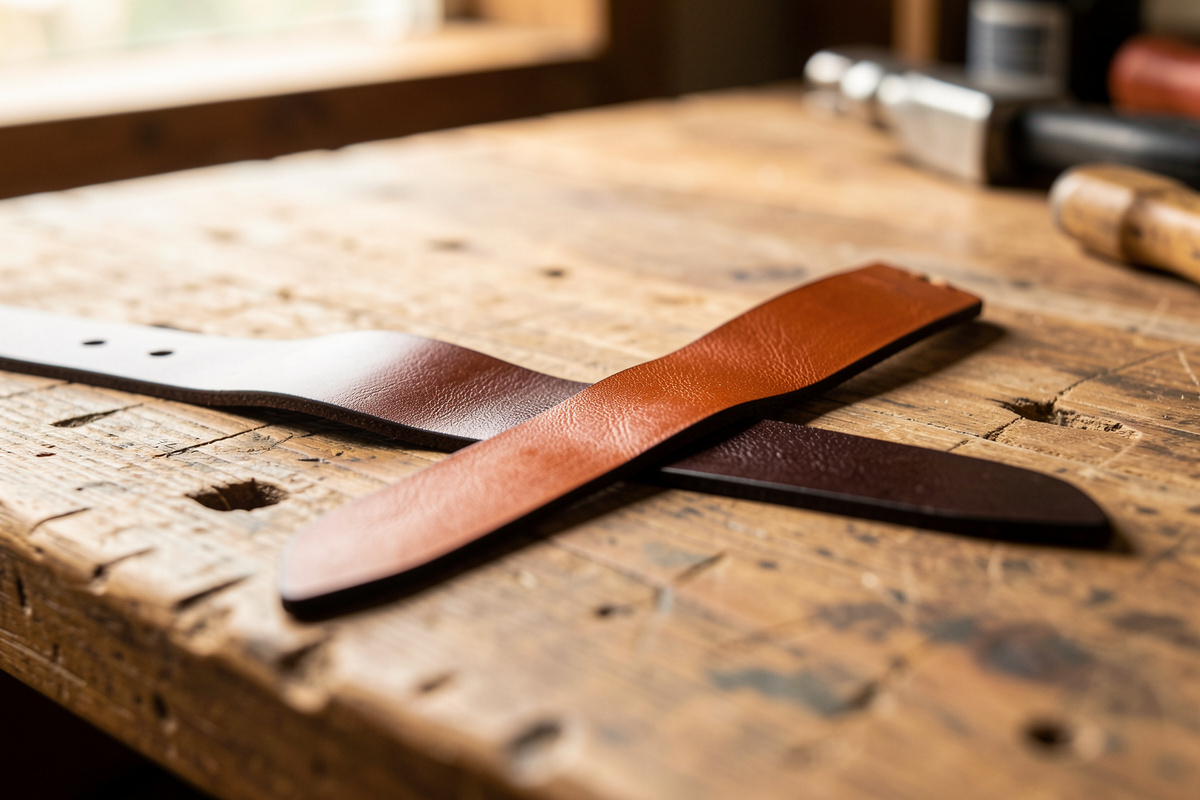
For dog collars and leashes, bridle leather is the better all-round choice and latigo is the specialist for the wettest, hardest-working gear. Both are veg-tanned and then stuffed…
For dog collars and leashes, bridle leather is the better all-round choice and latigo is the specialist for the wettest, hardest-working gear. Both are veg-tanned and then stuffed with fats and waxes, so both shrug off water far better than plain tooling leather — but bridle finishes to a crisper edge and a cleaner face, while latigo is oilier, more flexible, and built to stay supple after repeated soakings. If your dog swims daily or works in the rain, latigo earns its place; for everything else, I reach for bridle. Both come in the 8–10 oz weights I cut collars from, so the choice between them is about tannage, not thickness.
People treat these two as interchangeable “strap leathers,” and they overlap a lot, but the differences decide which one belongs on which piece of dog gear. I keep both on the shelf and choose by how wet the gear’s life will be. Here is how they actually compare on the bench.
What Bridle Leather Is
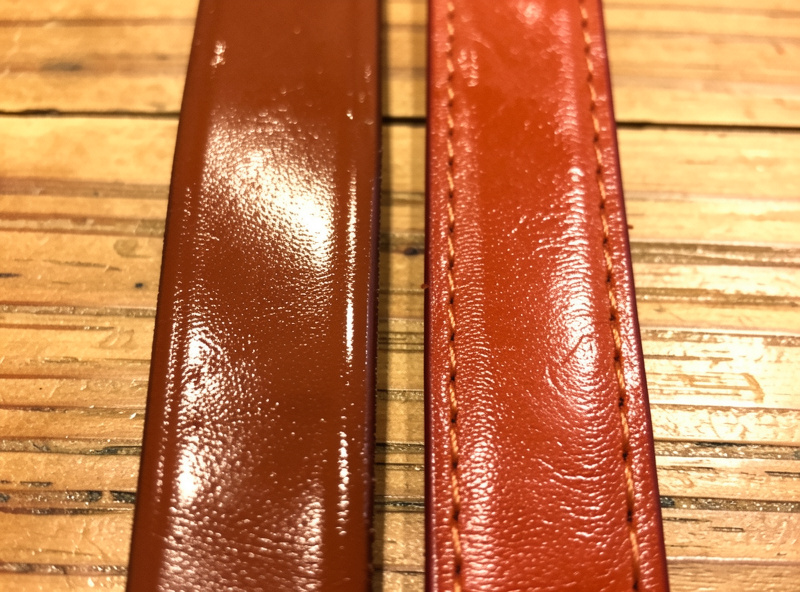
Bridle leather is full-grain veg-tan that has been hot-stuffed with a blend of fats, oils, and waxes after tanning, then often glazed on the surface. The name comes from horse tack — it was built for bridles and reins that live outdoors. That stuffing gives it water resistance and a firm-but-flexible hand, and the waxes let it burnish to a genuinely glassy edge.
For dog collars, bridle’s firmness is the selling point: it carries a buckle and welded ring without folding, holds a crisp punched hole, and finishes to an edge that looks turned rather than cut. It comes pre-dyed in classic colors, so you skip the dyeing step entirely. The deeper case for it on a collar is in the leather weight guide and the parent collar making guide.
What Latigo Leather Is
Latigo is also a stuffed strap leather, but traditionally it is tanned with a combination process (often a veg-and-chrome combination, or heavily fat-liquored veg-tan) and packed with even more oils and waxes than bridle. The result is a leather that is noticeably more flexible, more water-tolerant, and slower to dry stiff after a soaking — it was made for saddle strings, cinches, and tack that lives wet.
That extra oil is exactly why latigo wins for hard, wet-working dog gear: a leash for a dog that swims, a collar for a working dog in the rain, gear that gets soaked and used and soaked again. The trade-off is that latigo’s oilier surface does not burnish quite as crisply, and the oils can bleed slightly, so it is less ideal for a show-finish dress collar. More on the stuffed strap family is in latigo and harness leather.
Which Holds Up Wet
Both resist water far better than untreated veg-tan, but latigo holds up best to repeated soaking-and-drying cycles. Its heavier oil content keeps it supple through wet-dry cycles that would gradually stiffen bridle. Bridle resists a rain shower or a wet shake-off easily and dries back fine; it is constant immersion — a dog that swims every day — where latigo’s extra oils pull ahead and stop the leather from drying hard and cracking.
For either leather, the finish you add matters as much as the tannage. A well-sealed and conditioned bridle collar handles a wet life better than a neglected latigo one. Conditioning routine is in the conditioning guide, and how each tannage takes a topcoat differs — covered alongside dye behavior in the chrome tan vs veg tan guide.
| Property | Bridle | Latigo |
|---|---|---|
| Base tannage | Veg-tan, stuffed & glazed | Combination / heavily fat-liquored |
| Stiffness | Firm, holds shape | More flexible, drapes |
| Water tolerance | Resists rain, dries fine | Best for repeated soaking |
| Edge burnish | Crisp, glassy | Good, slightly softer |
| Color bleed | Minimal | Can bleed oils slightly |
| Best for | Collars, dress leashes, everyday gear | Swimming dogs, wet working gear |
Edge, Hole, and Hardware Behavior
On the bench, bridle is the more forgiving leather to finish. Its firmer body holds a punched hole crisply and bevels to a sharp clean edge that slicks glassy with Tokonole — the edge finish that separates a made collar from a bought one. Latigo’s softer, oilier body burnishes well but not quite as crisply, and its flex means a punched hole can pucker slightly if your punch is dull.
Both take hardware the same way — a center-bar buckle and welded D-ring set the same regardless of which you choose. The edge sequence is in the edge finishing guide, and hardware selection in the hardware guide. Whichever leather you pick, the weight still drives the build — 8–10 oz for a collar, per the sizing guide.
Color, Dyeing, and Finish
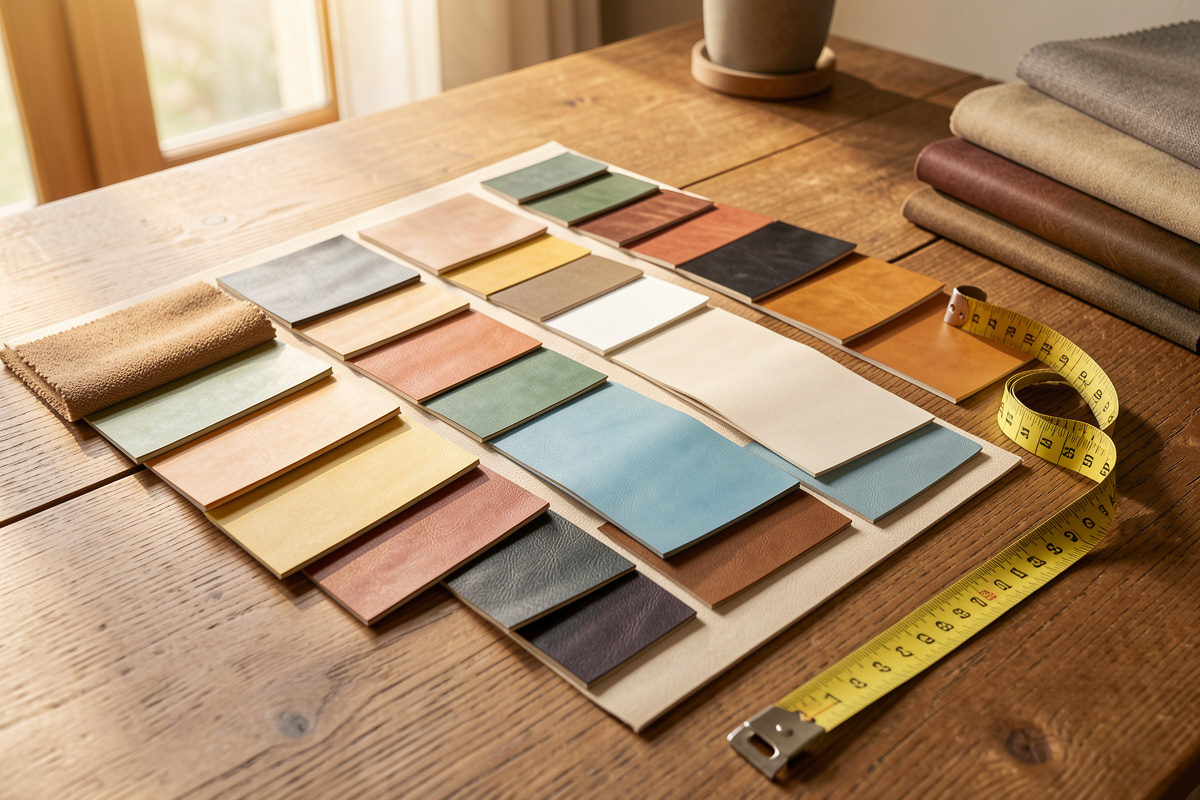
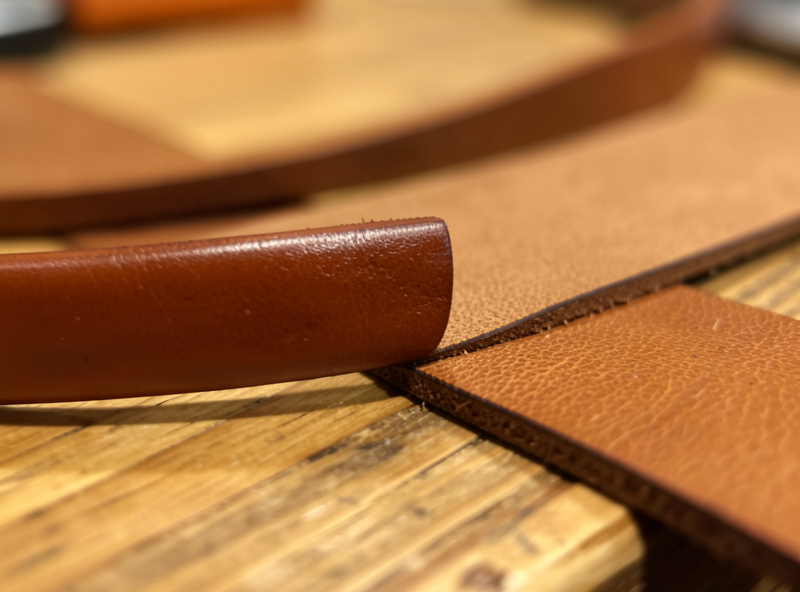
Bridle arrives pre-dyed in a tight range of traditional colors — chestnut, havana brown, black, london tan — with a glazed surface ready to use, which is part of why it is the convenient choice for collars. You can build a bridle collar without ever opening a dye bottle. If you want a custom color, bridle’s firm surface also takes a top dye reasonably well once deglazed.
Latigo is commonly sold in its own characteristic colors too — classic latigo is a warm reddish-brown or natural — but its oilier surface fights even dyeing, so re-coloring it is harder and prone to streaking. If you need a precise custom color, bridle or natural veg-tan you dye yourself gives more control; the streak-free method is in the no-streaks guide. For either leather, seal and condition rather than leaving a raw surface against a wet neck.
Conditioning Each Leather
Both leathers are already stuffed, so neither needs heavy conditioning out of the gate — over-oiling a new strap makes it limp. The rule is to condition lightly and only when the leather starts to look dry or feel stiff, which on a dog collar happens at the flex points first. A small amount of neatsfoot or a leather creme worked in and buffed off keeps the fibers supple.
Latigo’s heavier oil load means it goes longer between conditioning, while bridle benefits from a light feed once or twice a year on a collar in daily wet use. Do not strip and re-finish either one unnecessarily — the factory stuffing is doing most of the work. The full routine, including how often and how much, is in the conditioning guide, and broader care in the care and restoration guide.
Cost, Availability, and Buying Smart
Bridle and latigo sit in a similar price band — both cost more than plain veg-tan tooling leather because of the extra tannage and stuffing steps, and both are sold by the side, the strap, or pre-cut blanks. Bridle from a known tannery is widely available in collar weights; latigo is a touch more specialized and you may need to seek it out, often in its classic reddish color rather than a wide palette.
For dog gear, buy from the firm back-and-bend area of the side rather than the loose belly, whichever leather you choose, so the strap does not stretch over time. If you are starting out and want to buy one leather that covers the most projects, bridle is the smarter first side; the budget side of stocking up is in the startup cost guide.
My Pick for Each Piece of Gear
For a standard collar and an everyday leash, I use bridle — the crisp edge, firm hand, and clean hole win, and the pre-dyed colors save a step. For a leash or collar destined for a dog that swims, hunts wet, or works outdoors year-round, I switch to latigo for the extra suppleness through endless wet-dry cycles. For a harness, where flexibility across the chest is comfort, latigo or a softer bridle both work well — see the harness guide.
If you are buying one side to start, buy bridle — it covers more of the dog-gear range and is the easier leather to finish cleanly. Add a latigo side later when you build for a water dog. Either way, choose the weight first and the tannage second, and match the whole set — collar, leash, harness — in one leather and one hardware family so it reads as a deliberate set, as the leash guide lays out.
Against the Dog’s Coat and Skin
One practical difference matters for the dog wearing the gear: oil bleed. Latigo’s heavier oil and wax load can transfer a faint residue onto a light-colored coat, especially when new or warm, until it settles. Bridle, being firmer and glazed, is less prone to this, which is another reason I default to bridle for a white-coated or show dog. Either way, a sealed and buffed surface reduces transfer to nearly nothing.
Whichever you choose, make sure any dye you add yourself is fully sealed and buffed so it cannot rub off — the most common complaint with a home-dyed collar is color on the dog, and that is a finish failure, not a leather one. Round and burnish every edge hard, too, so nothing chafes the neck. The pieces against the skin should be smooth, sealed, and broken in, regardless of which strap leather is underneath.
As an Amazon Associate I earn from qualifying purchases. I keep both bridle leather strips and latigo straps on the shelf and choose by how wet the gear’s life will be.
Related Guides
- Leather Dog Collar Making: The Complete Guide
- Best Leather Weight for a Dog Collar
- Latigo and Harness Leather Explained
- Chrome Tan vs Veg Tan Leather
- How to Make a Leather Dog Leash