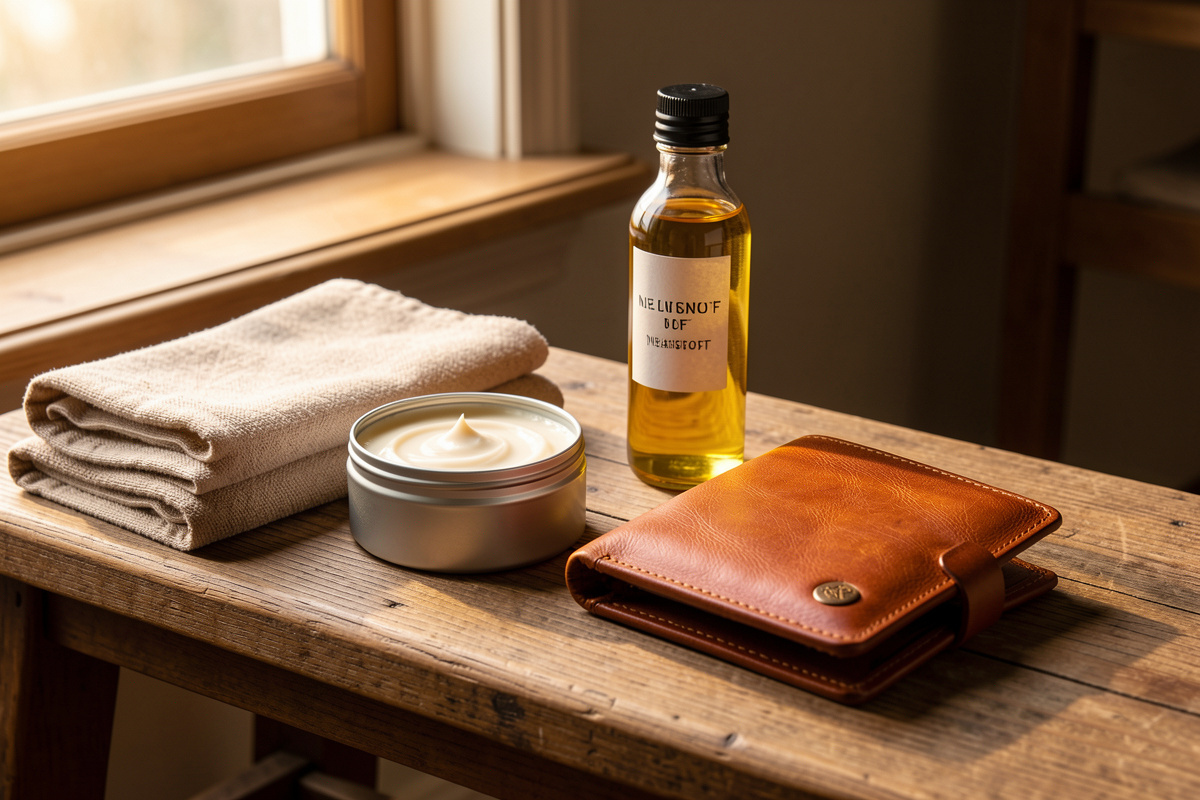
Conditioning leather replaces the oils that age, heat, and use slowly draw out, keeping the fibers supple so the piece flexes instead of cracking. The best products are…
Conditioning leather replaces the oils that age, heat, and use slowly draw out, keeping the fibers supple so the piece flexes instead of cracking. The best products are balanced creams for routine care and pure neatsfoot oil for serious rescues — applied in thin coats, never a flood. Most leather needs it only two or three times a year; the fastest way to ruin a piece is conditioning it too often.
On my bench, conditioning is the step that separates leather that lasts decades from leather that cracks at the fold in a few years. But it is also the step people most overdo, panicking at the first dry patch and saturating a piece until it goes limp. This guide covers the best conditioners for each job, exactly how to apply them, and how to read when a piece actually needs feeding versus when it is fine.
What Conditioning Actually Does
Tanned leather stays flexible because of oils and moisture held in its fiber network. Every year a few percent of that evaporates, and heat, sweat, and sun speed it up. A conditioner puts a controlled amount back, coating and lubricating the fibers so they slide past each other instead of snapping when the leather bends. That is the entire job — replacement, not transformation.
What conditioning does not do is waterproof. Conditioner keeps leather supple but does not block water; that is a separate waterproofing step with wax or grease. It also does not clean — conditioner over a dirty surface seals the grime in, which is why cleaning always comes first. Clean, dry, then condition, in that order, every time.
Choosing the Right Conditioner
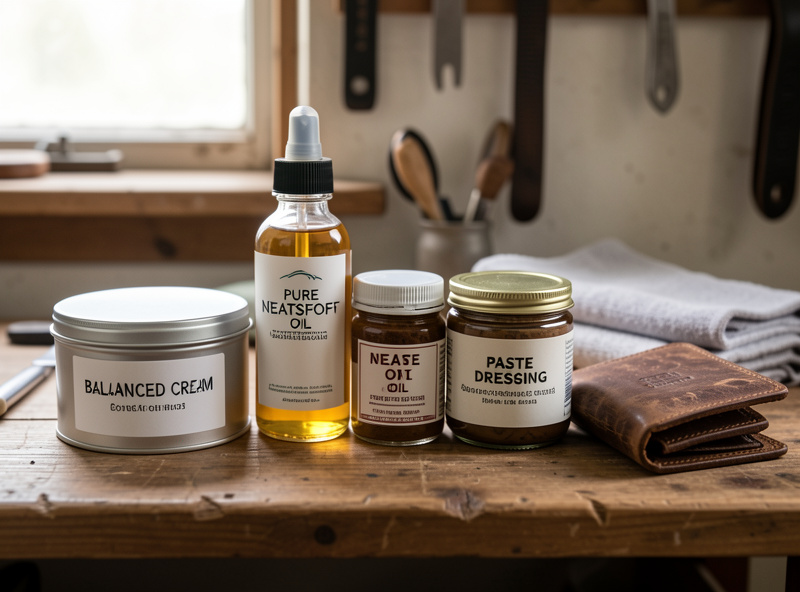
The product depends on the leather and the job. For routine care on veg-tan and chrome-tan goods, a balanced conditioner cream is the safe default — it carries a measured amount of oil and wax and is hard to overdo. For genuinely dried-out, stiff leather, pure neatsfoot oil penetrates deeper and softens more aggressively, but it darkens leather and must be used sparingly and in stages. Heavy greases and dubbin are for rugged work leather and boots, not fine goods.
Avoid anything petroleum-based (mineral oil, petroleum jelly) on quality leather — it gives a short-term softness but oxidizes and dries the fibers over time. The one rule that never fails: match the conditioner to the leather and start with the gentlest option. You can always add a second light coat; you cannot pull oil back out. If you are unsure what tannage you have, my guide to chrome tan versus veg tan sorts it.
| Conditioner | Best For | Darkening | Notes |
|---|---|---|---|
| Balanced cream | Routine care, most goods | Minimal | Safe default, hard to overdo |
| Pure neatsfoot oil | Stiff, dried-out rescue leather | Noticeable | Use sparingly, in stages |
| Paste / grease dressing | Boots, rugged work leather | Yes | Adds water resistance too |
| Carnauba creme | Light feed plus subtle sheen | Minimal | Good finishing touch |
| Petroleum products | Nothing — avoid | Varies | Oxidizes and dries fibers long-term |
How to Condition Leather, Step by Step
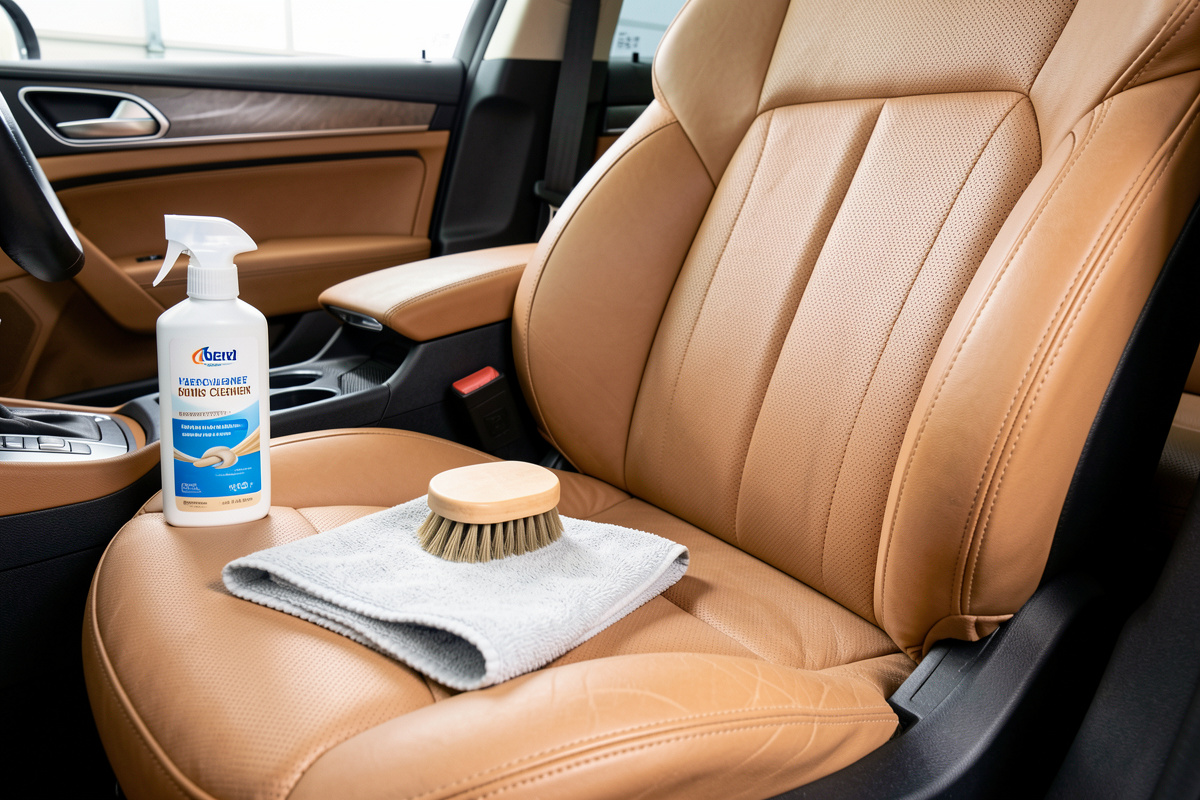
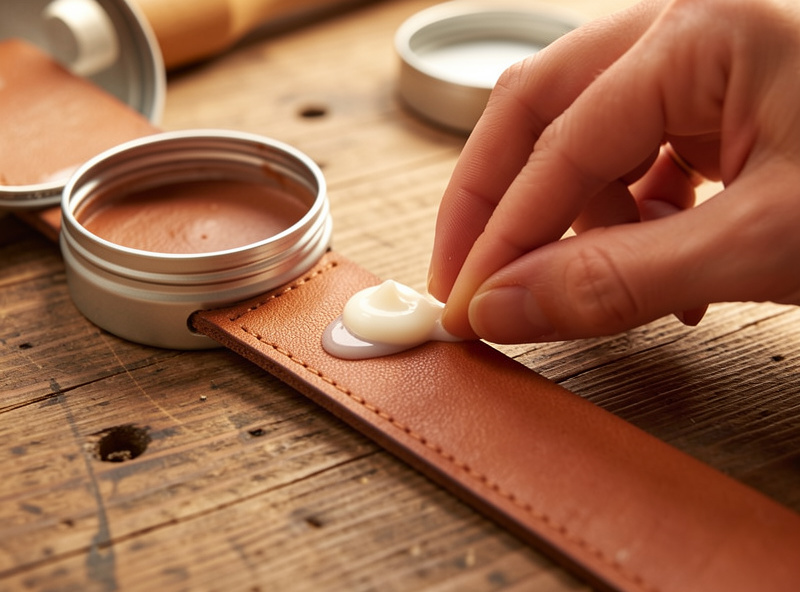
Start with a clean, fully dry piece. Put a small amount of conditioner on a clean cloth or your fingertips — less than you think you need — and work it into the grain in thin, even circles, covering the whole surface including stress folds and edges. On unlined pieces, give the flesh side a light touch too, since that is where drying starts. Then stop and wait: give it fifteen to thirty minutes to absorb.
After it absorbs, buff the surface with a clean dry cloth to lift any excess and bring up a soft sheen. Judge the result now, not during application — leather looks darker and greasy while wet and lightens as it dries. If it still looks thirsty after a few hours, apply a second thin coat rather than laying it on thick the first time. This staged approach is the whole secret to conditioning dried leather without overdoing it, and it is the same patient method I use to bring stiff, neglected belts back to daily use over several days.
How Often Should You Condition?
Far less often than people think. For most goods, two to three times a year is right; a back-pocket wallet against body heat might want a third pass, a belt that sees an hour a day even less. The leather tells you when it is due: a dull, flat look and a grain that feels papery rather than supple means condition now. A piece that still flexes softly and looks alive does not need anything, no matter what the calendar says.
Over-conditioning is the cardinal sin. Oil-saturated fibers go limp, the grain loses its snap, stitching holes stretch, and a structured bag slumps into a shapeless heap — permanently, because you cannot remove absorbed oil. Pull-up and oil-tanned leathers age with a lighter touch still; if your bag lightens wherever it bends, that is the oils shifting, not damage, and my notes on pull-up leather patina explain how to care for that finish without flattening it.
Leathers You Should Not Condition
Suede and nubuck get no conditioner ever — oil mats the nap and stains it permanently; clean those dry and protect with a suede spray. Patent and heavily coated leathers are sealed under a plastic-like finish that conditioner cannot penetrate, so just wipe them. And exotic leathers each have their own rules. When in doubt, test on a hidden spot and wait a day before committing. A balanced leather conditioner cream handles the great majority of smooth-leather care, with a small bottle of pure neatsfoot oil on the shelf for the occasional rescue. As an Amazon Associate I earn from qualifying purchases.
Conditioning is one stage of a larger routine. Once a piece is fed and buffed, weather-exposed goods still need waterproofing, faded ones may need color restored, and everything benefits from correct storage. The full picture lives in the leather care and restoration guide.
Frequently Asked Questions
What is the best leather conditioner?
For routine care on most leather goods, a balanced conditioner cream is the safest best-all-round choice because it carries a measured amount of oil and wax and is hard to overdo. For stiff, dried-out leather, pure neatsfoot oil penetrates deeper but darkens the leather and should be used sparingly in stages.
How often should I condition leather?
Two to three times a year for most pieces. A back-pocket wallet may want a third pass; a lightly used belt even less. Condition when the grain looks dull and feels papery, not on a fixed calendar. Over-conditioning saturates the fibers and makes leather limp permanently.
Does conditioning leather darken it?
Often, yes. Most conditioners darken leather temporarily while wet and many leave it slightly darker permanently, especially oils like neatsfoot. Balanced creams darken least. Always test on a hidden area first if color matters, and apply thin coats so the change is gradual and even.
Can I use coconut or olive oil on leather?
No. Food oils like coconut and olive oil go rancid inside the leather over time, leaving a smell and breaking down the fibers. Petroleum jelly and mineral oil oxidize and dry leather long-term too. Use a product made for leather: a balanced cream or pure neatsfoot oil.
Can you over-condition leather?
Yes, and it is the most common mistake. Oil-saturated fibers go limp, the grain loses its snap, stitching holes stretch, and structured pieces slump permanently. You cannot remove absorbed oil. Always start with a thin coat, let it absorb, and judge before adding more.
Related Guides
- Leather Care and Restoration: The Complete Bench Guide
- How to Clean Leather Goods
- Restoring Faded Leather Color
- Waterproofing Leather Goods
- Pull-Up Leather Patina and Care