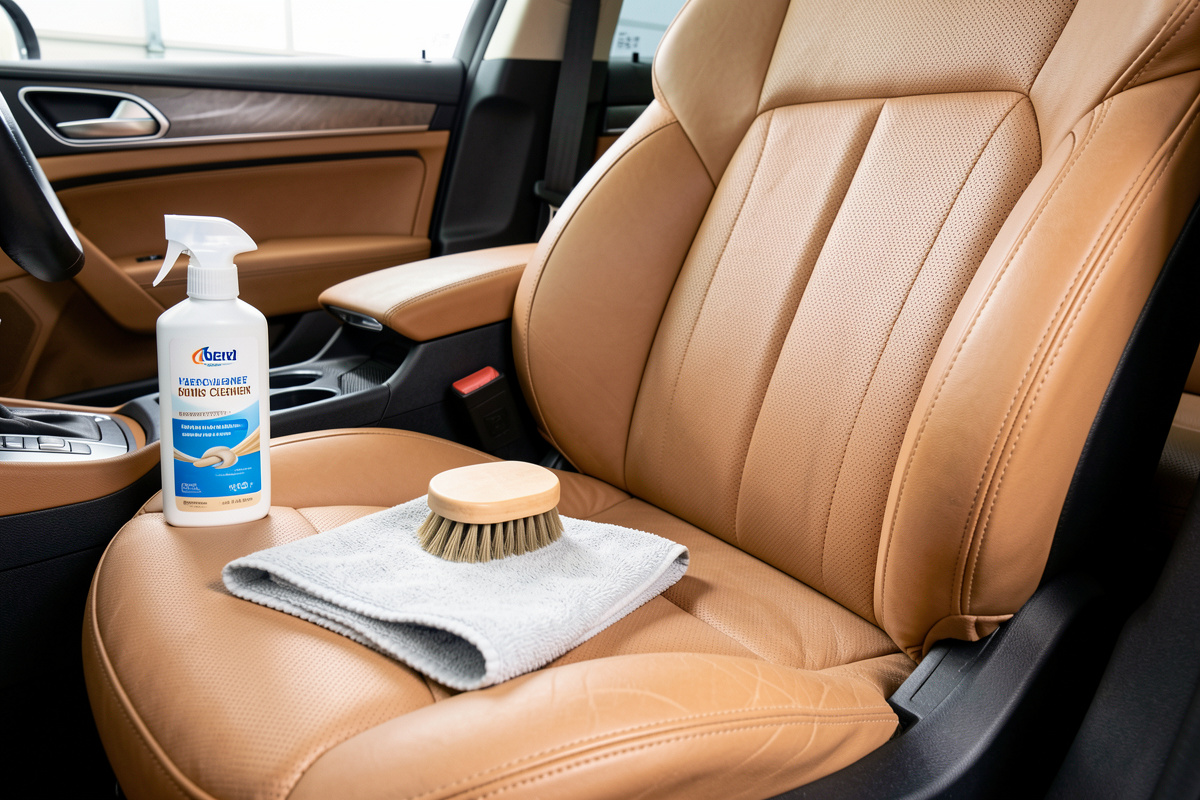
Cleaning automotive leather safely comes down to a pH-balanced leather cleaner, a soft brush, microfiber towels, and a light conditioner a few times a year — never household…
Cleaning automotive leather safely comes down to a pH-balanced leather cleaner, a soft brush, microfiber towels, and a light conditioner a few times a year — never household cleaners, bleach, or excessive water. Car leather is pigmented and coated, so you are cleaning a protective surface, not the hide itself, and gentle regular cleaning prevents far more damage than any repair ever fixes.
Automotive leather takes more abuse than almost any leather in the house: sun, heat, body oils, denim dye transfer and daily friction. It is a heavy pigmented upholstery hide, the family I cover in my garment and upholstery leather guide, and that coated surface is exactly what regular cleaning protects. Stay ahead of the grime and you avoid the cracked, faded seats that send people to my leather car interior restoration guide in the first place.
Why Car Leather Needs Its Own Routine
The protective topcoat on automotive leather is durable but not invincible. Body oils and sunscreen soak into the finish at contact points, sunlight bakes and dries it, and abrasive grit grinds it thin on bolsters where you slide in and out. Left alone, that combination dulls the finish, then cracks it. Cleaning lifts the oils and grit before they do their damage, and conditioning keeps the finish flexible so it does not go brittle.
Because the surface is coated, you do not need aggressive products — aggressive products are what cause harm. The goal is to lift dirt off the topcoat without stripping or drying it, which is why pH-balanced leather-specific cleaners exist and why kitchen and bathroom cleaners have no place on a seat.
What to Use and What to Avoid
Most car-leather damage I see from cleaning is self-inflicted with the wrong product. Here is the short version of what belongs near a seat and what does not:
| Use | Avoid |
|---|---|
| pH-balanced leather cleaner | All-purpose / kitchen cleaners |
| Soft horsehair or detailing brush | Stiff brushes, magic erasers |
| Microfiber towels | Bleach, ammonia, vinegar |
| Light leather conditioner | Heavy oils, mink oil, baby wipes |
| Lightly damp cloth | Soaking water, steam at high heat |
The repeat offenders are baby wipes (their preservatives and surfactants degrade the topcoat over time), all-purpose sprays (too alkaline), and excess water (it seeps into seams and perforations). When in doubt, less product and a damp cloth beat more product and a soaked seat. The same gentle-product logic runs through my general cleaning leather goods guide.
The Step-by-Step Cleaning Routine
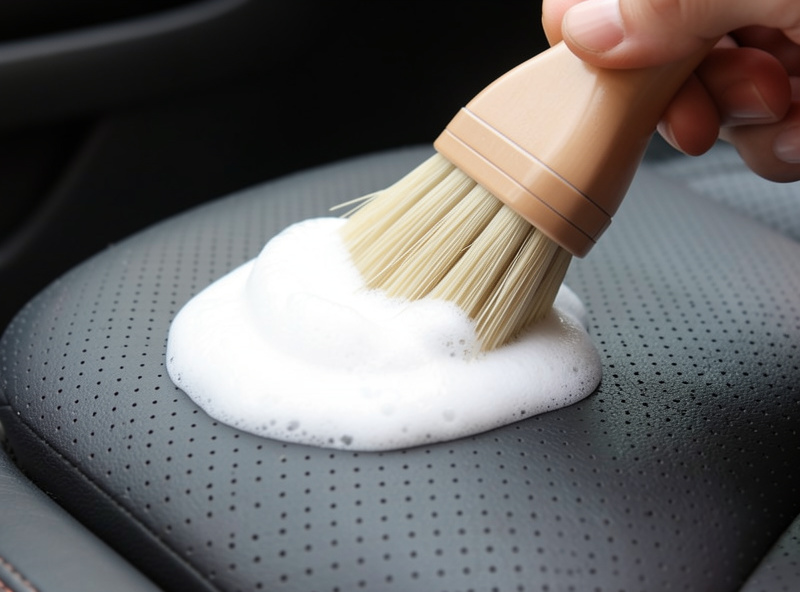
Work one seat at a time, out of direct sun so nothing dries too fast. First, vacuum thoroughly — the crumbs and grit in the seams are abrasive, and wiping them around just scratches the finish. Next, mist a pH-balanced leather cleaner onto a soft brush (not directly onto the seat, which oversaturates) and work it gently over the surface to lift the dirt; you will see the foam discolor as it pulls oils out of the grain.
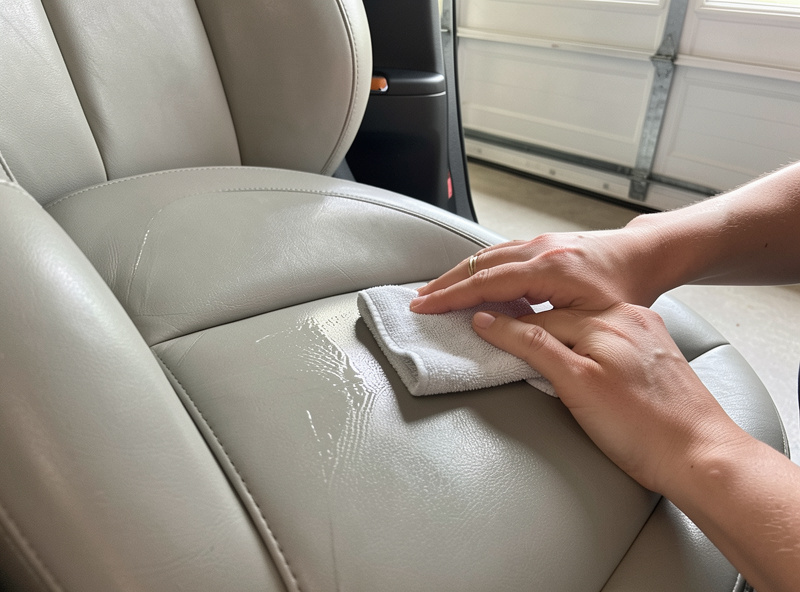
Wipe the lifted dirt away with a clean, lightly damp microfiber towel, turning the cloth often so you are removing grime rather than smearing it. For heavily soiled driver’s seats, a second light pass beats one aggressive scrub. Finish by drying with a fresh microfiber towel. The leather should look clean and matte, not wet, when you are done.
Conditioning and Protecting
After cleaning, a light leather conditioner keeps the coated surface supple and slows the drying that leads to cracking. Apply a small amount to a microfiber applicator, work it in thin and even, let it absorb, then buff off any excess so the seat is not greasy or slippery — a slick seat is both unpleasant and unsafe. Less is more; heavy conditioner sits on top of the topcoat and attracts dust rather than helping.
You do not need to condition every clean. The finish, not the leather, is what you are maintaining, so a few applications a year is plenty for most cars. This is the same maintenance philosophy as the broader leather care and restoration guide, scaled to the hardest-working leather you own.
How Often, and Spot-Cleaning Stains
A light wipe-down every few weeks and a proper clean every month or two suits most daily drivers; condition a few times a year. Adjust to use — a family car or a convertible that lives in the sun needs more frequent attention than a garaged weekend car. The point is consistency: small regular cleaning keeps grime from ever building into the kind of ground-in stain that is hard to remove.
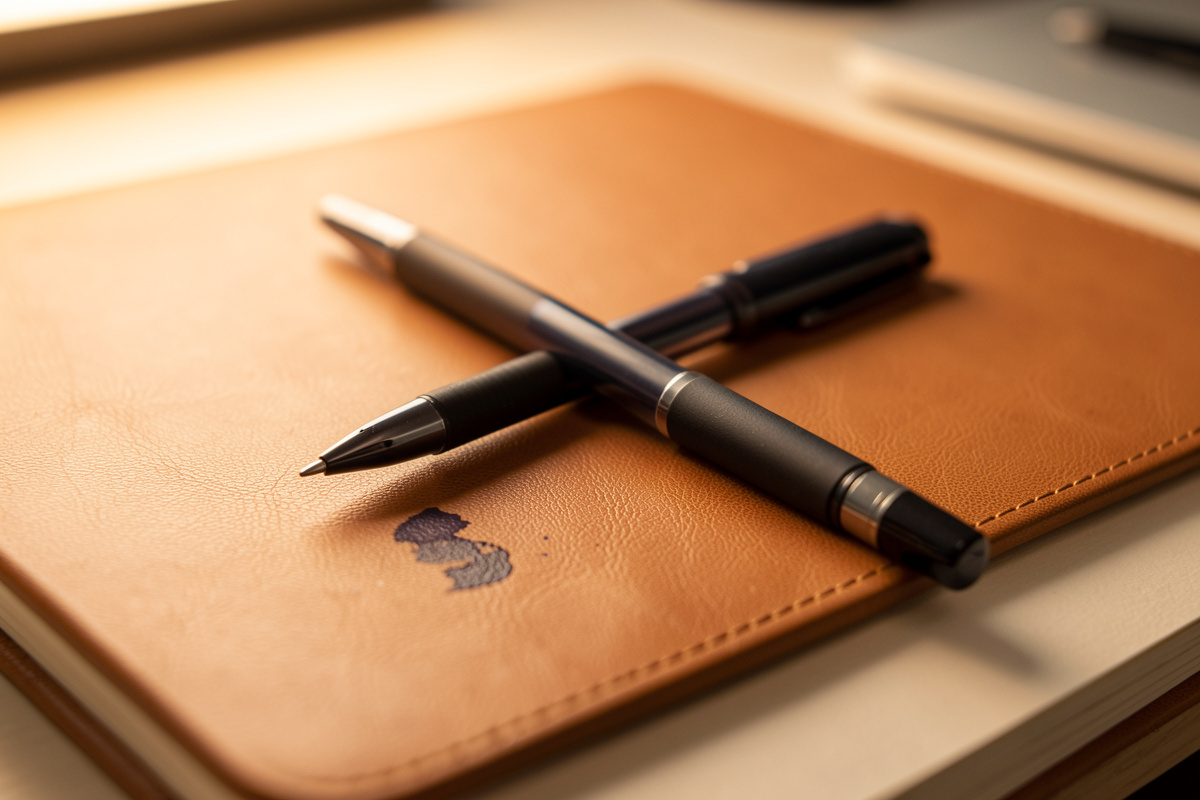
For fresh spills, blot immediately rather than rubbing, then clean the spot with leather cleaner. Denim dye transfer (the blue tint light seats pick up from jeans) responds to prompt leather cleaning before it sets; once it migrates deep into a worn finish it becomes a recoloring job. Ink and grease are the stubborn ones — address them quickly and gently, and accept that a set-in stain on a worn finish may need the restoration route rather than cleaning.
Cleaning Perforated and Ventilated Seats
Perforated and ventilated seats need a lighter hand, because the holes will hold liquid and let it reach the foam and electronics beneath. Never spray cleaner or water directly onto perforated leather. Instead, dampen the brush or cloth lightly and clean the surface without flooding the holes, then dry promptly so nothing sits in the perforations. The same care applies to conditioner — thin and buffed, never pooled. Treat perforations as the one place where the gentle-and-dry rule matters most, and ventilated seats clean up just as well as solid ones.
As an Amazon Associate I earn from qualifying purchases. My car-cleaning kit is simple: a pH-balanced leather cleaner and conditioner kit and a soft horsehair detailing brush.
Frequently Asked Questions
What is the best thing to clean car leather seats with?
A pH-balanced leather cleaner applied with a soft brush and wiped off with microfiber towels. Car leather is pigmented and coated, so it needs a gentle leather-specific cleaner, not household or all-purpose products that strip and dry the finish.
Can I use baby wipes on leather car seats?
It is not recommended. Baby wipes contain preservatives and surfactants that degrade the leather topcoat over time, leading to a dull, dry finish that cracks. Use a dedicated leather cleaner and microfiber instead.
How often should I clean and condition leather car seats?
A light wipe every few weeks and a proper clean every month or two suits most daily drivers, with conditioning a few times a year. Cars that live in the sun or carry kids and pets need more frequent attention.
Should you condition leather car seats after cleaning?
A light conditioner a few times a year keeps the coated surface supple and slows cracking, but you do not need it after every clean. Apply thin, let it absorb, and buff off the excess so the seat is not greasy or slippery.
How do you clean perforated or ventilated leather seats?
Use a lightly damp brush or cloth and never spray cleaner or water directly onto the holes, which can reach the foam and electronics below. Clean the surface gently, then dry promptly so no liquid sits in the perforations.
How do you get jean dye off light leather seats?
Clean the dye transfer promptly with a leather cleaner before it sets, agitating gently with a soft brush. Once the blue dye migrates deep into a worn finish it can no longer be cleaned out and becomes a recoloring job.
Related Guides
- Garment and Upholstery Leather: The Complete Bench Guide
- Leather Car Interior Restoration
- Repairing Leather Furniture
- How to Clean Leather Goods
- Leather Care and Restoration Guide
- Upholstery Leather Selection