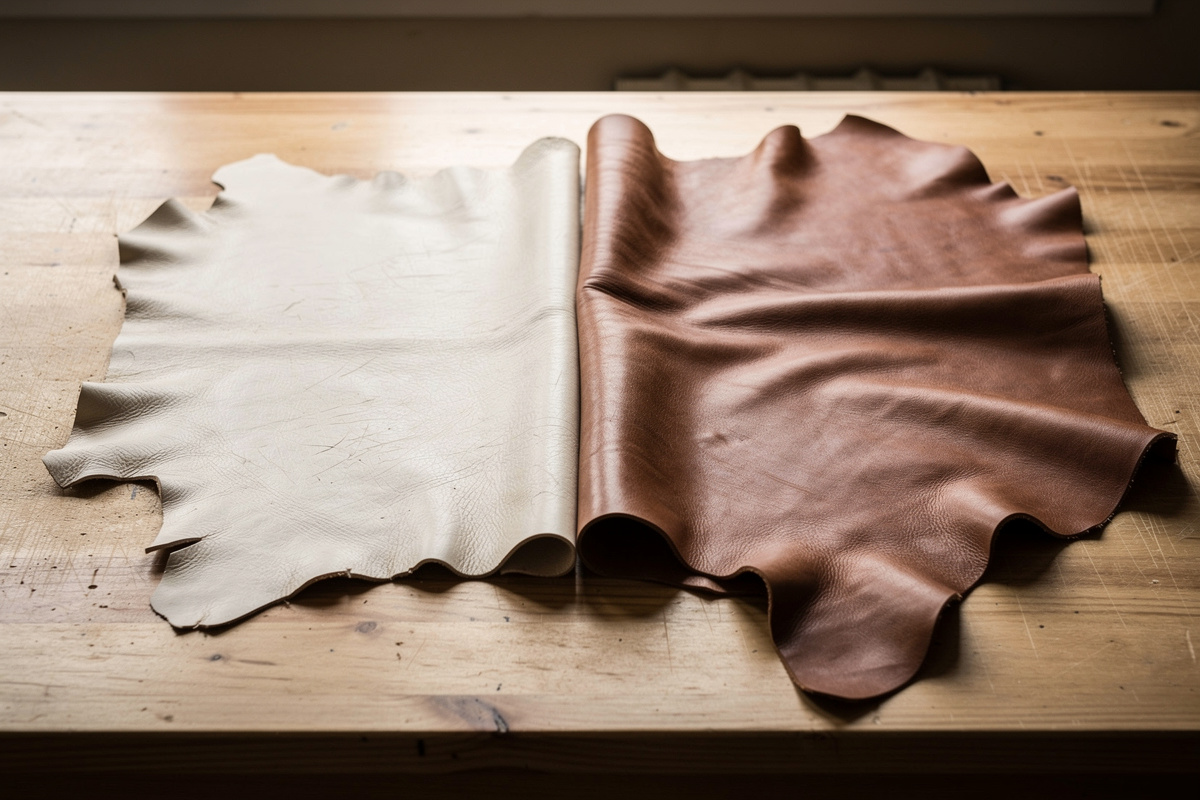
Chrome tan and veg tan are not two grades of the same thing — they are two different chemistries that produce leathers built for opposite jobs. Veg-tan is…
Chrome tan and veg tan are not two grades of the same thing — they are two different chemistries that produce leathers built for opposite jobs. Veg-tan is the leather that tools, molds, dyes deep and burnishes to a glassy edge; chrome-tan is the one that stays soft, takes color brightly on the surface, and shrugs off water. After years of cutting both at my bench, the single most useful thing I can tell a beginner is this: pick the tannage to match the job first, and almost every other decision gets easier.
I keep both in the rack at all times. Veg-tan is my core — Wickett & Craig and Hermann Oak shoulders in the weights I reach for daily. Chrome-tan and chrome-tan offcuts live on the soft-goods side of the bench for bag bodies and linings that need to drape. Below is exactly how I decide which one a project gets, what each does well, and the mistakes I see people make when they reach for the wrong one.
What “tannage” actually means
Tanning is the step that turns a raw hide — which would otherwise rot or dry to rawhide stiffness — into stable leather. Vegetable tanning uses tannins extracted from bark, wood and other plant matter; the hides soak in progressively stronger tannin liquors for weeks. Chrome tanning uses chromium salts and takes a fraction of the time. That difference in chemistry is the whole story: it sets how the leather feels, how it takes dye, whether it burnishes, and whether it holds a molded shape.
Everything else people argue about — “which is better,” “which is real leather,” “which lasts” — collapses once you understand that you are choosing a behavior, not a quality tier. Both are genuine, full leather. They just do different things.
Veg-tan: the leather that tools, molds and burnishes
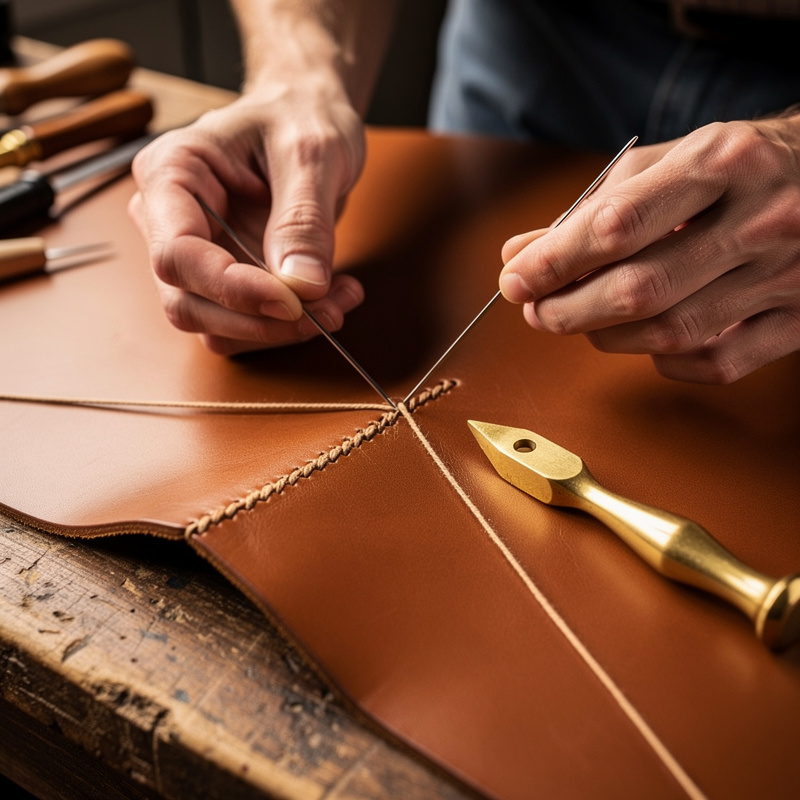
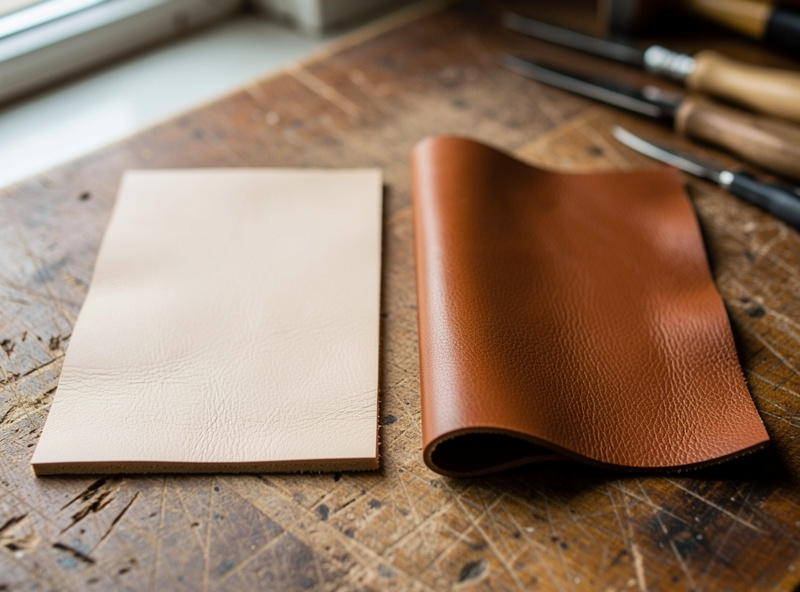
Veg-tan is the structural, workable leather. Fresh off the hide it is a pale tan (“natural”), firm, and ready to be carved, stamped, wet-molded, dyed any direction, and burnished to a hard, slicked edge. This is the leather behind tooled belts, knife sheaths, holsters, structured wallets and anything that needs to hold a shape.
The properties I rely on:
- It cases and wet-forms. Dampen veg-tan to the right moisture — “casing” it — and it becomes plastic enough to stamp deep or mold around a form, then it dries holding that shape. Chrome-tan will not do this; it springs back.
- It burnishes. The dense fiber structure lets a slicked edge compress and polish to a hard, glassy finish with Tokonole or gum trag. This is the single biggest “looks made vs looks bought” tell, and it is a veg-tan property.
- It dyes through. Penetrating oil and spirit dyes soak into the fiber, so a cut edge or a scuff shows colored leather, not a pale core.
- It patinas. Left natural and handled, veg-tan darkens and warms over time into the honey-to-caramel aging people prize.
The trade-off: it is stiffer, more water-sensitive until sealed, and it shows every flaw because there is nowhere to hide. It rewards good edge work and punishes sloppy work.
Chrome-tan: the leather that stays soft and takes the weather
Chrome-tan is the soft-goods leather. It comes from the tannery already colored, supple, and water-resistant, in an enormous range of finishes and textures. This is the leather behind most garments, upholstery, soft bags, jacket panels and anything meant to flex and drape rather than hold a form.
What it gives you:
- Softness and drape out of the box, with no breaking-in.
- Water resistance — it handles damp far better than raw veg-tan.
- Color consistency — drum-dyed at the tannery, so a whole hide matches.
- Less fuss — no casing, no edge slicking required, fewer steps to a usable piece.
The trade-off is exactly the inverse of veg-tan’s strengths: it will not tool, it will not wet-mold, and it will not burnish to a hard slicked edge the way veg-tan does. On chrome-tan I finish edges with edge paint (acrylic), not a slicker, because the fibers simply will not compress and polish. If you try to slick chrome-tan with Tokonole expecting a glassy edge, you will be disappointed — that is the wrong tool for that leather, and knowing this up front saves a ruined piece.
Side by side: how I actually choose
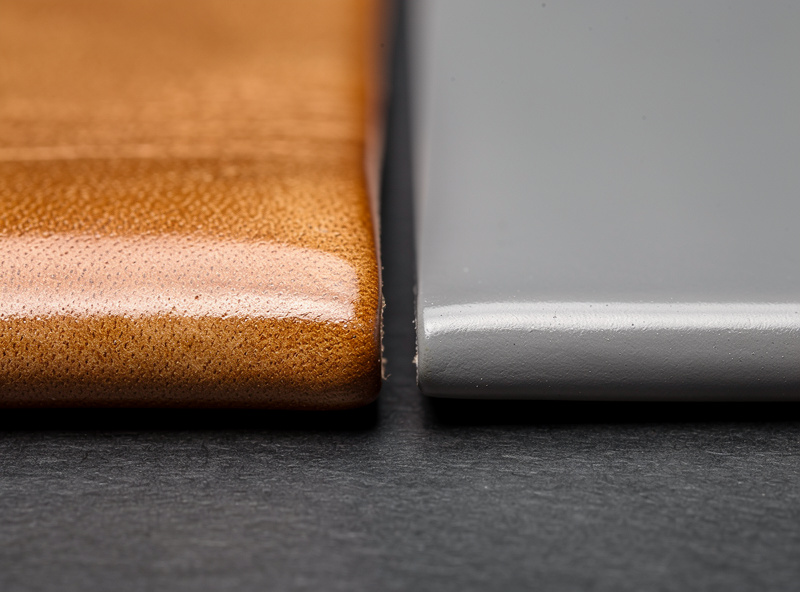
This is the comparison I wish someone had handed me when I started. It is the difference between behaviors, not a ranking.
| Property | Veg-Tan | Chrome-Tan |
|---|---|---|
| Tanning agent | Plant tannins (bark/wood) | Chromium salts |
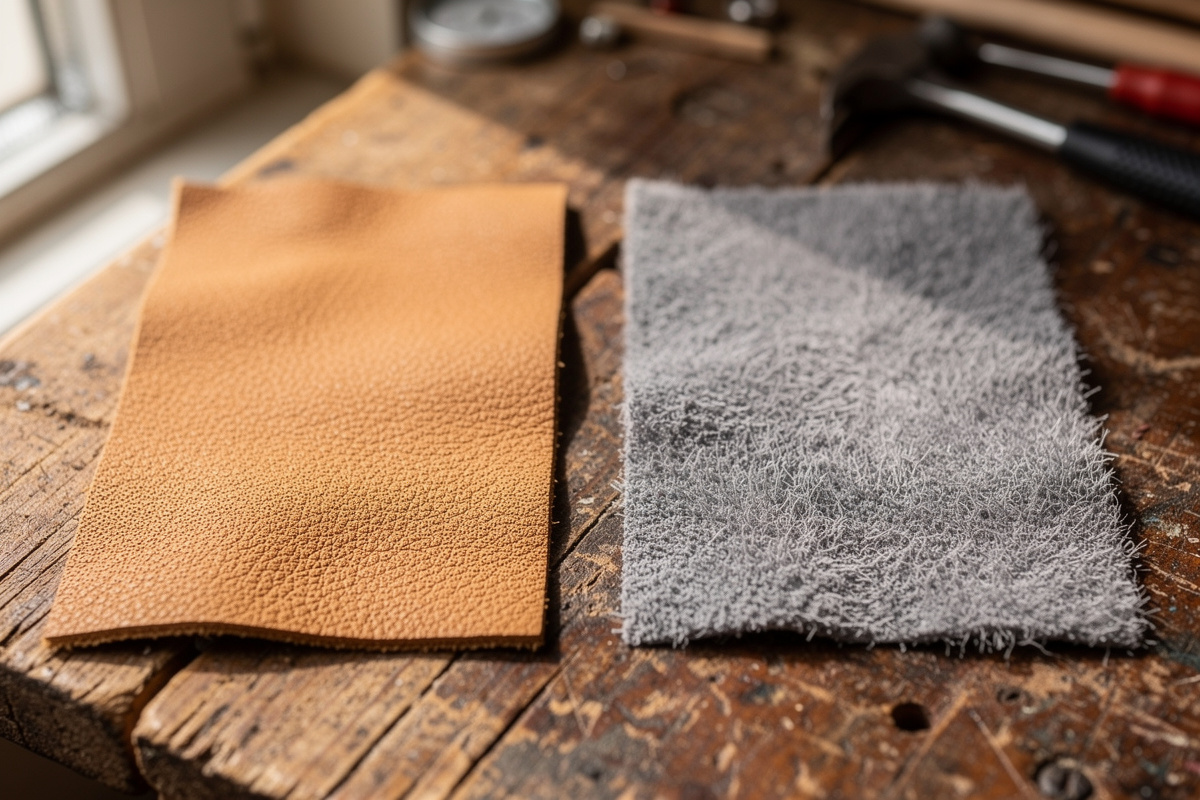
| Feel out of the tannery | Firm, structured | Soft, supple, drapes |
| Tools / stamps / carves | Yes — the leather for it | No |
| Wet-molds / holds a shape | Yes | No (springs back) |
| Burnishes to a slicked edge | Yes — its signature | No — use edge paint |
| Dye behavior | Penetrates / dyes through | Pre-colored; surface acrylic for touch-ups |
| Water resistance (raw) | Low until sealed | High |
| Patina with age | Pronounced, warm | Minimal — looks much the same |
| Best for | Belts, sheaths, holsters, tooled & structured goods | Garments, soft bags, linings, upholstery |
My shorthand at the bench: if it needs to hold a shape, tool, or show a finished edge, it is veg-tan. If it needs to be soft, flexible and weather-easy, it is chrome-tan. A structured bifold wallet is veg-tan. A slouchy tote body is chrome-tan. A knife sheath is veg-tan, always. A jacket is chrome-tan, always.
Weight matters as much as tannage
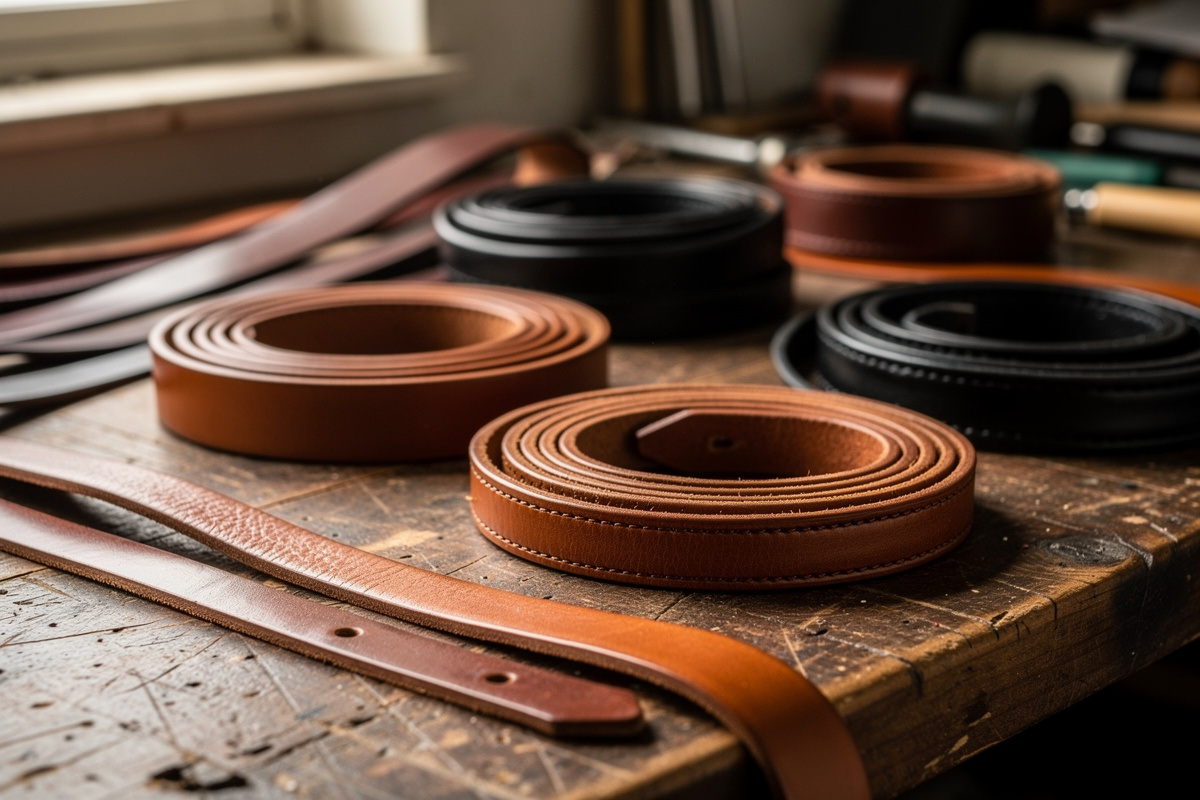
Tannage tells you the behavior; weight (measured in ounces, where 1 oz ≈ 1/64 inch of thickness) tells you whether it is right for the part. I reach for 3–4 oz for linings and wallet interiors, 5–6 oz for wallet exteriors and small goods, and 8–10 oz for belts and sheath bodies. A belt cut from 4 oz veg-tan will be floppy and useless; a wallet interior from 9 oz will be a brick. Get the tannage right first, then dial the weight to the part. The two decisions together do most of the work of “picking leather.”
The third category people forget: combination tan
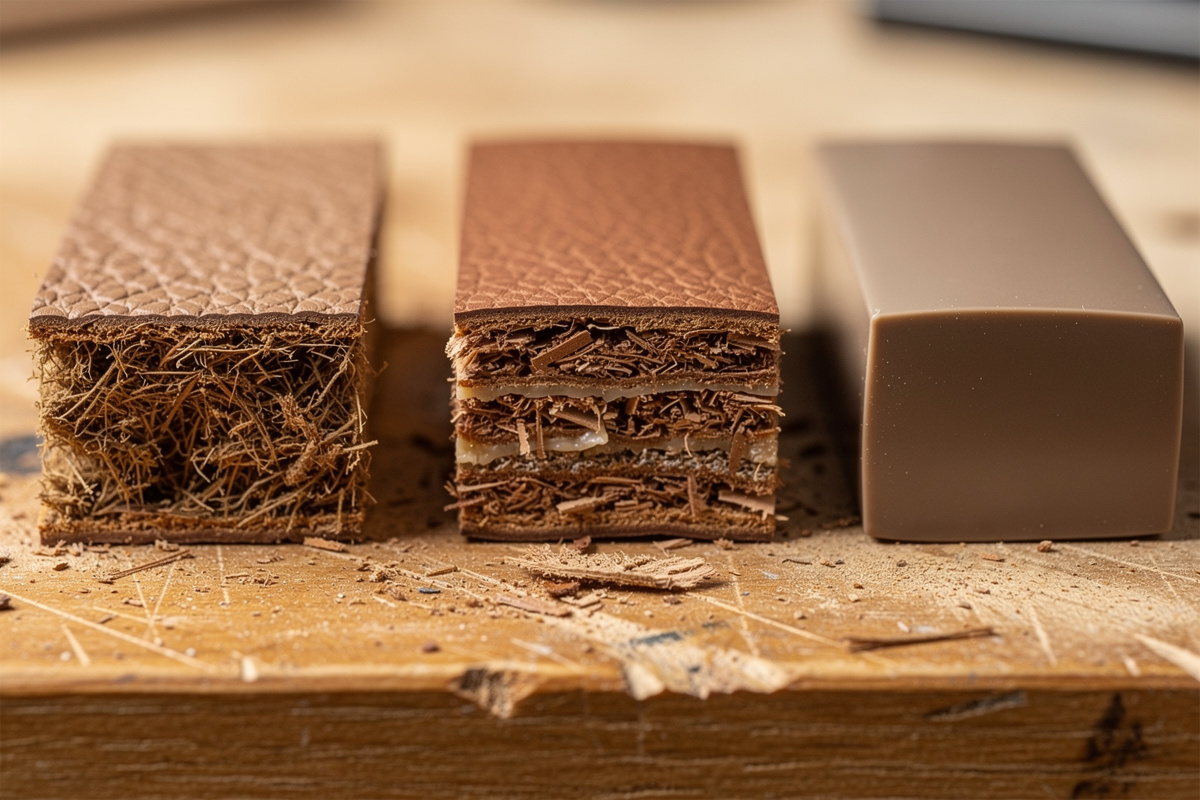
There is a middle ground I keep on hand for certain bags and straps — combination-tanned (also “retan”) leather, chrome-tanned first for softness and water resistance, then vegetable-retanned for a bit more body and a more workable edge. Latigo is a classic example. It is not a contradiction; it is a deliberate blend that gives you some drape and some structure. If a project sits awkwardly between “needs to hold a shape” and “needs to flex,” combination tan is often the honest answer rather than forcing a pure veg or pure chrome hide to do a job it resists.
Gear I keep for working both
The two tannages want slightly different finishing kits, and stocking both is what lets me say yes to any project.
Disclosure: LeatherCraftHaven is reader-supported. As an Amazon Associate I earn from qualifying purchases made through links in this article, at no extra cost to you. I only point to gear I actually use or would buy for my own bench.
For veg-tan, the two things that matter most are a penetrating oil-based leather dye that soaks into the fiber and a tub of Tokonole burnishing gum for slicking those edges to a polish. For chrome-tan, I keep acrylic leather paint for surface color and touch-ups since it will not take penetrating dye the same way. When I am buying to test behavior rather than build a project, a small veg-tan tooling scrap pack is the cheapest way to feel the difference yourself before you commit a whole hide.
Where this fits in the leather-types picture
Tannage is one of three axes you choose along — tannage (this article), grade (how much of the grain is intact), and weight. For the grade side, my full grain vs top grain breakdown covers what gets sanded off and why it matters; for choosing leather for a specific build, the best leather for wallets guide walks the type-and-weight decision for a real project; and the broad types of leather overview ties tannage, grade and weight together.
Frequently Asked Questions
Is chrome tan or veg tan better?
Neither — they do different jobs. Veg-tan is better for anything that tools, molds, or needs a burnished edge (belts, sheaths, structured goods). Chrome-tan is better for anything soft and flexible (garments, soft bags, linings). Better only means anything once you have a specific project in mind.
Can you tool or stamp chrome-tan leather?
No, not in any meaningful way. Chrome-tan will not take and hold a stamp impression or carve, and it springs back instead of holding a wet-molded shape. Tooling, stamping and wet-forming are veg-tan jobs because only veg-tan stays plastic when cased and then dries holding the form.
Why won’t my chrome-tan edges burnish?
Because chrome-tan fibers do not compress and polish the way veg-tan does — burnishing is a veg-tan property. On chrome-tan, finish edges with acrylic edge paint instead of a slicker and Tokonole. Expecting a glassy slicked edge on chrome-tan is the most common wrong-tannage mistake.
Is veg-tan or chrome-tan more water resistant?
Chrome-tan, by a wide margin, straight from the tannery. Raw veg-tan is water-sensitive and will spot and darken until you seal and condition it. You can make veg-tan far more weather-tolerant with finishes, but chrome-tan starts there.
Which leather patinas?
Veg-tan, especially natural undyed veg-tan, develops a pronounced warm patina as it ages and is handled — that honey-to-caramel deepening people prize. Chrome-tan changes very little over time, which is sometimes exactly what you want from a garment or bag that should stay one color.
Related Guides
- Types of Leather: Tannage, Grade and Weight
- Full Grain vs Top Grain Leather
- Best Leather for Wallets
- The Complete Leather Dyeing Guide