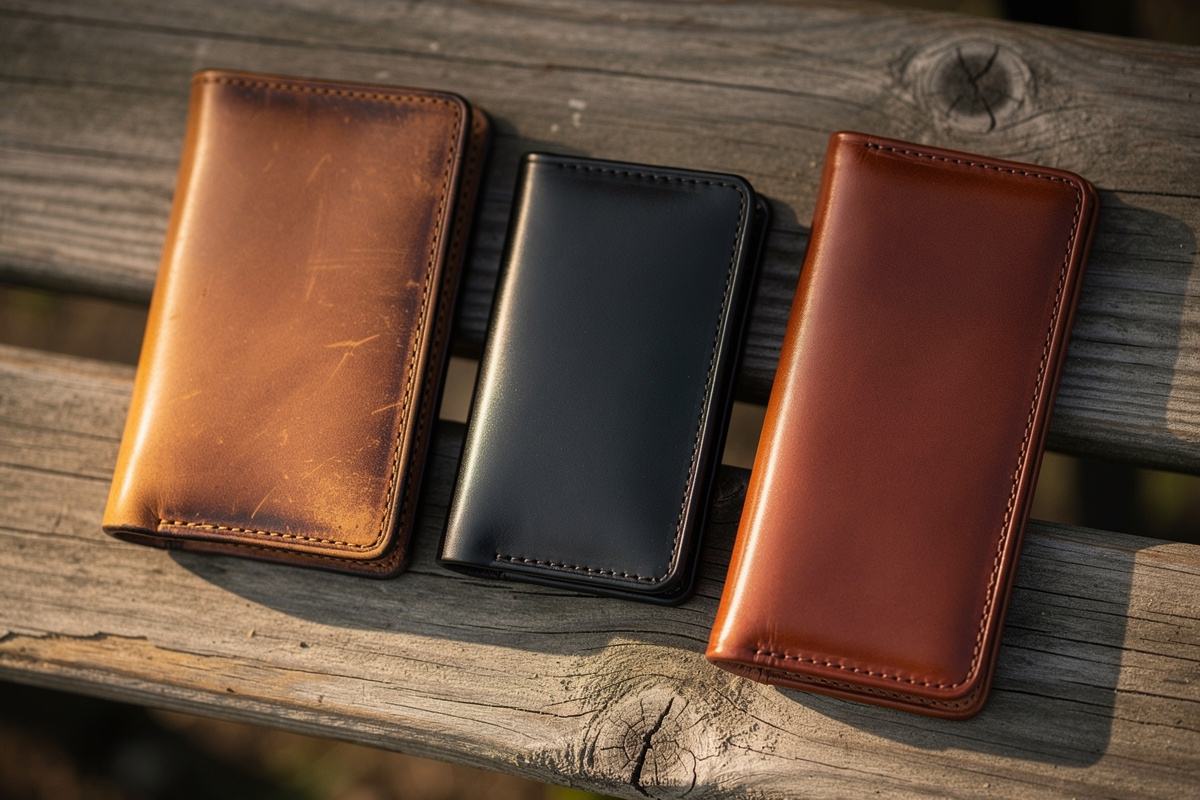
The best leather for wallets is full-grain vegetable-tanned cowhide in 3-4 oz weight (1.2-1.6mm thickness), tanned by Hermann Oak, Wickett & Craig, or Horween. Full-grain provides the natural…
The best leather for wallets is full-grain vegetable-tanned cowhide in 3-4 oz weight (1.2-1.6mm thickness), tanned by Hermann Oak, Wickett & Craig, or Horween. Full-grain provides the natural surface that develops patina; veg-tan accepts dye and burnishes cleanly; 3-4 oz balances feel-substantial with fits-pocket-flat. Avoid corrected-grain, bonded leather, and weights above 5 oz for slim wallets. The types of leather hub covers the full tannage-grade-weight matrix that supports the wallet-specific picks covered here.
Wallet leather selection is more constrained than most leatherwork because the finished piece sits in a pocket against your body for 8-12 hours daily. The leather has to feel good, age well, and survive constant flexing. Marketing terms (“genuine leather,” “Italian leather,” “premium hide”) tell you almost nothing useful. The four real specifications — grain quality, tannage method, weight, and tannery source — settle the question completely.
I used 5-6 oz leather for my first wallet because the tutorial said “leather for wallets” without specifying weight. It was so thick the bifold wouldn’t close flat and sat in my pocket like a brick. The 3-4 oz Hermann Oak I switched to transformed the fit and feel. The weight recommendations and tannery guide below are what I now follow for every wallet build.
As an Amazon Associate I earn from qualifying purchases.
The Four Specifications That Decide Wallet Leather
Four specifications cover every real wallet leather decision: grain quality (full-grain vs top-grain vs corrected-grain), tannage method (vegetable vs chrome vs combination), weight in ounces (typically 3-4 oz for wallets, 1 oz = 1/64 inch ≈ 0.4mm), and tannery source (US, European, or “unspecified import”). Get all four right and the wallet ages beautifully for 10-20 years.
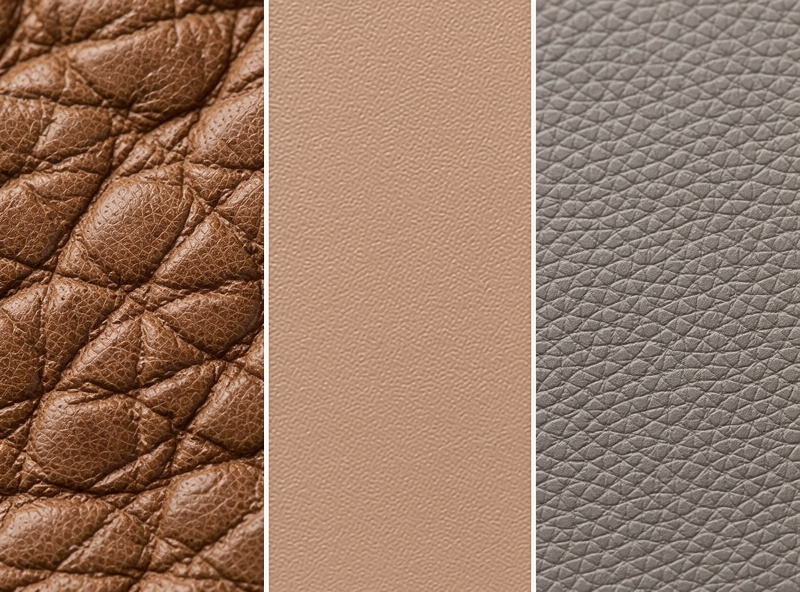
What each spec controls:
- Grain quality: Determines how the wallet ages. Full-grain develops patina; top-grain stays uniform; corrected-grain looks plastic-y over time.
- Tannage: Veg-tan accepts dye and burnishes; chrome-tan is softer and more flexible; combination is a middle ground.
- Weight: Controls thickness, stiffness, and pocket bulk. 3-4 oz is the universal wallet weight.
- Tannery: Reputable tanneries publish quality grades; unspecified imports often have inconsistent thickness, dye penetration, and surface defects.
Reading a marketing description that includes all four (“full-grain vegetable-tanned 3-4 oz from Hermann Oak”) tells you exactly what the leather will do. A description that includes none (“genuine premium Italian leather”) tells you nothing. Read about general leather grading in our full grain vs top grain leather comparison.
Why Full-Grain Wins for Wallets
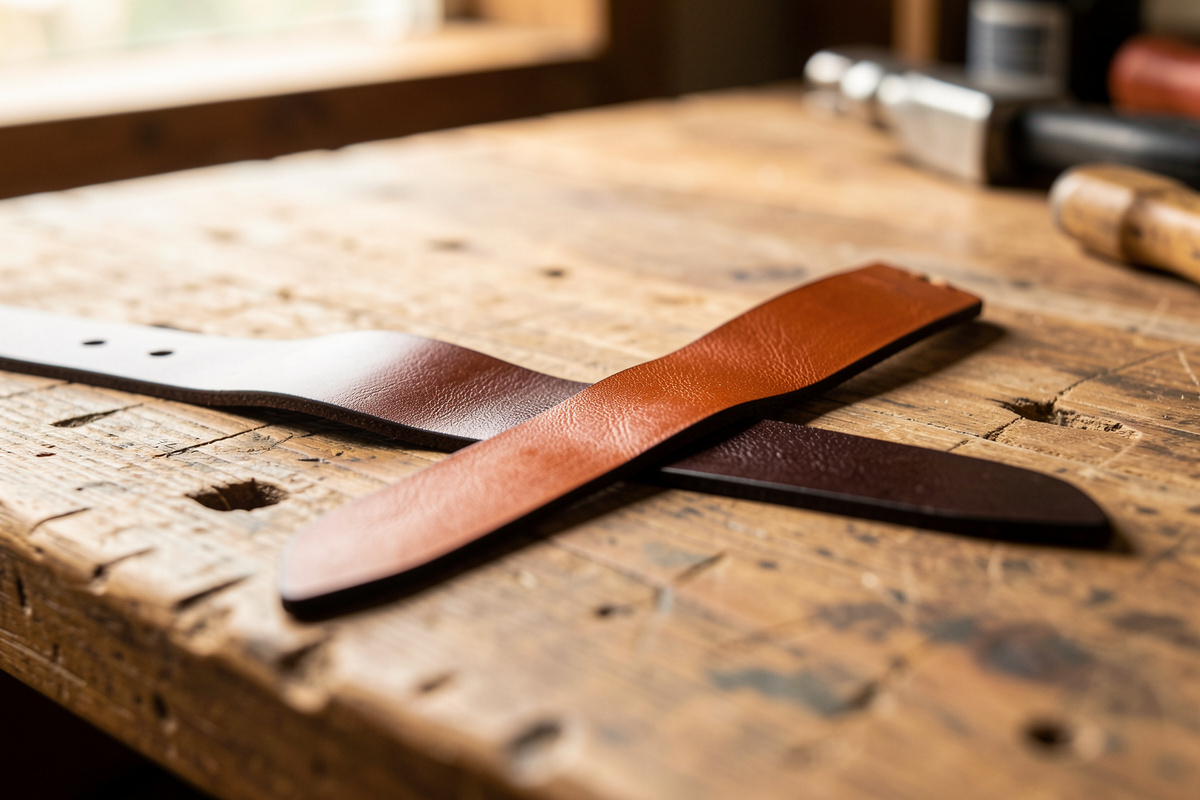
Full-grain leather has the natural outer surface of the hide intact — every pore, scar, and grain pattern preserved. Over 6-24 months of pocket use, full-grain develops patina: the surface darkens at flex points, polishes smooth where it rubs against fabric, and absorbs the natural oils from your hands. Top-grain has been sanded smooth before finishing and lacks the surface character. Corrected-grain has had the surface entirely sanded off and replaced with stamped texture.
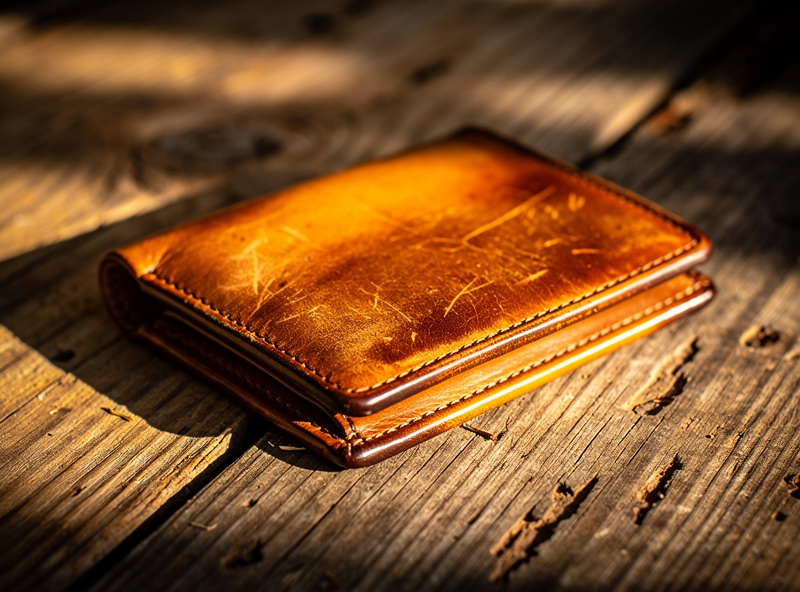
What you give up with each grain step down:
- Full-grain: Patina development, natural surface, longest lifespan (10-20+ years). Premium per-square-foot cost.
- Top-grain: Uniform appearance, no patina, smooth from day 1. Common in mid-tier wallets at fashion brands.
- Corrected-grain: Identical-looking surface across the entire hide, plastic-feeling, breaks down within 2-5 years. Common in mass-market wallets.
- Bonded leather: Reconstituted leather scraps glued together. Avoid entirely — falls apart in months.
- “Genuine leather”: Marketing term that almost always means corrected-grain or bonded leather. Avoid.
The patina question matters because most people who care about leather wallets specifically want the patina aging. Full-grain produces it; nothing else does. Pull-up leather — the fat-impregnated veg-tan subcategory that lightens dramatically at flex creases — produces the fastest and most visible patina of all full-grain variants; how that aging works and how to care for it is in the pull-up leather patina guide. If you do not care about patina, top-grain is acceptable and slightly less expensive. Bonded leather and “genuine leather” are not real options for serious wallet making.
Vegetable Tan vs Chrome Tan for Wallets
Vegetable-tanned leather is the wallet standard because it accepts dye, burnishes to a glass-like edge, develops patina, and feels firm enough to hold card slots in shape. Chrome-tanned leather is softer, more flexible, and more water-resistant, but does not burnish well and develops less patina. Most premium handmade wallets use veg-tan; most mass-market wallets use chrome-tan.
Trade-offs of each tannage:
- Vegetable-tan (veg-tan): Accepts dye, burnishes cleanly, develops patina, holds shape. Stiffer initially but breaks in over months.
- Chrome-tan: Softer, more flexible from day 1, more water-resistant. Does not burnish to a glass edge; develops less character.
- Combination tan (chrome-followed-by-veg-retan): Middle ground. Some patina development, somewhat better burnishing than pure chrome.
- Brain-tan, oil-tan, fish-skin: Specialty tans for specific aesthetics. Niche choices, not standard wallet material.
For traditional wallet making — saddle stitch, burnished edges, dyed surface, leather-character aesthetic — veg-tan is the clear answer. For modern flexible wallets that need to fold tightly without breaking — chrome-tan or combination is appropriate. Most US-made handmade wallets in 2026 use veg-tan; most European brands use chrome-tan or combination.
Weight Selection: Why 3-4 Oz Is the Sweet Spot
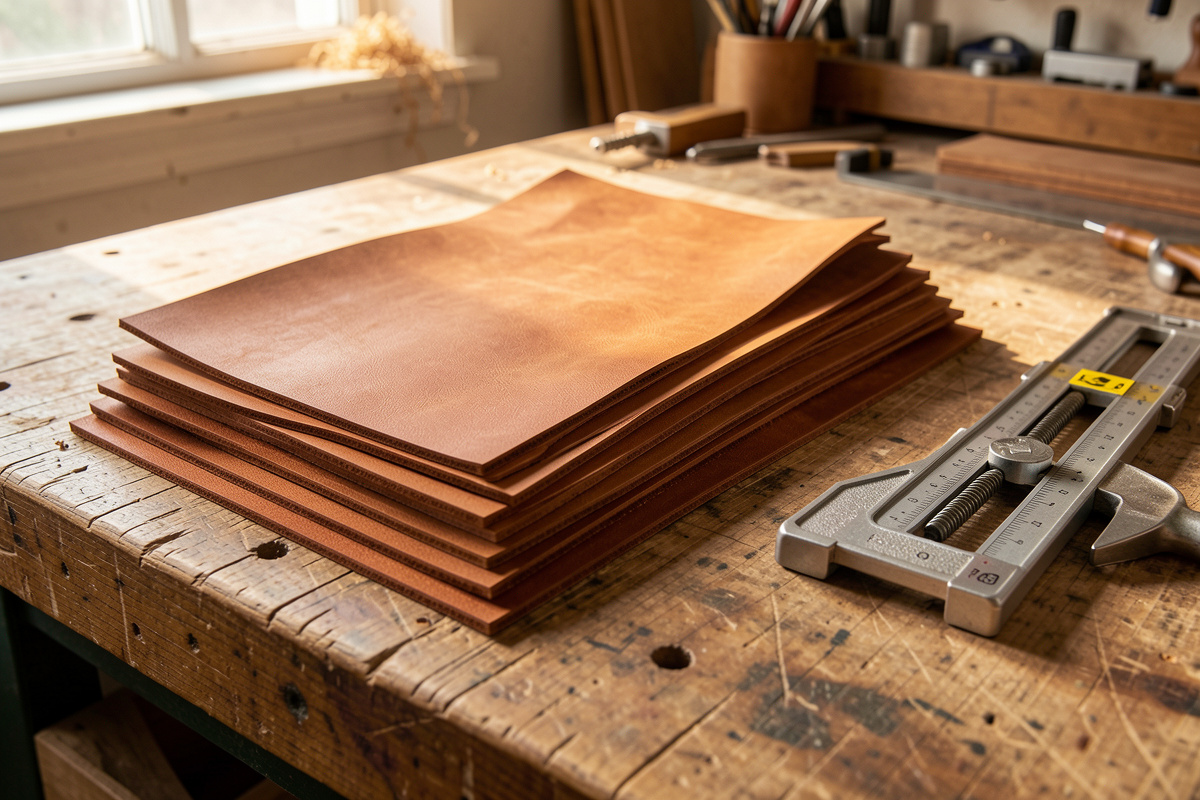
3-4 oz leather (1.2-1.6mm thick) is the universal wallet weight because it is thick enough to feel substantial in the hand and hold card slot shape, thin enough to fold without bulk in the pocket, and accepts saddle stitch with standard 4mm chisel spacing. Weights above 5 oz produce thick, stiff wallets that will not fit standard pockets. Weights below 2 oz feel cheap and tear at stitch lines. For a full conversion chart covering every common leather weight from 1 oz through 12 oz — with millimeter equivalents, caliper targets, and project suitability — see the leather thickness oz chart.
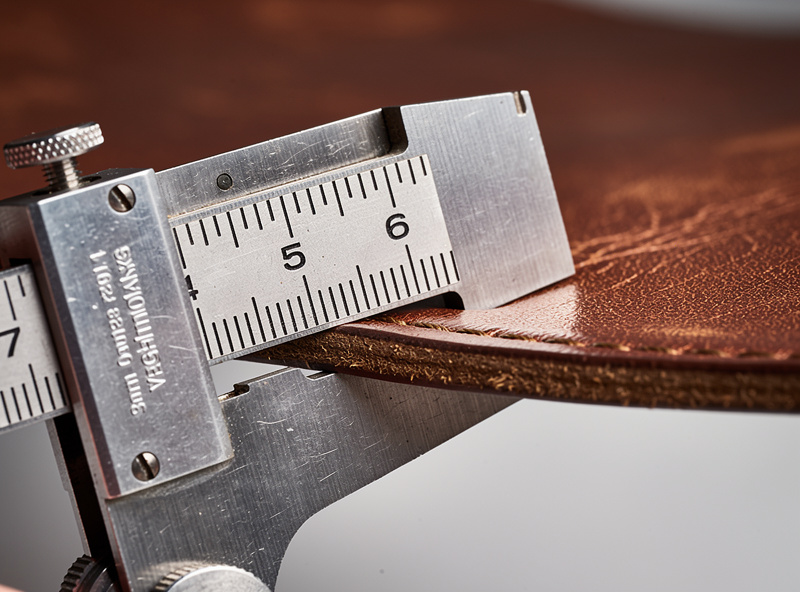
Weight breakdown for wallet construction:
- 2 oz (0.8mm): Too thin for primary wallet body. Acceptable as interior card slot lining where bulk reduction matters.
- 3 oz (1.2mm): Light wallet weight. Bifold and trifold wallets, slim card holders. Folds easily without bulk.
- 4 oz (1.6mm): Medium wallet weight. The most-used weight for hand-made wallets in 2026.
- 5 oz (2.0mm): Heavier wallets. Long wallets, money clips, leather pouches. Substantial but starting to feel thick in pockets.
- 6+ oz (2.4mm+): Belt and saddle weight. Too thick for most pocket wallets; appropriate for travel pouches and dedicated belt wallets.
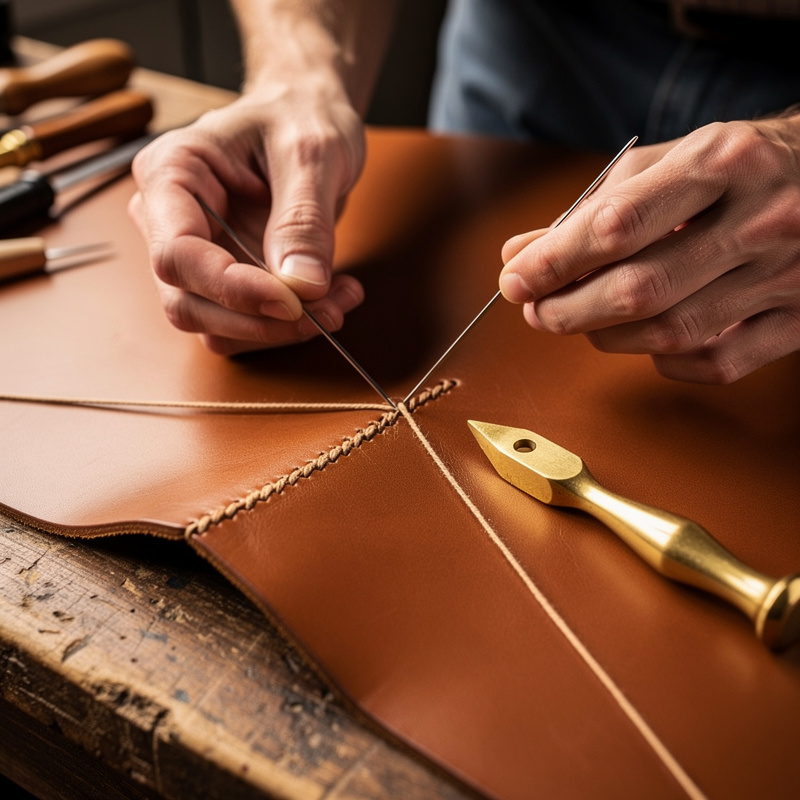
The trick at the 3-4 oz range is splitting (skiving) the edges. Many handmade wallets use 4 oz across most of the body but skive the edges to 2 oz where pieces fold over each other. This gives the wallet substantial feel without making it pocket-bulky. Read about skiving technique in our how to saddle stitch leather guide.
Recommended Tanneries and Where to Buy
A veg-tan craft panel in the 2-3 oz range covers interior pocket leather without needing to buy a full side. Three tanneries dominate premium US wallet leather: Hermann Oak (Missouri, since 1881), Wickett & Craig (Pennsylvania), and Horween (Chicago, founded 1905, source of Shell Cordovan). European premium options include Tärnsjö (Sweden) and Conceria Walpier (Italy). Each has distinct character, color range, and per-square-foot pricing.
Tannery comparison:
- Hermann Oak: Premium veg-tan, the most-recommended for traditional wallet making. Heavy-bodied with good fiber density. 12-18 dollars per square foot.
- Wickett & Craig: Long-standing veg-tan tannery, bridle and harness leather specialists. Slightly more flexible than Hermann Oak. 10-15 dollars per square foot.
- Horween: Two very different tannages under one name — Chromexcel is chrome-tanned then vegetable-retanned and hot-stuffed, while Shell Cordovan is straight vegetable-tanned over a six-month process, not chrome at all. The “sport luxury” of US leather. 15-25 dollars per square foot for Chromexcel; 70-150 for Cordovan.
- Maverick Leather Co.: Distributor of US tanneries plus their own offerings. Smaller piece sizes for hobbyists. Approachable for smaller projects.
- Tärnsjö Sweden: Premium European veg-tan, distinctive matte finish. 18-30 dollars per square foot.
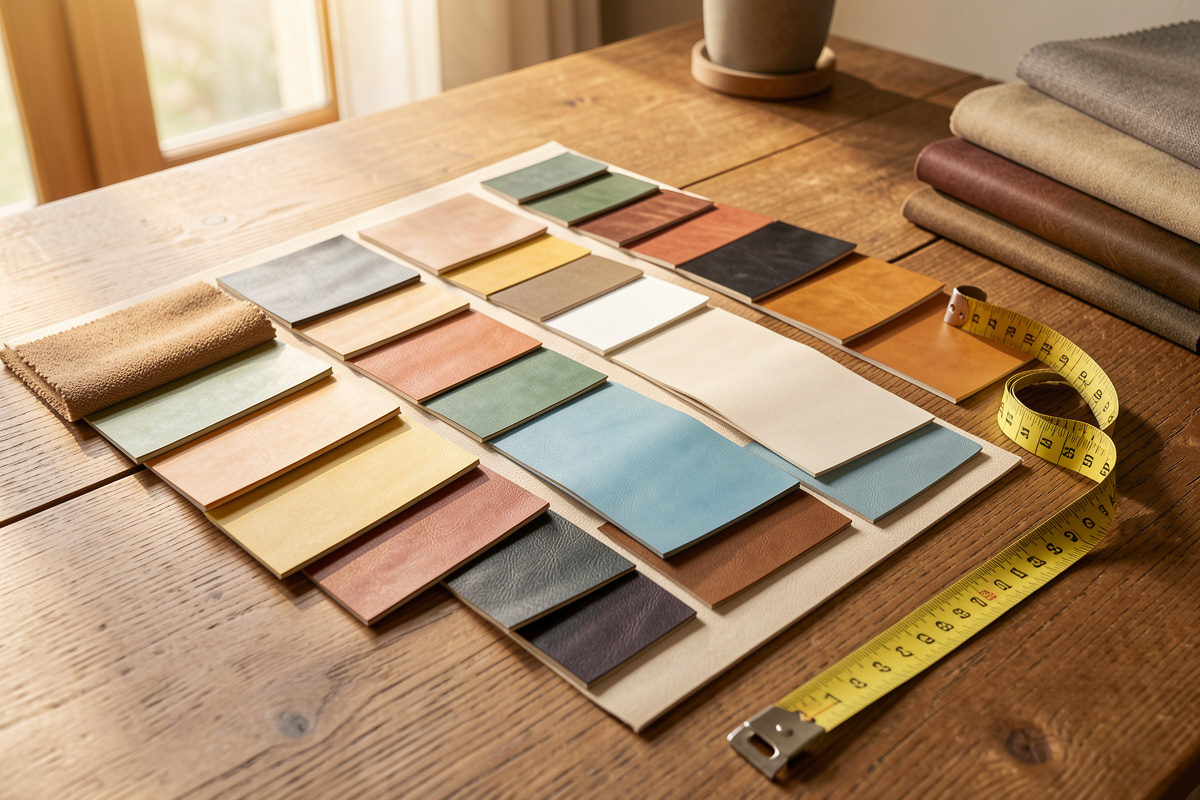
- Walpier (Italy): Buttero is the famous color line — bright saturated dyes that age beautifully. 15-25 dollars per square foot.
For first wallets, buy a single shoulder of Hermann Oak or Wickett & Craig veg-tan in 3-4 oz weight at 35-65 dollars from Maverick Leather or Springfield Leather. That single shoulder produces 8-15 wallets depending on cut efficiency. Read about specific buying strategies in our leatherworking starter kit guide.
Common Wallet Leather Selection Mistakes
Five mistakes show up in nearly every newcomer’s first wallet leather purchase: buying “genuine leather” or “real leather” without grain spec, choosing too-thick 6-8 oz leather, picking chrome-tan when planning to dye, ordering scrap pieces instead of a continuous shoulder, and confusing oz/mm weight conventions.
Specific mistakes and fixes:
- “Genuine leather” purchases: Marketing term covering corrected-grain and bonded leather. Insist on “full-grain vegetable-tanned” or buy elsewhere.
- 6-8 oz leather for wallets: Far too thick. Wallet pieces fold over twice in some places and the resulting bulk does not fit pockets.
- Chrome-tan for dyed projects: Chrome-tanned leather resists penetration by water-based and alcohol-based dyes; finished color stays patchy.
- Scrap leather mix bags: Inconsistent thickness, color, and grain across pieces. Plan a wallet, then realize the pieces do not match.
- Ounce/mm confusion: 1 oz ≈ 0.4mm. So 4 oz ≈ 1.6mm; 8 oz ≈ 3.2mm. Always confirm both numbers when ordering.
- Skipping the surface check: Even premium tanneries occasionally produce hides with surface defects. Order extra and inspect before cutting.
- Ignoring the leather smell: Premium veg-tan smells of natural tannins; chemical-y or sour smells indicate low-quality or aged stock.
The reliable buying habit is to start with a 12×12-inch piece of premium tannery 3-4 oz veg-tan at 25-40 dollars before committing to a full shoulder. The smaller piece teaches what good leather feels like; the full shoulder commits you to a tannery and weight choice for years. Read about pattern selection in our how to make a leather card holder piece.
Wallet Leather Thickness: the oz Chart by Part
Wallet leather weight is not one number for the whole wallet — each part calls for a different thickness. Using 4 oz everywhere produces a wallet that will not close flat; using 2 oz everywhere produces a wallet that tears at the card slots. The oz-per-part breakdown below is what I use on every bifold and trifold build.
| Wallet Part | Oz Weight | mm Thickness | Why |
|---|---|---|---|
| Exterior body panel | 4-5 oz | 1.6-2.0 mm | Structural rigidity, holds fold shape, survives pocket abrasion |
| Interior card pocket faces | 2-3 oz | 0.8-1.2 mm | Thin enough to stack 4-6 card slots without bulk |
| Card pocket dividers | 1-2 oz | 0.4-0.8 mm | Minimal bulk between cards; can be goat or kangaroo |
| Bill compartment lining | 2 oz | 0.8 mm | Smooth surface for bills to slide; adds no thickness to fold |
| Stitch reinforcement strip | 3-4 oz | 1.2-1.6 mm | Matches body weight where stitch line carries load |
The split between exterior and interior is the most important number on this chart. A wallet with a 4 oz exterior and 2 oz card slots folds flat and holds 8 cards comfortably. The same wallet with 4 oz everywhere is nearly an inch thick folded — it sits in the pocket like a brick and the cards jam against each other. This is why a skiving knife is essential wallet tooling: you skive the interior-facing side of exterior panels down to 2-3 oz at the fold lines, and you buy card-slot leather already at 2 oz instead of splitting it yourself.
Goat and kangaroo lining leather at 1-2 oz is the secret to thin wallets that still feel premium. Both pack incredible tensile strength into a thin hide — kangaroo at 1 oz out-pulls cowhide at 3 oz — which is why high-end slim wallets use roo lining even though the material costs more per square foot. For a first build, a single 3-4 oz veg-tan side covers the exterior and pocket faces if you skive the pockets to 2 oz. Buy lining leather separately only once you know the wallet pattern fits.
For the full behavior comparison — tooling, burnishing, dye penetration, water resistance — the chrome tan vs veg tan guide breaks down what each chemistry does and which projects each one owns.
Frequently Asked Questions
What is the best thickness leather for a wallet?
3-4 ounces, which is 1.2-1.6mm thick. Thick enough to feel substantial and hold card slot shape, thin enough to fold without pocket bulk. Below 2 oz feels cheap and tears at stitch lines; above 5 oz produces wallets too thick to fit standard pockets.
Should I use vegetable-tan or chrome-tan for my wallet?
Vegetable-tan for traditional handmade wallets that need dyed colors, burnished edges, and patina aging. Chrome-tan for modern flexible wallets that need water resistance and immediate softness. Most premium handmade wallets use veg-tan because it accepts hand-finishing better.
Is full-grain leather necessary for a wallet?
For lifetime wallets that develop patina — yes. Full-grain has the natural surface intact and ages with character. Top-grain has been sanded smooth and stays uniform but lacks aging character. Avoid corrected-grain and bonded leather entirely; both fail within years.
Where can I buy quality wallet leather online?
Maverick Leather, Springfield Leather, and Buckle Guy stock Hermann Oak, Wickett & Craig, and Horween at hobbyist quantities. For European leathers, Walpier-branded distributors and Conceria Walpier handle international shipping. Avoid Amazon-only brands without specified tanneries.
How much leather do I need for one wallet?
A bifold wallet uses about 0.4-0.6 square feet of leather; a card holder needs 0.2-0.3 square feet. A full single shoulder (8-15 square feet) produces 12-25 wallets. Scrap pieces of 1-2 square feet make 2-4 wallets — perfect starter quantity.
Why are some wallet leathers stiffer than others?
Vegetable-tanned leather is initially stiffer than chrome-tanned because of the longer fiber bonds in veg-tan. Both soften with use as the fibers compress and absorb skin oils. Some tanneries (Hermann Oak) produce firmer veg-tan than others (Wickett & Craig). For softer feel from day 1, choose chrome-tan or combination-tan.
Related Articles
- Full Grain vs Top Grain Leather
- How to Make a Leather Card Holder
- Leatherworking Starter Kit
- How to Saddle Stitch Leather
- How to Burnish Leather Edges With Tokonole