Most “is this real leather?” confusion comes from one trick: the labels are written to mislead you. “Genuine leather,” “bonded leather” and “PU leather” sound like they are…
Most “is this real leather?” confusion comes from one trick: the labels are written to mislead you. “Genuine leather,” “bonded leather” and “PU leather” sound like they are all describing real leather of different qualities — and only one of them reliably is. After years of handling hides and also picking apart cheap goods to see what they are actually made of, I can tell you the differences are easy to feel once you know the four or five tests, and almost impossible to spot from a product photo. This guide is the hands-on version: how to tell real leather from bonded and from synthetic (PU/PVC), at the bench or in a shop, with your own senses.
One thing up front to keep this from overlapping with grain grades: this is about real versus not-real, not full-grain versus top-grain. If you want the differences between the grades of genuine leather, that is a separate question covered in my full grain vs top grain guide. Here we are sorting real from bonded from fake.
The four materials you are trying to tell apart
The confusion clears the moment you know what each label actually means:
- Real (full hide) leather — an actual animal hide, tanned. One continuous piece of natural material. This includes full-grain, top-grain and genuine-leather grades (yes, “genuine leather” is real, just usually a lower grade with the surface corrected).
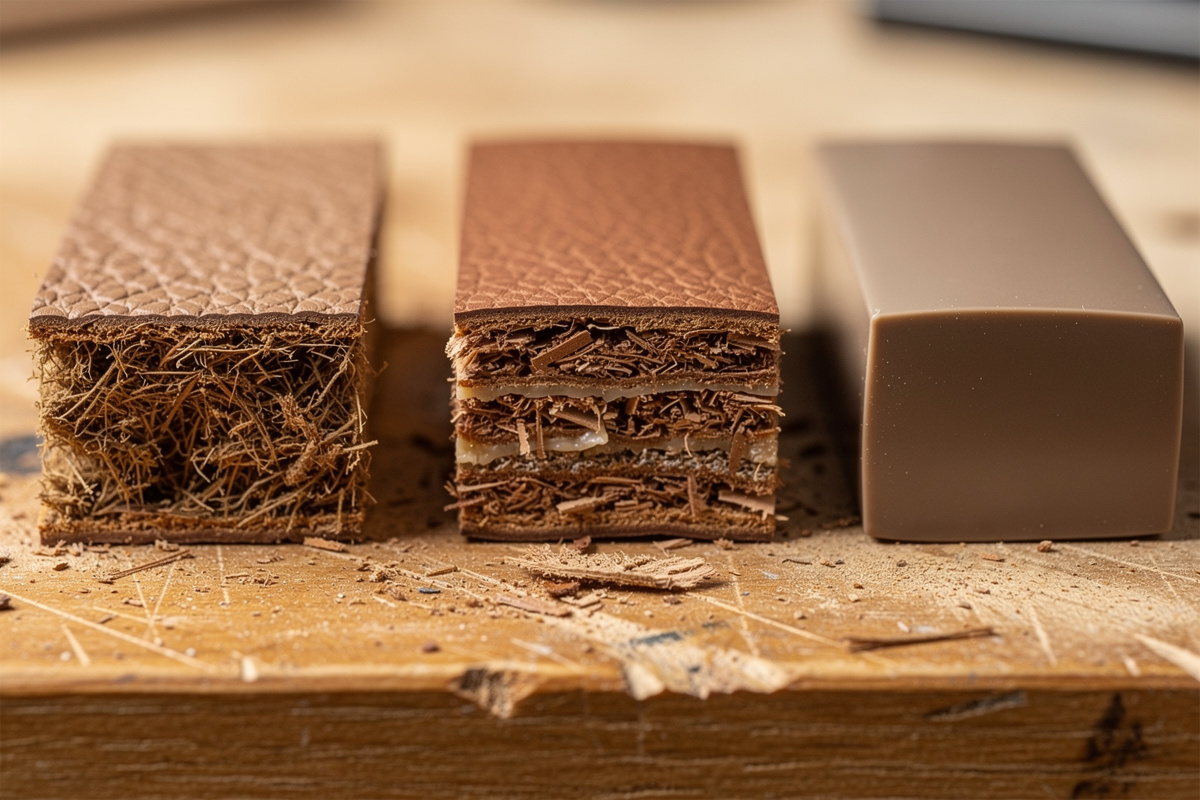
- Bonded leather — leather scraps and dust shredded, mixed with polyurethane/latex binder, and rolled out onto a backing like a sheet of chipboard. It contains some leather, but it is essentially a leather-particle composite with a fake printed surface. It delaminates and flakes with age.
- PU leather (faux/vegan) — a fabric or backing coated with polyurethane and embossed with a fake grain. No animal hide at all. Sometimes honestly sold as “vegan leather.”
- PVC / vinyl — older-style plastic upholstery material, fully synthetic, stiffer and more plasticky than PU.
“Genuine leather” is the label that trips people up most: it is real leather, but it is a grade term, not a quality boast, and marketers lean on it to make a lower grade sound premium. The real fakes to catch are bonded and PU.
The tests that actually work
No single test is foolproof, but stack two or three and you will know. Here is what I actually do, roughly in order of how reliable and how non-destructive they are.
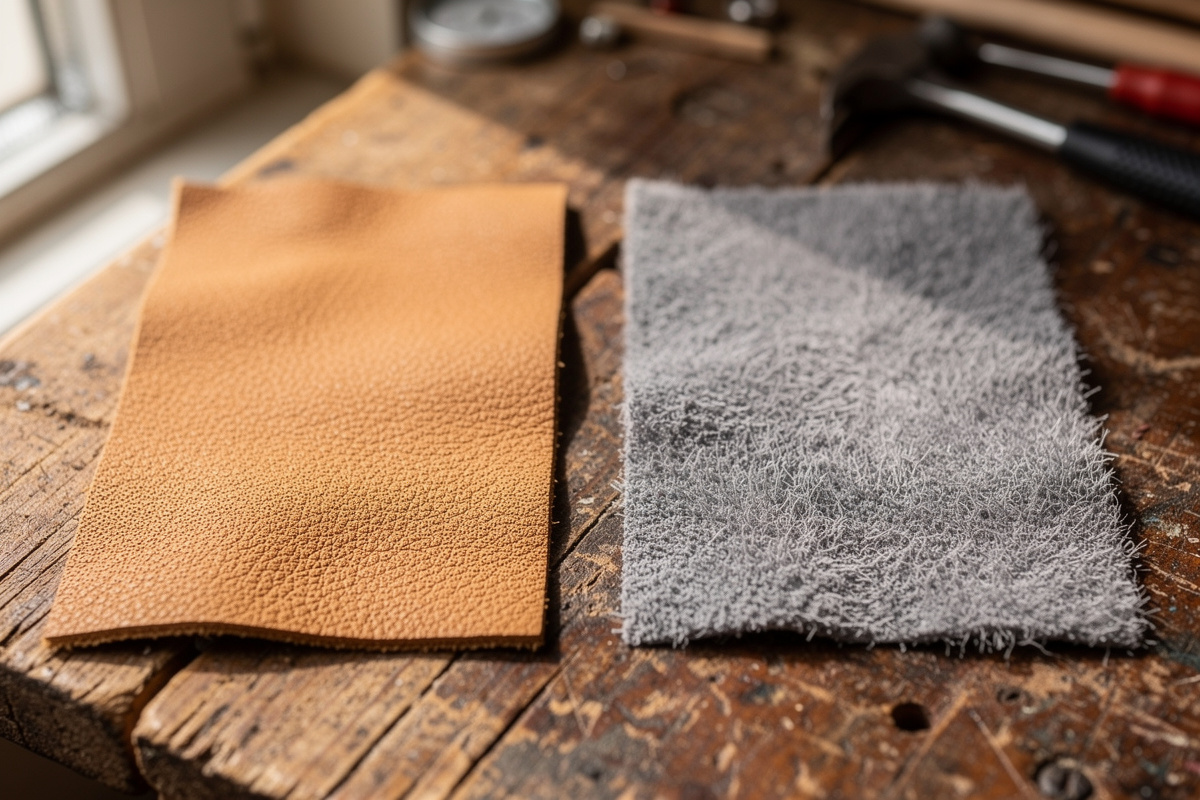
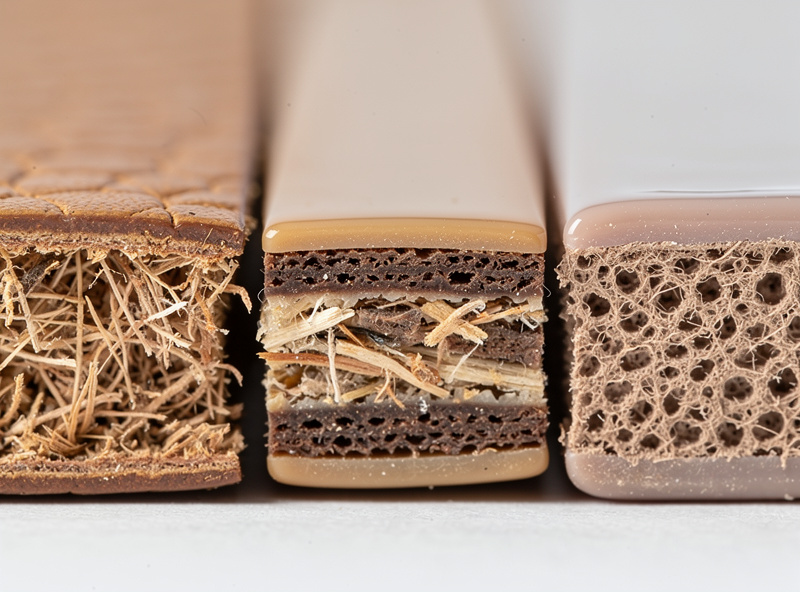
- Look at the cut edge. This is the single best tell. Real leather shows a fibrous, fuzzy cross-section — a continuous mass of fibers. Bonded leather shows a flat backing layer with a thin colored skin on top, like a laminate. PU shows fabric backing under a plastic coating. The edge does not lie the way the face can.
- Check the grain regularity. Real leather’s grain is irregular — pores, slight variation, the occasional natural mark. Fake grain (PU, bonded) is a repeating, too-perfect printed pattern. Find the repeat and you have found the fake.
- Press and watch it wrinkle. Real leather creases and wrinkles organically when you press it, and the pores stretch. PU tends to wrinkle more uniformly and spring back flatter and more plasticky.
- Smell it. Real leather has that unmistakable leather smell. PU and bonded smell of plastic or chemicals, or are scented to fake it. Not definitive on its own, but a strong supporting signal.
- Feel the temperature and texture. Real leather warms to your hand and feels slightly inconsistent; synthetics feel cool, even, and slick at first touch.
- The water-drop test (use with care). A drop of water absorbs into and darkens unfinished real leather; it beads on plastic-coated PU. This only works on unfinished/unsealed leather — heavily finished real leather also beads, so it is a weak test on its own.
The destructive tests (burning a corner, which makes real leather smell of burnt hair and synthetics melt into plastic beads) work but obviously ruin the item, so I only use the edge, grain, press and smell tests on anything I am not willing to damage.
Real vs bonded vs PU at a glance
| Test | Real Leather | Bonded Leather | PU / Faux |
|---|---|---|---|
| Cut edge | Fibrous, fuzzy throughout | Backing + thin colored skin | Fabric backing + plastic coat |
| Grain | Irregular, natural pores | Printed, repeating | Printed, repeating |
| Smell | Leather | Plastic / faint leather | Plastic / chemical |
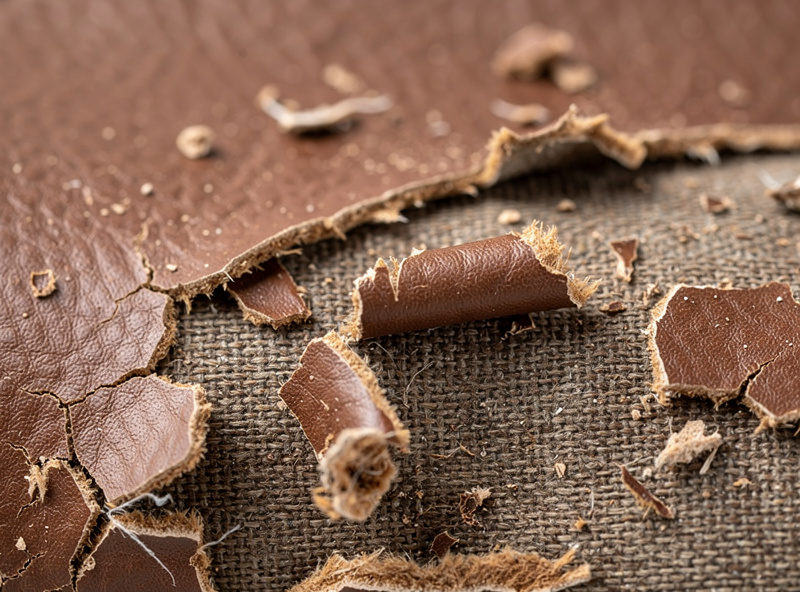
| Aging | Patinas, lasts | Flakes and delaminates | Cracks and peels |
| Contains real hide? | Yes (one piece) | Scraps + binder | None |
| Honest label | Full/top-grain, genuine leather | Bonded leather | PU / vegan / faux leather |
Why bonded leather is the one to avoid
I am hard on bonded leather specifically because it is sold as if it were a budget real leather when it behaves worse than honest fake. Because it is leather dust glued to a backing with a printed plastic surface, it has the durability of neither real leather nor good PU: within a few years the surface skin flakes and peels off the backing, and there is no fixing it — you cannot recondition particle board. An honestly-labeled PU bag will often outlast a “bonded leather” one. If a product trumpets “made with real leather!” but the price is suspiciously low, that phrasing is frequently the tell that it is bonded.
Vegan and faux leather: the honest version
Not all synthetic is dishonest. PU sold openly as “vegan leather” or “faux leather,” with no pretense of being hide, is a legitimate material with real uses — it is consistent, often cheaper, and fine for plenty of goods. My objection is never to PU itself; it is to PU or bonded being passed off as real leather through weasel-word labels. As a buyer, the rule is simple: if it is clearly labeled PU/vegan and priced like it, that is honest. If it is labeled “genuine leather” at a fake-leather price, or “bonded leather,” run the edge and grain tests before you trust it.
A small kit for testing leather
You mostly test with your own eyes, hands and nose — but two cheap things help.
Disclosure: LeatherCraftHaven is reader-supported. As an Amazon Associate I earn from qualifying purchases made through links in this article, at no extra cost to you. I only point to gear I actually use or would buy for my own bench.
A lighted magnifier loupe makes the printed-grain repeat and the laminated edge obvious in seconds — it is the fastest way to confirm a fake. And the best way to train your hands is to own a piece of the real thing to compare against, so a small full-grain leather sample on the bench gives you a reference edge and grain to hold a suspect item against.
Where this sits in choosing leather
Telling real from fake is step zero; once you know it is real, the next questions are grade and tannage. My full grain vs top grain guide sorts the grades of genuine leather, the chrome tan vs veg tan guide covers the tannage that decides behavior, and the types of leather overview puts the whole authenticity-grade-tannage picture together.
Frequently Asked Questions
How can you tell real leather from fake?
Stack two or three quick tests. Look at the cut edge — real leather is fibrous and fuzzy throughout, while fakes show a backing layer under a thin colored skin. Check the grain for a repeating printed pattern (a fake tell) versus irregular natural pores. Add the smell test (leather versus plastic) and a press test, and you will know without damaging the item.
Is genuine leather real leather?
Yes — genuine leather is real leather, but it is a grade term, not a quality boast. It usually means a lower grade with a corrected, refinished surface. Marketers lean on the word genuine to make a budget grade sound premium, which is why people confuse it with fake. The real non-leathers to catch are bonded and PU.
Is bonded leather real leather?
Only partly, and it is the material I would avoid. Bonded leather is leather scraps and dust shredded and glued to a backing with a printed plastic surface. It contains some leather but behaves like neither real leather nor good synthetic — the surface flakes and delaminates within a few years and cannot be repaired. An honestly-labeled PU item often outlasts it.
What is the difference between PU leather and real leather?
PU leather is a fabric or backing coated with polyurethane and embossed with a fake grain — there is no animal hide in it at all. Real leather is an actual tanned hide. PU is consistent, often cheaper, and legitimate when sold openly as vegan or faux leather; the problem is only when it is passed off as real through misleading labels.
Does the burn test tell real from fake leather?
Yes, but it is destructive, so save it for scraps. Real leather smells of burnt hair and chars rather than melting; synthetics melt and bead into plastic and smell chemical. Because it ruins the spot you test, rely on the non-destructive edge, grain, press and smell tests for anything you are not willing to damage.
Related Guides
- Types of Leather: Tannage, Grade and Weight
- Full Grain vs Top Grain Leather
- Chrome Tan vs Veg Tan Leather
- Best Leather for Wallets