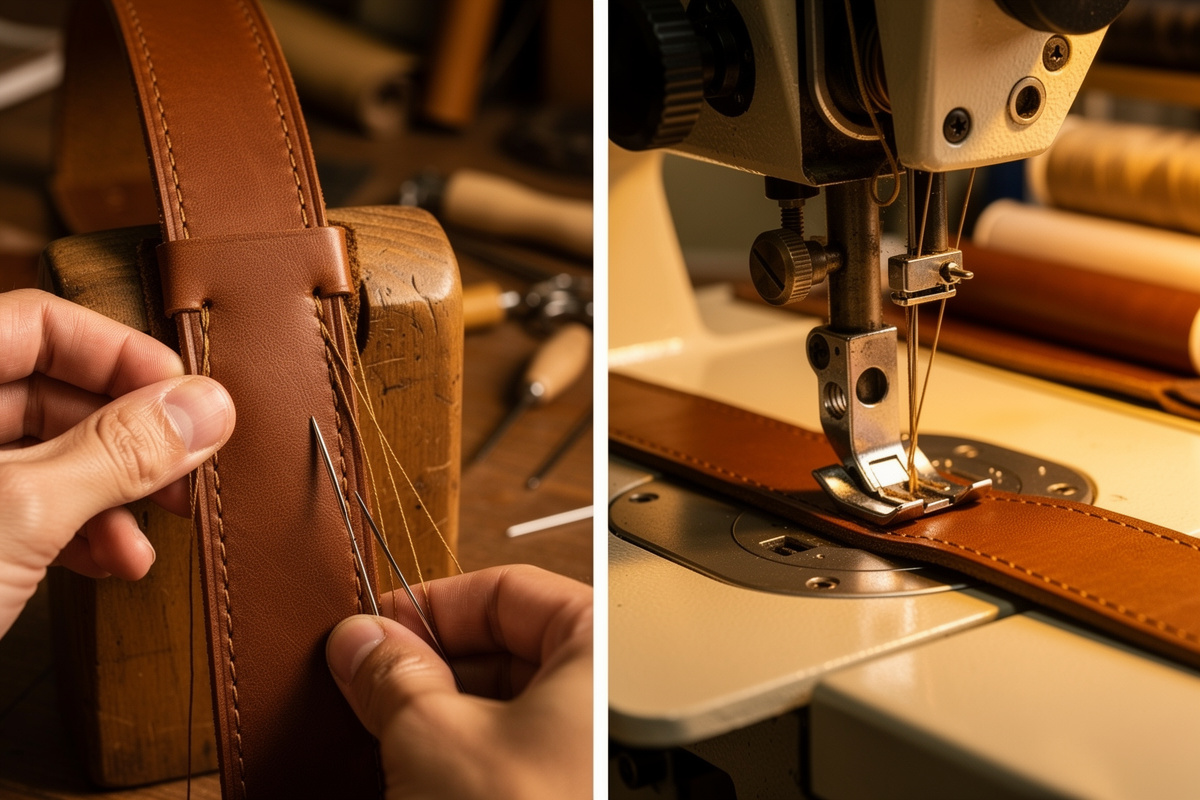
Saddle stitch versus machine stitch comes down to one structural fact: a hand saddle stitch locks every loop independently, so cutting one stitch leaves the seam intact, while…
Saddle stitch versus machine stitch comes down to one structural fact: a hand saddle stitch locks every loop independently, so cutting one stitch leaves the seam intact, while a machine lockstitch chains all loops through a single thread that unravels when cut. The hand stitch is stronger; the machine is faster. Below 30 projects a year, hand wins on real economics.
I hand-stitch everything I build, and I am not romantic about it — it is a deliberate choice backed by how these two seams actually behave under load and over the years. This is the comparison, not the tutorial: if you want the two-needle motion step by step, the saddle stitch tutorial covers that. Here I am answering the question of which method belongs on which piece, and when a sewing machine is worth four figures.
The Structural Difference That Decides Everything
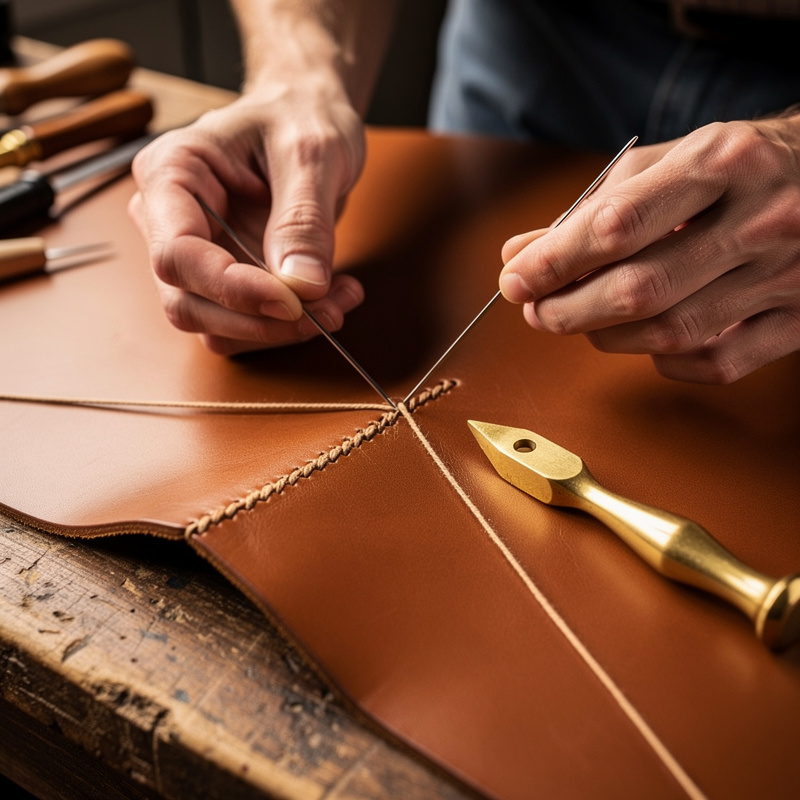
A saddle stitch threads one waxed thread through each hole from both directions with two needles, so every loop crosses and locks inside the leather independently. A machine lockstitch uses two separate threads (a top thread and a bobbin thread) interlocked through one continuous chain. Cut a saddle stitch and the seam holds; cut a lockstitch and it runs.
This is not a subtle distinction. On a saddle-stitched wallet, slicing through one stitch with a knife leaves every neighbouring stitch fully locked, so the seam keeps holding cards. On a machine-stitched wallet, cutting one stitch lets the continuous thread unravel several stitches in either direction until the seam opens — the same “ladder in silk stockings” failure mode Anne Wesley’s own saddle-stitch explainer describes. For anything that takes stress or abrasion — belts, holsters, dog leads, bag handles — that independence is why the hand stitch remains the standard even inside production workshops that own machines.
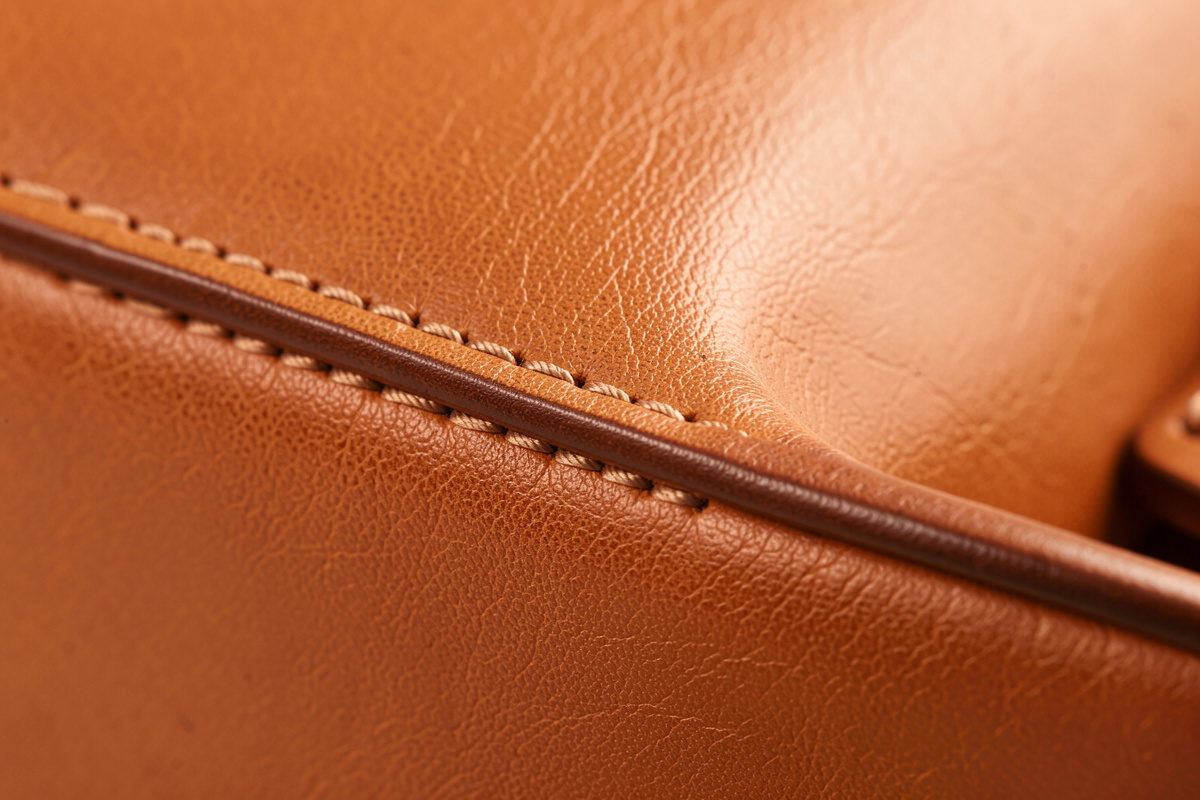
The look can be nearly identical, which is exactly why so many buyers cannot tell them apart. The difference lives in the structure, not the surface. A skilled maker can produce a machine seam that photographs the same as a hand seam, but it will not survive the same damage. When a maker tells you a piece is hand-stitched, the load-bearing strength is the thing you are actually paying for.
Strength and Durability Under Real Use
For durability under stress, the saddle stitch wins decisively because of its independent locking. Each stitch is its own anchor, so a saddle-stitched seam degrades gracefully — one failed stitch does not cascade. A machine lockstitch degrades catastrophically — one failure point can open a run. This is the whole reason high-stress leather goods are hand-stitched.
Think about where leather goods actually fail: the flex points and the load points. A belt bends at the buckle every day; a bag handle carries weight at the attachment; a holster grips a tool against constant draw and reholster. At those points, a single thread that interconnects every loop is a single point of failure. The saddle stitch removes that risk by making each stitch independent, which is why I hand-stitch every stress seam I build regardless of how long the rest of the piece takes.
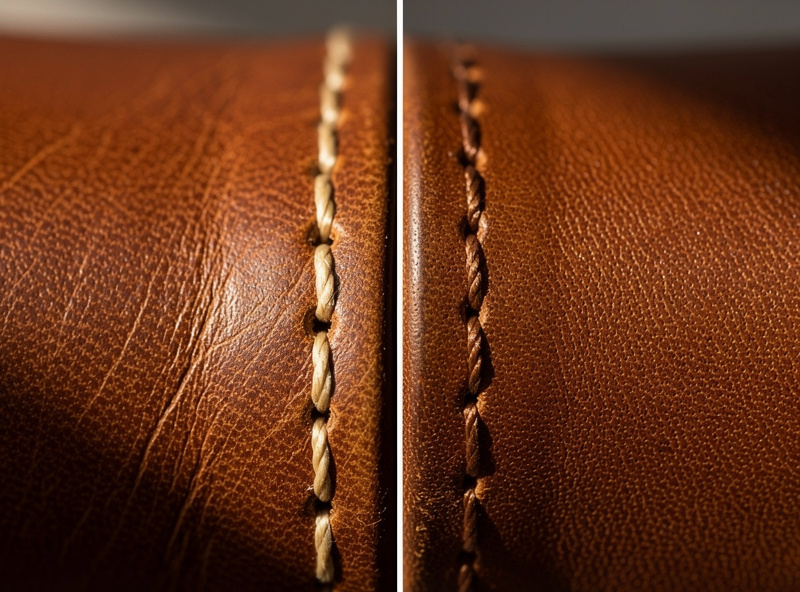
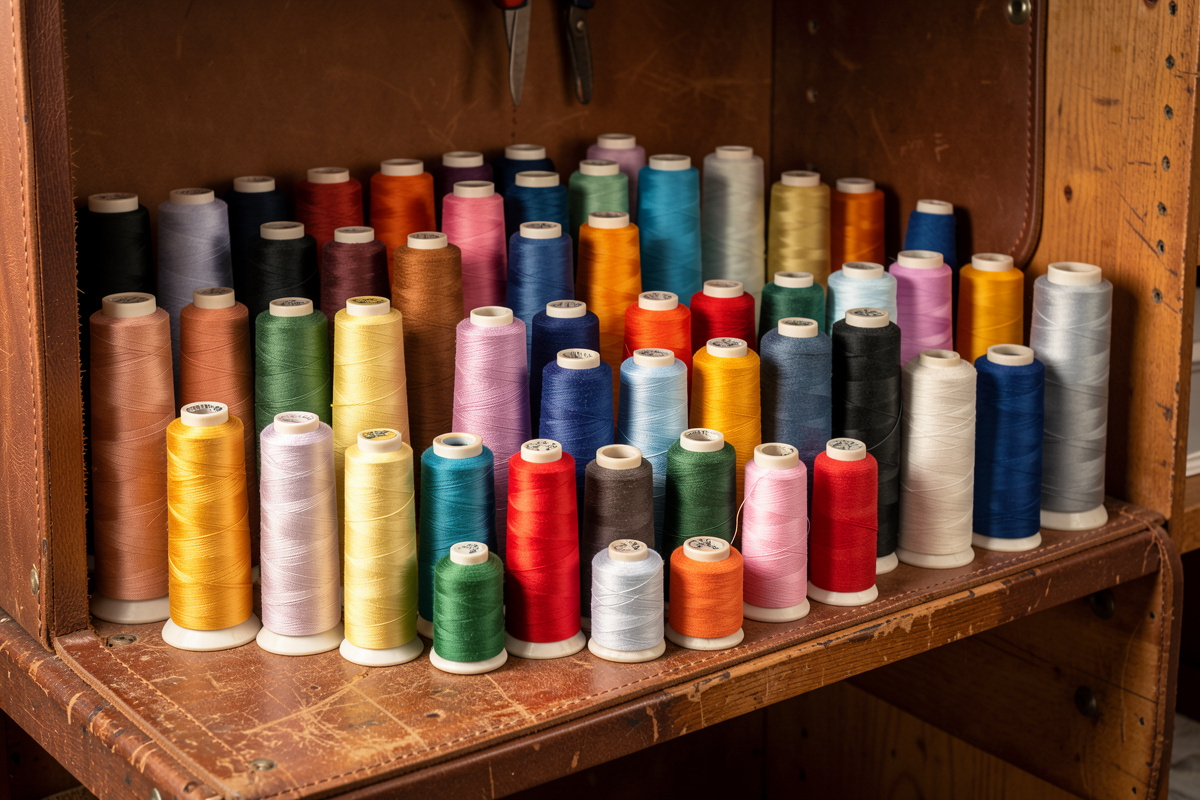
Thread choice compounds the difference. Hand saddle stitching typically uses waxed polyester or linen sized to the hole, while machine work uses bonded nylon in weights like number 138 or 207 that run roughly 0.4 to 0.5 mm in real diameter — thinner than the 0.6 to 0.8 mm hand-stitch thread most wallets and belts use, since a machine relies on tension and needle penetration rather than a hand-pulled lock to seat the stitch. Bonded nylon is strong but degrades faster in UV, so a machine-stitched item left in the sun loses strength sooner — another reason the hand stitch holds up on outdoor gear. The full fiber breakdown is in the leather thread guide.
Speed, and the Economics Nobody Mentions
Machine stitching is dramatically faster per seam: an industrial walking-foot machine runs 200 to 300 stitches per minute, while a beginner hand-stitches 60 to 100 stitches per hour and a practiced maker manages 200 to 300 per hour. Run the math on a bifold wallet’s 96 stitches and the raw sewing time tells the real story: at 200-300 stitches per minute, the machine’s actual needle-down time is well under a minute; a hand-stitcher needs 30 to 90 minutes for the same seam. In practice a wallet’s machine time runs a couple of minutes rather than seconds once you count repositioning the panel through each corner and trimming thread between segments, but the needle itself is only doing a fraction of that work — the real time cost is everything around the stitching, not the stitching.
But raw stitching speed hides the real economics. A leather sewing machine is an industrial walking-foot model (Juki, Cobra, Cowboy) costing 1,200 to 5,000 dollars used, plus the time to learn tension setup on heavy thread, plus the bench space and maintenance. Spread that cost across your output and the machine only earns its keep at volume. For a maker building under roughly 30 projects a year, hand stitching is faster end-to-end once you count the machine’s setup, threading, and learning time against the seams you actually sew.
This is the calculation that decides it, and it is genuinely a numbers question. The handmade leather pricing guide gets into what hand-stitching time is worth in practice — useful context if you’re weighing whether the time a machine would save is worth its four-figure cost for how much you actually build. Buy the machine to solve a volume problem you actually have, not one you imagine having.
Saddle Stitch vs Machine Stitch: Full Comparison
The table below lays the two methods side by side on the attributes that actually drive the decision. Read it as: hand for strength and low volume, machine for speed at scale.
| Attribute | Hand Saddle Stitch | Machine Lockstitch |
|---|---|---|
| Loop structure | Each loop locks independently | All loops chained through one thread |
| If one stitch is cut | Seam holds | Seam can unravel |
| Speed | 60 to 300 stitches per hour | 200 to 300 stitches per minute |
| Equipment cost | Under 100 dollars of hand tools | 1,200 to 5,000 dollars (used industrial) |
| Typical thread | Waxed polyester or linen (mm) | Bonded nylon (no. 138, no. 207) |
| Learning curve | Tension control, days to weeks | Machine setup and tension, weeks |
| Best for | Stress seams, low volume, EDC | Non-stress seams, high volume |
| UV durability | High (polyester thread) | Lower (nylon degrades in sun) |
Notice the equipment row. The barrier to hand stitching is under 100 dollars of chisels, needles, thread, and a pony; the barrier to machine stitching is a four-figure industrial machine. For nearly everyone starting out, that alone settles the question — start by hand, and revisit the machine only if volume forces it.
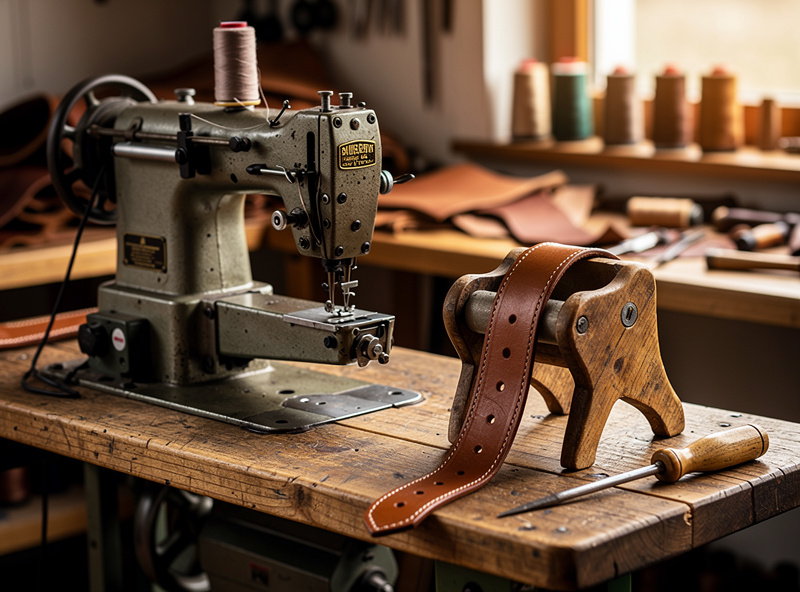
The Hybrid Approach Production Shops Actually Use
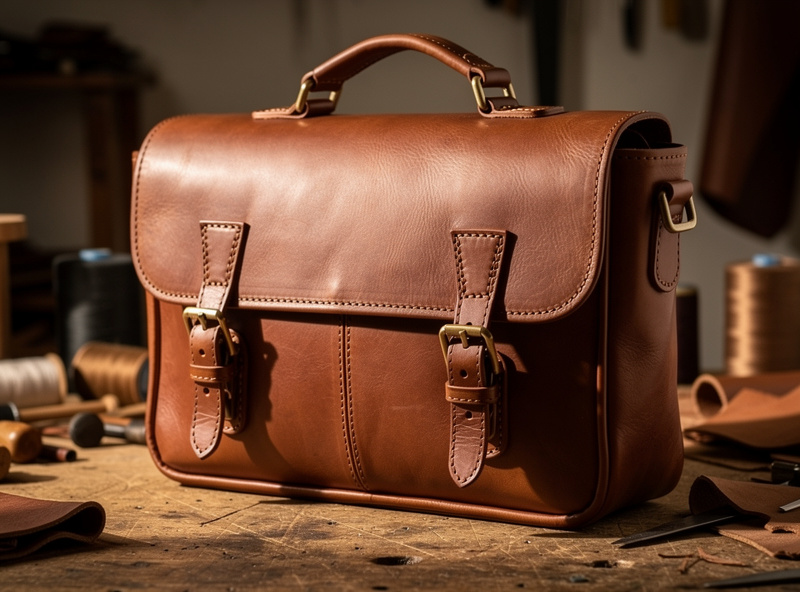
Most production leather workshops do not choose one method — they use both on the same piece. Non-stress seams (bag panels, linings, decorative runs) get machine-stitched for speed, while load-bearing points (handle attachments, belt billets, holster mouths) get hand-saddle-stitched for strength. This hybrid is the professional standard, not a compromise.
The logic is simple once you see it: spend machine speed where strength does not matter, and spend hand-stitch strength where failure would ruin the piece. A messenger bag might be machine-stitched around the body and hand-stitched at the two handle joins where all the weight lands. The buyer gets a piece that is economical to produce and bombproof where it counts. The trade-off is that you need both skill sets and both setups, which is why the hybrid belongs to established makers rather than beginners.
For a hobbyist, the takeaway is not to chase the hybrid early. Master the hand saddle stitch first — it is the skill that makes the strong seams possible and the one you will use on every piece you build. The machine is an optimization you layer on later, if at all. The leather stitching techniques hub lays out where stitching sits in the broader skill stack and what to learn in what order.
As an Amazon Associate I earn from qualifying purchases.
Which Should You Choose?
Choose the hand saddle stitch if you build under roughly 30 projects a year, make anything that takes stress, or want the strongest possible seam — which describes almost every hobbyist and small maker. Choose a machine only when stitching time has become the genuine bottleneck on predictable, repeating production. For everyone else, hand stitching is both cheaper and stronger.
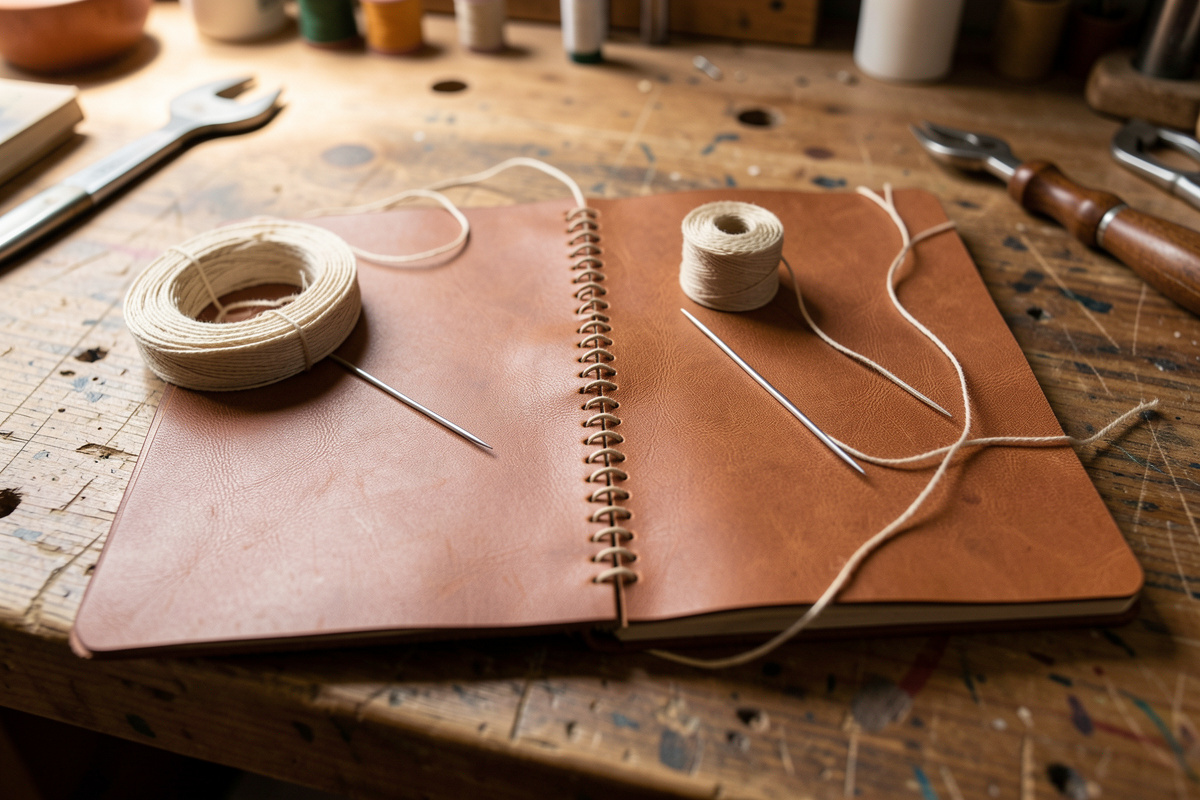
Getting started by hand costs almost nothing relative to a machine. A set of leather stitching chisels, a spool of waxed leather thread, two harness needles, and a stitching pony to hold the work is the entire entry cost, and it stitches a seam stronger than any machine. That is the kit I would buy again first.
If you do reach machine-buying volume, do not sell the hand skill short — keep saddle-stitching your stress points and let the machine handle the long, low-stress runs. The hybrid is where the two methods stop competing and start complementing. The pony-versus-clamp question for holding hand work is covered in the stitching pony vs clamps comparison.
Frequently Asked Questions
Is a saddle stitch stronger than a machine stitch?
Yes. A saddle stitch locks each loop independently, so cutting one stitch leaves the rest of the seam intact. A machine lockstitch chains all loops through one continuous thread, so a single cut can unravel several stitches in either direction. For high-stress leather goods, the hand saddle stitch is the durability standard.
Can you tell the difference between hand and machine stitching on leather?
Often not by sight alone, since a skilled maker can match the look. The difference is structural: hand saddle stitches are slightly irregular and slanted, while machine stitches are perfectly uniform. The real distinction shows under stress, where the hand stitch holds when cut and the machine stitch unravels.
How much faster is machine stitching than hand stitching leather?
Far faster per seam. An industrial machine runs 200 to 300 stitches per minute, while hand stitching runs 60 to 300 stitches per hour. A bifold wallet’s 96 stitches take a machine well under a minute of raw needle time, stretching to a couple of minutes in practice once you count repositioning through corners and trimming thread; a hand-stitcher needs 30 to 90 minutes for the same seam. But machine setup, cost, and learning time erase that speed advantage at low volume.
When is it worth buying a leather sewing machine?
When stitching time is the real bottleneck on predictable, repeating production, typically above roughly 30 projects a year. An industrial walking-foot machine costs 1,200 to 5,000 dollars used plus setup skill, so it only earns its keep at volume. Below that, hand stitching is cheaper and faster end-to-end.
Do professional leatherworkers use machines or hand stitching?
Many use both on the same piece. Non-stress seams like bag panels and linings get machine-stitched for speed, while load-bearing points like handle joins and belt billets get hand-saddle-stitched for strength. This hybrid approach is the production standard, combining machine economy with hand-stitch durability where it matters.
What thread is used for machine stitching leather?
Bonded nylon in weights such as number 138 or number 207, which run roughly 0.4 to 0.5 mm in real diameter — thinner than the 0.6 to 0.8 mm thread most hand-stitched wallets and belts use. It is strong and cheap but degrades faster in UV than the waxed polyester used for hand stitching, so machine-stitched outdoor items lose strength sooner. Machine thread is sized by Tex or ticket number, not millimeters.
Should a beginner learn hand stitching or machine stitching first?
Hand stitching, without question. It costs under 100 dollars in tools, makes the strongest seam, and is the skill every piece relies on. A machine is a four-figure optimization for volume you may never reach. Master the two-needle saddle stitch first, then add a machine later only if production demands it.
Related Articles
- Leather Stitching Techniques: Saddle Stitch and Beyond
- How to Saddle Stitch Leather by Hand
- Best Thread for Leather Stitching
- Stitching Pony vs Stitching Clamps
- How to Price Handmade Leather Goods