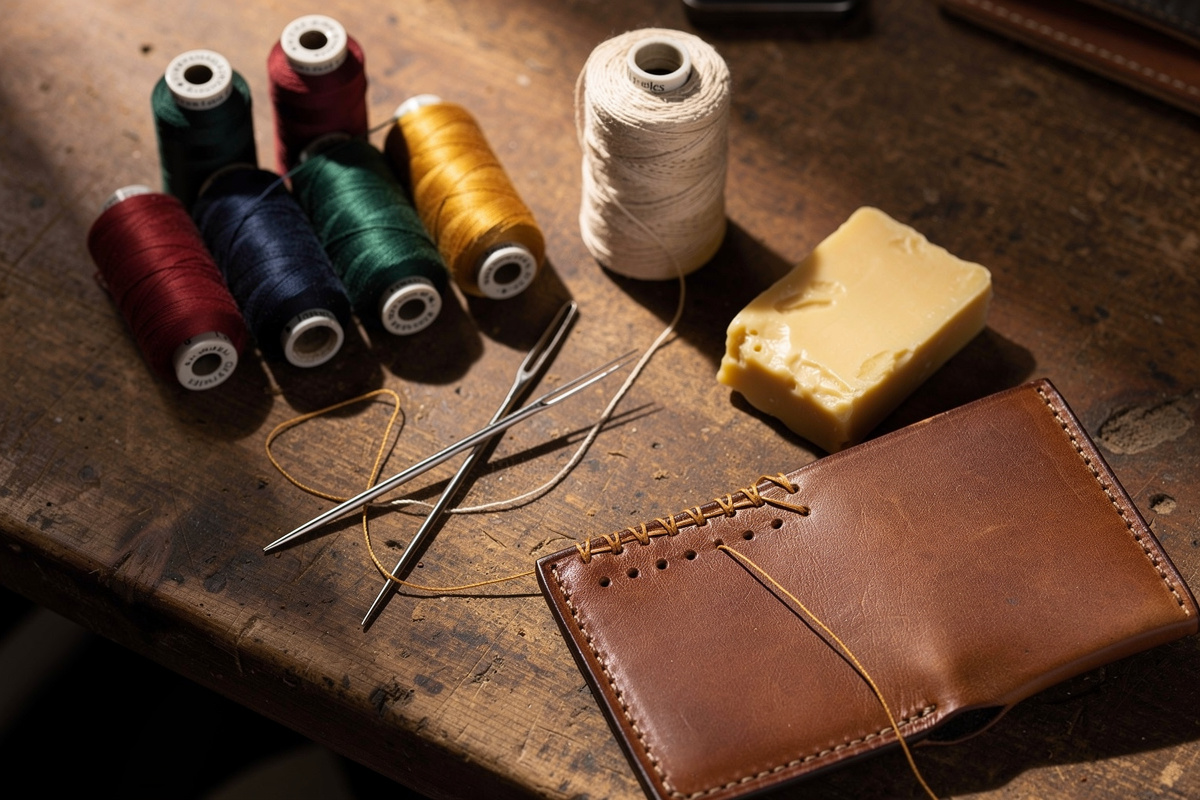
The best thread for leather stitching is braided waxed polyester (Ritza Tiger or Vinymo MBT) for almost every project: it resists abrasion, holds tension without springing back, and…
The best thread for leather stitching is braided waxed polyester (Ritza Tiger or Vinymo MBT) for almost every project: it resists abrasion, holds tension without springing back, and seals with a touch of heat. Waxed linen wins on heritage pieces; bonded nylon belongs on a machine, not in a hand stitch.
I have hand-stitched wallets, belts, and sheaths with all three fibers, and the choice is not really linen-versus-poly the way the forums frame it. It is a question of what the thread has to survive on the finished piece, and how forgiving you want it to be on the bench while you are still learning to pull even tension. This guide is the side-by-side I wish I had read before I wasted a spool of the wrong thread on my first belt.
The Three Fibers That Actually Matter
Leather hand-stitching thread comes in three fibers: polyester (braided, pre-waxed), linen (natural, hand-waxed), and nylon (bonded, round). Polyester is the modern default for strength and abrasion resistance; linen is the traditional fiber that ages into the leather; bonded nylon is primarily a machine thread that hand-stitchers rarely reach for.
The reason this matters is that fiber decides three things at once: how the thread behaves while you stitch, how the seam looks the day you finish, and how it survives five years of a wallet riding in a back pocket. Polyester braid like Ritza 25 “Tiger” thread sits flat in the stitch channel, takes a contrasting color cleanly, and shrugs off the flex-point abrasion that kills lesser threads. Linen is the fiber traditional saddlers used for a century — it is grippy, hand-waxes beautifully with a beeswax block, and develops a patina that reads as genuinely old-world rather than retro. Bonded nylon is strong and cheap, but its springy stretch and slick coating make it fight you on a hand saddle stitch.
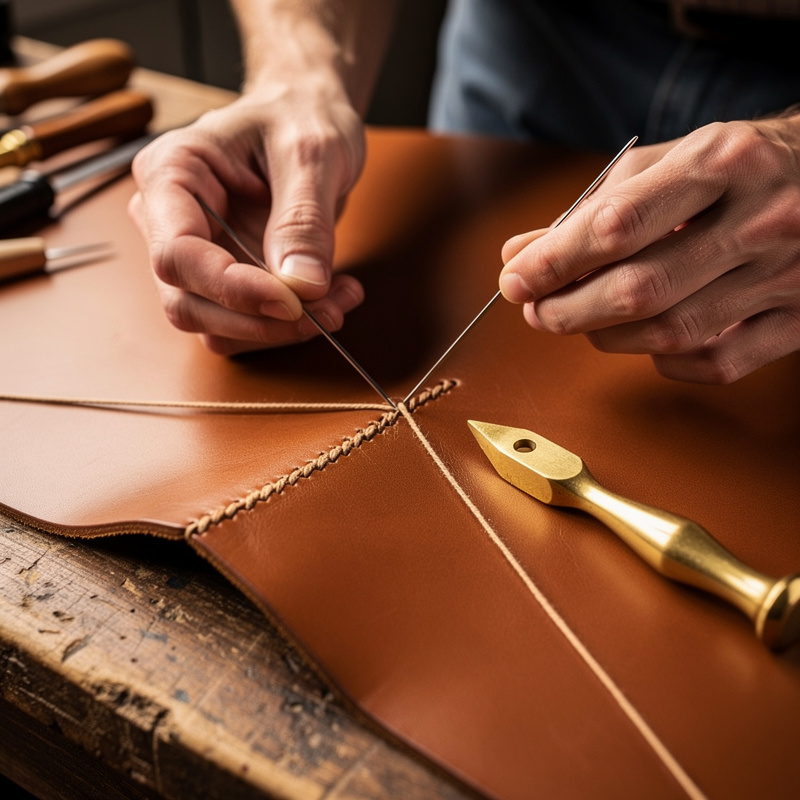
For the mechanics of the stitch those threads pass through, the step-by-step saddle stitch tutorial covers the two-needle motion; this guide is only about what you load onto those two harness needles.
Why Braided Polyester Is My Default
Braided waxed polyester is my default for roughly nine projects out of ten. It has the highest abrasion resistance of the three fibers, the lowest stretch, excellent UV stability, and it heat-seals into a clean melted bead at the seam end. Ritza Tiger and Vinymo MBT are the two brands I keep on the wall.
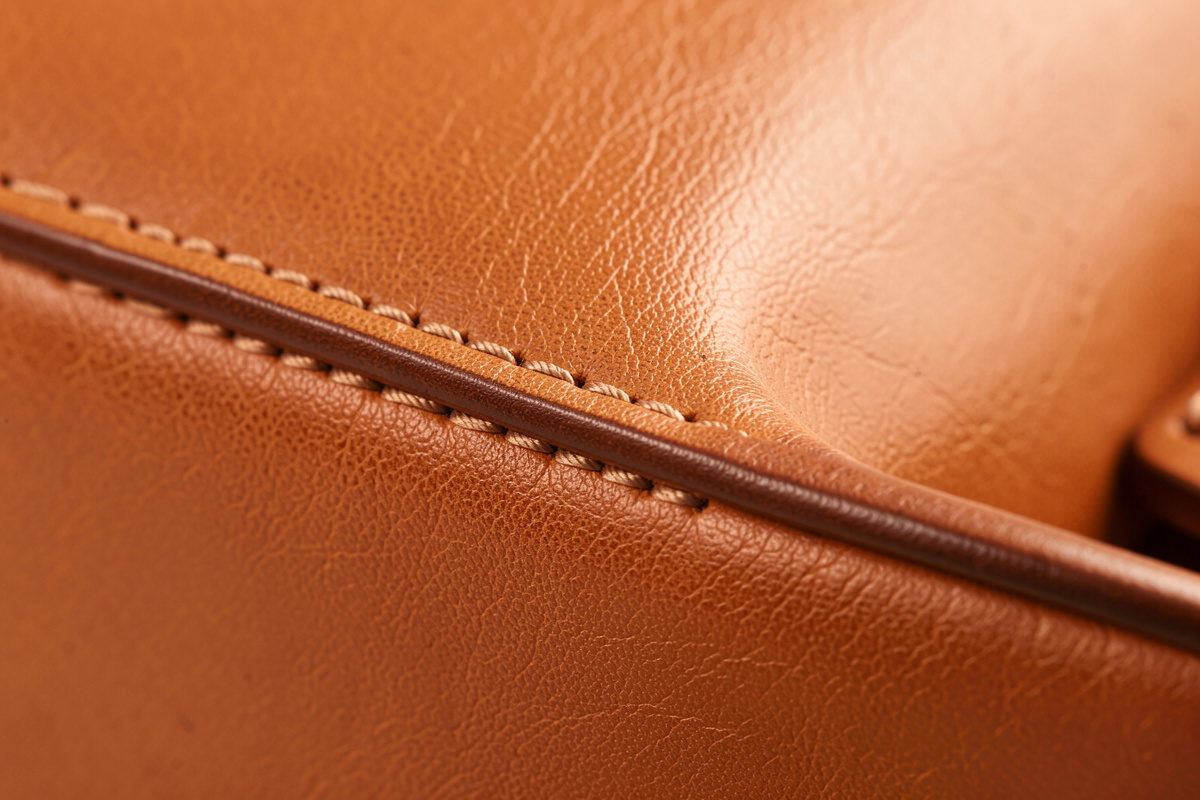
Low stretch is the underrated property. Polyester elongates far less under tension than nylon, which means when you pull the second needle to set a stitch, the thread stays where you put it instead of springing back a hair and leaving the line slightly loose. That single trait is why braided polyester is the most forgiving thread for a beginner still learning the even second-pull — the thread holds your tension for you. The flat braided cross-section also lies into the slanted stitch channel cleanly so the line reads crisp rather than rope-like.
Polyester is sold by millimeter diameter, not thread-weight numbers, which keeps sizing simple, though the exact floor depends on the brand: Ritza 25 Tiger starts at 0.6 mm, while Vinymo MBT’s finest size #20 runs a thinner 0.3 mm — reach for that Vinymo #20 on fine watch straps, then 0.6 mm (either brand) for wallets and small goods, 0.8 mm for belts and bags, 1.0 mm for heavy decorative work. Match the diameter to your iron pitch using the rule from the leather stitching hub — thread diameter should run roughly half the width of the chisel hole, so the stitch seats snug without straining the leather.
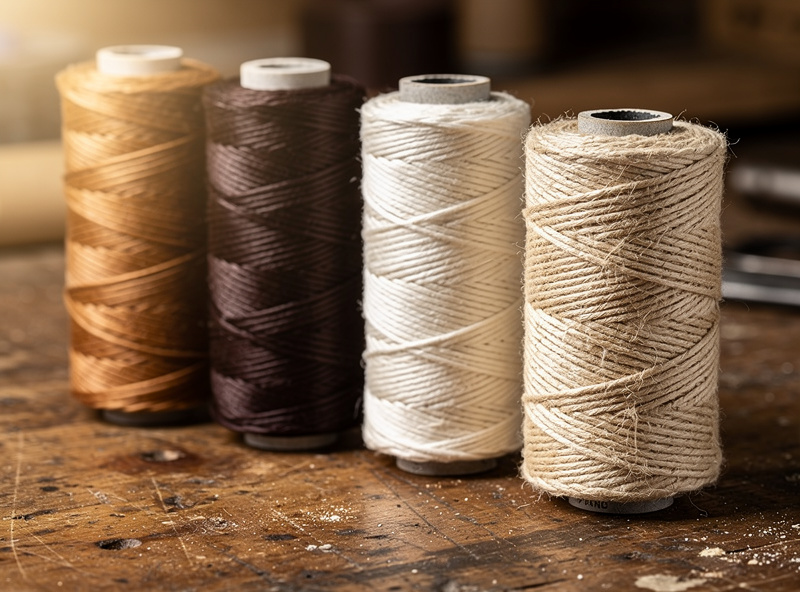
If you buy one thread to start, make it a 0.6 mm or 0.8 mm spool of braided polyester in a color that contrasts your leather. Contrast is mercy: it shows every stitch clearly so small tension errors average out visually, instead of a matched thread that highlights the one stitch you pulled wrong.
When Waxed Linen Earns Its Place
Waxed linen earns its place on heritage and traditional pieces — Western gear, tooled belts, anything where the look should read as old-world saddlery. Linen is grippy, ties knots that genuinely stay put, and ages into the leather with a patina polyester never develops. The trade-off is lower abrasion resistance and no heat-seal.
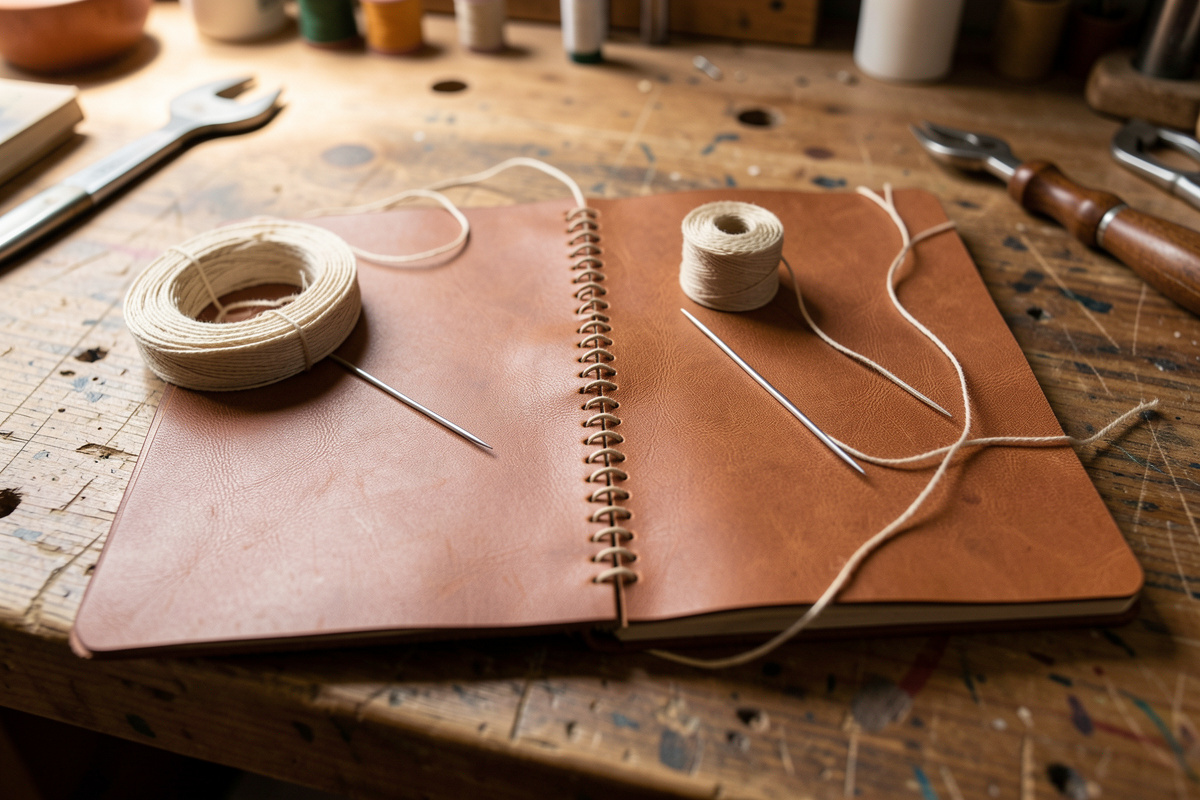
Linen thread is sold by ply-and-weight numbering rather than millimeters — you will see designations like 18/3, 18/4, and 18/5, where the second number is the ply count, so a higher number is a thicker, stronger cord. Crawford and Barbour are the names that come up most. I buy it close to natural and hand-wax it myself with a beeswax block, drawing the thread across the wax two or three passes before stitching. That wax is doing real work: it stiffens the thread enough to thread cleanly, fills the fiber against moisture, and grips the chisel holes so the stitch does not droop.
The honest weakness of linen is that it does not melt. Polyester and nylon both heat-seal, but linen only chars, so you finish a linen seam with a backstitch through two or three holes plus a dab of contact cement on the trimmed tail rather than a torch. Linen also abrades faster at flex points than polyester, which is why I keep it for display-grade and traditional work and reach for polyester on anything that lives in a pocket. None of that makes linen wrong — for the right piece, a hand-waxed linen seam is the more honest, more period-correct choice, and it is what I use when a customer wants the genuinely traditional look.
Bonded Nylon: A Machine Thread in Disguise
Bonded nylon is primarily a sewing-machine thread, and most of the spools you see sold as “leather thread” online are bonded nylon meant for walking-foot machines. It is strong and inexpensive, but its high stretch and slick bonded coating make it the worst of the three for hand saddle stitching.
Bonded nylon is sized by Tex or ticket number — T70 (also written #69), T135 (#138), and T210 (#207) are the common weights, running roughly 0.3 to 0.5 mm equivalent across that range. Those numbers are a tell: when a listing quotes you Tex sizes instead of millimeters, you are looking at machine thread. On a Juki or Cobra it is excellent. In your hand it stretches under the pull, springs back when you set the stitch, and the bonded coating (a glued finish, not a wax) makes it slick in the fingers and prone to lying proud of the channel rather than flat in it.
Nylon’s other quiet weakness is UV. Nylon degrades faster than polyester under sunlight over the years, so a nylon-stitched item that lives outdoors — a knife sheath worn on the belt, a dog lead — loses strength sooner than the same piece in polyester. I will use bonded nylon on the machine for high-volume non-stress seams, but I do not hand-stitch with it, and I would not choose it for anything that lives in the sun. If you bought a cone of bonded nylon expecting hand-stitch thread, it is not wasted — it is just waiting for the day you buy a machine.
Thread Comparison: Fiber by Fiber
The table below is the decision I run in my head before every project. Match the fiber to how the finished piece will live, then size within that fiber to your iron pitch.
| Property | Braided Polyester | Waxed Linen | Bonded Nylon |
|---|---|---|---|
| Typical brands | Ritza Tiger, Vinymo MBT | Crawford, Barbour | Generic cones, A&E |
| Sizing system | Millimeters (0.3 to 1.0 mm, floor varies by brand) | Ply number (18/3, 18/4, 18/5) | Tex / ticket (T70, T135, T210) |
| Stretch under tension | Low (holds tension) | Very low | High (springs back) |
| Abrasion resistance | Excellent | Moderate | Good |
| UV stability | Excellent | Good | Poor (degrades in sun) |
| End finishing | Heat-seals to a bead | Backstitch plus cement (no melt) | Heat-seals to a bead |
| Pre-waxed? | Yes | Usually hand-waxed | No (bonded coating) |
| Best use | Wallets, bags, belts, EDC | Heritage, Western, tooled work | Machine stitching |
One number ties the whole table together: thread diameter should sit at roughly half the chisel hole width so the stitch seats firmly without distorting the leather. That sizing logic, plus how stitch density changes the look, is laid out in the best stitch length for leather guide — thread choice and stitch length are one decision, not two.
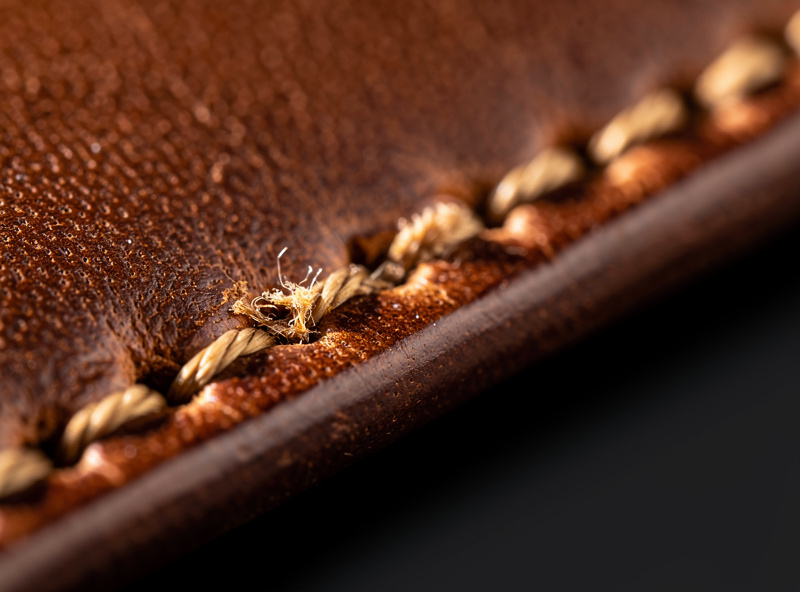
Waxing, Needles, and the Thread-to-Tool Chain
Thread is one link in a tuned chain: iron pitch, awl or chisel hole, needle eye, and thread diameter all have to match. Use harness needles in size 002 or 00 for 0.6 to 0.8 mm thread — their rounded eye carries waxed thread through the same hole twice without fraying it, unlike the sharp eye of a sewing needle.
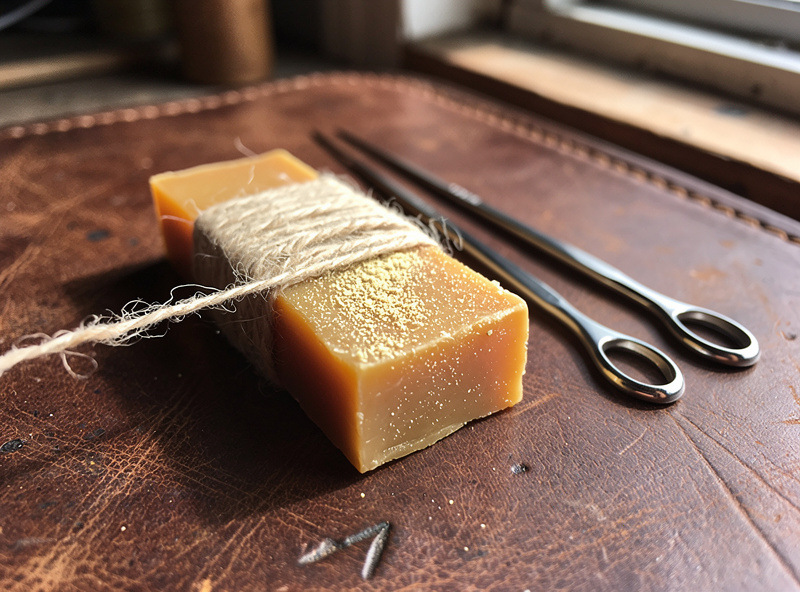
Pre-waxed polyester usually needs no extra wax, but on a long seam I will still draw it across a beeswax block once if it starts feeling slick. Bare linen always gets two or three passes of beeswax before stitching. The wax does three jobs: it lets the thread bite the chisel holes so the stitch does not droop, it protects the fiber, and it tacks the lock of each stitch in place. Over-waxing is a thing too — if the thread leaves visible wax smear on light leather, you have too much on; warm it in your fingers and wipe the excess.
How much thread to cut is the same regardless of fiber: roughly four times the length of the seam you are stitching, plus a few inches of margin. A 24-inch wallet seam wants about 96 inches of thread on the needles. Running short forces an ugly mid-seam splice; running long only wastes a little. If you are still building your kit, the leatherworking starter kit guide covers needles, wax, and thread in the right buy-order, and the broader tool stack lives in the leatherworking tools guide.
As an Amazon Associate I earn from qualifying purchases.
What I Actually Keep on the Wall
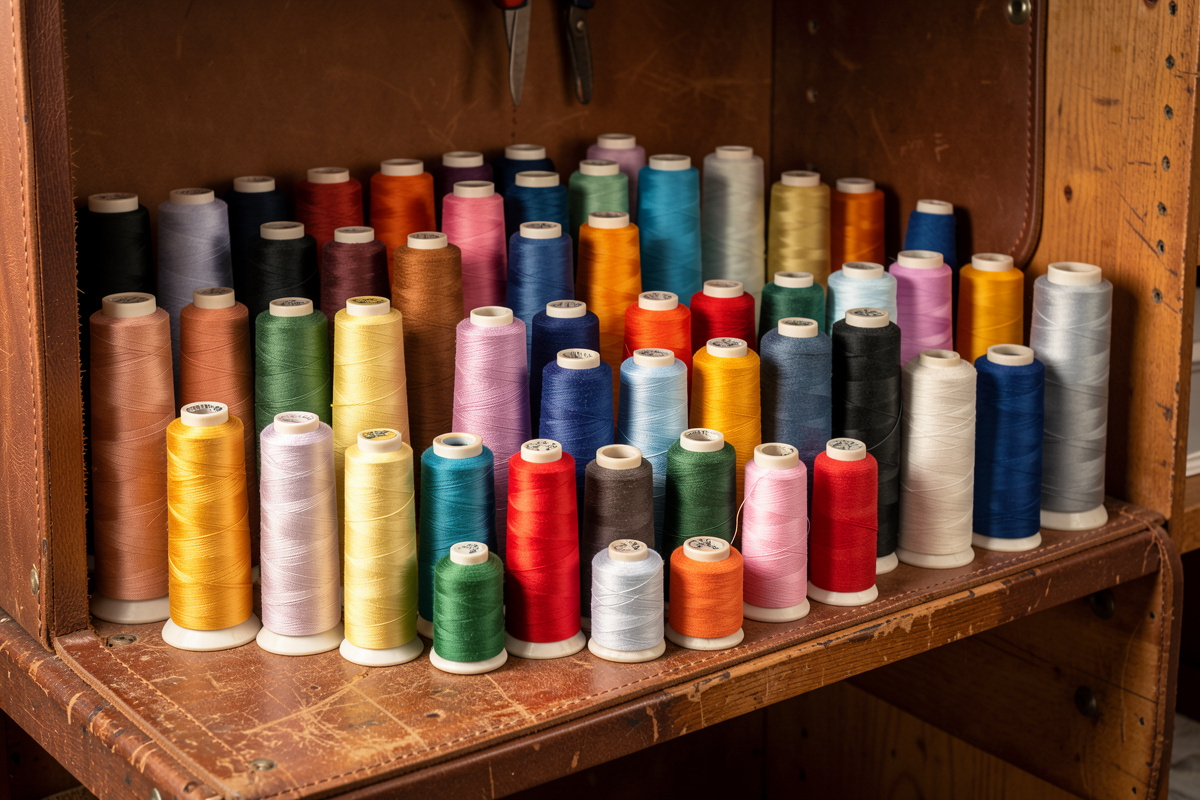
For a working thread shelf, I keep three things: a couple of diameters of braided polyester in contrasting colors, a spool of natural linen for traditional work, and a beeswax block to hand-wax the linen. That covers every hand-stitched project I build without a single cone of machine nylon in sight.
If you buy in this order you will not waste money. Start with a spool of braided waxed polyester thread in 0.6 mm or 0.8 mm — it handles the great majority of wallets, bags, and belts. Add a spool of waxed linen thread when you start a traditional or Western piece. And do not stitch with the wrong needles — a tin of leather harness needles in size 002/00 is a couple of dollars and saves you a frayed seam.
Once you have the thread sorted, the next decision is the holes it passes through. That is the chisel-versus-iron question, and it changes the look of the stitch as much as the thread does.
Frequently Asked Questions
What is the best thread for leather stitching?
Braided waxed polyester such as Ritza Tiger or Vinymo MBT for almost all hand stitching. It has the highest abrasion resistance, the lowest stretch, and heat-seals at the seam end. Use waxed linen for traditional and Western pieces, and keep bonded nylon for sewing machines.
Is polyester or linen thread better for leather?
Polyester is stronger, lower-stretch, more abrasion and UV resistant, and the better default for wallets, bags, and belts. Linen ages into the leather with a traditional patina and ties knots that stay put, making it the better choice for heritage, Western, and tooled work that prizes the old-world look.
Can you hand stitch leather with bonded nylon thread?
You can, but it is the worst of the three fibers for hand work. Bonded nylon has high stretch that springs back when you set a stitch, and its slick bonded coating lies proud of the channel rather than flat. It is built for walking-foot sewing machines, not the two-needle saddle stitch.
What thread size should I use for a leather wallet?
Use 0.6 mm braided polyester for a standard wallet, matched to a 4 mm (6 SPI) chisel. The rule is that thread diameter should sit at roughly half the chisel hole width so the stitch seats firmly. Drop to Vinymo’s finest 0.3 mm size for fine watch straps and step up to 0.8 mm for belts.
Do you need to wax leather thread before stitching?
Pre-waxed polyester like Ritza Tiger usually needs no extra wax, though a single pass over a beeswax block helps on long seams. Bare linen always needs two or three passes of beeswax first. The wax grips the chisel holes so the stitch does not droop, protects the fiber, and tacks the lock of each stitch.
Why does my leather thread keep fraying?
Usually the wrong needle or too little wax. Sharp-eyed sewing needles cut the thread on repeated passes; use rounded harness needles in size 002 or 00 instead. Re-wax the thread, and check your chisels for burrs, since a damaged chisel point shreds fibers as the thread passes through the hole.
How much thread do I need for a stitching project?
Cut roughly four times the length of the seam plus a few inches of margin. A 24-inch wallet seam needs about 96 inches of thread on the two needles. Running short forces an ugly mid-seam splice that weakens the line; running long only wastes a little material.
Related Articles
- Leather Stitching Techniques: Saddle Stitch and Beyond
- How to Saddle Stitch Leather by Hand
- Best Stitch Length for Leather
- Leatherworking Starter Kit: What You Need
- Leatherworking Tools Guide: Three Tiers of Buy-In