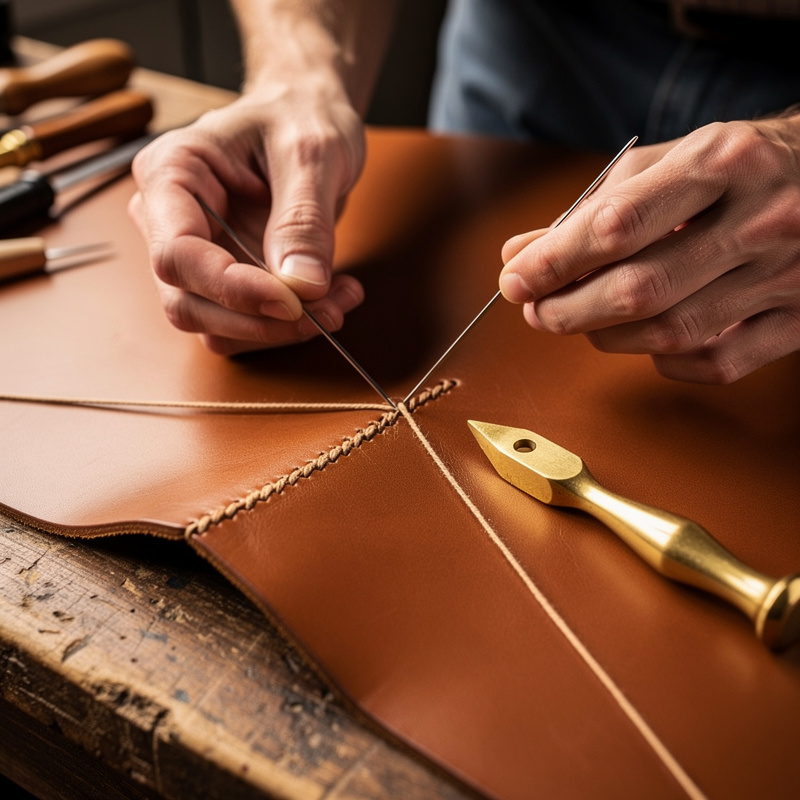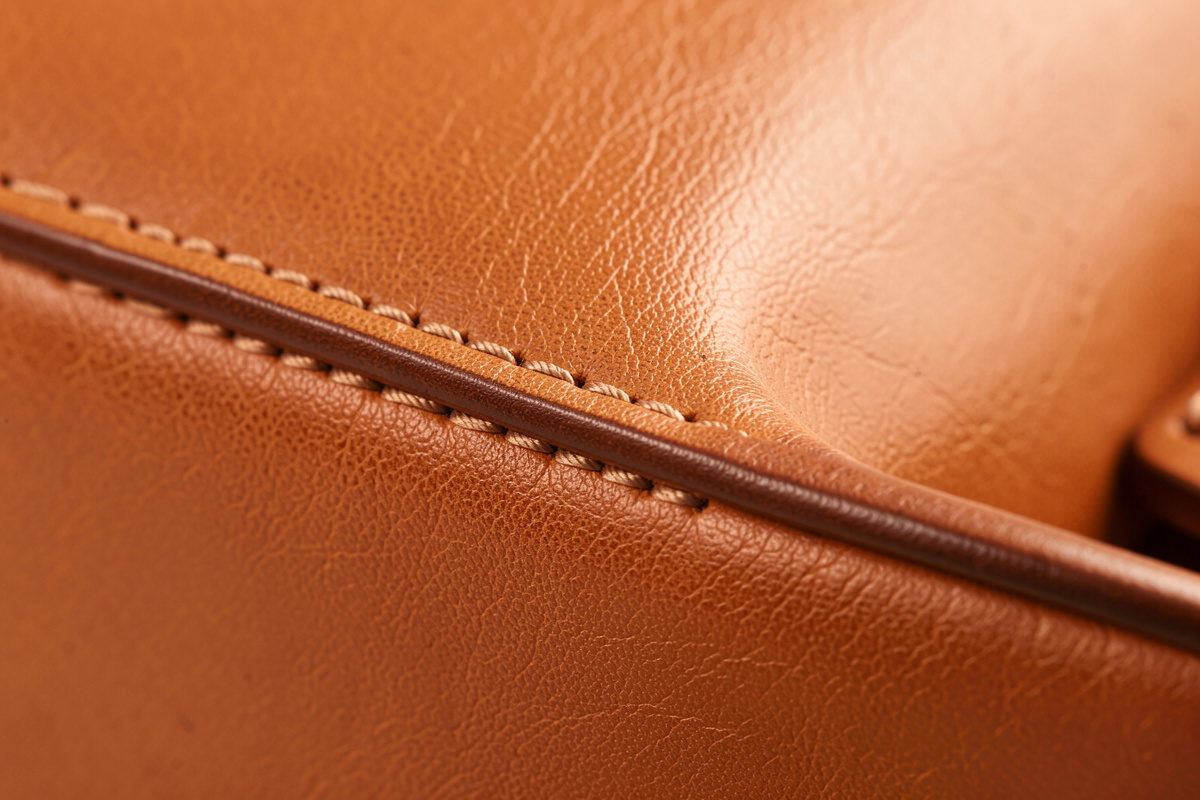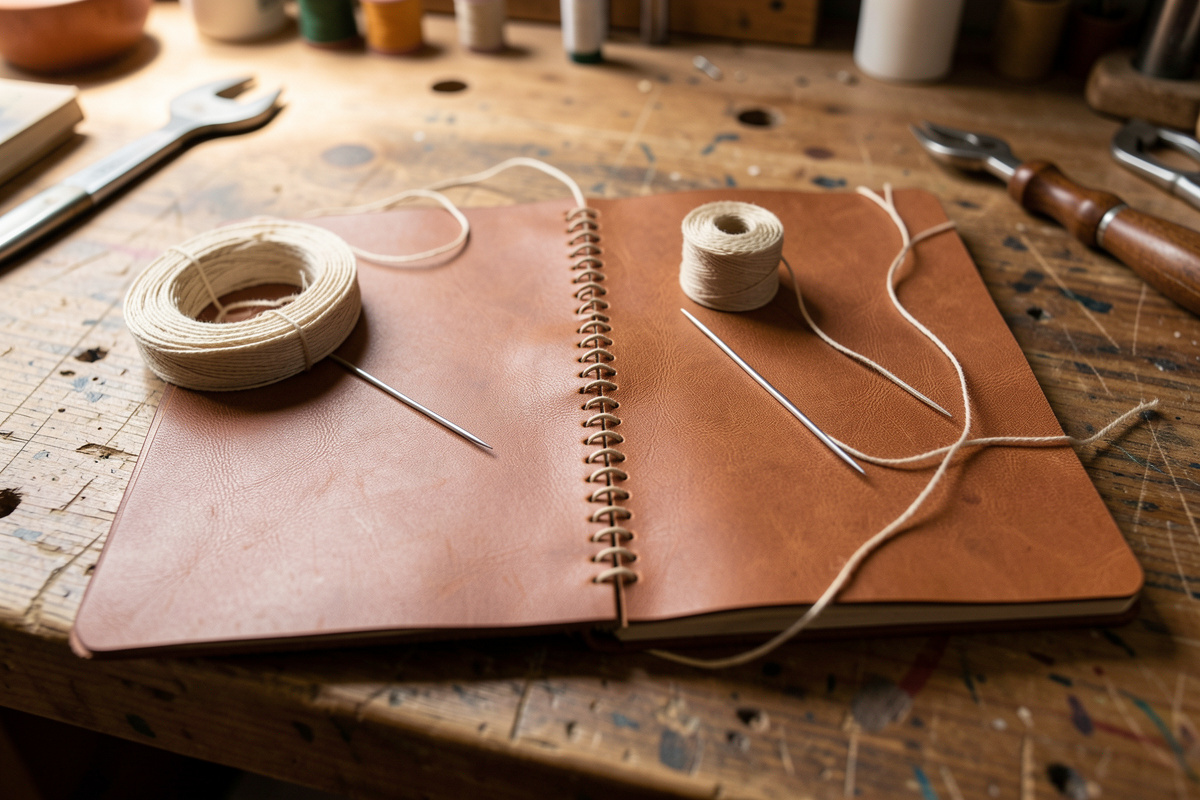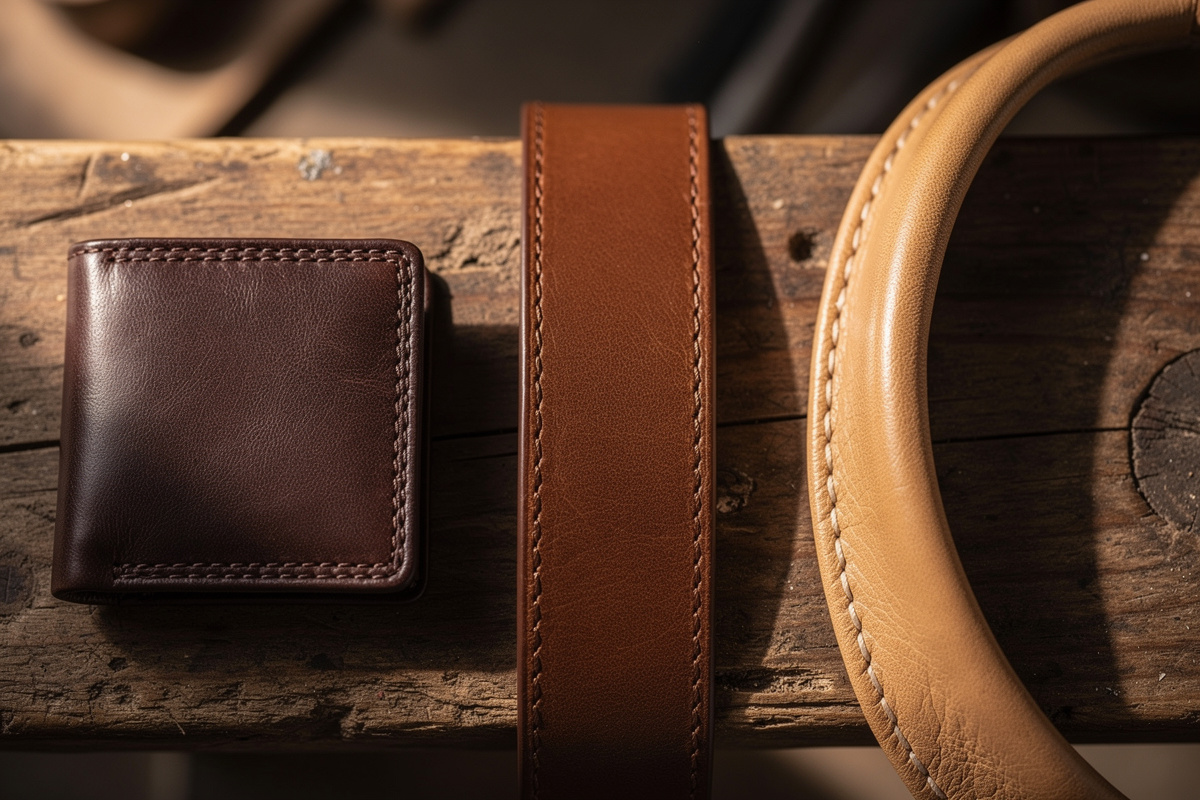
The best stitch length for leather depends on project type and leather weight: 3mm spacing for wallets and small goods (4-6 oz leather), 4mm for belts and medium…
The best stitch length for leather depends on project type and leather weight: 3mm spacing for wallets and small goods (4-6 oz leather), 4mm for belts and medium projects (6-8 oz leather), 5mm for bags and structural projects (8+ oz leather). The rule of thumb is stitch spacing roughly equal to or slightly less than leather thickness, with finer spacing on visible decorative stitching and bolder spacing on hidden structural stitching. The leather stitching techniques hub covers the full stitch-decision tree these per-project lengths sit inside.
As an Amazon Associate I earn from qualifying purchases.
Stitch length is one of three variables that decide how a finished leather piece reads — alongside leather selection and edge finishing. Get the spacing wrong and even perfect technique looks off. A wallet with 5mm spacing looks crude; a duffle bag with 3mm spacing looks fussy and weak. The visual harmony between project size and stitch density is what separates “looks handmade” from “looks store-bought” in the way that craftspeople care about.
My first belt looked wrong and I couldn’t figure out why until a leatherworker pointed out that my 4mm stitching looked too delicate for an 8-oz strap. Switching to 5mm spacing and 0.8mm thread immediately gave it the rugged proportion that belts need. The stitch-length-by-project matrix below covers the exact spacing and thread pairing for wallets, belts, and bags.
Why Stitch Length Matters Beyond Aesthetics
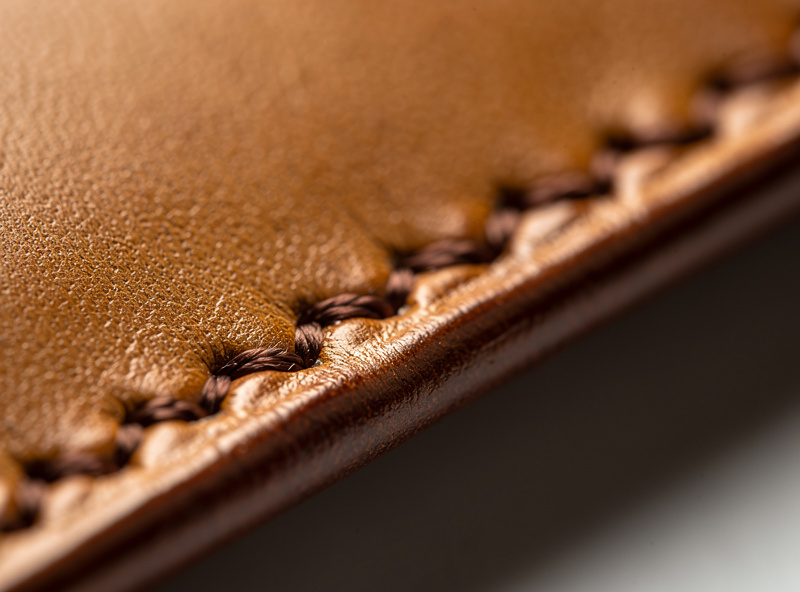
Stitch length controls structural strength as much as visual appearance. Closer spacing means more thread per inch of seam — stronger but slower to stitch, more prone to leather tearing if forced. Wider spacing means fewer thread points — weaker per inch but easier on the leather, faster to execute. The right spacing balances strength, speed, and aesthetic match.
Variables stitch length controls:
- Seam strength: 3mm spacing has roughly 33% more thread per inch than 4mm, increasing tear resistance proportionally.
- Leather tearing risk: Spacing too close to the edge or too tight on thin leather causes the leather to perforate along the stitch line under load.
- Visual density: Fine stitches read precise and refined; bold stitches read robust and craftsman-y.
- Stitch time: 3mm spacing requires 33% more individual stitches than 4mm — meaningful on multi-foot seams.
- Thread visibility: Finer stitches with thinner thread create subtle accents; bolder stitches with thick thread make the stitching the visual feature.
- Pattern proportionality: A 5-inch wallet looks proportional with 3mm stitches but oversized with 5mm stitches. A 18-inch belt looks proportional with 4mm stitches but lost with 3mm.
The strength considerations matter most on load-bearing seams (bag handles, belt straps, holster welts). The aesthetic considerations matter most on visible decorative stitching (wallet exteriors, journal covers, belt edges). Read about stitch technique fundamentals in our how to saddle stitch leather guide.
Stitch Length by Project Category
Project category determines stitch length more reliably than leather weight alone. Small leather goods (wallets, card holders, small pouches) use 3mm spacing universally. Belts use 4mm regardless of width. Medium bags (messengers, totes) use 4-5mm depending on thickness. Large structural bags and industrial leather use 5-6mm.
Project-by-project guide:
- Wallets and card holders: 3mm spacing. Sometimes 2.5-2.7mm for ultra-fine European-style work. Above 3mm reads cheap on small goods.
- Belts: 4mm spacing on dress belts; 4.5-5mm on heavy work belts. The bolder spacing reads correct on long horizontal seams.
- Watch straps: 2.5-3mm spacing. Watch straps are essentially miniature belts and need fine spacing to look proportional.
- Knife sheaths: 4-5mm spacing on the welt seam; structural strength priority over aesthetic refinement.
- Holsters: 4mm spacing minimum; 5mm on heavy duty holsters for handguns. Strength is critical.
- Messenger bags and totes: 4mm on body seams, 5mm on handle attachments. Balance refinement and strength.
- Duffle bags and travel bags: 5-6mm spacing. The bold spacing matches the project’s scale.
- Saddle bags and saddlery: 5-7mm spacing. Traditional saddle work uses bold spacing for both strength and visual hierarchy.
- Dog collars and pet goods: 4mm spacing. Combination of strength (dogs pull hard) and proportion (collars are belt-like).
- Journal and notebook covers: 3-4mm. 3mm for refined journals, 4mm for sketchbooks and rugged covers.
The “rule of thumb” most experienced makers use is 3mm for under 6 inches of project length, 4mm for 6-12 inches, and 5mm for 12+ inches. The visual proportionality is what makes the project look right. Read our deeper guide on how to saddle stitch leather.
Stitch Length and Leather Thickness Together
Stitch spacing should roughly equal leather thickness in millimeters: 4 oz leather (1.6mm) pairs well with 3-4mm spacing; 6 oz leather (2.4mm) pairs with 4-5mm spacing; 10 oz leather (4mm) pairs with 5-6mm spacing. Spacing significantly tighter than the leather thickness causes perforation; spacing significantly wider weakens the seam.
The thickness-to-spacing relationship:
- 4 oz (1.6mm) with 3mm spacing: Standard wallet construction. Strong enough; refined visual.
- 4 oz (1.6mm) with 5mm spacing: Possible but visually lost — the leather is too thin for the bold spacing to read structural.
- 6 oz (2.4mm) with 4mm spacing: Standard belt construction. Strong, fast, looks correct.
- 6 oz (2.4mm) with 2.5mm spacing: Risk of perforation under load — too many holes per inch of leather.
- 8 oz (3.2mm) with 4-5mm spacing: Standard bag and holster construction. Good strength and visual proportion.
- 10+ oz (4mm+) with 5-6mm spacing: Saddle and harness work. Traditional saddler proportions.
The risk asymmetry matters: too-tight spacing on thick leather sometimes works (just slow); too-loose spacing on thin leather often fails (looks weak and may pull through). When in doubt, err toward closer spacing on small projects and closer spacing on thinner leather.
Stitching Iron Spacing vs Pricking Iron Spacing
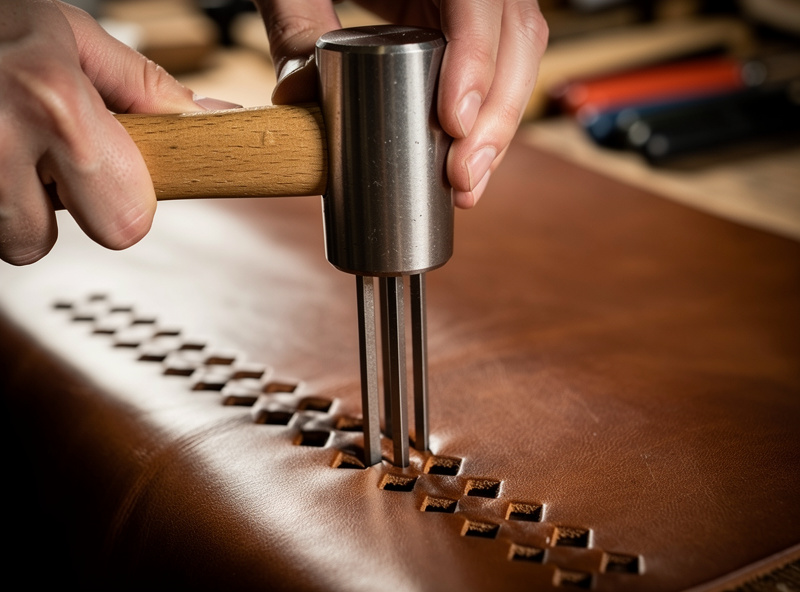
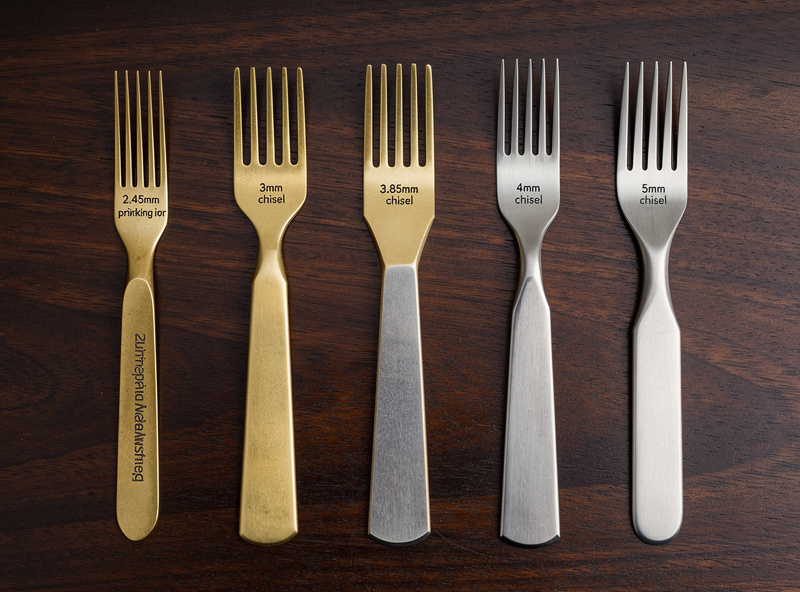
Stitching irons (chisels) cut diamond holes through leather with mallet strikes; pricking irons mark dimples on the surface that an awl pierces through one at a time. Both come in spacing measured stitches-per-inch (SPI) or millimeters. A stitching chisel set with interchangeable pitch covers the wallet-to-belt range without buying individual irons. The spacing notation is the same; the technique difference does not affect the spacing decision.
Common spacing measurements:
- Stitches per inch (SPI): American convention. 8 SPI ≈ 3.18mm; 10 SPI ≈ 2.54mm; 6 SPI ≈ 4.23mm; 5 SPI ≈ 5.08mm.
- Millimeter spacing: European convention. 3mm, 4mm, 5mm, 6mm. Measured tip-to-tip on the irons. A fine European-pitch pricking iron set is the tool that sets this spacing permanently — once you own a pitch, every project at that spacing uses the same iron.
- Stitches per centimeter: Sometimes used in Japanese tools. 3 SPC ≈ 3.33mm; 4 SPC ≈ 2.5mm.
- Goods Japan SPI conventions: Often labeled 9-10 SPI, 7-8 SPI, 6 SPI. Map to 2.5-3mm, 3.2-3.6mm, 4.2mm respectively.
- French traditional sizes: Vergez Blanchard uses internal “8 points,” “10 points,” etc. — meaning 8 stitches per French inch (1 French inch = 2.7cm). 8 points ≈ 3.4mm.
The translation between systems trips up people moving between American and European brands. When ordering Japanese irons after using Tandy, expect spacing 0.2-0.5mm finer at the same SPI label. Most experienced leatherworkers settle into 1-2 spacing standards and stick to them; mixing tools across systems creates inconsistency.
Comparison Table: Stitch Length by Project Type
| Project Type | Recommended Spacing | Leather Weight | Stitch Iron / SPI | Why |
|---|---|---|---|---|
| Card holders, slim wallets | 3mm | 3-4 oz | 3mm chisel / 8 SPI | Refined proportion |
| Bifold wallets, journal covers | 3mm | 4-5 oz | 3mm chisel / 8 SPI | Standard for small goods |
| Watch straps | 2.5-3mm | 3-4 oz | 2.7mm pricking iron / 9 SPI | Miniature scale |
| Belts, dog collars | 4mm | 6-8 oz | 4mm chisel / 6 SPI | Length proportionality |
| Knife sheaths, holsters | 4-5mm | 6-8 oz | 4mm chisel / 6 SPI | Structural seam priority |
| Messenger bags, totes | 4-5mm | 6-8 oz | 4-5mm chisel / 5-6 SPI | Strength + scale |
| Duffle bags, structural bags | 5-6mm | 8-10 oz | 5mm chisel / 5 SPI | Bold proportion |
| Saddle bags, saddlery | 5-7mm | 10+ oz | 5-6mm chisel / 4-5 SPI | Traditional saddler proportion |
The recommended spacing is the starting point — adjust based on personal aesthetic preference and the specific project’s visual scale. A small project that needs to look bold can use slightly wider spacing; a large project that needs to look refined can use slightly tighter spacing. Most makers stay within 0.5mm of the table value.
Common Stitch Length Mistakes
Five mistakes show up in finished projects: using one spacing for all projects, mixing different irons in a single seam, picking spacing too close to the leather edge, ignoring stitch density on curves, and using thread thickness mismatched to spacing. Each one degrades the finished work.
What to avoid:
- Single-spacing for all projects: A wallet maker who uses 4mm because it is “their go-to” produces wallets that look slightly off proportion. Buy 3mm and 4mm at minimum.
- Mixing chisel sizes mid-seam: Sudden spacing changes are visually jarring. Plan the seam start and end with the same iron.
- Stitches too close to the edge: Stitch lines should sit 3-5mm from the cut edge to prevent leather pulling through. Closer than 2.5mm risks perforation.
- Ignoring curve density: Curved seams need slightly tighter stitching to avoid visible gaps on the outside of the curve. Use a 2-prong iron or awl on tight curves to maintain spacing.
- Wrong thread thickness for spacing: 1mm thread on 3mm spacing looks balanced; 0.5mm thread on 5mm spacing looks anemic; 1.5mm thread on 3mm spacing looks chunky.
- Chisel diamond angle off-axis: Diamond stitching irons must strike at a consistent angle (typically 25-30 degrees from perpendicular) for the stitches to have the correct slant.
- Forgetting to mark the stitch line: Skipping the stitch groover means stitches wander across the surface. A consistent groove keeps the stitches straight.
The reliable practice is to test stitch spacing on a scrap of the project leather before committing. Stitch a 2-inch test seam, evaluate the visual proportion against the project size, adjust if needed. Five minutes of testing prevents committing the project to wrong spacing. Read about general beginner mistakes in our common leatherworking mistakes beginners make guide.
Frequently Asked Questions
What is the best stitch length for a leather wallet?
3mm spacing (about 8 stitches per inch) is the standard for wallets and small leather goods. Some European-style ultra-fine work uses 2.5-2.7mm spacing. Going wider to 4mm produces wallets that look proportionally off — too bold for the small project scale.
How does stitch length affect leather strength?
Closer spacing produces stronger seams (more thread per inch of seam length) but risks tearing the leather along the perforation line on thin material. Wider spacing produces weaker seams but is easier on the leather. The 3-5mm range balances both for most hobbyist projects.
Should I use the same stitch length for the whole project?
Yes for the same seam — switching iron sizes mid-seam looks visually jarring. Different seams within one project can use different spacings if planned (e.g., 3mm on the wallet body, 5mm on a thicker handle attachment). Plan the spacings before starting.
What stitch length do professional leather brands use?
Most premium leather brands stitch wallets at 3mm spacing, belts at 4mm spacing, bags at 4-5mm spacing. Ultra-premium European brands sometimes use 2.5mm on small goods for a refined look. Mass-market brands often use 5-6mm even on wallets to speed production.
Can I use a sewing machine for the same effect as hand stitching?
Sewing machines produce uniform stitches but use lockstitch instead of saddle stitch — single-sided strength rather than two-sided. Visually similar but structurally different. Hand saddle stitch on premium leather typically uses 3-4mm spacing; machine stitching can match the appearance but not the dual-strand strength.
How do I match thread thickness to stitch length?
For 3mm spacing use 0.6mm thread; for 4mm use 0.6-0.8mm; for 5mm use 0.8-1mm; for 6mm and above use 1mm-plus thread. Ritza 25 Tiger thread — the sizes I actually use — runs 0.6, 0.8, and 1.0mm; Japanese Vinymo MBT threads use their own numbered scale instead of direct millimeter labels, so match by the stated mm equivalent, not the size number.
Related Articles
- How to Saddle Stitch Leather
- Stitching Pony vs Stitching Clamps
- Leatherworking Starter Kit
- Best Leather for Wallets
- Common Leatherworking Mistakes Beginners Make