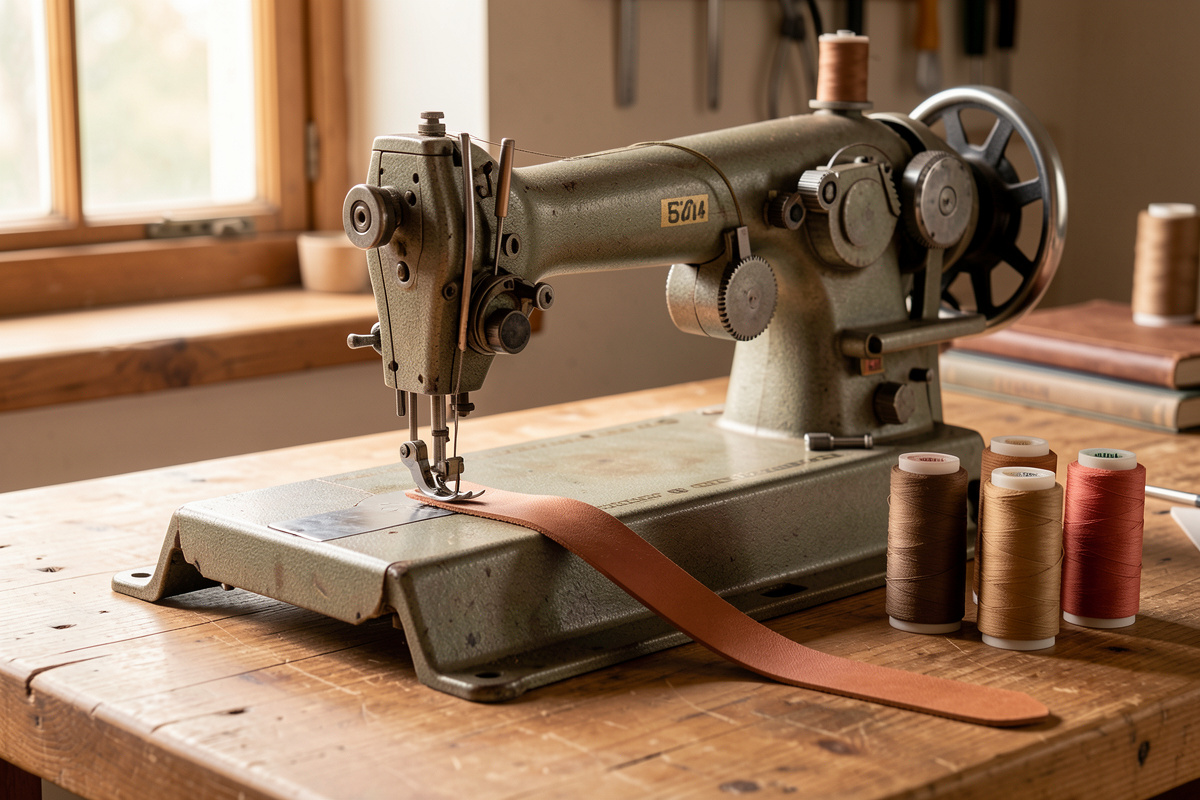
A sewing machine sews leather when it has three things a garment machine does not: a walking or compound feed that pulls the leather instead of dragging it,…
A sewing machine sews leather when it has three things a garment machine does not: a walking or compound feed that pulls the leather instead of dragging it, a cutting-point needle, and the muscle to pull bonded thread through stacked hide. A flatbed domestic machine tops out around 2–3 oz of soft chrome-tan; a compound-feed industrial will climb a 10–12 oz belt fold without a complaint.
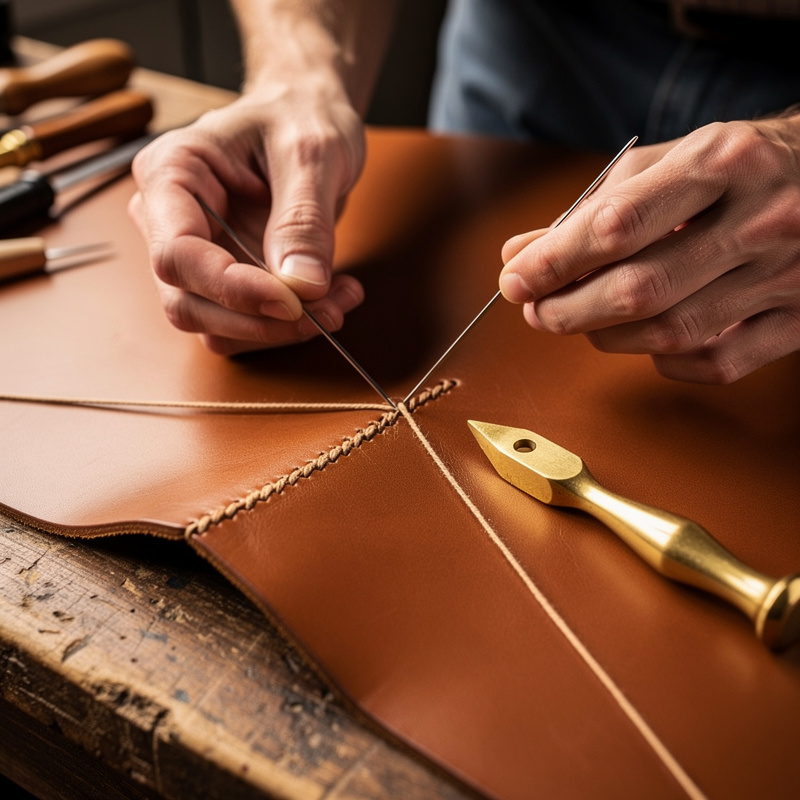
I want to be straight with you up front: I saddle-stitch nearly everything I make by hand — wallets, sheaths, belts, small bags — and I do it by choice, not because I’m scared of a motor. But machine sewing is the right call the moment you start making bags, lined goods, upholstery, or any volume at all, and the questions readers send me are almost always the same five: which machine, which needle, which thread, how to finish the seam, and how to skive so the machine can actually get over the bulk. This guide answers all of them, sends you to the deep-dive on each, and tells you where the money genuinely matters versus where it’s marketing.
Do You Actually Need a Machine to Sew Leather?
For small goods up to about 6 oz — wallets, card sleeves, watch straps, knife sheaths — a hand saddle stitch is stronger, fully repairable, and frankly looks better. A machine earns its bench space when you’re sewing bags, garment leather, long straps in batches, or anything where hand-stitch hours stop being romantic and start being a bottleneck.
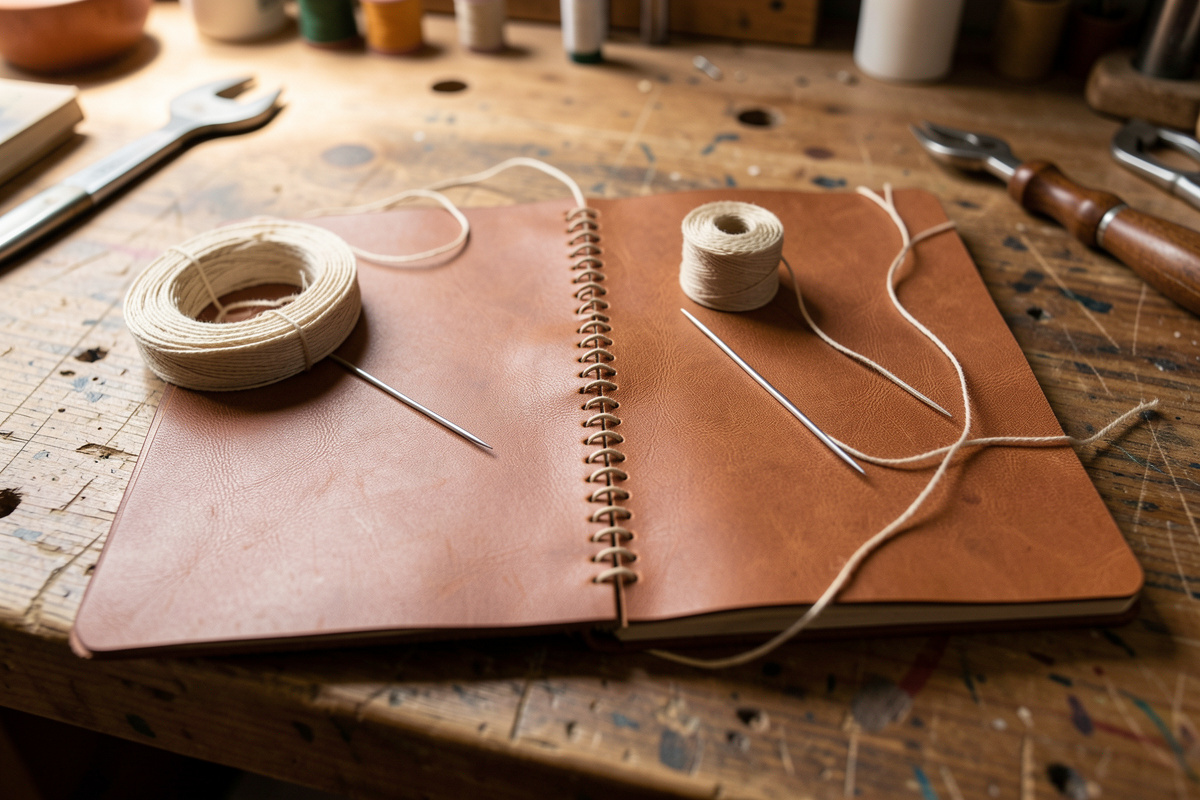
The strength story is real and it’s not marketing. A hand saddle stitch wraps two threads through every hole, so a single cut thread can’t unzip the seam. A machine lays a lockstitch — one needle thread, one bobbin thread, knotted in the middle of the material — which is plenty strong but will run if it’s nicked and the lock works loose. That trade-off is the whole argument, and I’ve laid it out fully in saddle stitch vs machine stitch. The short version: hand-stitch the things that take abuse at the seam; machine-sew the things where speed and a long, clean topstitch line matter more than absolute repairability.
So the honest answer is “it depends what you build.” If you’re three wallets deep and wondering whether to buy a machine, you almost certainly don’t need one yet. If you’re cutting tote panels and lining bag bodies, a machine isn’t a luxury — it’s the difference between a hobby and a workflow.
The Four Classes of Machine That Sew Leather
There are really only four categories worth knowing, and they’re separated by feed mechanism and thread capacity, not by brand. A domestic machine handles thin soft leather, a portable walking-foot machine handles medium goods and canvas, a compound-feed industrial handles bags and holsters, and a heavy 441-class cylinder arm handles harness, saddlery, and stacked belt leather. Everything else is a variation on those four.
The mistake beginners make is buying one class up or down from what they build. A domestic machine will sew a 2 oz chrome-tan lining all day, but feed it a folded bag edge and the feed dogs polish the surface while the needle deflects. Go the other way and a 441-class machine will happily sew a 12 oz strap but physically cannot make a stitch short or fine enough for a delicate card wallet — the needle is too big and the shortest stitch still reads as agricultural. Match the machine to the heaviest thing you’ll regularly sew, not the heaviest thing you can imagine sewing.
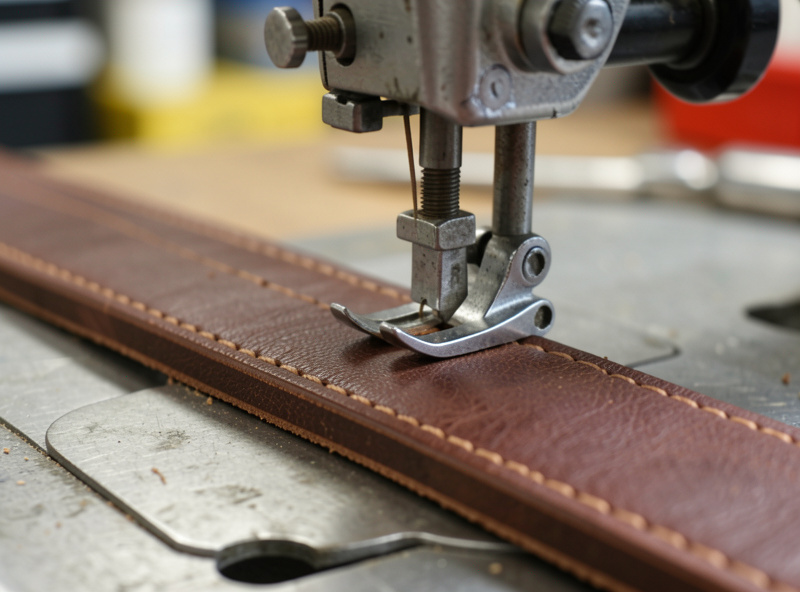
| Machine class | Leather it handles | Max thread (bonded) | Feed type | Typical use |
|---|---|---|---|---|
| Domestic / heavy-duty home | 1–3 oz soft chrome-tan | Tex 70 (V69) | Drop feed (feed dogs) | Linings, garment leather, light bag panels |
| Portable walking foot | 3–8 oz | Tex 135 (V138) | Walking foot | Bags, sheaths, medium straps, canvas + leather |
| Compound-feed industrial (flatbed/cylinder) | 4–16 oz combined | Tex 207 (V207) | Triple / compound feed | Bags, holsters, lined goods, production small goods |
| Heavy 441-class cylinder arm | 10–30 oz combined | Tex 415 (V415) | Triple / compound feed | Belts, harness, saddlery, sheaths, dog collars |
I unpack each of these — with the specific models traditional goods makers actually reach for at each budget — in best sewing machines for leather, and I draw the single most important line in this whole topic, the industrial vs domestic decision, in its own guide. If you read only two spokes off this hub, read those two before you spend a krona.
Feed Mechanism Is Everything
The feed is the difference between a machine that sews leather and one that fights it. A drop feed (the feed dogs under the needle plate) drags the bottom layer while the static presser foot holds the top — fine for cloth, but on leather the top layer creeps and your two panels finish misaligned. A walking foot or compound feed moves the top and bottom together so the layers travel as one.
There are three feed designs you’ll see described. Drop feed is the home-machine standard and the weakest for leather. A walking foot (technically “needle feed with alternating presser feet”) lifts and steps the top layer in time with the dogs — a huge upgrade, and the cheapest way into real leather sewing. Compound feed, also called triple feed, adds the needle itself moving with the material so nothing slips even on thick stacks or slick chrome-tan. For anything beyond linings, a walking foot is the floor and compound feed is what you actually want. This single spec matters more than horsepower, brand, or price, which is exactly why I rank machines by it in the industrial vs domestic comparison.
Needle Systems and the Cutting Point
A leather needle has a blade-shaped tip that slices a tiny clean hole instead of punching a round one. Use a standard round-point needle on veg-tan and you’ll get tear-out, skipped stitches, and a seam that looks chewed. The point geometry — not just the size — is what keeps a machine seam clean.
Domestic machines use the 130/705 H system, and you want the leather-point version (often sold as 130/705 H-LL). Industrial walking-foot and compound-feed machines use system 135×16 (the cutting leather point) and 135×17 (round point for synthetics and webbing); the big 441-class machines use system 794 or 7×3. Match the needle size to the thread — too small and the thread shreds in the eye, too large and the hole gapes around the stitch — and match the point shape to the leather. A left-twist (LR or LL) point lays the stitch line at a slight slant that mirrors a hand seam, which is why goods makers prefer it for visible topstitching. I cover every point shape, the size-to-thread chart, and the brands worth buying in the leather sewing machine needles guide. Getting this one detail right fixes most “my machine won’t sew leather” problems before they start.
Thread the Machine Can Actually Pull
Leather is sewn with bonded thread — nylon or polyester — sized in the Tex or V system, and every machine class has a ceiling. A domestic machine maxes out around Tex 70; push thicker and it can’t form a clean lockstitch or the tension goes to war with you. A compound-feed industrial runs Tex 135 to 207 comfortably, and a 441-class will pull Tex 346 and beyond for that fat saddlery stitch.
Bonded nylon and bonded polyester both work; the practical difference is that polyester holds up better to UV and weather, so I’d use it on anything that lives outdoors, and nylon is marginally stronger and a touch glossier for indoor goods. The number that trips people up is the size: Tex 70 (also written V69) is a fine wallet-weight thread, Tex 135 (V138) is the everyday bag stitch, and Tex 207 (V207) is a bold, visible saddlery line. Your needle size, thread size, and stitch tension are one tuned system — change one and you re-tune the other two. I work through bonded nylon vs polyester, the full Tex chart, and how to match thread to needle and machine in sewing machine thread for leather, and the hand-thread side lives in best thread for leather stitching if you do both.
As an Amazon Associate I earn from qualifying purchases. If you’re stocking a machine, a cone of Tex 135 bonded nylon thread and a pack of 135×16 leather-point needles covers the great majority of bag and small-goods work.
Stitch Length and Tension for Leather
Leather wants a longer stitch than cloth. Set 5–7 stitches per inch (roughly 3.5–5 mm); go shorter and the perforations sit so close they connect into a tear line and the seam can rip along the dotted line you just made. A longer machine stitch on leather isn’t a compromise — it’s correct.
Tension is the other half. A lockstitch should bury its knot in the middle of the leather thickness, not show a loop on top or a row of bobbin thread peeking underneath. On leather you usually loosen top tension slightly from the cloth setting because the bonded thread is thicker and the material is denser. Always test on a scrap of the exact leather and thread you’ll use — not a guess, the actual stack — and adjust until the knot disappears. The same length logic carries over from hand work, where I cover it in best stitch length for leather, and the setback-from-edge that keeps a machine line from blowing out the edge is in stitching distance from edge.
Skiving So the Machine Can Climb the Bulk
The number one reason a leather machine skips, jams, or breaks needles is bulk it can’t get over. Where two or three layers stack — a folded edge, a gusset corner, a turned bag mouth — you skive the overlap thinner first so the presser foot stays level and the feed keeps gripping. Skip the skiving and the foot tips, the feed lets go, and the stitch length collapses to nothing right where the seam shows most.
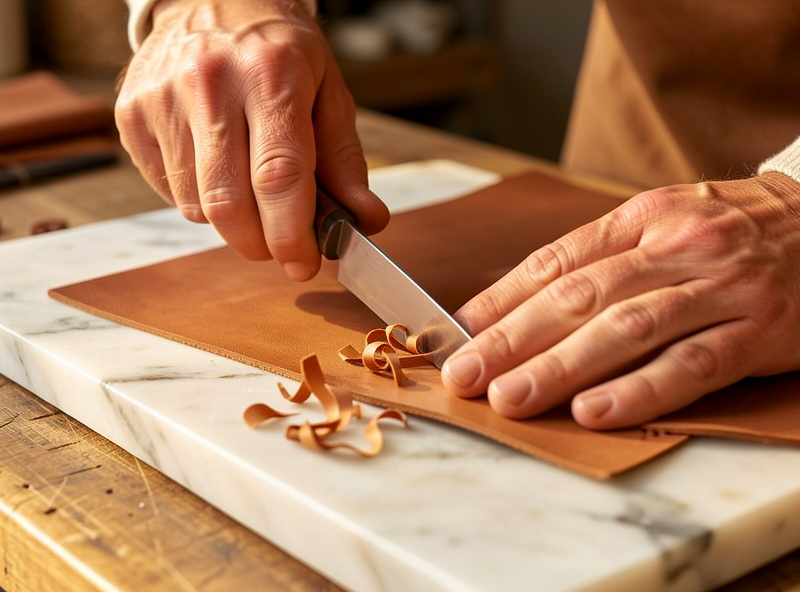
For machine work you’re skiving in specific places for a specific reason: thinning a fold so it lies flat, tapering a lining edge so the turned seam isn’t a speed bump, stepping down an overlap so the machine climbs it in one smooth ramp instead of hitting a wall. You can do it by hand with a skiving knife, with a French skiver, or — once you’re doing volume — with a bell skiver machine, which is its own purchase decision. I walk through exactly which areas to skive and how thin in skiving for machine sewing. This is the prep step that separates seams that look store-bought from seams that pucker.
Finishing a Machine-Sewn Seam
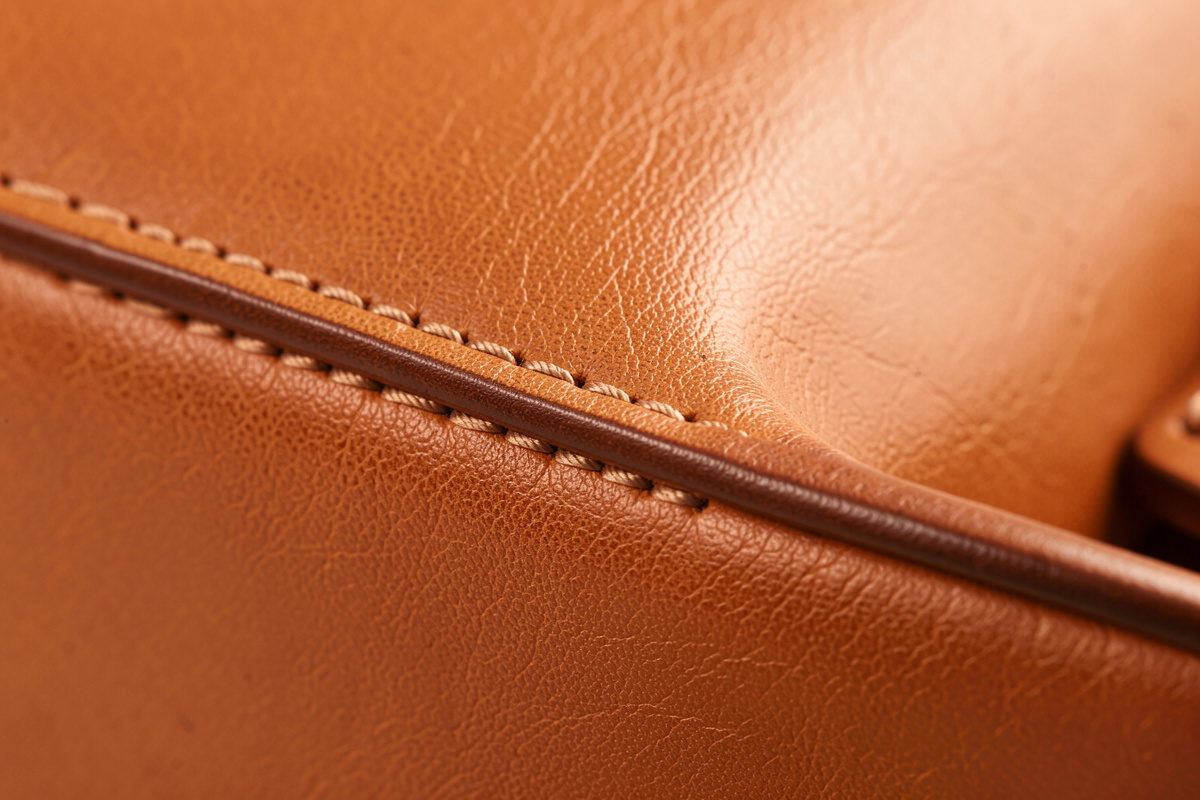
A machine lays the stitch; it doesn’t finish the seam. The edge still needs to be turned, bound, glued-and-folded, or beveled-and-burnished depending on the leather, and the thread tails still need to be locked so the lockstitch can’t crawl. A machine seam finished well is invisible; finished badly it announces itself with frayed tails and a raw, fuzzy edge.
How you finish depends on the leather. Veg-tan goods get the same bevel-sand-slick-wax treatment I use on hand work — the whole sequence is in leather edge finishing — while chrome-tan bag leather is more often turned or edge-painted because it won’t burnish the same way (here’s why veg-tan and chrome-tan behave differently). Locking the stitch matters too: you backtack a few stitches in reverse, or on a straight-stitch-only machine you tie and bury the tails, the machine analogue of the hand technique in backstitching a leather seam. The full machine-specific routine — turned edges, topstitch finishing, edge paint over a machine line — is in leather seam finishing on a machine.
Servo Motor, Clutch Motor, and the Bench Around It
An industrial machine’s head is half the story; the motor and table are the other half. The single best upgrade for sewing leather is a servo motor instead of the old clutch motor — a servo gives you precise slow-speed control and silence at idle, which is exactly what you want when you’re easing a needle through a thick corner one stitch at a time. A clutch motor lurches; a servo creeps.
Add a speed reducer pulley and you get even more torque at a crawl, which is how holster and belt makers punch through stacked leather without bogging the head. Budget for a servo even on a used machine — it’s a cheap swap and it transforms control. The rest of the bench follows the same logic as any leather station: good light, a clear run-off behind the needle, and the head set into the table at a height you can sit at for an hour. I cover the broader bench and tool buy-in tiers in the leatherworking tools guide, and which leather weights you’ll be feeding it live in the leather thickness chart.
Dialing In a Machine for Leather: The First Hour
A machine that “won’t sew leather” is almost always a machine that hasn’t been set up for leather. Spend the first hour on four things in order — needle, thread path, tension, presser-foot pressure — and most problems disappear before you’ve sewn a real seam. Skip the setup and you’ll blame the machine for what’s really an out-of-the-box garment configuration.
Start with a fresh leather-point needle in the correct system and size for your thread; a dull or round-point needle is behind more skipped stitches than any other single cause. Re-thread the whole path with the presser foot up so the tension discs are open and the thread seats properly, then drop to the bobbin and check it’s wound evenly with the same bonded thread. Now sew a test stack of the exact leather you’ll use and watch where the lockstitch knot sits: loops on top mean the top tension is too loose or the bobbin too tight, bobbin thread showing on top means the reverse. Adjust top tension first, in small moves, and only touch the bobbin if you’ve run out of range. Last, ease off the presser-foot pressure a little from the cloth default — leather doesn’t need to be pinned down hard, and too much pressure both marks the grain and fights the walking foot. Once those four are right, slow the servo down and sew like you mean it: leather rewards a steady crawl far more than speed.
The other half of dialing in is your own pace. Hand-stitchers come to a machine wanting to race; leather wants the opposite. Sew slowly, stop with the needle down to pivot corners, lift-and-reposition rather than forcing a turn, and respect that the machine is a precision tool you steer, not an automatic one you feed. The makers with the cleanest machine lines are almost always the slowest at the wheel.
What I’d Buy at Each Budget
If money is tight and you sew soft goods, a heavy-duty domestic with a walking-foot attachment and leather-point needles gets you sewing for the least outlay — just respect its 2–3 oz ceiling. The first serious step up is a used compound-feed industrial flatbed or cylinder arm; this is the machine most small-goods makers should own and the best value in the whole category. Only buy a 441-class if you genuinely sew belts, harness, or holsters — it’s overkill for bags and can’t do fine work.
I’d spend on the feed mechanism and the motor before anything else, and I’d buy used industrial over new domestic every time at the same price — a thirty-year-old compound-feed head with a fresh servo will outsew any new “sews leather” home machine on the market. The model-by-model picks sit in best sewing machines for leather, and if you’re torn between a souped-up home machine and a real industrial, the industrial vs domestic guide settles it. For the projects themselves — what to sew once the machine’s dialed in — the belt and knife sheath builds and the broader stitching techniques guide carry over, and if you want to see where machines fall short, the common stitching mistakes piece is honest about it.
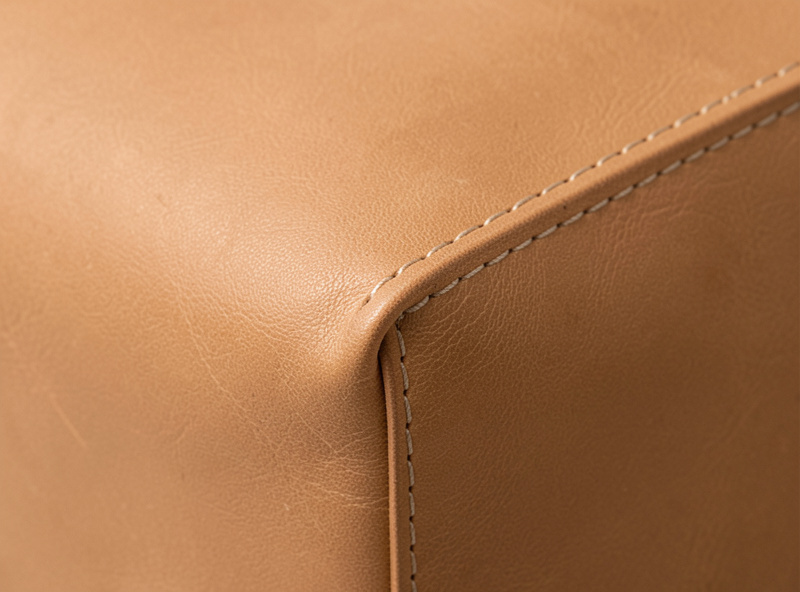
One last honest word. A machine buys you speed and a long, even topstitch; it does not buy you the saddle stitch’s unzip-proof seam or the hand-finished edge. The makers whose work I admire most use both — machine for the long runs and the bag bodies, hand for the stress seams and the small goods. Buy the machine for what it’s genuinely good at, keep your awl stropped for the rest, and you’ll never be cornered by either one.
Frequently Asked Questions
Can a regular sewing machine sew leather?
A regular domestic machine can sew thin soft leather up to about 2 to 3 oz if you fit a leather-point needle (130/705 H-LL), use bonded thread no heavier than Tex 70, and a walking-foot attachment. It cannot handle veg-tan, thick stacks, or folded edges. For anything beyond linings and garment leather you need a walking-foot or compound-feed machine.
What kind of sewing machine do I need for leather?
Match the machine to the heaviest leather you regularly sew. Soft goods and linings: a heavy-duty domestic with a walking foot. Bags, sheaths, and medium straps: a compound-feed (triple-feed) industrial. Belts, harness, and holsters: a 441-class cylinder-arm machine. The feed mechanism matters more than the brand or motor size.
What needle and thread do I use to sew leather on a machine?
Use a cutting-point leather needle sized to your thread: 130/705 H-LL on a domestic, 135×16 on an industrial, 794 on a 441-class machine. Pair it with bonded nylon or polyester thread, typically Tex 70 for wallets, Tex 135 for bags, and Tex 207 or heavier for belts. Needle size and thread size are tuned together.
Why does my machine skip stitches on leather?
The two usual causes are a round-point needle (use a leather cutting point instead) and bulk the presser foot cannot climb. Skive folded edges and overlaps thinner so the foot stays level, slow down at thick corners, and make sure the needle is sized to the thread. A worn or wrong-point needle is the most common single cause.
How long should the stitch be when sewing leather by machine?
Set 5 to 7 stitches per inch, roughly 3.5 to 5 mm. Leather needs a longer stitch than cloth: if the perforations sit too close they connect into a tear line and the seam can rip along it. A longer, even machine stitch is correct for leather, not a compromise.
Is a machine seam as strong as a hand saddle stitch?
No, not in the same way. A machine lays a lockstitch with one needle and one bobbin thread knotted in the middle, so a single cut thread can let the seam run. A hand saddle stitch wraps two threads through every hole and cannot unzip from one break. Machine for speed and long topstitch lines; hand for stress seams and repairable small goods.
Related Guides
- Best Sewing Machines for Leather: Honest Picks by Job
- Industrial vs Domestic Sewing Machine for Leather
- Leather Sewing Machine Needles Guide: Points & Sizes
- Sewing Machine Thread for Leather: Tex Sizes & Types
- Skiving Leather for Machine Sewing: Kill the Bulk
- Leather Seam Finishing on a Machine: Clean Edges