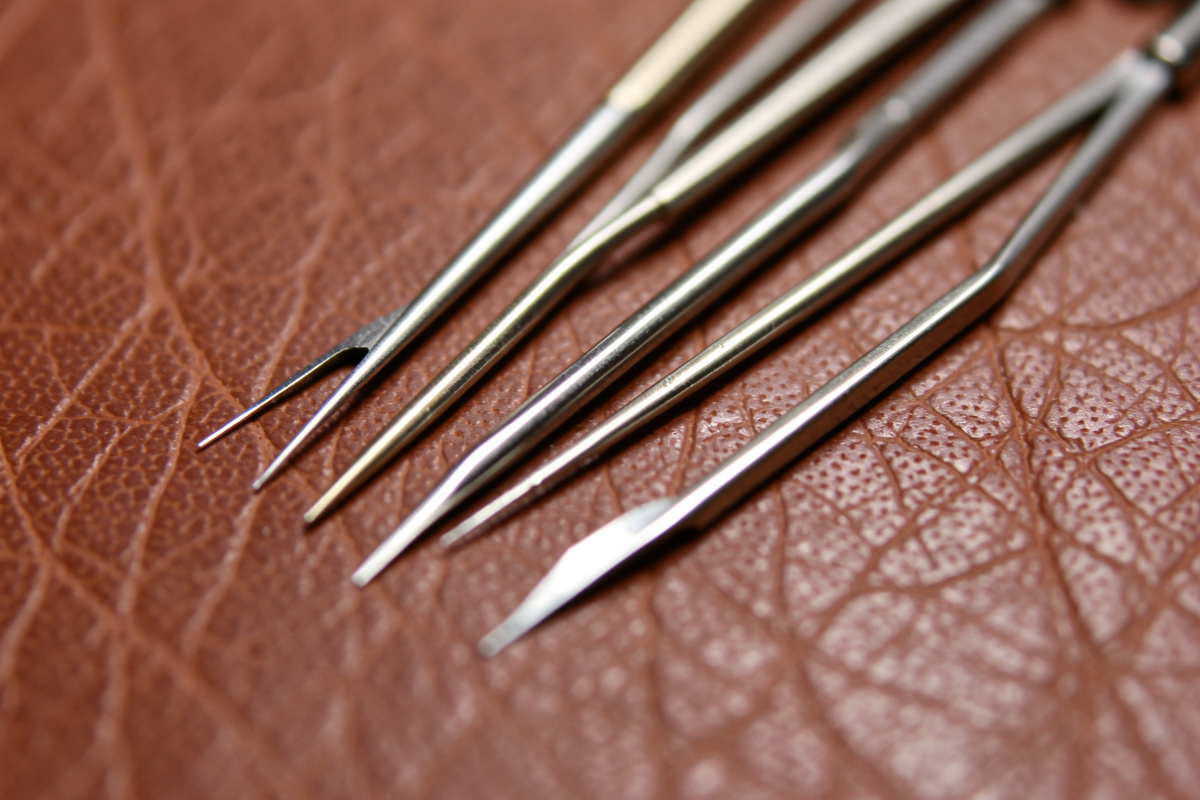
A leather sewing machine needle has a blade-shaped cutting point that slices a tiny clean slit instead of punching a round hole, and you size it to the…
A leather sewing machine needle has a blade-shaped cutting point that slices a tiny clean slit instead of punching a round hole, and you size it to the thread, not the leather. Get the system right for your machine (130/705 H for domestic, 135×16 for industrial walking foot, 794 for 441-class), pick a cutting point, and match the size to the thread — that one chain fixes most leather sewing problems.
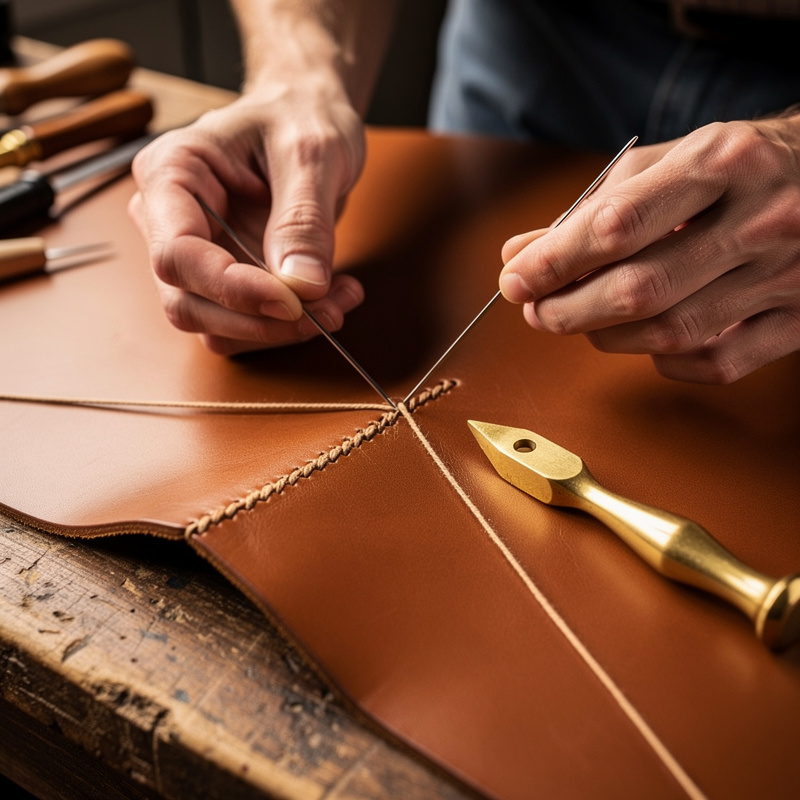
I hand-stitch with a diamond awl, so I think about machine needles the same way I think about my awl blade: the geometry of the point is everything, and a dull or wrong-shaped one wrecks the stitch line no matter how good the rest of the setup is. This guide decodes the systems, the point shapes, and the size-to-thread matching so you can buy the right packet the first time. It’s the needle companion to the main sewing machine for leather guide.
Why a Leather Needle Is Different
A fabric needle has a rounded tip that pushes between threads; a leather needle has a sharpened cutting edge that slices the hide. Use a round point on veg-tan and the needle has to tear its way through, which gives you skipped stitches, a fuzzy chewed seam, and broken needles. The cutting point makes a deliberate clean slit the thread can seat into.
The trade-off is that a cutting point also weakens the leather slightly along the stitch line — you’re cutting fibers, not parting them — which is exactly why machine stitch length runs longer on leather and why you never want a needle bigger than the thread requires. Match the point to the leather (cutting point for firm veg-tan and most chrome-tan; a round point is fine only for soft elastic garment leather and synthetics) and you’re halfway to a clean seam before you touch the tension.
Needle Systems by Machine
The needle system is dictated by your machine, not your preference, and using the wrong one means the needle won’t sit at the right height for the hook to catch the loop — instant skipped stitches. Domestic machines use 130/705 H, industrial walking-foot and compound-feed machines use 135×16 and 135×17, and the heavy 441-class machines use 794 or 7×3.
On a domestic you want the leather-point version of the home system, sold as 130/705 H-LL. On an industrial, 135×16 is the cutting leather point and 135×17 is the round point you’d keep for webbing and synthetics — same system, two tips. The big 441-class machines take system 794 (also written 7×3) in large sizes for heavy thread. Check your manual or the old needle in the machine before buying; the systems are not interchangeable even when the needles look similar in the packet.
Point Shapes Decoded
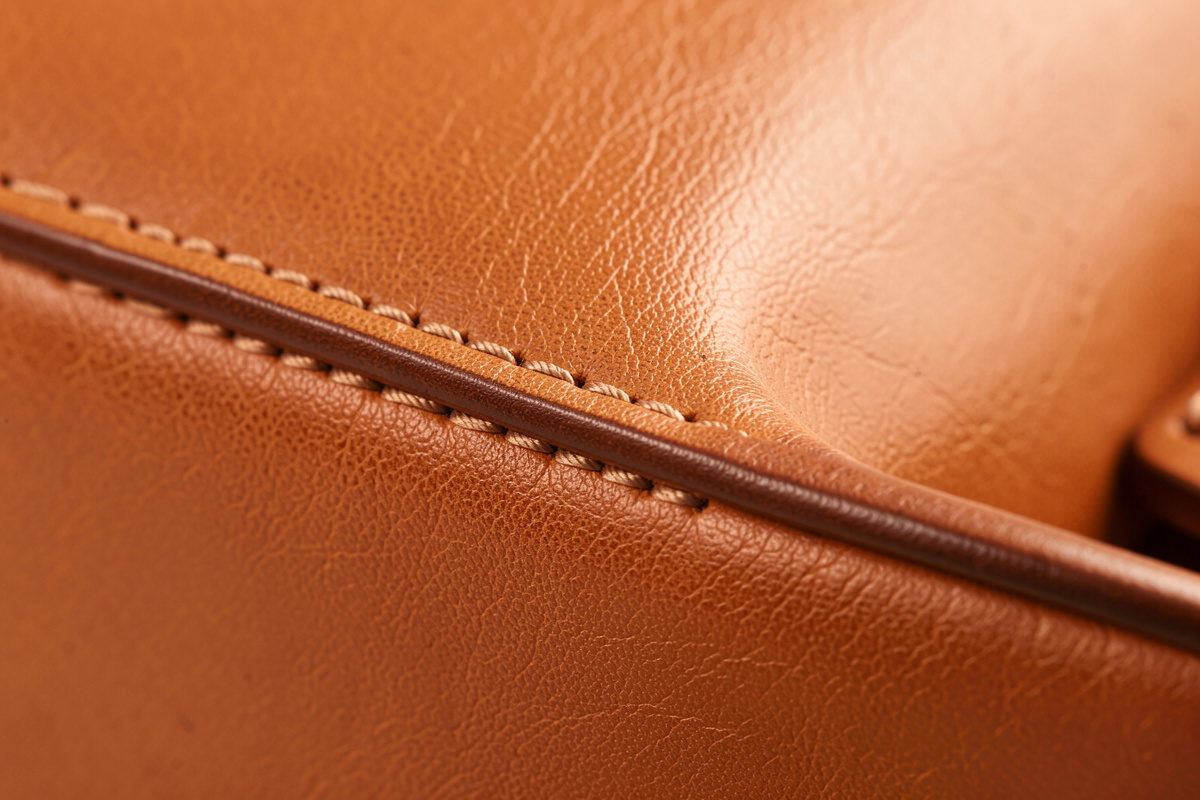
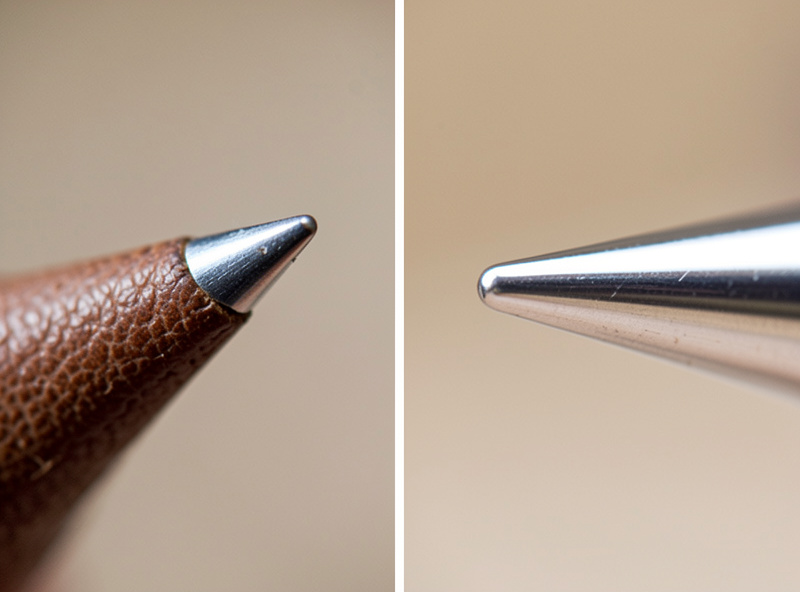
Beyond round versus cutting, leather points come in several blade orientations, and the letter on the packet tells you how the stitch line will look. The two you’ll use most are LR and LL: both cut a slanted slit that makes the machine seam lean like a hand stitch, with LR slanting the stitches one way and LL the other. The rest are specialist tips.
| Point code | Name | Cut / look | Best for |
|---|---|---|---|
| R | Round point | No cut, pushes through | Soft garment leather, synthetics, webbing |
| LR | Left twist, reverse | Slanted slit, stitches lean right | General leather, visible topstitch (most common) |
| LL | Left twist | Slanted slit, stitches lean left | Decorative seams, mirrored stitch slant |
| S | Spear / triangular | Straight inline cut | Stitches in line with the seam, firm leather |
| D | Diamond / tri-point | Diamond slit | Heavy harness and saddlery look |
For most makers, an LR cutting point is the default and the one I’d buy first; it gives that clean, slightly slanted line that reads as a hand seam. Only reach for the others when you want a specific look or you’re sewing something soft enough that a round point won’t tear it. The slant direction is purely cosmetic strength-wise — pick LR unless you have a reason not to.
Sizing the Needle to the Thread
Size the needle to the thread first and the leather second: the eye and groove have to carry the thread cleanly, and the hole has to close around the finished stitch. Too small and the thread shreds passing through the eye; too large and the hole gapes and the stitch looks loose. Needle sizes use the metric Nm number (the blade diameter in hundredths of a millimeter) alongside the US size.
As a working chart: Tex 70 (V69) thread wants an Nm 100–110 (US 16–18) needle, Tex 135 (V138) wants Nm 125–140 (20–22), Tex 207 (V207) wants Nm 140–160 (22–23), and the heavy Tex 277–415 saddlery threads want Nm 180–250 (24–27). When in doubt, go one size up rather than down — a slightly large needle just makes a slightly larger hole, while a slightly small one frays the thread and skips. The full thread side of this equation, including bonded nylon versus polyester, is in sewing machine thread for leather.
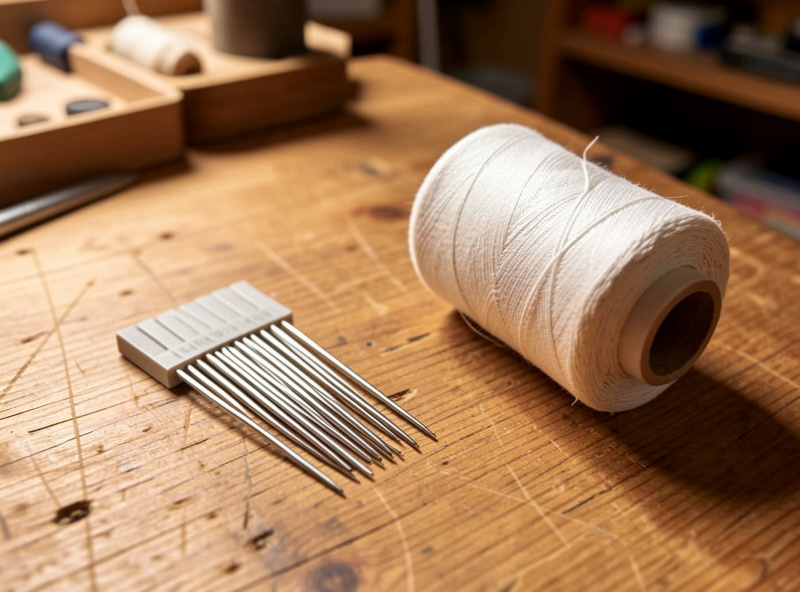
As an Amazon Associate I earn from qualifying purchases. For an industrial machine, a multipack of 135×16 LR leather-point needles in a couple of sizes covers most thread weights and saves you ordering one size at a time.
Reading the Packet
The numbers and letters on a needle packet look cryptic but follow a simple order: system, then size, then point code. A packet marked “135×16 Nm140/22 LR” tells you the system (135×16), the size (Nm 140, US 22), and the cutting point (LR) — everything you need to know it’s a leather needle for an industrial walking-foot machine carrying medium-heavy thread. Once you can read that line, ordering stops being a guessing game.
The two big needle makers you’ll meet are Schmetz and Groz-Beckert, and both are reliable — buy whichever your dealer stocks in the system and point you need rather than chasing a brand. Watch for sellers listing “leather needles” that are actually round points dressed up with a leather photo; the point code is the proof, not the marketing. If the listing won’t tell you the point code, assume it’s a round point and look elsewhere. And keep the systems straight in your head: a 130/705 packet will never fit an industrial, no matter how right the size and point look.
When to Change the Needle
Change the needle far more often than feels necessary — a leather needle dulls quickly because it’s cutting hide every stitch, and a dull point is behind more skipped stitches and chewed seams than any other cause. The moment the machine starts skipping, popping, or leaving a fuzzy hole, swap the needle before you touch anything else.
I treat a machine needle like I treat my awl: the second it stops cutting cleanly it gets replaced or, for the awl, re-stropped — you can read how I keep edges keen in how to sharpen leather tools. A fresh needle is the cheapest fix in the whole craft, so keep a stock in the sizes you use. If a new needle of the right system and size still skips, then look at timing, tension, and bulk; the troubleshooting tree is in leather stitching mistakes and how to fix them. The hand-tool analog for hole-making — pricking irons versus chisels — lives in the leather stitching chisels guide if you do both hand and machine work.
Frequently Asked Questions
What needles do I use for sewing leather on a machine?
Use a cutting-point leather needle in the system your machine takes: 130/705 H-LL for a domestic, 135×16 for an industrial walking-foot machine, and 794 for a 441-class machine. Then size the needle to the thread, from Nm 100 for fine Tex 70 thread up to Nm 250 for heavy saddlery thread.
What is the difference between an LR and LL leather needle?
Both LR and LL are cutting points that make a slanted slit so the stitch line leans like a hand seam. LR slants the stitches one way and LL the other; the difference is purely cosmetic. LR is the most common default for general leather and visible topstitching.
What size needle for Tex 135 bonded thread?
Tex 135 (V138) bonded thread wants an Nm 125 to 140 needle, which is US size 20 to 22. If you are unsure between two sizes, go one size larger rather than smaller: a slightly bigger needle just makes a slightly bigger hole, while one too small frays the thread and skips stitches.
Can I use a regular needle to sew leather?
A regular round-point needle only works on soft garment leather and synthetics. On firm veg-tan or chrome-tan it tears the fibers instead of cutting them, causing skipped stitches, a fuzzy seam, and broken needles. Use a cutting-point leather needle for anything firmer than soft garment hide.
How often should I change a leather sewing machine needle?
Far more often than for fabric, because a leather needle dulls fast cutting hide every stitch. Change it the moment the machine skips, pops, or leaves a fuzzy hole, and start every large project with a fresh needle. A new needle is the cheapest fix in the craft, so keep a stock of your sizes.
Related Reading
- Sewing Machine for Leather: A Maker’s Complete Guide
- Sewing Machine Thread for Leather
- Best Sewing Machines for Leather
- Leather Stitching Chisels Guide
- Leather Stitching Mistakes and How to Fix Them