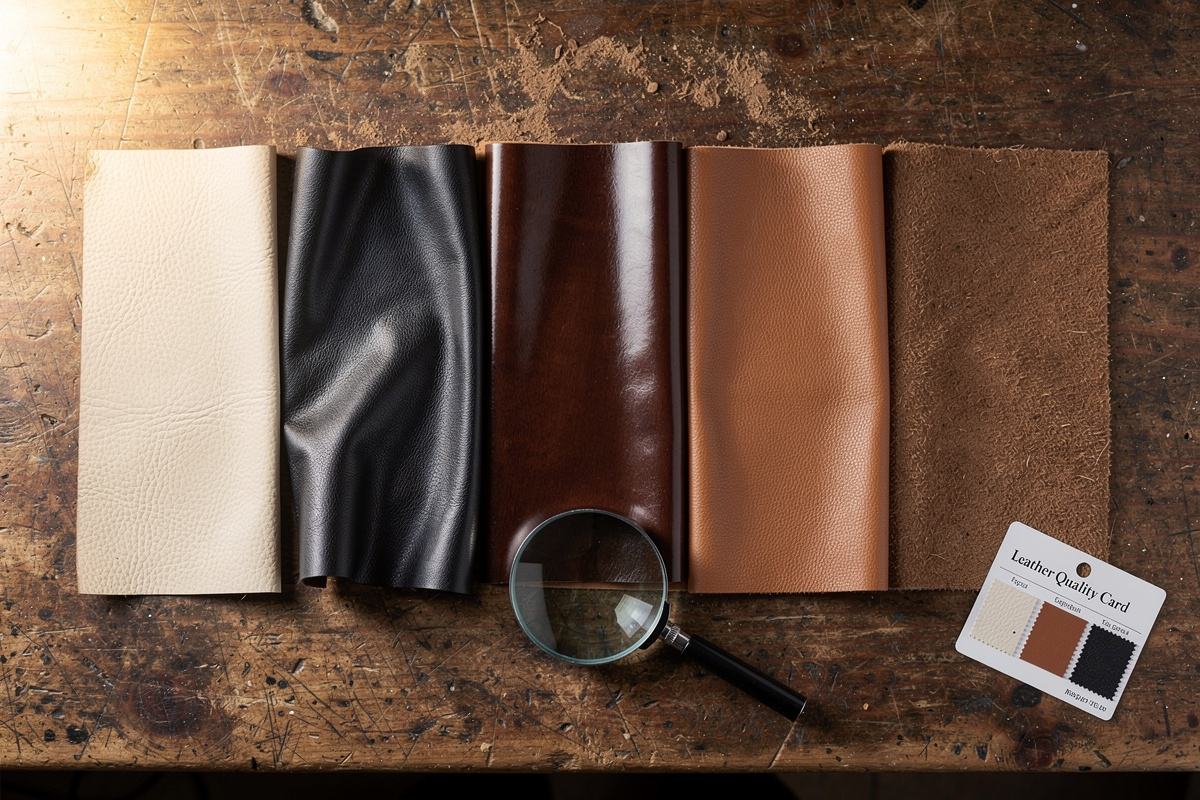
Leather types are categorized along three independent axes: tannage (vegetable, chrome, combination, brain), grade (full grain, top grain, genuine, bonded), and weight (1 ounce thin lining stock through…
Leather types are categorized along three independent axes: tannage (vegetable, chrome, combination, brain), grade (full grain, top grain, genuine, bonded), and weight (1 ounce thin lining stock through 10 ounce belt blanks). Picking the right combination for a project is the single biggest factor in whether your finished piece looks professional or homemade — a $30 wallet built from the wrong leather looks worse than a $5 wallet built from the right one.
This guide covers every leather selection decision a leatherworker faces before they place an order: which tannage to choose for a wallet vs a backpack vs a belt, why full-grain commands premium prices and when top-grain is the right call instead, how to read tannery weight specifications without ending up with belt-thick stock for a card holder, and which animal sources (cow, goat, kangaroo) suit which projects. Linked deep-dives expand each comparison.
I started leatherworking by buying a bag of “genuine leather scraps” from a craft store. None of it would burnish, dye, or hold a stitch line — and I spent weeks thinking I was bad at the craft when the real problem was the material. Vegetable-tanned full-grain leather from a named tannery (I use Hermann Oak and Wickett & Craig) costs about $10 more per hide section and teaches you what the tools are actually supposed to do. The tannage and grade breakdowns below are what I wish someone had explained before my first order.
The Three Axes That Define Every Hide
Every piece of leather can be described by three independent properties: how it was tanned, what part of the hide grade was retained, and how thick it is. Talking about leather without those three numbers is like talking about lumber without species, grade, and thickness — vague enough to be useless. Suppliers list all three on every spec sheet; learn to read them and ordering becomes precise.
| Axis | Common Values | Effect on Final Piece | How to Verify on Sample |
|---|---|---|---|
| Tannage | Vegetable, Chrome, Brain, Combination | Determines dye uptake, burnishing, stiffness | Smell test (veg-tan smells of bark; chrome smells faintly chemical) plus dye absorption test on scrap |
| Grade | Full grain, Top grain, Corrected grain, Genuine, Bonded | Determines patina development and durability | Loupe inspection of grain face — natural pore pattern means full grain |
| Weight | 1 oz to 10 oz (0.4 mm to 4 mm) | Determines what projects the piece can build | Caliper measurement at multiple points; suppliers list nominal weight |
| Animal source | Cow, calf, goat, kangaroo, exotic | Determines stretch behavior, cut consistency, cost | Pore pattern (cow pores are uniform; goat is irregular; kangaroo is fine and tight) |
For a refresher on where leather selection fits in the broader skill stack, the leather working for beginners hub covers the six core skills (cut, edge, stitch, dye, hardware, pattern) in sequence. Leather selection precedes all of them — the wrong leather makes every subsequent step harder. Spend more time picking the right hide than you do on any other decision in your project.
Tannage: How the Hide Becomes Leather
Raw animal hide rots in days. Tanning is the chemical process that crosslinks the protein fibers in raw hide so they resist decay and water damage. The four major tannage categories are vegetable (using bark and plant tannins), chrome (using chromium salts), brain (using animal brain emulsion), and combination (combinations of the above). Each produces dramatically different working properties.
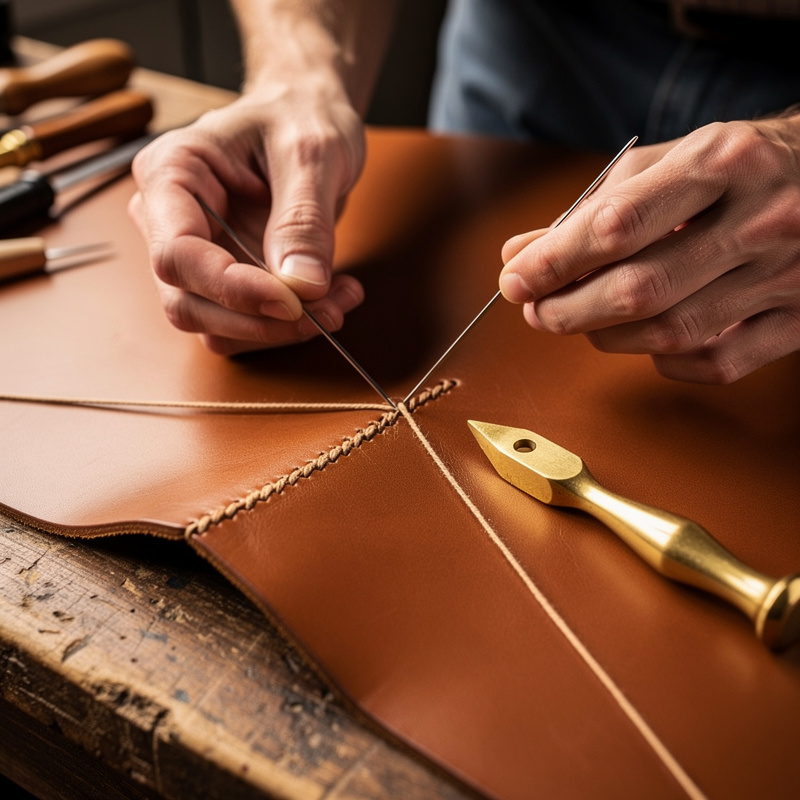
Vegetable tanning is the oldest method, dating back at least 6,000 years. The hide soaks in pits of bark-extract solution for 30-60 days, slowly absorbing tannins that bond to the collagen fibers. The result is firm, water-resistant leather that accepts dye, takes tooling impressions, burnishes smooth, and develops patina. Vegetable-tanned leather is the standard for hand-stitched leather goods — wallets, belts, holsters, sheaths, bound books, saddlery. The large majority of hand-stitched leather projects I see and build use veg-tan for exactly that reason — it is the one tannage that tools, molds, and burnishes the way this craft needs. Within that category, pull-up leather — fat-impregnated veg-tan that lightens visibly at flex points — develops the most dramatic patina in year one; how that aging process works and how to care for it is in the pull-up leather patina guide.
Chrome tanning uses chromium-salt solutions that complete the tanning process in 24-48 hours rather than 30-60 days. The result is softer, drapeable leather that holds vivid colors but rejects most penetrating dyes. Chrome leather is the standard for shoes, jackets, upholstery, and bag linings — anything that needs to flex repeatedly without cracking. Roughly 85-90% of all leather produced globally is chrome-tanned because production is faster and cheaper (a Leather UK industry-facts figure, not a hand-stitching-market number — see the note above on veg-tan’s share of hand-stitched goods specifically). How the two tannages actually compare in a working context — burnishing, dye uptake, edge finishing, and long-term aging — is the subject of the chrome tan vs veg tan leather guide.
Brain tanning is the traditional Native American method using animal brain emulsion. The result is unusually soft, breathable leather (common for moccasins and historical reproductions). Brain-tanned leather is rare commercially and used almost exclusively by historical reenactors and traditional craft practitioners. Combination tanning uses chrome first (for softness) then veg-tan (for body) and produces leathers that balance flexibility and stiffness — popular for handbags and luggage.
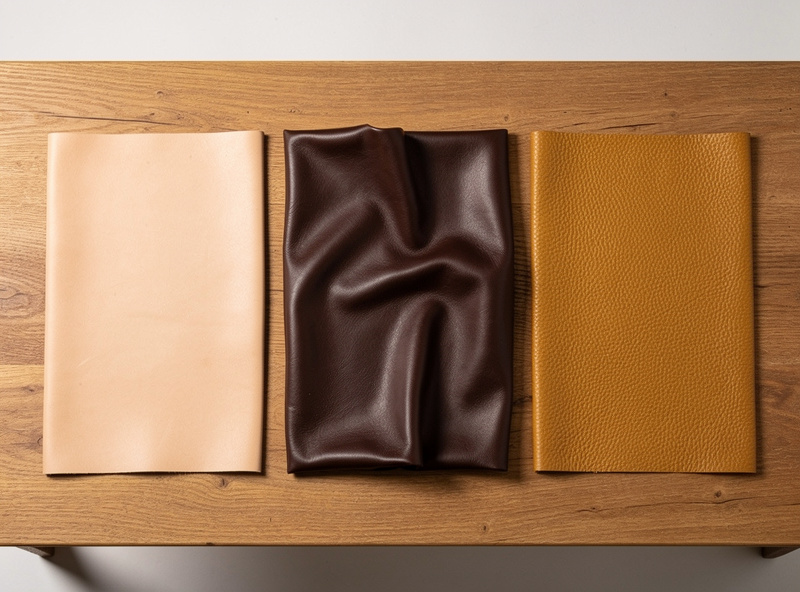
For dye selection on each tannage, the best leather dye for veg-tan review covers alcohol and oil dyes specifically formulated for vegetable-tanned leather; the dye without streaks tutorial covers the prep sequence that makes dye uptake reliable on veg-tan. Chrome-tanned leather rarely needs dyeing because it ships pre-dyed; if you must color chrome leather, surface-acrylic dyes (Angelus) are the only practical option.
Grade: How Much of the Hide Was Kept
The grade scale describes how much of the natural hide surface remains in the finished leather. Full-grain retains the entire surface intact; top-grain has the upper surface sanded off to remove blemishes; corrected-grain has the surface aggressively sanded and an artificial grain embossed on; genuine leather is recombined fibers with surface coating; bonded leather is shredded fiber pulp with adhesive. Higher grades cost more and last dramatically longer.
The full grain vs top grain leather guide covers the full-vs-top-grain distinction in detail: full-grain develops the rich patina the hobby is famous for; top-grain stays flatter and less interesting but hides cosmetic blemishes more reliably. For first projects, full-grain veg-tan is the canonical choice because the patina forgives early-stage technique imperfections.
Below top-grain, the quality drops dramatically. Corrected-grain leather has had so much sanding done that the embossed surface is what you see — and that surface delaminates after 1-2 years of use. Genuine leather is recombined leather scrap held together with adhesive; it splits and cracks under flex. Bonded leather is leather dust mixed with polymer; it disintegrates within months on flex points. Avoid these three categories for any hand-stitched project.
| Grade | What It Is | Lifespan in Daily Use | Suitable Projects | Cost vs Full-Grain |
|---|---|---|---|---|
| Full-grain | Entire surface intact | 20+ years | Wallets, belts, holsters, premium bags | 100% (baseline) |
| Top-grain | Top layer sanded smooth | 10-15 years | Mid-range bags, shoes, upholstery | ~60-75% |
| Corrected-grain | Heavily sanded with embossed grain | 1-3 years | Mass-market goods, fashion items | ~30-40% |
| Genuine leather | Recombined leather fibers | 1-2 years | Cheap belts, mass production | ~15-20% |
| Bonded leather | Leather dust + polymer | 3-12 months on flex points | Avoid for hand-stitched work | ~5-10% |
The cost and lifespan columns above are my own working estimates from comparing supplier price lists and my own pieces over the years, not a published industry table — treat them as a general planning guide, not a guaranteed figure for any specific hide. “Genuine leather” is a loaded term. Marketing departments use it to imply quality, but the phrase legally describes the lowest grade of actual leather (above bonded but below corrected-grain). When a product label says nothing more specific than “genuine leather,” assume the lowest legally defensible interpretation. Quality leather goods specify “full-grain” or “top-grain” by name; the absence of those terms is a signal.
Weight: How Thick the Leather Is
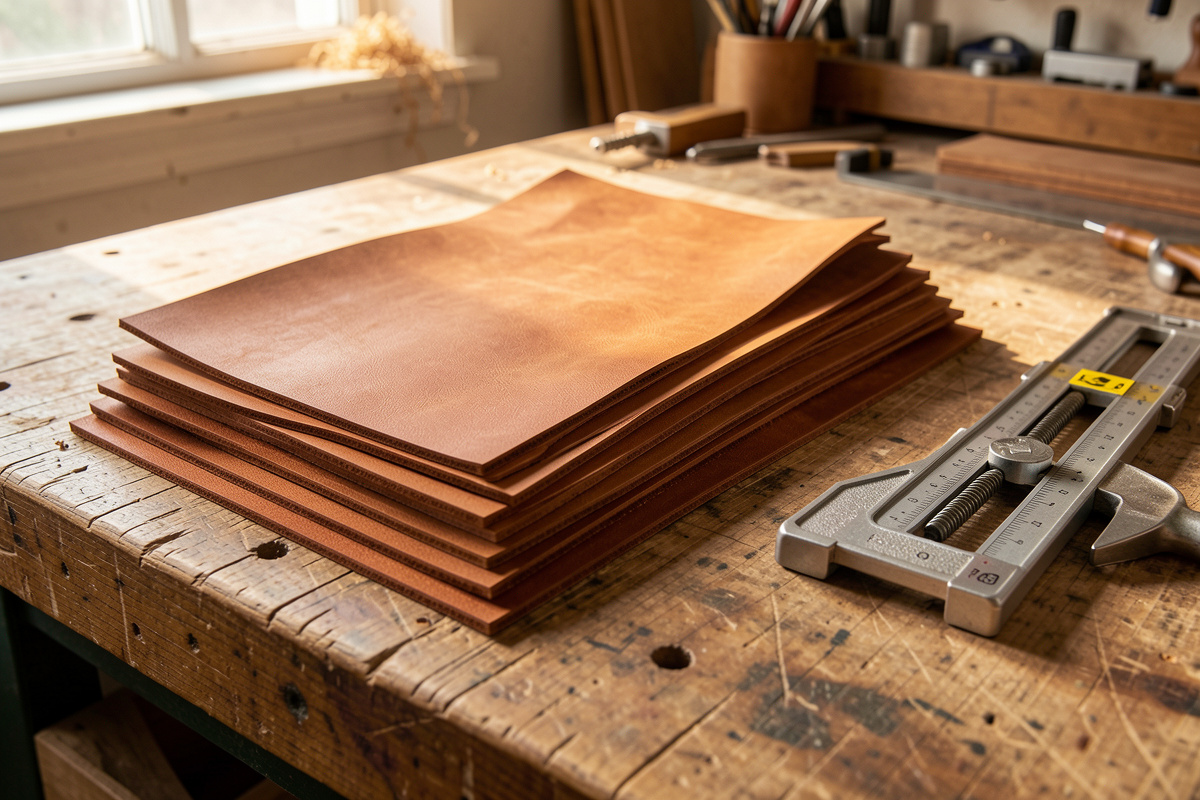
Leather weight is measured in ounces per square foot in the imperial system, or millimeters of thickness in the metric system. Suppliers list nominal weight ranges (e.g., “4-5 oz”) because hide thickness varies across the body. The conversion is roughly 1 ounce equals 0.4 millimeters; 5 ounces equals 2.0 mm. Weight controls what you can build — picking the wrong weight is the most expensive single mistake a beginner makes.
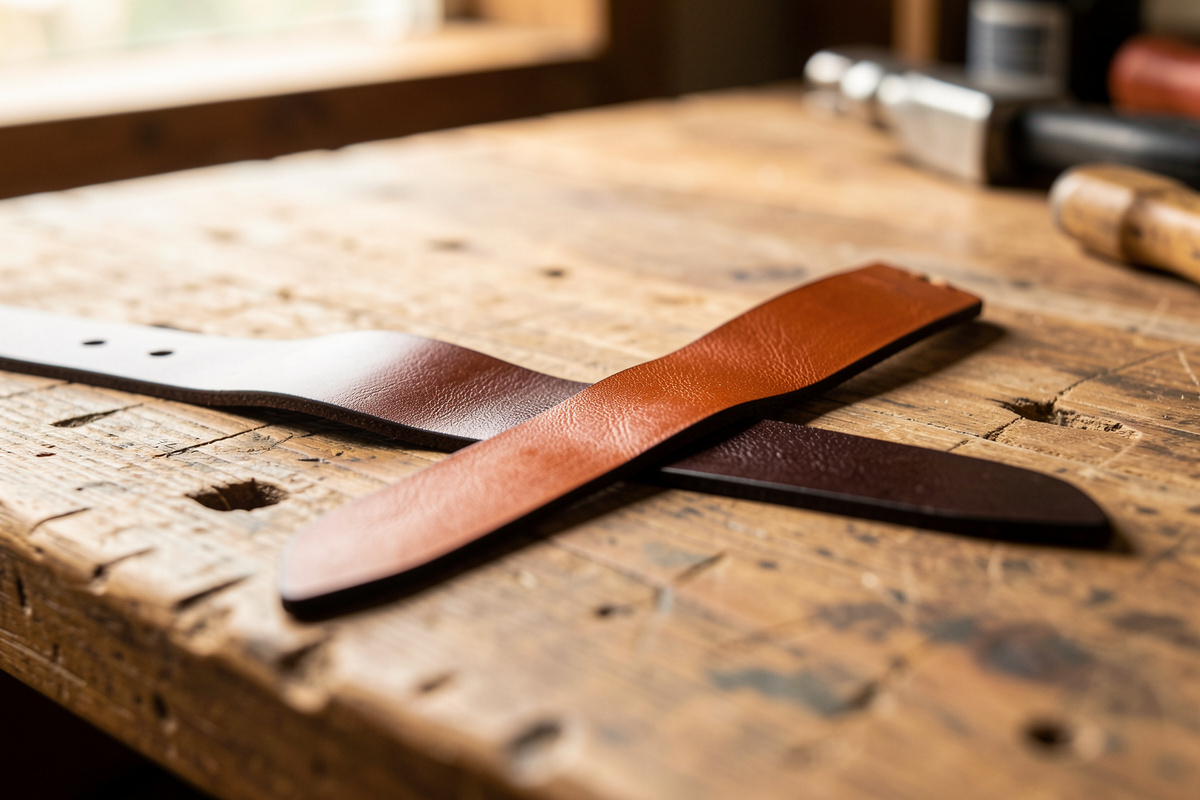
For wallet building, 4-5 oz (1.6-2.0 mm) is the universal exterior weight, paired with 2-3 oz (0.8-1.2 mm) for interior pocket linings. The best leather for wallets guide covers exterior and lining selection in detail. For belts, 7-9 oz (2.8-3.6 mm) is the standard; under 7 oz produces a flimsy belt that curls; over 9 oz produces a belt that is hard to fold around hardware.
Thinner leathers (1-2 oz, 0.4-0.8 mm) are used for bag linings, gloves, and shoe uppers. Mid-weights (3-5 oz, 1.2-2.0 mm) cover the bulk of small-leather-goods (wallets, card holders, watch straps, key fobs). Heavier weights (5-8 oz, 2.0-3.2 mm) cover bags, holsters, and structured pieces. Heaviest weights (8-12 oz, 3.2-5.0 mm) are belt blanks, saddle skirting, and tool sheaths.
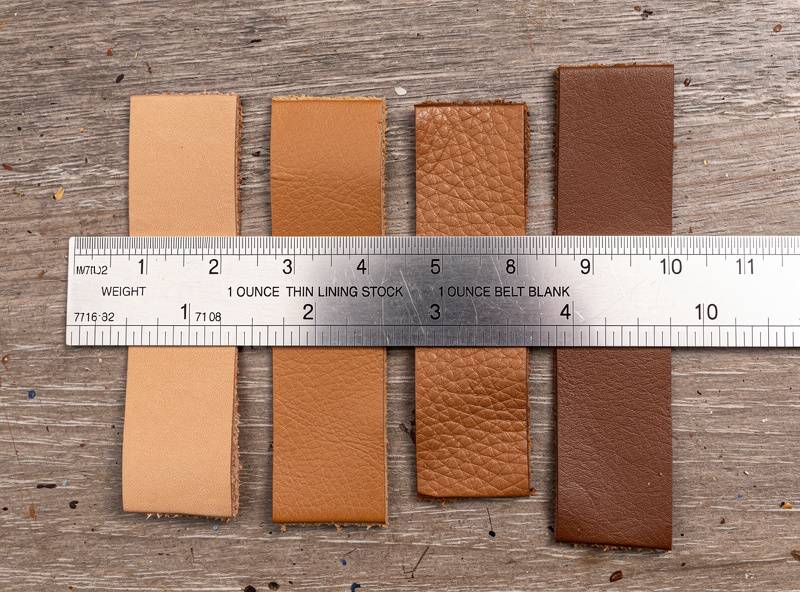
Splitting and skiving are the techniques that adjust weight after the hide is sourced. A splitter machine reduces overall thickness; a skiving knife thins specific areas (e.g., the fold of a wallet) without affecting the rest. Most beginners do not own splitters and instead order their target weight directly from the tannery; skiving knives are a moderate $20-30 investment that pays off on second project onwards.
Animal Source: Cow, Calf, Goat, Kangaroo, Exotic
The animal that produced the hide affects the working properties as much as the tannage. Cow leather (the default, used in 95% of leather goods) is uniform, durable, and available in every weight. Calf leather is tighter-grained, softer, and more expensive. Goat leather is irregular-grained but unusually strong for its weight (popular for jackets and gloves). Kangaroo leather is the finest-grained and strongest-per-weight (used in high-end shoes and motorcycle gloves). Exotic leathers (alligator, ostrich, snake, stingray) are decorative and extremely expensive.
For hand-stitched leather goods, cow leather covers 90%+ of all projects. Within cow, the most common variants are bridle leather (English-style, oil-dressed, used for premium belts and equestrian goods), Latigo (oil-and-wax dressed, used for tack and outdoor goods), saddle skirting (heavy weight, firm temper, used for saddles and holsters), and English bridle (premium hand-finished, used for $200+ wallets and belts).
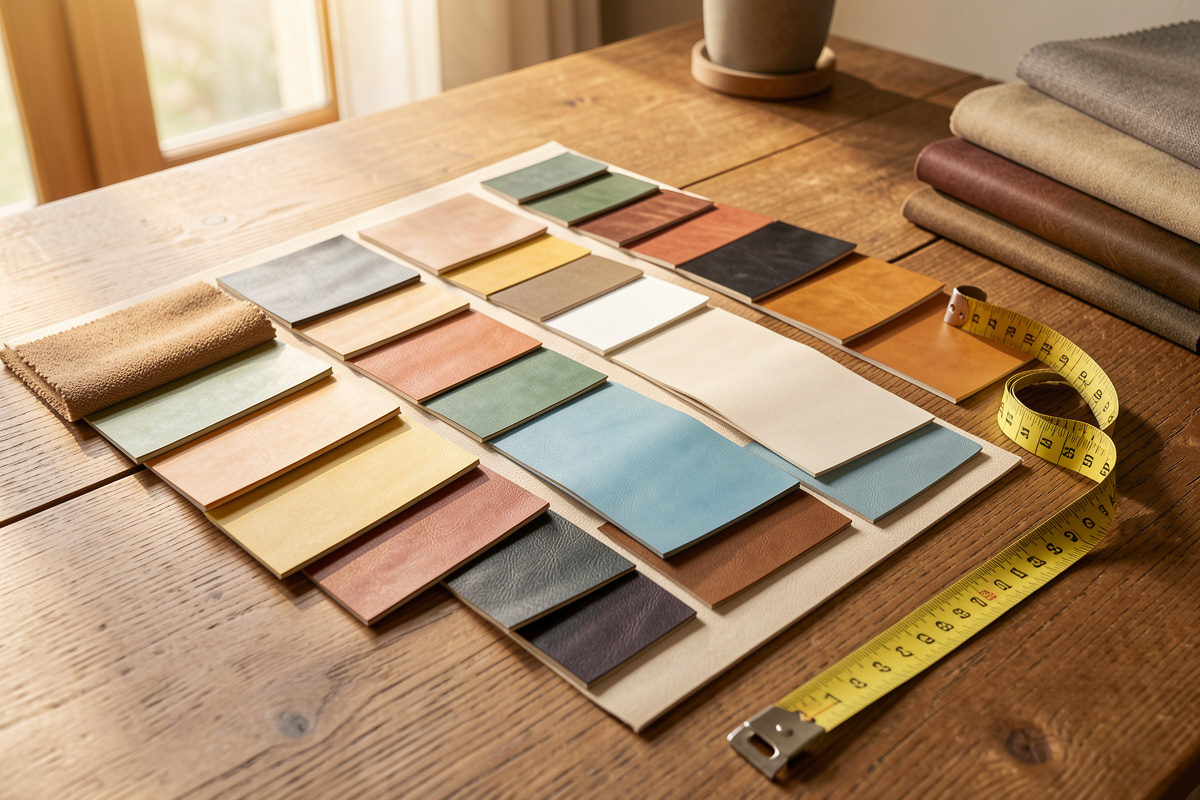
Two important surface finishes sit outside the full-grain / top-grain grade scale: suede (the buffed flesh side of split leather) and nubuck (the buffed grain side of full-grain leather). Both are napped, not smooth — suede is soft and drapeable, nubuck is firmer and more water-resistant. Which surface finish suits which project and how they differ in finishing, conditioning, and dyeing behavior is covered in the suede vs nubuck leather comparison. Tannery names matter more than animal source for most beginners. Wickett & Craig (US, Pennsylvania) is the standard for premium veg-tan; Hermann Oak (US, Missouri) is the historical brand favored by saddlery; Sedgwick (UK) is the standard for English bridle leather; Tärnsjö (Sweden) is premium veg-tan with exceptional consistency. Buying from any of these four costs more per square foot but eliminates 90% of “bad hide” lottery — the leather lays consistently with predictable working properties.
For exotic and specialty leathers, the price-to-skill curve is steep. Beginners should master cow leather (probably for at least 30 projects) before attempting alligator, snake, or kangaroo. Exotic hides are unforgiving of cutting errors, expensive to replace, and require specialized cutting and stitching techniques. Shell cordovan — horse rump leather, not technically an exotic but among the most expensive hides in the hand-stitching world — sits in a category of its own; what it is, why it costs four to six times cow leather, and when it is worth the price is covered in the shell cordovan leather guide.
Leather Selection By Project Type
Each project type has a typical leather specification. Use the table below as a starting point; adjust based on individual project goals (lighter weight for travel-friendly wallets, heavier weight for daily-carry holsters, etc.).
| Project | Tannage | Grade | Weight (oz) | Recommended Tannery |
|---|---|---|---|---|
| Bifold wallet exterior | Vegetable | Full-grain | 4-5 oz | Wickett & Craig, Hermann Oak |
| Wallet interior pockets | Vegetable | Full-grain | 2-3 oz | Same; split if needed |
| Card holder (3-slot) | Vegetable | Full-grain | 3-4 oz | Wickett & Craig, Hermann Oak |
| Belt (1.5 inch) | Vegetable | Full-grain | 7-9 oz | Sedgwick (English bridle), Hermann Oak |
| Watch strap | Vegetable or chrome | Full-grain | 3-4 oz | Hermann Oak (veg) or premium chrome |
| Bag (small messenger) | Combination or chrome | Full-grain or top-grain | 4-6 oz | Italian premium tannery |
| Holster (pancake) | Vegetable (must wet-form) | Full-grain | 8-9 oz | Hermann Oak saddle skirting |
| Key fob | Vegetable | Full-grain | 4-5 oz scrap | Any veg-tan supplier |
| Tool roll | Vegetable or oiled | Full-grain | 5-6 oz | Latigo or Hermann Oak skirting |
The bifold wallet build guide uses the wallet specification above; the card holder pattern uses the card holder specification. Both projects are forgiving of minor leather variations as long as you stay within the recommended ranges.
Reading Tannery Spec Sheets
Tannery websites and catalogs use shorthand that confuses beginners. The standard spec line looks like: “Hermann Oak Russet 4-5 oz Full Grain Veg-Tan Side.” That breaks down as: tannery name (Hermann Oak), color/finish (Russet — natural undyed), weight range (4-5 oz), grade (Full Grain), tannage (Veg-Tan), and cut format (Side — half a hide, the most common purchase format).
Cut formats matter. A “side” is half a hide split lengthwise; a “shoulder” is the front quarter of a hide; a “belly” is the lower section (softer, more stretchy); a “back” is the central section (firmest temper, most consistent). Beginners should buy sides — they offer the most material per dollar and contain a mix of qualities for learning.
“Temper” describes how stiff the leather feels. Tannery descriptions use terms like “firm temper” (stiffer, holds shape well, used for belts and holsters), “regular temper” (medium stiffness, used for wallets and small goods), “soft temper” (drapeable, used for bags and clothing). Temper is partly a tannage choice and partly a finishing choice; ask the tannery if unclear.
Pricing per square foot varies dramatically by quality. Wickett & Craig and Hermann Oak full-grain veg-tan costs roughly $8-15 per square foot at retail; a typical wallet uses 0.8-1.2 sq ft including waste. Bonded leather costs $1-2 per square foot but should be avoided. The cheapest reliable working leather is Tandy’s Craftsman Oak at $5-7 per sq ft — acceptable for practice, lower-quality finish than premium tanneries.
Leather Storage and Handling
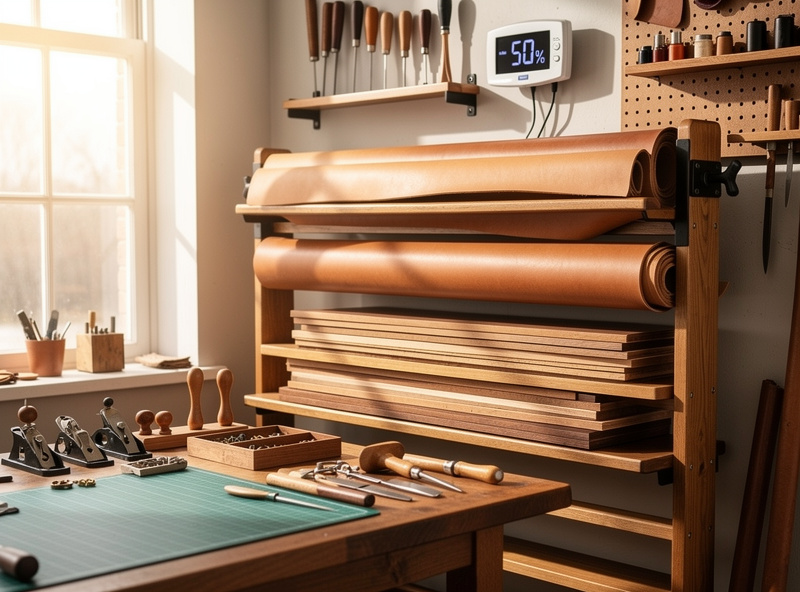
Leather is hygroscopic — it absorbs and releases moisture from the air. Long-term storage requires a stable environment: 40-60% relative humidity, 60-75°F temperature, no direct sunlight, no contact with metal (which can transfer rust stains). Leather rolled with the grain side facing inward stays flatter than leather stored flat under weight.
The 3D-printed leather tooling guide covers printable storage solutions (rolled-leather holders, hide-rack systems) for workshop organization. Most working leatherworkers buy hides as needed rather than stockpiling; warehoused leather can dry out, fade, or absorb moisture before use.
Handling fresh hides: pick up by the corners, never with hooks or clamps that can leave marks. Lay flat on clean surfaces only — wood, denim canvas, or kraft paper. Avoid contact with hand creams, hair products, or food oils; finger oil transfers permanently to natural leather and shows up as dark spots after dyeing.
For leather that has dried out (months in dry storage), restoration is possible: condition with neatsfoot oil (one thin coat with a damp cotton cloth, allow 12 hours to penetrate, repeat if needed), or use a leather conditioner like Bick 4 or Aussie. Over-conditioning is worse than under-conditioning — too much oil produces a greasy surface that resists dye. Apply minimum needed and stop.
Faux Leather and Alternatives
Faux leather (sometimes called PU leather, polyurethane leather, or vegan leather) is plastic — typically polyurethane or polyvinyl chloride bonded to a fabric backing. It looks like leather at a distance but lacks the breathability, patina development, and longevity of real leather. Faux leather is suitable for fashion items with short product lifecycles; it is unsuitable for hand-stitched goods that should last decades.
Mushroom leather (Mylo, made from mycelium) and pineapple leather (Piñatex, made from pineapple leaf fibers) are emerging alternatives positioned as sustainable replacements for cattle leather. Their working properties differ from animal leather and are still being characterized. For beginners, these are experimental rather than reliable choices.
Some leatherworkers explore alternative working surfaces. Laser engraving on vegetable-tanned leather is a popular adjunct technique that adds branded marks; CNC-cut leather patterns and form blocks covers production-scale cutting. Both work best on full-grain veg-tan because the cut quality and engraving response are most predictable.
For the at-home tests — edge look, grain regularity, smell, water drop — the real leather vs bonded leather guide walks through each check with what a fake looks like under a loupe.
Frequently Asked Questions
What are the different types of leather?
Leather is categorized by tannage (vegetable, chrome, brain, combination), grade (full-grain, top-grain, corrected-grain, genuine, bonded), weight (1 to 10 ounces), and animal source (cow, calf, goat, kangaroo, exotic). Picking the right combination is the biggest decision in any project.
What is the highest quality leather?
Full-grain vegetable-tanned leather from a premium tannery (Wickett and Craig, Hermann Oak, Sedgwick, Tärnsjö) is the gold standard. It retains the entire natural hide surface, develops patina, and lasts 20-plus years. Cost is 8 to 15 dollars per square foot at retail.
What is the difference between full-grain and top-grain leather?
Full-grain retains the entire natural hide surface and develops the rich patina that defines premium leather goods. Top-grain has the upper surface sanded smooth, which removes natural blemishes but flattens the look. Full-grain is the choice for premium wallets and belts.
Is genuine leather real leather?
Yes, but at the lowest legal grade. Genuine leather is recombined leather fibers with surface coating, lasting 1 to 2 years in daily use before splitting and cracking. The phrase signals low quality. Look for full-grain or top-grain on labels for quality goods.
What weight leather should I use for a wallet?
4 to 5 ounce (1.6 to 2.0 mm) full-grain vegetable-tanned leather for the wallet exterior, paired with 2 to 3 ounce (0.8 to 1.2 mm) full-grain veg-tan for the interior pocket linings. Mixing weights inside one project is standard professional practice.
What is bridle leather?
Bridle leather is English-style oil-dressed vegetable-tanned full-grain leather, originally developed for horse equipment. It is rich in fats and waxes, has a hand-glazed finish, and is favored for premium wallets, belts, and luggage. Sedgwick (UK) is the canonical bridle tannery.
Can vegetable-tanned leather get wet?
Yes, but with care. Veg-tan absorbs water and stiffens as it dries. Brief exposure (rain, hand washing of pieces) is harmless if dried slowly at room temperature. Prolonged soaking causes water-marking and grain damage. Treat with leather conditioner if frequently exposed.
Related Guides
- Full Grain vs Top Grain Leather Explained
- Best Leather for Wallets: Thickness, Type, Grain
- Best Leather Dye for Veg-Tan: 8 Brands Tested
- Leather Working for Beginners: Complete Starter Guide
- How to Make a Leather Bifold Wallet