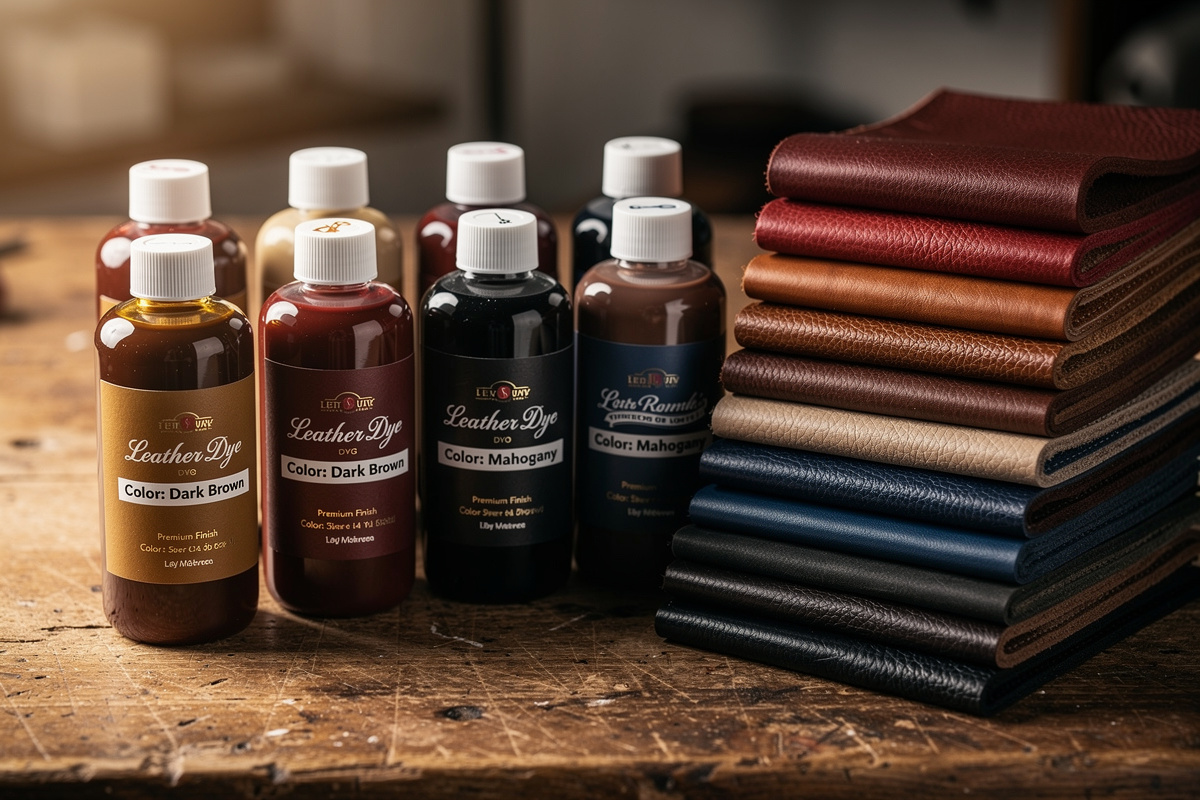
The best leather dyes for vegetable-tanned leather in 2026 are Fiebings Pro Oil Dye (roughly 9-12 dollars per 4 oz, most consistent black and brown), Angelus Acrylic Leather…
The best leather dyes for vegetable-tanned leather in 2026 are Fiebings Pro Oil Dye (roughly 9-12 dollars per 4 oz, most consistent black and brown), Angelus Acrylic Leather Dye (8-15 dollars per 4 oz, best color range), and Wuta Leather Dye (roughly 10-19 dollars per 30ml — Wuta doesn’t sell a 4 oz bottle, only 30ml and 100ml). Most hobbyists settle on Fiebings Pro Oil Dye for browns and blacks, Angelus for unusual colors like navy, burgundy, and bright accents. The leather dyeing hub covers when each of these dyes is the right call and how to seal them so the color stops bleeding.
Leather dye choice is the difference between a finished piece that looks rich and uniform versus one that looks patchy with brush strokes visible. Eight brands compete for the home-leatherwork market in 2026, and they perform very differently on identical hides. This guide ranks the eight most-used dyes by penetration, color consistency, fade resistance, and ease of use — based on side-by-side tests on Hermann Oak veg-tan.
I bought Angelus dyes for my first year because they were the cheapest option at the craft store. The colors were fine but the consistency varied between batches. Switching to Fiebing’s Pro Oil Dye for blacks and browns gave me reliable results across every piece. The 8-brand comparison below is based on side-by-side testing on identical Hermann Oak panels — not manufacturer claims.
As an Amazon Associate I earn from qualifying purchases.
What Makes a Good Leather Dye
Five qualities separate quality leather dyes from poor ones: deep penetration into the leather fibers (not just surface coating), color consistency from bottle-to-bottle, fade resistance over years of use, ability to layer for color depth, and clean burnishing afterward. Many “premium” dyes fail on at least one of these — and several budget options actually outperform premium pricing.
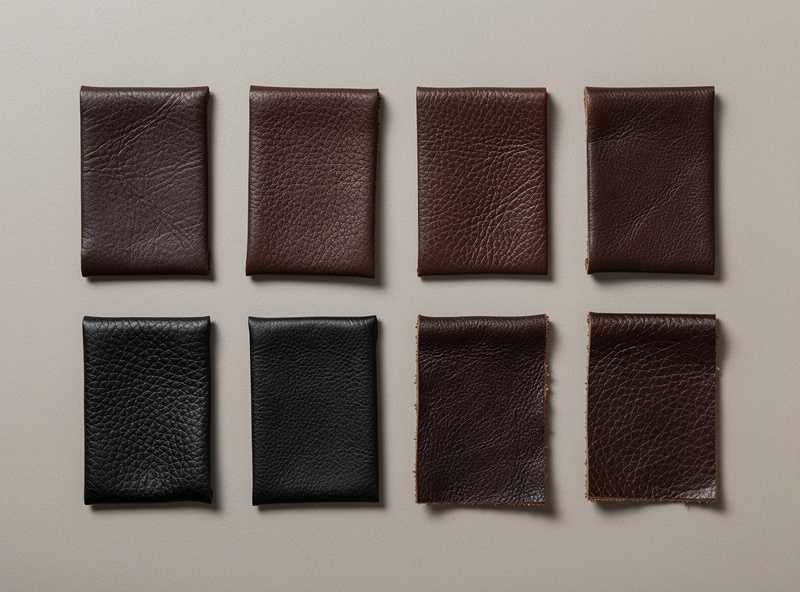
The five quality criteria explained:
- Penetration depth: Quality dyes penetrate 0.3-1mm into the leather fibers, so abrasion does not expose undyed fiber. Cheap dyes only coat the surface and show the unbleached fibers when scratched.
- Color consistency: Bottle-to-bottle variation should be minimal. Some Asian-import brands vary 10-20% in tint between bottles of the same color, making large projects impossible.
- Fade resistance: Quality dyes hold their color through 5-10 years of UV exposure. Poor dyes fade to a different color (browns turning red, blacks turning dark gray) within 18 months.
- Layerability: Multiple thin coats should darken the color uniformly. Some dyes streak when layered because the carrier evaporates inconsistently between coats.
- Burnishing compatibility: Some dyes form a film on the surface that prevents proper edge burnishing. Quality dyes leave a clean fiber surface that takes Tokonole or Gum Tragacanth without resistance.
For burnishing context, see our companion how to burnish leather edges with Tokonole guide. The dye-then-burnish sequence requires compatibility — get the dye wrong and the burnishing fights you.
Top Picks for 2026
Three brands cover almost every veg-tan dyeing need: Fiebings Professional Oil Dye for blacks and browns (the most-used dye in US leatherwork), Angelus Acrylic Leather Dye for unusual colors and water-based safety, and Wuta Leather Dye for European premium work. Each handles a different niche — having Fiebings in stock for browns and Angelus for accent colors covers most projects.
Specific recommendations:
- Fiebings Pro Oil Dye (roughly 9-12 dollars per 4 oz — verified on Fiebing’s own product page): The hobbyist standard. Deep penetration, excellent fade resistance. Best blacks and browns on the market. Solvent-based — needs ventilation. Color codes Pro Oil and regular oil are different formulations; choose Pro Oil.
- Fiebing’s Leather Dye, spirit/alcohol-based (roughly 7-9 dollars per 4 oz): This is the cheaper, older-style Fiebing’s line — worth naming correctly, because it’s alcohol-based, not another oil dye. Lighter, less colorfast pigmentation than Pro Oil, and it dries faster since the carrier is alcohol rather than oil. Acceptable for practice pieces; Pro Oil is better for anything that leaves the bench.
- Angelus Acrylic Leather Dye (8-15 dollars per 4 oz): Water-based, no harsh fumes, dozens of colors including bright reds, navy, purples. Slightly less penetration than Fiebings but better color range. Best for accent dyeing and unusual color projects.
- Wuta Leather Dye (roughly 10-19 dollars per 30ml, also sold in 100ml — no 4 oz bottle exists): Italian-sourced premium dye sold through a UK-based leathercraft retailer. Excellent saturation and fade resistance. More expensive per ml than Fiebings but produces archive-grade color depth.
- Tandy Eco-Flo Pro Waterstain (roughly 14-15 dollars per 8.5 oz — Tandy only sells this in 8.5 oz and 33.8 oz, not 4 oz): Water-based, easy cleanup. Lighter color saturation than Fiebings; best for stains and color washes rather than full saturation.
- Saphir Teinture Française (roughly 18-22 dollars per 50ml, also sold in 500ml — no 4 oz bottle): Premium French dye, often used in Hermes-tier leather work. Beautiful color depth but expensive and harder to source.
- Tarrago Self-Shine Color Dye (roughly 12-18 dollars per 25ml — Tarrago’s bottle is 25ml, not 4 oz): Combination dye-and-finish. One product that dyes and seals; results inconsistent on hand-applied leatherwork.
- Resolene-tinted finish: Not a true dye — Tan-Kote or Resolene with added pigment. Surface-level only; flakes off under wear. Skip.
For starting out, buy a 4 oz bottle of Fiebings Pro Oil in saddle tan plus a 4 oz of black, plus 1-2 colors from Angelus Acrylic for accents. About 30-45 dollars total covers 90% of dyeing needs for the first year. Read about specific dyeing technique in our how to dye leather without streaks guide.
Comparison Table: Top 8 Leather Dyes for Veg-Tan
| Brand | Price / Bottle Size | Type | Penetration | Color Range | Best For |
|---|---|---|---|---|---|
| Fiebings Pro Oil | 9-12 dollars / 4 oz | Solvent-based oil | Excellent | 15+ colors | Browns, blacks, reliable |
| Fiebing’s Leather Dye | 7-9 dollars / 4 oz | Alcohol/spirit-based | Good | 20+ colors | Budget alternative |
| Angelus Acrylic | 8-15 dollars / 4 oz | Water-based acrylic | Medium | 50+ colors | Unusual accents |
| Wuta Leather Dye | 10-19 dollars / 30ml | Solvent-based | Excellent | 10 colors | European premium |
| Tandy Eco-Flo Pro | 14-15 dollars / 8.5 oz | Water-based | Light | 20+ colors | Stains, color washes |
| Saphir Française | 18-22 dollars / 50ml | Solvent-based | Excellent | 10 colors | Archive-quality work |
| Tarrago Self-Shine | 12-18 dollars / 25ml | Combination | Medium | 15+ colors | One-step finishing |
| Resolene-tinted | 15-20 dollars / 4 oz | Surface finish | Surface only | Custom mix | Skip — not real dye |
Pricing reflects 2026 retail availability through Tandy, Wuta’s own storefront, and direct from the manufacturer where applicable — note that Wuta, Saphir, and Tarrago don’t sell in 4 oz bottles at all, only their native metric sizes (30ml/100ml, 50ml/500ml, and 25ml respectively). Larger sizes (1 quart, 1 gallon on the US brands) lower per-ounce cost roughly 30-40% but are mostly relevant for production shops.
Which Dye Type Should You Choose
The choice between solvent-based oil dyes (Fiebings, Wuta), water-based acrylics (Angelus, Tandy Eco-Flo), and premium European blends (Saphir) breaks down to three concerns: deep color penetration, color range available, and ventilation requirements. Solvent-based oils penetrate deepest and last longest; water-based acrylics offer the widest color palette and safer indoor use.
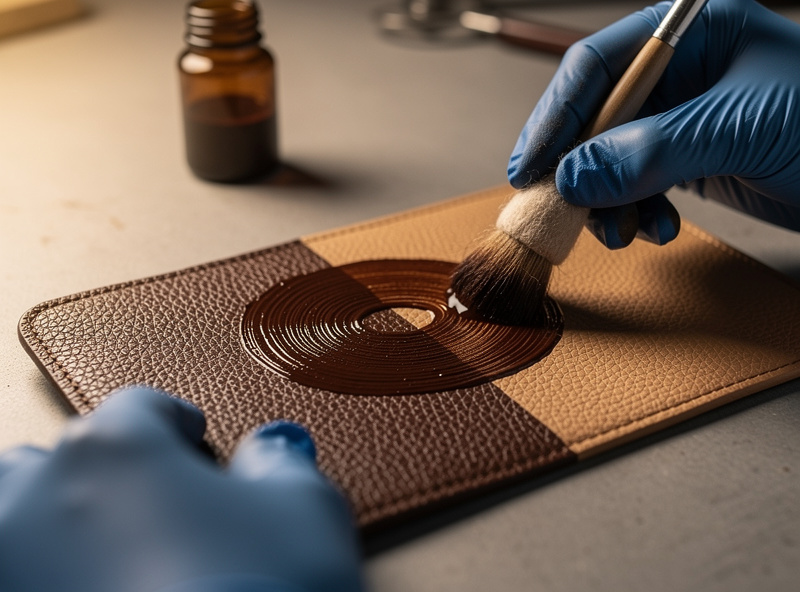
Type-by-type breakdown:
- Solvent-based oil dyes (Fiebings, Wuta): Deepest penetration, longest fade resistance, best for daily-use items like wallets. Strong solvent smell — requires ventilation. Cleanup with mineral spirits.
- Water-based acrylic dyes (Angelus): Easier to use indoors, water cleanup, wider color range, slightly less penetration. Excellent for accent colors and projects where exact custom colors matter.
- Premium solvent-based (Saphir, Wuta): Highest pigmentation density, most uniform color across batches, most expensive. Worth it for archive-grade or commercial work.
- Combination dye-finish products (Tarrago Self-Shine): Convenient single-step but quality compromises in both dyeing and finishing. Skip for any serious project.
- Surface-stain finishes (Eco-Flo, Resolene-tinted): Not real dyes — they color the surface only. Acceptable for color-wash effects but not for items needing real dyed depth.
Most home leatherworkers stock a Fiebings Pro Oil dark brown, a Fiebings Pro Oil black, and 2-3 Angelus colors for accents. About 40-60 dollars total covers 95% of dyeing for the first 2 years.
Common Dyeing Mistakes That Ruin Color
Five mistakes ruin even premium dye results: insufficient surface prep, applying dye too thick, using the wrong applicator type, dyeing chrome-tan with veg-tan dye, and skipping the post-dye finish. Each one shows up as patchy color, streaks, or premature fade.
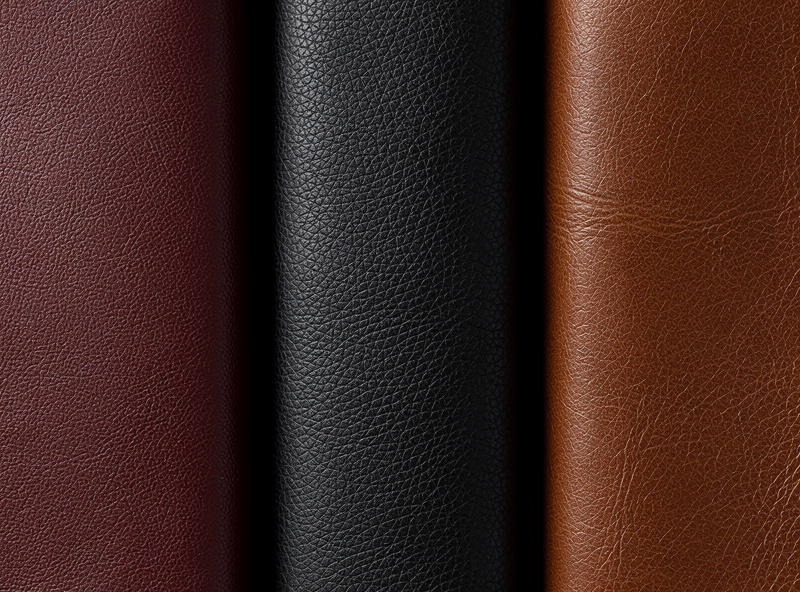
Mistakes and corrections:
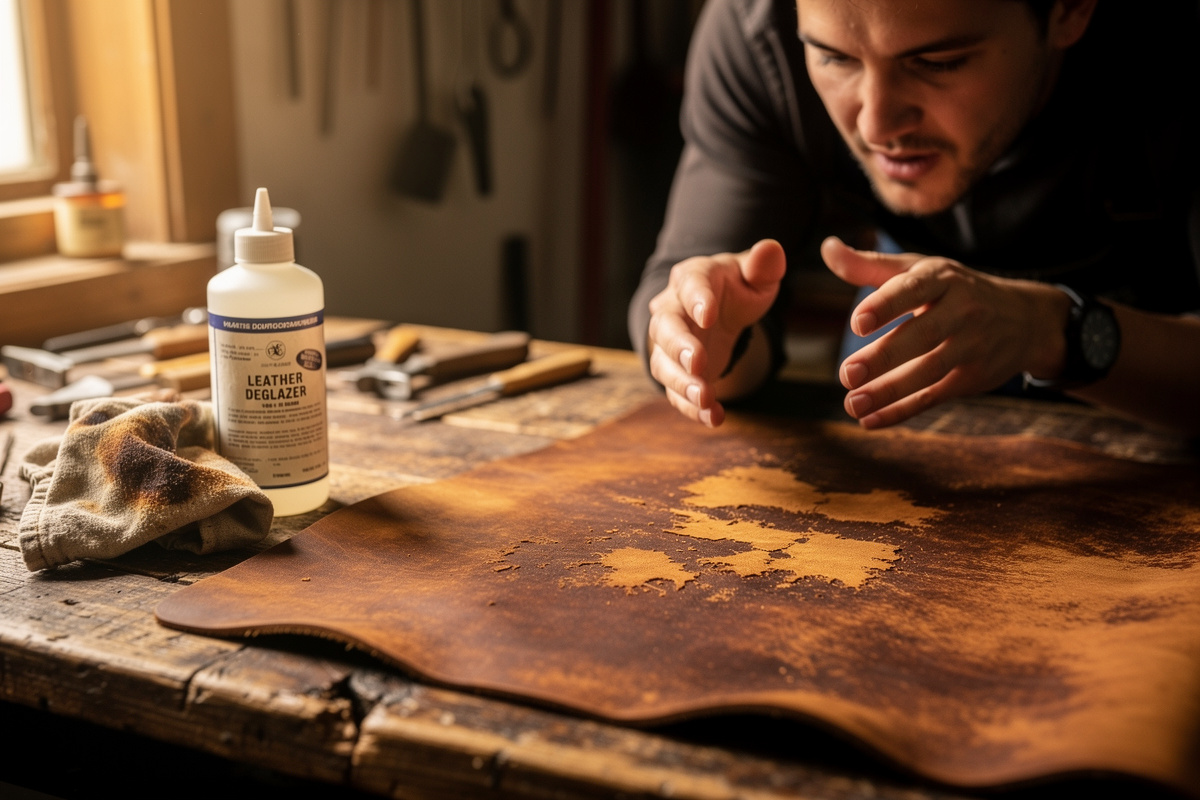
- Skipping degreasing: Fingerprints and natural skin oils prevent dye from penetrating. Wipe leather with denatured alcohol or saddle soap before dyeing.
- Thick dye application: Quality dyes work in thin coats — the leather absorbs what it needs. Thick application produces sticky surface and streak marks.
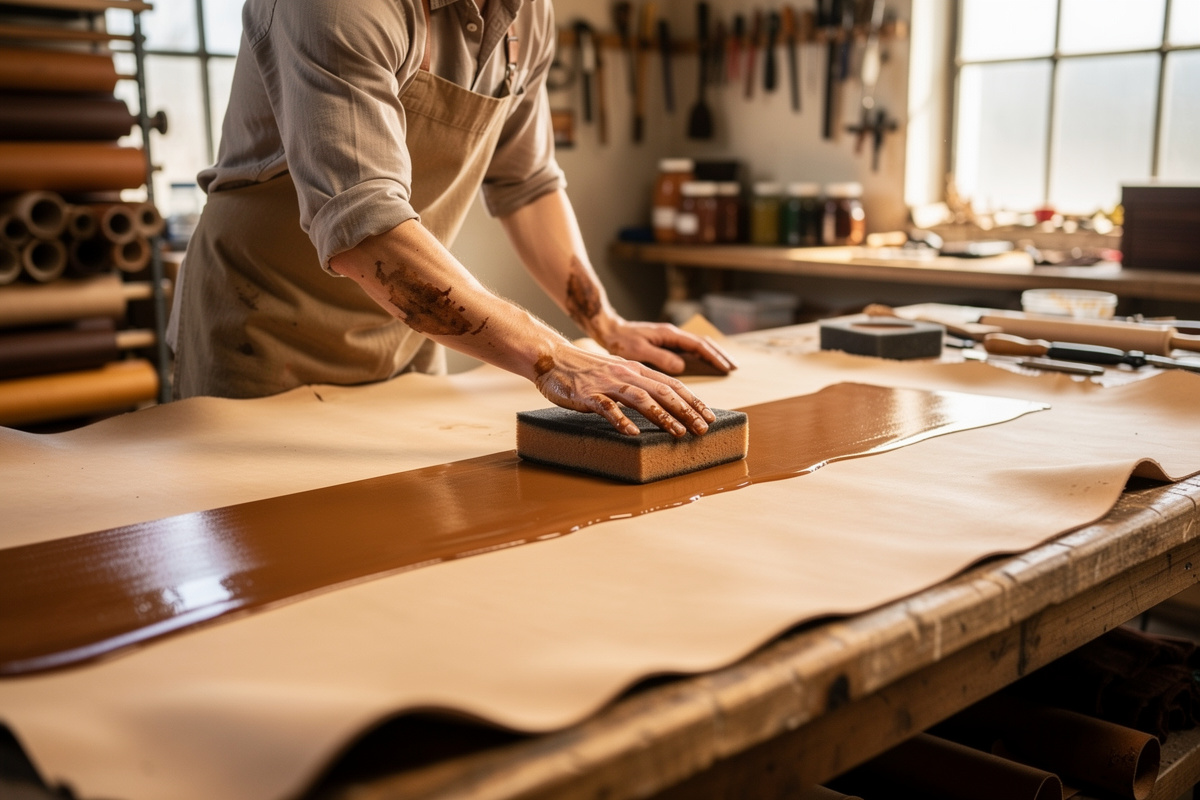
- Wrong applicator: Wool daubers for medium and dark colors; cotton swabs for tight detail; foam brushes for large flat areas; never paintbrushes (leave brush marks).
- Mixing dye types: Fiebings over Angelus or vice versa often produces uneven results because the carriers conflict. Stick to one dye system per project.
- Skipping the finish: Bare dyed leather absorbs moisture, fingerprints, and skin oils. Apply Resolene, Tan-Kote, or Sno-Seal after dyeing to seal the color.
- Dyeing too soon after wetting: Wet leather dyes unevenly. Let leather return to room temperature and surface-dry before dyeing.
- Not testing on scrap: Every leather hide accepts dye slightly differently. Test the chosen dye on a scrap piece before committing the project.
The reliable practice is to degrease, dye in three thin coats with full drying between each, then finish with Resolene or Tan-Kote. The whole cycle takes 24-48 hours but produces results that hold for years. For specific anti-streak technique, see our how to dye leather without streaks guide.
Which Dye for Furniture and Jackets?
The eight dyes above are all penetrating dyes designed for vegetable-tanned leather — the kind that soaks into the fiber and becomes part of the leather. Furniture and jackets are almost always chrome-tanned, which means a different approach entirely. This is the most common question that lands in comments, and the answer is not “use the same dye on different leather.”
Why penetrating dyes fail on furniture. Chrome-tanned leather has already been colored during tanning and sealed with a finish coat. Penetrating dye sits on the surface, streaks badly, and rubs off on clothing within weeks because it cannot soak through the chrome-tan finish. The Fiebings Pro Oil that gives a wallet a beautiful deep black will leave a sofa looking patchy and bleeding color onto a white shirt.
What actually works on chrome-tan upholstery. Pigmented leather finish — an acrylic or polyurethane color coat that bonds to the surface. Angelus leather paint, applied in thin coats and heat-set, is the standard for shoe and jacket recoloring. For furniture, dedicated leather restoration kits pair a prep cleaner with a pigmented topcoat in a matched color. Neither is a dye in the penetrating sense; both are surface finishes that mimic the original color. The leather dye types comparison breaks down the chemistry of each category in detail.
Jackets specifically. Leather jackets flex constantly, which cracks any finish that is not formulated for high-flex surfaces. Angelus acrylic with a flexible additive holds up; oil dye does not. For scuff repair on a jacket, a matched cream polish hides the mark better than a dye attempt. For full recoloring, send it to a specialist — home dyeing a jacket rarely produces an even result because the existing finish blocks penetration unevenly across panels that have worn differently.
The short version: penetrating dyes are for veg-tan; pigmented finishes are for chrome-tan. Trying to cross that line is the most common dyeing mistake I see in reader photos. The chrome-tan vs veg-tan comparison explains why the two leather types behave so differently under finish work.
Frequently Asked Questions
What is the best black leather dye for veg-tan?
Fiebings Professional Oil Dye in black is the most-used black for veg-tan in 2026. It produces deep saturation, true black with no blue or red undertones, and resists fading for 8-12 years on daily-carry wallets. Angelus Acrylic black is a water-based alternative with slightly less penetration but easier cleanup.
Is Fiebings or Angelus better for leather dyeing?
For traditional browns and blacks on veg-tan, Fiebings Pro Oil Dye is better — deeper penetration, longer fade resistance. For unusual colors (navy, burgundy, bright accents), Angelus Acrylic offers a much wider color range and safer indoor application. Most hobbyists own both and use each for its strengths.
How many coats of dye does leather need?
Three thin coats is the standard for full saturation, with full drying time between each (typically 30-60 minutes per coat at room temperature). Single coats produce light stains; two coats produce medium color; three coats produce full saturated color. More than three coats rarely improves color and risks streaking.
Why does my leather dye look patchy?
Most commonly insufficient surface prep — fingerprints and natural skin oils block dye penetration in random spots. Wipe with denatured alcohol or saddle soap before dyeing. Other causes: applying coats too thick, using wrong applicator type, or dyeing wet leather.
Can I dye chrome-tanned leather with veg-tan dye?
Marginally. Veg-tan dyes are formulated for the open fiber structure of veg-tan. Chrome-tan resists penetration and produces patchy uneven color with veg-tan dyes. For chrome-tan, use Angelus Acrylic specifically — it bonds better to chrome-tanned surfaces than oil-based dyes.
How long does dyed leather last before fading?
Properly dyed and finished veg-tan with Fiebings Pro Oil holds color for 8-15 years on daily-carry items. UV exposure accelerates fade — outdoor pieces fade 30-50% faster than indoor pieces. Angelus Acrylic typically fades 25-40% faster than Fiebings due to less penetration.
Related Articles
- How to Dye Leather Without Streaks
- How to Burnish Leather Edges With Tokonole
- Best Leather for Wallets
- Leatherworking Starter Kit
- Full Grain vs Top Grain Leather