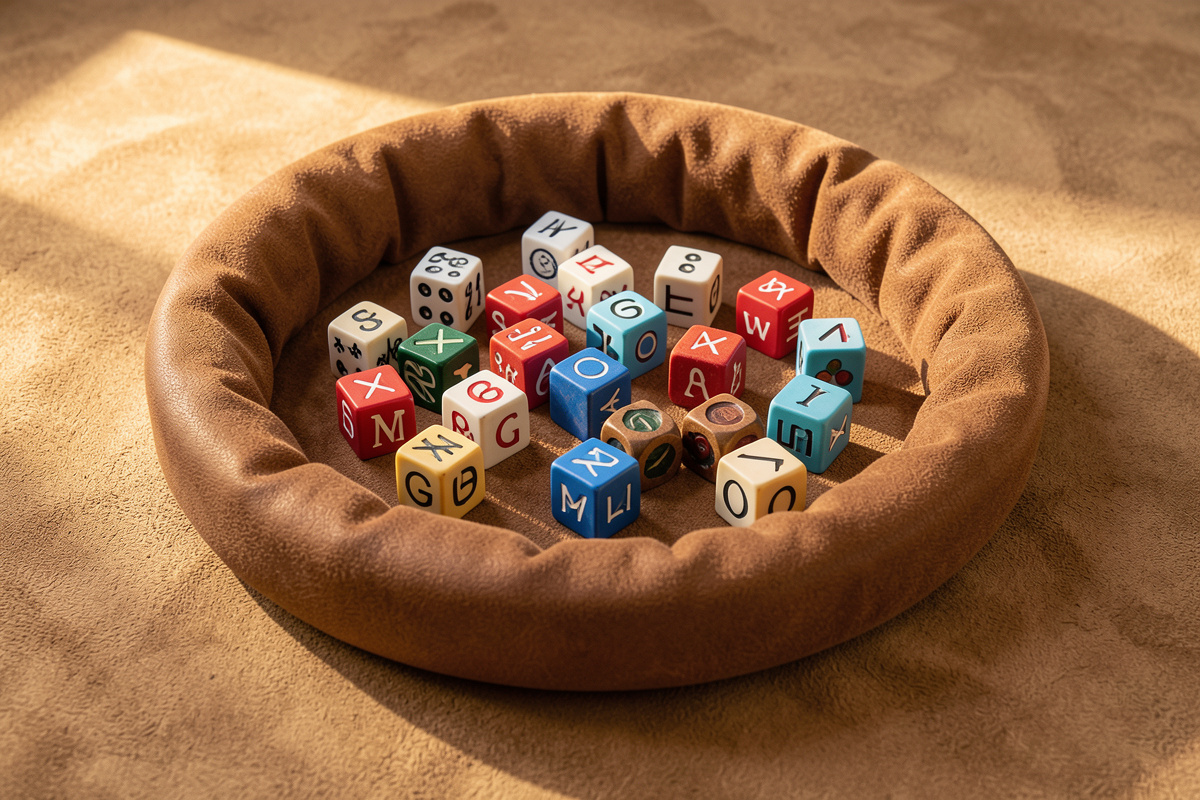
A leather dice tray is a shallow, round or hex-shaped tray with a soft rolled rim that stops dice from bouncing out and quiets the clatter. Cut it…
A leather dice tray is a shallow, round or hex-shaped tray with a soft rolled rim that stops dice from bouncing out and quiets the clatter. Cut it from 4–5 oz veg-tan, roll and stuff the edge with cord to pad it, line the floor to muffle the roll, and stitch the rim down. The padded edge is the whole trick — it does the job thicker leather would otherwise have to.
I built my first dice tray because a friend’s dice kept skittering off the table onto the floor mid-game, and a rigid-walled tray just sent them ricocheting back like a pinball. The rolled, padded rim was the fix: dice hit it and die instead of bounce. It is a genuinely different design from a valet tray, and the difference — a soft, stuffed edge instead of a stiff wall — is why it uses thinner leather than any other tray in this cluster.
It is also one of the most satisfying gifts you can make for anyone who plays tabletop games. Let me walk through the pattern, the rolled edge, and the lining that makes it quiet.
What Makes a Dice Tray Different From a Valet Tray?
A valet tray uses stiff walls to hold a form; a dice tray uses a soft, rolled rim to absorb impact. The goals are opposite — a valet tray wants rigidity, a dice tray wants to deaden a bouncing die. That is why a dice tray uses thinner leather and a padded edge instead of a boned, self-supporting wall.
Because the rim is doing the stiffening job, the leather itself does not need to be thick or wet-formed. This is the exception I flag in my best leather weight for trays breakdown: normally taller walls want thicker leather, but a dice tray inverts that by rolling the edge over a filler cord, which creates a stiff, padded bumper from thin material. The rolled rim is structurally a tube, and a tube is far stiffer than a flat panel of the same leather.
The other difference is the floor. A valet tray floor just holds objects; a dice tray floor gets hammered by falling dice, so it wants a soft lining to muffle the sound and protect the dice edges. Put together — thin leather, padded rim, lined floor — you get a tray optimized for a completely different job than the molded pieces in my valet tray making guide, even though they look like cousins.
What Leather Weight and Size Should a Dice Tray Be?
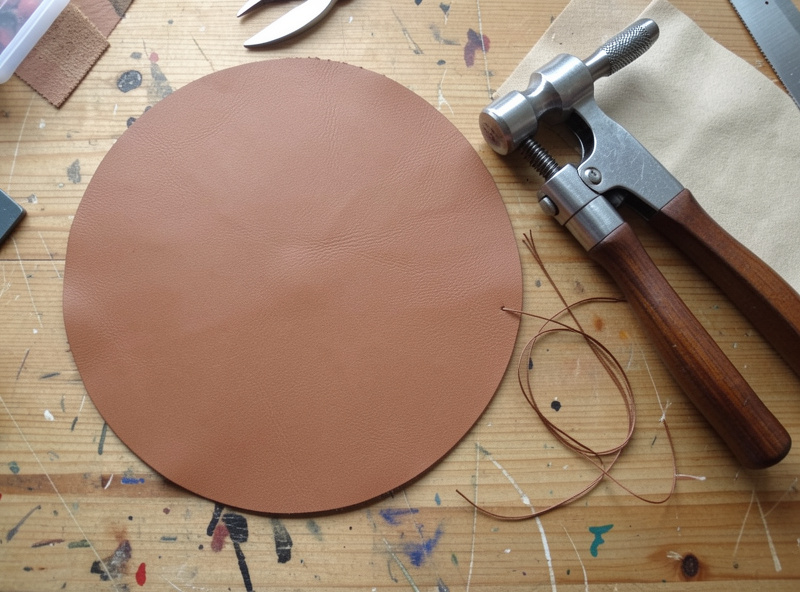
Use 4–5 oz veg-tan (1.6–2.0 mm) for the tray body — thin enough to roll a clean rim, with enough body to hold a shallow shape. Make the floor 6–8 inches across for a personal tray; 10 inches for a shared table tray. The rim adds about an inch of padded wall all around.
Four to five ounces is the right call because you are going to roll that edge, and thick leather fights a tight roll — it wants to crack or bulk up, the same way an 8 oz corner cracks when folded. Thin leather rolls smoothly around a filler cord. I keep the body in the 4–5 oz band and, if I want the floor to feel a touch more substantial, I let the lining add the body rather than going thicker on the leather itself. For a single player, a 6-inch floor holds a full set of polyhedral dice with room to roll; for a game where several people share one tray, go to 10 inches so multiple sets do not collide.
On leather choice: veg-tan takes dye and burnishes, so a veg-tan dice tray can be dyed to match anything and finished with a slicked outer edge. You could build the body from chrome-tan for a softer, floppier tray, but then you lose the ability to burnish and the tray stays limp — I prefer veg-tan here for the same reasons I use it across formed work, spelled out in chrome tan versus veg tan. A 4–5 oz veg-tan piece is plenty for several trays.
As an Amazon Associate I earn from qualifying purchases.
How Do You Make the Rolled, Padded Edge?
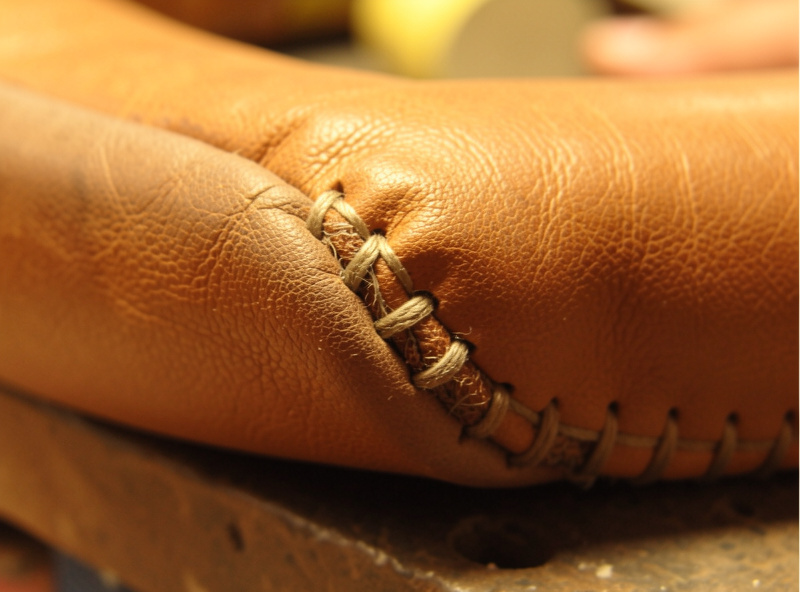
Cut the blank oversized, place a length of soft cord or leather lace around the perimeter about an inch in from the edge, fold the outer margin over the cord, and stitch through both layers to trap it. The trapped cord forms a padded tube rim that stands up as a soft wall and absorbs the dice on impact.
This rolled edge is the heart of the build and the part worth slowing down for. I lay a soft cotton piping cord — roughly 4–5 mm — around the perimeter, an inch inside the cut edge. Then I skive the outer margin slightly so it folds cleanly, wet it a touch to help it turn, and roll it up and over the cord toward the floor. Now you have the cord captured in a fold of leather, and a line of stitching just inside the cord locks it there. The result is a plump, rounded rim that feels like a bumper — press it and it gives, which is exactly what deadens a bouncing die.
The filler matters. Too thin a cord and the rim is floppy and does not stand; too thick and it will not roll smoothly under 4–5 oz leather. I have used cotton piping cord, thick leather lace, and even a rolled strip of chrome-tan scrap as filler — the cotton cord is the most consistent and the easiest to source. Wet-forming the fold helps enormously: casing that outer margin lets it turn a tight roll without cracking, using the same casing principle from my wet-forming corners work, just applied to a curl instead of a corner.
How Do You Cut the Dice Tray Pattern?
Cut a circle, hexagon, or octagon for the floor, then add a one-inch margin all around for the rolled rim. A round tray is easiest to roll evenly; a hex or octagon gives flat sides that are simpler to stitch straight but need attention at the corners. Mark the stitch line an inch in so your rolled rim is uniform.
Round is where I would start — a circle has no corners to fight, so the roll and the stitch line stay even the whole way around. I cut circles with a strap-end punch scaled up, or by scribing with a compass and cutting to the line with a sharp head knife. If you want flat sides for a more architectural look, a hexagon or octagon works, but plan the roll at the corners carefully: the leather has to gather slightly where the sides meet, and if you do not ease it, the corners pucker.
For repeatable trays I cut the pattern on the desktop machine — a clean circular or hex blank every time, with the stitch line scored in one pass. The CNC-cut pattern approach is genuinely worth it here because a dice tray’s symmetry shows every wobble; a hand-cut circle that is slightly egg-shaped looks off once the rim is rolled. Whatever method, add exactly one inch of margin beyond your intended floor edge for the rim, and mark the stitch line so both are consistent.
How Do You Line the Floor to Quiet the Dice?
Glue a soft lining — thin suede, wool felt, or self-adhesive craft foam topped with fabric — to the tray floor before stitching the rim. The lining muffles the clatter of falling dice and protects sharp resin edges. A veg-tan floor alone is loud; a lined floor turns a sharp rattle into a soft tumble.
The lining is what elevates a dice tray from “leather bowl” to something a gamer actually notices. Bare leather is hard and loud — dice landing on it crack sharply. A soft floor deadens that into a pleasant tumble, and it protects the corners of resin and metal dice from chipping over time. I like a thin garment suede glued flesh-to-flesh to the tray floor; it is soft, grippy enough to slow a die, and it takes dye if I want it to match. Wool felt is a cheaper alternative and honestly muffles even better, though it looks less refined.
Glue the lining down with contact cement before you roll and stitch the rim, so the rim’s stitch line runs through the lining edge and traps it neatly. Cut the lining slightly smaller than the floor so it does not intrude on the rolled rim area. If you want the lining to peek up the inside of the rim for a fully soft interior, size it to reach the base of the roll. Either way, do it before final assembly — trying to line a floor after the rim is stitched is a fiddly mistake I only made once.
How Do You Stitch and Finish a Dice Tray?
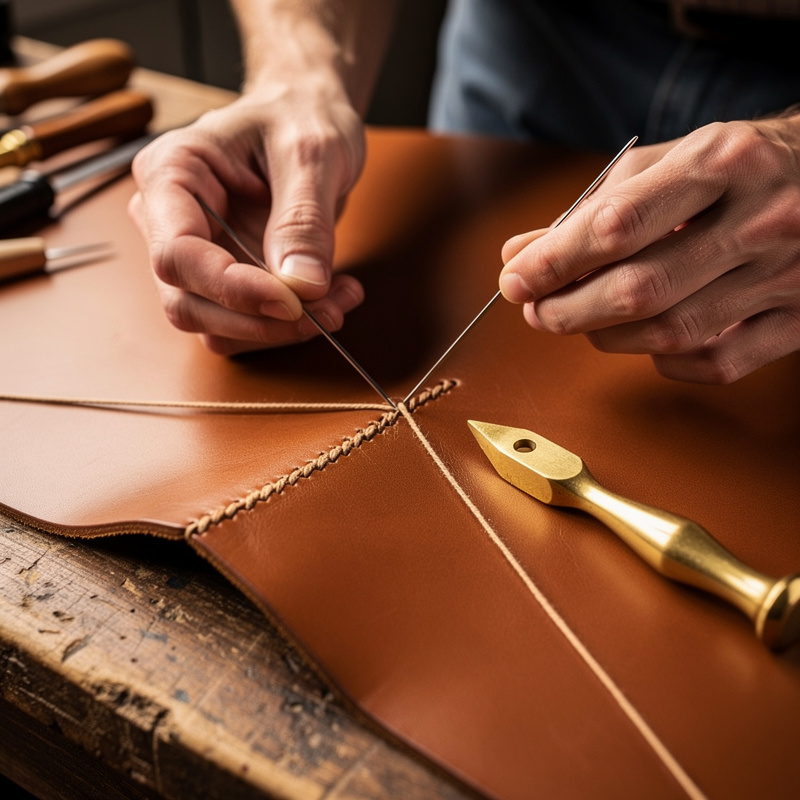
Saddle-stitch the rolled rim down with waxed thread matched to your leather weight, using a pricking iron to set even holes just inside the filler cord. Then burnish and seal the outer edge of the rim. The stitch line is visible all the way around, so even spacing is what makes it look professional.
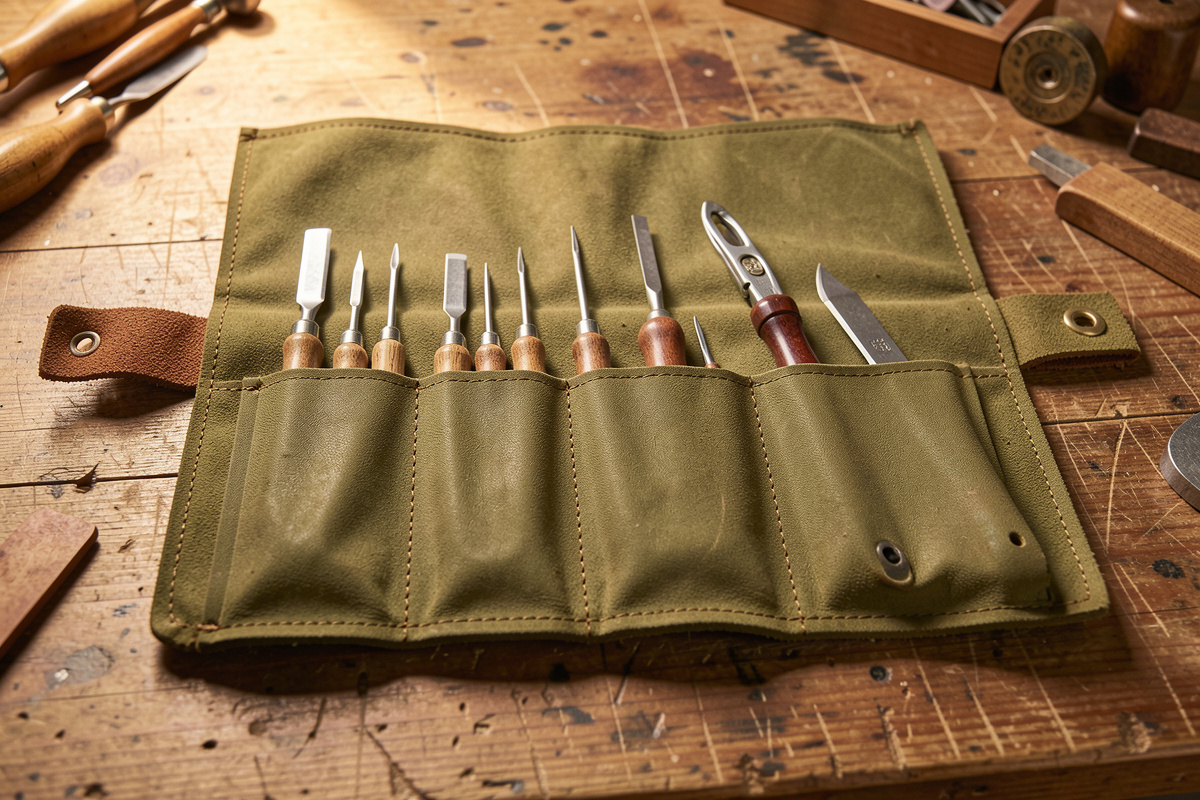
Because the stitch line rings the whole tray at eye level, this is a project where stitch quality shows. I run 0.8 mm waxed polyester — Ritza 25 “Tiger” thread — through holes set with a fine European-pitch pricking iron, the same pitch I default to across small goods so the look is consistent with my other work. Matching thread diameter to iron pitch is what makes the stitch seat flush instead of pulling loose or bulging; you can see the specs on the thread straight from Julius Koch, who make Ritza. If you are new to hand stitching, my broader notes on getting an even line are in the stitching cluster, and a saddle stitch is genuinely worth learning here rather than gluing.
Finish by beveling and burnishing the outer cut edge of the rim with Tokonole — the inside is soft and rolled, but the outer edge is a raw cut that wants slicking. If you dyed the tray, do it before burnishing as always. A light conditioner keeps the rolled edge supple so it stays springy. The tanneries I trust for consistent temper on thin veg-tan are the usual pair — Wickett & Craig among them — because even 4–5 oz stock that rolls consistently makes the rim come out clean every time.
What I’d Do Starting Today
Cut a 7-inch veg-tan circle from 4–5 oz stock with a one-inch rim margin, glue a suede floor, roll the edge over a cotton piping cord, and saddle-stitch it down. Give yourself an evening. The rolled rim will feel awkward on the first inch and obvious by the last — it is a skill that clicks fast. Make one for yourself, roll a few dice into it, and you will immediately want to make three more as gifts before the next game night.
What leather weight is best for a dice tray?
Use 4 to 5 oz veg-tan, about 1.6 to 2.0 mm. It is thin enough to roll a clean padded rim but has enough body to hold a shallow shape. The rolled rim does the stiffening, so thicker leather is unnecessary and would fight the tight roll.
How does a dice tray stop dice from bouncing out?
The soft rolled rim, stuffed with a filler cord, absorbs the impact of a die instead of bouncing it back like a rigid wall would. A lined floor muffles the landing further. Together the padded rim and soft floor deaden the dice rather than ricochet them.
What do you use to fill the rolled edge of a dice tray?
A soft cotton piping cord about 4 to 5 mm works best. Thick leather lace or a rolled strip of chrome-tan scrap also work. The cord is trapped inside a fold of the leather and stitched in place, forming a plump, springy tube rim.
What should you line a dice tray floor with?
Thin garment suede, wool felt, or fabric-topped craft foam. The lining muffles the clatter of falling dice and protects the edges of resin and metal dice. Glue it down with contact cement before stitching the rim so the stitch line traps its edge.
What shape should a dice tray be?
A circle is easiest because it has no corners to fight when rolling the rim. Hexagon and octagon shapes give flat sides that stitch straight but need care at the corners so the rolled rim does not pucker. Start round, then try faceted shapes.
Related Articles
- Leather Valet Tray Making Guide
- Best Leather Weight for Trays
- Wet-Forming Crisp Corners on a Tray
- How to Make a Leather Catchall Tray