Coptic stitch bookbinding is an exposed-spine chain stitch that sews each signature directly to the cover boards, so the finished book opens a full 180 degrees and lies…
Coptic stitch bookbinding is an exposed-spine chain stitch that sews each signature directly to the cover boards, so the finished book opens a full 180 degrees and lies dead flat with no glued backbone fighting you. That flat opening is exactly why it pairs so well with leather covers, and it is the binding I reach for on a sketchbook I actually want to draw in.
I bind my own leather journals on the same bench I cut wallets and sheaths on, and Coptic stitching is the structure I keep coming back to when a customer wants a book that stays open on its own. Below is how I cut, prep, and sew one with leather boards, what thread and needles I actually use, and where Coptic differs from the saddle stitch and case binding I use elsewhere.
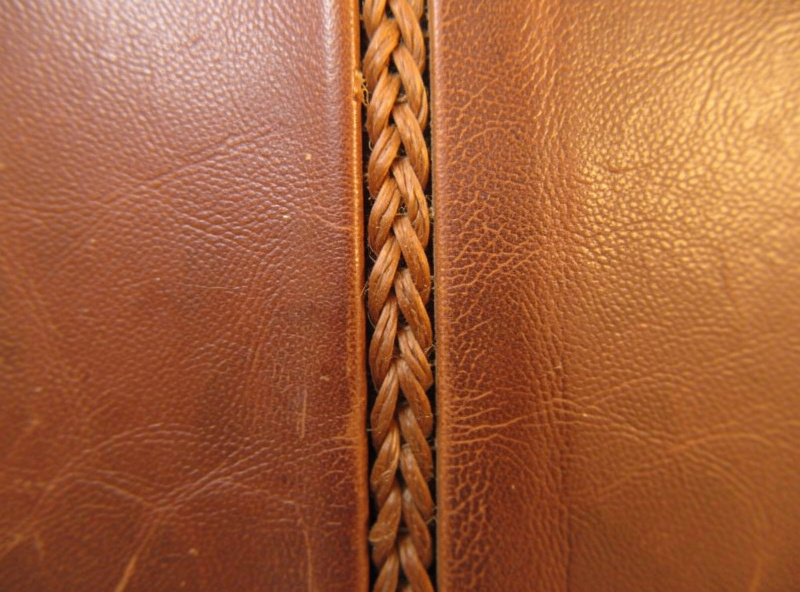
What Coptic Stitch Bookbinding Actually Is
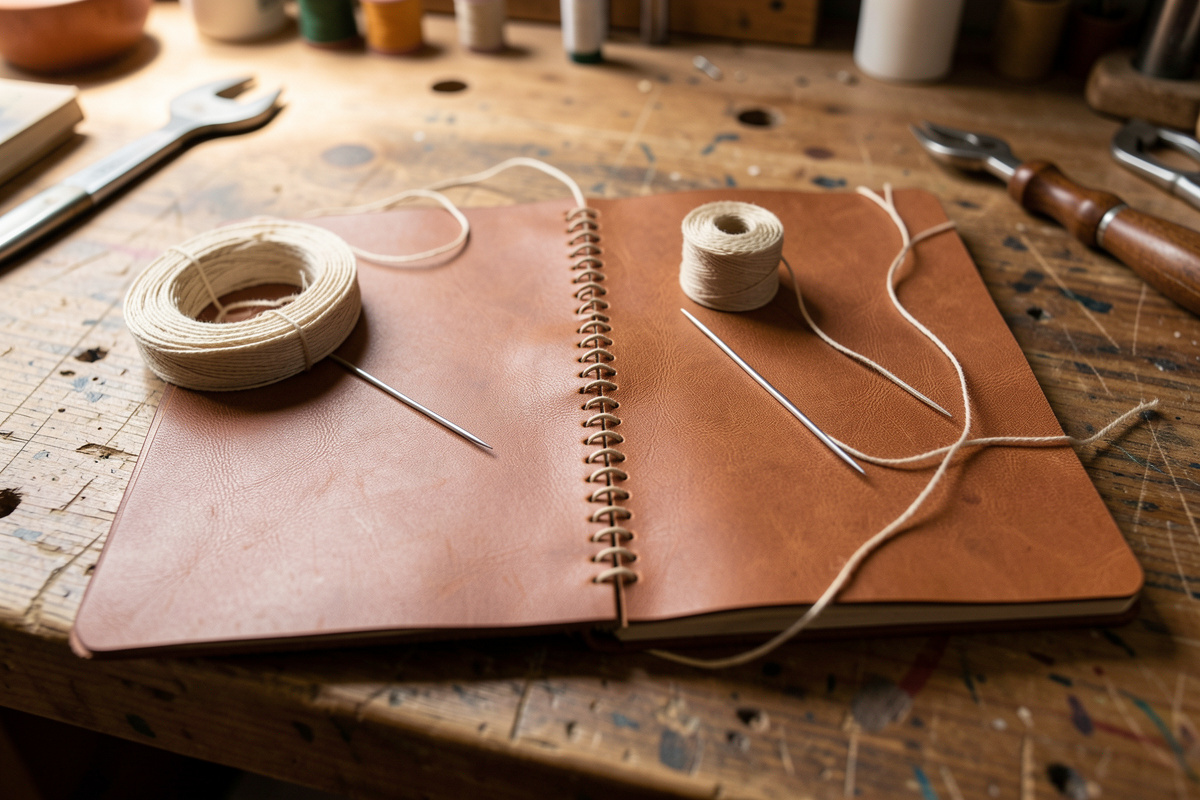
Coptic binding sews folded paper signatures to each other and to the front and back boards with a continuous chain of linked stitches that stays visible on the spine. There is no glue holding the pages in, and no spine cover hiding the work.
The name comes from early Christian Egypt, where this chain-link structure shows up in some of the oldest surviving bound codices. I will not pretend to be a manuscript historian, but traditional binders trace the technique back roughly 1,700 years, and the mechanical logic of it has not changed: a chain of stitches threading through holes in each signature and looping around the previous row. Because nothing glues the spine shut, the book has no resistance when you open it. Lay it on the bench and it stays where you left it.
For a leather worker the appeal is structural, not decorative. The exposed spine means the leather covers are two independent boards, not one wrapped case. That changes how you choose and prep the leather, which is where most of my decisions live. If you are completely new to working hide, start with my leather working for beginners primer before you commit good veg-tan to a book.
Choosing Leather For Coptic Covers
For Coptic covers I want a board that is stiff enough to hold the book square but thin enough that a needle and thread can pass through punched holes near the edge without tearing out. In practice that means firm veg-tan around 5-6oz, or a thinner leather laminated to binders board.
I run two approaches. The first is solid veg-tan, Wickett & Craig or Hermann Oak, in the 5-6oz range (roughly 2-2.4mm). That weight is the same stock I use for wallet exteriors, and it punches cleanly with an awl while still feeling like a cover. The second, for a bigger or harder-wearing book, is a 2-3oz chrome-tan or thin veg-tan glued grain-out over 2mm Davey binders board, which gives you a rigid board with a leather face. If you are unsure what those numbers mean, my leather thickness oz chart maps ounces to millimeters, and the chrome-tan vs veg-tan comparison covers why I default to veg-tan for anything I am going to burnish and tool. For the broader picture of what hide does what, see types of leather.
Whichever route you take, finish the cover edges before you sew. Once the book is bound you cannot get a beveler or slicker into the spine edge cleanly, so I bevel, sand, and burnish all four edges with Tokonole first. The full sequence is in my leather edge finishing guide.
Coptic Versus Saddle Stitch And Case Binding
People mix these up constantly, so it is worth being precise. The Coptic chain stitch, the saddle stitch I use on small journals, and a glued case binding are three different structures that solve different problems.
A saddle-stitched journal sews through a single fold, or a small stack folded together, with the two-needle saddle stitch I use on wallets. It is fast and strong but limited to thin books and it does not open as flat as a Coptic. A pamphlet stitch is the same idea with even fewer holes. Case binding, the structure behind a handmade leather book cover, glues a sewn text block into a wrapped hard cover with a hollow spine; it is robust and hides all the sewing, but it will never lie as flat as an exposed chain. Coptic sits between them: multi-signature like a case binding, hand-sewn like a saddle-stitched journal, but with the spine left open so the book lies flat.
| Structure | Spine | Lies flat? | Best for |
|---|---|---|---|
| Coptic chain stitch | Exposed, visible thread | Yes, full 180° | Sketchbooks, journals you draw in |
| Saddle / pamphlet stitch | Single fold, no exposed chain | Mostly, thin books only | Thin notebooks, single signatures |
| Case binding | Hidden, glued hollow back | No | Hardback books, archival volumes |
If you want the saddle stitch technique itself rather than the binding, my how to saddle stitch leather walkthrough covers the two-needle lock in detail.
Thread And Needle Choices
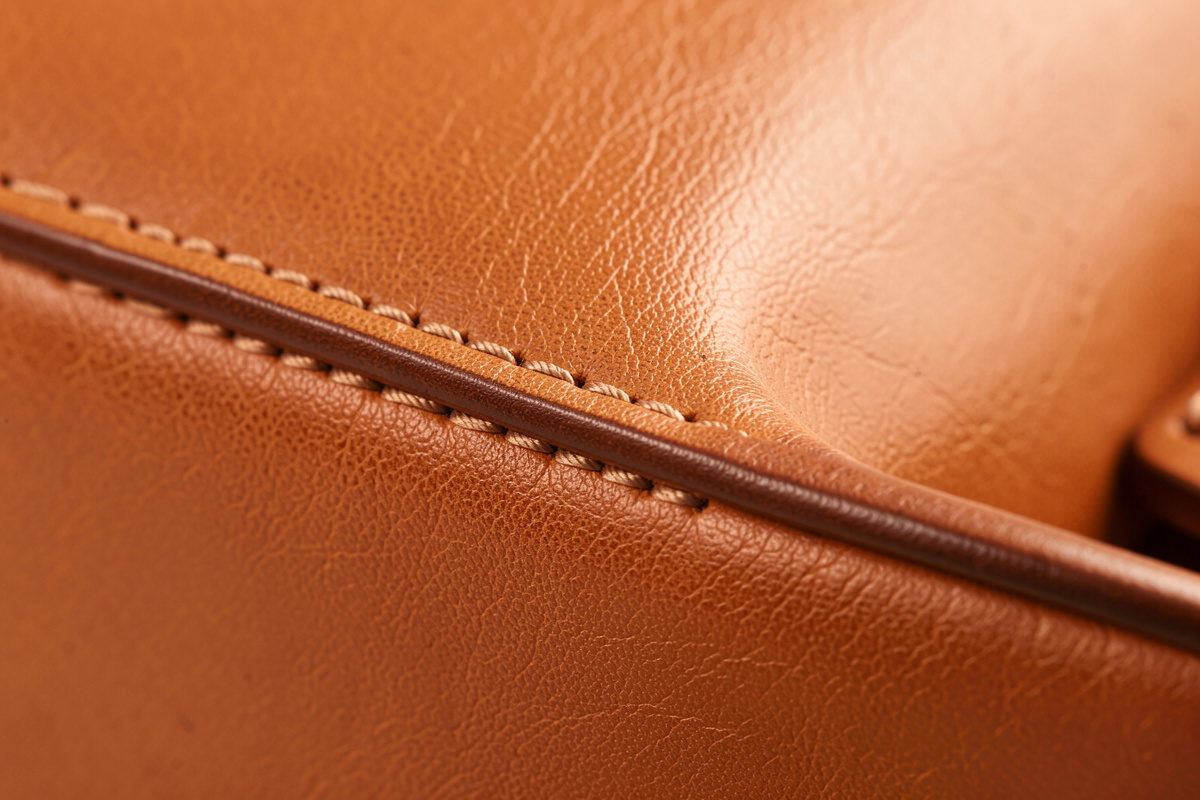
Coptic stitching wants a curved needle and a thread that resists abrasion at every chain link, because that thread is exposed and takes the wear. I sew most Coptic books with waxed linen, and switch to waxed polyester only when I want maximum durability over looks.
Curved needles matter here far more than in flat stitching. Each stitch loops around the previous row in a tight space against the board, and a curved needle lets you catch that loop without fighting the geometry. I keep a couple of curved bookbinding needles plus standard blunt-tip binding needles for the straight passes through the signatures. On thread, traditional binders favor waxed linen for the way it grips and sits down into the chain; it is what I default to. When a customer wants a book that will get hauled around in a bag for years, I will use waxed polyester (the same Ritza 25 “Tiger” I stitch wallets with, in 0.6mm) because it simply does not abrade through. My full reasoning on fibers is in best thread for leather stitching.
| Thread / needle | Feel | Durability | I use it for |
|---|---|---|---|
| Waxed linen, ~18/3 to 25/3 | Matte, grips into the chain | Good | Traditional look, most journals |
| Waxed polyester 0.6mm (Tiger) | Slightly sheen, very smooth | Excellent | Hard-use books, bag-carried |
| Curved bookbinding needle | Catches the loop in tight spine space | n/a | The chain link passes |
| Blunt straight binding needle | Slides through signature holes | n/a | Sewing into the folds |
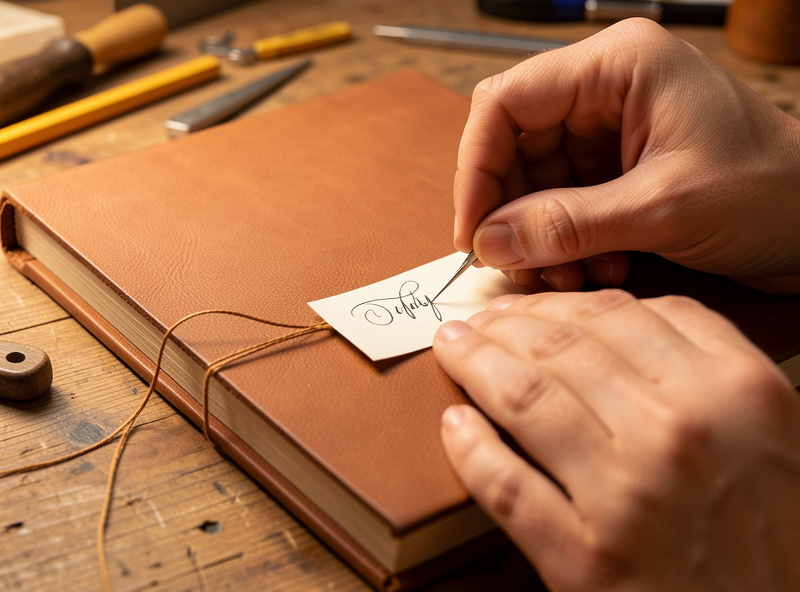
Punching The Sewing Stations
Accurate, aligned holes are the whole game in Coptic binding. I mark a consistent number of sewing stations down the spine edge of every signature and every cover, punch them with an awl on a cradle, and keep them perfectly registered so the chain pulls straight.
Fold and nest your pages into signatures first, usually four or five folded sheets each. Make a punching template the height of the spine and mark your stations on it, four to six stations for a typical journal. I punch the signatures in a sewing cradle with a fine awl so the hole is a slit, not a round void, which keeps the thread snug. For the leather covers I mark the same stations a few millimeters in from the spine edge and punch them with the awl I keep stropped, or a 1mm round punch if the leather is firm. Misregistered holes are the number one reason a first Coptic book looks crooked, so I check every signature against the template before a single stitch goes in. If you are punching a lot of stations and want speed, stitching chisels can help on the cover boards specifically; see my leather stitching chisels guide, though for the signatures themselves an awl is still cleaner.
Sewing The Chain, Row By Row
The chain itself is repetitive once you understand the loop: sew out through a signature hole, loop down around the stitch in the row below, and pass back in. Each row links to the last, building the visible chain that holds the book together.
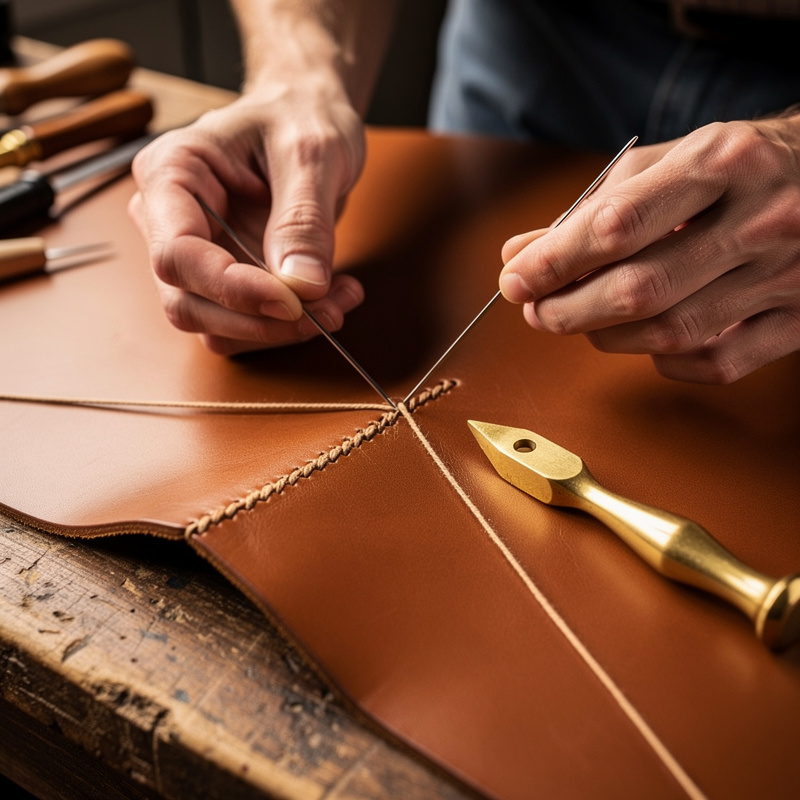
Start by attaching the first signature to the back board: thread out through the board hole, into the signature, and tie off the tail inside. Sew along the signature, in and out of each station, then catch the board again. For every signature after the first, the move at each station is the same kink-and-link: after coming out of the hole, slip the needle under the loop of the previous signature’s stitch at that station, then go back into the same hole you came from. That under-loop pass is what forms the chain. Keep tension even and firm but not so tight that you crush the fold. When you reach the last signature, sew the front board on the same way you started, and finish with a couple of secure half-hitches tucked inside the final signature. A bone folder helps you crease signatures sharp and press the chain down neat as you go. The whole structure relies on no glue, but a dab of the right glue is useful if you laminated a leather face to binders board for the covers.
Tools And A Few Affiliate Picks
You do not need much beyond what is already on a leather bench, plus a couple of binding-specific items. Below are the search links I would start from. As an Amazon Associate I earn from qualifying purchases.
- Curved bookbinding needles for catching the chain loop.
- Waxed linen thread in a binding weight.
- Coptic stitch bookbinding kit if you want everything in one box to start.
- Bone folder for sharp creases and pressing the chain.
- Davey binders board if you are laminating leather faces over a rigid core.
Keep your awl and any cutting edges sharp throughout; a dull awl tears holes instead of slitting them. My routine for that is in how to sharpen leather tools.
Where This Fits In The Bookbinding Workflow
Coptic is one structure among several I use for leather books. It is my pick when the brief is “I want it to lie flat,” and I switch to other bindings when the brief changes to durability under heavy carry or a fully finished spine.
For the full map of how I build leather books start to finish, the leather bookbinding guide is the hub, with deeper dives on leather journal making, spine finishing, and distressing a journal cover for an aged look. Pick the structure to fit the book, not the other way around.
Frequently Asked Questions
Does a Coptic stitched book really lie flat?
Yes. Because Coptic binding has no glue and no rigid spine cover holding the back together, the linked chain stitches let every page swing open a full 180 degrees. Set the book down open and it stays put, which is why it is my pick for sketchbooks and drawing journals.
What weight of leather is best for Coptic covers?
Firm veg-tan around 5-6oz works well as a solid board, stiff enough to hold the book square but thin enough to punch and sew near the edge. For larger books I laminate a 2-3oz leather face over 2mm Davey binders board to get rigidity with a leather grain.
Can I use waxed polyester thread instead of linen for Coptic binding?
Yes, and I do for hard-use books. Traditional binders favor waxed linen for the matte look and the way it grips the chain, but 0.6mm waxed polyester like Ritza 25 resists abrasion better. Since the spine thread is exposed, abrasion resistance matters on books that live in a bag.
How is Coptic binding different from a saddle stitch?
A saddle stitch sews through a single fold or small stack and suits thin notebooks. Coptic binding links many separate signatures with a chain across an exposed spine, so it handles thick multi-signature books and lies flatter. They are different structures, not two names for the same thing.
Do I need a curved needle for Coptic stitching?
A curved needle makes the chain-link passes far easier because you are looping around the previous row in a tight space against the board. You can manage with a straight blunt needle on the signature passes, but I keep curved bookbinding needles on the bench specifically for the linking stitches.
Related Guides
- Leather Bookbinding Guide (hub)
- Leather Journal Making Guide
- Saddle Stitch Leather Journal Guide
- Handmade Leather Book Cover Guide
- Leather Spine Finishing Guide
- Distressing a Leather Journal Cover