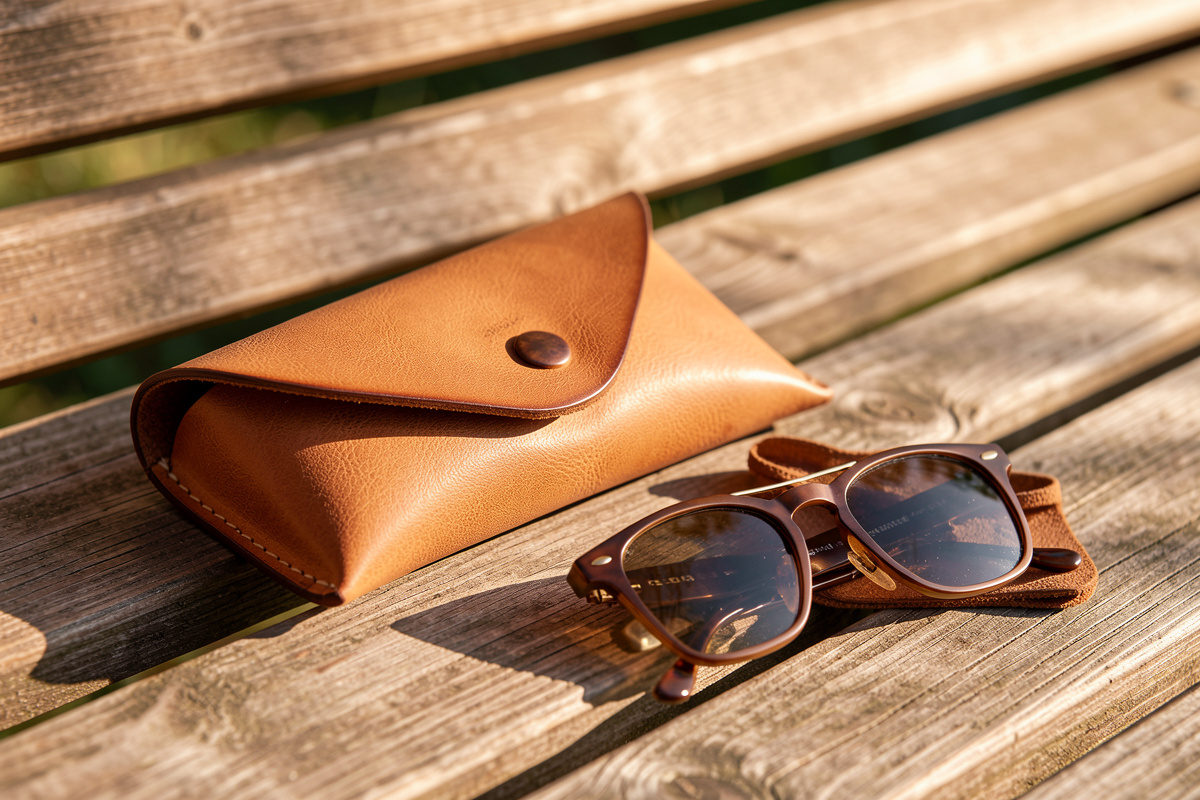
A leather sunglasses case comes in two honest forms: a soft stitched pouch in 2–3 oz that packs flat and protects against scratches, or a wet-formed hard shell in…
A leather sunglasses case comes in two honest forms: a soft stitched pouch in 2–3 oz that packs flat and protects against scratches, or a wet-formed hard shell in 5–6 oz veg-tan that guards against crushing. The soft version takes an evening and about $6; the hard shell takes two evenings plus drying and molds to your exact frames. Which you build depends on one question — is your enemy scratches or a back pocket you keep sitting on?
Most people default to buying a floppy microfiber sleeve, which stops scratches and nothing else. A leather case does more, and building your own lets you pick the level of protection you actually need. The soft pouch is faster and slimmer; the hard form is the one that saves a $200 pair of frames from a car seat. Below I lay out both builds, the sizing that fits real frames rather than a generic pattern, and why the hard shell has to be veg-tan while the soft pouch can go either way.
Sizing to Your Actual Frames
Measure your folded sunglasses at their widest and tallest points — usually the hinges are the widest and the lenses set the height — and add roughly 8–10 mm of clearance all around so the glasses slide in and out without forcing. Sunglasses vary wildly, from slim wire frames to wide wraparounds, so a generic pattern almost never fits; measuring your own pair is non-negotiable here. Folded aviators run larger than you expect, often 150 mm wide. I built my first case around a measured pair of slim wire frames, then went to drop my aviators in it and the hinges would not clear the mouth — cases really are frame-specific, not one-size.
For the soft pouch, that measurement becomes a simple folded rectangle stitched up two sides with an open or flap top. For the hard shell, you build around a wooden or foam form cut to the glasses’ profile, so the case holds its shape empty. Either way, the interior has to clear the frames with a little room — too tight and you scratch a lens sliding it in, which defeats the whole purpose. My templates guide covers turning your frame measurement into a reusable pattern once you have the fit right.
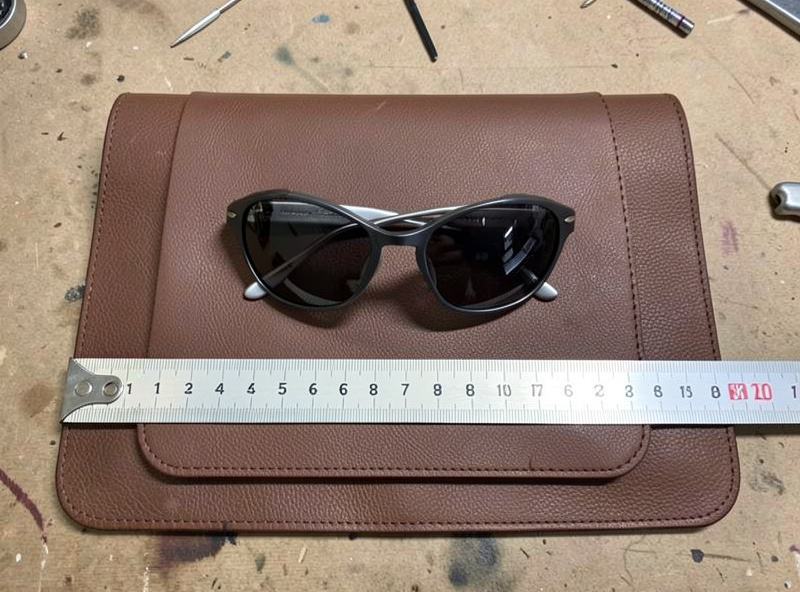
The lining question comes up on every sunglasses case, and the answer depends on the build. A hard veg-tan shell benefits from a soft lining — a thin suede or chamois glued to the interior — so the rigid leather never touches the lens coating. A soft chrome-tan pouch is gentle enough to skip the lining, since the leather itself is supple. If you do line a case, glue the lining before assembly and finish those interior edges first, because you cannot reach them later.
The Soft Pouch Build
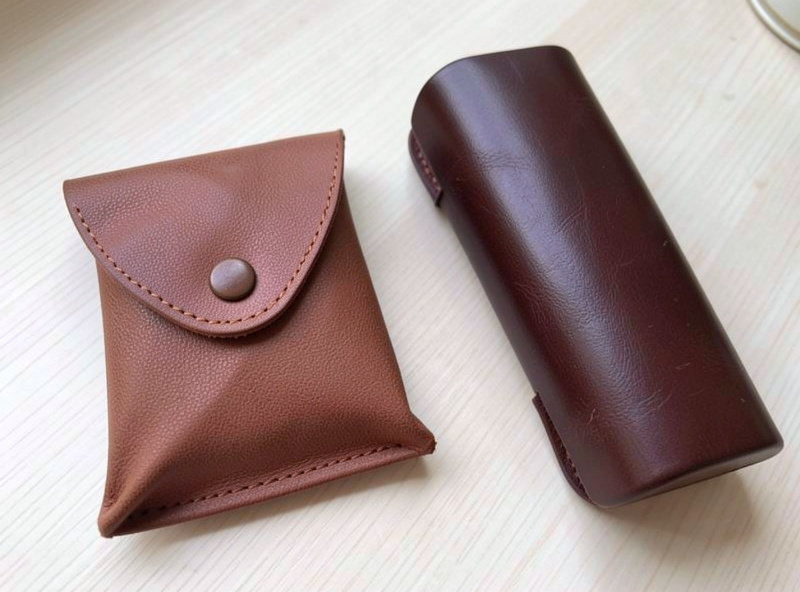
The soft pouch is the faster, slimmer option: a folded 2–3 oz panel — veg-tan or a supple chrome-tan — stitched up the sides, sometimes with a fold-over flap and a snap or magnetic closure. It packs flat in a bag, weighs almost nothing, and stops scratches, which is all many people need. This is the build I hand someone who carries their glasses in a bag rather than a pocket.
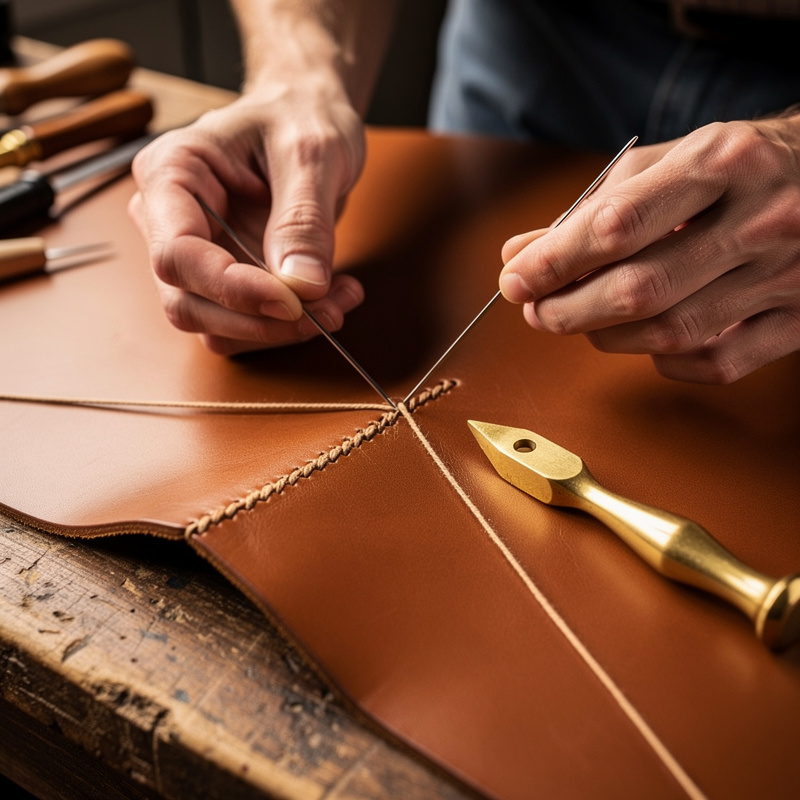
Because the pouch is thin and flexible, chrome-tan is genuinely a good choice here — its drape is a feature, and you are not asking it to hold a form. That said, chrome-tan won’t burnish, so a chrome-tan pouch gets a folded or painted edge rather than a slicked one; my guide on chrome-tan edges explains why and what to do instead. A veg-tan soft pouch, on the other hand, burnishes to a glossy edge and takes dye beautifully. Stitch it with a saddle stitch up both sides — the saddle stitch tutorial covers the technique — and add a simple snap flap if you want the glasses secured. As an Amazon Associate I earn from qualifying purchases. A set of magnetic snap closures gives a soft pouch a clean, hardware-light closure.
The Wet-Formed Hard Shell
The hard shell is the one that survives a back pocket. You case 5–6 oz veg-tan, mold it around a form cut to the shape of your folded glasses, and let it dry rigid — the result is a rigid clamshell or a fold-over case that holds its shape and resists crushing. This is a genuine wet-forming project, and it is veg-tan-only because chrome-tan cannot hold a molded form. Firm tooling veg-tan from a tannery like Hermann Oak holds a wet-formed shape best.
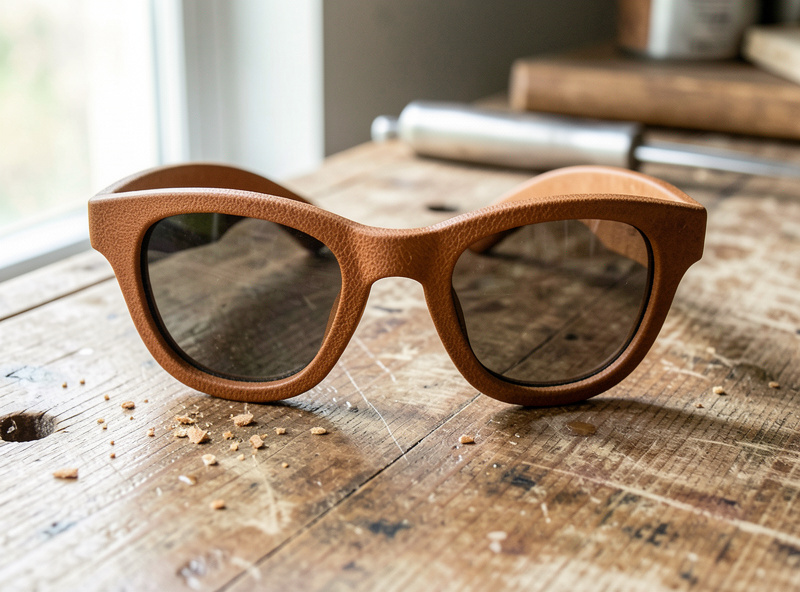
Cut a form from wood or dense foam to your glasses’ folded profile, case the leather until it is uniformly damp and pliable, then press and bone it around the form and let it dry completely before trimming and stitching. My wet-forming guide and the piece on molding for custom fit cover casing, boning, and drying in full, and hardening molded leather explains how to make the shell genuinely rigid with heat and wax if you want maximum crush resistance. The payoff is a case that stands up empty and takes real abuse — the difference between scratched frames and cracked ones.
Soft Pouch vs Hard Shell Compared
Here is how the two builds stack up so you can pick before you cut:
| Feature | Soft Pouch | Hard Shell |
|---|---|---|
| Leather | 2–3 oz veg or chrome | 5–6 oz veg-tan |
| Protection | Scratches only | Scratches + crushing |
| Build time | One evening | Two evenings + drying |
| Profile | Packs flat | Bulky, rigid |
| Best for | Bag carry | Pocket carry |
| Difficulty | Beginner | Advanced |
Finishing Either Version
Whichever build you choose, the edges and the closure are what make it look bought or made. On a veg-tan case, bevel, sand, and slick every edge to a gloss; on a chrome-tan pouch, fold or paint the edge instead. The mouth edge gets finished before assembly on both, since it is unreachable once the sides are stitched — the same before-and-after edge sequencing every small good demands.
Dye the leather while it is flat, buff hard, and seal so the color does not transfer to the frames. A sunglasses case is a natural companion piece to a full EDC small-goods set — build it in leather matching your phone sleeve and key case and the kit reads as intentional. The full edge sequence lives in my bevel-to-burnish guide, and for the soft pouch a clean creased edge line adds a finished detail that takes thirty seconds. Get the fit and the edge right and this is a piece you will actually reach for over the microfiber sleeve that came in the box.
Frequently Asked Questions
Should a leather sunglasses case be soft or hard?
It depends on how you carry them. A soft 2-3 oz pouch packs flat and stops scratches, ideal for bag carry. A wet-formed 5-6 oz veg-tan hard shell resists crushing and is the one to build if you keep sunglasses in a pocket you might sit on. Scratches versus crushing is the deciding question.
What leather weight is best for a sunglasses case?
2-3 oz for a soft stitched pouch and 5-6 oz veg-tan for a wet-formed hard shell. The soft pouch can be veg-tan or supple chrome-tan, but the hard shell must be veg-tan because chrome-tan cannot hold a molded form.
How much clearance should I leave around my sunglasses?
About 8-10 mm all around the folded glasses at their widest and tallest points. Too tight and you scratch a lens sliding the glasses in, which defeats the purpose. Sunglasses vary a lot, so always measure your own pair rather than using a generic pattern.
Do I need to line a leather sunglasses case?
A hard veg-tan shell benefits from a soft suede or chamois lining so the rigid leather never touches the lens coating. A soft chrome-tan pouch is supple enough to skip the lining. If you line a case, glue and finish the interior edges before assembly since you cannot reach them later.
Can I use chrome-tan leather for a sunglasses case?
Yes, for a soft pouch, where its drape is an advantage. But chrome-tan will not burnish, so a chrome-tan pouch gets a folded or painted edge instead of a slicked one. For a wet-formed hard shell you must use veg-tan, since chrome-tan will not hold the molded shape.
How do I make a sunglasses case rigid enough to protect the frames?
Wet-form 5-6 oz veg-tan around a form cut to your glasses’ profile, then harden the dried shell with gentle heat and a wax finish. Hardening tightens the fibers and adds real crush resistance, turning a molded case into one that stands up empty and survives a back pocket.
Related Projects
- Leather EDC Projects: The Small-Goods Guide
- How to Make a Leather Phone Sleeve
- Leather Wet Forming: The Complete Guide
- Hardening Molded Leather
- Leather Edge Finishing: Bevel to Burnish