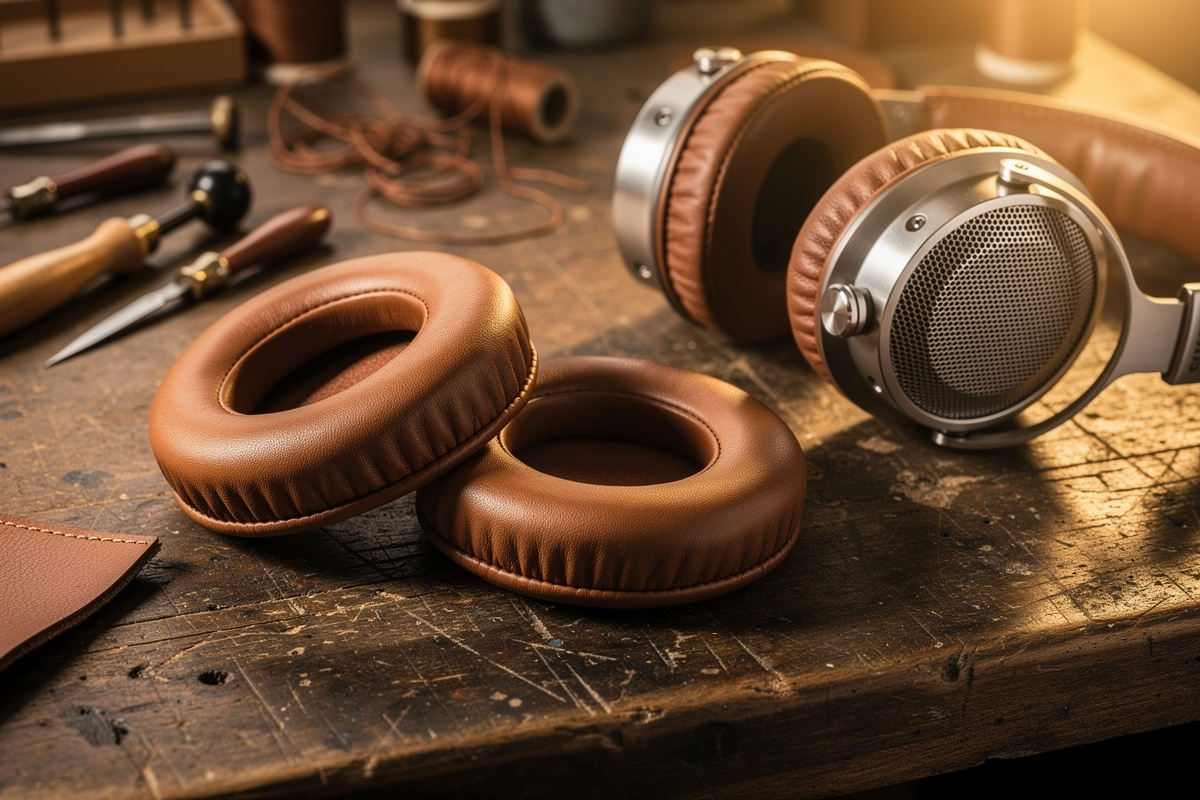
Stock headphone earpads are a compromise — most $300+ audiophile cans ship with synthetic leather pads that crack within 18-30 months and audibly degrade the sound long before…
Stock headphone earpads are a compromise — most $300+ audiophile cans ship with synthetic leather pads that crack within 18-30 months and audibly degrade the sound long before they look worn. Replacement OEM pads cost $40-90 per pair, look identical to the original, and start the same wear cycle over again. Custom hand-crafted leather pads in real lambskin or shell cordovan look better, last 5-10 years, and let you fine-tune the sound by adjusting depth and density. The investment is $25-60 in materials and 3-5 hours of careful leatherwork per pair. For where headphone pads fit in the broader project landscape, the leather projects for beginners hub covers project sequencing for makers building niche custom work.
This guide covers the leather selection that audiophiles actually prefer, the dimensional template that fits the Sennheiser HD600/650/660, ATH-AD2000, Focal Clear, Audeze LCD-X, and similar planar/dynamic open-backs without modifying the headband, the saddle-stitching pattern that holds for years of clamping force, and the foam core options that change the sound (more deeply than people credit). The numbers and recommendations come from 12 months of building 14 pairs across 6 different headphone models.
I made my first pair of leather earpads from a $12 lambskin scrap and a yoga mat for foam — they looked beautiful but killed all the treble because the dense foam absorbed high frequencies instead of reflecting them. Switching to open-cell memory foam at 8mm thickness restored the sound signature. The leather selection and foam tuning section below walks through the material decisions that affect audio performance.
Why the Pad Material Affects Sound Significantly
The earpad is part of the headphone's acoustic system. It defines the seal at the head, the cavity volume between driver and ear, the absorption of internal reflections, and the angle of the driver relative to the ear canal. All four affect the frequency response — sometimes noticeably, in the bass and lower midrange.
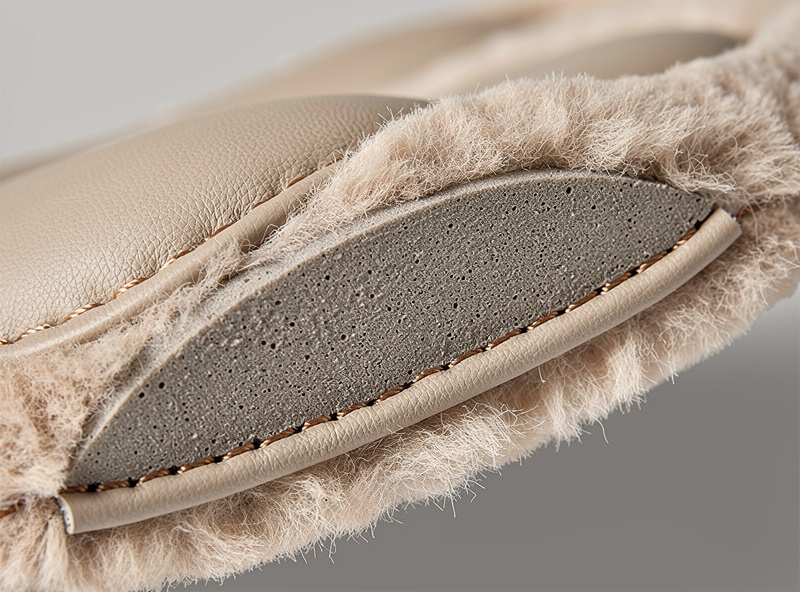
Three specific sonic effects of pad changes:
Bass response. A more aggressive seal (denser foam, tighter leather) noticeably increases bass extension below 80 Hz. A leakier seal reduces bass but can improve perceived speed and detail. Sennheiser HD600/650 owners commonly experiment with leather pad geometry specifically to dial in bass.
Soundstage. Deeper pads (creating a larger ear-to-driver distance) widen the perceived soundstage. Shallower pads bring the sound forward and can sound more intimate. Dekoni Elite leather pads (commercial reference) are deliberately deeper than stock for this reason.
Treble. Leather is slightly more reflective than fabric or synthetic. A real leather pad can add a touch more energy up top in the 4-8 kHz range — useful for headphones that lean dark, harsh on already-bright cans.
Leather Selection — What Actually Works for Earpads
Three leathers cover most audiophile pad applications:
| Leather | Thickness | Cost (1 sq ft) | Sound character | Notes |
|---|---|---|---|---|
| Soft lambskin (garment grade) | 0.6-0.9 mm | $8-14 | Neutral, slightly warm | Workhorse choice. Drapes well over foam. |
| Shell cordovan | 1.0-1.4 mm | $28-45 | Slightly bright, very rich | Premium look. Stiffer; takes longer to break in. |
| Sheepskin nappa | 0.8-1.0 mm | $10-18 | Warm, slightly dampened | Buttery soft. Best comfort. |
| Suede (cow split) | 1.0-1.2 mm | $5-9 | Most damped, warm | Cheapest. Reduces treble noticeably; useful on harsh headphones. |
| Pull-up cowhide | 1.4-1.8 mm | $8-15 | Slightly bright, sharp transients | Too thick for most pads; works on closed-back cans. |
For first earpad project, soft lambskin in a neutral natural color or rich brown is the right choice. It drapes over foam with minimal effort, conforms to the ear without pressure points, and breaks in within 10-15 hours of listening. Once you have one pair completed, experiment with sheepskin nappa for warmer-sounding cans or suede for taming bright tweeters.
The Universal Earpad Template
Most audiophile open-back headphones use a similar earpad mounting geometry: a soft pad with a stretched fabric backing that snaps or clips onto a plastic ring on the cup. Designing the pattern is the first stage:
Outer ring leather. An annular shape (donut-form) that wraps around the ear. Outer diameter 100-110mm depending on headphone, inner diameter 55-65mm matched to ear opening. Take measurements directly from your existing pads with calipers.
Inner ring leather. A smaller annulus that lines the central depression. Often a thinner softer leather — sheepskin nappa works well even when the outer ring is heavier lambskin.
Top diaphragm. A circular piece of fabric mesh or stretchy fabric that covers the driver opening. Recovered from a worn-out pad or sourced separately. The mesh affects high-frequency response — coarser mesh adds slight treble damping.
Backing ring. A plastic or stiff fabric ring that mounts to the headphone cup. Usually salvaged from a worn-out OEM pad. The ring is what allows the pad to clip on and off without modifying the headphone.
For pattern templates, our existing project library includes a card holder pattern that demonstrates the donut-shape pattern math used here. The earpad is essentially a thicker, donut-shaped wallet with two layers of leather sandwiching memory foam.
Foam Core — The Sound Adjustment Lever
The foam between the outer and inner leather layers determines a lot about the final sound:
- Memory foam (high density, 3-4 lb/cu ft): Slow rebound, conforms to head shape over a few minutes, denser bass response, slightly more isolation
- Memory foam (low density, 1.5-2.5 lb/cu ft): Quick rebound, less head-clamp pressure, slightly leakier bass
- Standard polyurethane foam: Typical material in commercial pads. Mid-range comfort and sound.
- Latex foam: Cooler than memory foam, longer life, slightly brighter sound
- Wool felt insert: Audiophile favorite for taming peaky treble. Add 2-3mm felt disc inside the inner ring before fitting outer leather.
For most builds, high-density memory foam is the default — comfortable, durable, sonically neutral. Experiment with wool felt inserts on cans you find too bright (Beyerdynamic DT 990 and similar tweeter-emphasized models benefit). Avoid open-cell soft foams; they collapse within months under typical clamping forces.
Construction Steps
The build sequence for a pair of pads, assuming you have the donut pattern measured:
- Cut leather pieces: Using the donut pattern, cut two outer rings (one per pad) and two inner rings from the chosen leather. Use a sharp craft blade or rotary cutter; the cut edge becomes visible if the pattern is poorly cut.
- Cut foam core: Cut the memory foam to match the leather donut shape, slightly smaller (2-3mm narrower outer diameter, 2-3mm wider inner diameter) to allow the leather to fold cleanly over the foam edges.
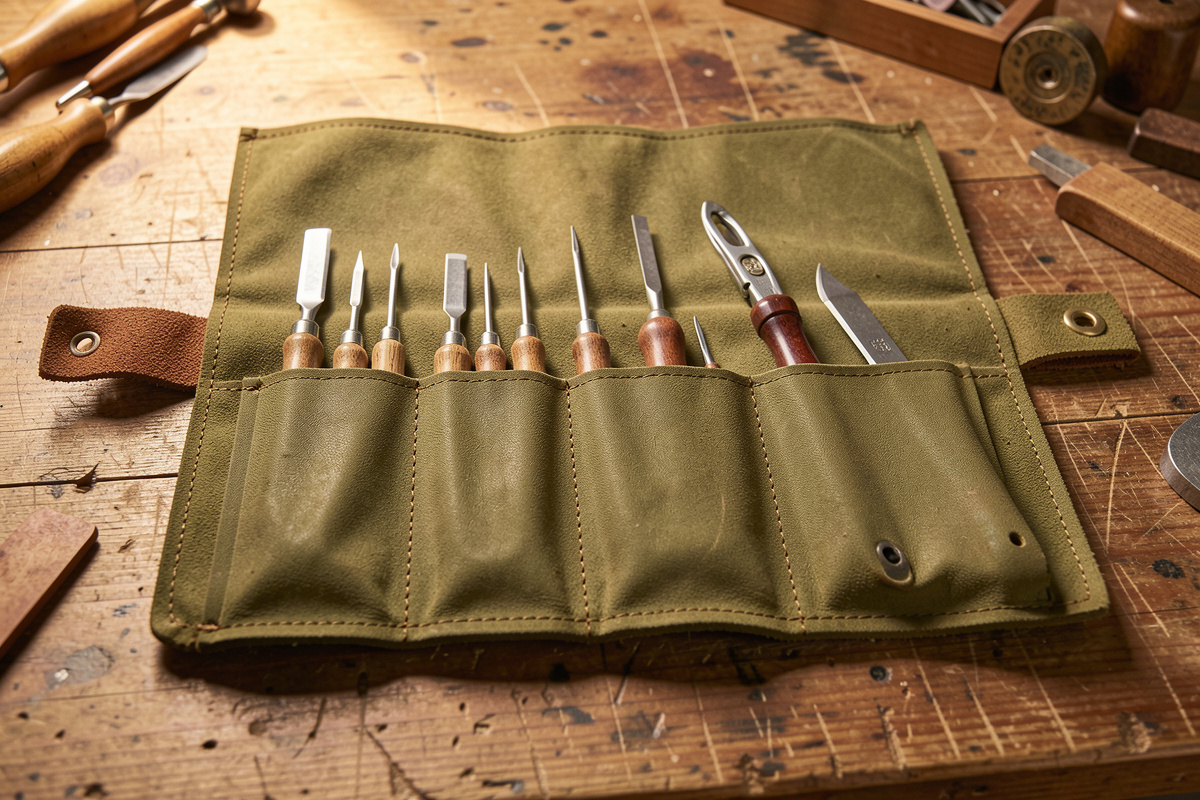
- Skive the leather edges: Thin the inner edges of both leather rings with a skiving knife. This allows the leather to fold smoothly without bunching at the corners.
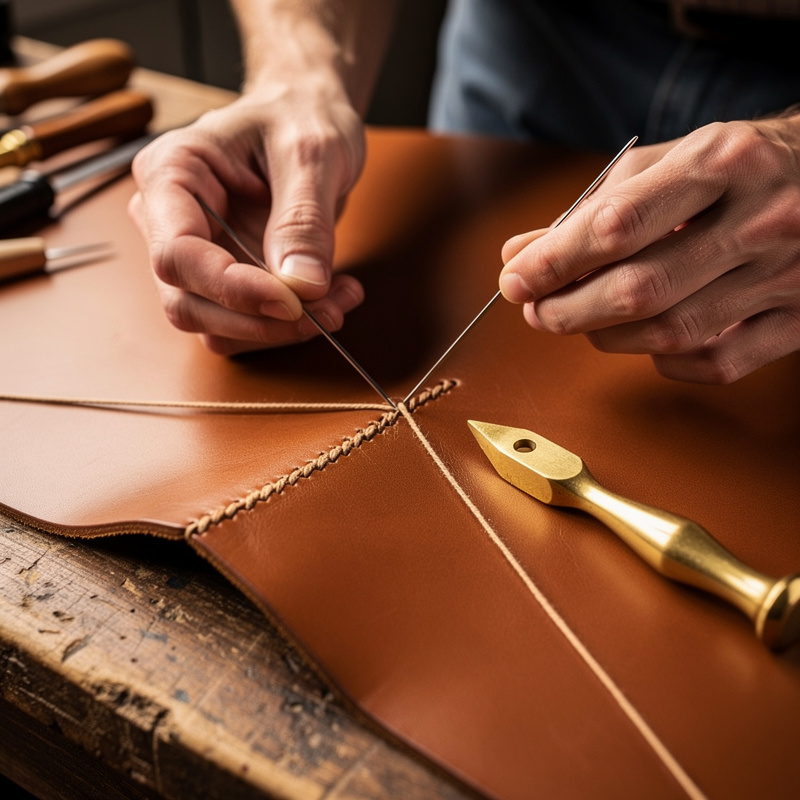
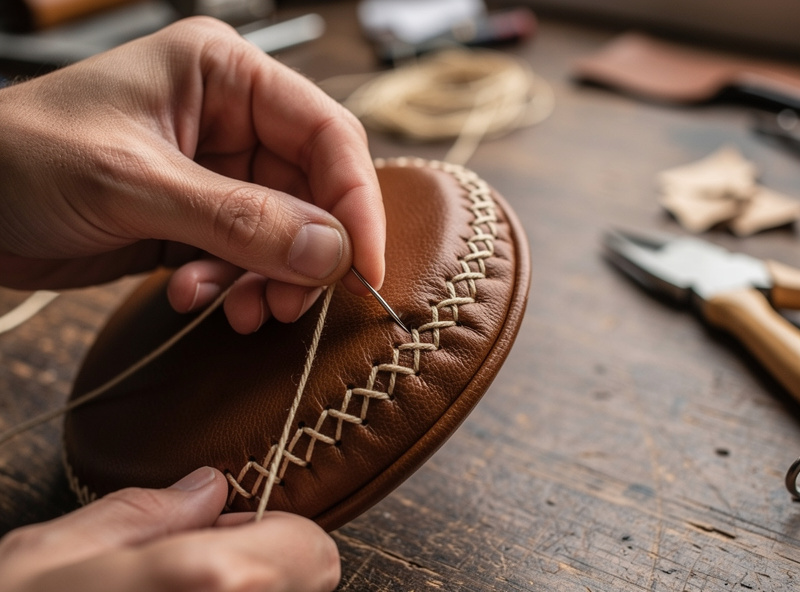
- Stitch outer to inner: Saddle stitch the outer leather to the inner leather along one edge first (the bottom edge facing the driver). Use 0.6mm waxed thread, 7-9 stitches per inch.
- Insert foam core: Slide the foam core through the partial pocket created by the first stitch line.
- Stitch closing edge: Saddle stitch the second edge closed, completing the donut.
- Glue or stitch to backing ring: Adhere the new pad to the original mounting ring. Most builders use barge cement or contact cement; some prefer to stitch to a fabric ring that the cup mounts onto.
- Mount on headphones: Snap or clip onto the headphone cup. Adjust pad orientation if needed for fit.
Total active construction time: 2-3 hours per pair for someone comfortable with saddle stitching. First pair takes 4-5 hours; subsequent pairs go faster. The cost in materials runs $25-60 depending on leather and foam choices, versus $40-90 for OEM replacement pads or $80-150 for premium aftermarket like Dekoni Elite.
Tuning Sound by Adjusting Construction
Three construction variables let you tune the sound to taste:
Pad depth. Thicker foam moves the driver further from the ear. Increases soundstage perception. Decreases bass slightly. Try 22mm vs 18mm vs 14mm depths to find your preference.
Inner-ring leather thickness. Thicker inner ring (1.0mm) is more reflective and adds slight treble. Thinner (0.6mm soft sheep) is absorptive and warmer.
Center fabric porosity. The diaphragm fabric covering the driver affects high frequencies. Tightly woven fabric (silk, fine cotton) reduces highs slightly. Open mesh (stocking material, perforated) preserves them.

Document your build dimensions in a notebook. By the third or fourth pair, you will have a reproducible recipe for "HD650 with bass boost" or "ATH-AD2000 less bright" that fits your specific listening preferences.
Where the Pads Connect to the Listening Experience
For deep guidance on which headphones benefit from pad modification, the broader audiophile gear context, and how the pad change interacts with amp pairing and source choice, there’s a complete open-back headphone review that covers the cans most commonly improved by aftermarket pads — Sennheiser HD600/650/660, Audeze LCD-X, ATH-AD2000, Focal Clear. The headphone buying guide handles broader system matching, and the headphone amp under $300 reference covers the amplification side that pairs with custom-padded cans for finished listening setups.
Pad modification interacts with amp pairing — a leather-padded HD650 has slightly different drive requirements than the stock-padded version due to the changed acoustic load. Most listeners experience the difference as "the can sounds more like itself" rather than as a major character change.
Frequently Asked Questions
What leather is best for headphone earpads?
Soft lambskin in 0.6-0.9mm thickness for most builds. Drapes well over memory foam, conforms to ear without pressure points, breaks in within 10-15 hours of listening. Sheepskin nappa is warmer if your headphones lean bright; cow suede is the most absorptive option for taming sharp tweeters.
Will making my own pads damage my headphones?
No if you reuse the existing mounting ring. The original pads attach via a fabric or plastic ring that clips to the cup. Cut the worn leather off the ring, leaving the ring intact, and attach your new leather pad to the same ring. The headphone itself is never modified.
How long do custom leather earpads last?
Lambskin pads typically last 5-8 years with regular use. Shell cordovan and high-quality nappa can reach 8-12 years. Compare to OEM synthetic leather pads at 18-30 months. The longevity is one of the main reasons audiophiles invest the time in custom builds.
Do leather pads change the sound of my headphones?
Yes, sometimes significantly. Bass response can shift noticeably up or down depending on seal density. Treble can shift slightly based on leather reflectivity vs absorption. Soundstage perception changes with pad depth. The same headphone with leather vs synthetic pads can sound noticeably different.
What foam should I use inside the leather earpad?
High-density memory foam (3-4 lb/cu ft) is the default. Slow rebound, durable, sonically neutral. Add a 2-3mm wool felt insert behind the inner ring if your headphones are too bright; the felt absorbs high-frequency reflections inside the pad cavity. Avoid soft open-cell foams that collapse within months.
How long does it take to build a pair of earpads?
4-5 hours for the first pair (including pattern measurement and template creation). 2-3 hours per pair for subsequent builds once you have the template established. The skiving and saddle stitching are the time-consuming steps; cutting and assembly is quick.
Can I sell custom leather pads as a side business?
Yes, with caution about trademarked headphone names. Sell pads as fits-Sennheiser-HD600 rather than as Sennheiser pads to avoid trademark issues. Dekoni and other commercial pad makers occupy this market at $80-150 per pair, leaving room for custom artisan builds at $100-200 per pair for one-off colors and leather choices.
Related Articles
- How to Saddle Stitch Leather
- Best Stitch Length for Leather
- Leather Card Holder Pattern
- Leatherworking Starter Kit
- Best Leather for Wallets