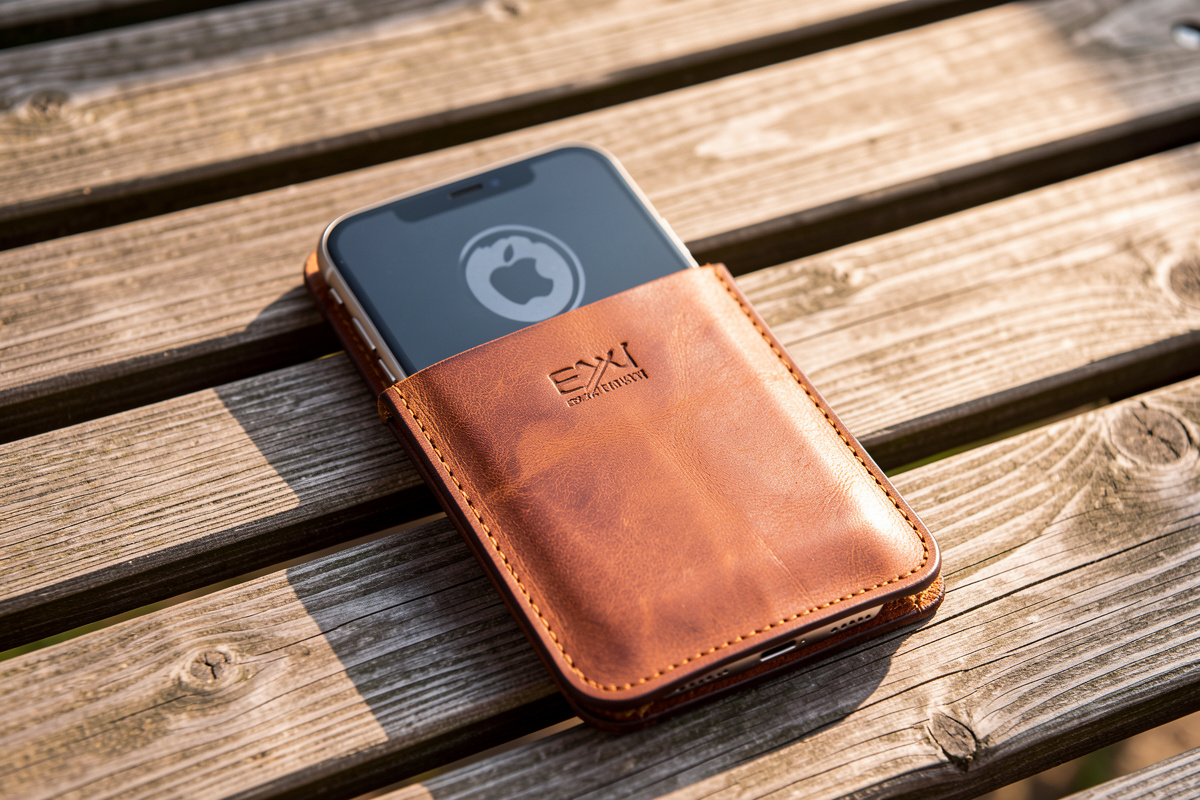
A leather phone sleeve that actually fits is built to your phone’s real girth, not its spec sheet. Two panels of 3–4 oz veg-tan, stitched up three sides, sized…
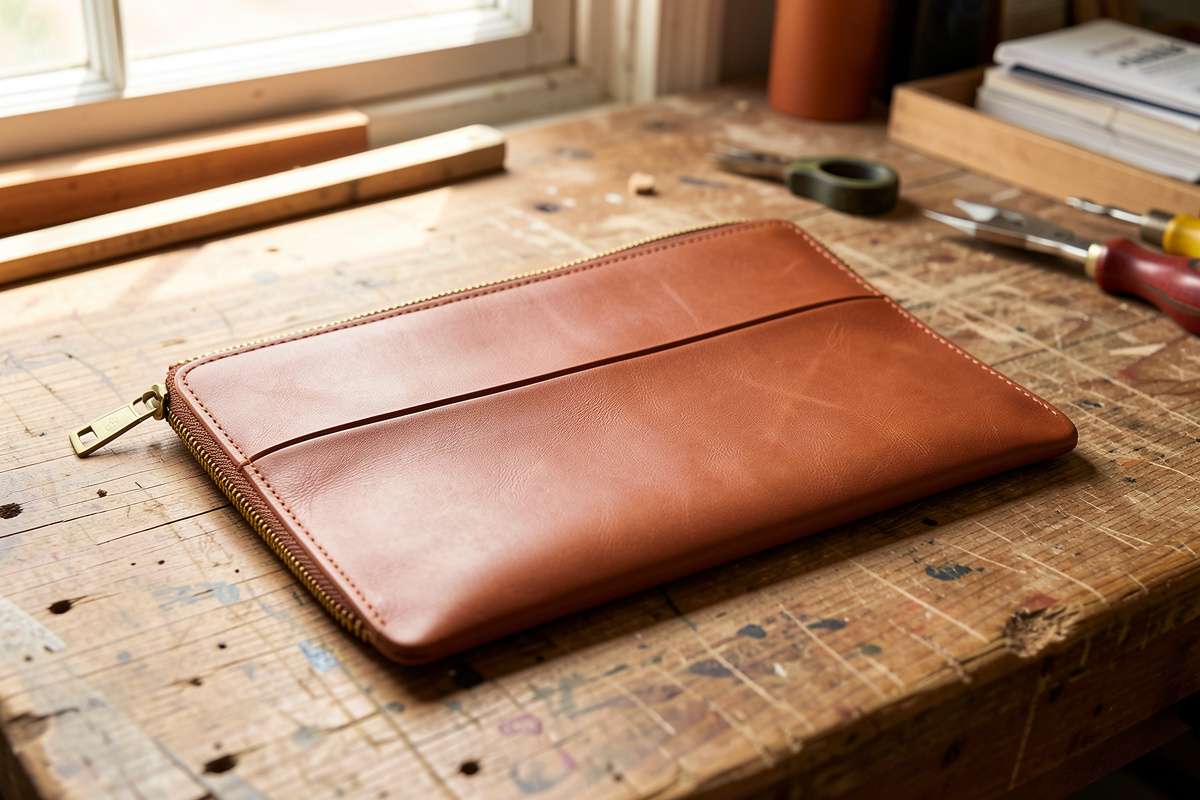
A leather phone sleeve that actually fits is built to your phone’s real girth, not its spec sheet. Two panels of 3–4 oz veg-tan, stitched up three sides, sized to your phone’s width plus two leather thicknesses, give a snug friction-fit sleeve that grips on the way in and releases with a push from the bottom. It takes an evening and about $7, and it is the project that teaches sizing to an object better than any other.
Nearly every homemade phone sleeve fails one of two ways: too tight to get the phone out, or so loose the phone slides free in a bag. Both come from measuring wrong. A phone listed at 71.5 mm wide needs an interior close to 74 mm, and every wrap-around seam adds two leather thicknesses to the girth — miss that and the fit is off by exactly the margin that makes the sleeve unusable. Below is the measuring method that gets it right the first time, the pull-tab or thumb-notch that makes retrieval easy, and why a snug sleeve should feel slightly tight on day one.
Measure the Phone, Not the Spec Sheet
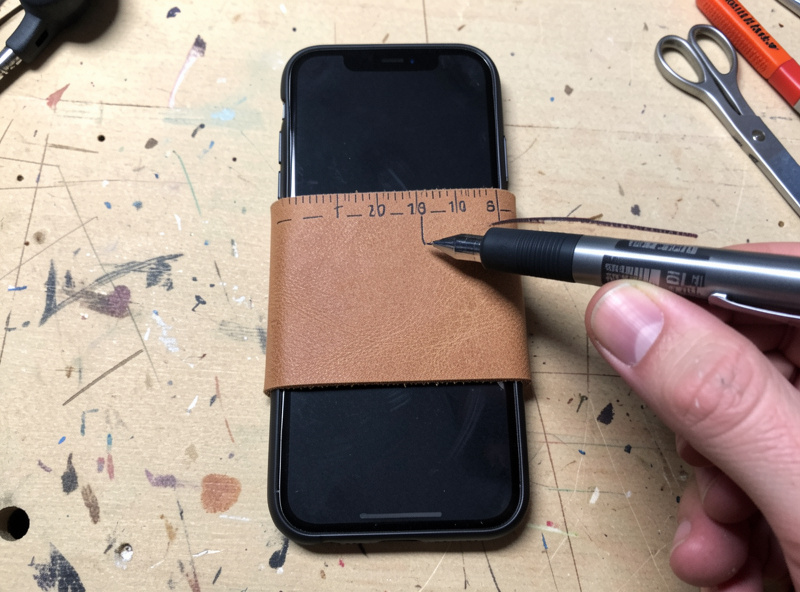
Wrap a strip of the exact 3–4 oz veg-tan you will use around your phone — including its case if you keep one on — and mark where the leather meets. That wrap gives you the true interior girth, which is the phone’s width plus depth plus the leather’s own thickness at every wrap, and it is the single measurement that decides whether the sleeve works. A caliper reading of the bare phone will always come out too tight once the leather is in play. I learned that the hard way: my first sleeve, sized straight off the caliper numbers, gripped so hard I had to peel it off the phone, and I ended up cutting fresh panels 3 mm wider.
For the length, measure the phone and add enough that the top sits proud by 15–20 mm so you can grip it to pull it out — or plan a thumb-notch or pull-tab if you want the phone to sit lower and more protected. The pattern itself is two panels (front and back) or one folded panel stitched up the two sides and across the bottom, leaving the top open. My templates guide covers turning your wrap into a reusable pattern, and if you have never cut clean panels, cutting leather straight is worth reading first — on a two-panel sleeve, any wobble in the cut shows along the whole seam.
Leather relaxes with use, so build the sleeve to feel slightly tight on day one. A phone sleeve that fits perfectly when brand new will be loose within a few weeks as the fibers break in and the pocket stretches to the phone’s shape. This is the same break-in logic that governs a pen slip or a knife sheath — start tighter than feels right and let use bring it to the sweet spot. If it ends up too tight, a light dampening and re-forming around the phone relaxes it; too loose is much harder to fix.
Choosing Weight and Leather
Stay at 3–4 oz veg-tan for a phone sleeve — heavy enough to protect and hold its mouth open for a one-handed return, light enough to keep the sleeve slim in a pocket. Thicker than 4 oz and the sleeve gets bulky and the seams get hard to stitch cleanly; thinner than 3 oz and it goes floppy and loses the self-supporting mouth that lets you drop the phone back in without looking. This is a real Goldilocks weight. Tanneries such as Wickett & Craig list veg-tan by ounce weight, so buying to a 3–4 oz target is straightforward.
Veg-tan is my default here because it burnishes to a clean edge and molds slightly to the phone over time, improving the fit as it ages. A firm chrome-tan works if you want a softer, more flexible sleeve, but you trade away the slicked edge and the self-supporting mouth. The ounce-to-millimeter chart helps if you are buying leather for the first time, and the veg-tan versus chrome-tan breakdown covers the trade-off. Here is how sleeve fit maps to phone size so you can plan your pattern:
| Phone Width | Interior Target | Panel Width (folded) |
|---|---|---|
| ~68 mm (compact) | ~71 mm | ~78 mm |
| ~71 mm (standard) | ~74 mm | ~81 mm |
| ~78 mm (max/plus) | ~81 mm | ~88 mm |
Stitching the Three Seams
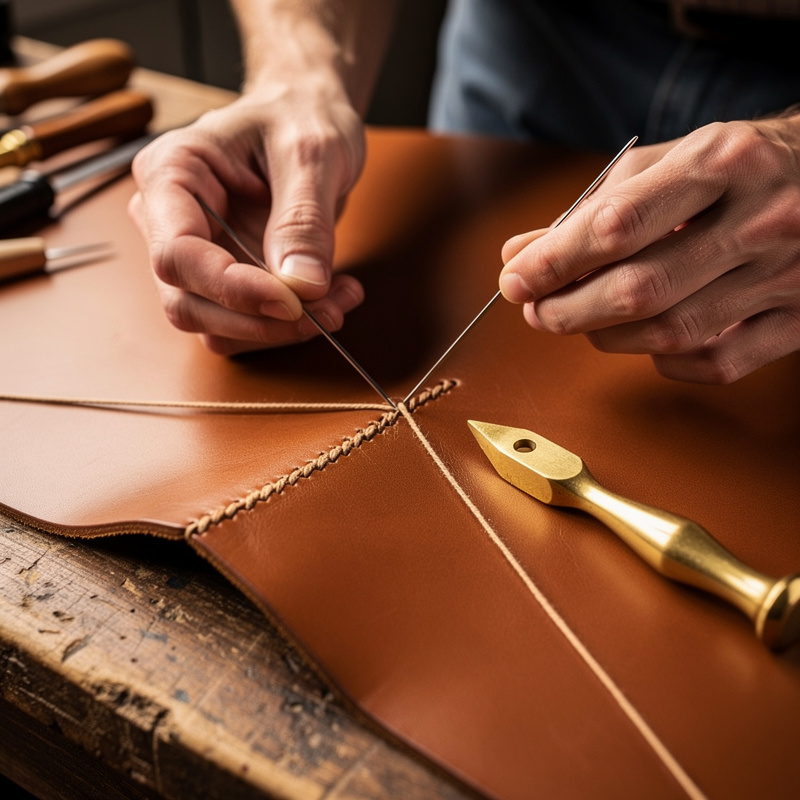
A phone sleeve is stitched up both sides and across the bottom, so it is more stitching than most small goods — a good chance to build a long, even saddle-stitch line. The seams take the weight of the phone every time you lift the sleeve, so a two-needle saddle stitch is the right call: each stitch locks independently and the seam holds even if one thread eventually wears through. Mark the stitch line 3–4 mm from the edge with a pricking iron.
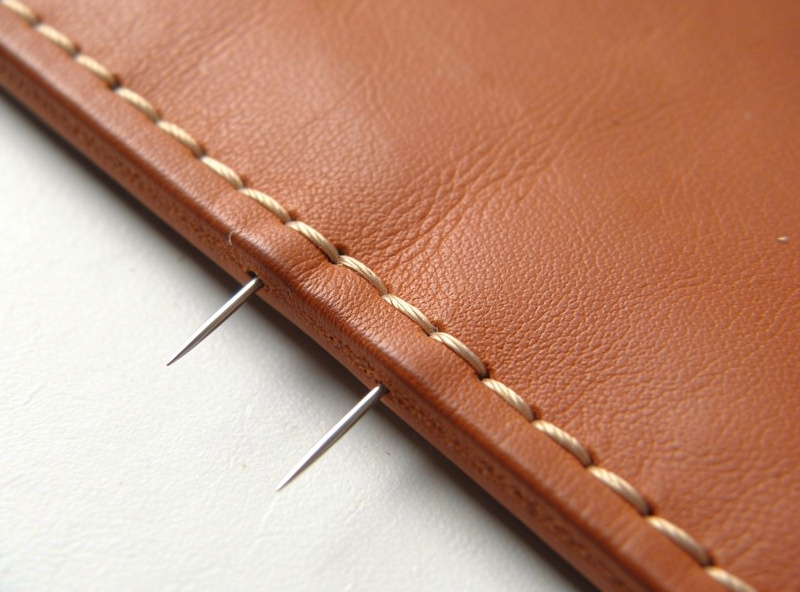
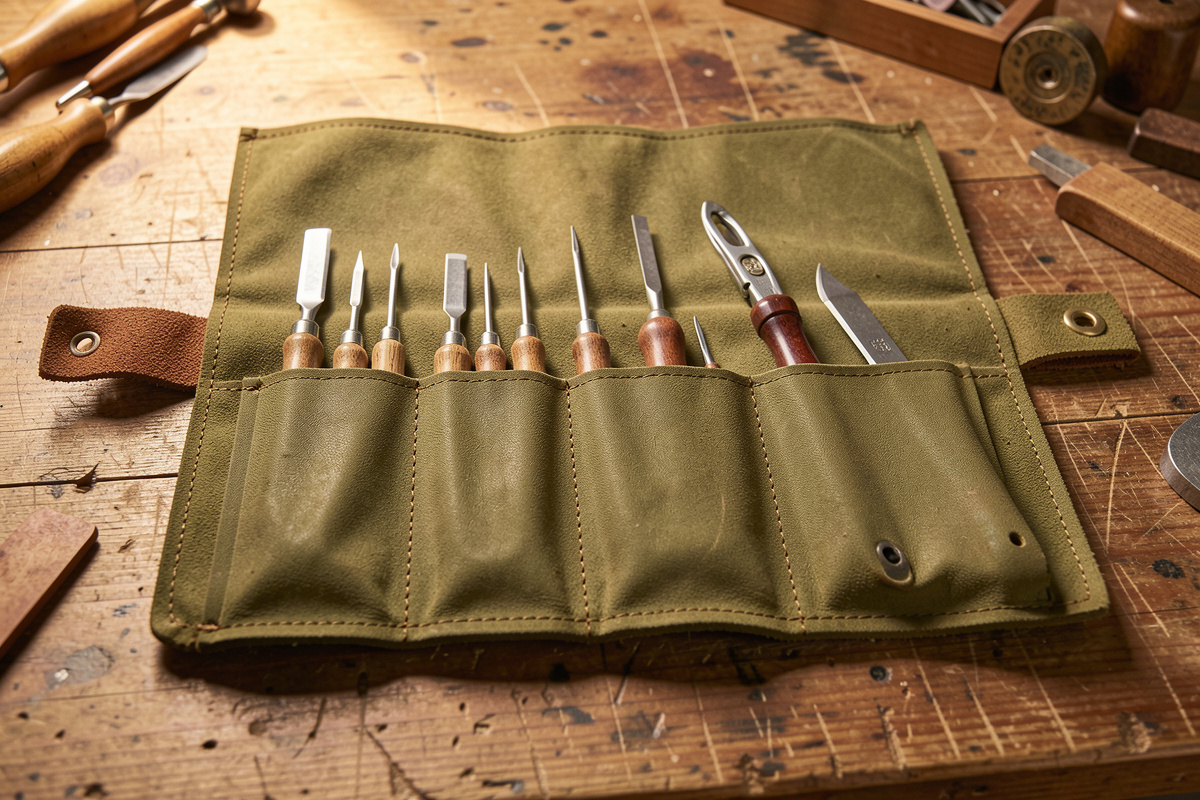
I use a European-pitch iron around 3.85 mm with 0.8 mm waxed thread for a sleeve this size — the slightly heavier thread suits a structural seam that carries load. Glue the seam allowance with a thin line of contact cement along the stitch line before punching so the panels do not shift under the awl. Backstitch and finish each seam end properly; my seam-finishing guide covers locking a run so nothing works loose. If the saddle stitch is new, start with the step-by-step tutorial, and the thread guide covers matching thread to your iron so the stitch seats cleanly rather than pulling the grain.
Edges, Notch, and Finish
Finish the mouth edges of both panels before assembly, because the top edge is unreachable once the sides are stitched and it is the edge your hand touches every time you draw the phone. Bevel, sand through the grits, and slick with Tokonole until it glosses. The three stitched seams get their edges finished after assembly, when both layers can be beveled and burnished together into one clean edge.
If you want easy retrieval, cut a shallow thumb-notch into the front panel’s mouth before assembly — a gentle scallop about 20 mm wide lets your thumb catch the phone and push it up. Dye the leather flat, buff hard, and seal so the color does not transfer to the phone; the full sequence is in my edge finishing guide. A phone sleeve is a cornerstone of a matching EDC small-goods set — built in the same leather as your key case and sunglasses case, the kit reads as one maker’s hand. Get the fit and the mouth edge right and this becomes the piece people ask you to make for them.
Frequently Asked Questions
How do I size a leather phone sleeve so it actually fits?
Wrap a strip of the exact leather around your phone and mark where it meets, rather than measuring the bare phone with calipers. That wrap captures the true girth plus the leather thickness added at every wrap. A phone listed at 71.5 mm wide needs an interior close to 74 mm.
What leather weight is best for a phone sleeve?
3-4 oz veg-tan. It is heavy enough to protect the phone and hold the mouth open for a one-handed return, but light enough to stay slim in a pocket. Above 4 oz the sleeve gets bulky; below 3 oz it goes floppy and loses the self-supporting mouth.
Why is my phone sleeve too loose after a few weeks?
Leather relaxes and breaks in with use, so a sleeve that fits perfectly when new loosens over time. Build it to feel slightly tight on day one so the break-in brings it to the right fit. A light dampening and re-forming around the phone can tighten a sleeve that has gone loose.
Should I use veg-tan or chrome-tan for a phone sleeve?
Veg-tan is my default because it burnishes to a clean edge and molds slightly to the phone as it ages, improving the fit. A firm chrome-tan gives a softer, more flexible sleeve but trades away the slicked edge and the self-supporting mouth that makes one-handed return easy.
How do I make the phone easy to pull out of the sleeve?
Leave the phone sitting proud of the mouth by 15-20 mm, or cut a shallow thumb-notch about 20 mm wide into the front panel’s mouth before assembly so your thumb can catch the phone and push it up. A pull-tab stitched into a seam is another option for a deeper sleeve.
Do I need a case-on or case-off phone sleeve?
Decide before you measure, because a case changes the girth significantly. If you keep a case on your phone, wrap the leather around the phone with its case for the pattern. A sleeve built for a bare phone will not accept a cased one, and vice versa.
Related Guides
- Leather EDC Projects: The Small-Goods Guide
- How to Make a Leather Pen and Tool Slip
- How to Make a Leather Sunglasses Case
- How to Saddle Stitch Leather by Hand
- Leather Edge Finishing: Bevel to Burnish