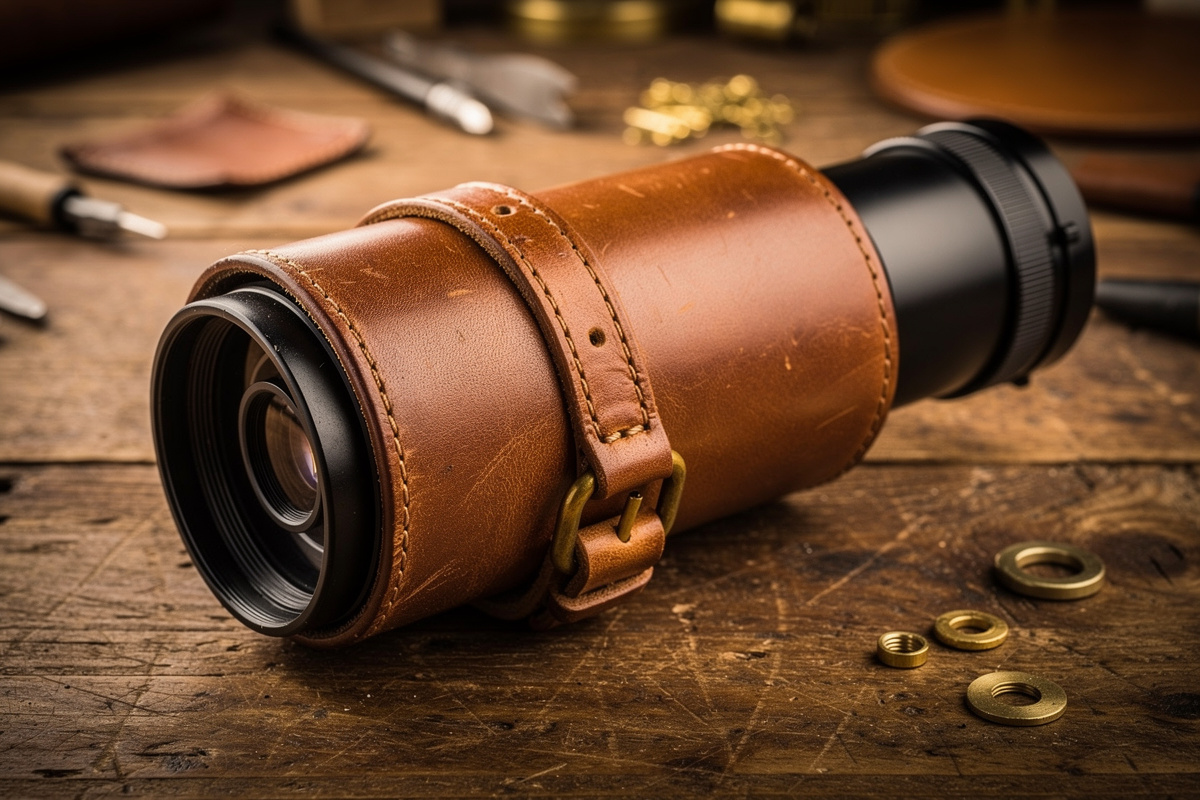
A hand-stitched leather telescope strap costs $18 in materials — 8-ounce vegetable-tanned leather, waxed linen thread, two solid-brass D-rings, and an afternoon at the stitching pony — and…
A hand-stitched leather telescope strap costs $18 in materials — 8-ounce vegetable-tanned leather, waxed linen thread, two solid-brass D-rings, and an afternoon at the stitching pony — and replaces a $45 nylon strap that frays after two observing seasons.
The leather strap conforms to the optical tube over time, distributes the weight of a 6-kilogram Maksutov-Cassegrain across a 40-millimeter-wide shoulder pad, and does not slip off a cold winter shoulder the way nylon slides on a parka. A handmade leather eyepiece case costs $25 in materials and protects $500 worth of glass better than the foam-lined plastic case that came with the scope, because the leather case is sized to the exact eyepiece collection rather than a generic foam insert that fits nothing snugly.
The telescope accessory market sells nylon straps for $45 and aluminum eyepiece cases for $60 and calls both “premium.” Build your own in leather and the combined materials cost — $18 for the strap, $25 for the case, roughly $43 total — comes in under the price of one commercial strap alone, before you even count the case. The gap between “store-bought accessory” and “handmade gear that fits your setup exactly” is the leatherworker’s advantage, and every telescope owner who also works leather — or knows someone who does, or is willing to learn — can outfit a full observing kit in custom leather for the price of two commercial accessories. The stitching is the same saddle stitch that builds a wallet. The edge-burnishing is the same Tokonole and canvas routine that finishes a belt. The only difference is the dimensions, and the dimensions come from the telescope — measure the tube circumference for the strap, measure the eyepiece barrel height for the case, and the pattern is done. For the foundational skills that make every leather project — including telescope accessories — a success, the leather projects guide covers saddle stitching, edge finishing, and hardware mounting from the first project forward.
Telescope Carry Strap: Design, Stitching, and Hardware
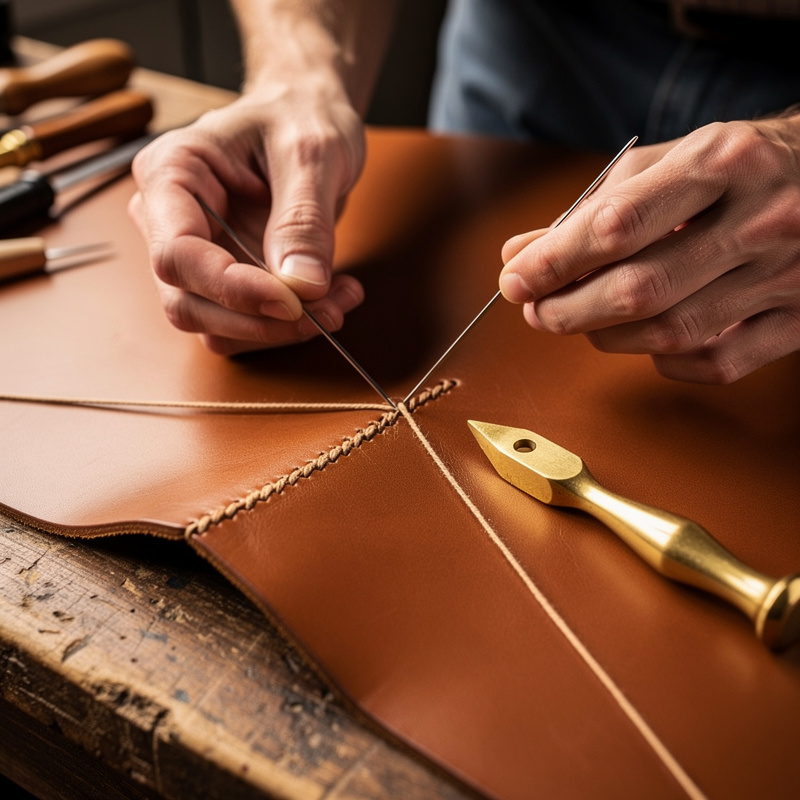
On my bench, the same pricking irons that stitch wallets and belts stitch telescope straps — the dimensions change, the technique doesn’t. A telescope carry strap for an optical tube assembly measuring 150 millimeters in diameter and weighing 4 to 8 kilograms needs a leather body 40 millimeters wide and roughly 3.2 millimeters thick — 8-ounce leather — with a total length of 1.2 to 1.5 meters including the shoulder-pad section. The strap wraps around the tube at two points, roughly one-third and two-thirds along the tube length, secured by adjustable buckles that cinch the strap to the tube diameter. The shoulder pad is a second layer of leather, 60 millimeters wide and 300 millimeters long, stitched to the inside of the main strap body with a thin layer of felt or neoprene sandwiched between the layers for padding.
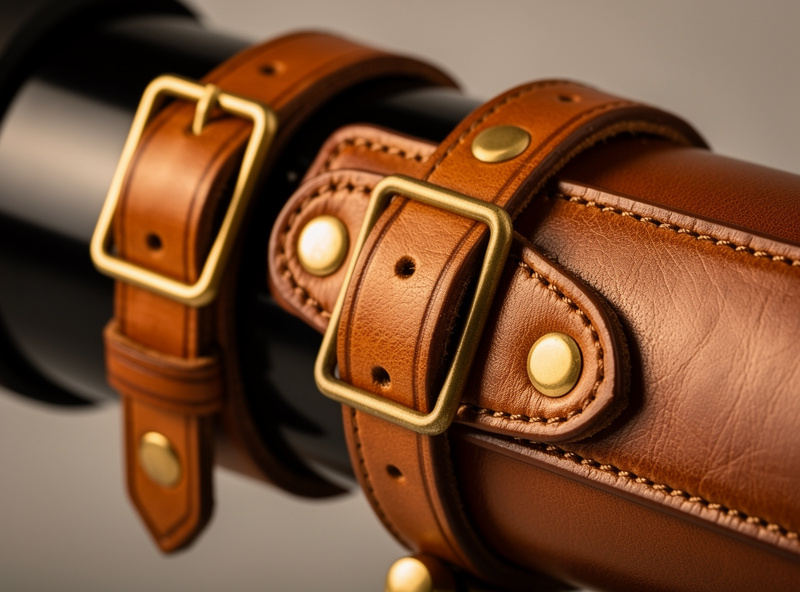
I don’t have a manufacturer breaking-strength figure for 1-millimeter Tiger thread I trust enough to put in front of you, and this is exactly the wrong place to guess — a strap failure means an expensive optical tube hitting the ground. What I do trust, and what every saddle-stitcher learns on lower-stakes projects first: a saddle stitch is a locking stitch, each pass independently anchored, which is why it’s the standard for load-bearing leatherwork from belts to horse tack in the first place. The strap attaches to the tube via two D-ring assemblies — one at each cinch point — with the D-ring sewn into a folded leather tab that wraps through the cinch buckle. The D-ring takes the full weight of the telescope when carried, so the stitching that holds it in place gets doubled — two parallel rows of saddle stitch across the folded tab, not one — because a dynamic load (the scope swinging against your hip while you walk) stresses a stitch line harder than the same weight held still. Before you trust a finished strap with real glass, load-test it: hang the empty strap from the D-ring with something equivalent to your scope’s weight for several minutes and inspect the stitch holes for any sign of elongation or tearing. If nothing’s moved, it’s ready for the field. If anything has, add a third row rather than assume the first repair holds.
Eyepiece Case: Custom-Sized for Your Collection
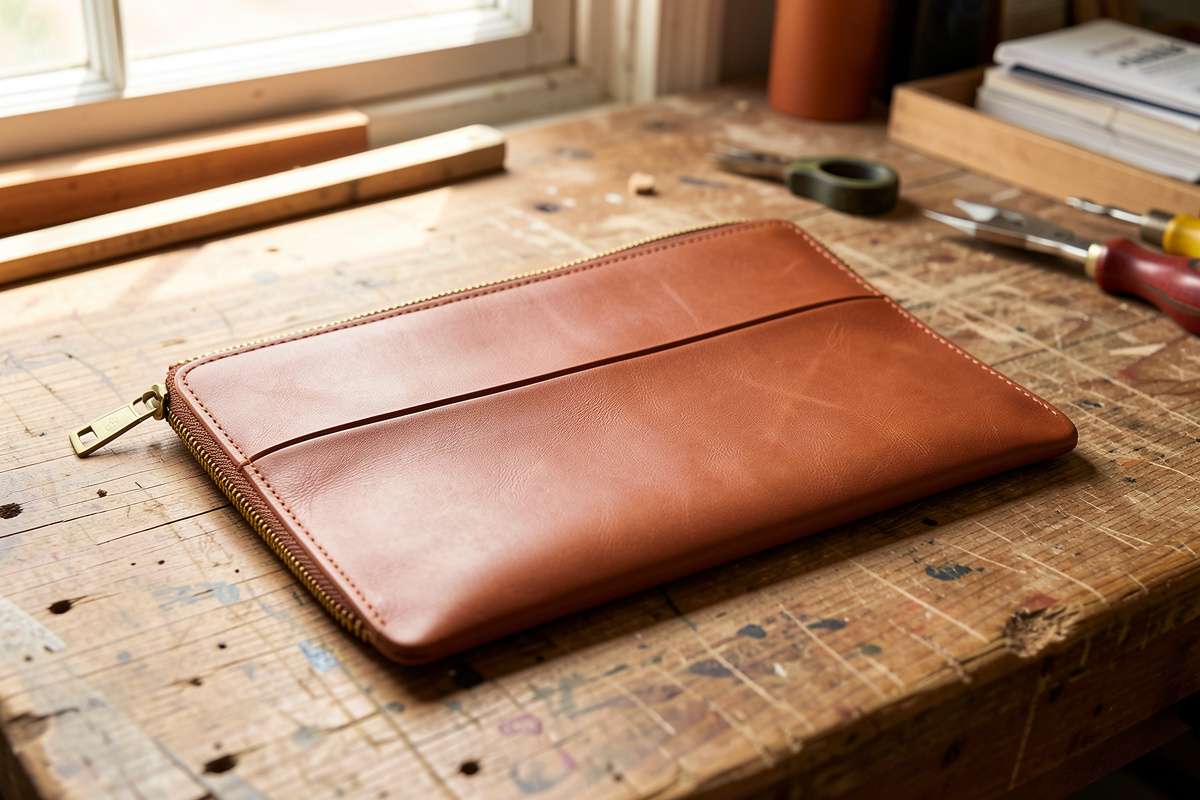
A leather eyepiece case is a rectangular tube with internal dividers, a fold-over flap, and a closure strap — sized to the specific eyepieces in your collection rather than a generic foam insert. Three eyepieces — a 25-millimeter Plossl, a 10-millimeter wide-field, and a 6-millimeter planetary — each measure roughly 45 millimeters in diameter and 60 to 90 millimeters in height. The case interior is 150 millimeters wide, 100 millimeters deep, and 100 millimeters tall, divided into three compartments by 2-millimeter leather partitions stitched to the case walls.
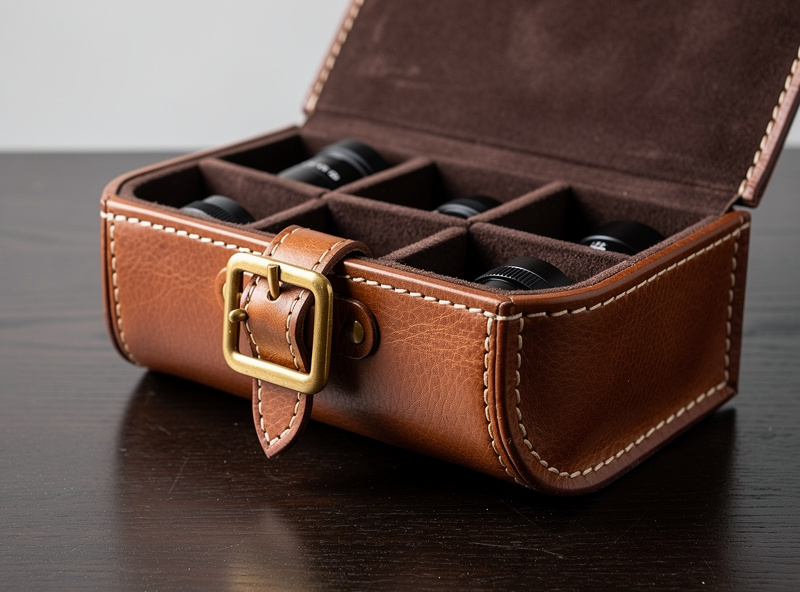
The case body is 5-ounce leather (roughly 2 millimeters) — stiff enough to hold its shape but thin enough to fold without cracking. The divider walls are the same leather, stitched to the case floor and side walls with a saddle stitch before the back wall is attached — building the case from the inside out, like a drawer, so the stitching is accessible at each assembly stage. The closure flap is a single piece of leather that extends from the back wall, folds over the top, and secures to a brass Sam Browne stud on the front face. The flap is lined with suede on the inside to protect the eyepiece tops from abrasion when the case is closed and jostled in a backpack or an observing bag.
The eyepiece barrels are protected from each other by the divider walls and from the case floor by a 5-millimeter felt pad glued to the floor of each compartment. The felt prevents the metal barrel threads from wearing through the leather floor over years of insertion and removal, and the felt pad is replaceable — peel it out, glue in a new one — without rebuilding the case. The full guide to telescope accessories that deserve custom protection — eyepieces, filters, finderscopes, and mount counterweights — is available in the telescope accessories guide, which covers what each accessory does and how to build a kit that matches how you actually observe.
Leather Selection for Telescope Gear: What Holds Up in the Field
Vegetable-tanned leather at 5 to 8 ounces (2 to 3.2 millimeters) is the correct leather for telescope accessories because it holds its shape without a stiffener, burnishes to a weather-resistant edge, and develops a patina rather than degrading under repeated handling. Chrome-tanned leather is too soft — a chrome-tan strap stretches under the telescope’s weight and the D-ring stitching elongates the stitch holes within months. Latigo and harness leathers are designed for equestrian tack and are overbuilt for telescope accessories — they are stiffer and harder to stitch than veg-tan and add unnecessary weight to a strap that already supports a 6-kilogram scope.
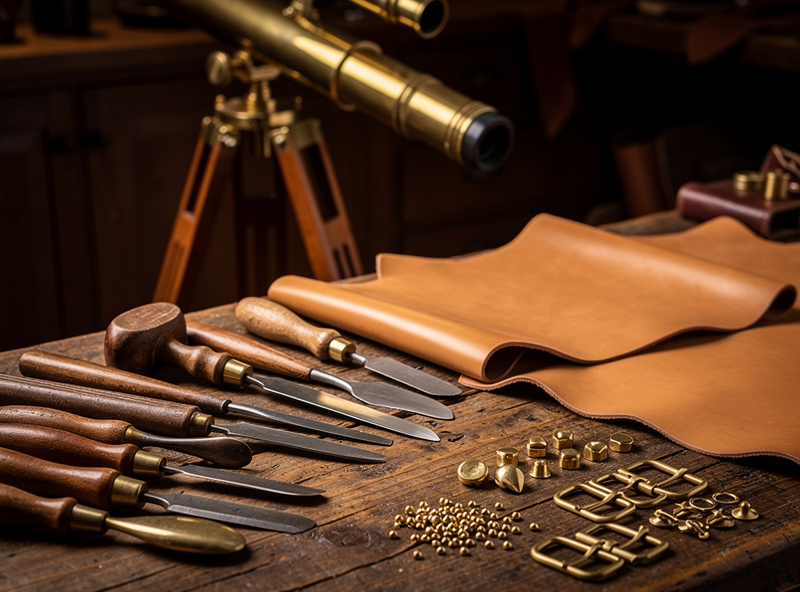
The way I finish edges on field gear differs from the way I finish a wallet: field gear gets beeswax seal because dew finds every unsealed edge. Edge finishing for field gear matters more than edge finishing for wallets and belts because telescope accessories live in dew-soaked grass, freezing temperatures, and dusty observing fields. A Tokonole-burnished edge is smooth and water-resistant but not waterproof — dew beads on the surface but eventually soaks through if the accessory sits in wet grass for hours. A beeswax-sealed edge, where melted beeswax is rubbed into the burnished edge and buffed, is waterproof enough for field use and adds roughly 15 minutes of finishing time per accessory. The wax seal lasts roughly one observing season and is reapplied during the annual gear-maintenance session — the same weekend you clean the eyepieces, collimate the scope, and recondition the mount.
A handmade leather telescope strap and matching eyepiece case cost less together than one commercial nylon strap — and the leather gear outlasts it by a decade. The same saddle stitch that builds a wallet builds a strap that carries your scope across a frozen observing field at 2 a.m., and the same edge burnish that finishes a belt keeps dew out of the eyepiece case. Measure the tube, size the case to your collection, and spend the weekend at the bench. The telescope will thank you every time you lift it by a strap that actually grips your shoulder.
Frequently Asked Questions
What leather thickness should I use for a telescope carry strap?
Eight-ounce (3.2-millimeter) vegetable-tanned leather for the main strap body — stiff enough to support 4 to 8 kilograms without stretching. The shoulder pad adds a second layer of 4-ounce leather with felt padding between. Use doubled saddle stitching at hardware attachment points for safety under dynamic loads.
How do I size an eyepiece case for my collection?
Measure each eyepiece at its widest diameter and tallest height. Add 10 millimeters to each dimension for leather thickness and felt padding. Arrange the eyepieces side-by-side in your preferred order and the combined widths plus divider walls give you the case interior width. Build the case 10 millimeters taller than your tallest eyepiece to prevent the closure flap from pressing on the eye lens.
Will leather telescope accessories hold up in wet observing conditions?
Yes, with edge finishing. A Tokonole-burnished edge resists dew and light moisture. For wet-grass or winter observing, seal the edges with melted beeswax rubbed into the burnished edge and buffed — this adds roughly 15 minutes per accessory and lasts one observing season before reapplication. Store leather gear indoors between sessions to prevent mildew.
Can I use chrome-tanned leather instead of vegetable-tanned?
Not for straps or structural accessories. Chrome-tan leather stretches under sustained load — the D-ring stitching holes elongate within months and the strap grows longer. Chrome-tan works for non-structural items like dust covers and accessory pouches. Veg-tan is required for any accessory that bears weight or must hold its shape.
What hardware should I use for telescope leather accessories?
Solid brass D-rings, buckles, and Sam Browne studs — brass does not rust in dew conditions the way nickel-plated steel hardware rusts within one observing season. Brass also does not scratch optical tube paint the way steel hardware does when the strap shifts during setup. Avoid aluminum hardware for load-bearing connections — it deforms under sustained telescope weight.
How long does it take to stitch a leather telescope strap?
Roughly 3 to 4 hours for a complete strap with shoulder pad and double-D-ring cinch assemblies. The saddle stitching is the time-consuming part — approximately 2 hours of stitching along the 1.2-meter strap body. Pre-punch the stitch holes with a pricking iron before stitching to maintain even spacing and reduce hand fatigue during the stitching session.
Related Articles
- How to Saddle Stitch Leather by Hand
- Leather Edge Finishing: The Bevel-to-Burnish Guide
- Types of Leather: The Tannage, Grade, and Weight Guide
- Leather Hardware Guide: Buckles, D-Rings, and Rivets
- Leatherworking Tools Guide: Three Tiers of Buy-In