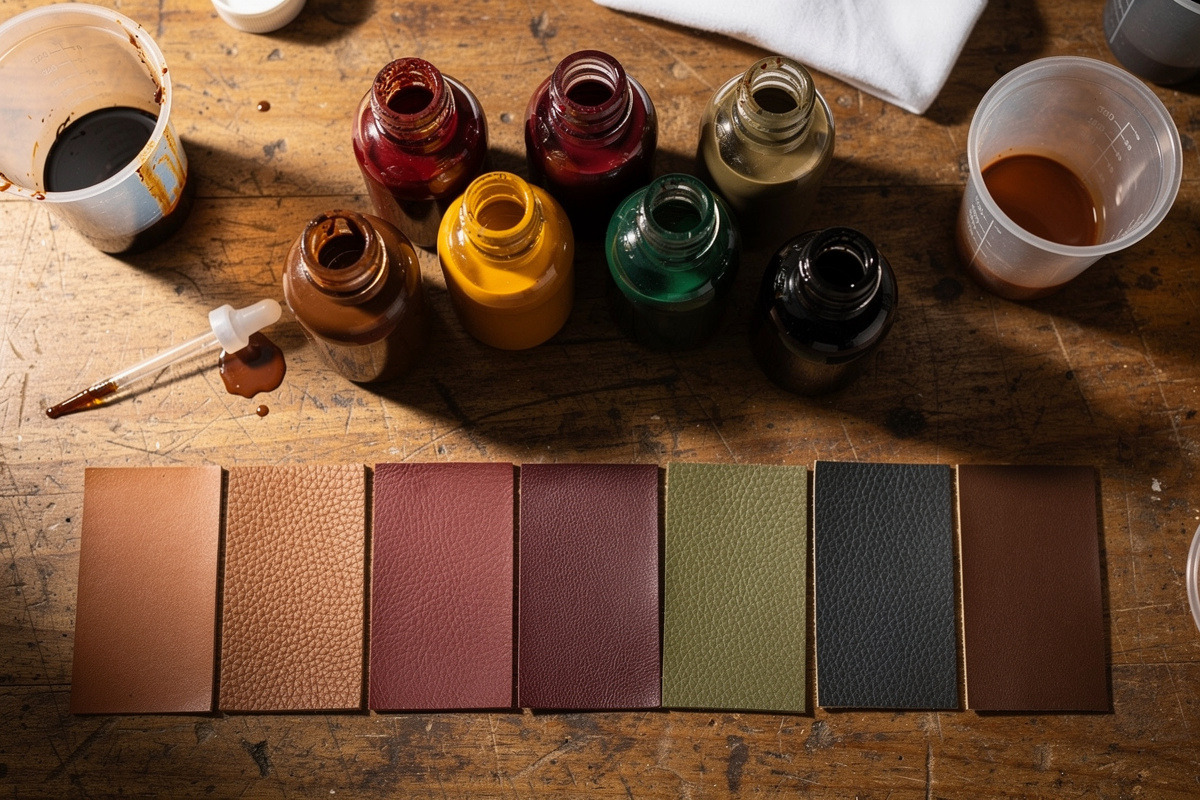
To mix custom leather dye colors, blend only dyes from the same family and brand — oil with oil, spirit with spirit — adjust by drop count and…
To mix custom leather dye colors, blend only dyes from the same family and brand — oil with oil, spirit with spirit — adjust by drop count and record every recipe, then test the blend on a scrap of the actual leather because veg-tan’s warm base shifts every color darker and warmer than it looks in the cup. Mix enough for the whole project in one batch.
Buying a rack of premixed colors is fine, but the moment you want an oxblood that is not quite oxblood, or a brown one shade warmer than the bottle, you have to mix. It is not hard once you understand two things: leather dye behaves like a transparent stain, not opaque paint, and the leather underneath is part of every color. This is the mixing chart and the working rules I use at the bench, built so you can repeat a color instead of getting lucky once. It slots under the complete leather dyeing guide.
The Three Rules Before You Mix a Drop
Three rules prevent almost every mixing disaster. First, only mix dyes of the same carrier and brand — oil with oil, spirit with spirit — because incompatible carriers clump or separate. Second, dye is transparent, so the leather’s own color always shows through and warms the result. Third, always test on a scrap of the same leather and let it dry, since wet dye reads two shades darker than dry.
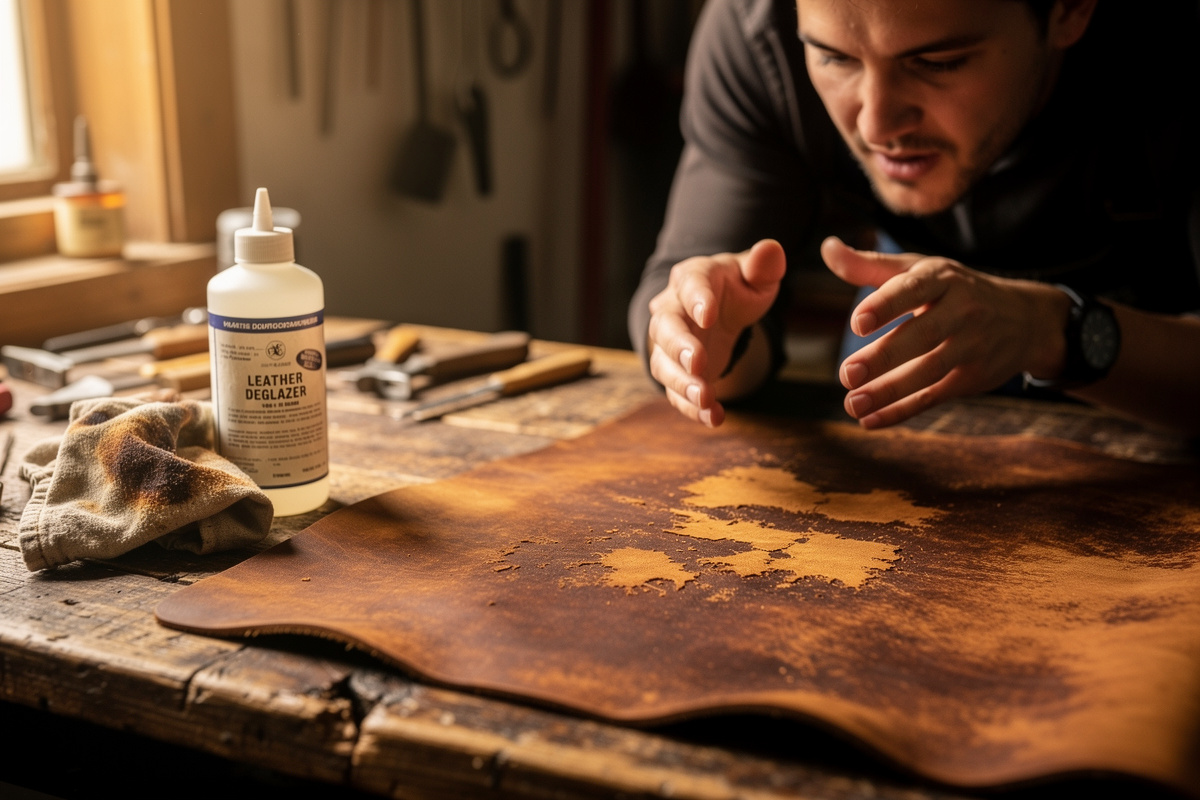
The carrier rule is the one beginners break most. Pour water-based dye into oil dye and you get a curdled, streaky mess that will not lay down — the pigments are suspended in liquids that refuse to blend, a mixing failure other makers report the same way in this leatherworker.net thread on mixing spirit and oil dye. Stay inside one family and ideally one brand, because manufacturers formulate their pigments to mix cleanly with their own line. The transparency rule is just as important: leather dye is a stain that lets the substrate show, so the same blend looks honey on cream veg-tan and rust on natural tan. That is why a swatch of the actual project leather, dried fully, is the only color sample you can trust. The cup lies, the wet leather lies, the dry swatch tells the truth. The same logic drives the dye-type behavior covered in the oil vs water vs acrylic comparison.
How the Colors Actually Combine
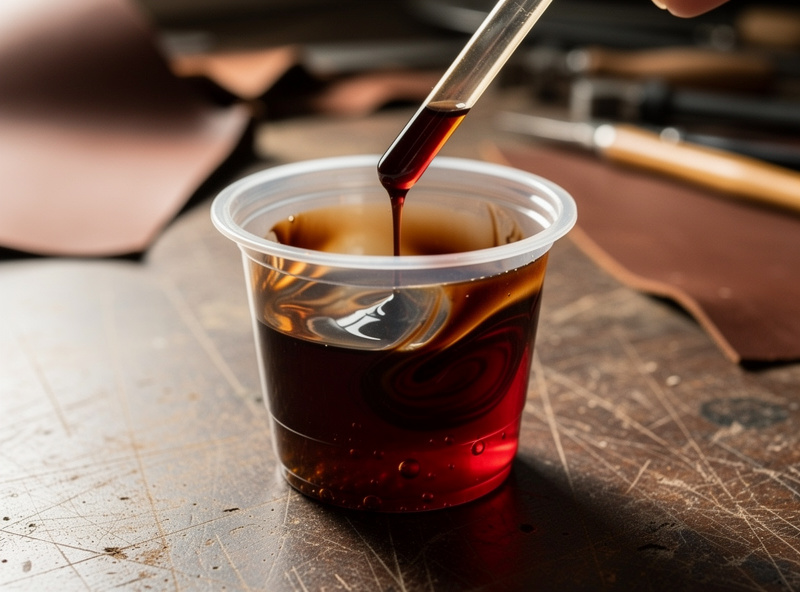
Leather dye mixing follows pigment logic, not light. Brown is your anchor color — most custom leather shades are a brown shifted toward red, yellow, or black. Adding black deepens and mutes any color; adding red warms it toward mahogany and oxblood; adding yellow lifts it toward tan and honey; a touch of green or blue cools an over-warm brown back toward neutral.
Think in terms of pushing a brown around the color wheel rather than building colors from scratch. A few drops of red into medium brown gives the mahogany and oxblood family that dominates dress leather. Yellow or “British tan” dropped into brown lightens and warms it toward saddle tan and honey. Black is the great muter — a drop or two knocks the loud out of any color and ages it; too much and you are back to near-black, so add it a single drop at a time. Cool colors are the secret corrector: if a brown comes out too orange or too red, a single drop of green or blue neutralizes it without obviously turning the color green. Because everything is transparent and the tan base adds warmth, you almost never need to add warmth deliberately — most mixing is about taming it.
Leather Dye Color Mixing Chart
This is the starting-point chart I work from. Treat the ratios as a first swatch, then nudge — leather, brand, and coats all shift the final color, so the chart gets you close and the test scrap dials it in.
| Target color | Starting mix (by parts) | Adjust toward target |
|---|---|---|
| Chocolate / dark brown | 4 brown + 1 black | More black to deepen; stop early, it jumps |
| Mahogany | 3 brown + 1 red (mahogany) | More red for vibrancy, drop of black to age |
| Oxblood / burgundy | 2 red + 1 brown + drop black | Black mutes toward dried-blood tone |
| Saddle / British tan | 3 light brown + 1 yellow | More yellow to lift; thin to lighten |
| Honey | 1 light brown + 1 yellow, thinned | Dye reducer to keep it pale and even |
| Chestnut | 2 brown + 1 red + 1 yellow | Balance red/yellow for warm vs orange |
| Olive / field tan | 3 brown + 1 green | Green tames orange; add black for depth |
| Muted slate brown | 4 brown + 1 blue + drop black | Blue cools; black grounds it |
| Antique tan (two-step) | Tan base, then brown antique wiped on | Layer, do not mix, for depth in tooling |
Lightening, Thinning, and Why You Cannot Add White
You cannot lighten leather dye by adding white — dye is transparent, so white pigment would only cloud it. To get a paler color, thin the dye with the matching brand’s dye reducer or thinner, which dilutes the pigment load so less color deposits per coat — the same dilute-to-lighten approach Angelus documents for their own dye line. Fewer, thinner coats also keep a light color light.
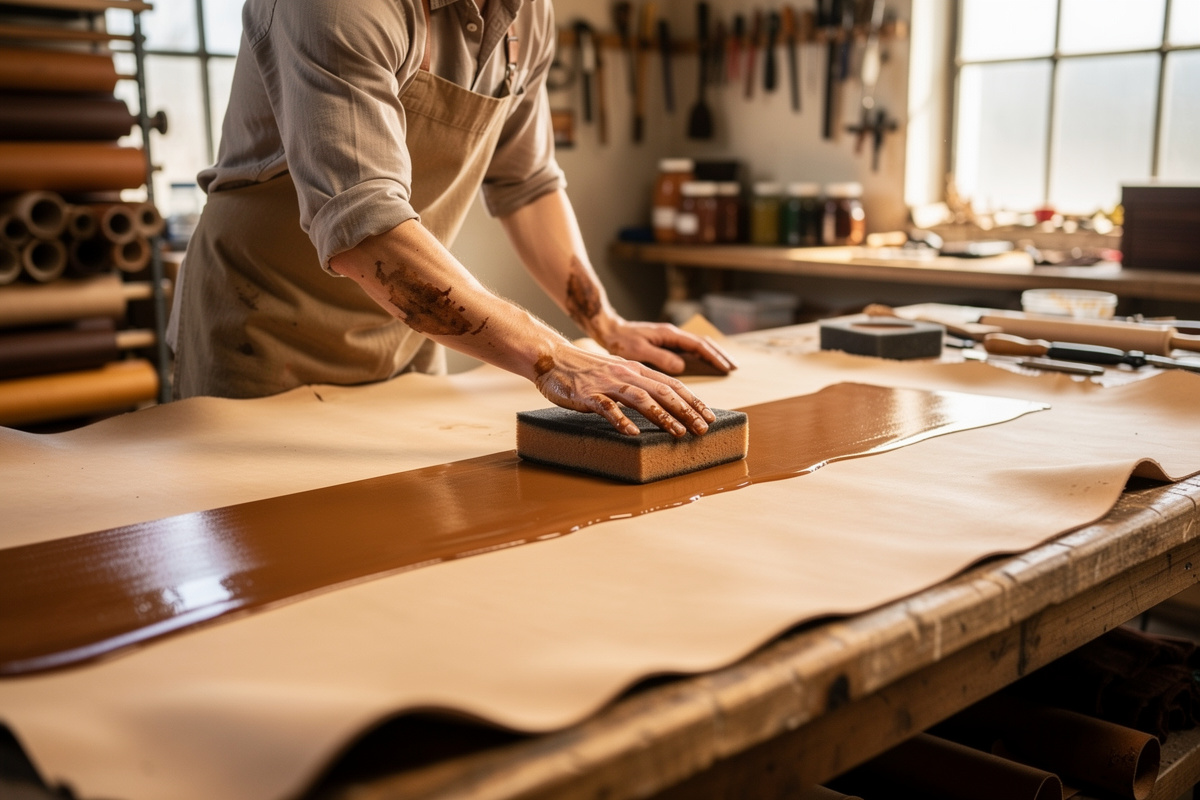
This trips up everyone who comes from painting. With paint you add white to lighten; with dye you remove pigment by diluting it. Oil dyes thin with their oil-based reducer, spirit dyes with denatured alcohol or the brand’s spirit reducer. A honey or pale tan is really just a well-controlled dilute brown applied in one or two light coats rather than flooded on. Diluting also evens out application — a thinner dye is more forgiving and less streak-prone, which is doubly useful on big panels. If you need to go lighter than your lightest dye allows, you are really choosing a paler leather to start, since you can always go darker but you can never pull color back out.
Mix the Whole Batch, Record the Recipe
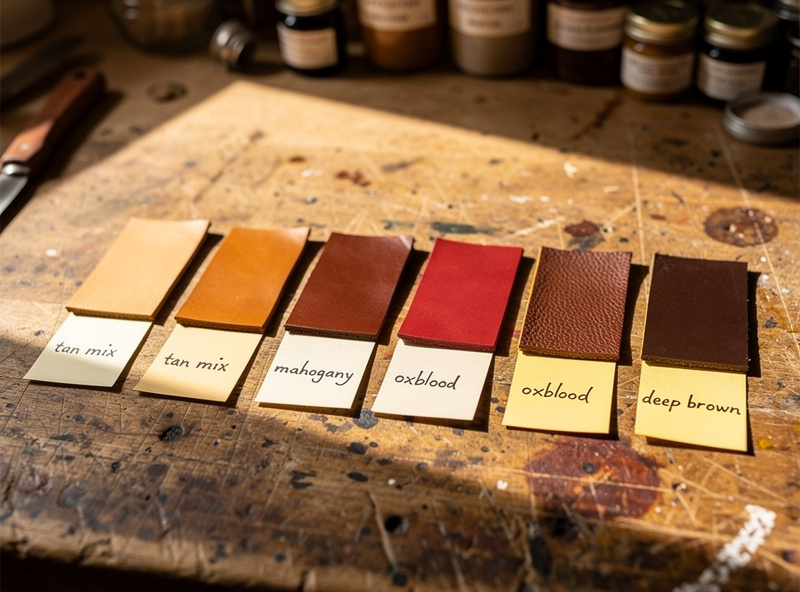
Mix enough dye for the entire project plus a margin in one batch, because re-creating an exact custom color later is nearly impossible. Write the recipe down by drop or part count the moment it works — “12 brown : 3 red : 1 black” — and keep the labeled dry swatch with it. A recorded recipe plus a real swatch is the only way to repeat a color months later.
The cruelest mistake in custom color is running out halfway through a belt. Even using the same bottles, a fresh batch mixed by eye will not match, and the seam where the new batch starts will show forever. So estimate generously and mix once. As you mix, count in consistent units — drops from a pipette, or parts from a measuring cup — and log it in a notebook with the brand and the leather type noted, because the same recipe lands differently on different leather. Staple the dried test swatch next to the recipe. Over a year you build a personal color library that beats any premixed rack, and wanting “that brown again” for a second piece months later stops being a guessing game. Once color is locked, sealing it consistently matters too — the topcoat order is in the edge finishing guide for the edges and on the body with resolene.
Mixing Safely
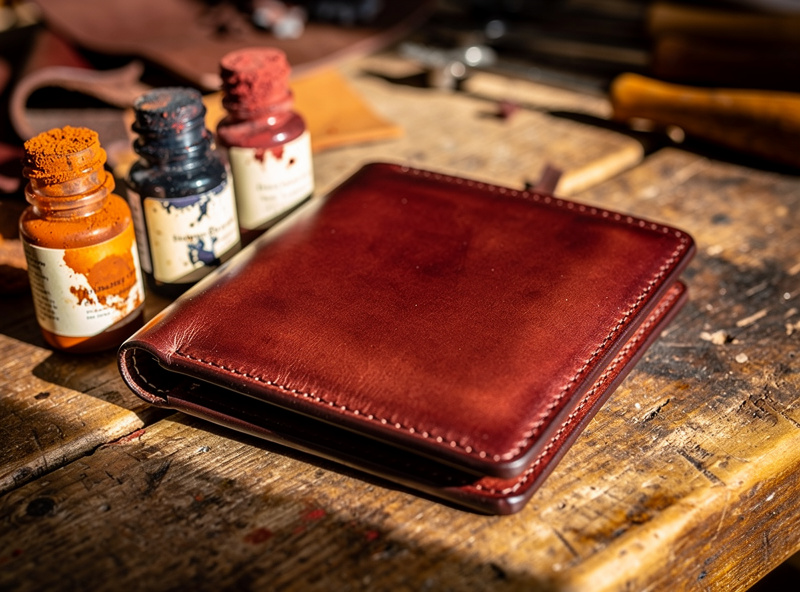
Spirit and oil dyes are solvent-based, so mix and decant in a ventilated space and wear nitrile gloves — custom colors mean more handling of open dye, more dauber drips, and more chances to stain your hands. Keep mixing cups, pipettes, and reducer for dye use only, and label them. None of this is dramatic; it is just the ordinary care you give any solvent on the bench, and it keeps the mixing station tidy enough to actually repeat a recipe.
As an Amazon Associate I earn from qualifying purchases.
What I Keep at the Mixing Station
Custom mixing needs almost no special gear — a set of base colors in one family, something to thin them, and a clean way to measure and test. That is the whole station.
Start with a leather dye color set in a single brand so the colors blend cleanly, and a bottle of the matching dye reducer to lighten and even out coats. Measure with cheap graduated pipettes so your drop counts are repeatable, and lay the blends down with wool daubers. To pick base colors worth mixing from, the best leather dye for veg-tan roundup ranks the bottles I reach for, and the streak-free application guide covers laying a custom color down evenly.
Frequently Asked Questions
Can you mix different leather dye colors together?
Yes, as long as they share the same carrier and ideally the same brand. Mix oil dye with oil dye and spirit dye with spirit dye. Never blend water-based and oil-based dyes, since the carriers are incompatible and the pigment clumps or separates instead of blending.
How do you make oxblood leather dye?
Start with about two parts red or mahogany dye to one part brown, then add a single drop of black to mute it toward the dried-blood tone. Test on a scrap of the actual leather and let it dry, because the warm tan base pushes the color darker than it looks wet.
How do you lighten leather dye?
Thin the dye with the matching brand’s dye reducer rather than adding white, because dye is transparent and white only clouds it. Diluting drops the pigment load so each coat deposits less color. Applying fewer, thinner coats also keeps a pale shade pale.
Why does mixed leather dye look different on the leather?
Leather dye is a transparent stain, so the leather’s natural color shows through and warms the result. The same blend reads honey on cream veg-tan and rust on darker tan. Always test the mix on a scrap of the project leather and judge it dry, not wet.
How much dye should I mix for a project?
Mix enough for the whole project plus a generous margin in one batch. Re-creating an exact custom color later is nearly impossible, and the seam where a second batch begins will show. Record the recipe by drop or part count and keep a dried swatch with it.
What colors make brown leather dye darker?
Add black a single drop at a time to deepen brown toward chocolate, since black jumps fast and over-darkens easily. A little red shifts brown toward mahogany while still darkening it, and a drop of green or blue mutes an over-warm brown without obviously cooling it green.
Can you mix leather dye with water?
Only water-based dyes can be thinned with water. Oil and spirit dyes must be thinned with their matching oil or alcohol reducer, since water will not blend into them and causes streaking and separation. Match the thinner to the dye’s carrier every time.
Related Articles
- Leather Dyeing: The Complete Veg-Tan Guide
- Leather Dye Types: Oil vs Water vs Acrylic
- Best Leather Dye for Veg-Tan: 8 Brands Tested
- How to Dye Leather Without Streaks or Blotches
- Leather Edge Finishing: The Bevel-to-Burnish Guide