A diamond awl is correctly sharpened when it is mirror-polished, not razor-sharp — a slick four-faced blade that slides through the pricking-iron slit and lets the thread seat…
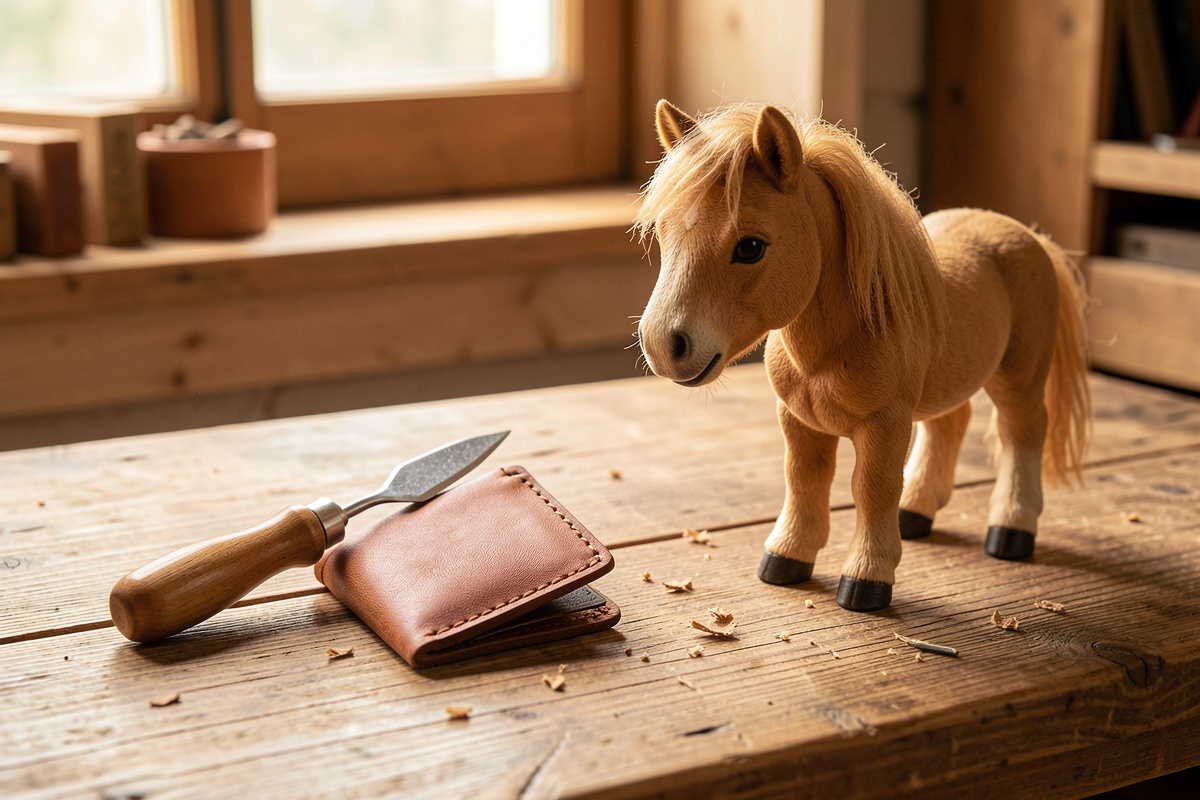
A diamond awl is correctly sharpened when it is mirror-polished, not razor-sharp — a slick four-faced blade that slides through the pricking-iron slit and lets the thread seat flat. You maintain it almost entirely by stropping all four faces edge-trailing on green compound — five to eight passes per face, before each stitching session — and you only reach for a stone when the tip dents or the taper drifts out of true.
This is the blade the stitching videos treat as an afterthought, and it is the one that quietly decides whether your saddle stitch looks hand-made or hand-struggled. A rough or over-sharpened awl grabs the leather as it enters, drags the thread, and leaves stitches sitting proud at odd angles. A polished awl parts the fibers, opens the slit just enough for two waxed threads to pass, and the lock pulls the stitch down flat on its own. The difference is not the needlework — it is the hole underneath.
I ruined a bifold exterior learning this. I had honed my awl to a true cutting edge, convinced that sharper was always better, and watched my stitch line wander a full millimeter off the pricking-iron marks over eight inches of seam because the awl was slicing its own path sideways instead of following the slit. The fix was counter-intuitive: I blunted it back slightly with extra stropping and polished the four faces to a mirror. This guide covers that geometry, the four-face stropping routine, and how to size the blade to your iron pitch. It is the third blade in the cluster — pair it with the head-knife and swivel-knife pieces, and the hub care guide ties the whole bench together.
What Does a Diamond Awl Actually Do in a Stitch Line?
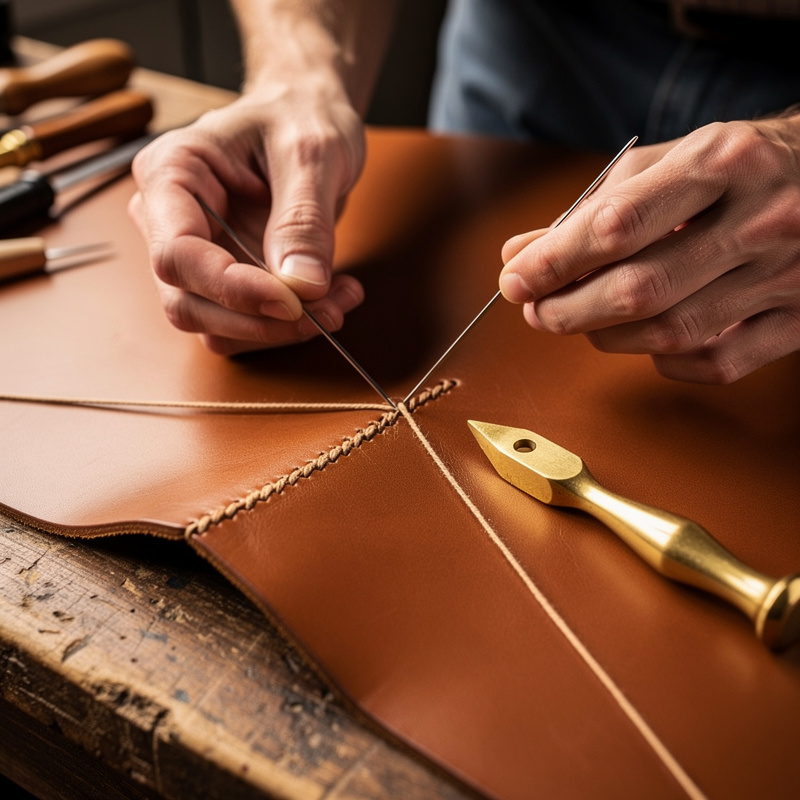
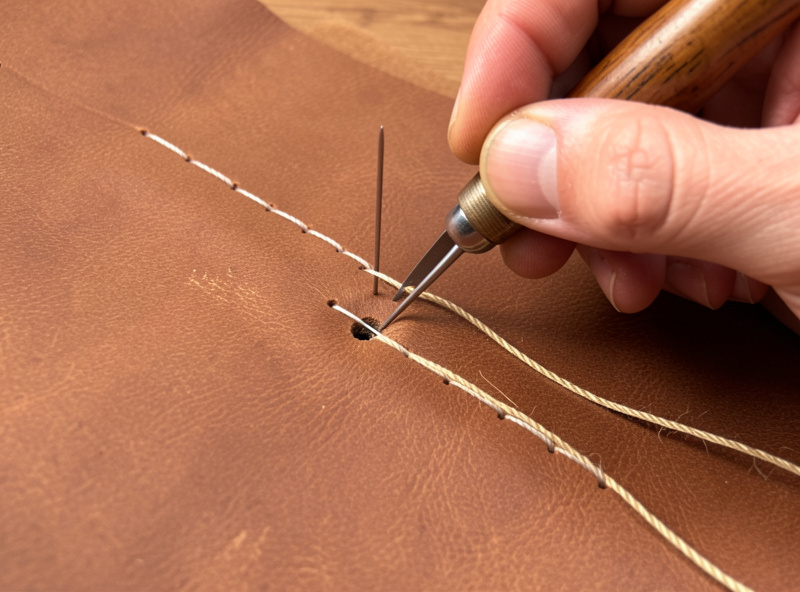
The diamond awl opens the slit your pricking irons marked, and nothing more. The iron pressed a diamond-shaped indent into the leather; the awl enters that indent, gently wedges it open along the four pre-set lines, and withdraws — leaving a clean slit sized for two threads to pass and cross. The awl does not punch a round hole, and it does not cut new leather. It unlocks the iron’s work so the needle can pass without force.
That distinction matters because it sets the sharpening goal. A round awl (the kind used for lacing and some bookbinding) punches and displaces; a diamond awl shears along four edges and relies on the iron for placement. Get the geometry right and the awl follows the slit like a key in a lock, entering straight and true every time. Get it wrong — too sharp, too thick, or unpolished — and it either cuts its own wandering path or binds so hard you lever the leather out of shape pulling it free. The whole logic of saddle stitching, which the stitching techniques guide breaks down in full, depends on that clean, repeatable slit.
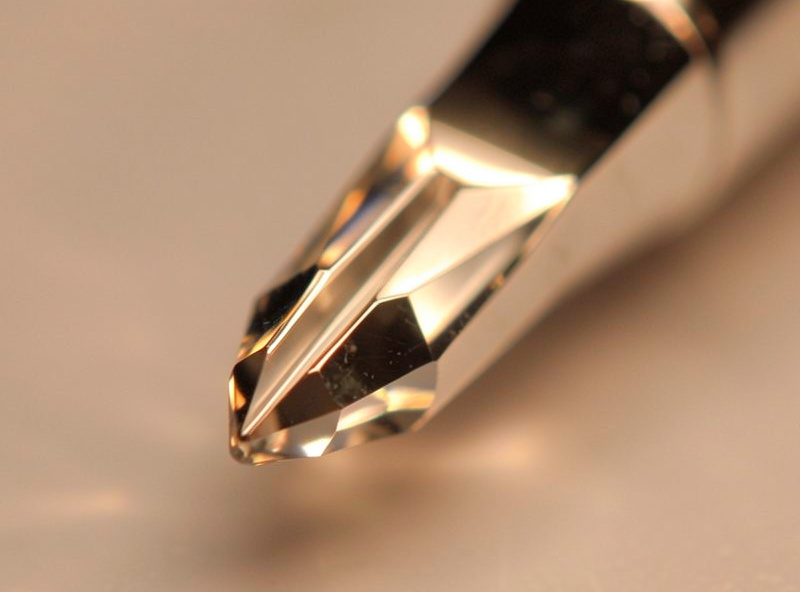
The thread tells you immediately whether the awl did its job. Waxed polyester or linen thread passing through a properly opened slit slides with a faint squeak and pulls the stitch down flush as the lock forms. Thread through a rough, undersized slit drags, abrades against raw leather, and leaves the stitch sitting proud — and over a long seam, that abrasion actually weakens the thread at every hole. The friction data sewing-thread manufacturers like Coats publish on thread-on-substrate drag makes the point in the industrial literature: tighter, rougher holes measurably raise the abrasion a thread sees per pass, which on a hand-stitched seam translates directly to a fuzzy, weakened lock.
Should an Awl Be Razor-Sharp or Just Polished?
Just polished. The four long edges of a diamond awl need to be keen enough to part the leather fibers as the blade enters, but the goal is a smooth, low-friction surface — not a cutting edge that slices. Think of it as a burnished wedge: the edges lead the entry, the polished faces reduce drag, and the slit opens along the iron’s lines rather than wherever the awl happens to bite.
The failure mode of an over-sharpened awl is wander. A blade honed to knife sharpness will cut sideways the instant it meets any resistance or grain variation, and because you drive it at an angle to follow the stitch line, that sideways cut compounds over each successive hole. Eight inches in, your seam is a full iron-width off the marks and you cannot tell which hole caused it. A polished-but-not-knife-sharp blade resists this because it cannot easily initiate a cut in a new direction — it can only follow the existing slit, which is exactly what you want.
The polish itself is doing real work, not cosmetics. A mirror finish on the four faces means there is no surface roughness for the leather to grab as the blade enters and withdraws, so the awl slides on its own taper rather than sticking. This is the same principle that makes a polished edge cut cleaner than a coarse one of identical sharpness — the substrate glides rather than drags, as the edge-refinement microscopy at Science of Sharp documents in detail. Makers of premium awls like Barry King deliver their blades pre-polished for exactly this reason, and the maintenance job is to keep that polish rather than chase a keener edge.
How Do You Strop a Diamond Awl on All Four Faces?
Use a flat strop charged with green chromium-oxide compound, and draw the awl across it edge-trailing — spine-first — for five to eight passes on each of the four faces in rotation. Lay one face flat against the leather, lift the spine just enough that the long edge leads, and pull the blade toward you so the edge trails. Rotate a quarter turn, repeat on the next face, and cycle through all four so no face gets more attention than the others.
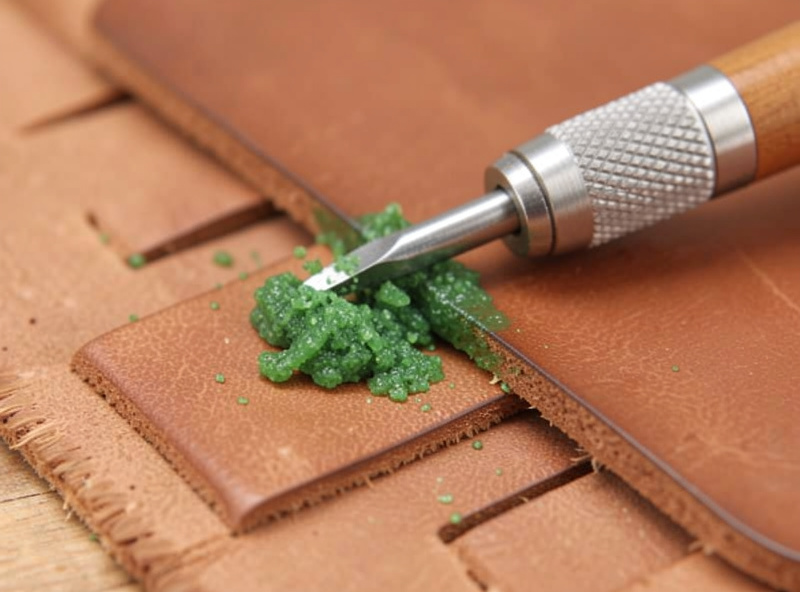
The single most common mistake is stropping only two of the four faces. The awl looks shiny, feels sharp, and you move on — but the two faces you skipped have developed a microscopic burr from the last stitching session, and that burr grabs the thread on every pass. The fix is discipline: count the faces, cycle all four every time, and finish with two ultra-light passes around the whole blade to knock off any wire edge at the tip. I strop before every stitching session and again whenever I feel the awl start to bite mid-seam, which on 8–10 oz belt leather means every few inches.
A grooved or shaped strop is not necessary, but it helps at the tip. The very point of the awl does the initial entry and takes the most abuse, so a strop with a shallow groove (or just the rounded edge of a strop board) lets you polish the tip’s curved transition without flattening the faces. Keep compound light — a thin, even charge cuts and polishes; a thick paste of compound rounds the geometry and loads the leather with steel dust that scratches the next blade. The same charged board serves the whole cluster; the stropping routine itself is covered in the broader sharpening leather tools overview.
How Do You Reshape a Dented Awl Tip?
When the tip takes a visible dent or bend — from dropping the awl or driving it into a hard surface under the leather — stropping will not fix it, and you should not try. Take a fine hard Arkansas or a high-grit ceramic slip stone, lap the four faces back evenly until the dent disappears at the tip, then return to the strop to re-polish. Removing the dent usually shortens the blade by a millimeter or two; that is the cost, and it is unavoidable.
Work one face at a time on the slip stone, keeping the existing taper angle — typically around 6 to 10 degrees per face, a very shallow grind — and count your strokes so each face loses the same amount. The danger is reshaping the taper unevenly, which puts the tip off-center and reintroduces the wander problem. Check by sighting down the blade from the tip: the four faces should meet at a single centered point. If the point is off to one side, that face needs more work until the tip recenters.
After the stone, the blade will be sharp but rough — the polish is gone. Spend twice as long on the strop as you normally would, cycling all four faces, until the mirror finish returns and the tip stops catching on a thumbnail drawn lightly across it. A re-ground awl needs this extended polishing before it stitches cleanly again; skip it and you will be back to dragging thread within a few holes. If the dent is deep enough that regrinding would shorten the blade past usefulness, retire it — a too-short awl reaches the handle before it passes through heavier leather.
How Do You Match Awl Size to Your Pricking Iron Pitch?
The awl blade’s widest point should be about equal to, or fractionally narrower than, the slit your pricking iron leaves — close enough that the awl opens the slit without cutting fresh leather, and loose enough that two threads pass without fraying. Mismatch the two and every stitch fights you: too wide an awl enlarges the holes until stitches look sloppy; too narrow an awl leaves a slit the thread has to force through, abrading on every pass. The match is by iron pitch (stitches per inch) and iron type, not by eye.
| Iron pitch | Slit size (approx.) | Match awl blade width | Typical thread |
|---|---|---|---|
| 7–8 SPI (3.0–3.5 mm) | Larger diamond slit | 2.5–3.0 mm diamond | 0.8–1.0 mm poly/linen |
| 9–10 SPI (2.5–2.7 mm) | Medium slit | 2.0–2.4 mm diamond | 0.6–0.8 mm poly/linen |
| 11–12 SPI (2.0–2.3 mm) | Fine slit | 1.6–2.0 mm diamond | 0.45–0.6 mm poly/linen |
| French iron, fine | Round-ish, small | 1.5–1.8 mm diamond | 0.45 mm linen |
The iron sets the geometry for the whole chain — which is why choosing between chisels and irons, covered in the stitching chisels guide, decides your awl and thread options downstream. Once the iron is fixed, buy the awl to match it and the thread to match the pair, and the three become a single tuned system: the awl opens exactly the slit the iron marked, and the thread fills it just enough to lock without drag. When people ask why my stitches seat flat without fighting the thread, the answer is never my needlework — it is that the iron, awl, and thread were chosen as one set. The thread-selection logic lives in the thread guide.
Should a leather awl be razor-sharp?
No. A diamond awl should be keen enough to part the fibers but polished smooth, not knife-sharp. An over-sharp awl cuts sideways and wanders off the stitch line; a polished one follows the slit the pricking iron marked.
How do you strop a diamond awl?
Draw it edge-trailing across green compound, five to eight passes per face, cycling through all four faces equally. Skipping faces leaves a burr that grabs the thread. Strop before every stitching session and whenever the awl starts to bite mid-seam.
How do you fix a bent awl tip?
Stropping will not fix a dent. Lap the four faces back evenly on a fine slip stone at the existing taper angle until the dent is gone and the tip recenters, then spend extra time on the strop restoring the mirror polish before stitching.
What size awl matches my pricking irons?
Match the awl blade width to the slit your iron leaves: about equal or fractionally narrower. An 8 SPI iron takes roughly a 2.5 to 3.0 mm diamond awl with 0.8 to 1.0 mm thread; a 10 SPI iron takes 2.0 to 2.4 mm with 0.6 to 0.8 mm thread.
Related Articles
- Maintaining Leather Tools: The Complete Care Guide
- How to Sharpen a Head Knife: The Convex Edge That Slices Clean
- How to Sharpen a Swivel Knife Blade for Smooth Tooling Cuts
- Leather Stitching Chisels Guide: Chisels vs Pricking Irons
- Best Thread for Leather Stitching: Linen vs Poly vs Nylon