A good leather camera strap solves three problems at once: it spreads the weight of a body and lens across your shoulder without biting, it connects to the…
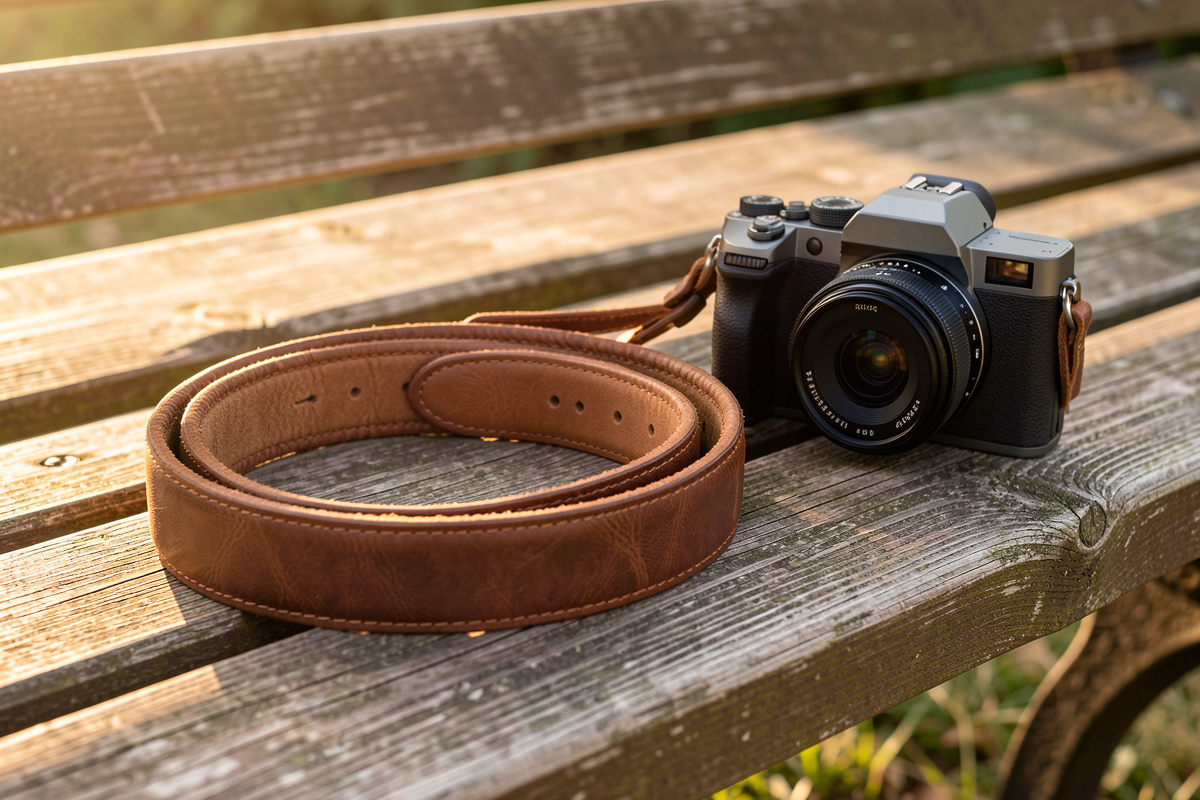
A good leather camera strap solves three problems at once: it spreads the weight of a body and lens across your shoulder without biting, it connects to the camera’s small lugs with hardware that will not scratch the body, and it does not stretch and drop your gear lower every week. Get the width, the padding, and the lug hardware right and a handmade leather strap beats almost anything you can buy — because you build it for your exact camera and your exact neck.
My first leather camera strap taught me two lessons in one go. I used a soft shoulder that stretched two inches in a month, and I rigged the lug end with a bare metal ring that rubbed a bright wear mark into the black paint of my camera body. Both were avoidable. A firm core fixes the stretch; a bit of leather or a proper lug lace between metal and body fixes the scratching. This guide is the strap I would have built the first time if I had known.
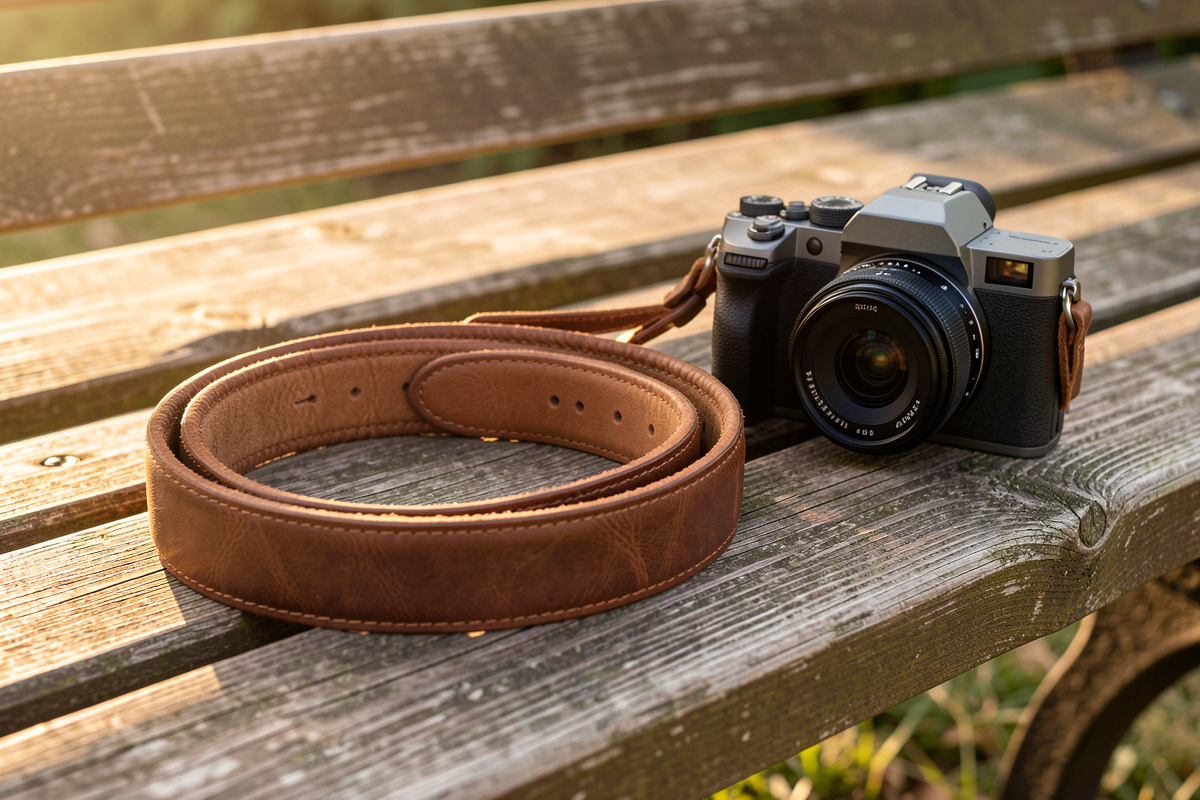
This build sits inside the broader strap-making projects guide, and it leans on two other pieces more than any strap: the right leather so it will not stretch, and padding so it will not bite.
How Wide Should a Leather Camera Strap Be?
Match width to the weight you carry. A light mirrorless body is comfortable on a 1 to 1.25 inch strap; a DSLR with a heavy lens wants 1.5 to 2 inches or a padded shoulder section to spread the load. Width, not thickness, is what stops a heavy camera cutting into your neck — a wide strap distributes the same weight over more contact area.
This is the decision that determines all-day comfort. I size the shoulder section of a camera strap to the heaviest setup I expect to hang on it, because a strap that is comfortable with a small prime becomes a wire under a fast zoom. For a compact mirrorless kit I keep it slim and simple — a firm 1.25 inch strap needs no padding. For a pro body and a 70–200 mm, I widen the shoulder to 2 inches and pad it, then taper back to a narrow end so it threads the lugs cleanly. The narrow ends and wide middle are the whole trick: comfort where it rests, slim where it connects.
What Leather Should You Use for a Camera Strap?
Use firm veg-tan or bridle at 5 to 7 oz for the load-bearing core, and if you want a soft contact face, add a thin chrome-tan or garment-leather lining or wrap over it. The firm core is non-negotiable — it is what stops the strap stretching under the swinging weight of a camera. Soft leather alone will elongate and hang your gear lower within weeks.
The camera strap is the clearest case for separating structure from comfort. The core carries the load and must be firm; the face that touches your neck can be soft. On a simple strap I use a single layer of firm 6 oz veg-tan and just finish the edges well. On a padded one I build a firm core, a closed-cell foam shim over the shoulder, and a soft leather wrap — the full method is in the padding guide. What I never do is use a single soft layer, because that is exactly the strap that stretched and dropped my camera the first time. Firm bridle from a named tannery is the safest core; it barely elongates under a swinging load — I pull mine from Wickett & Craig or Hermann Oak stock, since both publish the weight and temper specs up front (Wickett & Craig, Hermann Oak).
How Do You Attach a Leather Strap to Camera Lugs Without Scratching?
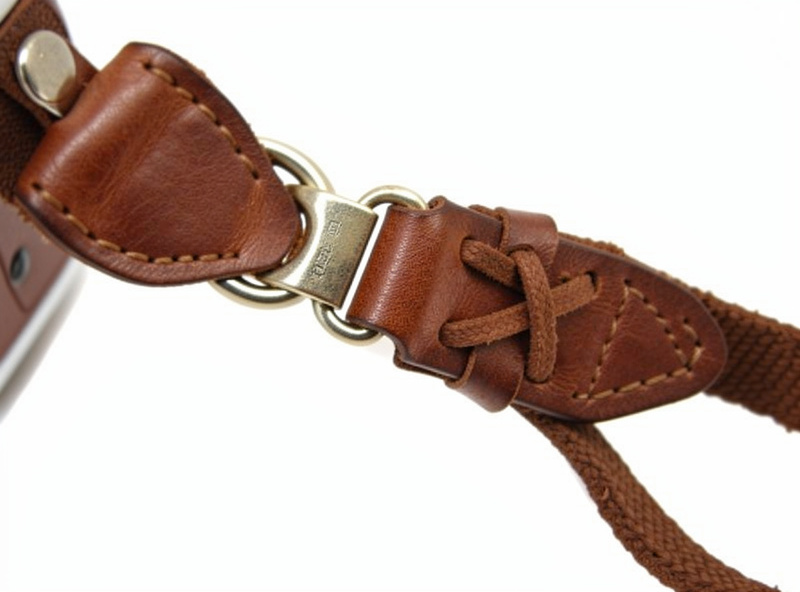
Connect to the lugs with a split ring plus a leather lug lace, or with a leather tab that threads the lug directly, so no bare metal rubs the camera body. The most common damage from a handmade strap is a metal ring wearing through the body’s finish — a thin leather buffer or a lace loop between the hardware and the camera prevents it entirely.
Camera lugs are small and the body finish is soft, so the connection needs to be secure and gentle at once. Here are the approaches I use and how they compare:
| Lug attachment | Security | Scratch risk | Removable? | Best for |
|---|---|---|---|---|
| Leather lug lace | High | None | Yes, unties | Rangefinders, mirrorless, vintage bodies |
| Split ring plus leather tab | High | Low if buffered | With a ring tool | DSLRs, general use |
| Direct leather tab through lug | Very high | None | No, stitched on | Fixed dedicated straps |
| Bare metal split ring only | High | High | With a ring tool | Avoid on painted bodies |
My default for a nice body is a leather lug lace — a thin strip of firm leather threaded through the lug and tied or riveted, so leather is the only thing touching the camera. For a quick-release setup I use a split ring but always thread it through a leather tab so the ring never contacts the body paint. Whatever the method, the strap end that carries the load is anchored with a stitched fold exactly as in the hardware guide — the lug connection and the load anchor are two separate jobs, and both have to be right. If you want to swap between straps, Chicago-screw or clip systems like those Peak Design popularized are worth studying for the mechanism (Peak Design).
Should a Camera Strap Be Padded?
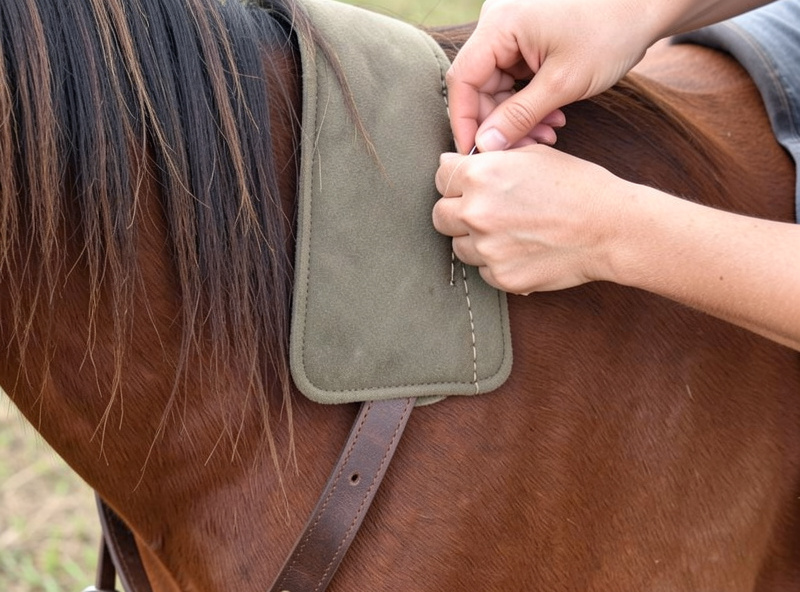
Pad it if you carry a DSLR or a heavy lens for long periods; skip padding for a light mirrorless body where a wide firm strap is enough. Padding adds a domed, cushioned shoulder section that spreads heavy load, but it adds bulk, so only build it in when the weight justifies it. For many kits, width alone does the job with less complexity.
I decide based on the heaviest camera the strap will carry and how long it hangs on me. A half-day walking with a pro body earns padding; a mirrorless around town does not. When I do pad, I keep the pad in the shoulder zone only and taper it out well before the ends, so the lug hardware attaches to firm single-thickness leather — a padded end folded around a split ring makes a squishy, unreliable joint. The camera strap is where the padding and hardware guides come together most tightly, and getting the sequence right is what separates a strap that feels premium from one that feels lumpy.
How Long Should a Camera Strap Be?
A neck strap runs about 40 to 44 inches for the camera to sit at mid-chest; a cross-body sling runs longer, around 50 to 56 inches, so the camera rides at your hip. Decide how you carry before you cut, because the two lengths are quite different and a fixed strap only does one well. Add a buckle or slide if you want to switch between them.
The way you carry drives the length. Around the neck, I want the camera resting where my hands fall to it naturally, roughly mid-chest, which lands most necks around 42 inches. Slung across the body, the camera should ride at the hip out of the way, which needs a noticeably longer strap. If someone wants both, I build in an adjuster — a stitched fold around a slide bar — so one strap covers both carries. Measure it on the person with the actual camera before cutting; a camera strap that is even a couple inches off changes how the whole thing hangs.
What I Would Do for Your First Camera Strap
Start simple: a firm 6 oz veg-tan strap, 1.25 inches wide, 42 inches long, with leather lug laces at both ends and a well-burnished edge — no padding, no buckle. It will carry a mirrorless or light DSLR comfortably and teach you the lug connection and the edge finish that matter most. Add padding and adjusters on your second strap, once the first one has hung a camera on your shoulder for a day and proven the basics. Firm core, buffered lugs, clean edge: get those three and the strap is better than most you can buy. A quality set of camera strap split rings is the only hardware you need to start.
As an Amazon Associate I earn from qualifying purchases.
Keep Building
- Leather Strap Making Projects: The Complete Guide
- How to Add Padding to a Leather Strap: Lined vs Built-Up Comfort
- How to Attach Strap Hardware Without Rivets Pulling Through
- Best Leather for Straps: Why Bridle and Harness Beat Soft Hides
How wide should a DIY leather camera strap be?
Match width to the load. A light mirrorless body is comfortable on a 1 to 1.25 inch strap, while a DSLR with a heavy lens wants 1.5 to 2 inches or a padded shoulder section. Width, not thickness, spreads the weight and stops a heavy camera cutting into your neck.
How do I attach a leather strap to my camera without scratching it?
Use a leather lug lace threaded through the lug, or a split ring with a leather tab, so no bare metal touches the body. The most common damage from a handmade strap is a metal ring wearing through the paint, and a thin leather buffer between the hardware and the camera prevents it.
What leather should I use for a camera strap?
Firm veg-tan or bridle at 5 to 7 oz for the load-bearing core, with an optional soft lining or wrap for the contact face. The firm core is essential because it stops the strap stretching under the swinging weight of a camera. A single soft layer will elongate and drop your gear lower over time.
How long should a leather camera strap be?
A neck strap runs about 40 to 44 inches so the camera sits at mid-chest, while a cross-body sling runs around 50 to 56 inches so it rides at your hip. Decide how you carry before cutting, or build in an adjuster slide so one strap covers both carries.
Does a leather camera strap need padding?
Only if you carry a DSLR or heavy lens for long periods. A wide firm strap is enough for a light mirrorless body. When you do pad, keep it in the shoulder zone and taper it out before the ends so the lug hardware attaches to firm single-thickness leather.