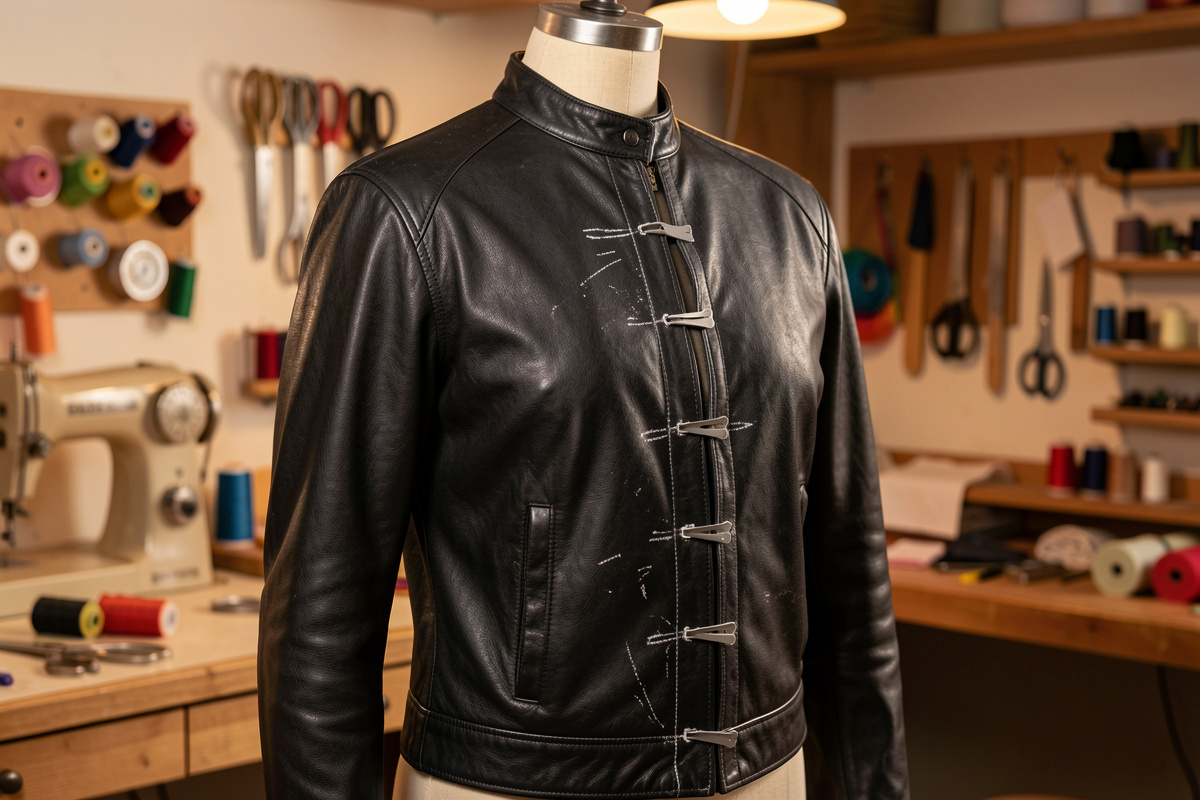
A leather jacket can be taken in, shortened, and have its sleeves slimmed or cropped — but it can almost never be let out, because the old needle…
A leather jacket can be taken in, shortened, and have its sleeves slimmed or cropped — but it can almost never be let out, because the old needle holes are permanent and reusing a seam line shows. Work inside the existing seams, stitch in the original holes where you can, and the alteration disappears. Fight those rules and it announces itself.
Altering leather is closer to surgery than tailoring. There is no pressing a seam open, no easing in fabric, no quietly letting out a half inch you took in last year. I approach a jacket alteration the way I approach any soft-leather job — the same skiving, gluing and machine habits from my working with garment leather guide — just on a finished garment where every mistake is visible. For the bigger picture on the hide itself, see my garment and upholstery leather guide.
What You Can and Cannot Alter
Start with the hard limits, because they decide whether the job is even possible. You can take a jacket in (smaller), shorten the body, shorten or slim sleeves, and replace zippers, snaps and linings. You cannot meaningfully make a jacket larger: leather does not have hidden seam allowance to let out the way wool trousers do, and any seam you open leaves a permanent line of old holes. Even taking in has a catch — once you re-stitch a tighter line, the original stitch holes stay visible just outside the new seam unless they fall inside the trimmed allowance.
So the golden rule is to remove material, never add it, and to hide old holes inside the seam allowance you trim away. Plan every alteration backward from that constraint and you will know in two minutes whether a jacket is worth the work.
Tools and Prep for a Finished Jacket
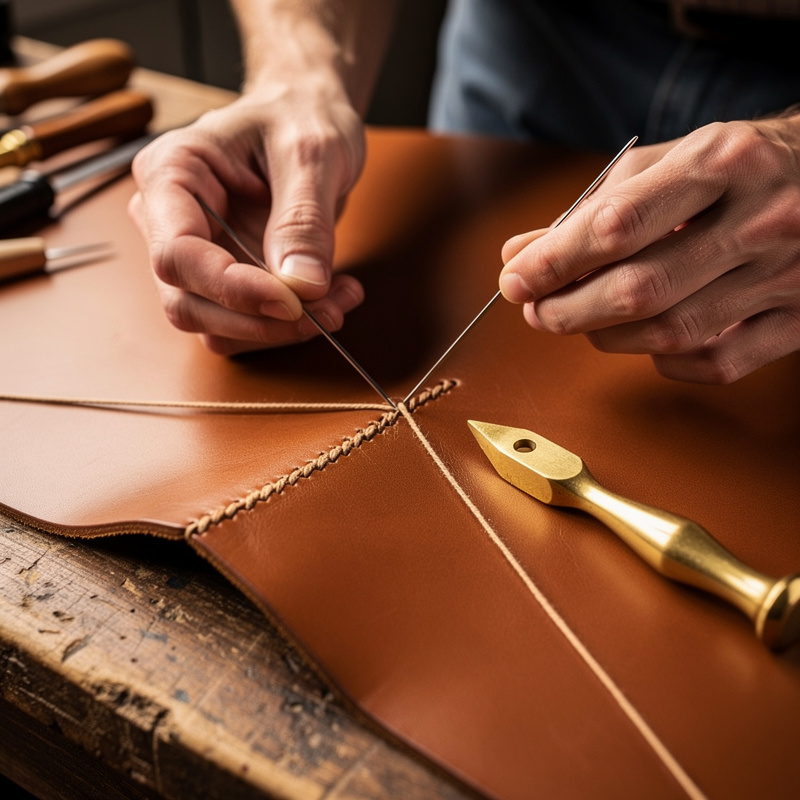
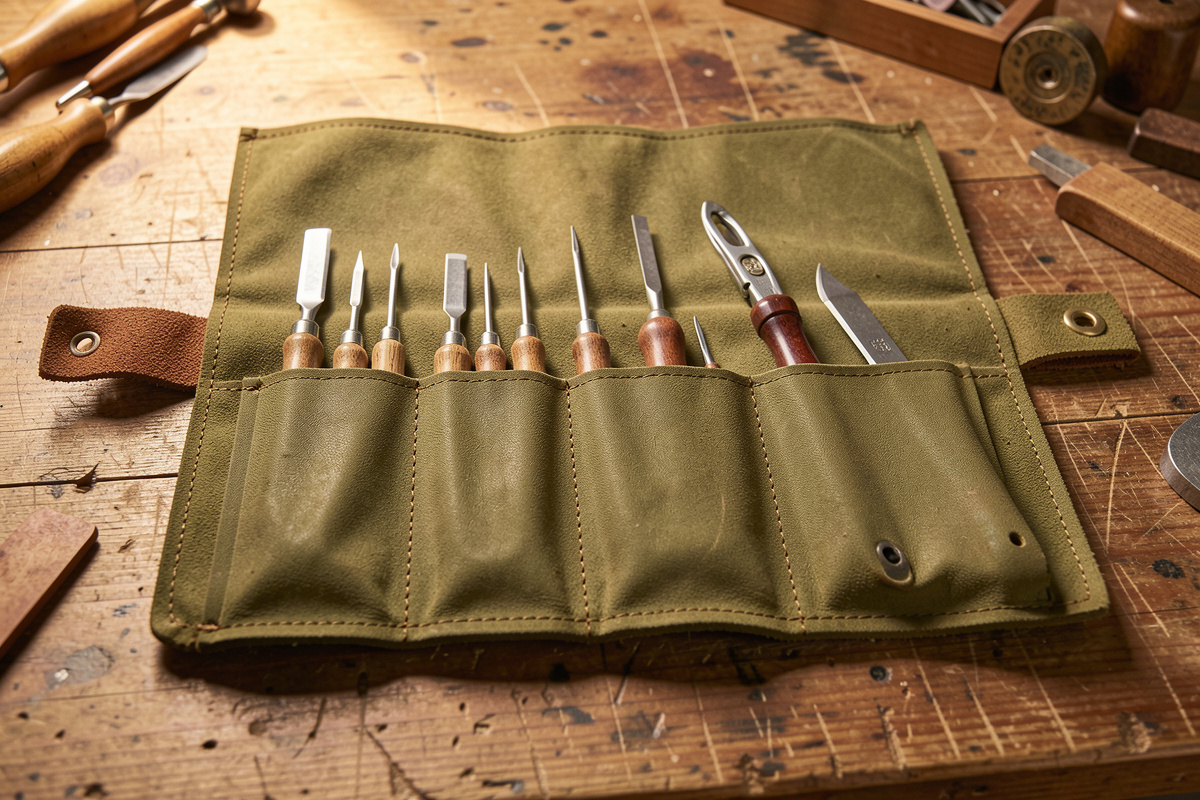
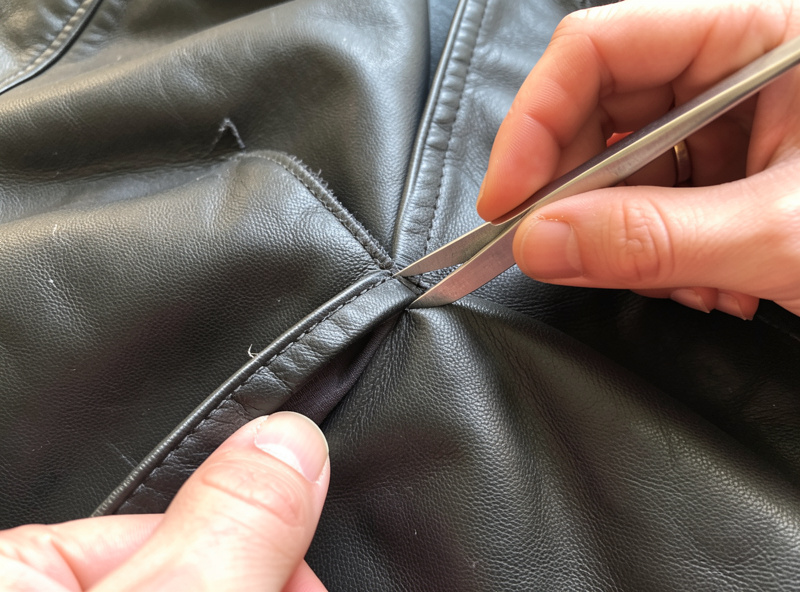
Working on an assembled jacket means working blind through a lining, so prep matters. I open the lining at a hem or cuff with a fine seam ripper to get inside, rather than cutting through the leather. A few essentials: a sharp seam ripper, binder clips or hair clips instead of pins (pins scar leather permanently), tailor’s chalk or a silver pen for marking on the flesh side, a skiving knife for thinning new seam allowances, and a machine set up with a leather needle and a walking or Teflon foot.
Before any cutting, turn the jacket inside out and study how it was built — whether seams are stitched-and-glued, top-stitched, or bound. You are going to reverse and redo that construction, so understand it first. Mark the new seam line in chalk and try the jacket on (or fit it to a dress form) before you commit a single stitch.
Taking In the Body and Sleeves
Taking in is the most common alteration and the most forgiving. Open the lining to expose the side and underarm seams, mark the new line with the jacket fitted, and re-stitch the seam tighter. The trick is to keep the new seam parallel to the old and to trim the now-wider seam allowance so the old needle holes are cut away rather than left exposed. Skive the new allowance thin so it does not create a ridge, glue it down with a flexible contact cement (see my best glue for leather notes), then re-stitch.
For sleeves, taking in at the underarm seam slims the whole arm. Re-stitch with thread matched to the original — my thread guide covers matching weight and color — and use the original stitch length so the new line reads identically. Because these seams are long, this is machine work; my reasoning is in saddle stitch vs machine stitch and the technique in the machine sewing leather guide.
Shortening Length and Sleeves
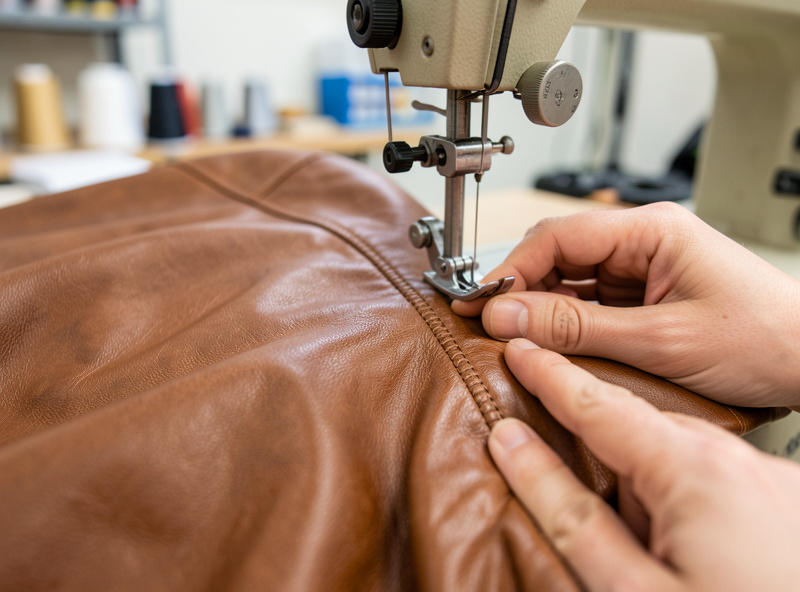
Shortening the body means rebuilding the hem, which is more involved than taking in. You remove the existing hem finish, mark the new length, cut, then re-skive and re-fold or re-bind the new hem edge. If the jacket has a zipper that runs the full length, shortening the body also means shortening the zipper from the bottom — doable, but it pushes the job toward the harder end.
Shortening sleeves is usually done from the cuff. If the cuff is plain, you can crop and refinish it; if it has a zip, snap or knit cuff, you remove that hardware, shorten the sleeve, and reattach it. Skiving the new fold line thin is what keeps a shortened cuff from looking bulky — the same principle as every turned edge in soft-leather work. Take your time marking; you cannot add length back if you cut short.
When to DIY and When to Use a Pro
I do my own taking-in and simple shortening because I have the machine, the skiving knife and the patience for it. But I am a hand maker, not a trade tailor, and I am honest about the line. A full reproportioning, a shoulder adjustment, or a relining on a valuable jacket is genuinely difficult — shoulders in particular are structural and hard to get right — and a specialist leather tailor or a good cobbler who works leather will do those faster and cleaner than a home setup.
My rule: if the alteration is removing material along an existing straight seam, it is a reasonable DIY job. If it involves shoulders, complex reproportioning, or an expensive jacket you cannot risk, pay the specialist. Knowing which is which is part of the craft, and it saves more jackets than any technique.
As an Amazon Associate I earn from qualifying purchases. For alteration work I keep a quality seam ripper set and a tube of flexible leather contact cement on the bench.
Frequently Asked Questions
Can a leather jacket be made bigger?
Not really. Leather has no hidden seam allowance to let out, and any seam you open leaves permanent needle holes. A jacket can be taken in, shortened or slimmed, but making it meaningfully larger is generally not possible.
Do old stitch holes show after altering leather?
They can. Old needle holes are permanent, so the goal is to trim the widened seam allowance so the original holes are cut away, or to re-stitch in the same holes. Done carefully, the alteration is invisible.
Can you take in a leather jacket at home?
Yes, taking in along an existing side or underarm seam is a reasonable home job if you have a machine with a leather needle and walking foot. Keep the new seam parallel to the old, skive and glue the allowance, and match the original thread.
How do you shorten leather jacket sleeves?
Usually from the cuff. For a plain cuff, crop and refinish the edge; for a zip, snap or knit cuff, remove the hardware, shorten the sleeve, and reattach it. Skive the new fold thin so the cuff does not look bulky.
Should I alter a leather jacket myself or use a tailor?
Take in or simply shorten along straight seams yourself. Hand over shoulder adjustments, full reproportioning, or any expensive jacket to a specialist leather tailor or a cobbler who works leather, since those are structural and unforgiving.
Keep Reading
- Garment and Upholstery Leather: The Complete Bench Guide
- Working With Garment Leather
- Machine Sewing Leather: A Maker’s Guide
- Leather Skiving Knife Guide
- Best Thread for Leather Stitching