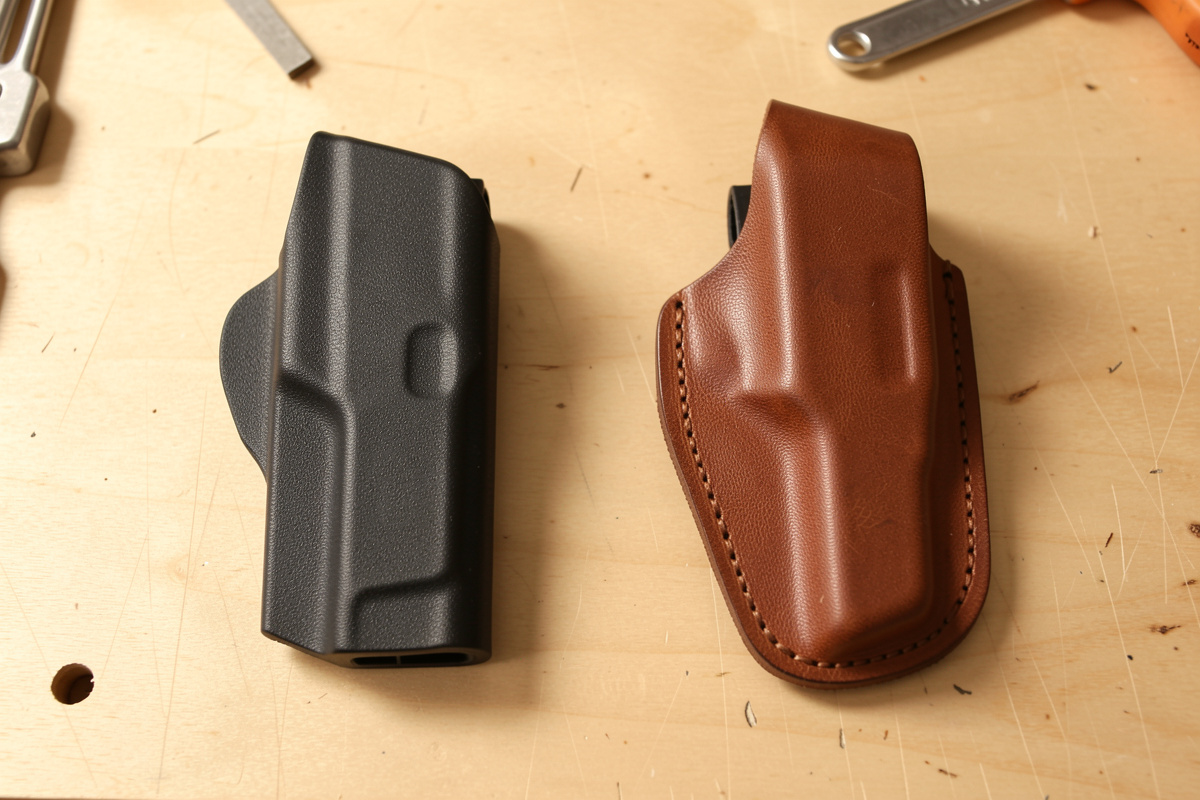
Kydex versus leather is the holster question every maker eventually weighs, and the honest answer is that they are different materials with different strengths, not a winner and…
Kydex versus leather is the holster question every maker eventually weighs, and the honest answer is that they are different materials with different strengths, not a winner and a loser. Kydex is a thermoplastic sheet that you heat, press over a form and trim — fast, rigid, weatherproof, with sharp audible retention. Leather is wet-formed 7-8 oz veg-tan that you case, bone, dry, stitch and finish — slower to build, quieter, warmer against the body, and a genuine craft object. I make leather; I respect Kydex for what it does. This guide compares them as a maker decides between them.
Both start from the same idea — mold a flat material to a form — but the process and the result diverge completely. If you want the full leather molding method, see the wet forming hub and the holster making guide. Here, the focus is choosing the material.
How Each Material Is Formed
Kydex is heated in an oven to around 150°C (300°F) until pliable, pressed over the form in a foam press, and trimmed and drilled once cool — a build measured in minutes once you have the press. It needs no stitching and no finishing; the sheet is the finished surface. The skill is in the press setup, the trim line and the retention adjustment, not in slow handwork.
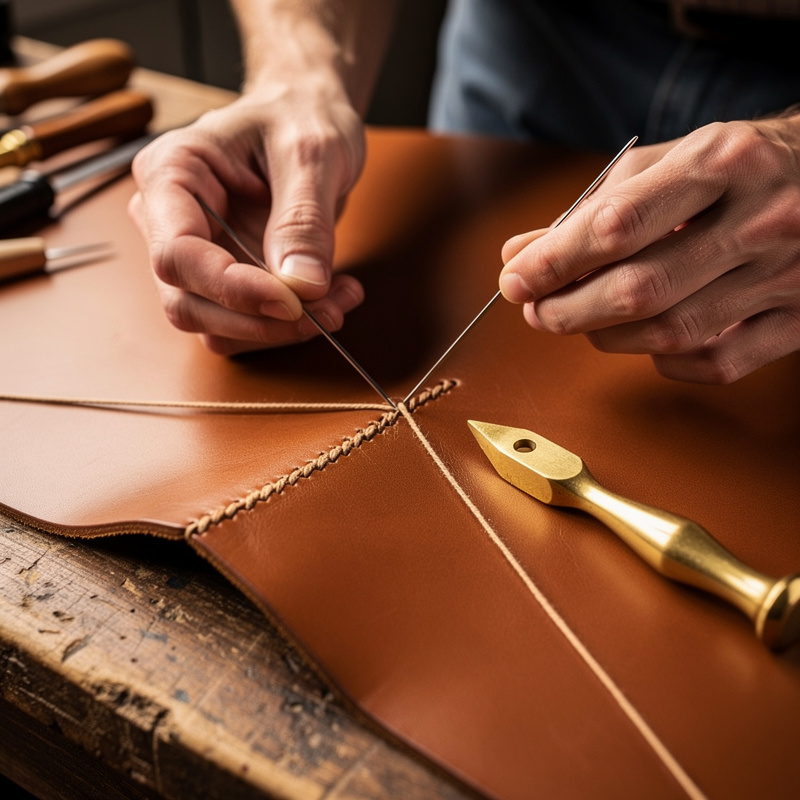
Leather is the opposite kind of work. You case veg-tan to the clay-like state, bone it tight to the form, dry it slowly for a day or two, then saddle stitch the welt and finish every edge by bevel, sand, slick and wax. It is hours of patient handwork spread over days. That slowness is a cost if you want a holster today and the entire point if you want to make something by hand. As a leatherworker, the building is the reward — the same patience-discipline the whole craft runs on.
Retention, Comfort and Feel
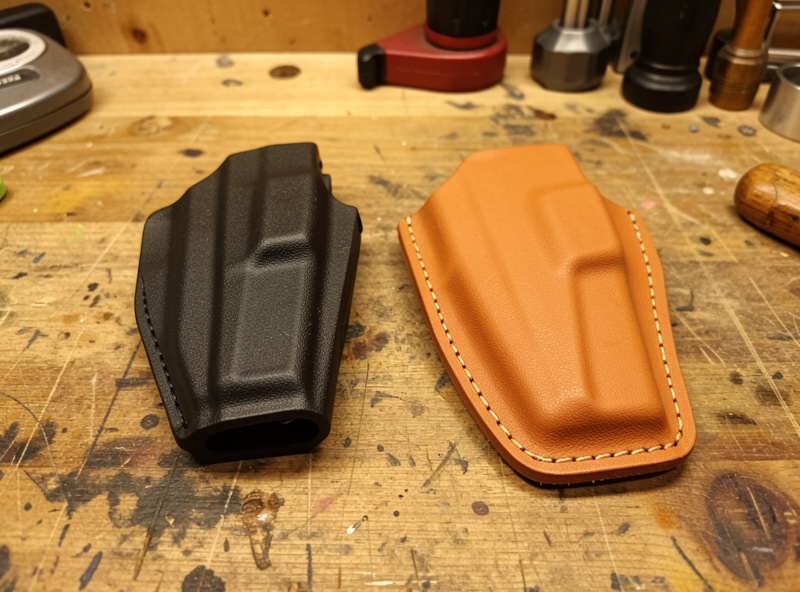
Kydex gives sharp, adjustable, audible retention — a definite click, tunable with the press screws. It is consistent and does not change with humidity. Leather gives quieter friction retention from a boned channel; it can soften slightly in heat and humidity and is not adjustable after the fact, though a re-mold can restore it. Against the body, leather is warmer and more forgiving, with no hard edges; Kydex is rigid and can feel sharp until the edges are dressed.
Neither is universally better. Kydex wins on consistency and speed of draw feel; leather wins on comfort, quietness and the way it ages into a personal object. Many makers end up with both for different uses, which tells you the comparison is about fit-to-purpose, not superiority.
Durability, Weather and Maintenance
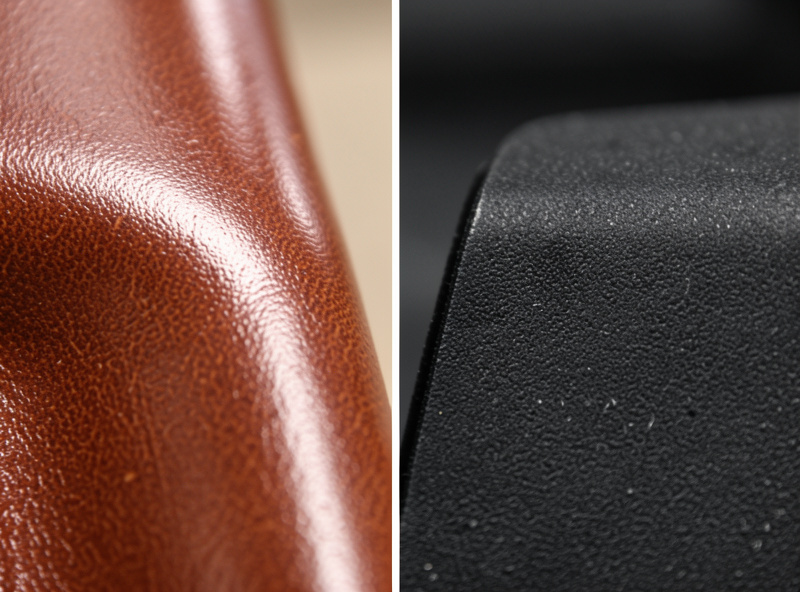
Kydex shrugs off water, sweat and solvents and needs essentially no maintenance — rinse and go. Its failure modes are cracking if flexed hard cold and deforming if left somewhere genuinely hot, like a closed car in summer, because heat is exactly how it was formed. Leather needs care: keep it out of soaking and high heat (the same water and warmth that molded it can un-mold it), and condition it lightly once or twice a year. In return, well-made leather lasts decades and develops a patina; Kydex stays looking exactly the same forever, which some makers love and others find sterile.
Cost and Tooling to Get Started
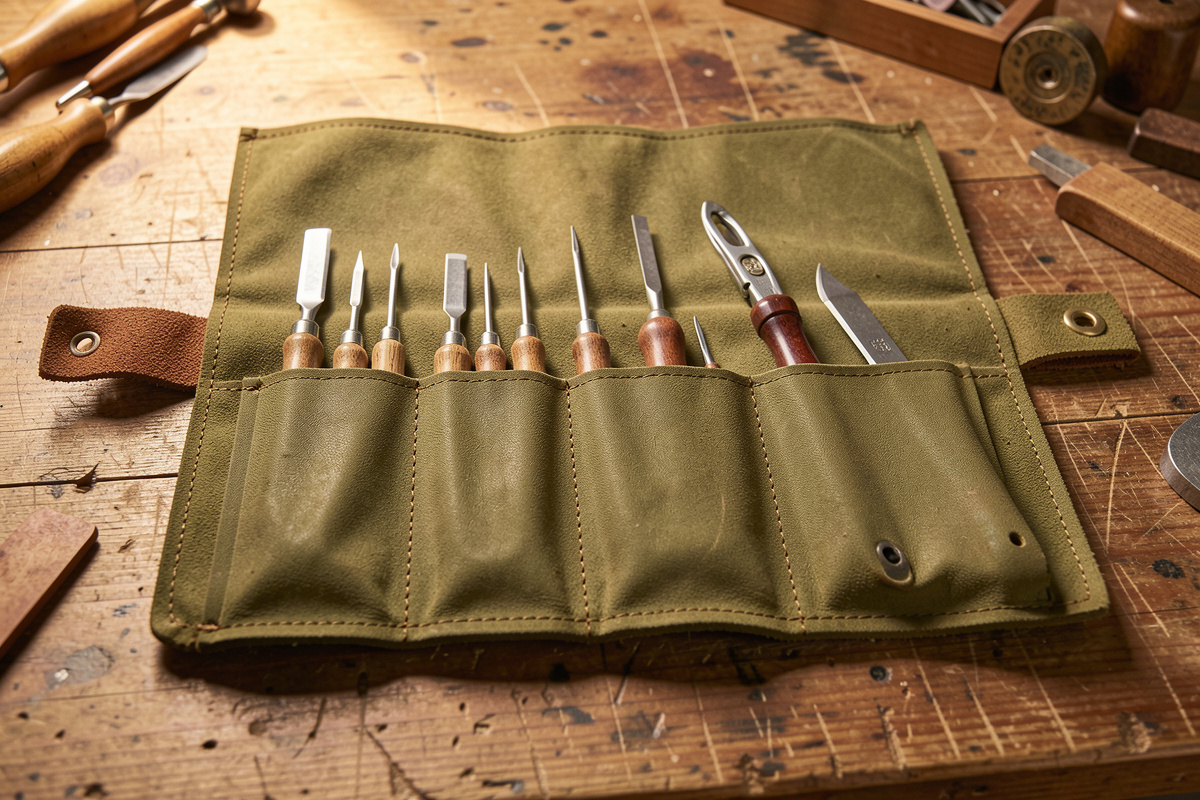
Entry cost differs in shape, not just amount. Kydex needs a sheet supply, a heat source (a dedicated toaster oven works), and a foam press — a modest, mostly one-time kit, after which each holster is cheap and fast. Leather needs veg-tan, stitching irons, an awl, thread, edge tools and finishes — the standard leatherworking kit — which costs more to assemble but serves every other leather project you will ever make. If holsters are all you want and you want them fast, Kydex is the leaner path. If you are already a leatherworker, you own most of the leather kit already.
| Factor | Kydex | Leather (7-8 oz veg-tan) |
|---|---|---|
| Forming process | Heat to ~300F, press, trim | Case, bone, dry, stitch, finish |
| Build time | Minutes (with press) | Hours over 1-2 days |
| Retention | Sharp, audible, adjustable | Quiet friction, re-moldable |
| Against the body | Rigid, needs edges dressed | Warm, forgiving, no hard edges |
| Weather / sweat | Waterproof, zero maintenance | Needs conditioning, avoid soaking |
| Ages by | Staying identical | Developing patina |
| Stitching / finishing | None | Saddle stitch + edge work |
| Best for | Fast, weatherproof, consistent | Craft, comfort, a made object |
Which Should You Make?
Choose Kydex if you want speed, weatherproofing, consistent adjustable retention, and you do not care about handwork. Choose leather if you want the craft, the comfort and an object that ages — and if you already enjoy molding, stitching and finishing. There is a hybrid worth knowing about: leather-backed Kydex shells, where a Kydex pocket is riveted to a leather backer to combine Kydex retention with a leather feel against the body. As a leatherworker, my bench makes leather, and the molding, welt and edge work are the same satisfying skills I bring to a knife sheath. But I will say plainly that for a beat-around, get-it-wet holster, Kydex is the more practical material — competence means naming that honestly.
What Building Both Taught Me
The first time I pressed a Kydex shell I trimmed too close to the trigger guard and lost the retention click entirely — the sheet just slid off the form. Warm Kydex smells faintly of hot plastic coming out of the toaster oven, and it goes from floppy to set in well under a minute, so there is no patient correction the way there is with leather; you commit to the trim line or you start over. That speed is genuinely useful, and I keep a press for exactly the holsters I do not want to baby.
On the leather side my early mistake was the opposite kind: I boned a 7-8 oz veg-tan holster so tight while it was cased that it gripped beautifully wet, then dried down a hair tighter and locked the pistol in hard enough to need both hands. A boning tool squeaks against properly cased leather — a sound I now use to judge moisture — and I learned to bone a protective holster a touch looser and let the dry-down close it. That recoverability is the quiet win for leather: I re-cased that holster, re-molded it slightly looser, and it has carried fine for years. Kydex would have been scrap.
Frequently Asked Questions
Is Kydex or leather better for a holster?
Neither is universally better. Kydex is faster to build, waterproof and offers sharp adjustable retention with no maintenance. Leather is warmer against the body, quieter, ages into a personal object, but takes hours of handwork and needs occasional care. The right choice depends on whether you value speed and weatherproofing or craft and comfort.
How is Kydex formed compared to leather?
Kydex is heated to around 300F until pliable, pressed over a form in a foam press, then trimmed and drilled when cool, taking minutes. Leather is wet-formed: you case veg-tan, bone it to the form, dry it slowly for a day or two, then saddle stitch and finish the edges. Leather is hours of handwork over days.
Does a leather holster lose retention over time?
It can soften slightly in heat and humidity because the friction retention comes from the molded shape, and water plus heat are how leather is molded. Unlike Kydex, leather retention is not screw-adjustable, but a leather holster can be re-cased and re-molded to restore a tight fit.
Which holster material needs more maintenance?
Leather needs more care. Keep it out of soaking water and high heat and condition it lightly once or twice a year. Kydex needs essentially none, rinsing clean and shrugging off sweat and solvents, though it can deform if left somewhere genuinely hot like a closed car in summer.
Is Kydex or leather cheaper to start making?
Kydex has a leaner startup if holsters are all you want: a sheet supply, a heat source and a foam press, then cheap fast builds. Leather needs the broader leatherworking kit of veg-tan, irons, awl, thread and finishes, which costs more but serves every other leather project you make.
What is a leather-backed Kydex holster?
It is a hybrid where a Kydex pocket is riveted to a leather backer. The Kydex shell gives sharp consistent retention while the leather backer sits warm and forgiving against the body. It combines the practical strengths of Kydex with the comfort and feel of leather.
Related Guides
- Leather Holster Making Guide
- Leather Wet Forming: The Complete Guide
- Hardening Molded Leather
- How to Make a Leather Knife Sheath
- Leatherworking Tools Guide