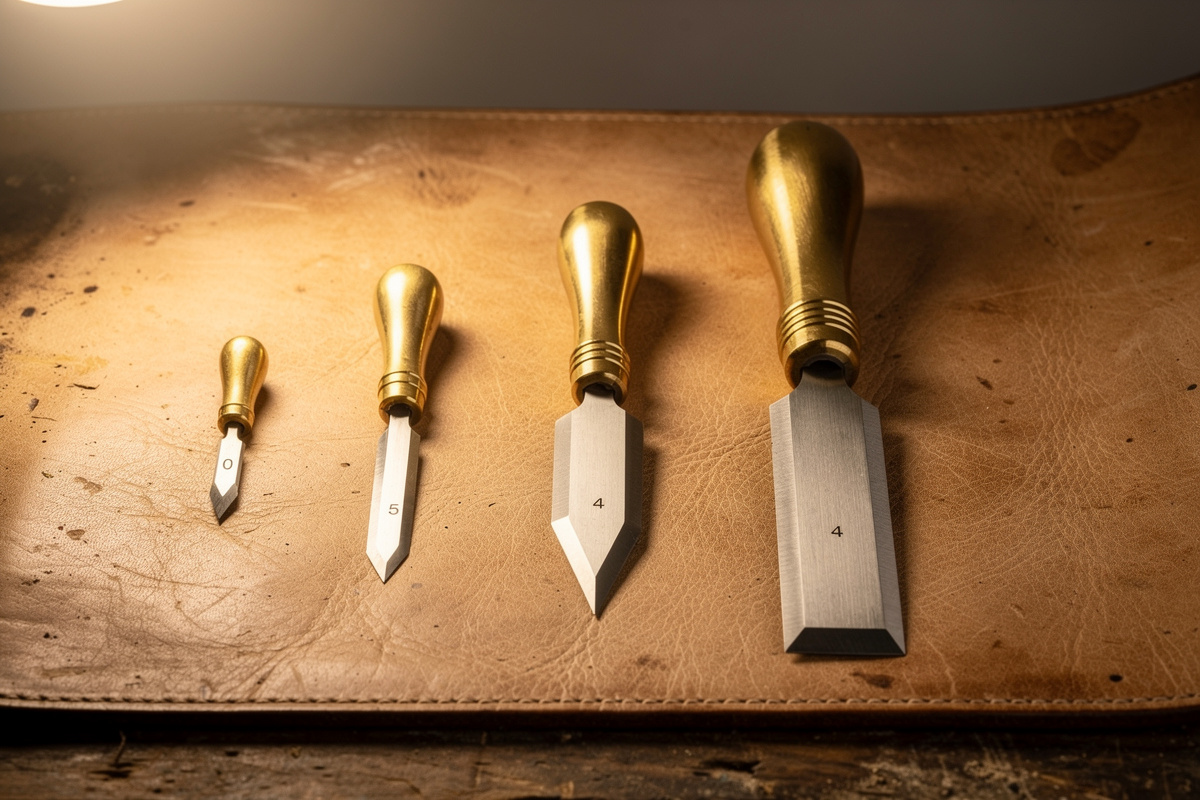
The best edge bevelers for leather are the Crimson Hides Arc Bevelers (45-65 dollars per size) for premium use, the Tandy Craftool line (roughly 15 dollars per size)…
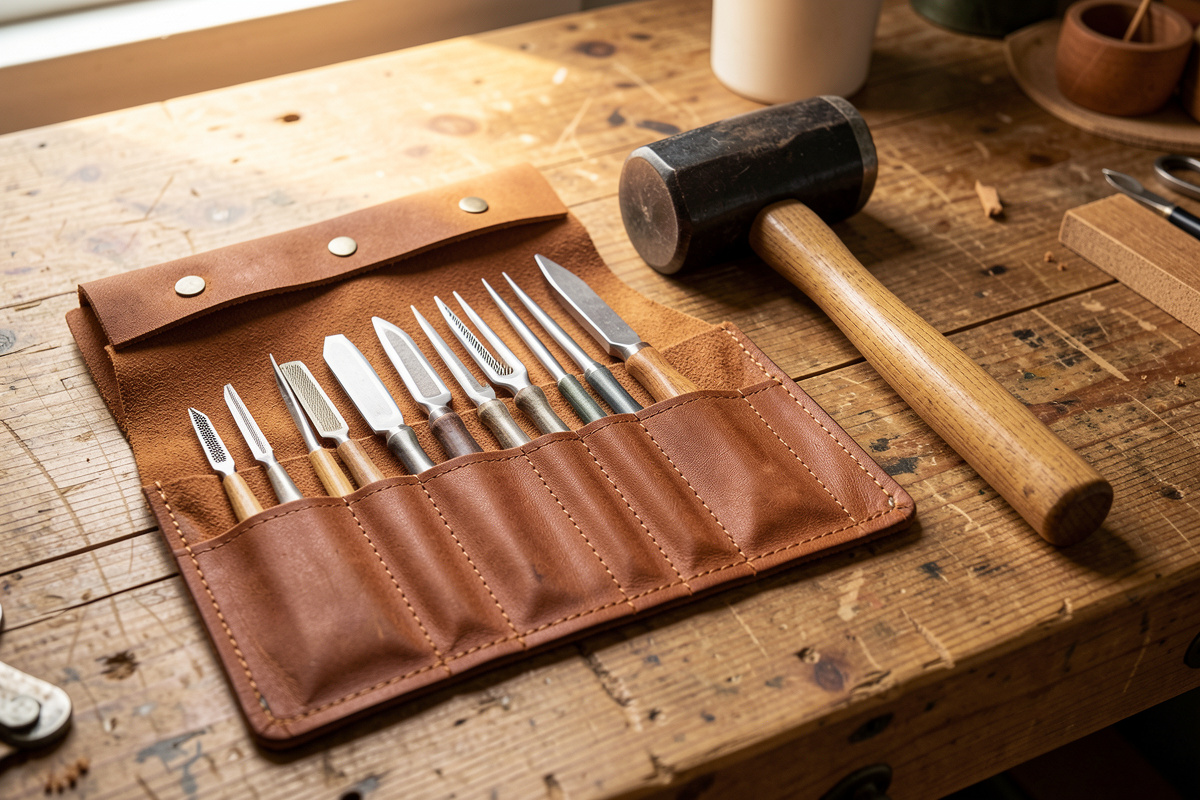
The best edge bevelers for leather are the Crimson Hides Arc Bevelers (45-65 dollars per size) for premium use, the Tandy Craftool line (roughly 15 dollars per size) for budget hobbyists, and the Vergez Blanchard French traditional bevelers (35-45 dollars per size) for legacy quality. Size 1 (about 1.0mm cutting width on the Crimson Hides scale) handles 4-6 oz leather; size 2 (about 1.4mm) handles 6-7 oz. Most wallet makers buy size 1 first, add size 2 within a year. For the full edge-finishing context this beveler fits into, the leather edge finishing hub walks through bevel, sand, dampen, and burnish together.
Edge bevelers create the rounded edge profile that makes hand-finished leather look professional. Skip beveling and the wallet looks raw and amateur regardless of stitching quality. Use the wrong size and the bevel is either invisible (too small) or removes too much material (too large). The size-1-vs-size-2 question is the most-asked beveler question in leather forums, and the answer depends entirely on the leather weight you work with.
I used the same size-2 beveler on everything for my first year — wallets, belts, sheaths — because nobody told me the size matters. A size-1 produces a cleaner chamfer on 3-4 oz wallet leather while size-2 is correct for 5-6 oz belt stock. The side-by-side brand comparison below covers Crimson Hides, Tandy Craftool, and budget options including the sharpening technique that keeps a beveler cutting clean.
As an Amazon Associate I earn from qualifying purchases.
Why Edge Beveling Matters for Finished Leather Goods
An unbeveled cut leather edge is a sharp 90-degree corner that catches on fabric, splits along grain lines under stress, and looks raw. Beveling rolls that corner into a 1-3mm rounded profile that burnishes smoothly, resists abrasion, and reads professionally. Skipping the bevel step is the #1 visual difference between handmade-quality and amateur-quality leather goods.
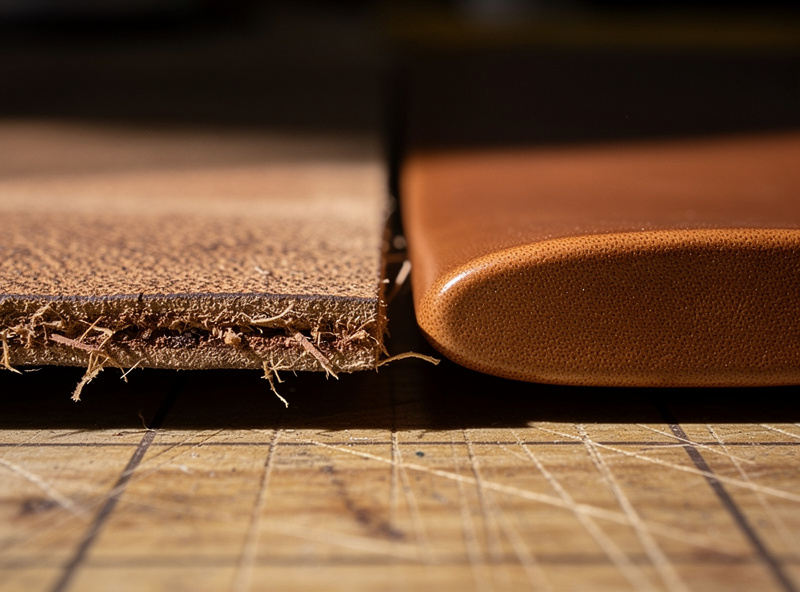
What proper beveling does:
- Removes the sharp 90-degree corner: Creates a rounded profile that resists chipping and splitting.
- Cleans up fuzzy fibers: Cut leather edges show loose surface fibers; beveling removes them.
- Sets up burnishing: A clean beveled edge is required for the burnishing step to produce a glass-like finish.
- Improves abrasion resistance: Beveled corners do not catch on fabric or wear down at high-friction points.
- Allows clean dyeing or edge paint: Crisp bevel edges accept dye and edge paint uniformly; raw cuts produce uneven coverage.
- Adds visible craftsmanship: The bevel is the single visual element that separates careful work from sloppy work.
The sequence is always cut → bevel → sand if needed → burnish. Skip the bevel and you cannot burnish properly because the sharp corner does not roll under the bone slicker. Read about how to use a beveler in the burnishing step in our how to burnish leather edges with Tokonole guide.
Edge Beveler Sizes Explained
For a first buy, a size #2 edge beveler covers wallet and bag edges without needing a full set immediately.
Edge bevelers come in numbered sizes from 0 (smallest, roughly 0.6mm cutting width) to 4 (largest common size, roughly 2.2mm), with a rare 5 on some brands’ charts for saddle-weight work. The actual millimeter width behind each number is not standardized across makers — a Crimson Hides #2 is not the same cut as a Vergez Blanchard #2 or a Tandy #2, which trips up a lot of newcomers comparing charts between brands. What follows is the Crimson Hides scale, since it is the size chart I actually work from. The size matches the leather weight: size 0 for thin 2-4 oz leather, size 1 for medium 4-6 oz leather, size 2 for 6-7 oz, size 3-4 for belt and saddle weights 7.5-10+ oz. Most wallet and small-goods makers need only sizes 1 and 2.
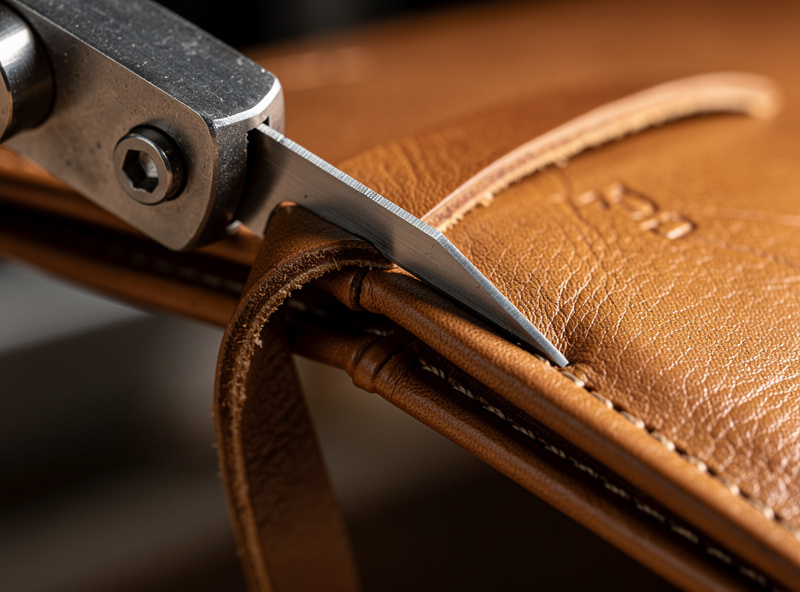
Size-to-leather matching:
- Size 0 (~0.6mm): Thin lining leathers, watch straps, sheath welts. 2-4 oz leather. Rare for hobbyists.
- Size 1 (~1.0mm): Wallet body, card holders, light bag construction. 4-6 oz leather. The most-used size for hobbyist work.
- Size 2 (~1.4mm): Belt edges, holster body, structured bags. 6-7 oz leather. Second most-used size.
- Size 3 (~1.8mm): Heavy belts, saddle parts, strap goods. 7.5-9.5 oz leather. Add when starting belts or thicker projects.
- Size 4 (~2.2mm): Saddle skirts, heavy harness leather. 10 oz and up. Specialty for saddle/harness work.
The “match the size to the weight” rule is real. A size 1 beveler on 8 oz leather makes only a tiny scratch instead of a clean bevel; a size 3 beveler on 4 oz leather removes too much material and weakens the edge. Buy the size matched to your most-used leather weight first, add others as project weights expand.
Top Brand Recommendations by Tier
Three tiers cover hobbyist needs: budget Tandy Craftool at roughly 15 dollars per size, the mid-tier OWDEN edge beveler widely available on Amazon at 15-25 dollars per size, premium American Crimson Hides at 45-65 dollars per size, and legacy French Vergez Blanchard at 35-45 dollars per size. All of them produce excellent bevels with proper sharpening. The premium tier holds an edge longer; the budget tier needs more frequent sharpening but works fine.
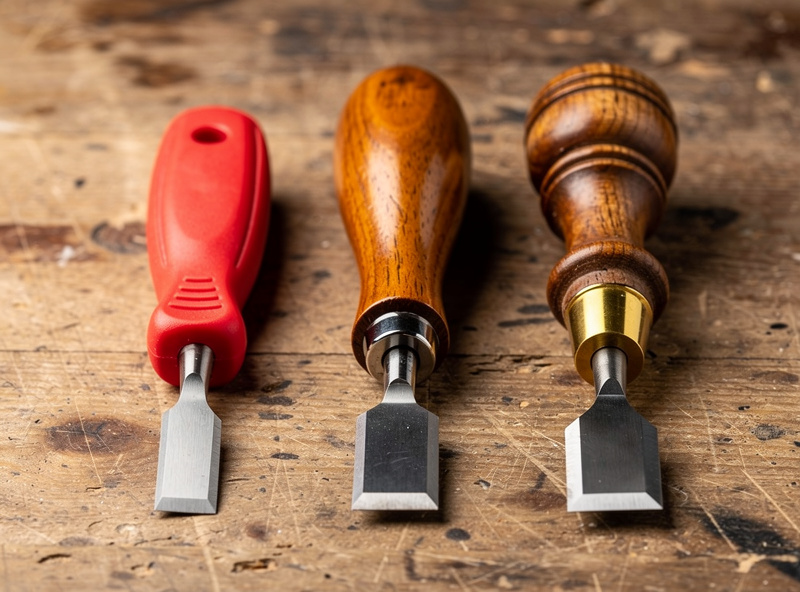
Brand specifics:
- Tandy Craftool (about 15 dollars per size): Most-bought hobbyist beveler. Polished steel blade, plastic handle. Performs well after a good sharpening; dulls within 50-100 hours of use.
- Crimson Hides Arc (45-65 dollars per size): American-made premium bevelers with hardwood handles. Better steel quality than Craftool, holds an edge 3-5x longer. The hobbyist sweet spot above the budget tier.
- TandyPro (about 60 dollars per size): Tandy’s actual premium line, above Craftool — wider oz range per size than the Craftool chart. Worth it if you are staying inside the Tandy ecosystem and want the upgrade over Craftool without switching brands.
- Vergez Blanchard French (35-45 dollars per size): Traditional French saddler tool, wooden handle, hand-sharpened steel blade. Solid fit and finish, closer in price to the budget tier than the name suggests. Good legacy option if you like the heritage angle.
- Sinabroks (via Goods Japan): South-Korean-made, tight quality control, exceptional steel. Around 70 dollars per tool. Equivalent to Crimson Hides in performance.
- Amazon “leather edge beveler set” 4-6 piece bundles for under 30 dollars: Skip. Cheap stamped steel; worse than the Craftool line above.
For most hobbyists, the right purchase path is size 1 in Crimson Hides Arc for 45 dollars, add size 2 in same brand at 50 dollars within a year, and skip everything else for the first 2-3 years. Read about other essential tools in our leatherworking starter kit guide.
Comparison Table: Top Edge Bevelers by Tier
| Brand | Price (Size 1) | Steel Quality | Edge Retention | Best For |
|---|---|---|---|---|
| Tandy Craftool | ~15 dollars | Carbon steel | 50-100 hours | Budget hobbyists |
| Crimson Hides Arc | 45-65 dollars | High-carbon tool steel | 200-400 hours | Most hobbyists |
| Sinabroks (Goods Japan) | ~70 dollars | Korean tool steel | 250-450 hours | Steel-quality fans |
| Vergez Blanchard | 35-45 dollars | French tool steel | 300-450 hours | Legacy/heritage pick |
| Amazon bundle sets | under 30 dollars | Stamped steel | 10-30 hours | Skip — too low quality |
Edge retention numbers are based on hobbyist use of 5-10 hours per week on veg-tan leather. Production work on chrome-tan dulls bevelers 30-50% faster. Periodic sharpening with a strop and rouge restores most bevelers to near-new condition.
How to Sharpen and Maintain an Edge Beveler
Sharpen a leather edge beveler with a leather strop charged with green honing compound. Hold the beveler with the cutting edge against the strop, draw it backward along the leather (away from the cutting direction) for 20-30 strokes. The beveler should peel a clean curl from scrap leather as a sharpness test. Skipping sharpening is the #1 reason cheap bevelers feel inadequate.
The sharpening procedure:
- Acquire a small leather strop or cardboard strip: 2 inches wide by 8 inches long is plenty.
- Apply green honing compound to the strop: Rub the compound stick along the leather to deposit material.
- Hold the beveler with the blade flat against the strop: The U-shaped cutting edge should sit on the leather.
- Draw the beveler backward 20-30 times: Always backward — never push toward the cutting direction.
- Test on scrap leather: A sharp beveler peels a clean curled strip; a dull one drags or skips.
- Re-strop every 4-6 hours of use: Quick maintenance prevents the need for full re-sharpening.
- Annual full sharpening: If stropping no longer restores edge, take to a hand-tool sharpener for a proper hone.
The single biggest improvement most hobbyists can make to their tools is learning to strop. A 5-dollar strop and 8-dollar compound stick transform a dulling Tandy beveler back to near-new performance. Most leather forums underestimate how much beveler complaints come from skipped sharpening.
Common Beveling Mistakes
Five mistakes produce poor bevels even with good tools: pulling the beveler instead of pushing, applying inconsistent pressure, beveling before stitching instead of after, using wrong beveler size for the leather weight, and skipping the sharpening step. Each shows up as inconsistent or messy edges.
Common errors and corrections:
- Pulling the beveler: Push the beveler in the direction of the leather edge, not pull it backward. Pulling tears fibers instead of cutting them.
- Inconsistent pressure: Light pressure produces partial bevels; heavy pressure removes too much material. Aim for consistent moderate pressure that takes a 1mm strip per pass.
- Beveling before stitching: Some makers bevel first, then stitch. The stitch holes can interfere with the bevel line. Better order: stitch → bevel → burnish.
- Wrong size for leather weight: Size 1 on 8 oz leather barely scratches; size 3 on 4 oz leather removes too much material. Match the size to the weight.
- Skipping sharpening: Most beveler complaints are sharpness complaints. Strop every 4-6 hours of use and the beveler stays sharp for hundreds of hours.
- Beveling chrome-tan with wrong technique: Chrome-tan stretches under beveler pressure. Hold the leather firmly against a hard surface and use lighter pressure than veg-tan.
- Beveling both sides equally: The flesh side and grain side bevel differently. Most projects bevel grain side prominently, flesh side lightly. Equal beveling weakens the edge.
The reliable beveling habit is to test on scrap from each new hide before committing to the project piece. Different tannages and weights respond differently to the same beveler; the scrap test prevents committing the project to wrong settings.
Frequently Asked Questions
What size edge beveler should a beginner buy first?
Size 1 (about 1.0mm cutting width) is the most versatile starter. It handles 4-6 oz leather, which covers wallets, card holders, and most beginner projects. Add size 2 within a year if you start working with belts or thicker projects. Buying both at once is fine if budget allows; size 1 alone gets you started.
Are Tandy edge bevelers worth buying?
Yes, with a caveat on which line. The Craftool line at about 15 dollars per size is the one most hobbyists buy and it performs well after a good sharpening. Tandy’s actual premium line, TandyPro, costs about 60 dollars per size and covers a wider oz range per size if you want to stay in the Tandy ecosystem rather than switch to Crimson Hides.
Why is my edge beveler not cutting cleanly?
Almost always sharpness. Even premium bevelers ship not-quite-sharp from the factory and need 2-3 minutes of stropping with green compound before first use. If a beveler that previously worked is now dragging, it needs re-stropping or full sharpening.
Should I bevel both sides of the leather edge?
Yes, bevel both sides — but unequally. The grain side (visible exterior) gets a more prominent bevel; the flesh side (interior) gets a light bevel. Equal beveling on both sides removes too much material and weakens the edge for stitching.
Can I bevel chrome-tanned leather?
Yes, with adjustment. Chrome-tan stretches under beveler pressure, so hold the leather firmly against a hard surface and use lighter pressure than for veg-tan. The bevel will be slightly less crisp than on veg-tan because chrome-tan compresses rather than cleanly cutting.
How long should an edge beveler last?
With proper stropping every 4-6 hours of use, a quality beveler holds its sharp edge for 200-450 hours. The Crimson Hides Arc tier lasts 200-400 hours; Vergez Blanchard lands around 300-450 hours in my own bench use. Without stropping, even premium bevelers dull within 50 hours and the user blames the tool.
Related Articles
- How to Burnish Leather Edges With Tokonole
- Leatherworking Starter Kit
- Best Leather for Wallets
- Stitching Pony vs Stitching Clamps
- How to Dye Leather Without Streaks