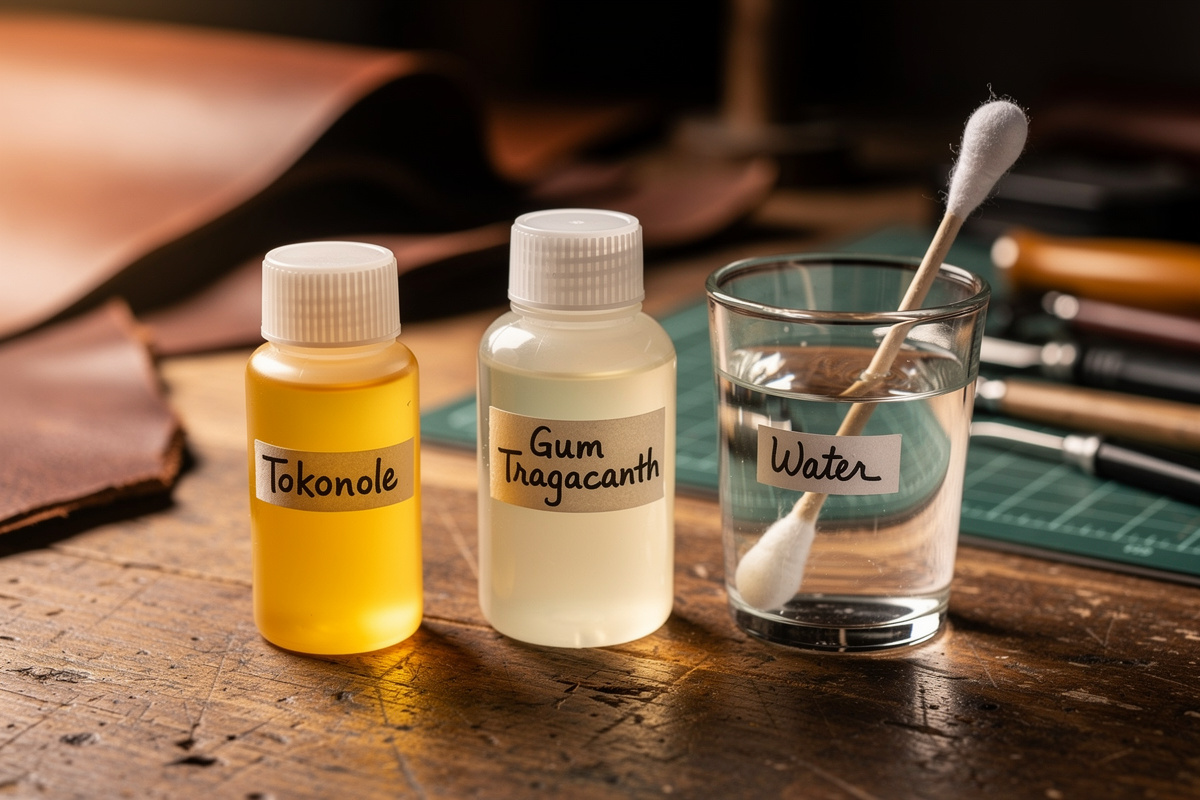
Tokonole burnishes the cleanest glass-like edge for vegetable-tanned leather, Gum Tragacanth produces a slightly more matte traditional finish, and plain water works for quick burnishing without storage hassle…
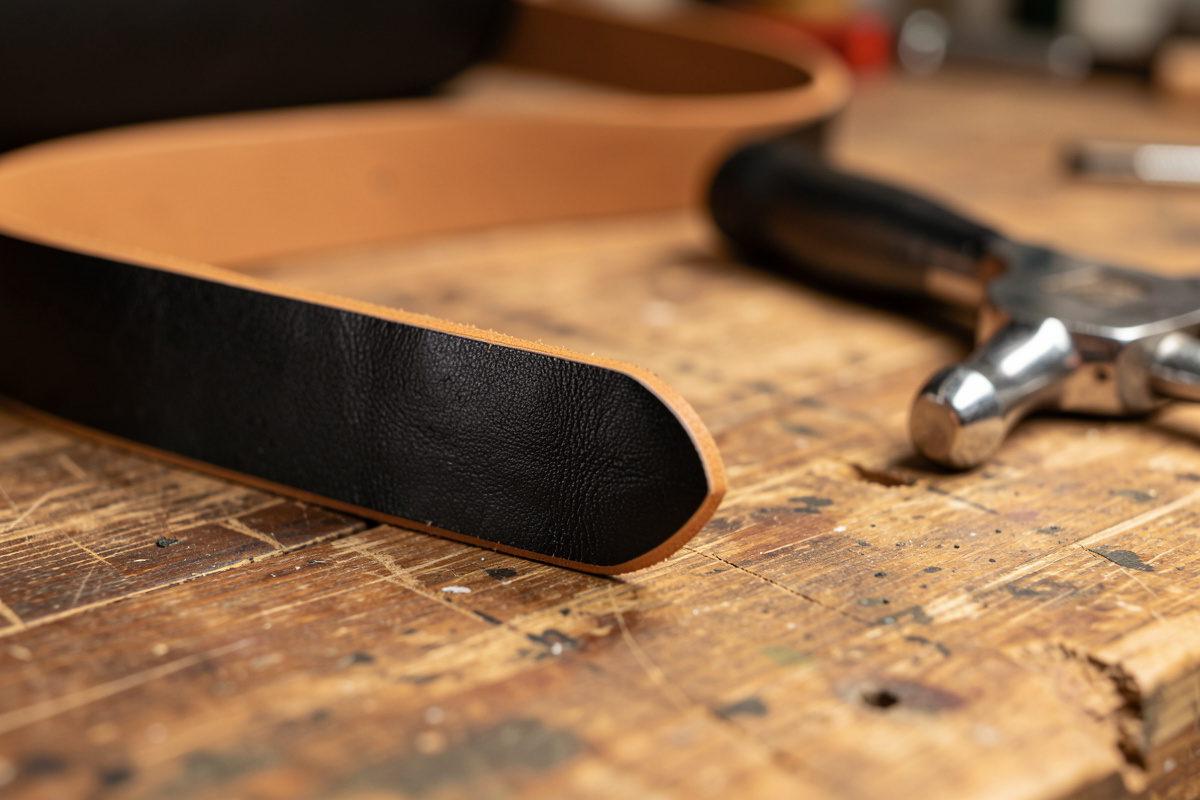
Tokonole burnishes the cleanest glass-like edge for vegetable-tanned leather, Gum Tragacanth produces a slightly more matte traditional finish, and plain water works for quick burnishing without storage hassle but produces the dullest result. Tokonole is also water-resistant once cured, while Gum Tragacanth and water both let edges fuzz back up if the leather gets wet later. The leather edge finishing hub covers where this compound choice fits in the bevel-sand-dampen-burnish sequence.
The “best burnishing compound” debate has been running for decades in leather forums, and the modern answer has shifted decisively toward Tokonole since Western retailers started stocking it widely over the past decade or so. Older traditions favored Gum Tragacanth (Trag) because it was the only quality option for centuries; plain water remained the budget choice. In 2026 the practical hierarchy is Tokonole > Gum Tragacanth > water — but each has specific situations where it remains the right call.
I started with gum tragacanth because it was $6 and the traditional choice. It produced a matte finish that I found underwhelming. Switching to Tokonole gave me the glass-glossy edge I was trying to achieve, and the small jar lasted through 20+ projects. The compound comparison below covers when each one wins — gum trag is still my pick for rustic tooling projects where a high-shine edge looks out of place.
As an Amazon Associate I earn from qualifying purchases.
What Each Compound Actually Does to the Leather Edge
All three compounds work by saturating the leather fibers at the cut edge with moisture and a binding agent, allowing friction to compress and align those fibers into a smooth surface. Tokonole adds a wax-and-resin component that hardens after burnishing; Gum Tragacanth provides a vegetable gum that polymerizes lightly; plain water provides the moisture without any binding agent.
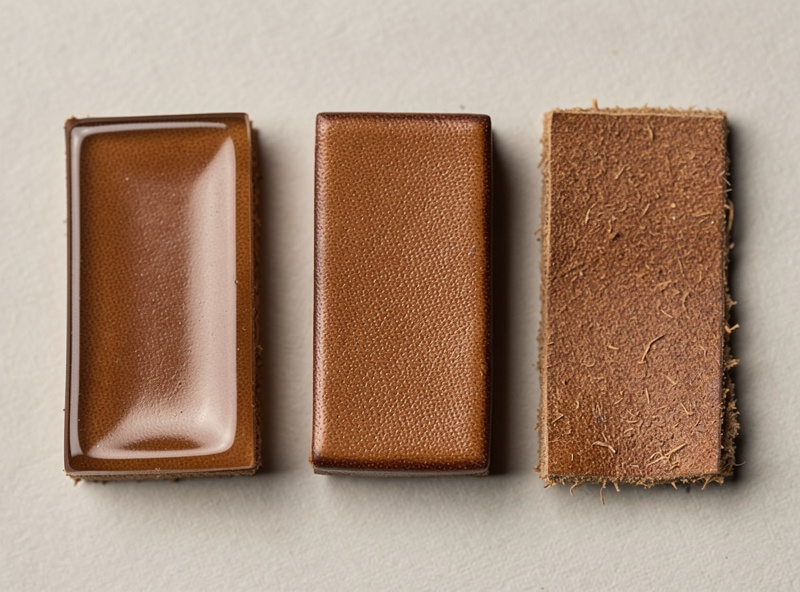
The science of each:
- Tokonole (Japanese, Seiwa brand): Wax-and-resin emulsion in water carrier. The wax component hardens and seals; the resin gives the polished glass appearance. Cures water-resistant.
- Gum Tragacanth (traditional vegetable gum): Plant-derived hydrocolloid. Lightly polymerizes when dried, gives matte sheen. Less water-resistant than Tokonole.
- Plain water: No binding agent. Re-burnishes any time the edge gets wet, both feature and bug — cheap and infinitely available, but burnishing is impermanent.
- Saddle soap (occasional alternative): Soap base that softens leather and provides slight wax content. Acceptable for burnishing chrome-tan but not the standard for veg-tan.
- Beeswax (occasional alternative): Pure wax rubbed on then heat-burnished. Produces hard sealed edge but harder to apply than Tokonole.
- Edge Kote / EdgeFlex (acrylic edge paints): Different category entirely — paint that coats the edge rather than burnish that polishes the leather itself.
The choice between Tokonole, Gum Tragacanth, and water is essentially a choice between “permanent glass-like finish” (Tokonole), “traditional matte finish” (Gum Tragacanth), and “quick budget burnishing that does not last” (water). Most modern hobbyists settle on Tokonole within the first 6-12 months of burnishing. Read about the technique itself in our how to burnish leather edges with Tokonole guide.
Tokonole: Why It Dominates Modern Leatherwork
Tokonole is a Japanese-made wax-resin emulsion that produces the glossy glass-like edges seen on high-end leather goods. A small bottle of Tokonole (120ml or 500ml) lasts 50-100 wallet projects. Apply a thin coat with a finger, applicator, or cotton swab; wait 30-60 seconds for the water to absorb; burnish with a wooden slicker or canvas. The wax component hardens over 24 hours into a permanent finish.
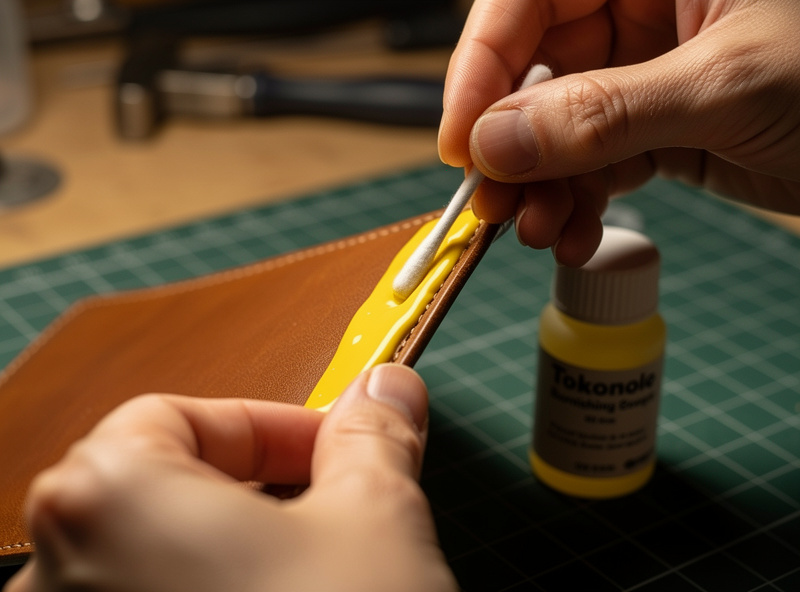
Tokonole specifics:
- Forms: clear, dark brown, and natural: Clear works for any color leather; brown adds slight darkening to natural veg-tan; natural is barely tinted.
- Application: thin coat: A thick application creates a sticky surface that does not burnish cleanly. Less is more.
- Cure time: 24 hours: Initial polish is immediate; full water-resistance develops over 24 hours.
- Storage: indefinite if sealed: The bottle does not skin over or thicken the way some wax compounds do.
- Price: 15-20 dollars per 120ml bottle: a small 20ml try-it size runs about 8-9 dollars; 500ml runs 30-35 dollars. Lasts essentially forever for hobby use.
- Where to buy: Goods Japan, Buckle Guy, Tandy Leather: All carry authentic Tokonole. Avoid Amazon-only “tokonole-style” alternatives — most are inferior knockoffs.
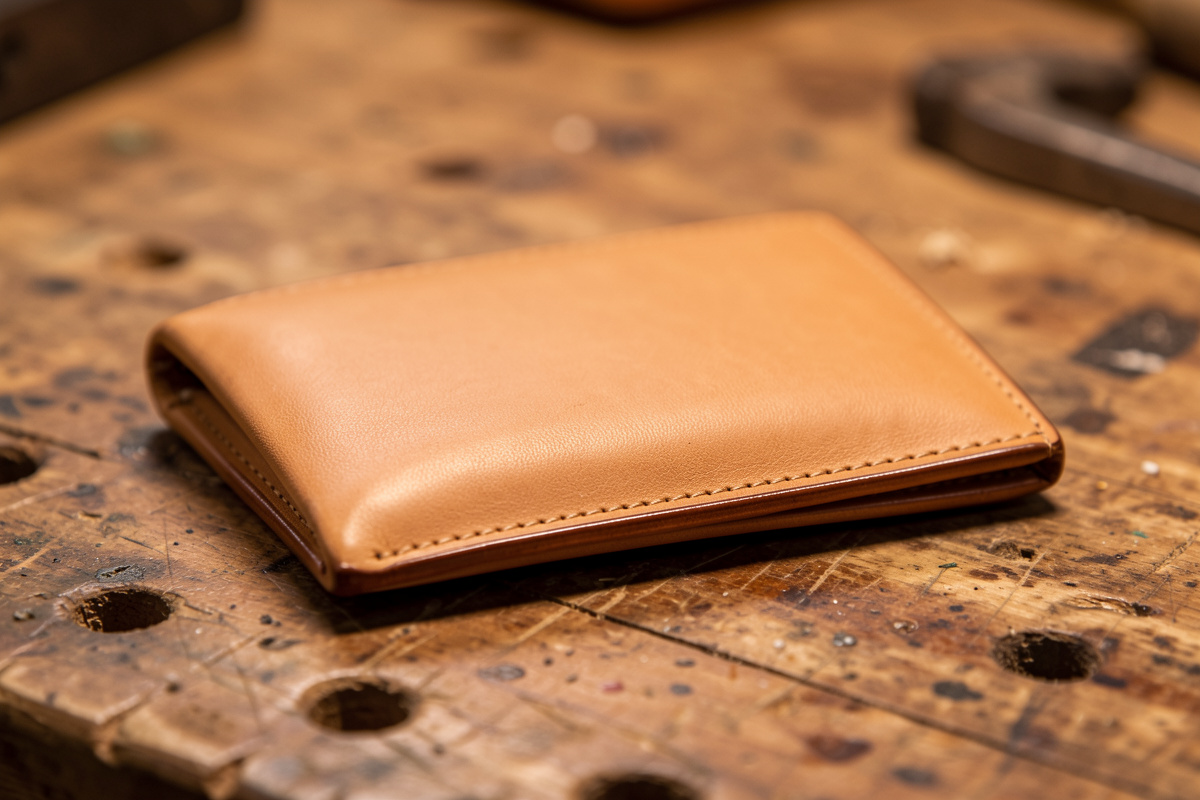
- Best for: any project that gets daily handling: Wallets, belts, watch straps, anything that needs durable edge finish.
The water-resistance is Tokonole’s killer feature. A wallet that gets caught in rain or dropped in a puddle keeps its burnished edge with Tokonole; the same wallet finished with Gum Tragacanth or water re-fuzzes within days of moisture exposure. For pocket-carry items where moisture is inevitable, Tokonole is the single right answer.
Gum Tragacanth: When the Traditional Finish Is Right
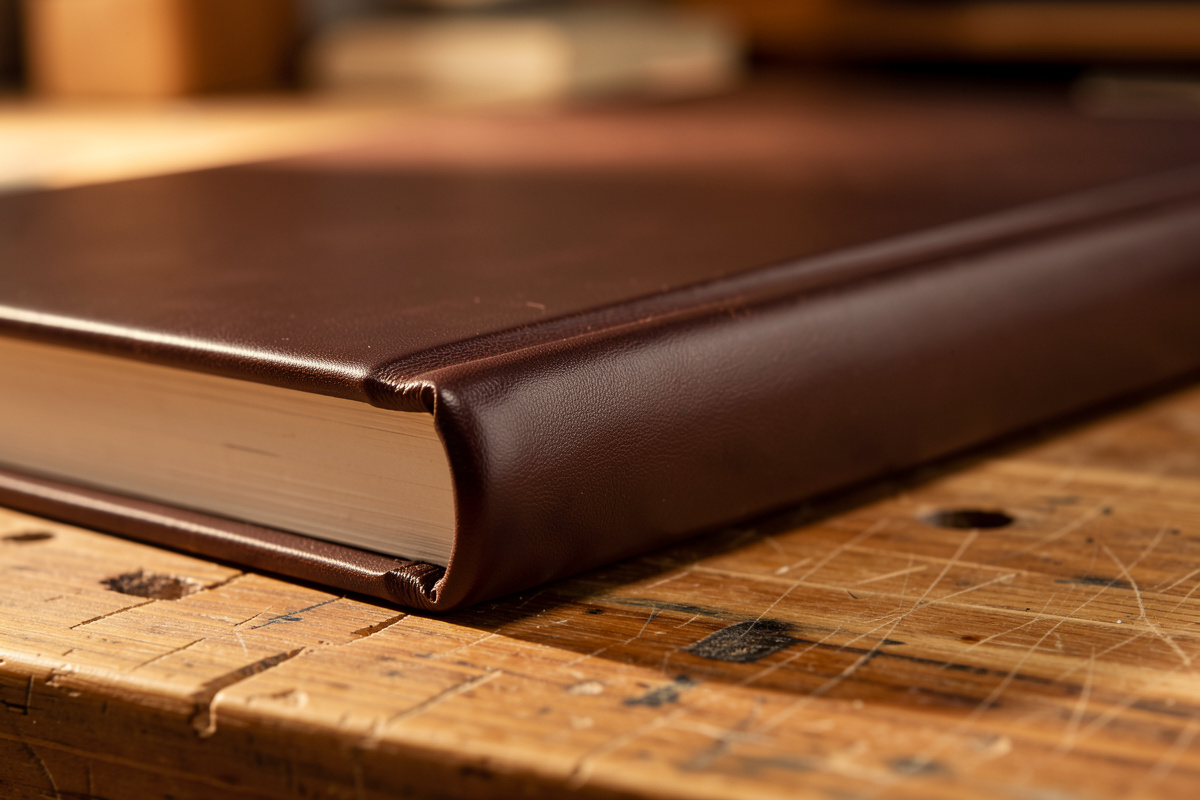
Gum Tragacanth produces a matte, slightly absorbent edge finish that looks more “natural” than Tokonole’s glass shine. Some traditional aesthetics specifically call for the muted Gum Trag look — Western saddlery, vintage bookbinding, traditional French saddler work. Gum Trag is also less expensive long-term and easier to dye over because it does not seal the edge.
Gum Tragacanth specifics:
- Form: liquid, slightly thick: About the consistency of egg white, slightly tan in color.
- Application: same as Tokonole: Thin coat, wait briefly, burnish.
- Cure time: 4-12 hours: Faster initial cure than Tokonole, but the resulting finish is less water-resistant.
- Storage: 6-18 months opened: Can grow mold or thicken if stored poorly. Refrigeration extends life.
- Price: about 7 dollars for the 4 oz bottle: Fiebing’s sells it in 4 oz and 32 oz, not an 8 oz size — the 4 oz is cheaper per ounce than Tokonole, but not significantly per project.
- Where to buy: Tandy Leather, Springfield Leather, Amazon (Fiebings brand specifically): Fiebings is the most reliable Gum Trag in 2026.
- Best for: traditional aesthetic projects, items that will be re-dyed later: Saddle work, traditional bookbinding, items needing matte finish.
For people working in traditional Western saddlery, French sadellery, or classical bookbinding, Gum Tragacanth is the historically-correct choice and produces the look the tradition expects. For modern goods, Tokonole’s water-resistance and glass finish usually wins.
Plain Water: The Free Option That Sometimes Wins
Plain water burnishing requires no purchases, works on any veg-tan leather, and produces decent edges for projects that will not be water-stressed. The big drawback is that water-only burnishing fuzzes back up the moment the leather gets wet — moisture causes the fibers to swell back to their pre-burnished state. Acceptable for prototype work, scrap practice, and items that stay dry.
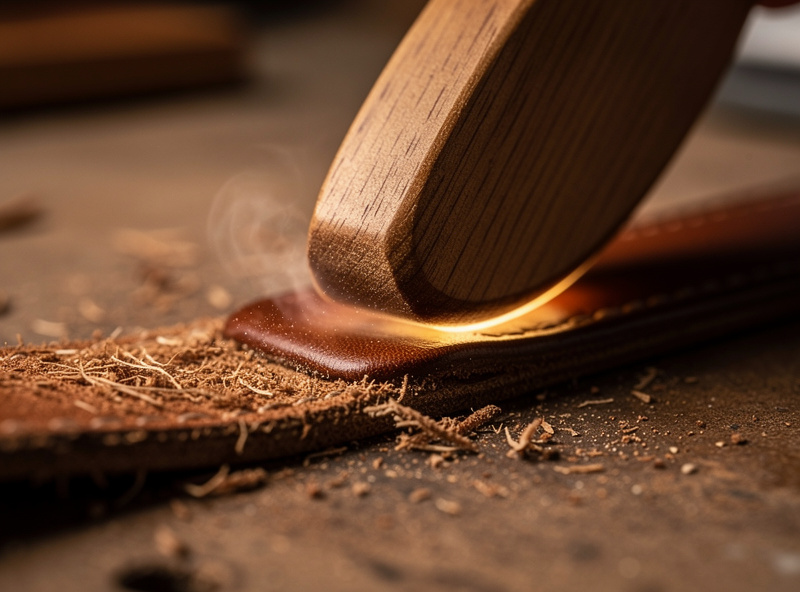
When water burnishing is appropriate:
- Practice and prototype work: No need to “use up” expensive Tokonole on test pieces.
- Items that stay dry: Wall art, journal covers used indoors, decorative pieces.
- Travel without supplies: If you forgot the Tokonole at home, water plus a wood slicker still produces respectable edges.
- Pre-dye edge prep: Burnish lightly with water before dyeing, then re-burnish with Tokonole after — water does not interfere with subsequent dye absorption.
- Chrome-tan leather: Chrome-tan does not burnish well with any compound; water is as good as anything else for the limited burnishing chrome-tan accepts.
Water burnishing is also the technique used to test edge-prep quality. If you cannot get a decent finish with water, the bevel and sanding stages were probably skipped. Water is the truth-test for edge prep — if it does not produce at least a respectable burnish, the edge needs more prep before any compound will help.
Comparison Table: Three Burnishing Compounds
| Compound | Finish | Water Resistance | Price (per project) | Best For |
|---|---|---|---|---|
| Tokonole (Seiwa) | Glass-like glossy | High | 0.10-0.20 dollars | Modern wallets, daily-use items |
| Gum Tragacanth (Fiebings) | Matte traditional | Medium | 0.08-0.15 dollars | Traditional saddlery, vintage aesthetic |
| Plain water | Light polish | None | Essentially free | Practice, indoor items, pre-dye prep |
| Beeswax | Hard sealed | Very high | 0.05-0.10 dollars | Heavy-duty outdoor goods |
| Saddle soap | Soft polish | Low-medium | 0.05-0.10 dollars | Chrome-tan finishing |
Per-project cost differences are minimal — the choice is primarily about finish appearance, water-resistance, and aesthetic tradition. None of these compounds will make or break a project’s profitability.
Common Mistakes Across All Three Compounds
Five mistakes show up regardless of which compound is used: applying too thickly, burnishing before the compound has soaked in, using a slicker too aggressively, skipping the bevel stage entirely, and changing compounds mid-project. Each one degrades the final edge regardless of how good the compound is.
What to avoid:
- Thick application: All three compounds work in thin coats. Thick coats produce gummy edges that never burnish cleanly. Less is more — apply, wait, burnish, repeat if needed.
- Premature burnishing: Tokonole and Gum Trag need 30-60 seconds for the water content to absorb into the leather fibers. Burnishing immediately produces a smeared surface instead of compressed fibers.
- Aggressive slicker pressure: Burnishing works through controlled friction, not pressure. Heavy hand pressure damages the leather; light consistent friction polishes it.
- Skipping the bevel: Without an edge bevel, no compound produces a clean burnish. The 90-degree corner has to be rounded first via beveling.
- Switching compounds mid-project: Tokonole over Gum Trag does not bond well. Gum Trag over Tokonole is even worse. Pick one and use it for the whole project.
- Burnishing dyed edges with light-colored compound: Tokonole clear over dark-dyed edges sometimes lifts color. Test on scrap first.
- Ignoring leather temperature: Cold leather burnishes more slowly than warm leather. Warm the leather slightly with friction before applying compound.
The reliable practice is to test the compound choice and application on scrap from the same hide before committing to the project. Different leathers respond slightly differently even with identical compounds, and the scrap test catches inconsistencies before they ruin a finished piece.
Tokonole Alternatives and Substitutes
If Tokonole is out of stock or you want to try something already on the bench, three substitutes produce workable edges on veg-tan. None matches Tokonole for water-resistance and glass finish, but each has a situation where it earns its place.
Beeswax block. A hard beeswax block rubbed along a beveled, sanded edge and then friction-burnished with a slicker produces a hard, sealed edge that holds up well on outdoor gear and heavy straps. The technique is different from Tokonole: you rub the wax on dry, then build heat with the slicker until the wax melts into the fibers. The result is durable but never reaches the glass-gloss that Tokonole produces — expect a satin sheen at best. Beeswax edges also crack if the leather flexes sharply, which is why I reserve this method for rigid items like belt keepers and sheath bodies rather than wallet folds.
Plain water and saddle soap. For practice pieces and prototypes where you do not want to consume compound, a damp edge with a light pass of saddle soap gives enough lubrication for the slicker to compress fibers. The finish fuzzes back within days of any moisture, so this is strictly for indoor display items or test scraps. I use it to verify edge prep quality before committing Tokonole to a real piece — if water and soap cannot produce a respectable sheen, the beveling and sanding were not good enough for any compound to save.
Homemade gum tragacanth. Mixing food-grade gum tragacanth powder with distilled water at roughly 1 percent concentration produces a working burnishing compound that behaves like commercial Gum Tragacanth. The DIY version is inconsistent between batches, tends to grow mold within weeks unless refrigerated, and costs nearly as much in powder as a bottle of Fiebings. I tried it for one summer and went back to the commercial bottle — the shelf life and consistency are not worth the effort for the savings involved.
Frequently Asked Questions
Is Tokonole better than Gum Tragacanth for leather edges?
For most modern leather goods, yes. Tokonole produces a glossier, more water-resistant finish that lasts longer in daily use. Gum Tragacanth produces a more traditional matte finish that is preferred for Western saddlery and vintage-aesthetic projects. Both work well; pick based on the look you want.
Can I burnish leather edges with just water?
Yes for practice and indoor-only items. Water burnishing produces decent results but the finish degrades the moment the leather gets wet again. For wallets, belts, or anything that gets handled daily, use Tokonole or Gum Tragacanth for a permanent finish.
How much Tokonole do I need to apply?
A thin coat — about the amount you would use for hand lotion. Tokonole works in shallow penetration; thick application produces a sticky surface that resists burnishing. If your edge feels gummy after burnishing, you used too much; reduce the next coat.
Why does Tokonole sometimes leave a yellow tint?
Tokonole comes in clear, brown, and natural versions. The natural version has a slight yellow tint that becomes visible on white or pale leather. For natural undyed leather or pale dyed leather, choose the clear version specifically.
Can I make my own Gum Tragacanth?
Technically yes — Gum Tragacanth powder mixed with distilled water at roughly 1 percent by weight produces working compound. The DIY version is slightly inconsistent and harder to keep mold-free than commercial Fiebings Gum Tragacanth. The 7-dollar 4 oz bottle of commercial Gum Trag lasts so long that DIY rarely makes economic sense.
Does Tokonole work on chrome-tanned leather?
Marginally. Chrome-tanned leather does not burnish well with any compound because the chrome tannage prevents fiber compression. For chrome-tan edges, use edge paint instead of burnishing — products like Fiebings EdgeKote or Italian acrylic edge paint give chrome-tan a finished edge appearance.
Related Articles
- How to Burnish Leather Edges With Tokonole
- Best Edge Bevelers for Leather
- Leatherworking Starter Kit
- How to Dye Leather Without Streaks
- Best Leather for Wallets