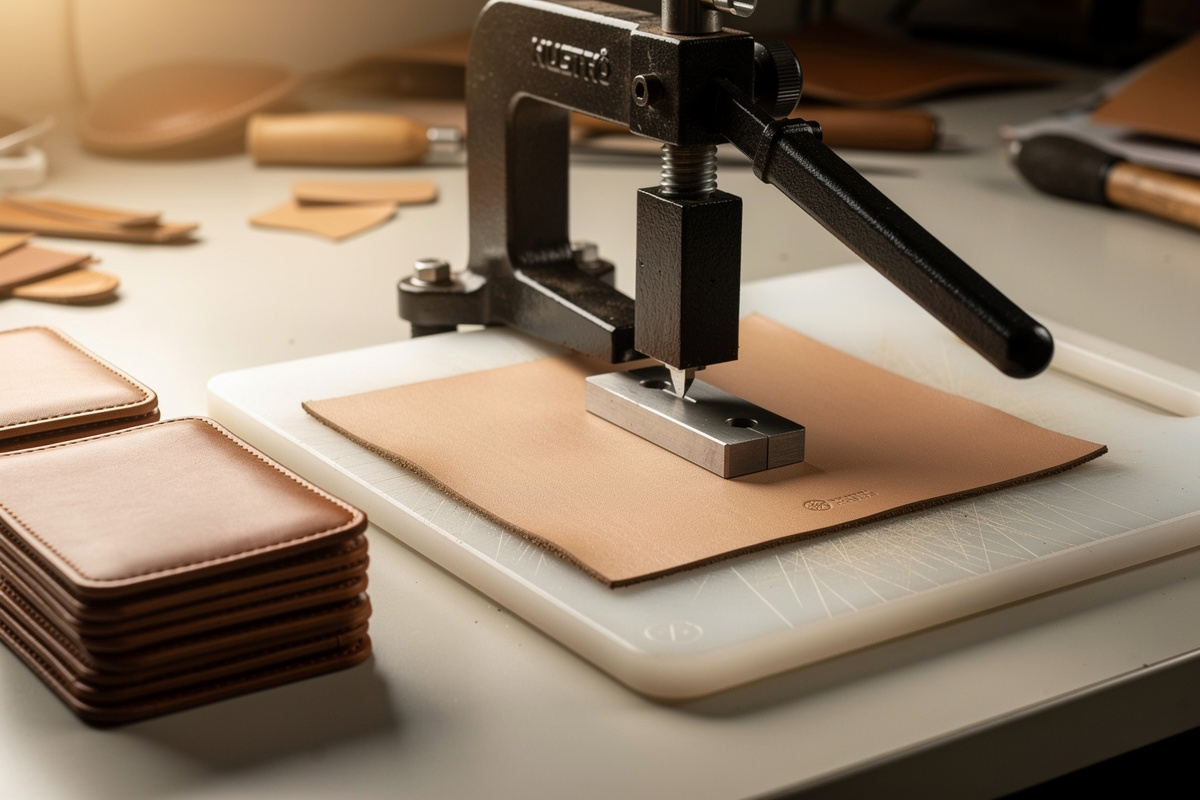
A leather clicker press is a machine that drives a steel cutting die straight down through leather to stamp out identical shapes — wallet panels, card slots, key…
A leather clicker press is a machine that drives a steel cutting die straight down through leather to stamp out identical shapes — wallet panels, card slots, key fobs — in one stroke. Pair it with custom dies and you cut fifty matched pieces in the time hand-cutting takes for five, with zero pattern drift. It only earns its place at real repeat volume; below that, a knife and a template win.
This is production tooling, not a beginner buy. Below is how the press and dies actually work together, the press types from a $60 arbor frame to a hydraulic swing-beam, steel-rule versus forged dies, the tonnage you need for your die size, and the honest break-even point where a clicker press starts paying you back instead of sitting under a dust cover.
Disclosure: LeatherCraftHaven is reader-supported. As an Amazon Associate I earn from qualifying purchases made through links in this article, at no extra cost to you. I only point to gear I actually use or would buy for my own bench.
How a Clicker Press and Dies Work Together
A clicker press supplies downward force; a clicker die supplies the cutting edge in the shape you need. You lay leather on a poly cutting board, set the die on top, bring the press platen down, and the die shears the shape cleanly through the leather against the board. The name comes from the click old presses made on each stroke. The press is generic — the dies are what make it produce your specific parts.
This is fundamentally a repeatability tool. The reason to own one is not speed on a single cut (a knife is faster to set up) but identical parts at volume: every wallet back is the exact same shape, every card slot lands in the exact same place. That consistency is what separates a batch of forty wallets that all assemble cleanly from forty that each need individual fitting. For one-off and small-batch work, hand cutting against a template is more than enough — the press is for when you are cutting the same pattern over and over.
Clicker Press Types and Tonnage
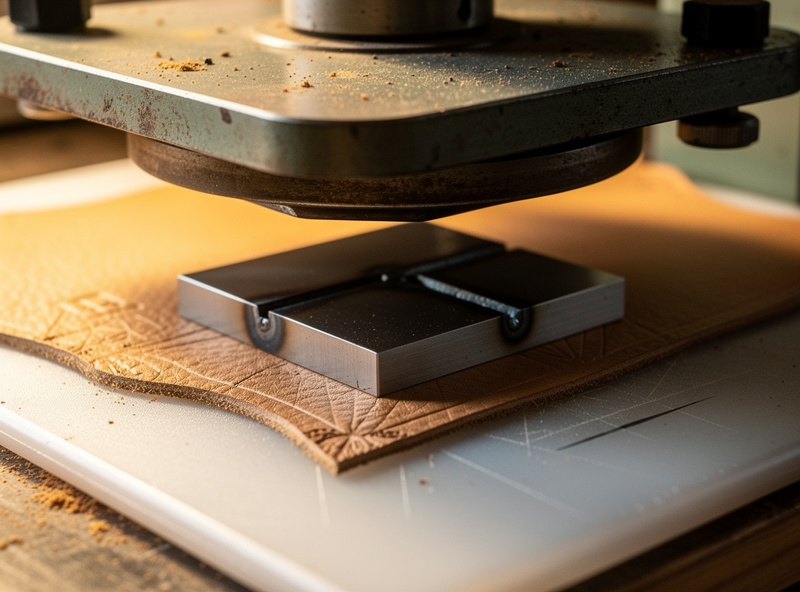
Presses range from a $60 arbor frame to a multi-thousand-dollar hydraulic swing-beam. The right one depends on die size: tonnage needed rises with the total cutting-edge length of the die, so a small key-fob die cuts under a couple of tons while a full belt-strap die needs ten or more. Buy more tonnage than your current dies need so you are not stalled when you add a bigger die later.
A manual arbor or hand-lever press handles small dies (fobs, small slots, coasters) and is where most makers start. A benchtop hydraulic press jumps you to wallet-panel and bag-strap dies. A full swing-beam clicker is industrial — overkill for a hobby bench, right for a small production shop. Where this differs from the hardware-setting hand press in my three-tier tools guide: that lighter press sets snaps and rivets at low force, while a clicker press needs far more tonnage to shear a die clean through.
| Press Type | Typical Tonnage | Die Size It Cuts | Footprint | Price Range |
|---|---|---|---|---|
| Arbor / lever press | 1-2 ton | Small fobs, slots, coasters | Benchtop, tiny | $60-180 |
| Benchtop hydraulic | 5-10 ton | Wallet panels, card slots | Benchtop, heavy | $400-1200 |
| Floor hydraulic clicker | 10-20 ton | Bag panels, belt straps | Floor unit | $1500-4000 |
| Swing-beam clicker | 20-30+ ton | Any production die | Large floor | $3000-8000 |
| Hardware hand press (for reference) | Low (leverage) | Not for cutting — sets snaps/rivets | Benchtop, small | $90-400 |
The last row is there to clear up the most common confusion: a hardware-setting hand press and a clicker press are different machines. The hand press squeezes hardware closed; the clicker press shears cutting dies. Do not buy a $120 hand press expecting it to cut dies — it cannot generate the tonnage.
Steel-Rule vs Forged Clicker Dies
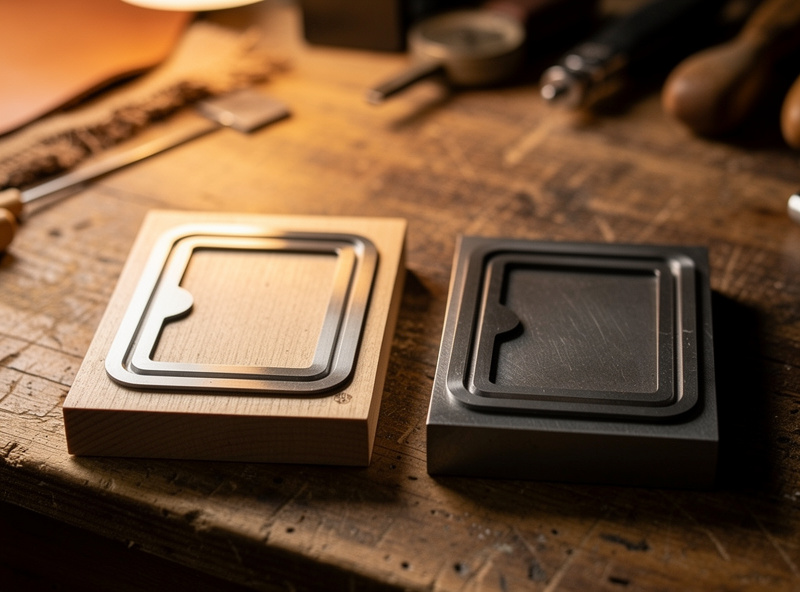
Dies come in two grades. Steel-rule dies are a bent steel blade set into a wooden or composite base — cheaper ($30-120 custom), faster to make, and ideal for low-to-mid volume; the edge is sharp but wears sooner. Forged (solid machined) dies are milled from a steel block — expensive ($80-300+), razor-sharp, hold their edge for tens of thousands of cuts, and are what production shops run for their highest-volume patterns.
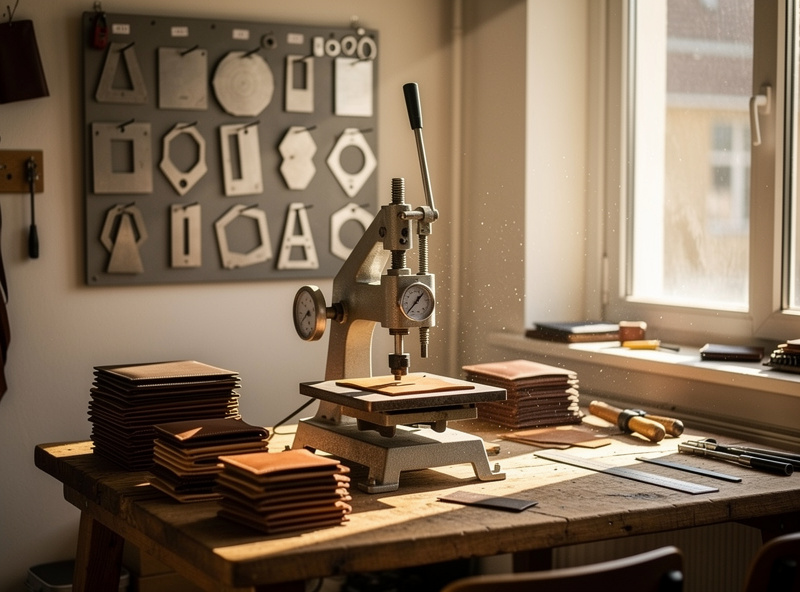
For a hobby maker stepping into batch work, steel-rule dies are almost always the right call: you order them to your exact pattern, they cut clean for thousands of pieces, and you can afford several. Reserve forged dies for the one or two patterns you cut constantly. A leather clicker cutting die made to your template is the single biggest workflow upgrade once you are repeating a pattern. If you would rather cut digitally, the CNC-cut leather patterns and dies guide covers producing the same shapes on a desktop CNC without buying steel dies at all.
Using the Press Without Wrecking Dies or Leather
Always cut against a poly (PE/HDPE) clicker board, never steel or granite — the soft board lets the die edge bite slightly past the leather without dulling, the same surface logic as struck punches. Set the press depth so the die just kisses the board; over-travel hammers the cutting edge flat and shortens die life dramatically. One firm stroke shears the whole shape; rocking or repeated strokes shifts the die and frays the cut.
Rotate the board and flip it to spread the cut marks so no single groove deepens. Keep dies sharp the same way you keep every edge tool sharp — a light strop on the inside bevel, covered in my guide to sharpening leather tools — and store them so the edges never knock together. Match the leather weight to the die: thick veg-tan needs more tonnage than soft chrome-tan of the same outline. A poly clicker board is the cheap consumable that protects expensive dies.
Is a Clicker Press Worth It?
A clicker press pays back only at genuine repeat volume — roughly 30+ identical pieces per month of the same pattern, the same threshold that justifies a sewing machine or a leather splitter. Below that, the setup time and the cost of custom dies outrun the time you save, and a sharp knife against an acrylic template cuts your small batches just as accurately for a fraction of the money.
Run the honest math before buying: do you cut the same pattern dozens of times a month, will you keep doing so for the next year, and do you have the bench or floor space and the budget that may not return in year one? If yes, a benchtop hydraulic press plus a few steel-rule dies transforms your throughput. If you are still finding your product mix, hold off — invest in leather selection and skills first, covered in the best leather for wallets guide and the broader tools buy-in guide, and let proven demand pull you up to production tooling. A 1-ton arbor press is the low-risk way to test clicker work with small dies before committing to a hydraulic unit.
Frequently Asked Questions
What is a clicker press used for in leatherwork?
A clicker press drives a steel cutting die down through leather to stamp out identical shapes in one stroke, such as wallet panels, card slots, and key fobs. It is a repeatability tool for batch production, giving every cut piece the exact same shape with no pattern drift.
How much tonnage do I need for a leather clicker press?
Tonnage rises with the total cutting-edge length of your die. Small fob dies cut under two tons, wallet-panel dies need about five to ten, and full belt-strap or bag dies need ten or more. Buy more tonnage than your current dies require so larger dies do not stall the press.
What is the difference between steel-rule and forged clicker dies?
Steel-rule dies are a bent blade set in a base, cheaper at 30 to 120 dollars and ideal for low-to-mid volume. Forged dies are machined from solid steel, cost 80 to 300 plus, stay sharp for tens of thousands of cuts, and suit high-volume production patterns.
Do I need a clicker press for leatherwork?
No, not for hobby or small-batch work. A clicker press only pays back at roughly 30 plus identical pieces per month of the same pattern. Below that, a sharp knife against an acrylic template cuts small batches just as accurately for a fraction of the cost.
What do you cut on with a leather clicker press?
Cut on a poly (HDPE or PE) clicker board, never steel or granite. The soft board lets the die edge bite slightly past the leather without dulling. Set the press depth so the die just kisses the board, since over-travel flattens the cutting edge and shortens die life.
Is a clicker press the same as a hardware hand press?
No. A hardware hand press squeezes snaps and rivets closed at low force. A clicker press generates far more tonnage to shear cutting dies through leather. They are different machines, so a light hand press cannot cut clicker dies no matter how you use it.
Can you make your own leather cutting dies?
You order custom steel-rule dies to your exact pattern from a die maker, which is the usual route. Alternatively, skip steel dies entirely and cut the same shapes on a desktop CNC with a drag knife, which avoids per-pattern die cost for makers who change designs often.
Related Articles
- Leatherworking Tools Guide: Three Tiers of Buy-In
- CNC-Cut Leather: Patterns, Form Blocks, and Press Dies
- Leather Splitter and Skiver Machine Guide
- How to Sharpen Leather Tools
- Best Leather for Wallets: Thickness, Type, and Grain