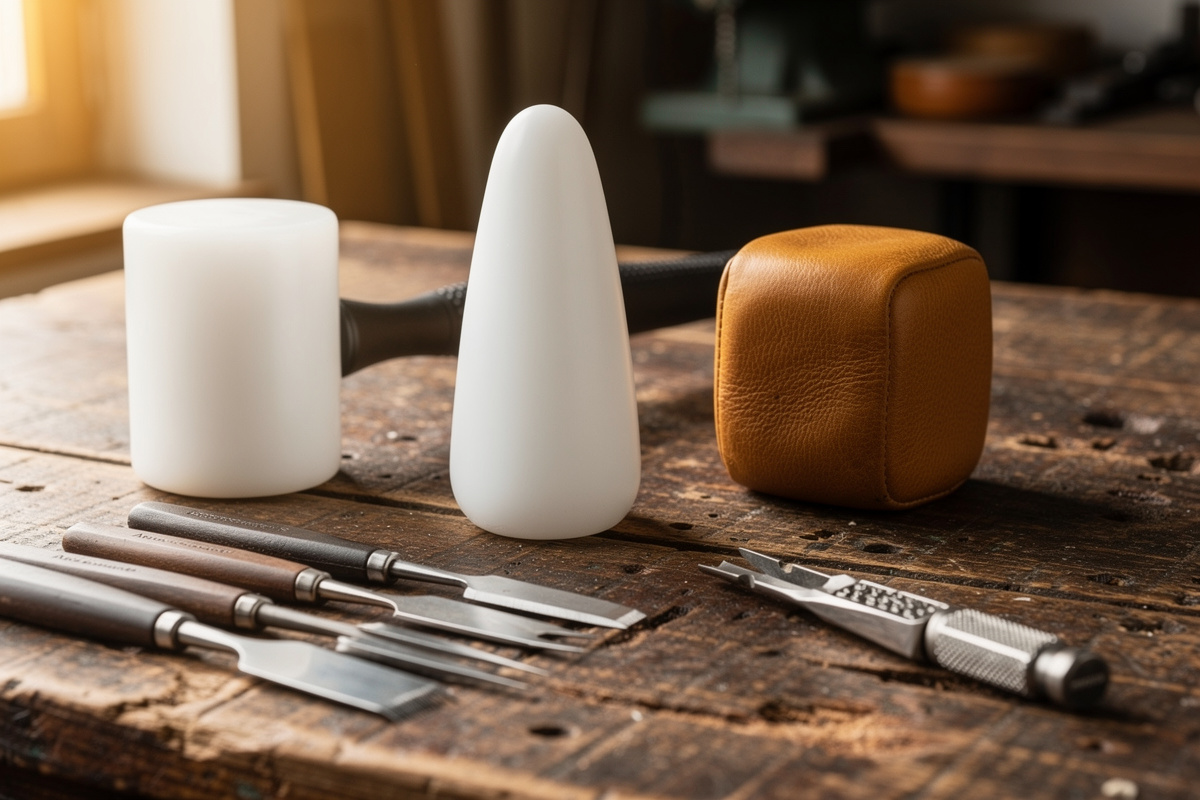
A leather maul is the striking tool that drives chisels, punches, and stamps without wrecking them — a tapered poly or nylon head, often weighted with a steel…
A leather maul is the striking tool that drives chisels, punches, and stamps without wrecking them — a tapered poly or nylon head, often weighted with a steel core, that contacts fully at any angle and spreads its own wear as you rotate it. A mallet is the simpler flat-faced cousin. On my bench a 16 oz weighted poly maul does almost everything; a steel hammer never touches a leather tool, because it mushrooms chisel tops in one session.
Choose the wrong striker and you either fatigue your wrist swinging something too light or batter your expensive chisels with something too hard. Below is the real difference between a maul and a mallet, which head material to buy, the weight that matches stitching versus stamping, and why the one tool you must never reach for is a metal hammer.
Disclosure: LeatherCraftHaven is reader-supported. As an Amazon Associate I earn from qualifying purchases made through links in this article, at no extra cost to you. I only point to gear I actually use or would buy for my own bench.
Maul vs Mallet: What Is the Difference?
A maul has a cylindrical, slightly tapered head you strike with a natural arc, so the face contacts the tool fully no matter the angle of your swing — and you rotate it between strikes to spread wear evenly. A mallet has a fixed flat or barrel face on a perpendicular handle, like a small hammer, so you must square it up each strike. For repetitive chisel and stamp work, the maul’s any-angle contact and self-spreading wear make it the leathercraft standard.
Both deliver a soft, tool-friendly blow, which is the whole point: the striker must be softer than the steel tool it hits so it absorbs the shock instead of mushrooming the tool’s struck end. The maul wins for hand stitching and tooling because you swing it hundreds of times per project and its rotational face lasts far longer. A simple poly mallet still works fine for occasional punching, and it sits in the early mid-range tier of my three-tier tools guide alongside the granite slab it pairs with.
Head Materials: Poly, Nylon, Rawhide, Wood
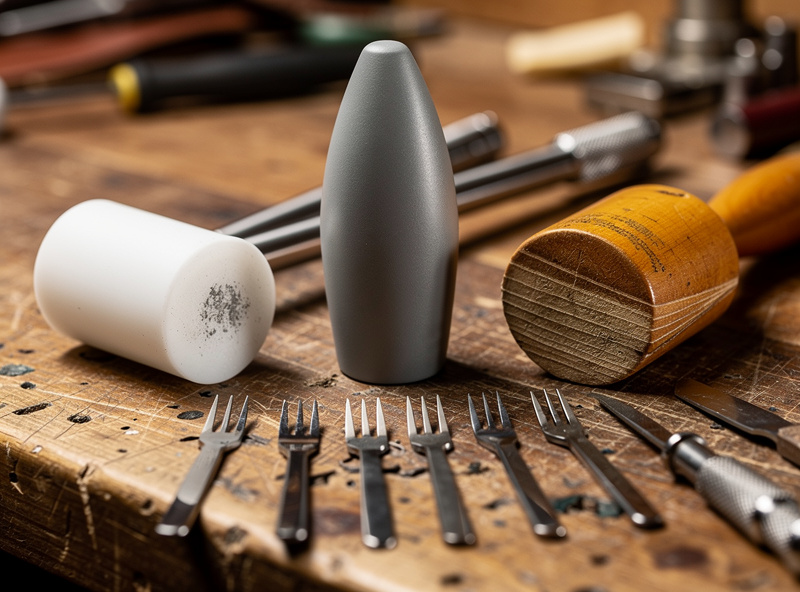
Head material decides how the striker treats your tools and how long it lasts. Poly (polyurethane/UHMW) and nylon are the modern standard — tough, slightly forgiving, and gentle on chisel and stamp tops; weighted poly mauls add a steel core for momentum without hardness. Rawhide is the traditional stamping mallet but dents and wears over time. Wooden mallets are cheap but wear fastest. A steel hammer is the one to never use — it ruins chisel and stamp tops instantly.
For almost everyone, a weighted poly or nylon maul is the right buy: it drives chisels through 8 oz leather cleanly and protects the chisel handle the hub’s tool tiers warn a steel hammer destroys. Rawhide still has a following for stamping because of its dead, non-bouncy blow, but expect it to deform and need occasional dressing. A weighted poly leather maul is the striker I reach for on every stitching session; a nylon leather mallet is the budget alternative that still spares your tools.
| Striker | Head Material | Best For | Durability | Notes |
|---|---|---|---|---|
| Weighted poly maul | Poly + steel core | Chisels, punches, all-round | Excellent | Any-angle face, rotate to spread wear |
| Nylon maul / mallet | Nylon | Chisels, light punching | Very good | Tough, tool-friendly, budget pick |
| Rawhide mallet | Rolled rawhide | Stamping, tooling | Moderate (dents) | Dead blow, needs occasional dressing |
| Wooden mallet | Hardwood | Occasional light use | Low (wears fast) | Cheap starter, wears quickly |
| Steel hammer (avoid) | Steel | Never on leather tools | n/a | Ruins chisel and stamp tops |
The bottom row is a warning, not a recommendation: a metal hammer mushrooms the struck end of any chisel, punch, or stamp on the first session. Keep one off the leather bench entirely.
Choosing the Right Maul Weight
Maul weight is matched to the job, not your strength. Lighter mauls (8–12 oz) suit fine stitching chisels and pricking irons, where you want control and many quick taps. Mid-weight mauls (about 16 oz, or 1 to 1.5 lb) are the all-rounder for general chisel and punch work. Heavier mauls (20–24 oz) drive big drive punches, thick stamps, and deep impressions where you want mass to do the work.
If you buy one maul, make it a 16 oz (roughly 1 lb) weighted poly — it covers stitching chisels and most punching, matching the 1 to 1.5 lb polyurethane mallet the tools guide recommends. The heavier the leather and the bigger the tool, the more weight helps; the finer the stitch pitch, the lighter and more controlled you want to go. Let the mass swing the tool rather than muscling it — a controlled tap from a properly weighted maul drives a chisel cleaner than a hard whack, and it keeps your stitch line even. The same controlled striking drives the drive punches in the hole punch guide.
Striking Technique and Protecting Your Tools
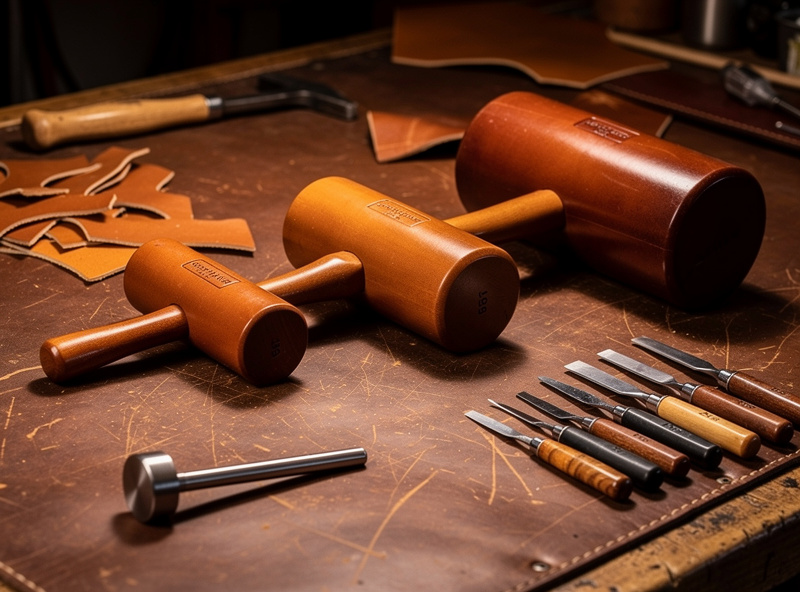
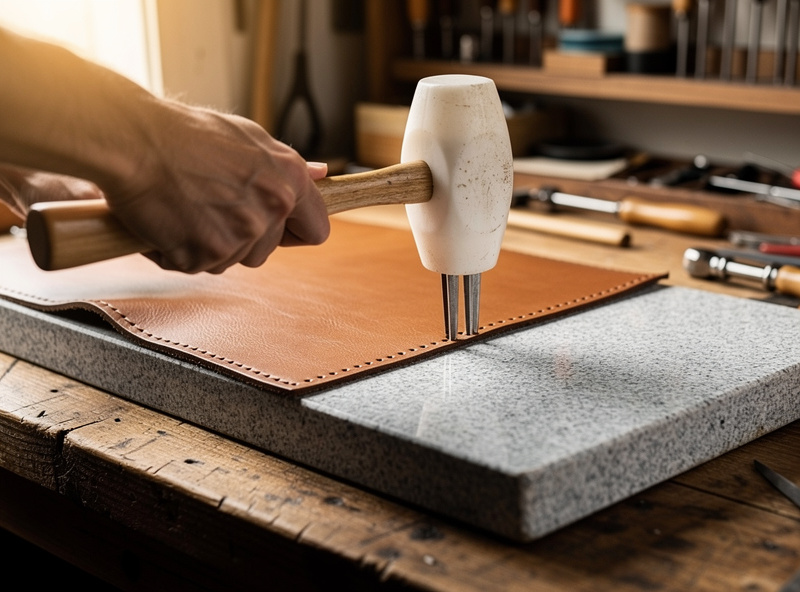
Always strike over a hard backing — a granite or marble slab under a poly cutting board for chisels and punches. Granite reflects the energy back into the tool for a clean cut; wood and concrete absorb it and leave ragged holes. Hold the chisel or punch vertical, strike straight down with one firm maul blow per set, and lift the tool cleanly rather than twisting it out, which drags the holes oval.
Rotate the maul a few degrees between strikes so the face wears evenly instead of flat-spotting in one place — this is the maul’s built-in advantage and it roughly doubles head life. Strike the tool, never the leather directly, and let the weight do the work so your wrist lasts the whole session. Twisting a chisel or over-striking are the two habits that destroy both tools and stitch lines, the same beginner errors I flag in the common mistakes guide. With a printer at hand you can even run jigs and stamp blanks for it, as in the 3D-printed leather tooling guide.
Maintaining a Maul or Mallet
Poly and nylon heads slowly mushroom and flat-spot with heavy use; rotating the maul as you work delays it, and a badly deformed poly face can be lightly resurfaced with fine sandpaper or, on some mauls, a replaceable head swapped in. Rawhide mallets need occasional dressing — sand off the frayed fibres and re-form the face — and wooden mallets simply get replaced when they split. None of this is frequent; a quality poly maul lasts many years.
Keep the handle tight: a loose maul head wobbles and robs your strike of energy and accuracy. Wipe wax and grease off the face so it does not transfer to light-colored leather. Store mauls so the heads do not sit pressed against a hard edge that flat-spots them. A well-kept striker is part of the same maintenance discipline that keeps every cutting edge sharp — covered for blades in the sharpening guide — and it is cheap insurance for the chisels and stamps it protects. For a complete starting kit, see the leatherworking starter kit guide.
Frequently Asked Questions
What is the difference between a leather maul and a mallet?
A maul has a tapered cylindrical head you strike with an arc, so it contacts the tool fully at any angle and spreads its wear as you rotate it. A mallet has a fixed flat face on a perpendicular handle that you square up each strike. The maul is the leathercraft standard for repetitive work.
What weight maul should I buy for leatherwork?
For one maul, choose a 16 oz, roughly 1 pound, weighted poly maul that covers stitching chisels and most punching. Lighter 8 to 12 oz mauls suit fine pricking irons, while heavier 20 to 24 oz mauls drive big punches and deep stamps where mass does the work.
Can I use a regular hammer for leather tools?
No. A steel hammer ruins the struck end of any chisel, punch, or stamp, mushrooming the metal in a single session. Always use a poly, nylon, or rawhide maul or mallet, which is softer than the steel tool and absorbs the shock instead of damaging it.
What is the best material for a leather maul?
Poly (polyurethane or UHMW) and nylon are the best materials, tough and gentle on tool tops, often weighted with a steel core for momentum. Rawhide is traditional for stamping but dents over time, and wood wears fastest. Avoid steel, which destroys chisel and stamp ends.
Why use a maul instead of a mallet for stitching chisels?
A maul’s tapered head contacts the chisel fully no matter the swing angle, so every strike lands square without aiming a flat face. You also rotate it between blows to spread wear, which roughly doubles head life. That makes it ideal for the hundreds of strikes a stitching project needs.
What do you strike leather chisels on?
Strike over a hard backing such as a granite or marble slab, with a poly cutting board on top to protect the chisel edge. Granite reflects the energy back into the tool for clean holes, while wood and concrete absorb it and leave ragged, torn punch holes.
How do you stop a leather maul from wearing out?
Rotate the maul a few degrees between strikes so the face wears evenly instead of flat-spotting in one spot, which roughly doubles head life. A deformed poly face can be lightly resurfaced with fine sandpaper, and many mauls accept a replaceable head when the face finally wears.
Related Articles
- Leatherworking Tools Guide: Three Tiers of Buy-In
- Leather Hole Punch Guide: Rotary vs Drive
- Leather Stitching Techniques: Saddle Stitch and Beyond
- Common Leatherworking Mistakes Beginners Make
- Leatherworking Starter Kit Guide