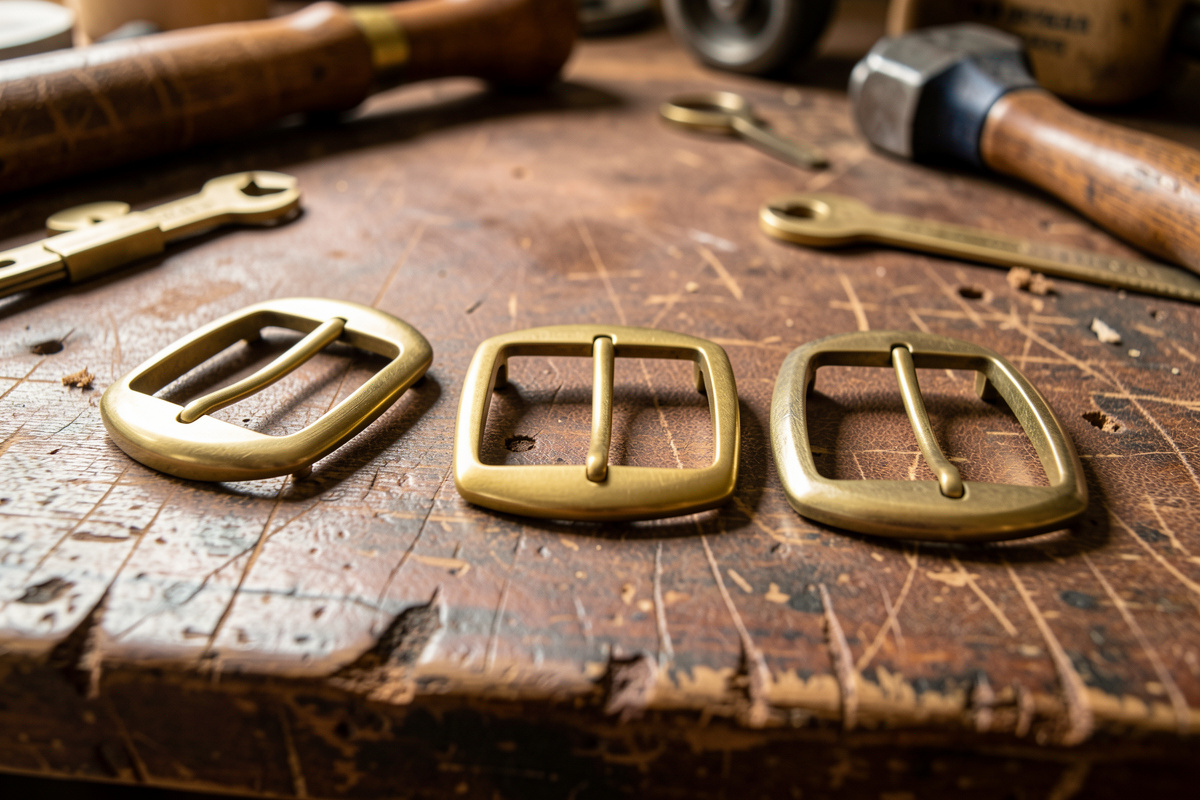
If you are choosing a leather buckle, the type is decided by how the buckle anchors the strap, not by its looks: roller buckles take the friction off…
If you are choosing a leather buckle, the type is decided by how the buckle anchors the strap, not by its looks: roller buckles take the friction off a daily-worn belt, center bar buckles are the workhorse for most belts and straps, and heel bar buckles let you swap the strap without unstitching it. Across the belts and straps I have made on my bench, pick the mechanism first and the finish second.
I default to solid brass or stainless in a center bar for belts I want to outlive me, and I reach for a heel bar whenever the customer might want to change the strap later. The mistake I see most often is buying a pretty buckle with the wrong bar style for the job, then fighting the strap thickness forever. This guide sorts the families by mechanism so you buy once.
The Four Buckle Families That Actually Matter
There are dozens of decorative buckles, but for hand-stitched belts and straps four mechanical families cover almost everything: the center bar, the heel bar, the roller, and the locking or quick-release types. Each one anchors the strap differently, and that single difference dictates strap thickness, prong length, and whether you can change the strap later. Get the family right and the rest is just sizing.
This is part of my broader leather hardware guide, where the buckle is one of several findings that decide whether a piece functions. Here I am only on buckles, and I am sorting them the way I do at the bench: by how the bar holds the strap.
Center Bar Buckles: The Default for Belts
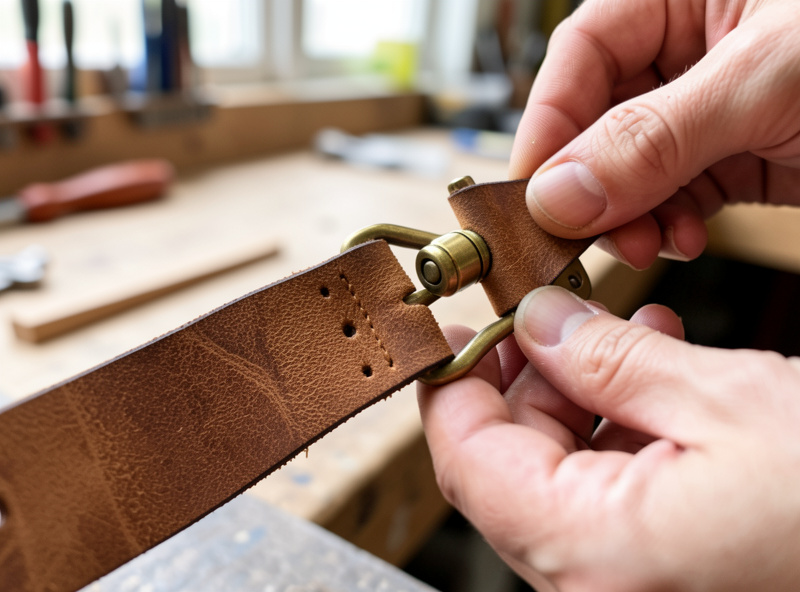
A center bar buckle has the prong pivoting on a bar set in the middle of the frame, with the strap stitched permanently around that bar. It is the standard belt buckle because it is simple, strong, and centers the prong over the strap holes cleanly. For a 1.5 inch belt in 8 to 10 oz bridle, this is what I reach for first.
The thing to measure is the bar width, not the frame width. A buckle sold as a “1.5 inch buckle” should have a 1.5 inch internal bar so your strap seats without bunching. I keep my strap end exactly to the bar width, skive the fold so the doubled leather is not bulky, and set the prong slot so the prong sits dead center. Because the strap is stitched to the bar, a center bar buckle is permanent — plan your strap length before you commit the stitch line.
Heel Bar Buckles: When You Want to Swap the Strap
A heel bar buckle moves the strap bar to the rear edge of the frame and leaves it open or pinned, so the strap loops around it and fastens with Chicago screws or snaps instead of stitching. That is the whole point: you can change the buckle or the strap without cutting a stitch. Watch straps and convertible belts live on this style.
On the watch straps I make, the heel bar is non-negotiable because the wearer expects to swap straps freely. I fasten the strap loop with a pair of Chicago screws rather than rivets so it stays serviceable. The trade-off is a small amount of play where a stitched center bar would be rigid, but for anything meant to be changed, that flexibility is the feature, not a flaw. If you want a permanent belt, do not use a heel bar — you will lose the rigidity that a stitched bar gives.
Roller Buckles: Friction Relief for Daily Wear
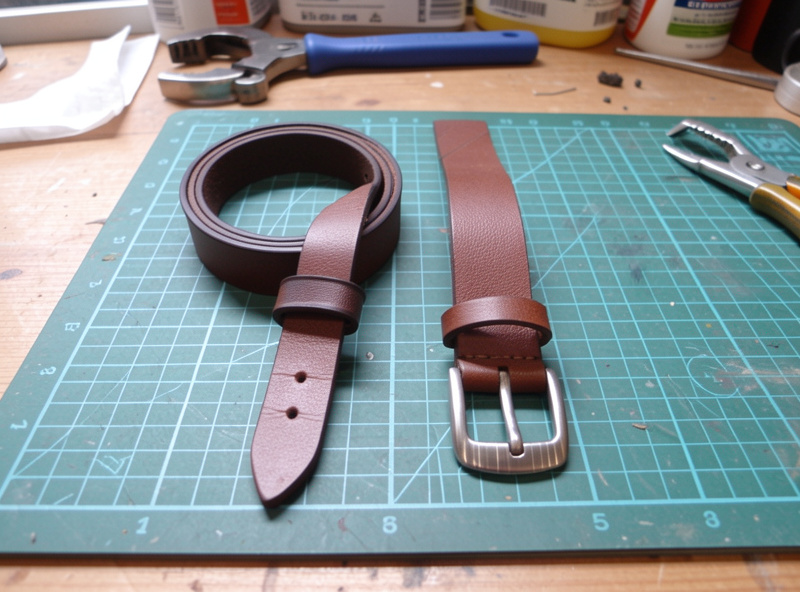
A roller buckle is a center bar buckle with a free-spinning sleeve on the front edge of the frame, where the strap rubs as you tighten it. That roller turns instead of dragging, so a heavy work belt cinches smoothly and the strap edge does not abrade. For a thick 10 oz belt that gets pulled tight every day, the roller earns its keep.
I use roller buckles on heavier harness and work belts where the strap is stiff enough that a plain frame edge would wear a shine line into the leather. The roller is not necessary on a dress belt in thinner leather — there the strap glides fine on its own. Match the roller frame to the strap weight: an undersized roller on a thick strap binds, which defeats the purpose.
Locking and Quick-Release Buckles
Beyond the three prong families, locking buckles (cam or cobra style) and quick-release side-release buckles clamp the strap without holes. These show up on rigging belts, tool belts, and gear straps where you want fast on-off and no prong holes weakening the leather. They are mechanical hardware bolted or screwed to the strap rather than stitched around a bar.
I keep these in the drawer for utility pieces, not dress goods. A cobra-style locking buckle on a thick 12 oz strap gives a rock-solid hold with no stretch, but it is heavy and industrial-looking. For most leatherwork — belts, watch straps, bag straps — you will live in the center bar, heel bar, and roller families, so I weight my buying there.
Buckle Type Comparison
| Buckle Type | Strap Attachment | Swappable? | Best For | Typical Strap Weight |
|---|---|---|---|---|
| Center bar | Stitched around bar | No (permanent) | Standard belts, dress belts | 8–10 oz |
| Heel bar | Looped, screwed or snapped | Yes | Watch straps, convertible belts | 4–8 oz |
| Roller | Stitched around bar | No (permanent) | Heavy work and harness belts | 10–12 oz |
| Locking (cobra/cam) | Screwed or clamped | Yes | Rigging and tool belts | 10–14 oz |
| Quick-release | Screwed or sewn loop | Yes | Gear and utility straps | 6–10 oz |
Sizing the Buckle to the Strap
Buckle size is the internal bar width, and it must match your finished strap width exactly. A 1.5 inch strap needs a 1.5 inch buckle bar; go a hair over and the strap rattles, go under and it will not pass. I cut my strap, then dry-fit the buckle before I punch a single hole, because a buckle that binds on a too-thick strap end is a re-cut, not an adjustment.
The other measurement people miss is strap thickness against the prong gap. A doubled-over 10 oz strap end can be 20 oz of leather at the fold, which may jam a buckle sized for a single thickness. I skive the fold down so the doubled section seats cleanly, the same prep I use when setting other findings into a strap. Dry-fit first, every time.
Prong length is the third number people forget. The prong has to clear the doubled strap end and still drop cleanly into the holes, so on an 8 to 10 oz belt I want a prong that reaches a good 3/16 inch past the leather face when the buckle is folded over — too short and it pops out under load, too long and it scratches whatever the belt presses against. I set my first hole one strap-width back from the fold and space the rest 3/4 inch apart, which is the spacing that has fit every wearer I have made belts for without re-punching. Check the prong against the actual folded thickness, not the flat strap, because that fold is where a buckle either seats or fights you.
As an Amazon Associate I earn from qualifying purchases. When I want a buckle to outlast the belt, I buy solid brass or stainless center bar buckles in the correct bar width rather than the plated zinc ones bundled in cheap kits — the difference shows up the first time a plated buckle wears through at the prong.
Frequently Asked Questions
What is the difference between a center bar and a heel bar buckle?
A center bar buckle has the strap permanently stitched around a bar in the middle of the frame, making it a fixed belt buckle. A heel bar buckle moves the bar to the rear edge and leaves it open, so the strap loops around it and fastens with screws or snaps, letting you swap straps without unstitching.
Do I need a roller buckle for a belt?
Only for heavier straps. A roller buckle adds a spinning sleeve that reduces friction and edge wear when you tighten a stiff 10 to 12 oz work belt. On a thinner dress belt the strap glides fine on its own, so the roller is unnecessary weight and cost.
How do I know what size buckle to buy?
Match the buckle to your finished strap width using the internal bar width, not the frame width. A 1.5 inch strap needs a 1.5 inch bar. Always dry-fit the buckle on the cut strap before punching holes, since a too-thick folded strap end can jam a buckle sized for single thickness.
Can I change the strap on a stitched buckle?
No. A center bar or roller buckle has the strap stitched permanently around the bar, so changing it means cutting the stitch line and re-stitching. If you want swappable straps, use a heel bar buckle and fasten the loop with Chicago screws instead of stitching.
What buckle type is best for a watch strap?
A heel bar buckle is standard for watch straps because it lets the wearer swap straps freely. Fasten the strap loop with a pair of Chicago screws rather than rivets so the connection stays serviceable, and size the buckle bar to the lug width of the strap.
Related Guides
- Leather Hardware Guide: Rivets, Snaps, Buckles, Setting
- How to Make a Leather Belt: A Complete Hand-Stitched Tutorial
- How to Make a Leather Watch Strap: A DIY Guide
- Best Rivets for Leather: Copper vs Brass vs Stainless