The best zipper for most leather goods is a YKK #5 brass metal zipper for structured pieces and a YKK #3 nylon coil for slim, soft ones —…
The best zipper for most leather goods is a YKK #5 brass metal zipper for structured pieces and a YKK #3 nylon coil for slim, soft ones — matched to the leather weight, not chosen by color. Size number roughly equals tooth width in millimeters, so a #5 measures about 5mm across the closed teeth and a #3 about 3mm. Pick the tooth to suit the job and the zipper stops being the weak point of the piece.
I’ve bought bin after bin of zippers over the years — good ones, cheap ones, mystery-brand ones off a roll — and installed them into wallets, pouches, dopp kits and bag mouths on my bench. The pattern is boringly consistent: the zipper is almost never the thing that fails. The install fails, or the wrong size was chosen for the leather. So this guide is really about matching, and once you can match tooth size and type to a project you’ll never stand paralyzed at a supplier wall again. If you want the full install method, that lives in my guide to sewing zippers into leather; here we’re picking the hardware.
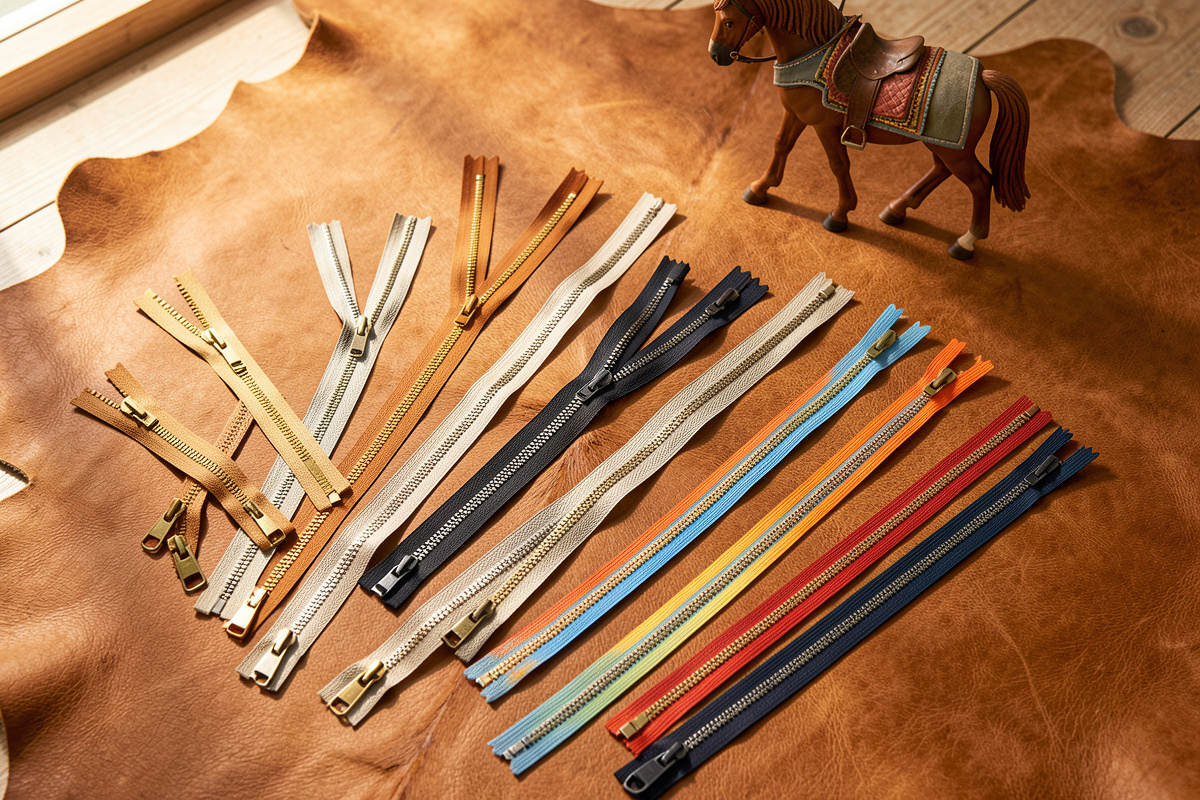
What Do YKK Zipper Numbers Actually Mean?
The number on a zipper — #3, #5, #8, #10 — is the approximate width of the closed teeth chain in millimeters. A #3 is about 3mm and slim; a #5 is about 5mm and the everyday workhorse; a #8 and #10 are progressively beefier, for bag mouths and heavy-duty gear. It is a size spec, not a quality grade — a well-made #3 outperforms a badly made #8 for the right job.
YKK is the reference here because they publish real specs — the sizing convention on YKK’s fastening site is where the numbers come from, and it’s worth knowing they’re an industry standard rather than a marketing figure. On my bench I stock #3 and #5 in bulk and keep a few #8s for bag work. For leather specifically, I rarely go above #5 unless the piece is a large tote or a tool bag, because bigger teeth start to look and feel industrial against fine leather. The mistake I made early was buying a box of #8 metal zippers because they felt “sturdy,” then discovering they overpowered every wallet and pouch I tried them in — too much hardware, not enough grace.
Metal vs Coil vs Molded: Which Zipper Type for Leather?
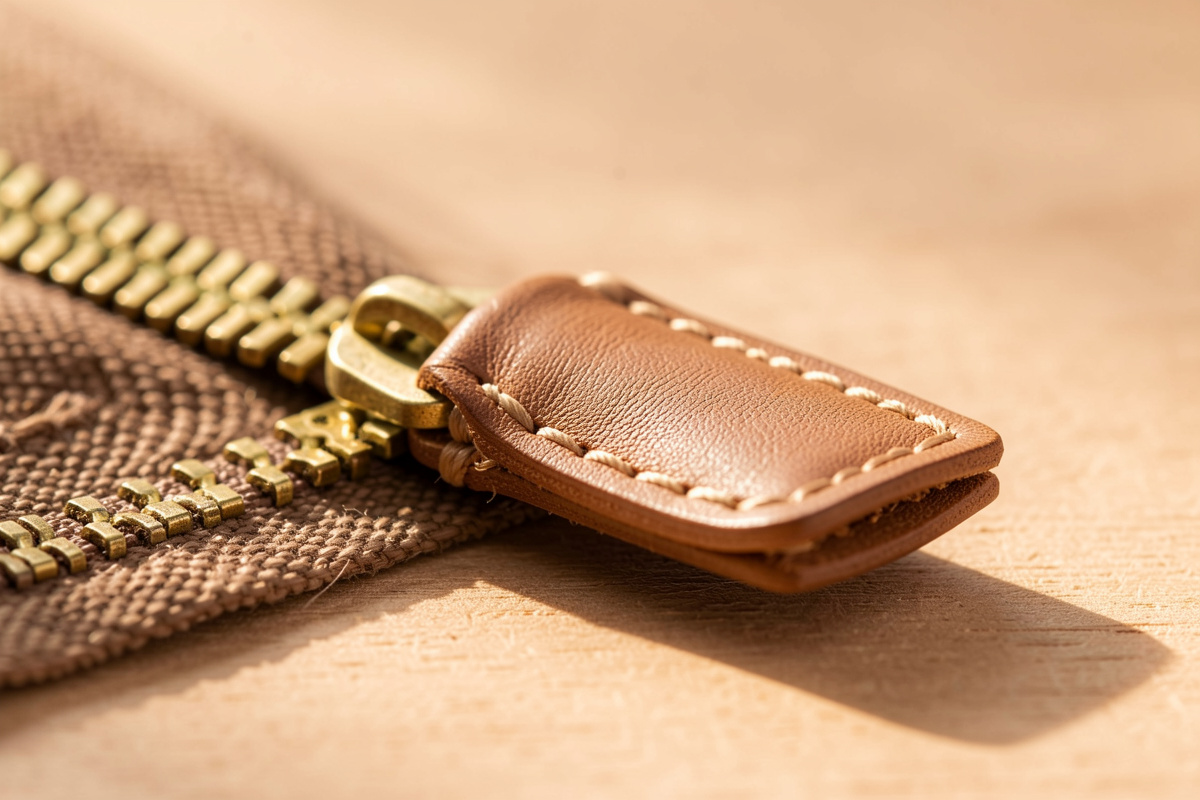
Metal zippers look and age best on leather and repair well but weigh more; nylon coil is the smoothest-running and self-heals after a snag; molded plastic is rugged and light but reads sporty. For a hand-stitched veg-tan wallet, brass metal wins on looks and repairability; for a soft chrome-tan pouch, coil wins on feel. There’s no single best — there’s the right one for the leather and the use.
Here’s how I sort them at the bench:
| Type | Best size for leather | Feel | Ages / repairs | Where I use it |
| Brass metal | #3 wallets, #5 pouches | Firm, clicky | Patinas nicely, teeth re-set | Wallets, card cases, dopp kits |
| Antique / nickel metal | #5 | Firm, slight drag | Ages to gunmetal | Tooled veg-tan, sheaths |
| Nylon coil | #3, #5 | Smoothest, self-heals | Slider wears first | Soft bags, pouch interiors |
| Molded plastic | #5, #8 | Chunky, rugged | Slider only, rarely repaired | Tool rolls, outdoor pieces |
| Concealed coil | #3 | Hidden, delicate | Hard to repair | Thin linings, hidden pockets |
The self-healing trait of coil is real and underrated: run a #5 coil off its track with a snag and you can usually work the slider back and the coil re-meshes, where a metal tooth that pops out is a repair job. But coil against a rough leather edge frays, and metal against a nylon slider on a cheap zipper can gall over time. Slick your edges first — that’s true whatever tooth you pick, and it’s the first step in every project like my leather sunglasses case where a zipper meets a finished edge.
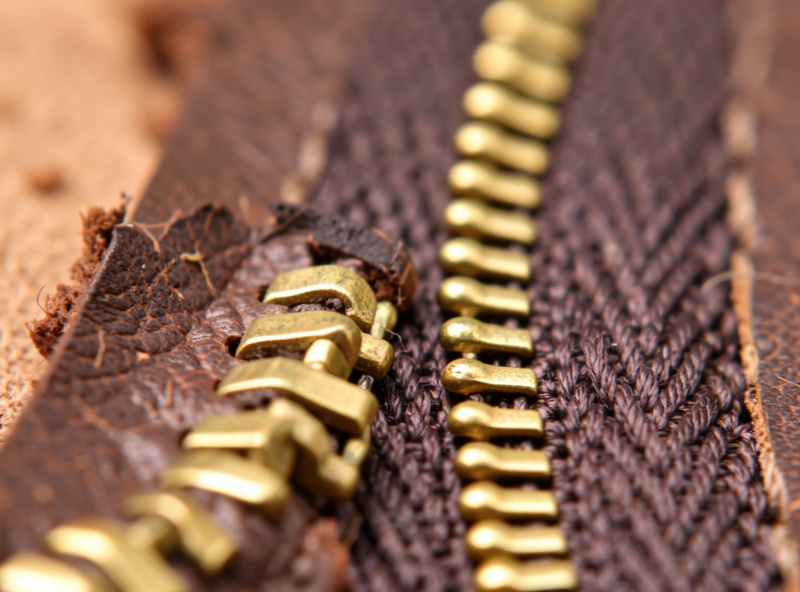
What Zipper Size for a Wallet, a Pouch, or a Bag?
Use a #3 for wallet coin zips and card sleeves, a #5 for pouches, dopp kits and bag interior pockets, and a #8 for a large bag’s main mouth. The rule is to match the zipper to the leather weight it sits in: a #3 disappears into a 3–4 oz interior, a #5 pairs with 4–5 oz panels, and an #8 belongs on a structured bag body.
I keep this simple by pairing size to leather up front. A slim bifold with a coin pocket gets a #3 because a #5 there bulks the fold and fights the card slots — I learned that by over-building one in #5 and watching it refuse to fold flat; that coin-zip-without-the-pucker problem is the whole subject of my zipper wallet pattern. A dopp kit or a wide pouch gets a #5 because you open it one-handed and the bigger pull is genuinely easier to grab with a wet or cold hand — the same #5 I default to in the two-panel zipper pouch. On a full messenger or laptop bag mouth I’ll step to #8, the same logic I follow when speccing hardware for a hand-stitched messenger bag or a leather laptop bag, where the zipper carries real weight and gets yanked hard.
Brass, Nickel, or Antique: Does Zipper Finish Matter?
Finish is mostly aesthetic, but it does affect aging. Brass warms and patinas with handling, antique/gunmetal hides wear, and bright nickel stays cold and shiny until it doesn’t. Match the zipper finish to your other hardware — buckles, rivets, snaps — so the piece reads as one designed object rather than a parts bin.
My default on natural veg-tan is solid brass, because it patinas along the same curve the leather does — both go warmer and richer with a year in a pocket, and a bright chrome slider on aged tan always looks like an afterthought. For blackened or dark-dyed leather I go antique or gunmetal so the hardware recedes. If you want the truly premium end of metal zippers, Swiss maker RIRI is the reference luxury-goods houses reach for, and handling one next to a generic zipper teaches you what “good action” actually feels like — the slider glides with a weight and quiet the cheap ones never match. You don’t need RIRI money for a pouch, but feeling one calibrates your standards.
How Do You Judge a Good Zipper by Hand?
Run the slider up and down a few times: a good zipper glides quietly and evenly, closes the teeth cleanly behind the slider with no gap, and the pull tab feels solid on its bail. A bad one drags, chatters, leaves the teeth partly open behind the slider, or has a pull that wobbles on a thin stamped bail. The action tells you almost everything before you ever stitch it in.
The test I do at the counter or when a roll arrives: close it, then look at the teeth just behind the slider from the side. On a quality zipper they mesh into a clean, level chain; on a worn or cheap one they sit slightly open or uneven, which means the slider jaws are already too loose and the zipper will split under load. I also flex the tape — good tape is tightly woven and doesn’t fray at a cut end, which matters because you’ll be trimming and tabbing those ends. A frayed, loose tape makes a mess when you fold it into an end tab, the step I break down in finishing zipper ends on leather.
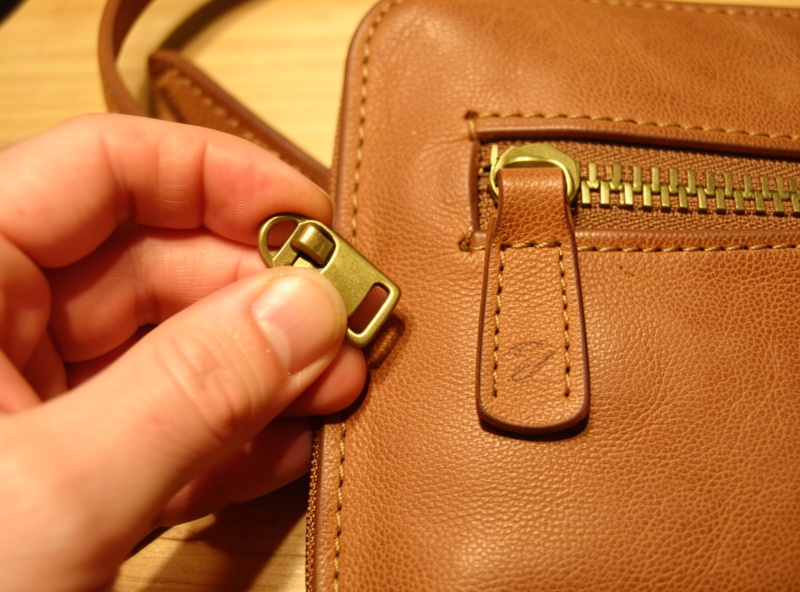
Should You Buy Zippers by the Yard or Pre-Made?
For anything you make repeatedly, buy zipper by the yard plus separate sliders and stops — you cut each zip to the exact opening and it’s far cheaper per piece. Pre-made zippers with sewn stops are convenient for one-offs but force you to design around stock lengths. Continuous coil is the most flexible; continuous metal exists too but needs the teeth stripped to set stops.
I switched to buying #5 coil by the yard once I was making more than the occasional pouch, because a roll plus a bag of sliders lets me build a zipper to fit the opening instead of shrinking the opening to fit a zipper. You size the zip to the piece — the way I size thread to iron pitch — rather than compromising the design. The thread question is its own rabbit hole, and if you’re machine-sewing rather than hand-stitching, the right sewing machine thread for leather matters as much as the zipper. For hand work I stay with waxed polyester matched to my iron.
As an Amazon Associate I earn from qualifying purchases. When I restock, I search for YKK #5 brass metal zipper by the yard and a matching bag of YKK #5 zipper sliders so I can build each zip to length.
Frequently Asked Questions
What is the best zipper for a leather wallet?
A number 3 metal or coil zipper is best for a leather wallet, because at about 3mm across the teeth it stays slim enough to disappear into a 3 to 4 ounce interior without bulking the fold. Brass metal looks best and repairs well on natural veg-tan; coil runs smoother in a soft lining.
Are metal or coil zippers better for leather goods?
It depends on the piece. Metal zippers look and age best on structured veg-tan leather and repair well, but weigh more. Nylon coil runs the smoothest and self-heals after a snag, which suits soft chrome-tan bags and pouch interiors. For a hand-stitched wallet I choose brass metal; for a soft pouch I choose coil.
What does the number on a zipper mean?
The number is roughly the width of the closed teeth chain in millimeters. A number 3 is about 3mm and slim, a number 5 is about 5mm and the everyday workhorse, and a number 8 or 10 is heavier for bag mouths. It is a size spec, not a quality grade.
Should I buy zipper by the yard or pre-made?
For projects you make repeatedly, buy zipper by the yard plus separate sliders and stops, because you cut each zip to the exact opening and it costs far less per piece. Pre-made zippers are fine for one-offs but force you to design around stock lengths. Continuous coil is the most flexible to work with.
How can I tell if a zipper is good quality?
Run the slider up and down. A good zipper glides quietly and evenly and closes the teeth cleanly behind the slider with no gap. A poor one drags, chatters, or leaves the teeth partly open behind the slider, which means the slider jaws are loose. Also check the tape does not fray at a cut end.
Related Reading
- Sewing Zippers Into Leather: The Complete Guide — the full install method once you’ve picked your zipper.
- How to Make a Leather Zipper Pouch — the two-panel pouch where zipper choice really shows.
- How to Finish Zipper Ends on Leather — tabbing the tape ends you just trimmed.
- Leather Messenger Bag Pattern Guide — where a #8 mouth zipper earns its keep.
- Sewing Machine Thread for Leather — matching thread to the job if you machine-sew.