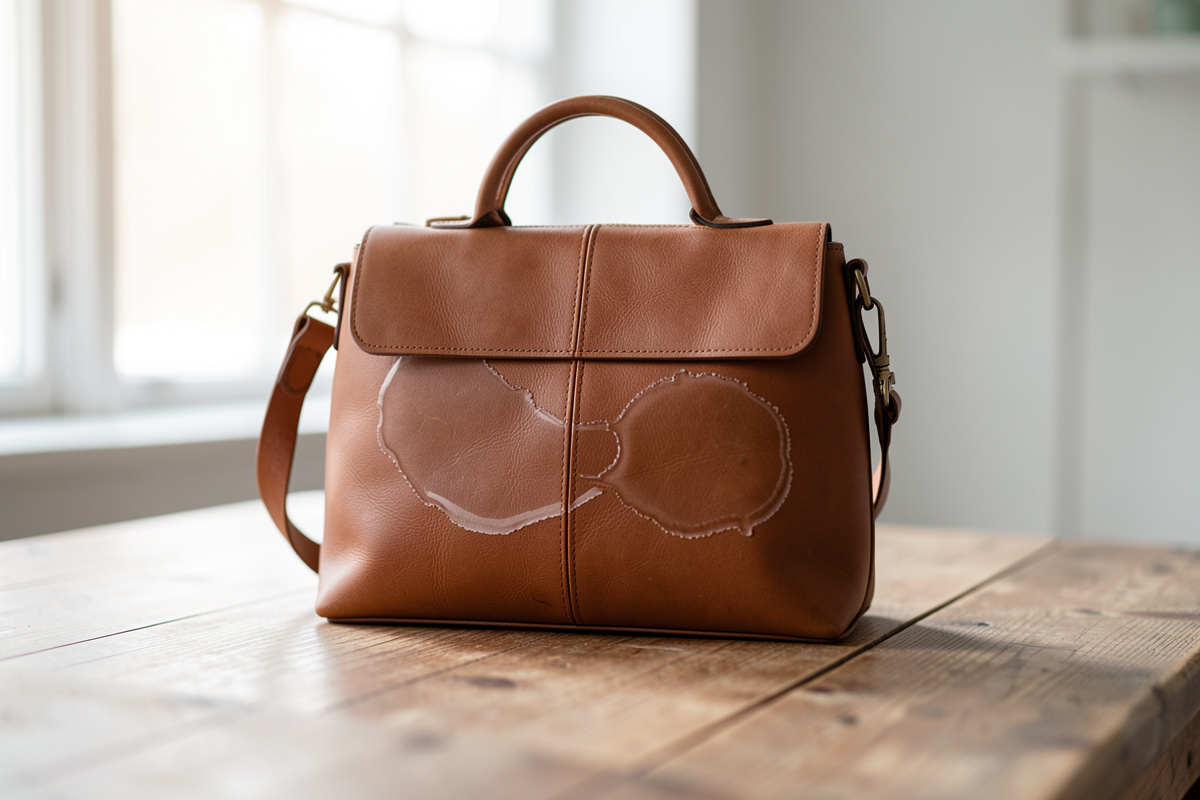
To remove a water stain from leather without setting a permanent ring, dampen the entire panel evenly rather than spot-drying the wet patch, then let it dry slowly…
To remove a water stain from leather without setting a permanent ring, dampen the entire panel evenly rather than spot-drying the wet patch, then let it dry slowly and flat, away from any heat, over 8 to 12 hours. The tide line you are fighting forms where a wet edge dries faster than the leather around it — erase the edge and you erase the stain.
Water is the stain I see people ruin most often, and it is almost always because the instinct is exactly backwards. A drop lands on a bag, you dab it dry, and a week later there is a stiff pale halo where the water was. On the wallets and belts I make, veg-tan drinks water so readily that I use controlled wetting — casing — as a normal part of tooling. That same thirst is what turns a splash into a stain, and understanding it is what makes the fix obvious.
Why Water Leaves a Ring in the First Place
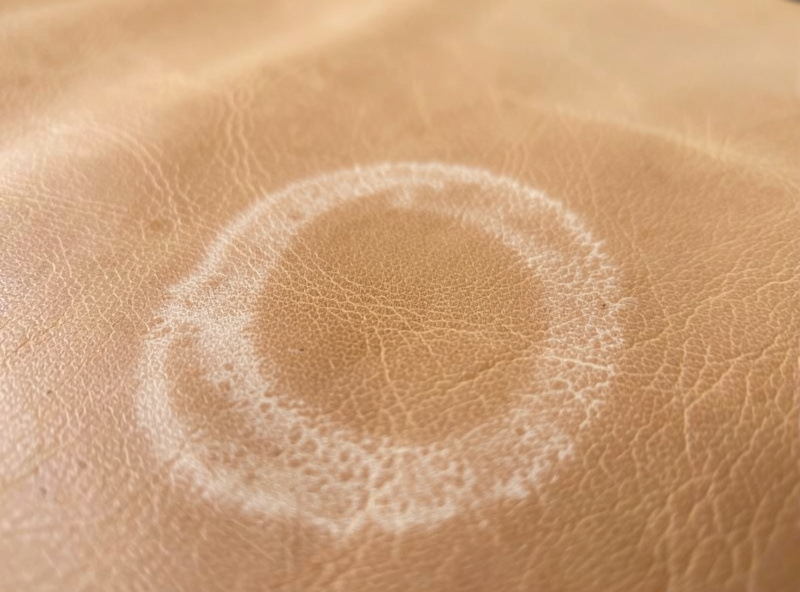
A water stain is not really the water — it is a tide line. When water soaks into leather, it dissolves and carries the natural tannins, oils, and surface dirt along with it. As the wet area dries from the edges inward, all of that dissolved material gets deposited in a line right where the moisture stopped. That is the pale, crusty halo you end up staring at. The water is long gone; what remains is everything the water moved.
This is why the size of the stain has nothing to do with the size of the original drop, and why finished leather resists it. On pigmented or well-sealed leather the water beads and never carries anything, so a wipe handles it. On absorbent veg-tan and aniline leather — the kind that shows a fingerprint — the water gets deep enough to move material and leave a mark. If you are unsure which you have, a drop of distilled water on a hidden spot tells you: soak-in means you are in ring territory.
The Mistake That Sets the Stain
Spot-drying is the trap. You blot the wet area with a towel, maybe hit it with a hair dryer to speed things up, and you feel like you are helping. What you are actually doing is creating the sharpest possible wet-to-dry edge and then drying it fast, which is the exact recipe for a hard tide line. Heat makes it worse on two counts: it sets the mark faster, and it shrinks and stiffens the leather fibers so the halo becomes stiff as well as pale.
The second mistake is impatience — going at a half-dried stain with conditioner or cleaner before the leather is fully dry, which just floats the deposited material around and often darkens it. Leather cleaning is a slow craft. Rush the drying and you lock in whatever you were trying to remove.
Fixing a Fresh Water Spill
Catch it while it is still wet and the job is easy. Blot — press straight down, never rub — with a dry cloth to lift the standing water. Then, instead of drying just that spot, take a barely-damp sponge and lightly wet the whole panel outward to its natural seams or edges, feathering so there is no hard line between wet and dry. You are not soaking it; you are evening out the moisture so the entire piece dries as one, with no edge to deposit a ring.
Then walk away and let it air dry, which I cover in its own section below because it is the step that makes or breaks the result. Once dry, a light conditioning evens the color the rest of the way. On a small splash caught early, this alone usually erases any evidence it happened.
Rescuing a Ring That Has Already Set
A stain that dried days ago takes the same principle, applied harder. You have to re-wet the leather to re-mobilize the deposited material, this time deliberately damping the whole panel — not soaking, but enough that the surface darkens evenly and the old tide line is no longer a distinct edge. Work it gently with the damp sponge so the concentrated deposit at the ring blends back into the surrounding leather. Then dry it slowly and flat, exactly as for a fresh spill.
Set rings sometimes take two passes, and a truly stubborn one on veg-tan may need a light rehydrate followed by a re-burnish or a fresh coat of finish to fully even out. If the ring sits on a tooled or dyed piece, go carefully — over-wetting can lift dye, which turns a water problem into a color problem. At that point you are into the territory of my care and restoration guide, where re-finishing is the honest fix.
Drying: Slow, Flat, and Nowhere Near Heat
This is the step people skip and then wonder why the stain returned. Lay the piece flat, out of direct sun, away from radiators, and let it dry at room temperature over hours — overnight for a thick belt or a bag panel. The goal is for the surface and the core to dry at the same rate, because uneven drying is what deposits material in a line. A fan moving room-temperature air is fine; a heat source is not.
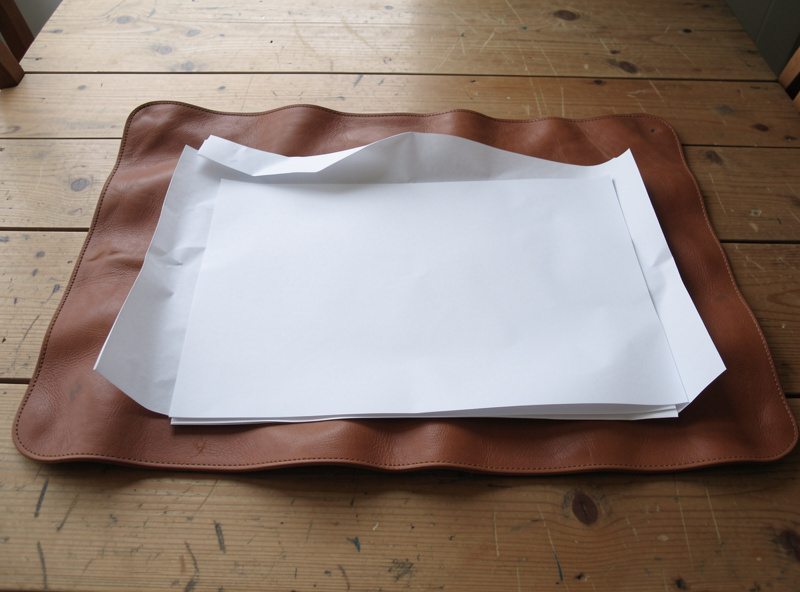
If the piece needs to hold a shape — a molded sheath, a structured bag — stuff it loosely with plain paper to keep the form while it dries, and change the paper once as it takes on moisture. Never wring, never fold to a hard crease while wet, and resist the urge to check it every ten minutes with a warm hand.
Condition Once It Is Bone Dry
Drying pulls oils out along with the water, so a piece that dried unevenly can look and feel flat even after the ring is gone. A light coat of conditioner, worked in with a cloth and buffed, restores the suppleness and evens the color the last few percent. Do not over-do it — too much conditioner darkens leather and can leave its own blotch. My conditioning guide covers products and the light-hand technique that avoids trading a water stain for a grease one.
Suede, Nubuck, and Soft Chrome-Tan
Napped leathers do not take the wet-the-whole-panel trick the same way — the nap mats and changes texture when wet. For suede and nubuck, let a water spot dry fully first, then lift the nap with a suede brush; a light even misting followed by brushing can blend a spot, but the risk of a texture change is higher, so test first. Soft chrome-tan garment leather is more forgiving than veg-tan and often just needs even dampening and slow drying. The one constant across all of them is the ban on heat.
Stop the Next One: Finish It
The best water-stain fix is a finish that keeps water on the surface. A wax or acrylic sealer turns an absorbent piece into one where a spill beads and wipes off before it can carry anything. On boots and bags that meet real weather, a pre-season treatment is worth far more than any cleanup. My full walkthrough is in waterproofing leather goods, and it connects to the general routine in how to clean leather goods. Water is only the first of several stains worth knowing cold — the whole set lives in my leather stains and damage fixes hub, and salt, its winter cousin, gets its own salt-stain guide.
Frequently Asked Questions
Do water stains come out of leather?
Usually yes on absorbent leather. Because a water stain is just deposited material at a dry edge, re-wetting the whole panel evenly and drying it slowly redistributes that material and removes the ring. Fresh spills come out easily; set rings may take two passes.
Should I use a hair dryer to dry water-stained leather?
No. Heat sets the tide line faster and shrinks and stiffens the fibers, leaving a stiff pale halo. Always dry water-stained leather slowly at room temperature, flat and out of direct sun, even if it takes overnight for a thick piece.
Why did my leather get a ring after it dried?
You spot-dried the wet area, creating a sharp wet-to-dry edge. As it dried, dissolved tannins, oils, and dirt were deposited along that edge as a tide line. Wetting the whole panel evenly instead removes the edge that forms the ring.
Can I fix a water stain that has been there for weeks?
Yes. Re-wet the whole panel to re-mobilize the deposited material, blend the old ring into the surrounding leather with a damp sponge, then dry slowly and flat. Stubborn rings on veg-tan may need a light re-burnish or fresh finish coat afterward.
Does conditioning remove water stains?
Conditioning alone rarely removes a set ring, but it is an essential final step. Drying pulls oils out with the water, so a light conditioner after the leather is fully dry restores suppleness and evens the color the last few percent. Do not over-apply it.
Related Guides
- Leather Stains and Damage Fixes: The Complete Removal Guide
- How to Remove Salt Stains From Leather Boots and Bags
- Waterproofing Leather Goods: The Complete Guide
- Conditioning Leather: Best Products and Technique
- Leather Care and Restoration: The Complete Bench Guide