To remove an oil or grease stain from leather, cover it with a dry absorbent powder — cornstarch, talc, or fuller’s earth — and leave it to draw…
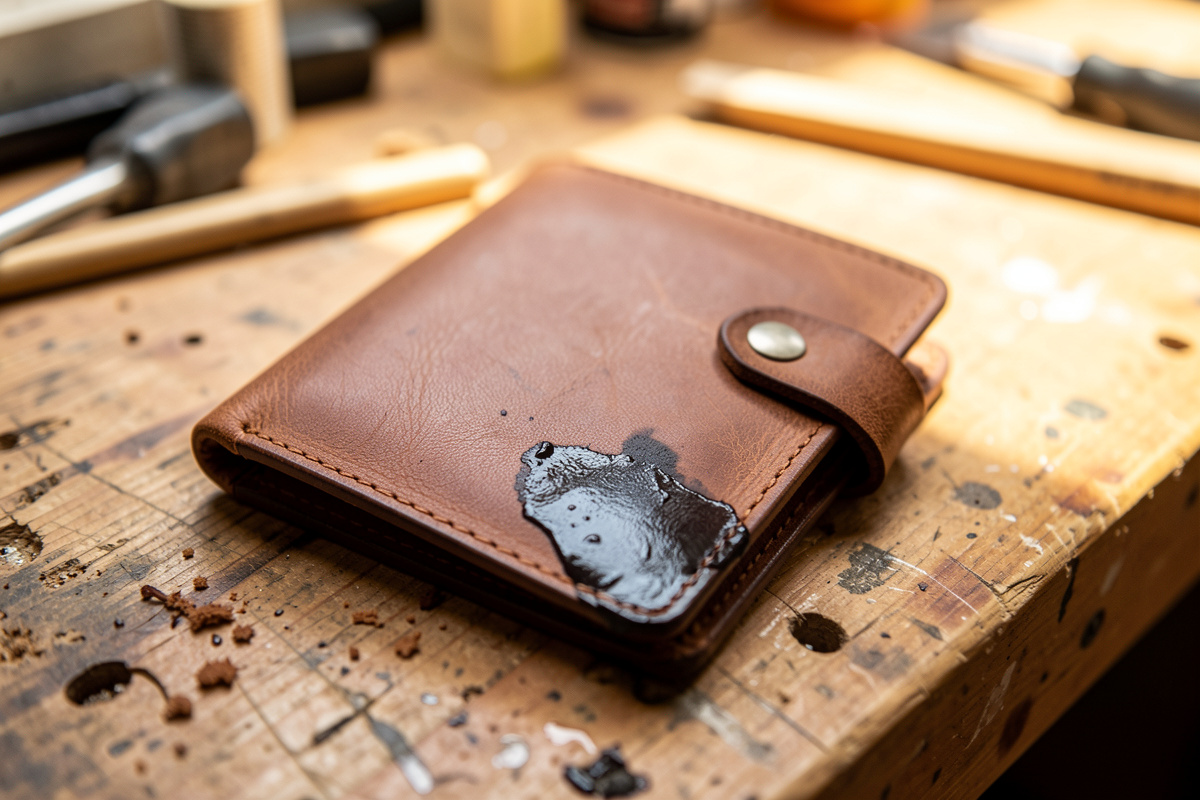
To remove an oil or grease stain from leather, cover it with a dry absorbent powder — cornstarch, talc, or fuller’s earth — and leave it to draw the oil up out of the fibers over several hours or even a couple of days. Water and soap do not work here, because oil and water do not mix; the first move is dry, not wet.
Oil behaves nothing like water on leather. Water sits and dries; oil soaks in and darkens, spreading a translucent shadow that no amount of blotting pulls back out once it is in the fiber. I have watched a drop of neatsfoot go one shade too dark on a wallet back and stay there, and the lesson is the same every time: with oil, you are not lifting a stain off a surface, you are coaxing it back up out of the material. That takes a different tool and a lot more patience than any spill.
Why Soap and Water Make It Worse
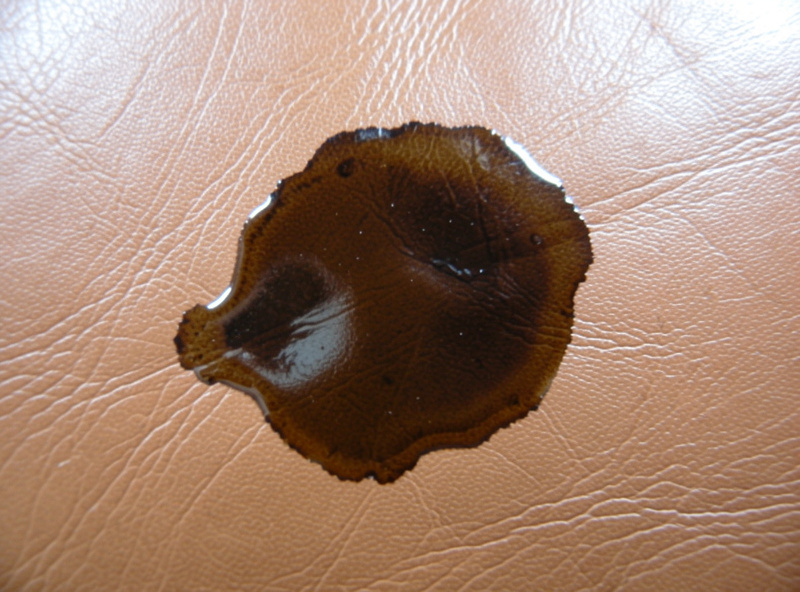
The instinct with any stain is a damp cloth and a little soap, and with oil that is precisely wrong. Oil is hydrophobic — water cannot dissolve or carry it — so scrubbing with a wet cloth just pushes the oil sideways into clean leather and gives you a larger dark patch than you started with. You also drive water into the leather on top of the oil, which can set a water ring around the grease stain, so now you have two problems.
The right mental model is a poultice, not a wash. You want something that will pull the oil out by absorption, working with the way oil moves, rather than a solvent trying to flush it away. That is why the humble powder in your kitchen outperforms every spray cleaner for this one job.
The Dry Absorbent Method, Step by Step
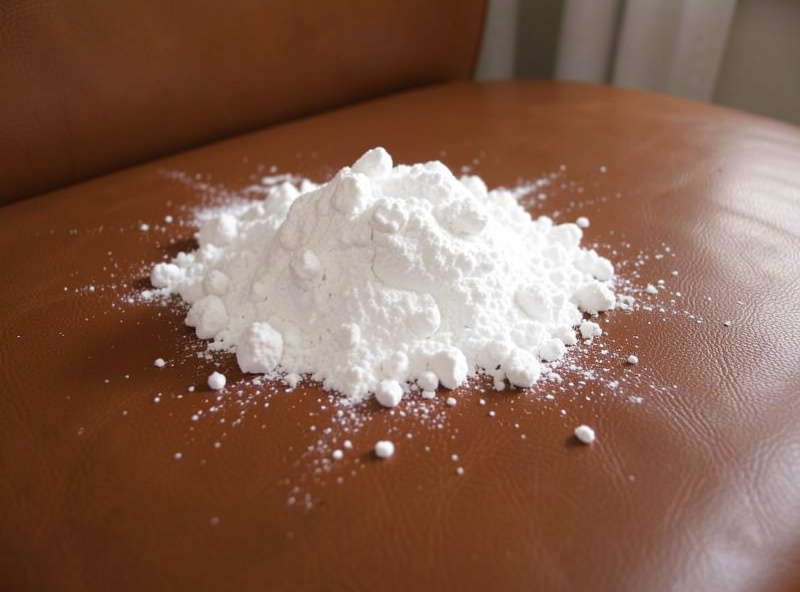
Blot first if the spill is fresh — press a dry cloth straight down to lift any surface oil before it sinks further, never rubbing. Then pile a generous layer of dry absorbent directly over the stain. Cornstarch and talcum powder are the everyday choices; fuller’s earth, a natural clay, is the strongest drawing agent and my pick for a bad stain. Cover the mark completely and press the powder gently into contact with the leather.
Now wait — this is where patience does the work. Leave it several hours at minimum, and for a deep or old stain, cover it and leave it overnight or for a couple of days. The powder slowly wicks the oil up out of the fibers and holds it. Brush the spent powder away and check: if the stain has lightened but not gone, repeat with fresh powder. Two or three cycles are normal for a stubborn stain, and each one pulls a little more. Rushing to wipe it after an hour just wastes the powder before it has drawn anything.
How Finish Changes Your Odds
On finished, pigmented leather, oil largely sits on the sealed surface, so a quick powder draw or even a wipe with a leather-safe degreaser often clears it entirely — the topcoat did its job and kept the oil from reaching the fiber. On absorbent aniline and veg-tan, the oil is in the leather, and here you have to make peace with a truth: a small oil mark sometimes will not fully lift, and the better outcome is to even it out rather than remove it.
Because veg-tan darkens with oil the same way it darkens with a conditioner, a light, even application of neatsfoot or conditioner across the whole panel can blend a small residual stain into a uniform, slightly darker tone that reads as intentional patina rather than a blotch. It is not removal, but on a piece that was going to age and darken anyway, it is often the most honest and best-looking fix. Knowing when to stop chasing a stain and blend instead is half the skill.
Which Absorbent to Reach For
They are not interchangeable. Here is how I choose between the ones most people already have or can get cheaply — the stronger the draw, the better for old, deep stains, but any of them beats a wet cloth.
| Absorbent | Drawing strength | Best for | Notes |
|---|---|---|---|
| Fuller’s earth | Strongest | Old, deep, or large oil stains | Natural clay; my pick for a bad mark |
| Cornstarch | Moderate | Fresh household spills | Kitchen staple, gentle, easy to brush off |
| Talcum powder | Moderate | Fresh spills, delicate finishes | Fine grain, works into grain texture |
| Baking soda | Mild | Small spots, doubles for odor | Also draws smell; brush off fully |
Do Not Try to Melt It Out With Heat
A tip that circulates is to warm the stain — a hair dryer, a warm iron over paper — to “melt and lift” the grease into a blotter. On leather this is a bad trade. The heat that mobilizes the oil also dries and shrinks the collagen and can set the stain deeper before any of it wicks into the paper, and a warm iron risks scorching the grain outright. The cold, patient absorbent draw is slower but it does not cook the leather. Save the iron-and-blotter trick for fabric, where there is no finish to ruin.
The Over-Conditioning Trap
The most common oil stain is not food or motor grease — it is a maker over-oiling their own piece. Neatsfoot oil and heavy conditioners are wonderful in moderation and a dark, greasy blotch in excess, because leather can only hold so much before the surplus sits as a stain. The fix is the same dry-absorbent draw, and the lesson feeds back into how you condition: thin coats, worked in and buffed, always less than you think. My conditioning guide covers the light-hand technique that avoids creating an oil stain in the first place.
Finish and Prevent
Once the stain is gone or evened out, a light conditioning restores balance if the powder pulled out more than just the spill, and a good finish keeps the next grease mark on the surface. A sealed or waxed piece gives oil nowhere to soak, which is the whole argument for a proper finish on anything that meets hands, food, or a workbench. For where oil sits among the other stains and the read-the-leather-first approach that governs all of them, work from the leather stains and damage fixes hub; if the oil left a shadow you would rather recolor than blend, restoring faded leather color covers evening a patch back to match.
Frequently Asked Questions
How do you get oil stains out of leather?
Cover the stain with a dry absorbent powder like cornstarch, talc, or fuller’s earth and leave it several hours to overnight so it draws the oil up out of the fibers. Brush it off and repeat with fresh powder if needed. Do not use soap and water on oil.
Why can’t I use soap and water on an oil stain?
Oil is hydrophobic, so water cannot dissolve or carry it. Scrubbing with a wet cloth pushes the oil sideways into clean leather, making the dark patch bigger, and can set a water ring around the grease stain. A dry absorbent powder is the correct first move.
What is the best powder for drawing oil out of leather?
Fuller’s earth, a natural clay, is the strongest drawing agent and best for a bad or old stain. Cornstarch and talcum powder are effective everyday choices for fresher marks. Whichever you use, cover the stain fully, press it into contact, and give it time.
Will an oil stain ever come out of veg-tan leather completely?
Not always. On absorbent veg-tan the oil is in the fiber, and a small mark may not fully lift. The best outcome is often to apply conditioner evenly across the whole panel so the residual stain blends into a uniform, slightly darker patina rather than a blotch.
How long should I leave the powder on the stain?
Several hours minimum, and overnight or a couple of days for a deep or old stain. The powder wicks oil slowly, so rushing to wipe it after an hour wastes it. Brush off, check, and repeat with fresh powder; two or three cycles are normal for a stubborn stain.
Related Guides
- Leather Stains and Damage Fixes: The Complete Removal Guide
- Conditioning Leather: Best Products and Technique
- Restoring Faded Leather Color: A Step-by-Step Guide
- Waterproofing Leather Goods: The Complete Guide
- How to Remove Water Stains From Leather Without Making It Worse