The three edge paints leatherworkers reach for most are Fenice, Giardini and Uniters — all Italian, all water-based, and all built for the layered chrome-tan and bag edges…
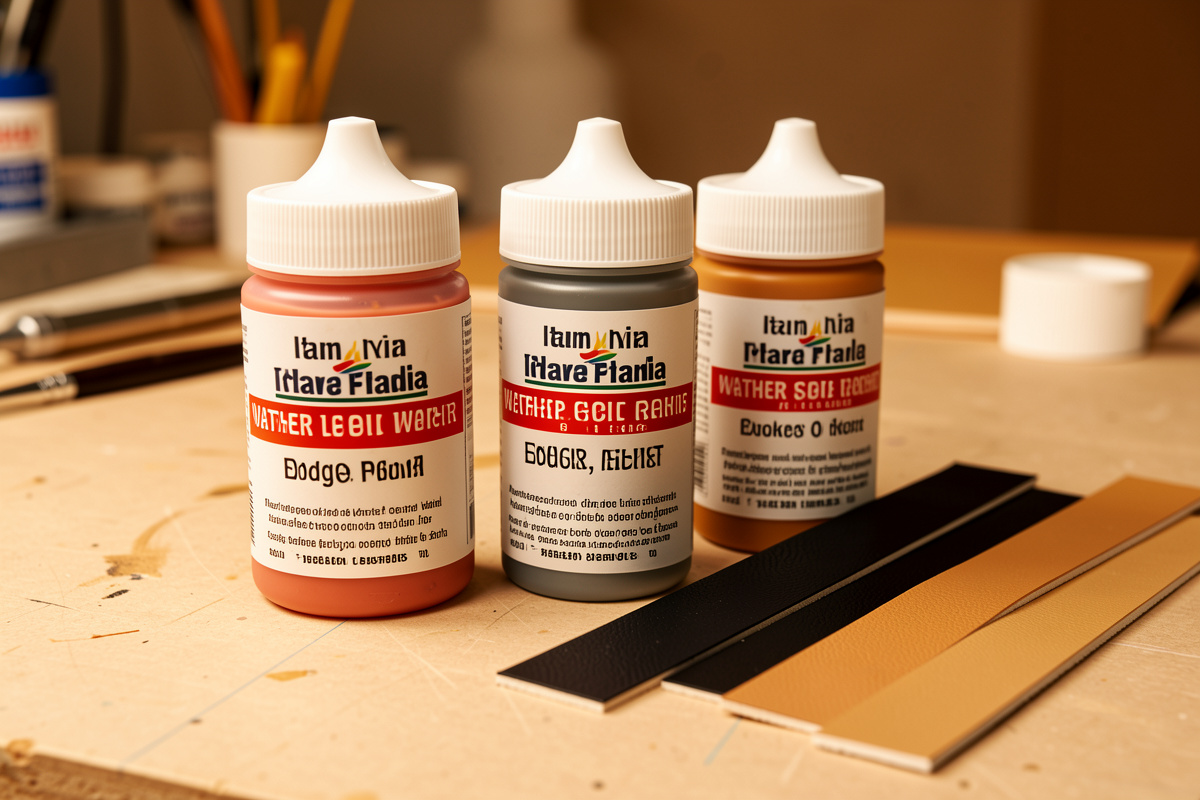
The three edge paints leatherworkers reach for most are Fenice, Giardini and Uniters — all Italian, all water-based, and all built for the layered chrome-tan and bag edges that will not burnish. Fenice and Giardini are the two I keep on the bench in the widest color range; Uniters shows up most on factory and brand goods. They behave more alike than the brand loyalty online suggests, and the real differences are viscosity, finish sheen and how forgiving each is to apply by hand.
Edge paint is fussier than burnishing, and the brand you start with shapes how much swearing you do learning it. I have run all three through enough wallet and strap edges to have honest opinions, so here is how they actually compare on the bench rather than on a spec sheet.
What These Edge Paints Have in Common
All three are water-based, flexible pigment coatings applied in thin heat-set layers, and all three are designed for edges that cannot be burnished — chrome-tan, glued layered stacks, and soft bag leather. They cure to a smooth flexible film that bends without cracking, which is the whole point on a strap that flexes thousands of times. Water-based also means easy cleanup and low fumes compared to the old solvent edge coats.
The shared workflow matters more than the brand: clean sanded edge, thin first coat, light sand, second and third coats, heat-set between. Get that process right and any of the three looks good; get it wrong and the best paint in the world beads and chips. So before chasing brands, the honest advice is that application technique outweighs the label — but within that, the brands do differ in feel.
Fenice vs Giardini vs Uniters
The practical differences come down to viscosity out of the bottle, sheen of the cured finish, and how thick each lays down per coat. Here is how I would summarize them from bench use:
| Edge paint | Consistency | Finish | Best for |
|---|---|---|---|
| Fenice | Medium, slightly thicker | Semi-gloss, builds fast | Hand application, fewer coats |
| Giardini | Thinner, more fluid | Smooth, even, controllable | Fine control, thin precise coats |
| Uniters | Thicker, production-oriented | Durable, matte to satin | Volume work, machine application |
None of these is wrong — they are tuned for slightly different jobs. Fenice builds a finished edge in fewer coats, which I like for hand work. Giardini’s thinner body gives me more control on small precise edges and dilutes nicely when I want it thinner still. Uniters is the one I associate most with factory and brand production, built to be tough and applied at volume.
Which One I Reach For
For hand-applied small goods I default to Fenice for its forgiving build, and switch to Giardini when I want maximum control on a fine edge or a custom-thinned coat. That is the honest split on my bench. Fenice’s slightly thicker body hides minor application unevenness and reaches a finished look in two or three coats. Giardini rewards a steadier hand with a glassier, more controllable result, and its fluid consistency is easier to thin for very fine edges.
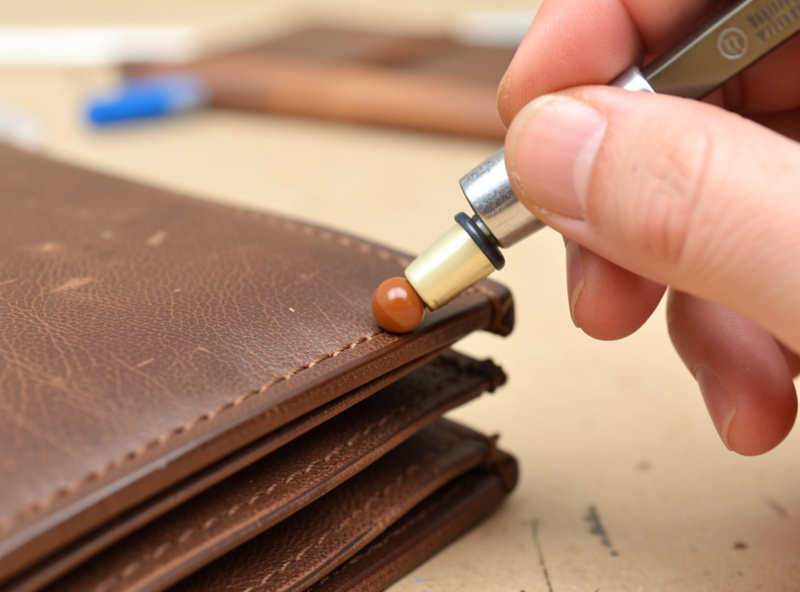
A good edge paint applicator matters as much as the paint — a fine roller or applicator pen lays a controlled bead where a brush leaves streaks. Whichever brand you choose, the applicator and the thin-coat discipline carry most of the result. I keep Fenice edge paint as my daily and Giardini edge paint for the precise work.
Application Tips That Apply to All Three
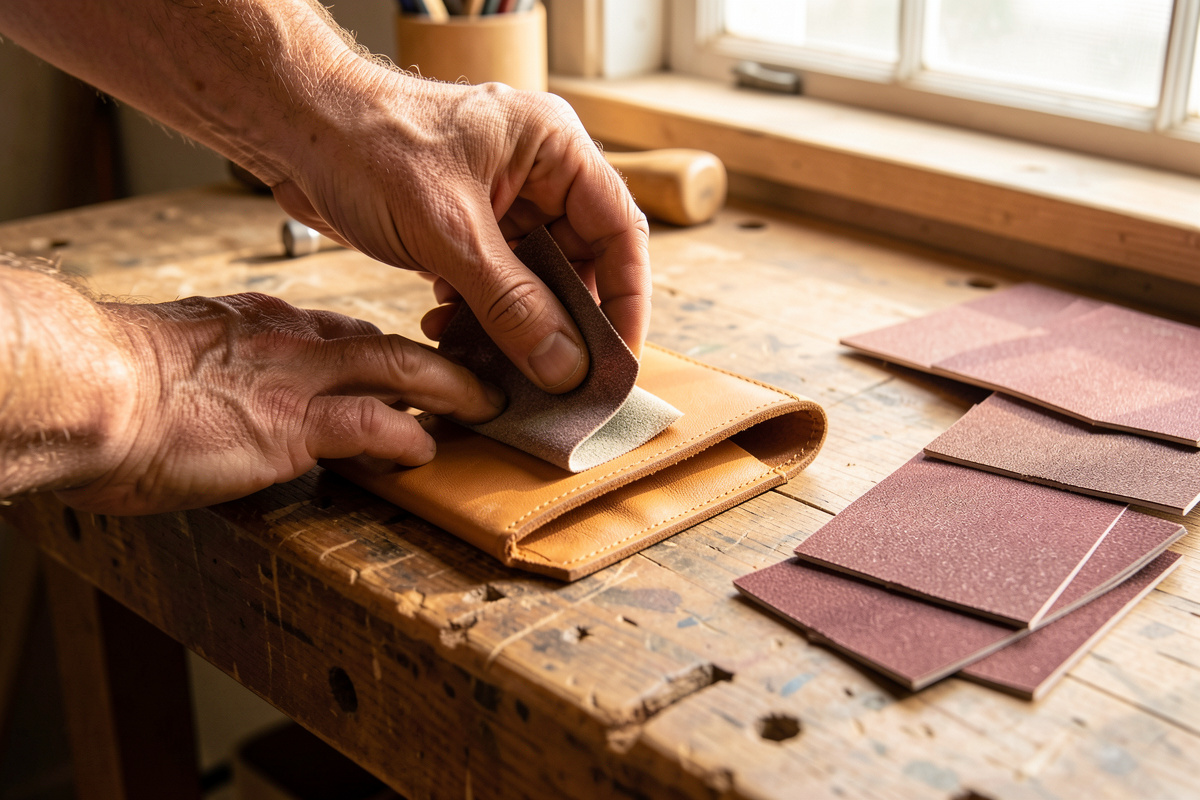
Thin coats heat-set between each is the universal rule — two or three thin coats always beat one thick one, which cracks as it dries. This is the single thing that separates a clean factory-looking edge from a lumpy amateur one, and it is brand-independent. I lay a thin first coat, let it dry, knock it back with fine sandpaper, then build up.
Heat-setting with a warm edge iron or even a hair dryer firms each coat and improves adhesion and gloss. Sand lightly between coats to keep the bead smooth. And always start from a clean sanded edge — edge paint covers layers but it cannot fix a ragged cut, so the same beveling and sanding prep still applies even though you are not burnishing. The prep is shared with the burnished route; only the finish changes.
Color Range and Matching the Edge to the Leather
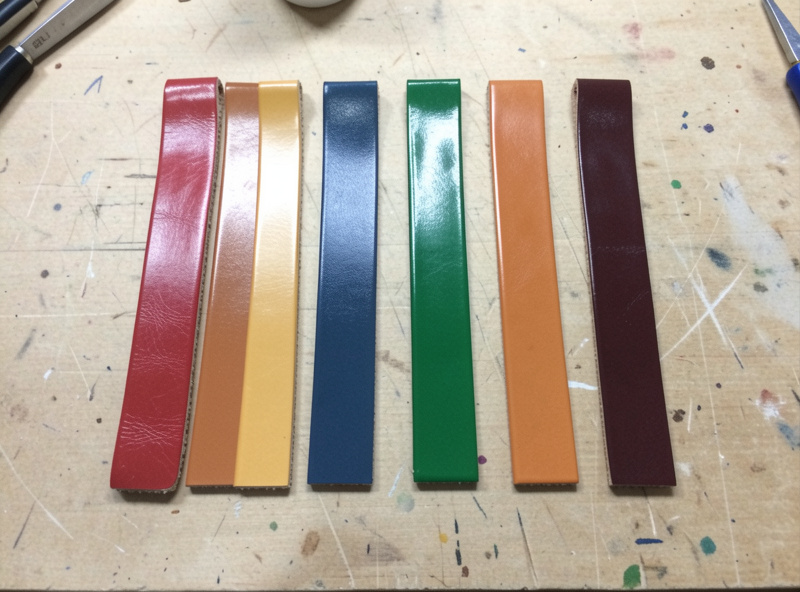
All three brands carry deep color ranges, but the decision that actually matters is whether you match the edge to the leather or contrast it on purpose. A black edge on black leather reads clean and invisible; a sharp contrasting edge — bright color against natural — becomes a deliberate design line. Both are valid, and the paint makes either easy because you are choosing pigment, not relying on the leather’s own tone.
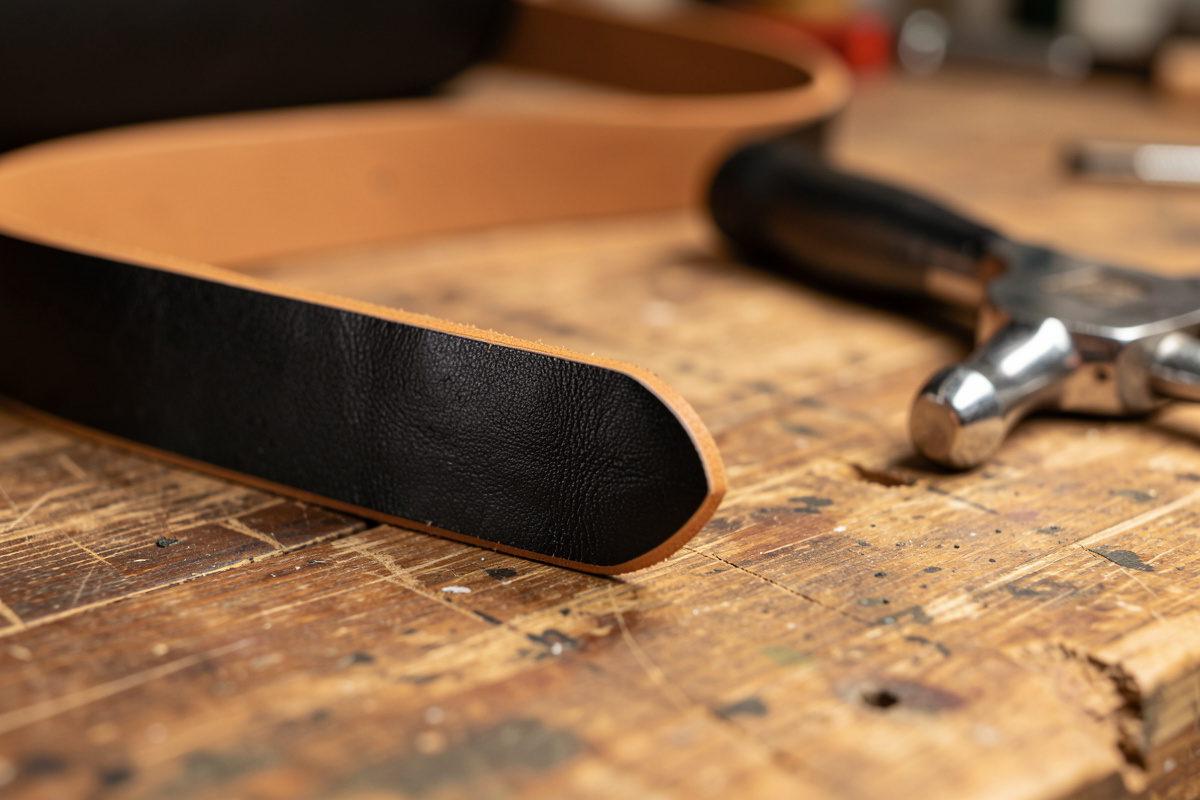
Where edge paint earns its keep is matching across a layered stack of mismatched leathers. A wallet built from a dark exterior and a pale lining shows two colors at the raw edge; one bead of edge paint unifies them into a single clean line that burnishing never could. I lean on that constantly for chrome-tan bag work where the layers never match. For matching a specific leather color, I buy the closest stock shade rather than mixing, since edge paint is harder to color-mix predictably than dye — getting a repeatable custom edge color across a batch is genuinely fiddly, so stock colors save grief.
How Durable Is a Painted Edge?
A properly applied and heat-set edge-paint coat is durable and flexible enough for daily-carry straps and wallets, but it can chip if knocked hard against a corner, exposing the raw edge underneath. That is the honest trade against a burnished edge, which cannot chip because there is no separate layer. For most goods the chip risk is low and the crisp colored line is worth it, especially on leather that was never going to burnish.
The brands trend similar on durability when applied right, with Uniters edging ahead on toughness by reputation in production use. The bigger durability variable is not the brand but the coats: a single thick coat chips far more readily than three thin heat-set ones, because the thin built-up film flexes as one bonded layer. So the durability question loops straight back to technique — thin coats, heat-set, on a clean sanded edge, in any of the three brands.
Edge Paint or Burnish Instead?
Use these edge paints for chrome-tan and layered edges that physically cannot burnish, and reach for Tokonole and a slicker on veg-tan where you want the natural polished look. The brand comparison only matters once you have decided paint is the right finish at all. I lay out that decision in full in my edge paint vs burnishing guide, and the whole edge sequence lives in the edge-finishing hub. Pick the finish first, then pick the paint.
Some links in this article are affiliate links — if you buy through them I may earn a small commission at no extra cost to you.
Frequently Asked Questions
What is the best leather edge paint?
There is no single best — Fenice, Giardini and Uniters are all water-based Italian edge paints that perform well. Fenice builds fast for hand work, Giardini gives fine control with thinner coats, and Uniters is tuned for durable production volume. Application technique matters more than the brand.
What is the difference between Fenice and Giardini edge paint?
Fenice is slightly thicker and builds a finished edge in fewer coats, which suits hand application. Giardini is thinner and more fluid, giving more control on fine edges and thinning easily for very precise work. Both are water-based and flexible.
Can you use edge paint on veg-tan leather?
Yes, though veg-tan usually burnishes to a natural polished edge without paint. Edge paint is mainly for chrome-tan and layered edges that cannot burnish, but you can paint veg-tan when you want a crisp contrasting colored edge instead of the natural look.
How many coats of edge paint do you need?
Two to four thin coats, heat-set and lightly sanded between each. Thin repeated coats always beat one thick coat, which cracks as it dries. The exact number depends on the paint and the color, but thin and patient is the rule for every brand.
Do you need to heat-set edge paint?
Heat-setting with a warm edge iron or hair dryer firms each coat and improves adhesion and gloss. It is not strictly mandatory but it noticeably improves durability and finish, especially on edges that will flex, so most makers heat-set every coat.
Related Guides
- Leather Edge Finishing: The Bevel-to-Burnish Guide
- Edge Paint vs Burnishing
- How to Sand Leather Edges
- How to Bevel Leather Edges