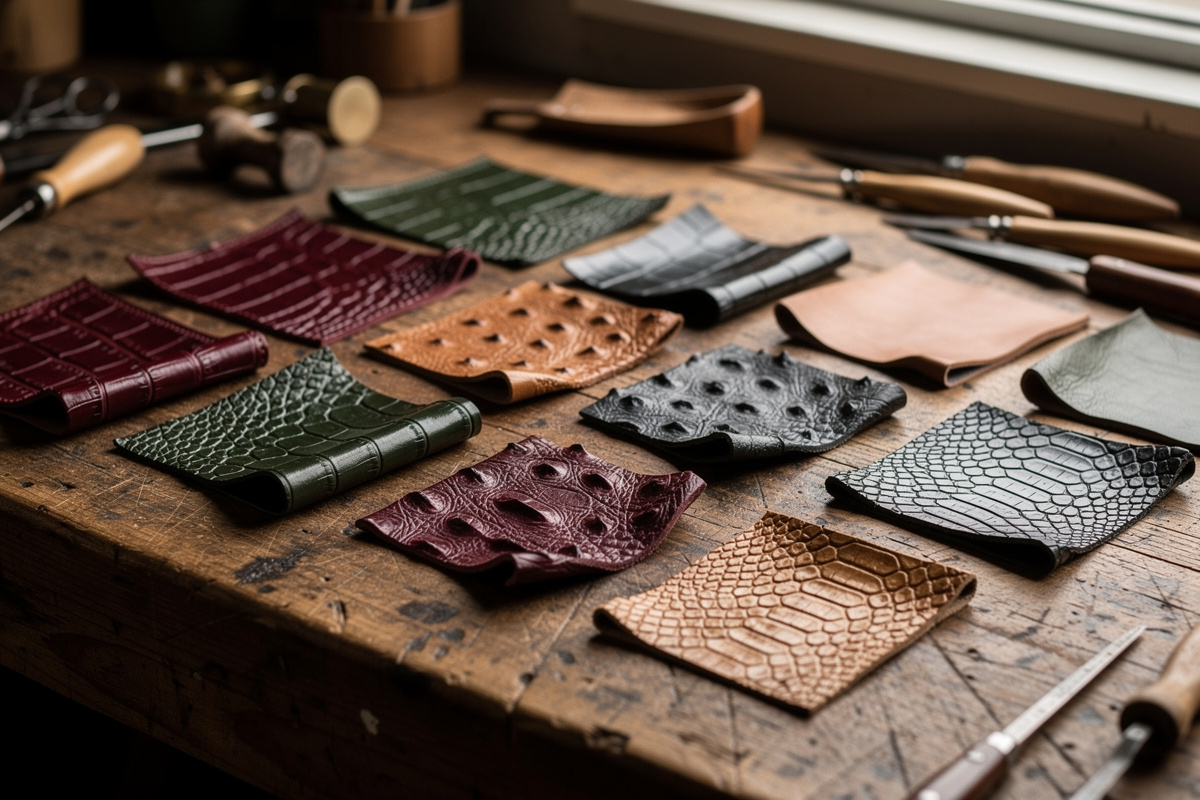
Exotic leathers are a different discipline from cattle hide, and the honest version of this guide tells you where my hands-on experience holds and where I am relaying…
Exotic leathers are a different discipline from cattle hide, and the honest version of this guide tells you where my hands-on experience holds and where I am relaying what dedicated exotic makers report. I have worked some exotics — fish leather, a little snake, and the more accessible scaled hides — but alligator, crocodile, ostrich and the CITES-regulated species are a specialist’s world with sourcing, legal, and technique demands a generalist hobbyist does not pretend to own. What I can give you straight is how these leathers actually behave under a knife and an awl, what makes each one special, and the genuinely important legal and sourcing realities you cannot skip.
This is an orientation to crafting with exotic leather: the main types, how they differ to work, the CITES side you must respect, and the techniques that change when you leave cowhide behind.
The legal reality first — CITES is not optional
Before any technique, the part beginners most often miss: many exotic species are protected under CITES (the Convention on International Trade in Endangered Species), and trading their leather across borders requires permits and proper documentation. Alligator, crocodile, many snakes and lizards, stingray and others fall under this. Legally sourced exotic leather comes with paperwork tracing it to a regulated, often farmed, supply; leather without that documentation can be illegal to import or sell, and “I bought it online” is not a defense.
I am not your legal advisor and rules differ by country and species, so the rule I follow and recommend: buy exotics only from established suppliers who can document legal, CITES-compliant sourcing, and confirm your own country’s import and sale rules before you order or sell anything made from a protected species. This is the single most important thing in exotic leatherwork, and it sits entirely outside the craft.
The main exotic leathers and how they work
Each exotic is its own material. Here is how the common ones actually behave at the bench, with my hedges flagged.
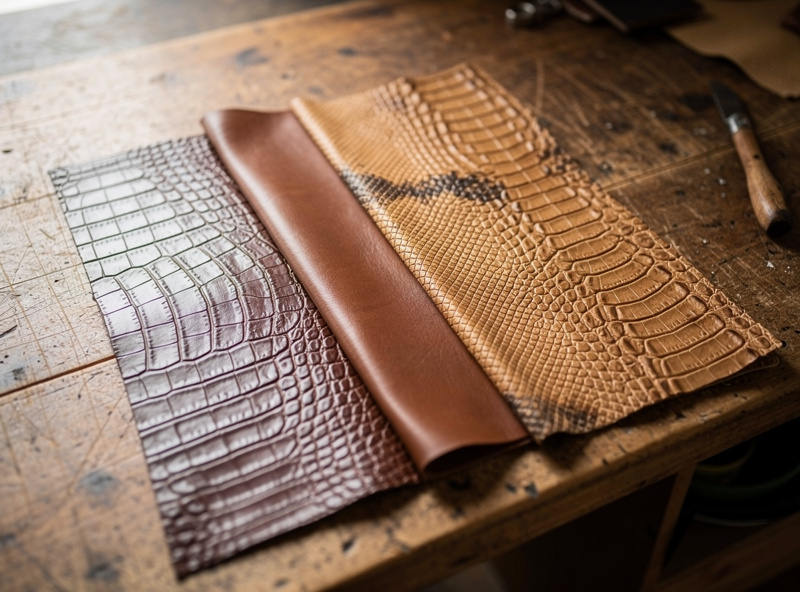
- Alligator and crocodile — the prestige exotics, prized for the tile-like scale pattern and the soft belly scales. Makers who specialize in them report that cutting to showcase the scale layout (and matching pattern across a piece) is most of the skill, and that the bony scales (osteoderms) on some sections must be worked around. This is specialist territory; I defer to dedicated croc makers on layout and finishing.
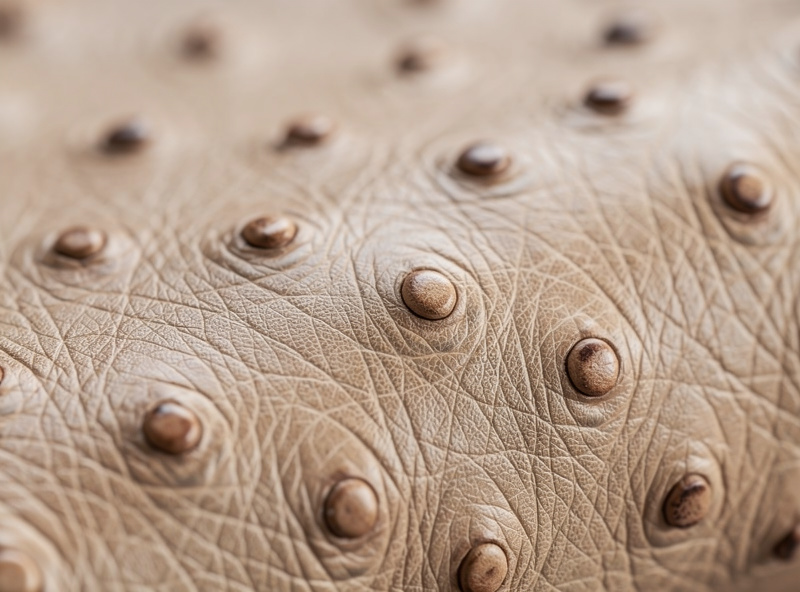
- Ostrich — instantly recognizable by the raised quill follicle bumps on the prime “crown” section. The non-bumpy leg leather looks completely different. Ostrich is supple and strong; the quill pattern only covers part of the hide, so layout matters and the prime area is small relative to the skin.
- Stingray (shagreen) — extraordinarily hard and abrasion-resistant because the surface is covered in bead-like calcified denticles, with a row of larger pale “pearls” down the spine. It blunts tools fast and is genuinely difficult to cut and sand; specialist makers use carbide and accept that ordinary leather tools will not last.
- Snake (python, etc.) — thin, scaly, and delicate, almost always backed or laminated onto a stronger leather or fabric because on its own it tears. The scales lift and catch, so glue and backing technique are central. This one I have actually worked, and the backing step is non-negotiable.
- Fish leather (salmon, perch, etc.) — the accessible exotic and an increasingly available by-product leather. Small panels, a beautiful scale pattern, surprisingly strong for the thickness, and no CITES issues for farmed food-fish species. This is where I tell beginners to start if they want the exotic look without the legal and cost barrier.
What changes when you work exotic
The techniques that shift the moment you leave cowhide:
- Tools dull faster. Scales and calcified surfaces (stingray especially) eat edges. Sharp, frequently stropped knives are not optional, and some exotics genuinely call for carbide.
- Backing and lining are common. Thin or fragile exotics (snake, some fish) get glued to a backing leather for strength, which changes your gluing, skiving and edge approach.
- Layout is a design decision. Scale pattern, the ostrich crown, the stingray spine pearl — where you place the pattern on the piece is half the craft, and you cut around the prime areas, which wastes more material than cowhide does.
- Edges are handled differently. Many exotics do not burnish like veg-tan; makers often turn edges (fold and stitch) or use edge paint rather than slicking a scaled edge.
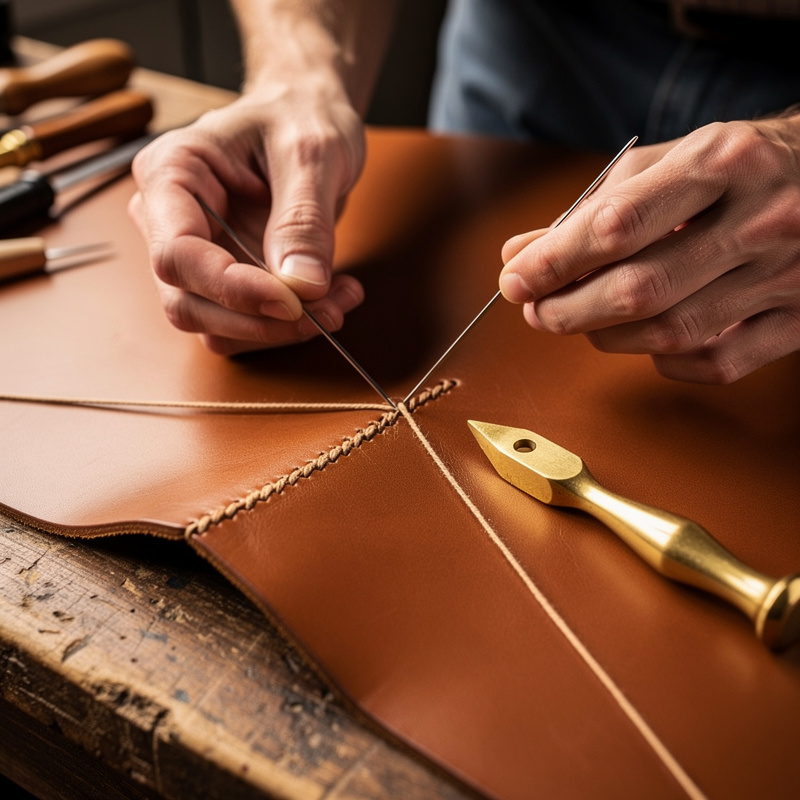
- Stitching avoids the scales. You plan stitch lines to run cleanly without splitting a raised scale, which constrains your layout further.
Buying exotic: cost, waste and grading
Exotics are priced and sold differently from cowhide, and going in blind is expensive. Most exotics are sold by the individual skin (a whole alligator, a single python, one ostrich hide) rather than by the square foot the way cattle leather often is, and the usable area is far smaller than the skin looks because you cut around the prime pattern. An ostrich skin is big but only the quill-bumped crown is the prized part; an alligator’s value is concentrated in the soft belly; a stingray’s pearl row is a single line you design around. So your effective yield — the area you can actually use for show panels — is a fraction of what you paid for, and you plan layout before you buy to make sure the skin you are ordering actually contains the pattern your project needs. Grading also matters: exotics are graded for scratches, healed bite marks, and scale damage, and a lower grade is fine for accents but not for a piece where one clean panel is on full display. I treat the first exotic skin I buy for any new species as tuition — I expect to waste more of it than I would a cowhide while I learn how its pattern lays out.
Where to start if you want the exotic look
If the appeal is the texture and you do not want to take on the legal and cost weight of true exotics, there is a sane ladder. Start with fish leather — legal, affordable, real exotic scale texture, and small panels that suit accents and inlays. Move to embossed cowhide that mimics croc or ostrich for practice pieces and to learn how the pattern reads in a design (just never sell embossed cowhide as exotic — that is fraud). Use exotics as accents — a snakeskin inlay on a veg-tan wallet, a fish-leather card pocket — before committing to a full exotic piece, which stretches a small, expensive skin much further and looks intentional.
That accent approach is how I use exotics in my own work: a small panel of something special set into a veg-tan body I am completely confident in, so the structure, stitching and edges are on home ground and the exotic is doing one striking job.
Gear for working scaled and fragile leathers
Exotic work leans on sharpness and good adhesion more than special kit.
Disclosure: LeatherCraftHaven is reader-supported. As an Amazon Associate I earn from qualifying purchases made through links in this article, at no extra cost to you. I only point to gear I actually use or would buy for my own bench.
The two things that matter most are a sharp, replaceable-blade leather craft knife (so you can swap a dull blade the instant a scaled hide blunts it) and a strong contact cement for backing fragile exotics to a stronger leather. If you want to start on the accessible end, a piece of fish leather gives you genuine exotic scale texture with no CITES complications to navigate.
Where exotic leather fits in the bigger picture
Exotics are the specialist corner of the leather world, sitting apart from the everyday cattle hides most projects use. For the leathers you will actually build the structure from, my chrome tan vs veg tan guide and the types of leather overview cover the workhorses, and if you are setting an exotic accent into a wallet, the best leather for wallets guide helps you choose the body leather to build it on.
Frequently Asked Questions
Is it legal to craft with exotic leather?
It depends entirely on the species and your country. Many exotics — alligator, crocodile, many snakes and lizards, stingray — are protected under CITES, so trading their leather across borders requires permits and documentation tracing it to a legal, often farmed, source. Buy only from suppliers who can document CITES-compliant sourcing and confirm your own country’s import and sale rules before ordering or selling.
What is the easiest exotic leather for beginners?
Fish leather, by a wide margin. It is affordable, comes from farmed food-fish so there are no CITES complications, has a genuine exotic scale texture, and comes in small panels that suit accents and inlays. It is the natural starting point before taking on the cost, legal weight and tool demands of true exotics like croc or stingray.
Why does snakeskin need backing?
Snake leather is thin and the scales lift and catch, so on its own it tears easily. Gluing it to a stronger backing leather or fabric gives it the strength to be cut, stitched and used, and it changes your gluing, skiving and edge technique. Backing is essentially non-negotiable for snake and several other thin exotics.
Why is stingray leather so hard to work?
Its surface is covered in bead-like calcified denticles — essentially tiny mineral beads — with a row of larger pearls down the spine. That makes it extraordinarily abrasion-resistant but also blunts ordinary leather tools fast and is genuinely difficult to cut and sand. Specialist makers reach for carbide tooling rather than standard steel blades.
Can I use embossed cowhide instead of real exotic?
Yes, for practice and for the look — embossed cowhide that mimics croc or ostrich is a good way to learn how the pattern reads in a design without the cost or legal weight. The one rule: never sell embossed cowhide as genuine exotic. Representing it as real croc or ostrich is fraud; call it embossed cowhide.
Related Guides
- Types of Leather: Tannage, Grade and Weight
- Chrome Tan vs Veg Tan Leather
- Shell Cordovan Leather Guide
- Best Leather for Wallets