To dye a large leather project evenly, thin the dye so it dries slower and self-levels, work fast along the longest dimension keeping a constant wet edge, and…
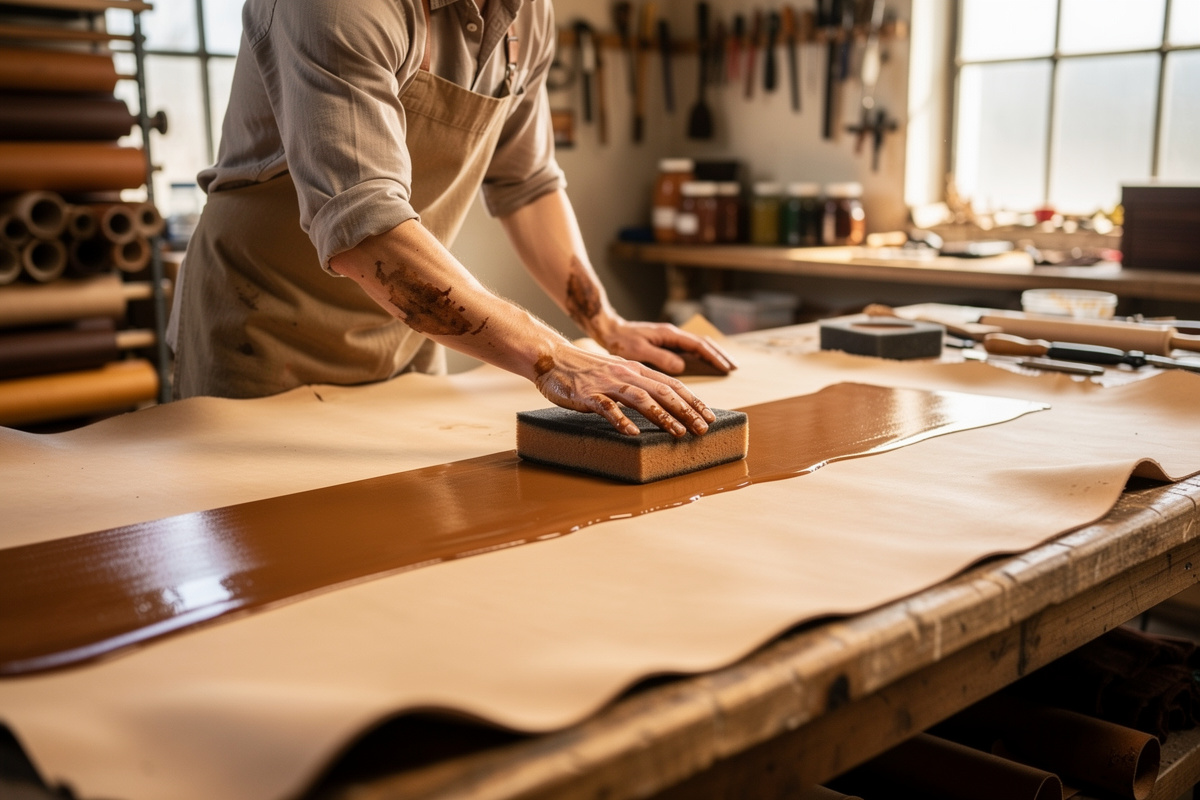
To dye a large leather project evenly, thin the dye so it dries slower and self-levels, work fast along the longest dimension keeping a constant wet edge, and use a wide applicator — a big sponge, a wool block, or an airbrush — or dip the piece if it fits. The enemy on large pieces is the leather drying before you finish a coat, which prints as a hard lap line. Mix enough dye for the whole piece in one batch before you start.
Dyeing a wallet is forgiving; dyeing a bag panel, a full belt blank, or a half-hide is where people discover that their reliable technique suddenly leaves tide lines and blotches. The reason is simple physics — you cannot cover a big surface before its leading edge starts to dry, and every place a dry edge meets new wet dye becomes a streak. Everything about dyeing large is really about beating that clock. I have dyed plenty of big panels and straps, and these are the strategies that actually hold up at scale. It sits under the complete leather dyeing guide, and builds on the fundamentals in how to dye leather without streaks.
The Real Problem: Losing the Wet Edge
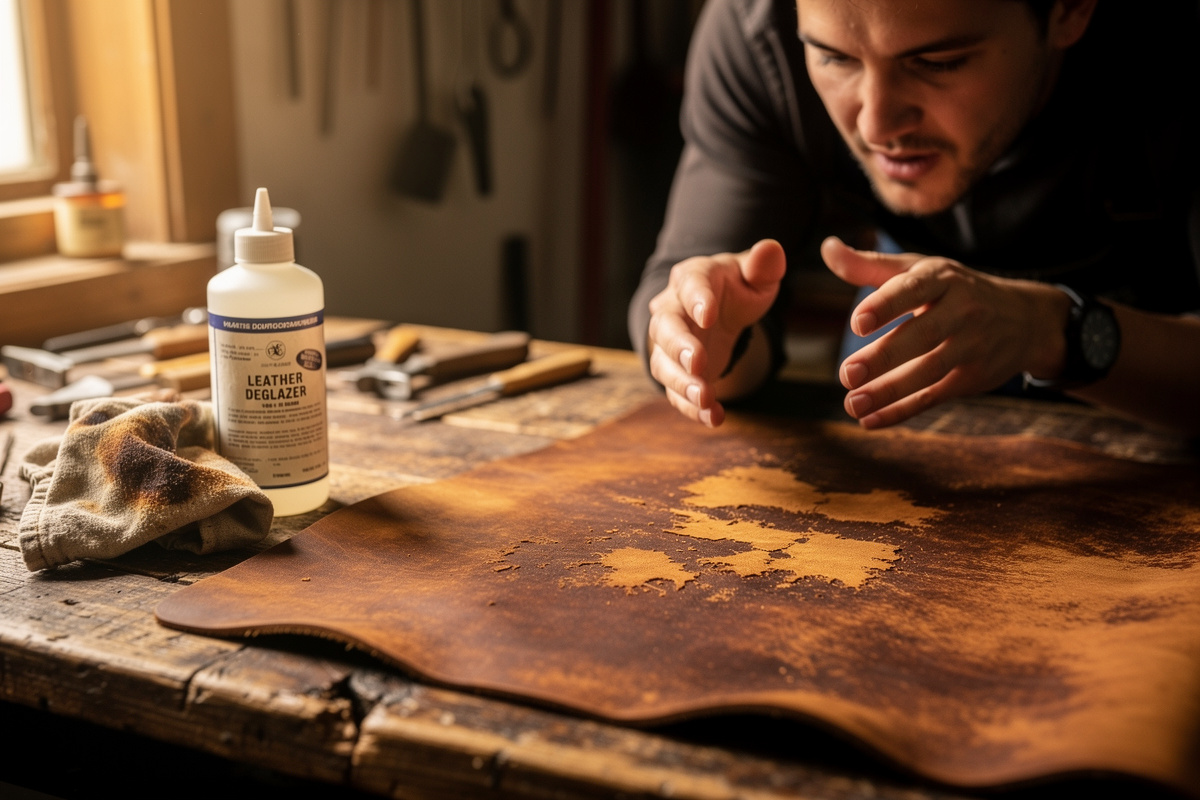
On a large piece the core challenge is keeping a wet edge across the whole surface, because dye that dries before you blend the next pass into it leaves a permanent lap line. The bigger the panel, the less time you have, so the entire strategy for large projects is buying more working time and covering more area per stroke.
A wet edge is the band of still-damp dye at the boundary of your last pass. As long as your next stroke overlaps into wet dye, the two blend seamlessly. The moment that edge dries, the overlap shows as a darker line forever. On a small piece you cover the whole thing before anything dries, so you never think about it. Scale up and the leading edge can dry in under a minute, especially with fast alcohol dye, so by the time you stroke your way across a big panel the start has set and your return pass collides with a dry edge. Every large-dyeing tactic that follows — thinning, wide applicators, dipping, casing, working fast — exists to either slow that drying or cover the area before it can happen.
Thin the Dye and Case the Leather
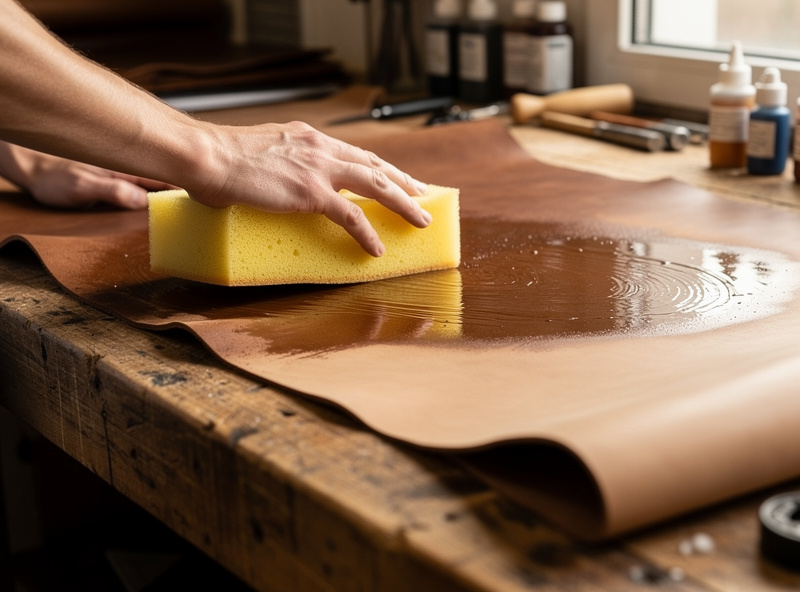
Thin the dye with its matching reducer so it dries slower, self-levels, and deposits less color per coat — then build the color in two or three even coats instead of one. Lightly casing the leather first, wiping it evenly damp with water, also slows absorption and helps the dye draw in uniformly across the whole surface.
Diluted dye is the single biggest help on a large piece. A dye cut roughly half-and-half with reducer flows out more evenly, gives you noticeably more working time before it sets, and because each coat lays down less color, any small unevenness averages out over multiple light coats rather than locking in on one heavy pass. Casing helps the same way from the leather’s side: a uniformly damp panel absorbs dye more slowly and evenly than a bone-dry one, which has thirsty and slick spots that grab color unevenly. Wipe the whole panel with a damp (not soaked) sponge and let the surface sheen go matte before dyeing. The combination — thinned dye onto cased leather — is how you turn a panel that would streak in seconds into one you can actually work across evenly. Building color in coats also means you must mix enough dye up front, because a second batch will not match; the dye mixing chart covers batching a repeatable color.
Use a Wide Applicator or Dip It
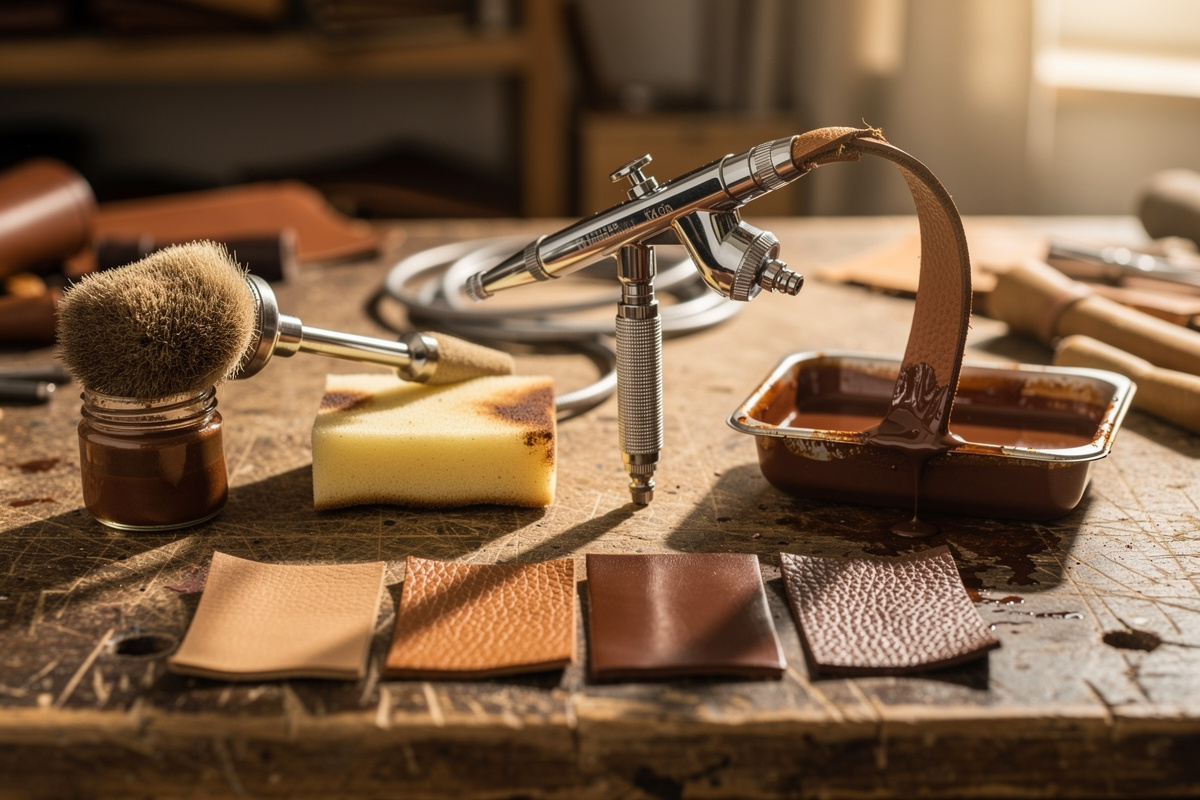
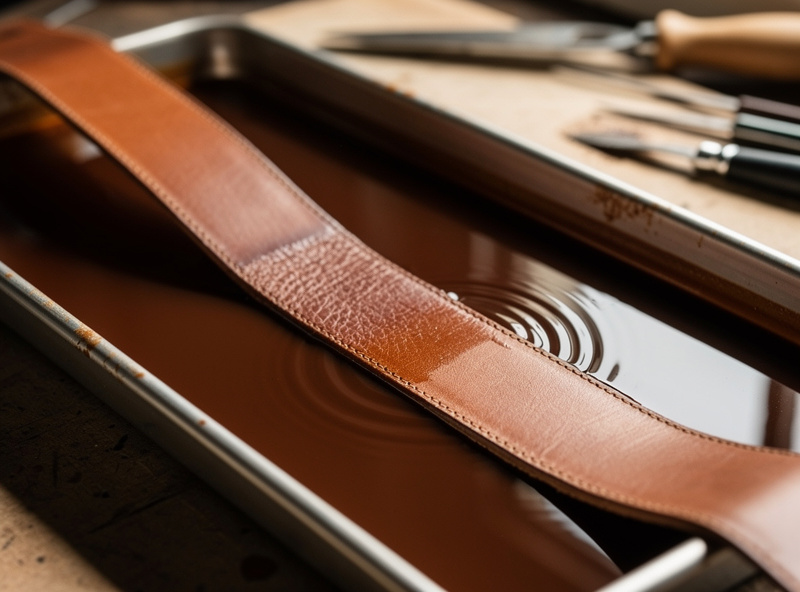
Cover more area per stroke with a wide applicator — a large dense sponge, a wool-covered block, or an airbrush — so you can dye the whole panel before any of it dries. For belts, straps, and small-enough parts, dip-dyeing sidesteps the wet-edge problem entirely by wetting every surface at once.
A small dauber loses the race on a big panel because its narrow face means dozens of overlapping passes, and the early ones dry before the later ones land. A large sponge or a wool block lays down a wide even band and covers the surface in a handful of strokes, well inside the drying window. Pull long continuous passes along the longest dimension of the piece, never stopping mid-stroke, and overlap each pass generously into the wet edge of the last. For the biggest, most demanding work — large even fields and fades — an airbrush is the professional answer because it builds invisible thin coats and never has a wet edge to lose, though it needs a respirator and ventilation. And whenever the piece physically fits in a tray, dipping is the great equalizer: full immersion dyes a belt or strap perfectly evenly with zero technique anxiety. These methods are compared in depth in the dye application methods guide.
Work Order: How to Move Across a Big Panel
Plan the whole panel before you start, mix more dye than you think you need, then dye in long passes along the longest dimension without stopping, immediately crossing direction for the second coat. Move with intent — speed is your friend here — and never lift out of a pass to fix a spot, because the pause is what creates the lap line.
Set yourself up to never stop once you start: dye mixed and within reach, applicator loaded, the whole piece accessible without reaching awkwardly across wet leather. Dye the long way so you make the fewest passes, each overlapping the last by a third into its wet edge. Get the whole surface wetted with the first coat as fast as you cleanly can, then cross-hatch with a perpendicular second coat to even any directional streaking, and a third light coat if the depth needs it. Resist the urge to dab at a light spot mid-coat; you will fix far more in the next full crossed coat than by spot-touching, which almost always leaves a darker mark. For very large or awkward pieces, a second pair of hands genuinely helps — one keeps the edge wet while the other reloads. Two people and a big sponge can dye a panel that would defeat one person with a dauber.
Drying and Sealing a Large Piece
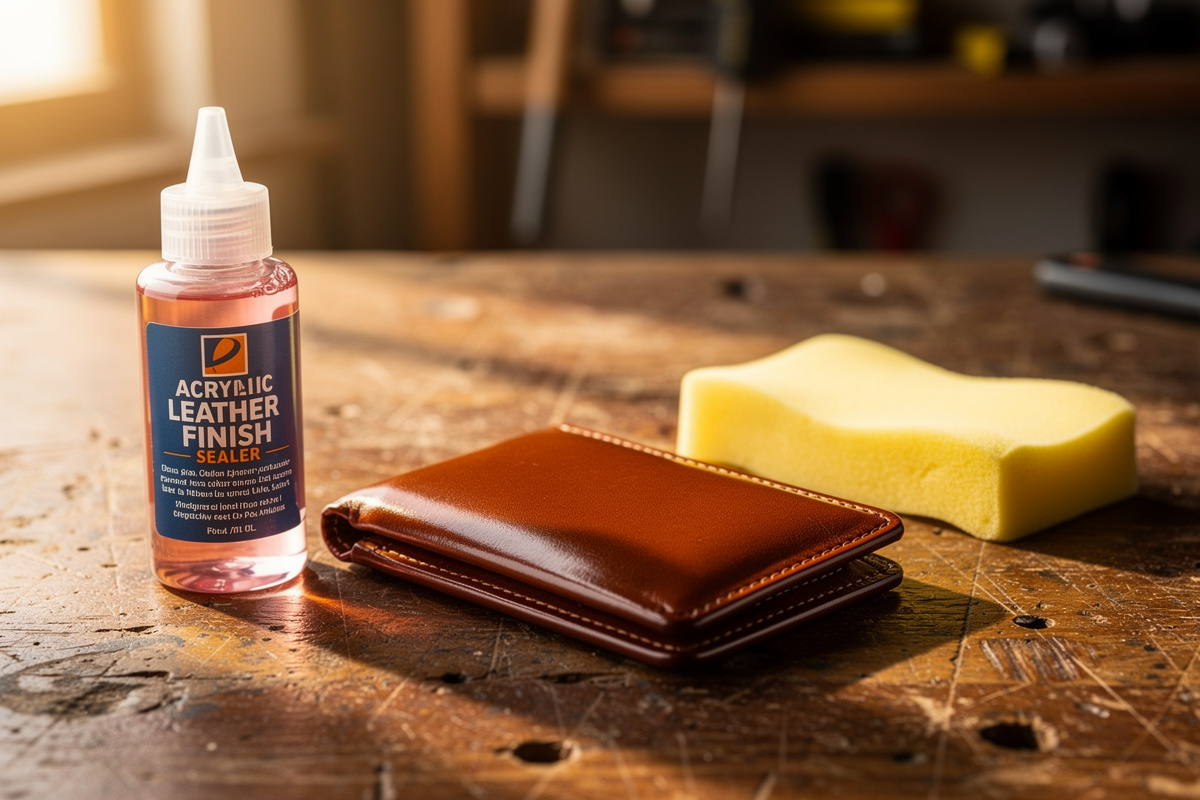
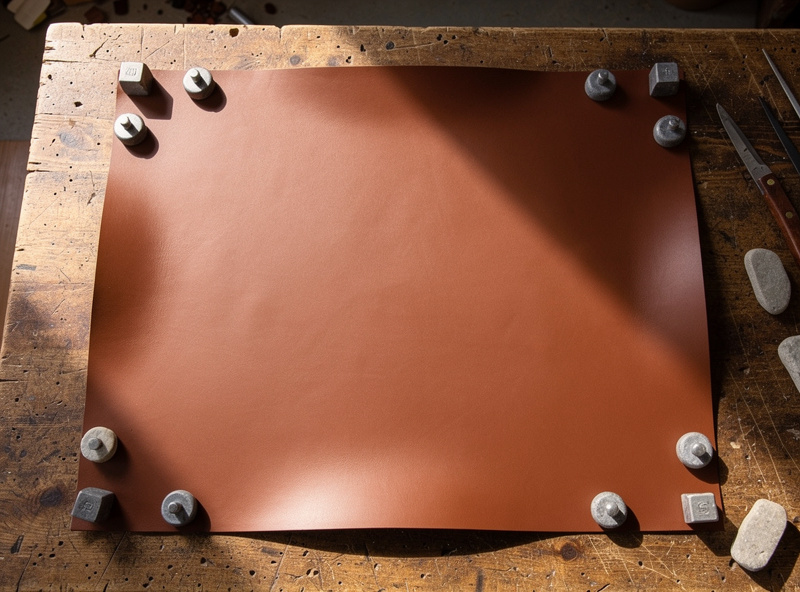
Lay large dyed pieces flat to dry and weight the corners, because big panels curl hard as they dry. Once fully cured and buffed, seal with thinned resolene applied by large sponge or airbrush in thin coats — the same wet-edge discipline applies to the finish as to the dye.
A big wet panel will cup and curl as the moisture leaves, so dry it flat with light weights on the corners, or hang a strap straight with a little tension. Give it a full cure — overnight for oil dye — then buff off loose pigment before sealing. Sealing a large piece has the same lap-line risk as dyeing it, so thin the resolene 50/50, use a wide sponge or airbrush, and keep that wet edge moving across the panel just as you did with the dye. The full sealing method, including the fixes for cloudy or streaky coats at scale, is in the resolene finish guide, and once the faces are done, the edges get the bevel-to-burnish treatment from the edge finishing guide so the whole large piece reads finished.
Large-Project Dyeing Strategies Compared
Match the strategy to the piece. Here is how the main approaches stack up for big work.
| Strategy | Best for | Evenness | Working time | Notes |
|---|---|---|---|---|
| Dip-dyeing | Belts, straps, parts that fit a tray | Excellent | N/A (instant) | Uses lots of dye; goes dark |
| Large sponge / wool block | Bag panels, big flat blanks | Very good | Short, so move fast | Wide band per pass; thin the dye |
| Airbrush | Largest panels, fades, even fields | Excellent | High (thin coats) | Needs respirator + ventilation |
| Thinned dye + casing | Any large surface | Improves all methods | Extends it | Slows drying, builds in coats |
| Two people | Oversized or awkward pieces | Very good | Effectively longer | One keeps the edge wet |
Safety on Big Pours
Large pieces mean large pours of solvent dye — bigger open trays, more sponge drips, more airborne solvent if you airbrush. Work in a well-ventilated space, run a fan, and wear nitrile gloves throughout, since you will be handling wet dye for longer than on a small piece. If you dip, set the tray somewhere stable where a knock cannot spill it, and if you airbrush a big panel, the respirator and ventilation are mandatory because you are atomizing more dye over a longer session. It is the same care as any solvent job, just scaled up with the project.
Disclosure: LeatherCraftHaven is reader-supported. As an Amazon Associate I earn from qualifying purchases made through links in this article, at no extra cost to you. I only point to gear I actually use or would buy for my own bench.
Gear That Makes Large Dyeing Manageable
Large dyeing is less about special products and more about wide applicators, plenty of dye, and something to thin it. Get those right and the job stops fighting you.
Stock up on large dense fine-pore sponges to cover area fast, and buy your leather dye in a larger bottle so you never run short mid-panel. Keep the matching dye reducer on hand to thin for working time, and for the most even big-panel results an airbrush and compressor kit is the upgrade. To choose a dye that behaves well on large surfaces, the best leather dye for veg-tan roundup ranks the bottles, and the dye types comparison explains why oil dye’s slow carrier is the friendliest for big work.
Frequently Asked Questions
How do you dye a large piece of leather evenly?
Thin the dye so it dries slower and self-levels, lightly case the leather first, then work fast along the longest dimension with a wide applicator, keeping a constant wet edge. Build color in two or three crossed coats, and dip the piece instead if it fits in a tray.
Why does my leather streak when I dye big pieces?
Because the leading edge of the dye dries before you finish the coat, and the overlap where new wet dye meets dry dye prints as a lap line. The bigger the surface, the faster you lose the wet edge. Thin the dye, use a wide applicator, and move quickly.
Should you dip-dye large leather projects?
If the piece fits in a tray, dipping is the most even option because full immersion wets every surface at once with no wet edge to lose. It works perfectly for belts and straps but uses a lot of dye and drives the color deep and dark, with little depth control.
Does thinning leather dye help on large projects?
Yes, significantly. Thinned dye dries slower so you keep a wet edge longer, flows out more evenly, and deposits less color per coat so unevenness averages out over multiple light coats. Thin with the dye’s matching reducer and build the color gradually.
How do you keep large dyed leather from curling?
Lay the piece flat to dry and weight the corners, since big panels cup as moisture leaves. Dry straps under light tension. Let it cure fully before buffing and sealing, because a piece sealed while still damp can haze and hold its curl.
What applicator is best for dyeing large leather?
A large dense sponge or a wool-covered block covers a wide even band per pass so you finish before the leather dries. For the biggest panels and fades an airbrush is best, building invisible thin coats with no wet edge to lose, though it needs a respirator and ventilation.
How much dye do I need for a large project?
Mix more than you think you need and do it in one batch before you start, because running out mid-panel forces a pause that creates a lap line, and a second batch will not color-match. Dipping in particular needs enough dye to fully submerge the piece.
Related Articles
- Leather Dyeing: The Complete Veg-Tan Guide
- How to Dye Leather Without Streaks or Blotches
- Dye Application: Dip vs Sponge vs Airbrush
- Resolene Leather Finish: Seal Dye Without Streaks
- Leather Dye Color Mixing Chart