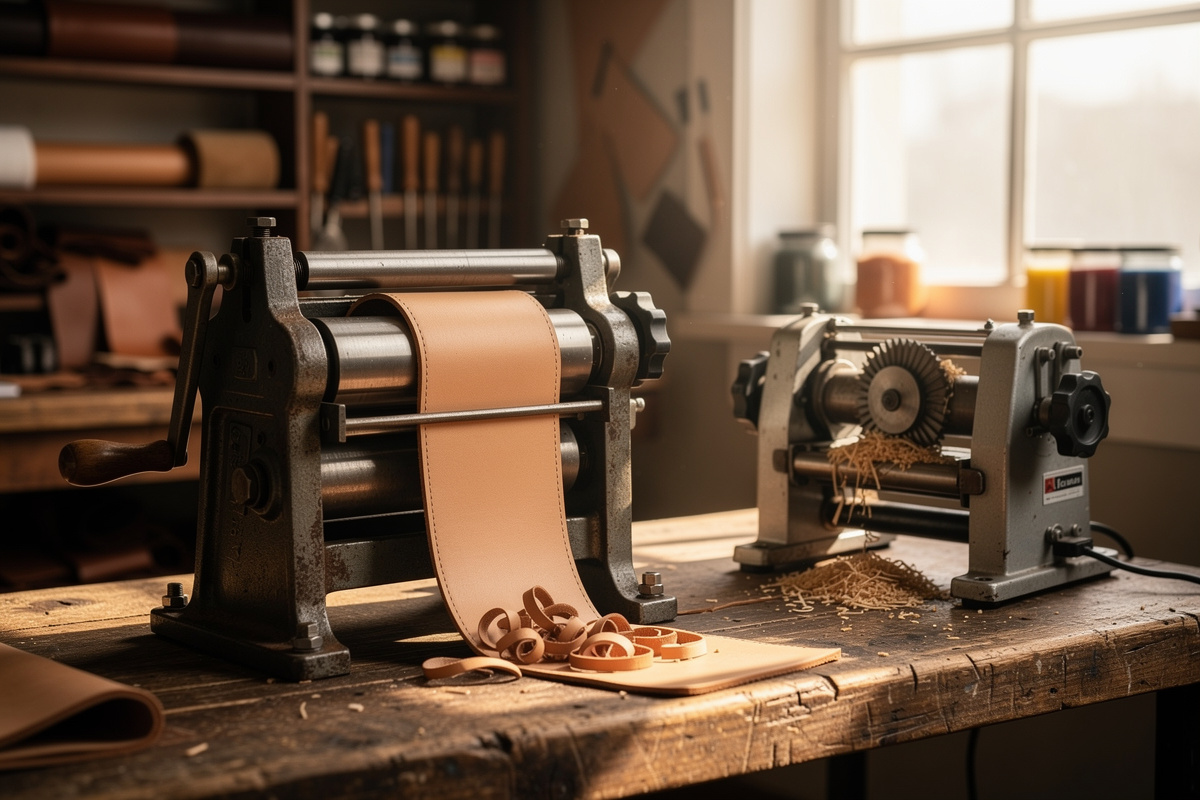
A leather splitter and a bell skiver machine both thin leather, but they do opposite jobs: a splitter shaves a strip to a uniform thickness across its whole…
A leather splitter and a bell skiver machine both thin leather, but they do opposite jobs: a splitter shaves a strip to a uniform thickness across its whole width, while a bell skiver feathers a margin along an edge at an angle. On my bench the splitter turns variable 8 oz strap stock into dead-even 6 oz blanks; the bell skiver thins wallet edges for folding at production speed. Pick by the job, not the price tag.
These are tier-three machines — you buy them when hand tools stop keeping up with volume, not before. Below is exactly what each machine does, where the splitter and skiver part ways, the thickness each one handles, how to set them up so they shave clean instead of dragging, and the honest point where they start paying back versus a hand skiving knife.
Disclosure: LeatherCraftHaven is reader-supported. As an Amazon Associate I earn from qualifying purchases made through links in this article, at no extra cost to you. I only point to gear I actually use or would buy for my own bench.
Splitter vs Bell Skiver: Two Different Jobs
A leather splitter reduces a piece to a uniform thickness across its full width — feed an 8 oz strap through and it comes out a consistent 6 oz from edge to edge, with the excess shaved off the flesh side. A bell skiver, by contrast, thins only a margin along an edge to a tapered feather, driven by a spinning bell-shaped blade. The splitter sets whole-piece thickness; the skiver feathers edges for folding and lapping.
That distinction decides which you need. If you make belts and straps and want every blank the same weight, you want a splitter. If you make wallets and bags and want fast, even edge-feathering for turned edges, you want a bell skiver. Most makers reach the splitter first because matched-thickness strap stock is the more common bottleneck, and because a hand skiving knife already covers occasional edge work until volume justifies a powered skiver.
Leather Splitter Types and Thickness Range
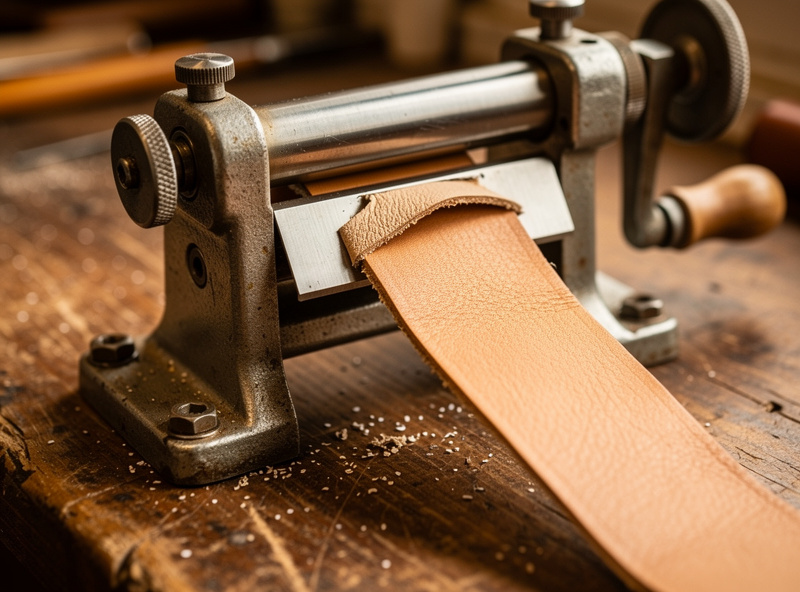
Splitters scale with how thick and wide a piece they handle. An entry-level Tandy-class hand splitter handles up to about 6 oz across a narrow width — fine for straps and wallet backs. A mid-range Weaver-class splitter handles up to roughly 12 oz at wider widths. Production-grade splitters take 20 oz at full width. Prices run from about $150 for the entry hand splitter to $800 for a heavy bench unit, matching the tiers in my three-tier tools guide.
Hand splitters are the common workshop type: a fixed razor blade and an adjustable roller or bar set the gap, and you draw the leather through by hand or crank. The blade must be scary sharp and the gap set evenly across its width, or the split wanders thick-to-thin. Width is the real limit — a 6-inch splitter cannot split an 8-inch panel in one pass, so match the splitter width to your widest common strap. A bench leather splitter is the machine that ends the frustration of buying hide at one weight and needing another.
| Machine | Job | Max Thickness | Price Range | Best For |
|---|---|---|---|---|
| Hand splitter (entry/Tandy-class) | Uniform thickness, narrow | Up to ~6 oz | $150-250 | Straps, wallet backs |
| Bench splitter (Weaver-class) | Uniform thickness, wider | Up to ~12 oz | $350-800 | Belts, bag panels |
| Production splitter | Uniform thickness, full width | Up to ~20 oz | $800+ | High-volume strap shops |
| Bell skiver machine | Edge feathering, angled | Edge margin only | $400-1500 | Wallet/bag edge production |
| Hand skiving knife (reference) | Manual edge or spot thinning | Any (by hand) | $20-35 | Hobby, one-off folds |
The bottom row is the baseline: a hand skiving knife does everything these machines do, just slower and one piece at a time. The machines buy speed and repeatability, not capability — which is why they only make sense at volume.
How a Bell Skiver Machine Works
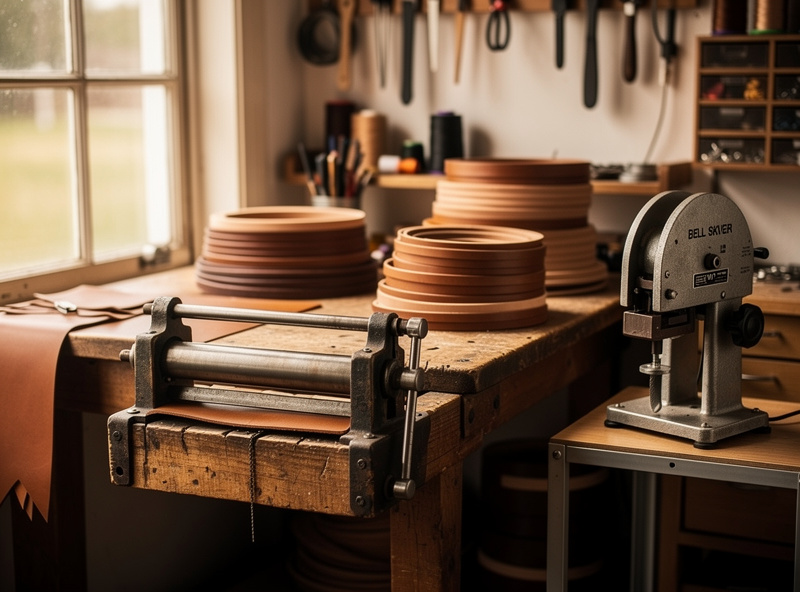
A bell skiver runs a spinning bell-shaped blade against a feed wheel and presser foot; you guide the leather edge into it and it shaves a tapered feather at a depth and angle you set. The blade is kept sharp by a built-in sharpening stone that rides against the bell. Depth, feed pressure, and bell angle all adjust, and dialing them in for a given leather weight is the real skill — it is closer to running a sewing machine than swinging a knife.
The payoff is consistency at speed: every wallet edge gets the exact same feather, every time, far faster than a hand knife. The cost is the learning curve and setup time, so a bell skiver only earns its place when you feather edges in volume — the same threshold as a walking-foot sewing machine. For occasional folds, a hand knife on a marble slab still wins on setup time. A bell skiver machine sits alongside the clicker press and sewing machine in the production-tooling tier covered in the clicker press and dies guide.
Setting Up for a Clean Split or Skive
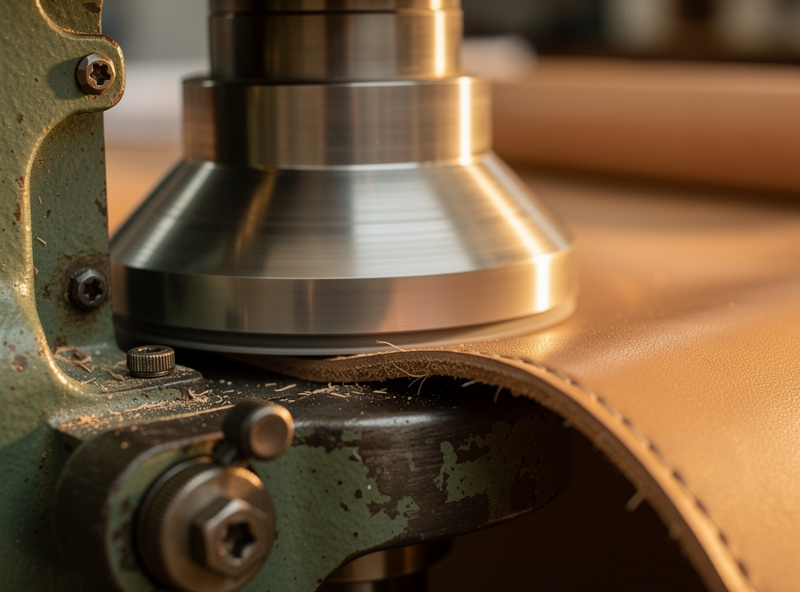
The blade is everything on both machines. A splitter or bell skiver shaves clean only with a razor edge; the moment it dulls it drags, compresses, and produces an uneven result. Hone the splitter blade on a fine stone and strop it the same way you maintain any flat single-bevel edge, and keep the bell skiver’s built-in stone engaged. The full edge-maintenance routine is in my guide to sharpening leather tools.
Set the splitter gap with a scrap first and creep up on the target thickness — take a test pass, measure, adjust, repeat — rather than guessing and ruining a strap. Feed at a steady, even speed; jerky pulls leave thickness ripples. Firm veg-tan splits more predictably than soft chrome-tan, which can stretch and grab, so split temper-firm stock when you can. Knowing your starting and target weights matters, which is where the oz logic in my leather tannage and weight guide pays off — you split to move a hide between weight classes on purpose. A replacement splitter blade is worth keeping on hand, since a fresh blade is the fastest fix for a splitter that suddenly drags.
Is a Splitter or Skiver Machine Worth It?
Both machines pay back at production volume, not hobby volume — roughly 10+ matched-thickness pieces or feathered edges per week is the rough break-even, the same tier as a sewing machine or clicker press. Below that, a hand skiving knife and careful hide selection cover everything for a fraction of the cost and zero setup time. The machines buy you speed and dead-even repeatability once you are doing the same operation over and over.
Buy the splitter first if your bottleneck is inconsistent strap thickness; buy the bell skiver first if it is slow edge-feathering on wallets and bags. Before either, make sure you have proven, recurring demand — the production-tier rule from the tools buy-in guide applies: 30+ projects a year, six months of order history, and budget that may not return in year one. Most makers run a hand knife happily for years; the machines are an upgrade you grow into, not a starting purchase. If you mainly build wallets, dial in your leather first with the best leather for wallets guide before chasing a splitter.
Frequently Asked Questions
What is the difference between a leather splitter and a skiver?
A splitter shaves a piece to a uniform thickness across its whole width, turning thick stock into even, thinner blanks. A bell skiver feathers only a margin along an edge to a tapered angle. The splitter sets whole-piece thickness; the skiver thins edges for folding and lapping.
How thick of leather can a splitter handle?
It depends on the class. An entry-level Tandy-style hand splitter handles up to about 6 oz, a mid-range Weaver-class bench splitter up to roughly 12 oz, and a production splitter up to about 20 oz at full width. Width is also a limit, so match the splitter to your widest strap.
How much does a leather splitter cost?
Hand splitters start around 150 dollars for an entry Tandy-class unit and run up to about 800 dollars for a wider, heavier bench splitter. Bell skiver machines run roughly 400 to 1500 dollars. Both are production-tier purchases that only pay back at consistent repeat volume.
Do I need a leather splitter machine?
Not for hobby work. A splitter pays back at roughly 10 plus matched-thickness pieces per week, the same tier as a sewing machine. Below that, a hand skiving knife and careful hide selection cover everything for far less money and no setup time. Most makers use a hand knife for years.
Why is my leather splitter dragging or splitting unevenly?
The blade is dull or the gap is set unevenly across its width. Hone and strop the blade to a razor edge, then set the gap on a scrap and creep up on the target thickness with test passes. Feed at a steady, even speed, since jerky pulls leave thickness ripples.
How does a bell skiver machine work?
A bell skiver spins a bell-shaped blade against a feed wheel and presser foot, shaving a tapered feather along a leather edge at a depth and angle you set. A built-in stone keeps the bell sharp. Dialing in depth, feed pressure, and angle for each leather weight is the main skill.
Can I split chrome-tanned leather?
Yes, but it is harder than veg-tan because chrome-tan is softer and can stretch and grab the blade, giving an uneven split. Split temper-firm stock when you can, keep the blade razor sharp, and feed slowly and evenly. Firm veg-tan splits far more predictably.
Related Articles
- Leatherworking Tools Guide: Three Tiers of Buy-In
- Leather Skiving Knife Guide: Types, Use and Sharpening
- Leather Clicker Press and Dies Explained
- How to Sharpen Leather Tools
- Types of Leather: Tannage, Grade, and Weight