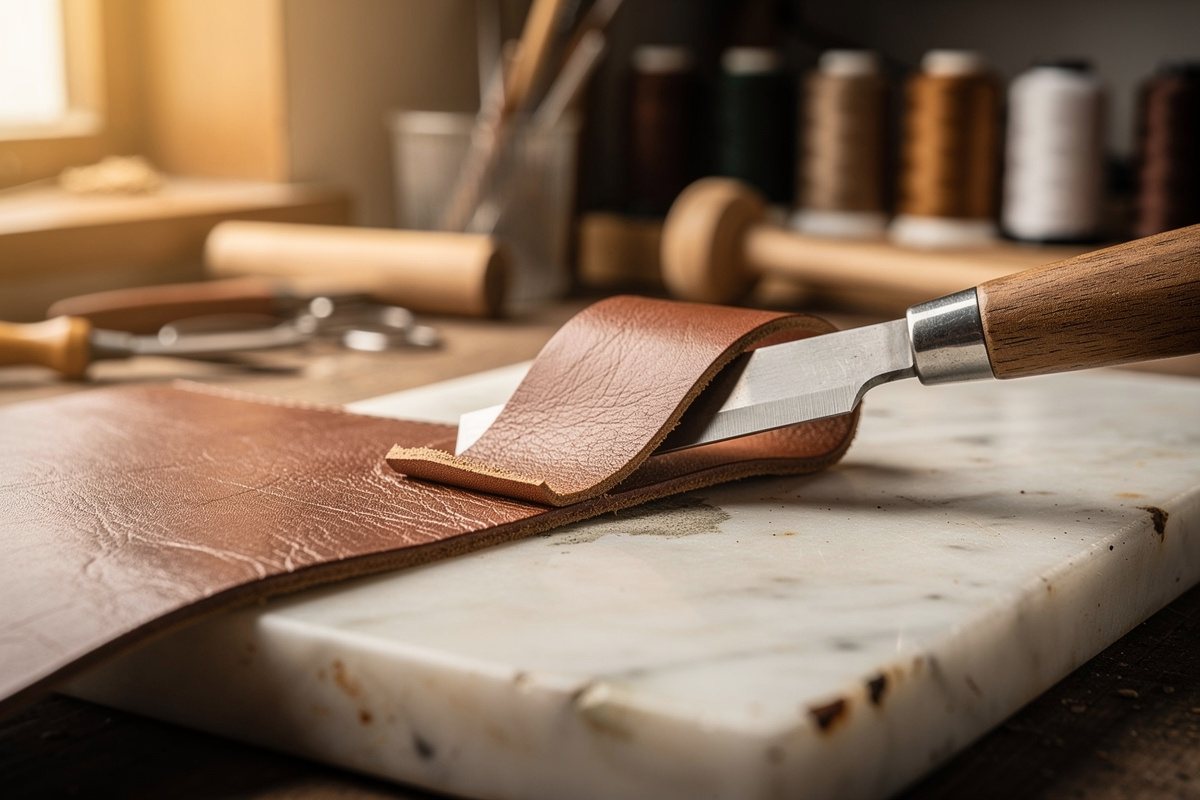
A leather skiving knife is a flat, single-bevel blade used to thin leather — shaving the flesh side down so folded edges, overlapped seams, and turned-in linings sit…
A leather skiving knife is a flat, single-bevel blade used to thin leather — shaving the flesh side down so folded edges, overlapped seams, and turned-in linings sit flat instead of bulking up. The single bevel rides flat against the leather, and on my bench a properly stropped Japanese knife takes a 4 oz wallet edge down to 1 oz in three passes without tearing a fiber.
Skiving is the skill that separates a wallet that closes flat from one that wedges open at the fold. Below is every knife type I keep on the wall, how each one cuts, how to sharpen the one tool that punishes a dull edge harder than any other, and the technique that finally made my skive lines stop diving through the grain side.
Disclosure: LeatherCraftHaven is reader-supported. As an Amazon Associate I earn from qualifying purchases made through links in this article, at no extra cost to you. I only point to gear I actually use or would buy for my own bench.
What a Skiving Knife Actually Does
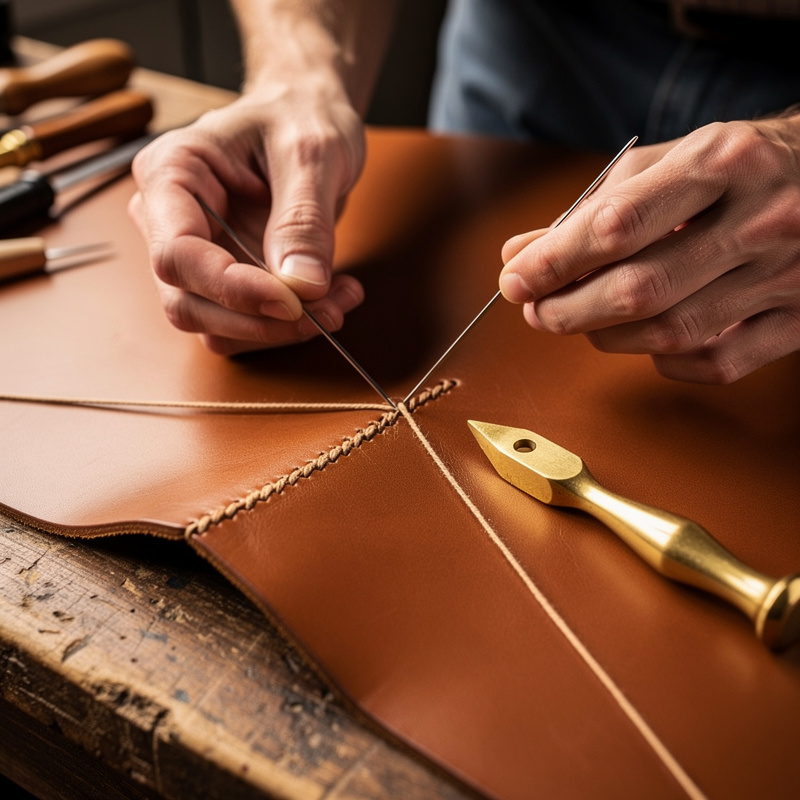
A skiving knife thins leather by shaving material off the flesh side at a shallow angle. You skive to reduce bulk where leather folds back on itself (wallet edges, turned bag tops), where two pieces overlap at a seam, or to feather a whole edge so a glued lap disappears. It is subtractive thickness control — taking 5 oz down to 2 oz exactly where the project needs it.
The reason it matters: leather does not compress like fabric. Fold a 4 oz strip and the bend is now 8 oz of stacked material that will not lie flat and will crack the grain on a tight radius. Skive the fold zone to 1.5–2 oz first and it turns cleanly. Veg-tan skives predictably because it is firm and holds the cut; chrome-tan is stretchier and grabs the blade, so I freeze-firm thin chrome-tan offcuts or back them with masking tape before skiving. This is the same weight logic covered in my guide to leather tannage, grade, and weight — you skive to move a piece between weight classes locally.
The Skiving Knife Types I Keep on the Wall
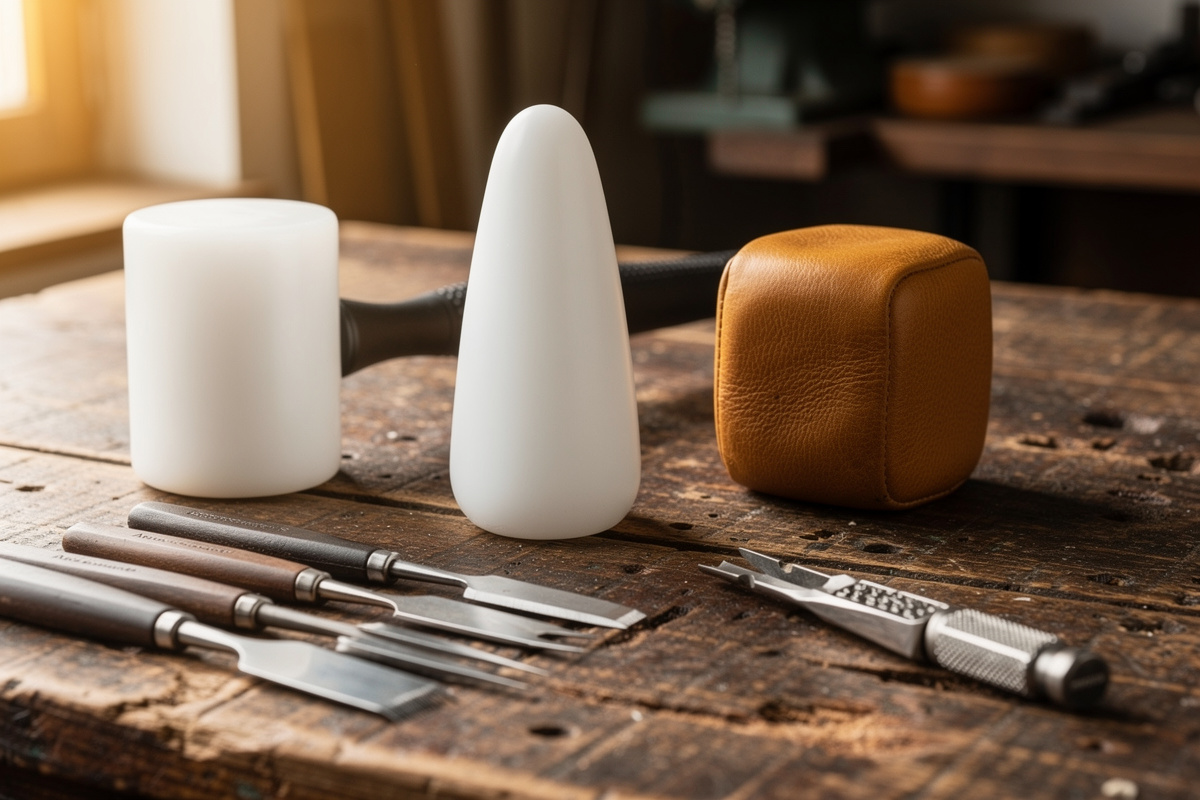
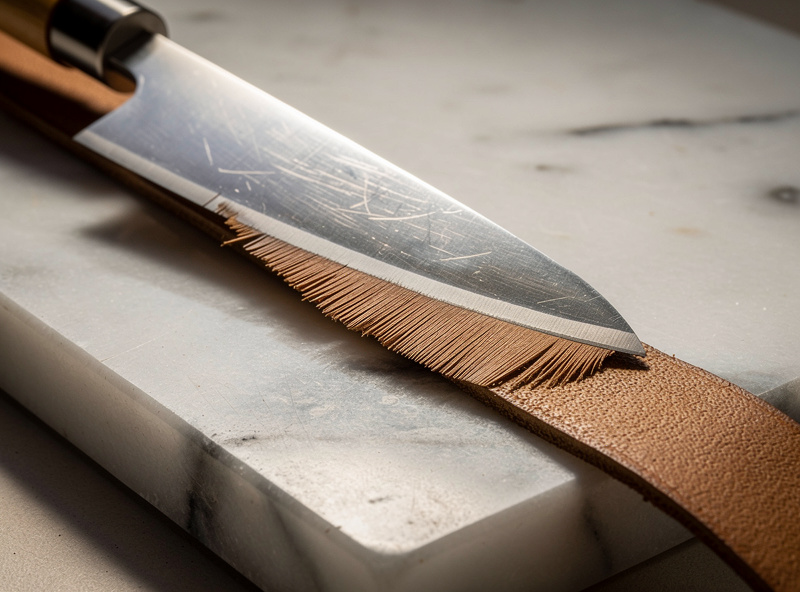
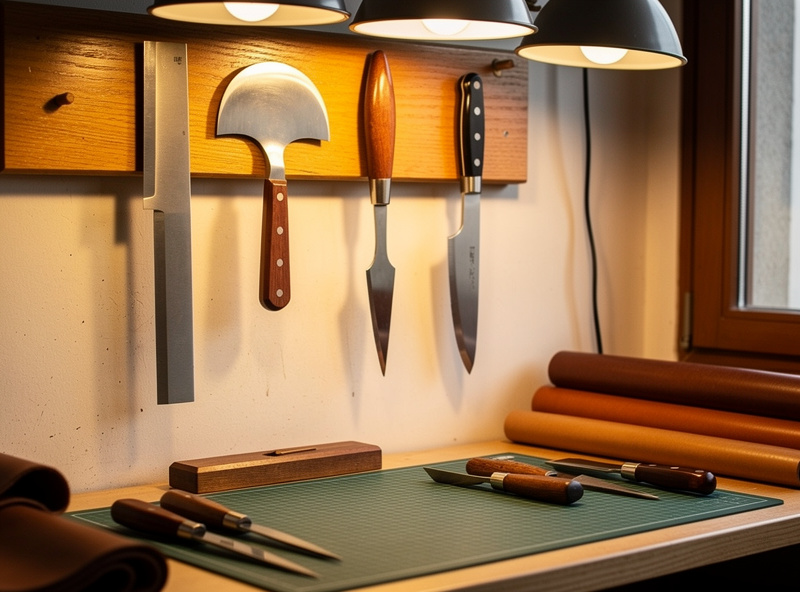
There are five tools that get called “skiving knives,” and they are not interchangeable. The Japanese leather knife (kawa-bocho) is the daily driver — a flat blade with one long bevel, scary sharp, the most control per pass. The safety skiver is a replaceable-razor tool for beginners. The round/head knife skives in skilled hands. The French paring knife is the traditional bookbinder’s choice, and the bell skiver is the powered machine for volume.
I reach for the Japanese knife for almost everything because the flat single bevel lets me feel the leather thickness through the blade. The Japanese-style leather skiving knife is the one tool I tell every beginner to buy once they have ruined a wallet edge with a box cutter. The safety skiver matters as a confidence bridge — it physically cannot dive too deep because the razor sits in a guard — but it leaves a slightly scuffed cut and you outgrow it fast.
| Knife Type | Best For | Learning Curve | Sharpening | Typical Price |
|---|---|---|---|---|
| Japanese (kawa-bocho) | Edge skives, lap seams, fine control | Moderate | Single-bevel flat hone + strop | $20-35 |
| Safety / super skiver | Beginners, straight edge feathering | Easy | Replace razor blade ($5/10-pack) | $12-18 |
| Round / head knife | All-around cut + skive, thick stock | Hard | Curved strop, stone re-edge | $35-90 |
| French paring knife | Bookbinding, whole-panel paring | Hard | Wide bevel hone + strop | $40-120 |
| Bell skiver machine | Production volume, repeatable depth | Steep (setup) | Bell blade stone + replace | $400-1500 |
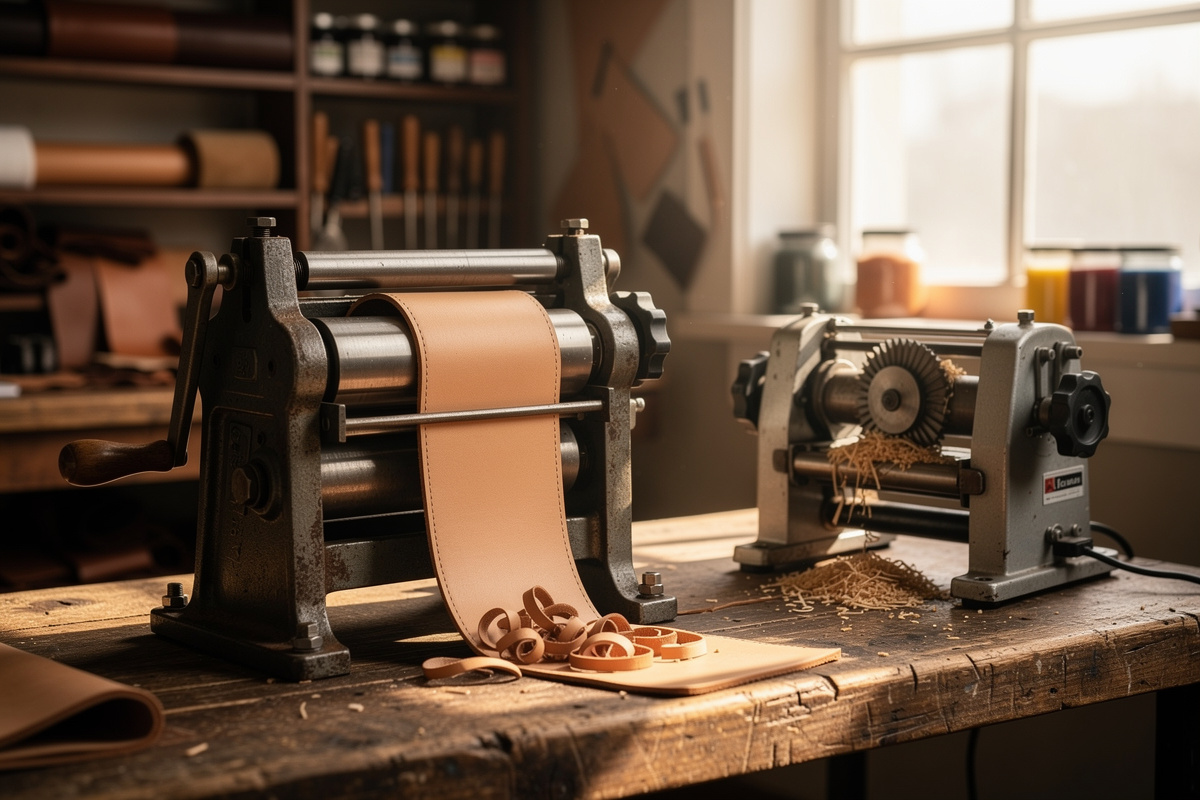
The premium handmade Japanese knives ($80-150) hold an edge longer and arrive sharper, but a $25 knife stropped properly cuts identically — the price buys edge retention and steel quality, not a better skive. For the powered end of the range, the bell skiver and the leather splitter do related but different jobs; I separate them fully in the leather splitter and skiver machine guide.
How to Skive Without Cutting Through the Grain
Skive on a hard, smooth, sacrificial surface — glass, marble, or a poly cutting board, never a self-healing mat (too soft, the blade dives). Hold the knife at a low angle, roughly 10–15 degrees, bevel down for a Japanese knife, and push the blade away from you in thin shaving passes. Take three light passes, not one greedy one. The shaving should come off in a translucent curl.
The mistake that wrecks the grain side is too steep an angle plus too much downward force — the blade dives, exits the grain, and you have a window in your wallet. Lower the angle until the blade almost lies flat and let the edge do the work. Mark your target skive depth with a wing divider line first so you skive to a stop line, not by feel alone. Case the leather lightly (a barely damp sponge) on stubborn veg-tan; it skives cleaner just past bone dry. Skiving is the same patience-discipline as a clean hand saddle stitch — slow, even, repeatable strokes beat force every time.
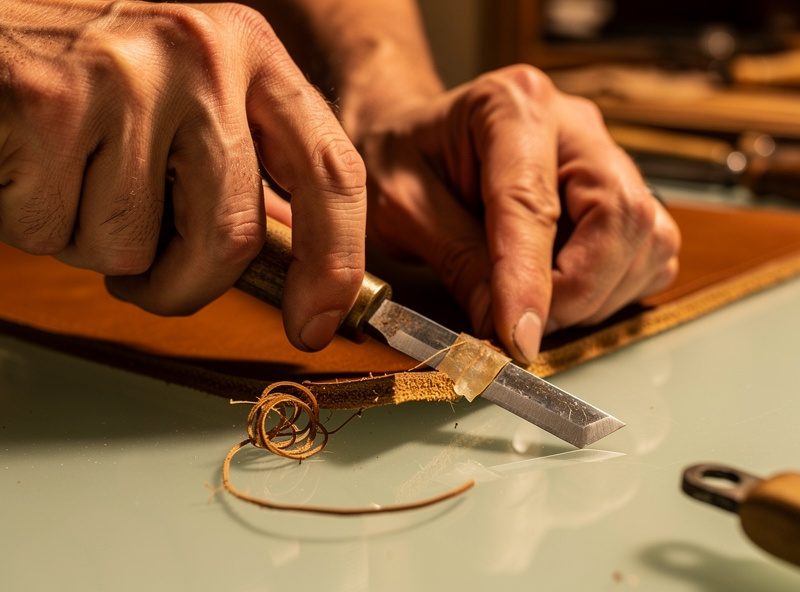
Edge skiving (feathering the last 10–15 mm before a fold) is the most common job. Whole-panel skiving — taking an entire piece down a weight class — is harder by hand and is exactly where a splitter or bell skiver earns its keep. For a single fold on a card holder, three passes with a hand knife is faster than setting up a machine, which is why the knife never leaves my bench even after I bought the powered tools.
Sharpening: The Skiving Knife Punishes a Dull Edge
No tool on the bench rewards sharpness like a skiving knife and none punishes dullness faster. A dull skiver tears and drags instead of shaving, and the moment it drags you push harder, and the moment you push harder it dives. The fix is a flat single-bevel edge kept stropped before every session — I strop mine on green compound on a paddle strop until it shaves arm hair, then it is ready.
For a Japanese single-bevel knife: lap the flat back dead flat on a fine stone (it must be a true plane), then hone the bevel at its existing angle on a 1000 then 4000 grit waterstone, finishing with 8-10 light passes on the strop. The single bevel is forgiving because you only maintain one face plus the back. This is the same edge discipline I cover for every cutting tool in the guide to sharpening leather tools — strop maintains, stone re-edges, and you never let a blade get truly dull before touching it up. A paddle strop with green honing compound is the cheapest quality upgrade you can buy a skiving knife.
Where the Skiving Knife Fits in the Tool Tiers
The skiving knife is a tier-two tool — you add it around month six, once you have built a few flat projects and hit your first folded edge that will not lie down. It is not in the absolute beginner six, but it is the next purchase after them. In my three-tier leatherworking tools guide it sits right alongside the wing divider and edge beveler as the upgrades that move you from flat card sleeves to structured wallets and bags.
Pair it with a good edge beveler and the workflow clicks: skive the fold zone thin, fold and glue, bevel the assembled edge, then burnish. Skip the skive and the folded edge stays fat and the bevel cannot round it cleanly. The skiving knife is also the tool that makes a bifold wallet close flat instead of springing open — the single highest-impact skill upgrade for small goods. A safety skiver with replaceable blades is a low-risk way to learn the motion before committing to a knife you have to sharpen.
Frequently Asked Questions
What is a skiving knife used for in leatherwork?
A skiving knife thins leather by shaving material off the flesh side at a shallow angle. You use it to reduce bulk where leather folds, overlaps at a seam, or where a turned-in edge would otherwise stack to double thickness and refuse to lie flat.
What angle do you hold a leather skiving knife?
Hold the blade at roughly 10 to 15 degrees, nearly flat to the leather, bevel down for a Japanese knife. Too steep an angle plus downward force makes the blade dive through the grain side. Lower the angle and take three thin passes instead of one deep cut.
What is the best skiving knife for beginners?
A safety skiver with a replaceable razor blade (12 to 18 dollars) is the safest start because the guard prevents the blade diving too deep. Move to a Japanese single-bevel knife (20 to 35 dollars) once you trust the motion, since it gives far more control per pass.
Why does my skiving knife tear the leather instead of shaving it?
The edge is dull or the angle is too steep. A skiving knife must be razor sharp and stropped before every session. If it drags, stop and strop on green compound rather than pushing harder, since extra force makes the blade dive and cut through the grain.
Can you skive chrome-tanned leather?
Yes, but it is harder than veg-tan because chrome-tan is stretchier and grabs the blade. Back the piece with masking tape or chill it firm first so it does not stretch under the cut. Veg-tan skives more predictably because it is firm and holds the cut.
Do I need a skiving machine or is a knife enough?
A hand knife is enough for hobby work and is faster than a machine for a single fold. A bell skiver or splitter only pays back when you thin whole panels repeatedly at production volume. Most makers run a hand skiving knife for years before needing a machine.
What surface should you skive leather on?
Skive on a hard, smooth, sacrificial surface such as glass, marble, or a poly cutting board. Never skive on a self-healing cutting mat, since it is too soft and lets the blade dive into it instead of shaving the leather cleanly above it.
Related Articles
- Leatherworking Tools Guide: Three Tiers of Buy-In
- How to Sharpen Leather Tools: Strop, Stone, and Edge Geometry
- Leather Splitter and Skiver Machine Guide
- Best Edge Bevelers for Leather
- How to Make a Leather Bifold Wallet