The best hardware for a leather dog collar is solid cast brass or 316 stainless in three pieces: a center-bar or heel-bar buckle, a welded D-ring, and a…
The best hardware for a leather dog collar is solid cast brass or 316 stainless in three pieces: a center-bar or heel-bar buckle, a welded D-ring, and a copper or brass rivet behind the stitch. Hardware is where collars fail — the leather and stitch almost never give first — so this is the one place I never buy cheap. A hollow stamped buckle or a split, unwelded ring is a lunge away from letting a dog loose.
I have pulled apart enough failed store collars to know the pattern: the strap is fine, the stitching is fine, and the ring has sprung open or the buckle tongue has bent flat. Spend the few extra dollars on cast, welded, corrosion-proof hardware and the collar becomes as strong as the leather around it. Here is exactly what to buy and why.
The Buckle: Center-Bar vs Heel-Bar vs Roller
A dog collar buckle should be solid cast, never hollow stamped sheet metal. For most collars a center-bar buckle is ideal — the center bar gives the tongue a fixed pivot and a clean fold-back for the strap. A heel-bar buckle suits heavier collars where you want the bar set back for a longer fold, and a roller buckle reduces wear on the billet over years of daily buckling but adds a moving part.
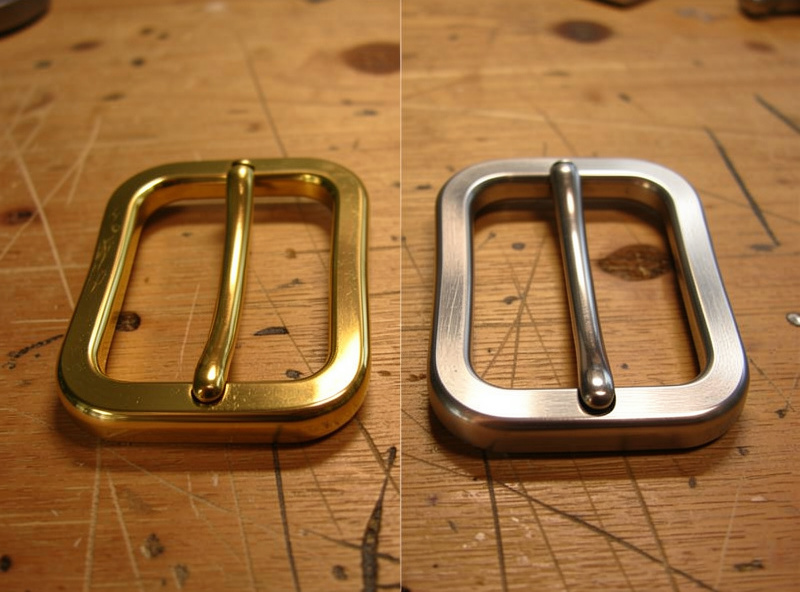
Size the buckle to the strap width exactly: a 1-inch strap takes a 1-inch buckle (measured at the inside of the bar). Brass and stainless both work; brass patinas warm, stainless stays bright. The full buckle breakdown is in the buckle types comparison, and how the buckle folds into the collar is in the collar making guide.
The D-Ring: Welded Is Non-Negotiable
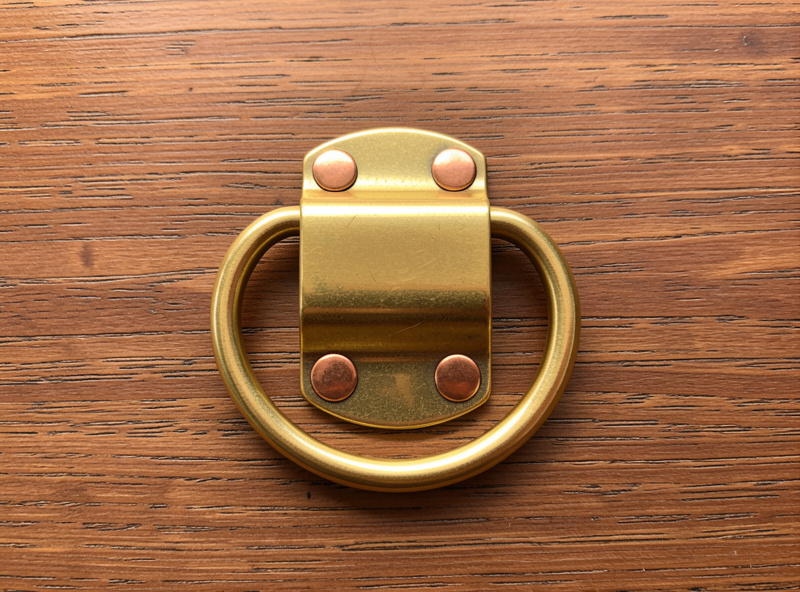
The D-ring carries every ounce of leash force, so it must be welded — a continuous loop of steel or brass with no gap. An unwelded (split) ring has a butt joint that a hard lunge can pry open, and that single failure is the most common way a dog gets loose from an otherwise sound collar. I will not put a split ring on anything that holds a dog.
Set the D-ring in the buckle fold so it sits at the back of the neck, or on its own stitched tab. Size it to the strap width and the leash snap it will mate with. Stainless or solid brass resist the corrosion that constant neck moisture causes. The wider hardware context is in the leather hardware guide.
| Component | Best Choice | Avoid | Why |
|---|---|---|---|
| Buckle | Solid cast center-bar, brass or SS | Hollow stamped sheet | Tongue and bar must not bend under pull |
| Ring | Welded D-ring | Split / unwelded ring | Gap pries open on a lunge |
| Rivet | Copper or solid brass | Cheap aluminum cap | Backs up the stitch at the fold |
| Snap (leash) | Cast bronze / SS swivel | Die-cast pot metal | Snap is the leash failure point |
| Finish | Solid brass or 316 stainless | Plated zinc | Plating wears, base metal corrodes |
Rivets: Backing Up the Stitch
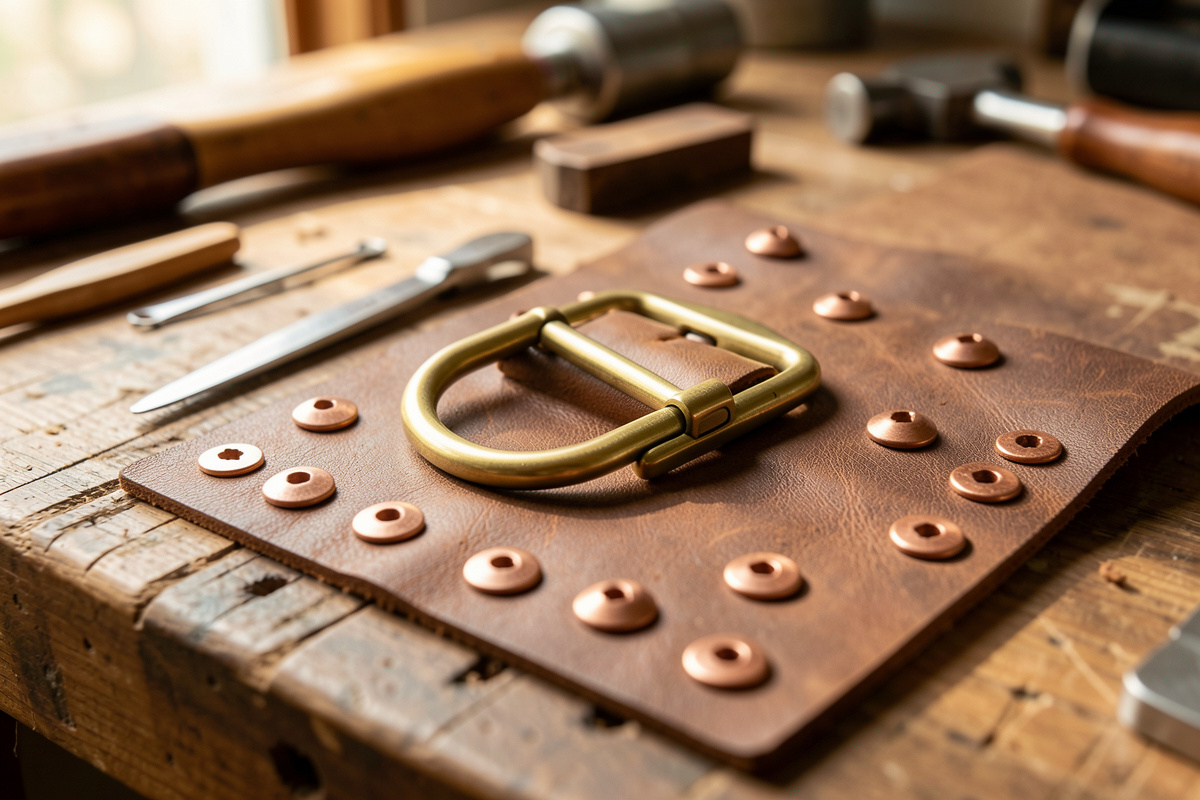
A rivet is not a substitute for stitching on a collar — it is the backup. Copper rivets (set and burred) or double-cap solid brass rivets behind the buckle stitch block add a mechanical lock so that even if the thread were cut, the fold holds. On a big-dog collar I set one copper rivet behind the buckle fold and burr it over a washer.
Avoid hollow aluminum or cheap cap rivets that crush rather than hold. Copper vs brass vs stainless is covered in the rivet guide, and if you do not own a press, the hand-tool setting method works for rivets and snaps alike.
Brass vs Stainless vs Plated
For a collar that gets wet constantly, corrosion resistance decides longevity. Solid brass and 316 stainless are both solid-through, so a scratch does not expose a rusting core. Plated zinc hardware looks identical in the bin but the plating wears at the buckle tongue and ring contact points, then the base metal corrodes and stains the leather and the dog’s coat.
I choose by look and budget: brass for a warm, traditional collar that patinas, stainless for a bright modern one or a dog that swims in salt water. Never plated for anything structural. Keep the whole collar’s hardware one metal family so it ages evenly — matching the leash and harness too, as in the leash guide and harness guide.
Sizing Hardware to the Strap
Hardware that does not match the strap width either binds or rattles. Measure the buckle and D-ring at the inside opening and match it to your finished strap width: a 3/4-inch strap wants 3/4-inch hardware. The buckle tongue must clear your punched holes (a 5/32-inch hole suits most collar tongues), and the keeper (belt loop) should be sized a hair loose so the leather can swell when wet without binding.
Get the width math right before you buy, because mismatched hardware is the most common reason a first collar looks off. The strap-weight-to-width pairing is in the weight guide and the fit in the sizing guide.
Keepers, Tabs, and the Small Stuff
The keeper — the small loop that holds the billet end after buckling — is leather, not hardware, but it fails collars too when it is sized too tight. Cut it from the same strap, size it a hair loose so the wet leather can swell without binding, and stitch or rivet it just behind the buckle. A keeper that splits or pops off leaves the loose end flapping into the dog’s eyeline.
If you add a separate tab for the D-ring or a name plate, use the same metal family and the same rivet stock so nothing looks bolted on as an afterthought. Small consistency in the minor hardware is what separates a collar that looks designed from one that looks assembled from a parts bin.
As an Amazon Associate I earn from qualifying purchases. I buy solid brass center-bar buckles and welded stainless D-rings in matched sizes — the hardware is the one part I never cut cost on.
Frequently Asked Questions
What is the best buckle for a leather dog collar?
A solid cast center-bar buckle in brass or stainless is best for most collars. The center bar gives the tongue a fixed pivot and a clean strap fold. Avoid hollow stamped buckles, which bend under a hard pull.
Why does a dog collar D-ring need to be welded?
A welded D-ring is a continuous loop with no gap, so it cannot be pried open. An unwelded split ring has a butt joint that a hard lunge can spring apart, which is the most common way a dog escapes a sound collar.
Is brass or stainless steel better for dog collar hardware?
Both are solid-through and corrosion resistant. Brass patinas warm and traditional; 316 stainless stays bright and handles salt water best. Avoid plated zinc, which wears at contact points and then corrodes and stains the leather.
Do I need rivets if I saddle stitch the collar?
Rivets are a backup, not a replacement. A copper or solid brass rivet behind the buckle stitch block adds a mechanical lock so the fold holds even if the thread is cut. I add one on large-dog collars.
How do I size hardware to my collar strap?
Measure the buckle and D-ring at the inside opening and match the finished strap width exactly, so a 3/4-inch strap takes 3/4-inch hardware. The buckle tongue must clear your punched holes, and size the keeper a hair loose.
What snap should I use to connect a leash to the collar?
Use a cast bronze or stainless swivel snap rated above the dog’s weight. Die-cast pot-metal snaps are the leash’s most common failure point, so the snap is worth buying solid even on a budget build.
Related Guides
- Leather Dog Collar Making: The Complete Guide
- Leather Buckle Types Compared
- Best Rivets for Leather
- Leather Hardware Guide: Rivets, Snaps, Buckles
- How to Make a Leather Dog Leash