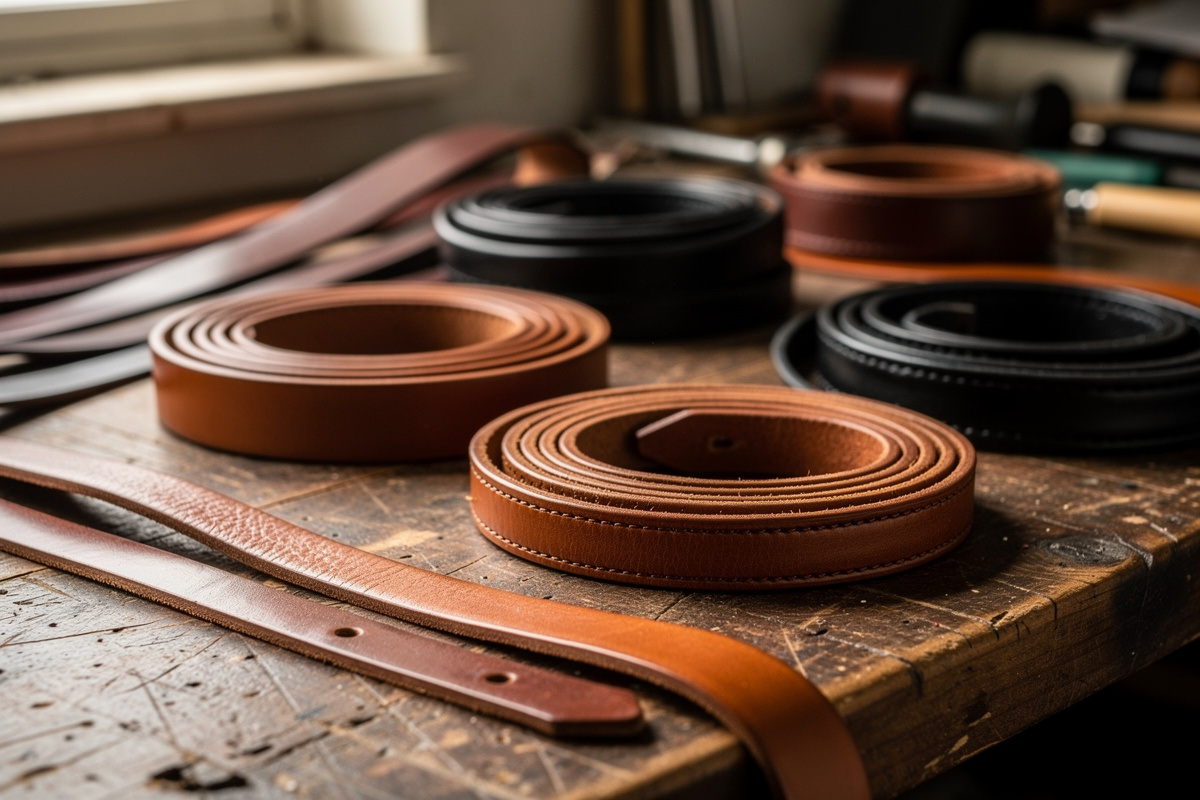
Latigo and harness leather are the tough, stuffed, weather-ready leathers built for things that get pulled, worn and rained on — straps, dog leads, gun belts, tack, and…
Latigo and harness leather are the tough, stuffed, weather-ready leathers built for things that get pulled, worn and rained on — straps, dog leads, gun belts, tack, and any strap good that has to hold up outdoors. They sit in a different category from the veg-tan I tool and the chrome-tan I use for soft goods: both are heavily oiled and waxed during tanning so they arrive supple, water-resistant, and ready to work without much finishing. I keep both on the rack for strap work, and the differences between them — and between them and bridle leather — decide which one a project gets.
This guide covers what latigo and harness leather actually are, how they differ from each other and from bridle, what they are good for, and how they behave at the bench. These are not beginner show-piece leathers — they are working leathers, chosen for a strap’s job rather than for tooling or carving — and once you understand the stuffing that defines them, picking between the three becomes simple.
What makes these “stuffed” leathers different
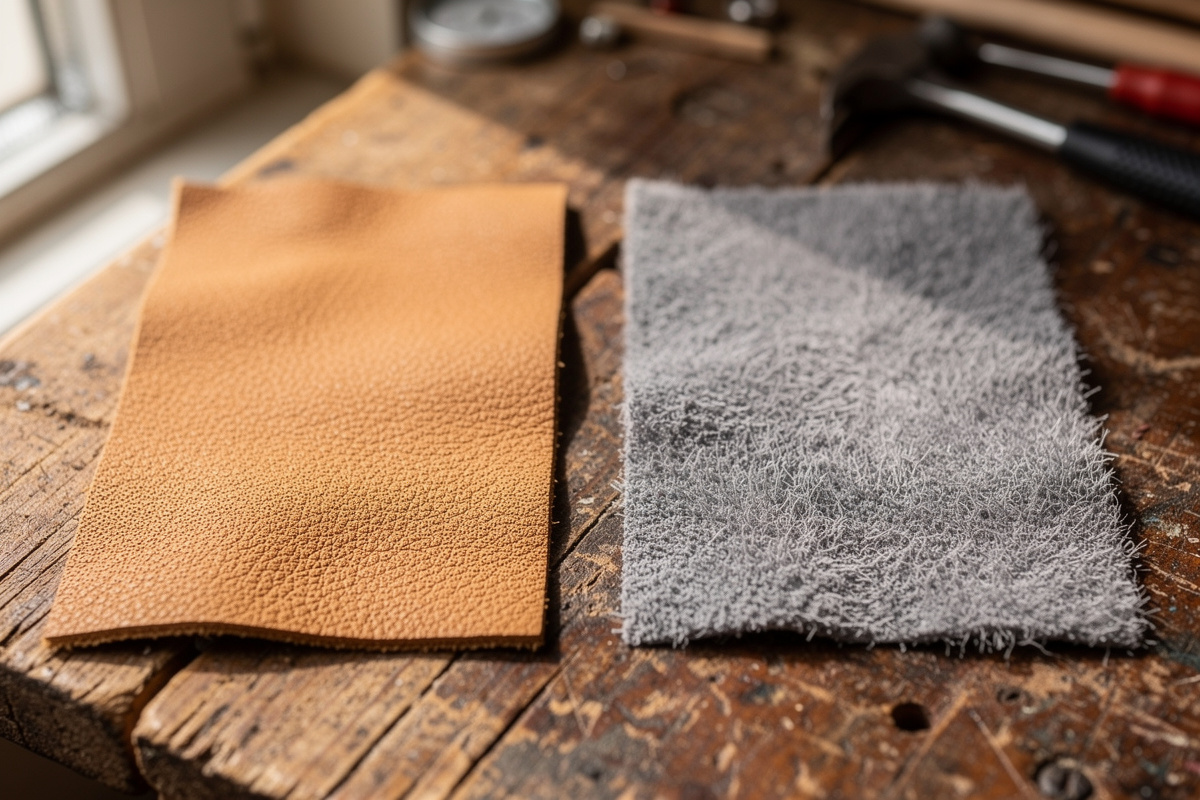
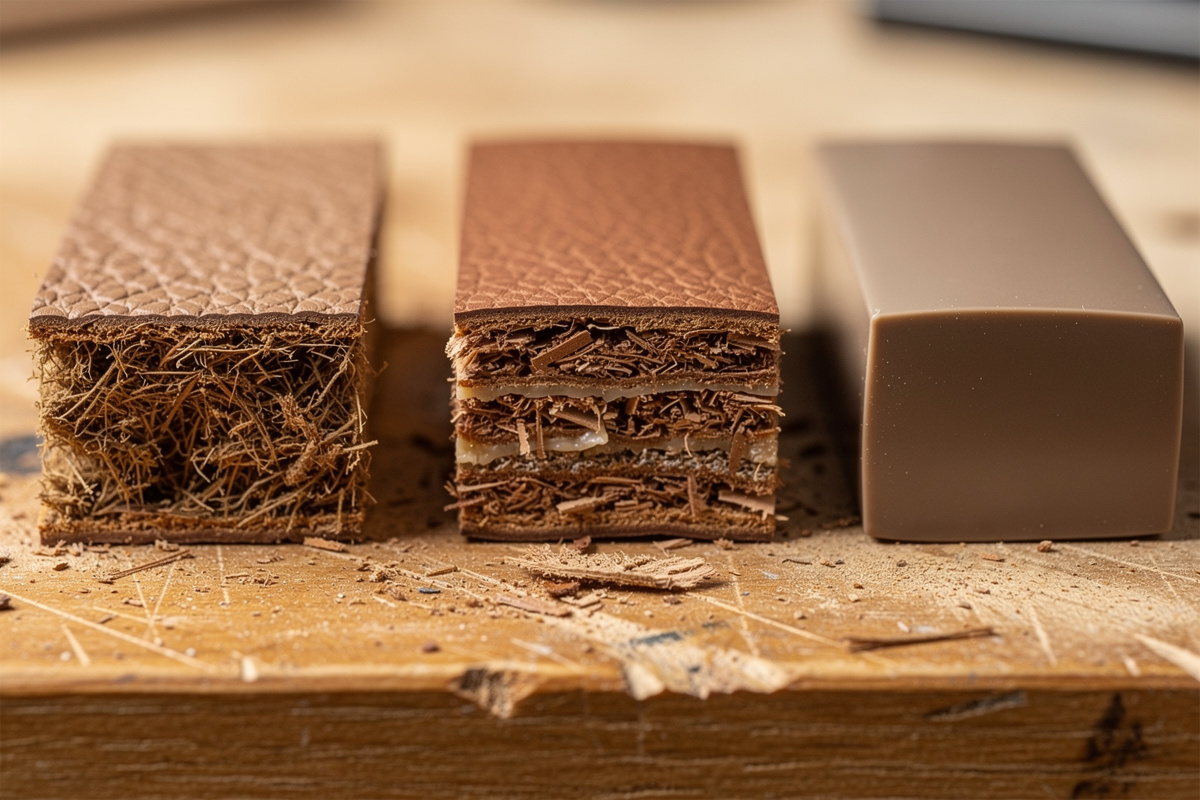
Latigo, harness and bridle leather share one defining trait: they are hot-stuffed with a heavy charge of oils, greases and waxes during tanning. That stuffing is why they feel so different from plain veg-tan — they are pre-conditioned, flexible, and water-resistant straight off the roll, where natural veg-tan is dry, stiff and thirsty. The stuffing also means these leathers need far less conditioning in use and shrug off weather, which is exactly what you want in a strap or a piece of tack that lives outdoors.
The trade-off is the familiar one: that oil content means they do not burnish to the hard, glassy slicked edge of dry veg-tan, and the oils can interfere with contact cement, so gluing sometimes needs a deglaze first. These are leathers you stitch and finish a little differently, and they reward planning for their oil content rather than fighting it.
Latigo leather
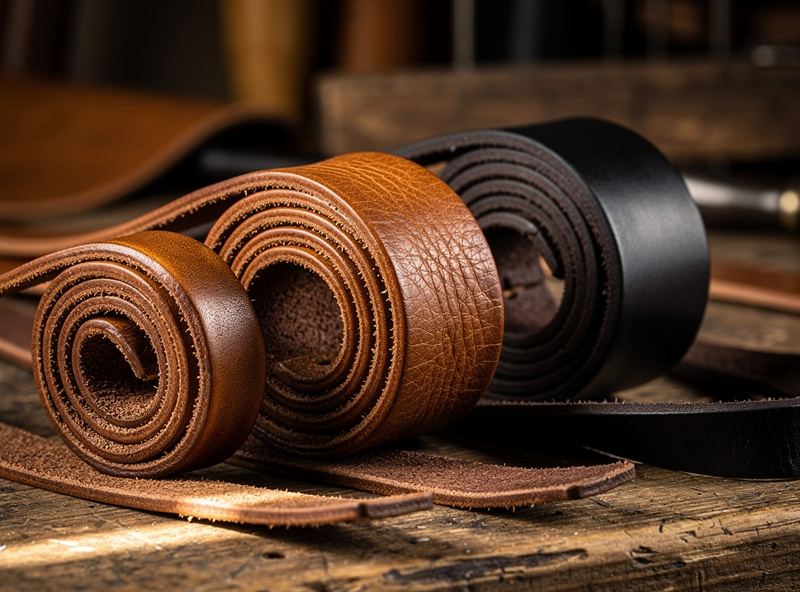
Latigo is traditionally a combination-tanned leather — often chrome-tanned first, then vegetable-retanned — and then heavily stuffed with oils and waxes, usually dyed in earthy colors (the classic is a russet brown, though it comes in black and others). The combination tannage is the key: the chrome step gives it suppleness and water resistance and strength, the veg retan gives it body and a bit more workability, and the heavy stuffing makes it pliable and tough.
What latigo is good at: it is strong, flexible, and very weather- and rot-resistant, which made it the traditional saddle-string and cinch-tie leather (the name comes from the cinch strap). Today I reach for it for dog leashes and collars, straps, cinches, lacing, and anything that flexes repeatedly and gets wet — it takes that abuse without drying or cracking the way unstuffed leather would. It is supple enough to be comfortable in the hand and tough enough to trust on a pulling dog.
Harness leather
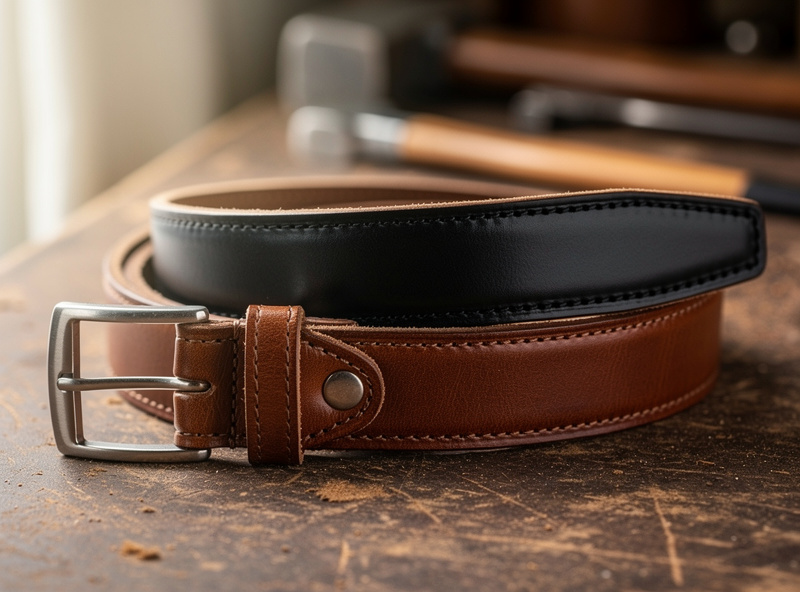
Harness leather is typically vegetable-tanned (sometimes combination) and then hot-stuffed heavily with oils and waxes, usually finished in black or brown. Compared to latigo it tends to be a bit firmer and more substantial — it was built for horse harness and tack that needs to hold its shape under load while still being weather-resistant and supple enough not to crack.
Where harness shines: belts (especially gun belts and work belts that need to stay rigid and not roll), heavy straps, tack, halters, and any strap good where you want firmness and weather resistance together. It holds an edge a little better than latigo because of the veg-tan base, and it has the body to make a belt that stands up rather than flopping. When I want a belt that feels substantial and lives hard, harness is often the call over plain veg-tan because it is already conditioned and will not dry out.
Latigo vs harness vs bridle at a glance
These three stuffed leathers get conflated constantly. Here is how they actually differ.
| Property | Latigo | Harness | Bridle |
|---|---|---|---|
| Typical tannage | Combination (chrome + veg retan) | Veg (sometimes combo) | Veg, slow-tanned |
| Temper | Supple, flexible | Firmer, substantial | Firm with a waxy finish |
| Signature trait | Weather/rot resistance, flex | Firmness + weather resistance | Hand-curried wax finish, both sides finished |
| Classic use | Cinches, leashes, lacing, straps | Belts, tack, harness, heavy straps | Fine straps, belts, English tack |
| Edge finishing | Light burnish / edge paint | Burnishes better than latigo | Often already finished |
The short version: latigo for supple, weather-tough flex (leashes, cinches, lacing); harness for firm, weather-tough body (belts, tack); bridle when you want that refined, hand-curried wax finish on a firm strap with both sides dressed. All three are stuffed and weather-ready; they differ in temper and finish.
Buying latigo and harness: weight and color
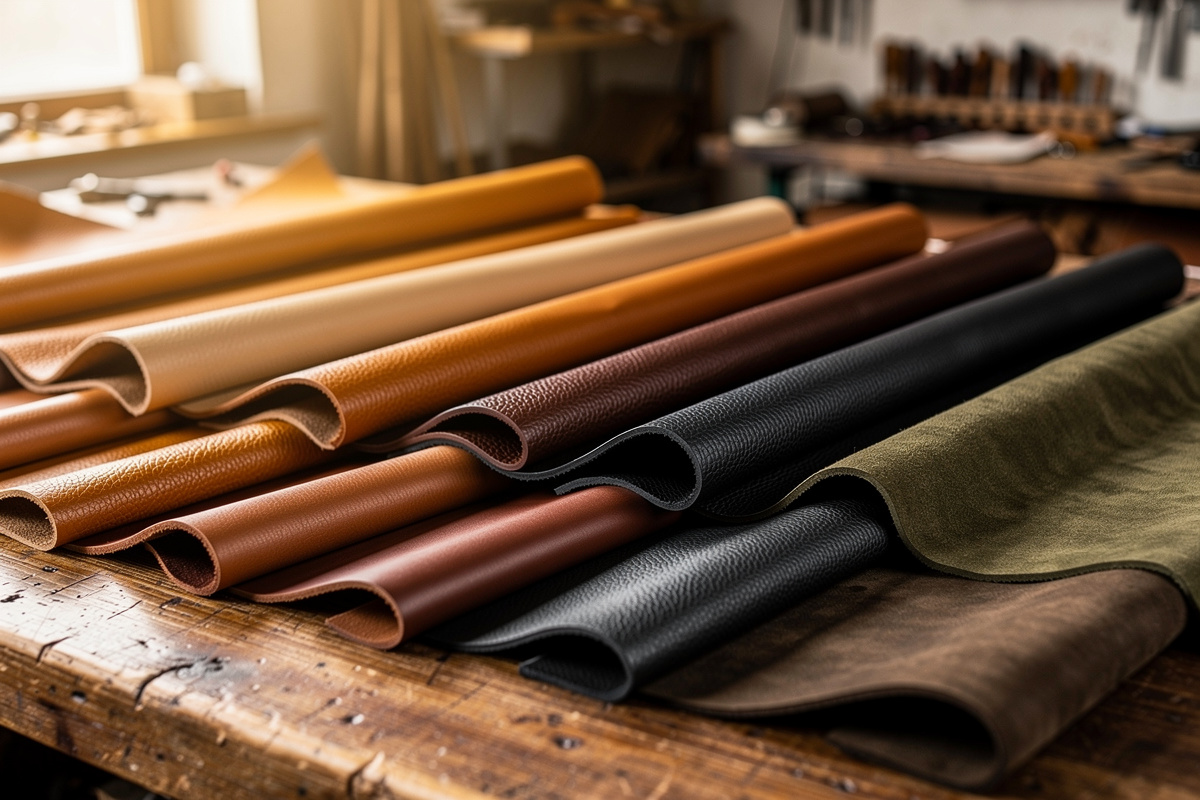
Because these are strap leathers, weight matters even more than usual — a strap that is too light flexes and stretches under load, and one too heavy is stiff and clumsy. For dog leashes and lighter straps I reach for latigo around 6–8 oz; for belts and heavier straps, harness in the 8–10 oz range gives the body a belt needs. A gun belt or a heavy work belt I might laminate two layers or go to the top of that range so it stays rigid and does not roll. Both come pre-dyed, most commonly in russet/brown and black, which simplifies the build — but it also means you are matching the supplier’s color rather than mixing your own, so if a project needs two pieces to match, buy them together from the same lot. The pre-dyed surface also means the show face is done for you; your finishing work is mostly the edges and a light oil, not dyeing the whole panel.
One naming caution: “latigo” and “harness” are used loosely in the market, and what one supplier calls latigo another might call harness, because the lines blur (both are stuffed, both can be combination-tanned). Rather than trusting the name alone, I look at the actual temper, weight and tannage described — supple-and-flexible points to latigo’s role, firm-and-bodied points to harness’s role, regardless of the label on the listing. Buy for the behavior you need, not just the word.
Working latigo and harness at the bench
The handling notes that matter:
- Cut clean and stitch normally. Both cut and punch fine; they are firm enough to handle well. A sharp knife and a good straightedge give clean strap edges.
- Edges want a different approach. The oil content limits a hard burnish. I get a soft, waxy burnish with a slicker, or use edge paint where I want a crisp line. Don’t expect dry-veg-tan glassiness.
- Deglaze before gluing. The stuffing oils fight contact cement, so wipe glue areas with deglazer and rough them up, then test the bond before committing a seam.
- Dye is mostly unnecessary. These come pre-dyed and stuffed; you usually finish the edges and oil lightly rather than dyeing the whole piece. If you do touch up, the oil content can resist penetrating dye.
- They need little conditioning. Already heavily stuffed, so a light wipe of oil keeps them happy for years — over-oiling just makes them limp.
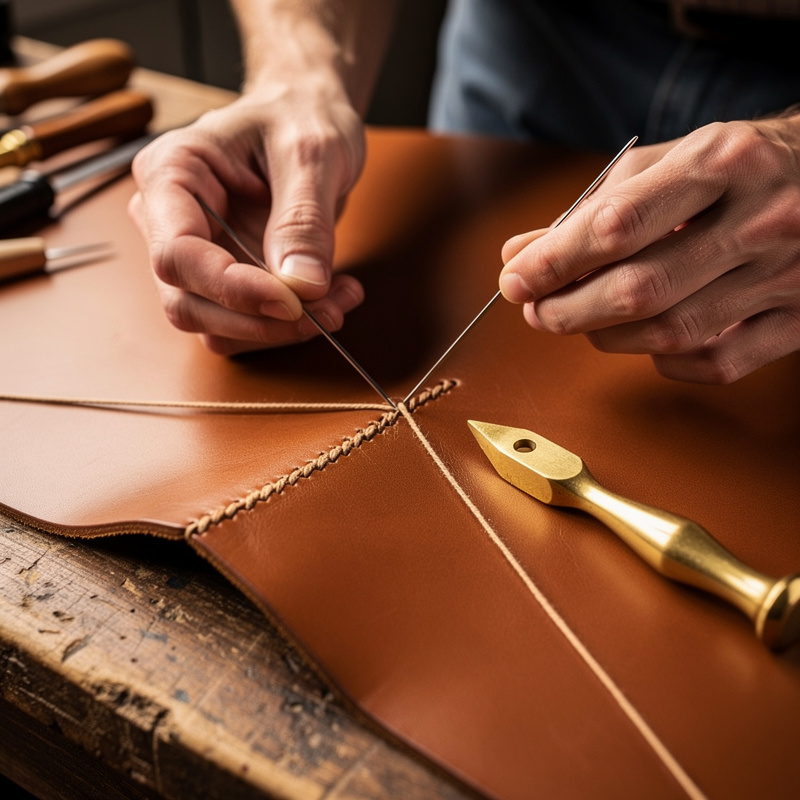
- Stitch with a thread that suits the load. Strap goods take real stress, so I match a heavier waxed thread and iron pitch to the strap rather than a fine wallet pitch, and I lock and bury the ends well — a leash or belt seam that fails is not a cosmetic problem.
Picking between them for a project
My decision rule: if the piece needs to flex repeatedly and stay weather-tough — a leash, a cinch, lacing, a soft strap — latigo. If it needs body and firmness while staying weather-tough — a belt, a rigid strap, tack that holds shape — harness. If I want a refined finished strap with a waxy hand and both sides dressed, bridle. And if the piece is a tooled, molded, or burnished show piece that lives mostly indoors, none of these — that is plain veg-tan, because the stuffing in latigo and harness is exactly what stops them tooling and slicking like natural veg-tan does.
Gear for working strap leathers
Strap work rewards clean cuts and good edge finishing more than a big tool list.
Disclosure: LeatherCraftHaven is reader-supported. As an Amazon Associate I earn from qualifying purchases made through links in this article, at no extra cost to you. I only point to gear I actually use or would buy for my own bench.
For consistent straps the most useful tool is a leather strap cutter, which gives you parallel-width strips far faster and cleaner than freehand cutting. To deal with the oil content when gluing, a bottle of leather deglazer preps the surface so contact cement actually holds. And to start, a piece of latigo leather is the cheapest way to feel how a stuffed combination leather behaves compared to the veg-tan you already know.
Where strap leathers fit in
Latigo and harness are specialized working leathers built on the tannages you already know. My chrome tan vs veg tan guide explains the combination tannage latigo is built on, the types of leather overview places the stuffed strap leathers among the rest, and if you are weighing leather for a daily-carry build rather than a strap, the best leather for wallets guide covers that side.
Further Reading
- Types of Leather: Tannage, Grade and Weight
- Chrome Tan vs Veg Tan Leather
- Full Grain vs Top Grain Leather
- Pull-Up Leather Patina Guide
- Best Leather for Wallets