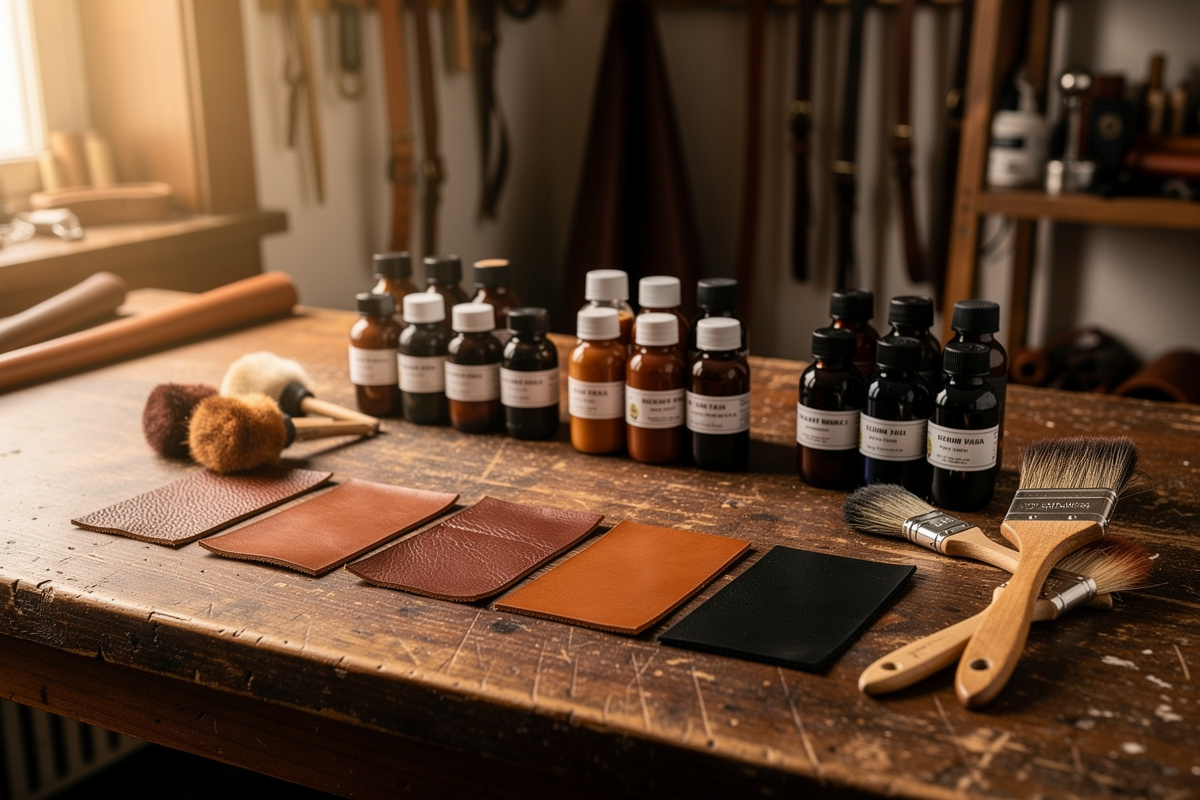
Leather dye splits into three working families: oil-based dye penetrates deep and dries even, making it the safest choice for large veg-tan panels; water-based dye is low-odor and…
Leather dye splits into three working families: oil-based dye penetrates deep and dries even, making it the safest choice for large veg-tan panels; water-based dye is low-odor and beginner-friendly but sits shallow and streaks easier; acrylic is surface pigment that paints color onto leather penetrating dyes cannot reach, like chrome-tan. Pick by leather and project, not by brand.
I have run all three across years of wallets, belts, and sheaths, and the single most common dyeing mistake I see is choosing the dye by the color on the label instead of by the chemistry in the bottle. The carrier — what the pigment is dissolved or suspended in — decides how deep the color goes, how evenly it lays down, how much it rubs off, and whether it will even bond to the leather on your bench. This is the comparison I wish someone had handed me before my first streaky black belt. For the broader workflow this slots into, start with the complete leather dyeing guide.
The Carrier Is the Whole Decision
Every leather dye is pigment plus a carrier, and the carrier is what actually matters. Oil-based dyes suspend aniline color in an oil base for deep, even penetration. Water-based dyes carry pigment in water for low odor and easy cleanup. Acrylics suspend pigment in a flexible resin that bonds on the surface rather than soaking in. Alcohol-based — the old original — is the fast, harsh fourth.
Think of it as a spectrum from “soaks all the way through the leather” to “sits on top as a film.” Alcohol penetrates deepest and dries hardest; oil penetrates almost as deep but stays supple; water sits shallower; acrylic does not penetrate at all and instead forms a colored skin. That single axis predicts almost everything you care about: streaking, rub-off, how the piece ages, and which leathers will even take the color. Veg-tan drinks penetrating dyes because it is still chemically open; chrome-tan and oil-tanned leathers are sealed and largely reject them, which is exactly where acrylic earns its keep. If you are unsure which tannage is on your bench, the types of leather guide sorts veg-tan from chrome-tan before you ever open a dye bottle.
Oil-Based Dye: My Default for Veg-Tan
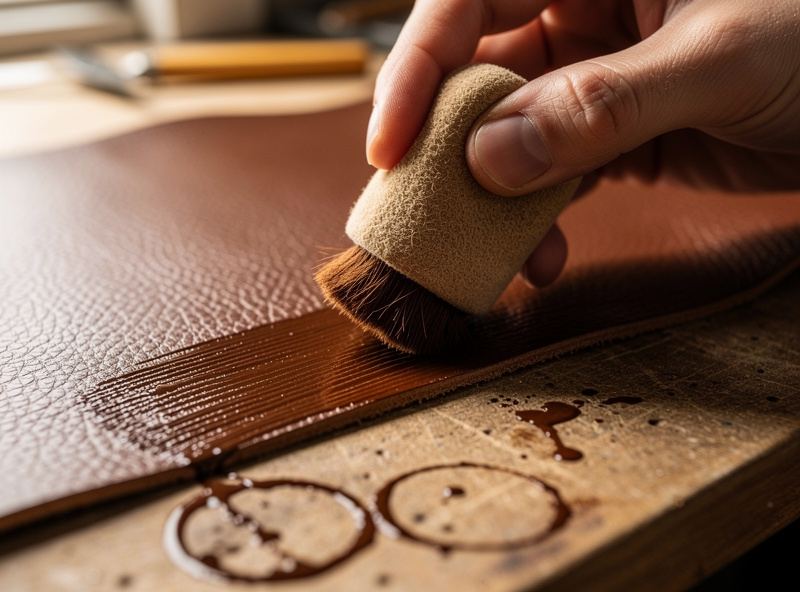
Oil-based dye is my default for almost every veg-tan project. It penetrates deep, lays down the most evenly of any dye type, resists rub-off well once sealed, and keeps the leather supple instead of drying it out. Fiebing’s Pro Dye (formerly Pro Oil Dye) is the bottle I reach for nine times out of ten.
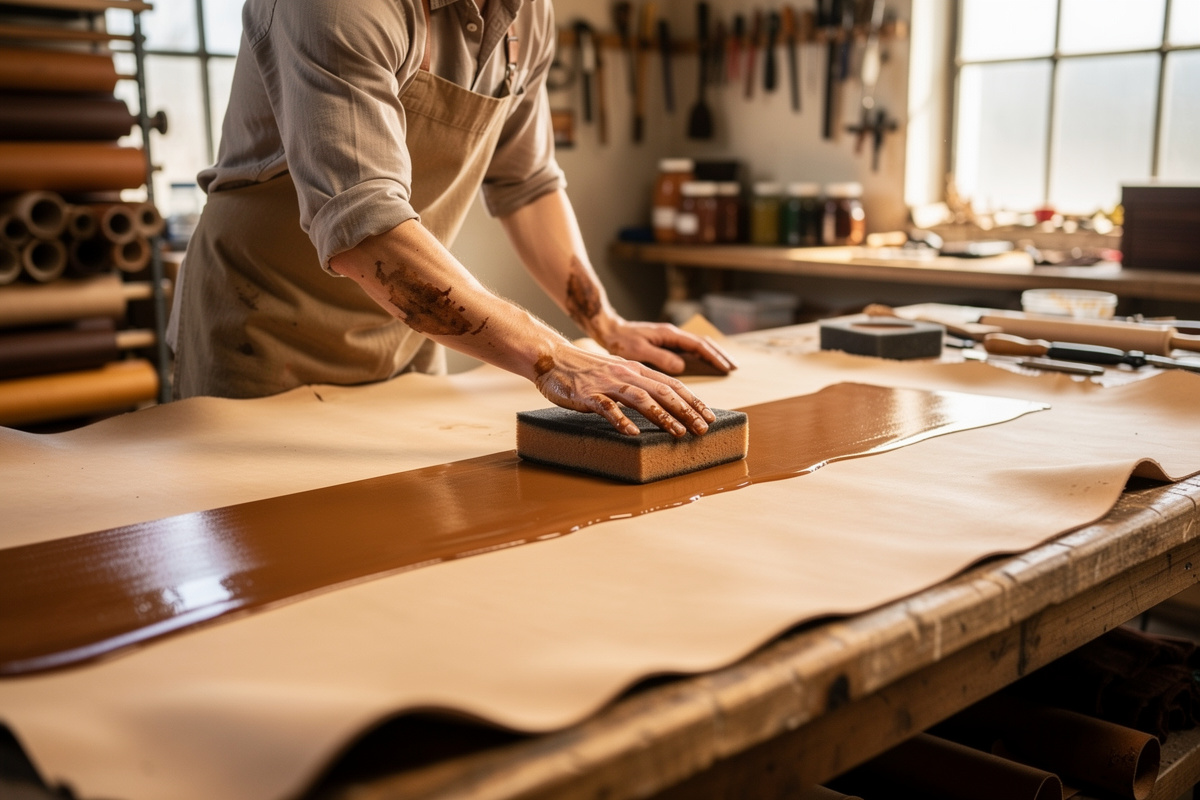
The reason oil wins on large flat panels is the slow, even way the carrier moves through the fibers. An alcohol dye flashes off so fast that wherever your dauber lingers a half-second longer, the color jumps darker — that is the classic streak. The oil carrier buys you working time, so a long parallel stroke followed by a perpendicular second coat blends into one even tone instead of a tiger-stripe. Oil dye also keeps a leftover suppleness that matters on anything that flexes: a belt dyed with alcohol can feel board-stiff, while the same belt in oil dye still breaks in. The trade-offs are honest ones — it is the slowest to dry (give it a full day before topcoat), the fewest bright colors (it shines at browns, black, oxblood, tan), and it still crocks color onto your hands until you seal it. For an even oil-dye finish, the prep and stroke technique in how to dye leather without streaks is the other half of the job.
Water-Based Dye: Low-Odor, Lower Ceiling
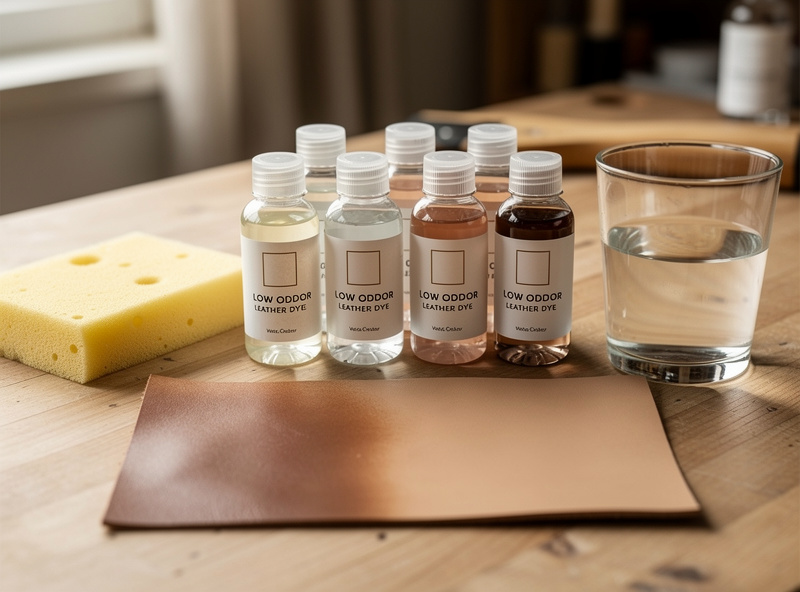
Water-based dye is the low-odor, low-VOC option — the one you can use at a kitchen table without clearing the room. It cleans up with water, comes in bright colors, and is genuinely the friendliest dye to start with on small pieces. The cost of that friendliness is shallower penetration, easier streaking on big panels, and weaker colorfastness.
Eco-Flo and other water-based dyes sit higher in the leather because water does not carry pigment as deep as oil or alcohol. On a card holder or a keyfob that is fine, even ideal — low fumes, easy color, quick rinse. Scale up to a belt or a bag panel and the same dye starts fighting you: it can raise and pucker the grain slightly, it dries fast enough at the edges to leave lap marks, and because the color rides near the surface it rubs off more readily and fades faster in sunlight. Water-based dye also genuinely needs a sealer — a coat of acrylic resolene is not optional here the way it is merely smart with oil dye, because without it the color crocks onto everything. I keep water-based dye on the shelf for low-fume days and small bright projects, and I do not reach for it when a piece has to survive years of handling.
Acrylic: Surface Pigment for the Leathers Dye Rejects
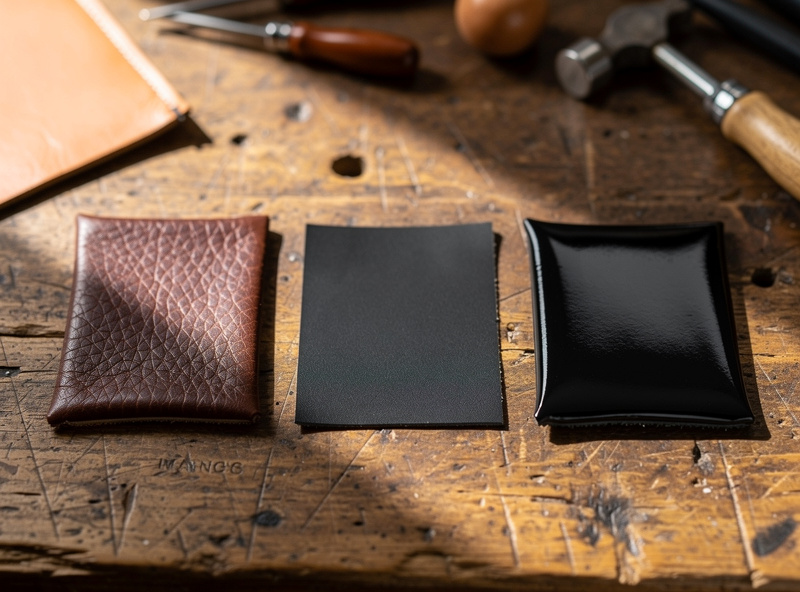
Acrylic leather color is not really a dye at all — it is pigment suspended in flexible acrylic resin that bonds to the surface as a thin colored film. That makes it the answer for everything penetrating dyes cannot do: opaque bright colors, covering an existing color, and coloring chrome-tan or oil-tanned leather that refuses to absorb dye. Angelus acrylic leather paint is the reference product.
Because acrylic sits on top rather than soaking in, it behaves like paint and follows paint logic. It is opaque, so you can lay a bright red over brown leather or paint white onto black — something no penetrating dye can manage. It bonds to chrome-tan and even to sneakers, where Fiebing’s would just bead up and wipe off. The flip side is everything you would expect from a surface film: it can crack if the leather flexes hard and the coat went on too thick, it changes the hand of the leather slightly toward a coated feel, and a deep scratch shows the leather color underneath rather than dye-through color. The technique is thin coats — two or three light passes beat one heavy one every time — and a flexing piece wants a finisher or flex additive over the top. I use acrylic for decorative detail, two-tone work, and any chrome-tan piece, and I never expect it to look or age like a dyed-through veg-tan panel.
Alcohol-Based: The Fast, Harsh Original
Alcohol- or spirit-based dye is the traditional original — Fiebing’s classic Leather Dye in the yellow-label bottle. It penetrates the deepest, dries the fastest, and throws the most vivid color, but the same alcohol that drives it deep also dries the leather and makes it the most streak-prone dye to apply by hand.
I keep alcohol dye for jobs where its speed is a feature, not a bug: quick edge dyeing, touching in a small area, or any time I want color driven hard into a dense, structural piece and I am going to oil and condition it afterward anyway. On a broad flat panel it is the unforgiving one — the alcohol flashes off in seconds, so any overlap or hesitation prints as a darker streak, and the leather can come out stiff and thirsty. If you use it on a large piece, dilute it with dye reducer, work fast, and plan to re-oil the leather with neatsfoot after. For most makers, oil dye does the same color job with half the heartbreak; alcohol dye is the specialist tool you keep for speed and penetration, not the everyday choice.
Leather Dye Types Compared
The table below is the decision I run before I open any bottle. Match the carrier to the leather and the project first, then pick a brand within that family.
| Property | Oil-Based | Water-Based | Acrylic | Alcohol-Based |
|---|---|---|---|---|
| Reference product | Fiebing’s Pro Dye | Eco-Flo | Angelus Acrylic | Fiebing’s Leather Dye |
| Penetration | Deep | Shallow | Surface film only | Deepest |
| Evenness on big panels | Best | Streak-prone | N/A (paints on) | Worst |
| Odor / VOC | Moderate | Low | Low | High |
| Dry time to topcoat | ~24 hours | 1-2 hours | 15-30 min/coat | ~2-4 hours |
| Works on chrome-tan? | Poorly | Poorly | Yes | Poorly |
| Colorfastness / rub-off | Good (sealed) | Weak (must seal) | Good (it is a film) | Good (sealed) |
| Keeps leather supple? | Yes | Mostly | Coats the hand | Dries it out |
| Best for | Veg-tan panels, belts, sheaths | Small bright low-fume projects | Chrome-tan, opaque color, two-tone | Edge dye, fast deep color |
A Word on Fumes and Skin
Oil- and alcohol-based dyes are solvent products, so treat them like it: work in a ventilated space, open a window or run a fan, and wear nitrile gloves unless you enjoy walking around with brown hands for a week. Alcohol dye in particular throws real fumes — do not dye a large piece in a closed bathroom. Water-based and acrylic are far lower-odor and the friendlier choice for an indoor table, but gloves still save cleanup. None of this is alarmist; it is the same caution you would use with any solvent finish on the bench.
Disclosure: LeatherCraftHaven is reader-supported. As an Amazon Associate I earn from qualifying purchases made through links in this article, at no extra cost to you. I only point to gear I actually use or would buy for my own bench.
What I Actually Keep on the Dye Shelf
For a working dye shelf that covers every project, you do not need every type — you need one good oil dye, an acrylic for the leathers oil rejects, and the tools to lay them down evenly. That trio handles wallets through belts through chrome-tan accents without a gap.
Start with a bottle of oil-based leather dye in brown and black — it is the workhorse for veg-tan and the most forgiving to apply. Add acrylic leather paint when you start working chrome-tan or want opaque color a dye cannot give. Lay either one down with a pack of wool daubers for even coverage, and seal penetrating dye with acrylic resolene finish so the color stops rubbing off. If you want the head-to-head brand picks rather than chemistry families, the best leather dye for veg-tan roundup ranks eight bottles by consistency, and once the color is down, the edge finishing guide covers sealing the edges so the whole piece reads finished.
Frequently Asked Questions
What is the difference between oil and water based leather dye?
Oil-based dye carries pigment in an oil base that penetrates deep and lays down evenly, keeping leather supple and resisting rub-off once sealed. Water-based dye carries pigment in water for low odor and easy cleanup, but it sits shallower, streaks easier on big panels, and fades faster unless sealed.
Is acrylic leather paint the same as leather dye?
No. Dye is pigment in a carrier that soaks into the leather and colors the fibers. Acrylic is pigment in a flexible resin that bonds on the surface as a thin colored film. Acrylic is opaque and works on chrome-tan, but it sits on top rather than dyeing through.
Which leather dye is best for beginners?
Water-based dye is easiest for a first small project because it is low-odor and cleans up with water. For veg-tan belts and wallets, oil-based dye is the more forgiving choice on larger panels because its slow carrier resists the streaking that alcohol and water dyes cause.
What dye works on chrome-tanned leather?
Penetrating dyes barely take on chrome-tan because the leather is sealed. Acrylic leather paint such as Angelus is the reliable answer, since it bonds to the surface as a film rather than soaking in. Apply it in thin coats and seal with a flexible finisher so it does not crack.
Why is my leather dye streaky?
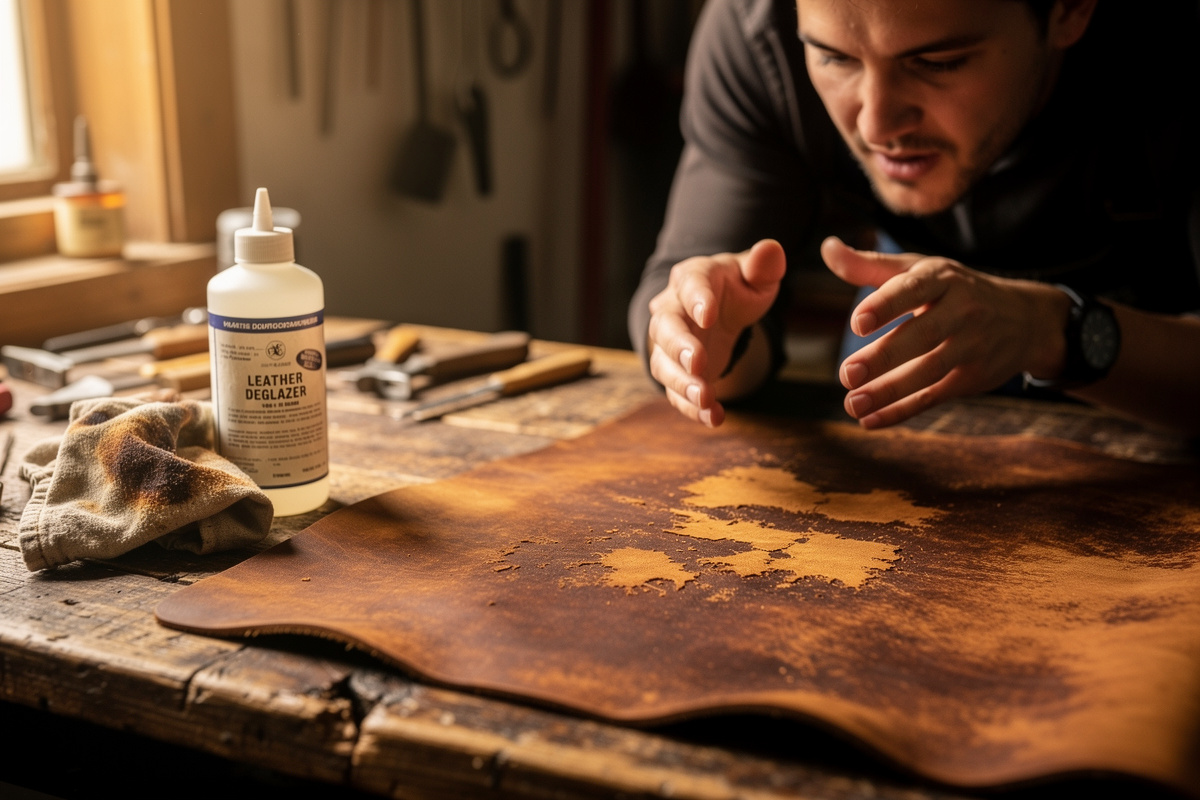
Usually the carrier flashed off too fast where the applicator lingered. Alcohol dye is the worst for this; oil dye is the most forgiving. Deglaze first, work with long parallel strokes, then a perpendicular second coat, and switch to an oil-based dye on large flat panels.
Do I need to seal leather after dyeing?
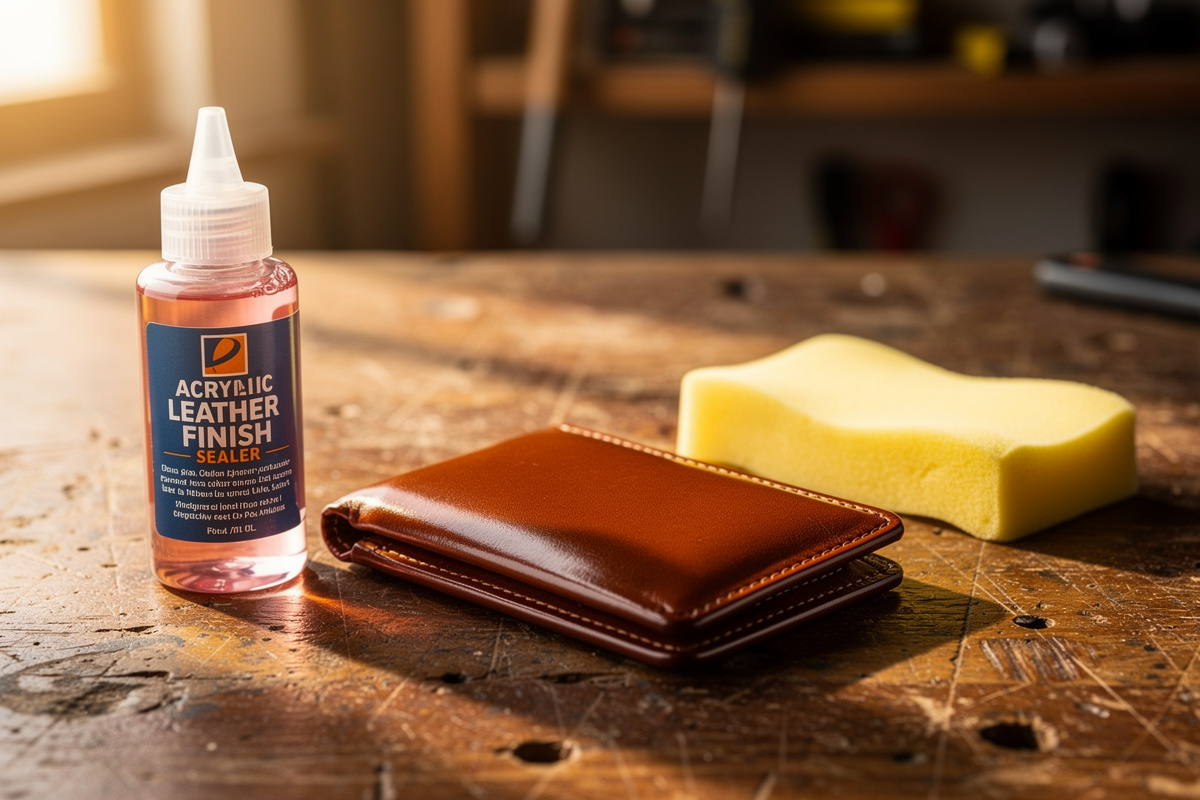
Always with water-based dye and acrylic over penetrating dye, because the color rides near the surface and crocks onto everything. Oil and alcohol dye also benefit from a sealer like acrylic resolene to stop rub-off. Seal only after the dye has fully dried and you have buffed off loose pigment.
Can you mix oil and water based leather dyes?
Do not mix them in the bottle, since the carriers are not compatible and the pigment can clump or refuse to blend. You can layer them on the leather once each coat is fully dry, but it is cleaner to stay within one dye family and mix colors inside that family instead.
Related Articles
- Leather Dyeing: The Complete Veg-Tan Guide
- Best Leather Dye for Veg-Tan: 8 Brands Tested
- How to Dye Leather Without Streaks or Blotches
- Types of Leather: Tannage, Grade, and Weight
- Leather Edge Finishing: The Bevel-to-Burnish Guide