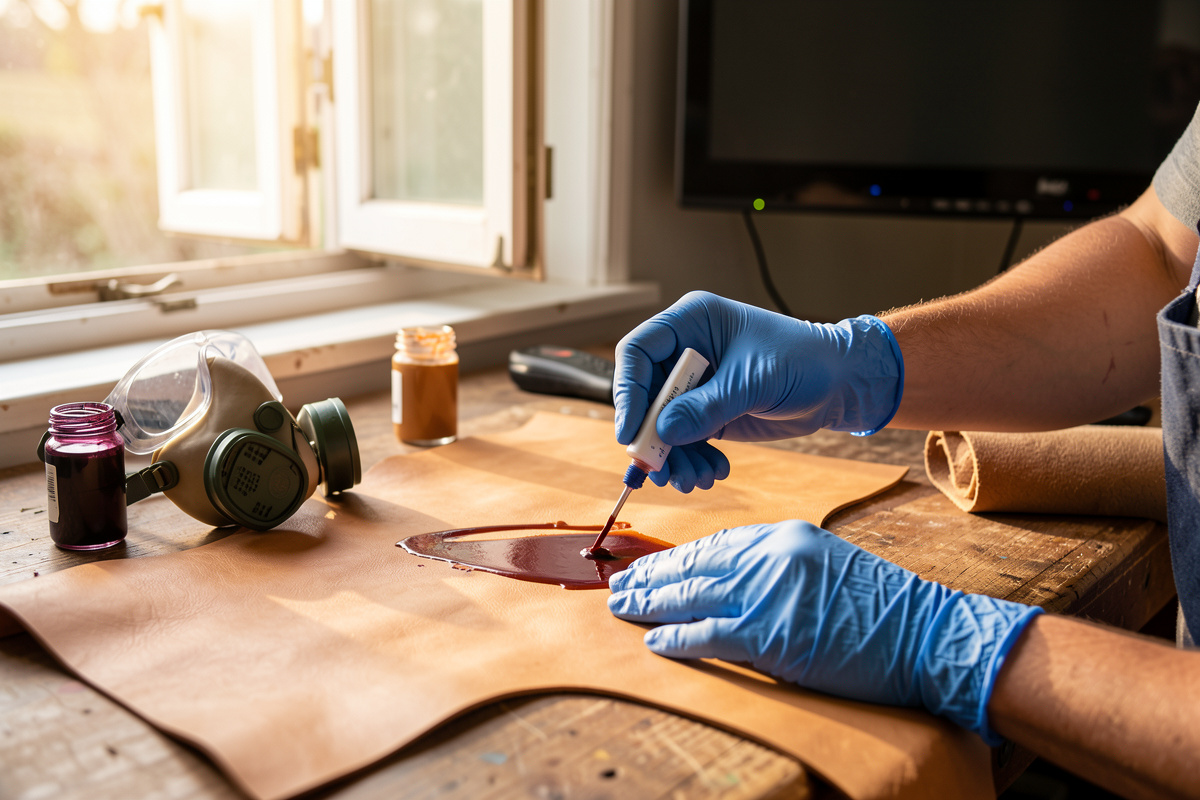
Leatherwork is one of the safer crafts, but it concentrates its real risks in two places: the blades that cut you and the solvents you breathe. Sharp knives,…
Leatherwork is one of the safer crafts, but it concentrates its real risks in two places: the blades that cut you and the solvents you breathe. Sharp knives, punches, and awls cause the cuts; dyes, deglazers, and contact cement off-gas the fumes. Respect those two and the rest of the craft is genuinely low-hazard. Most beginner injuries come not from doing something exotic but from a dull blade slipping or a closed room full of solvent vapour, both entirely preventable with a few habits.
I work leather in a space deliberately walled off from the grinding-and-sparks side of my workshop, and that separation taught me to think about leather’s hazards on their own terms rather than lumping them in with the louder, more obvious dangers of metalwork. Here are the safety habits that actually matter at a leather bench, in order of how likely they are to bite you.
Blades: The Most Likely Injury
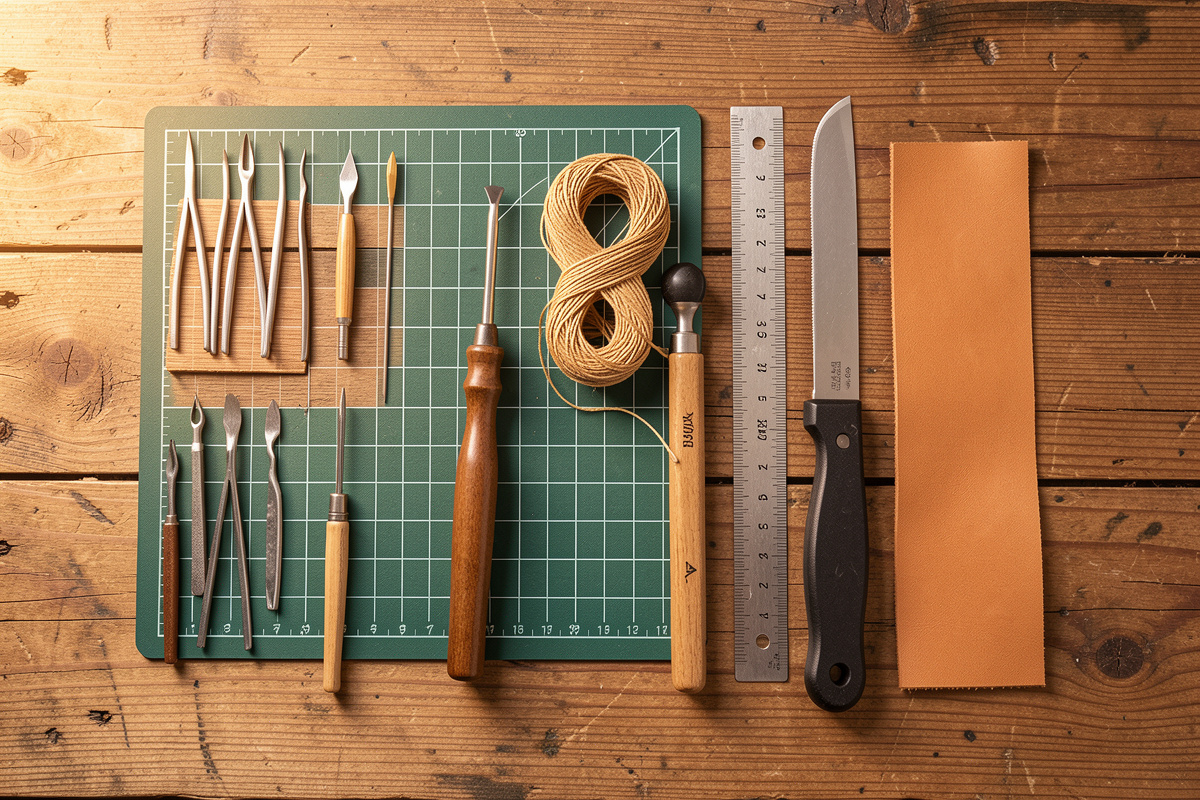
The cutting station is where you are most likely to draw blood, and the counterintuitive truth is that a sharp blade is safer than a dull one. A sharp edge goes where you aim it; a dull edge needs force, and force is exactly what sends a blade skipping off the leather and into a finger. Keep your knives and awls stropped, and you remove the single biggest cause of cuts.
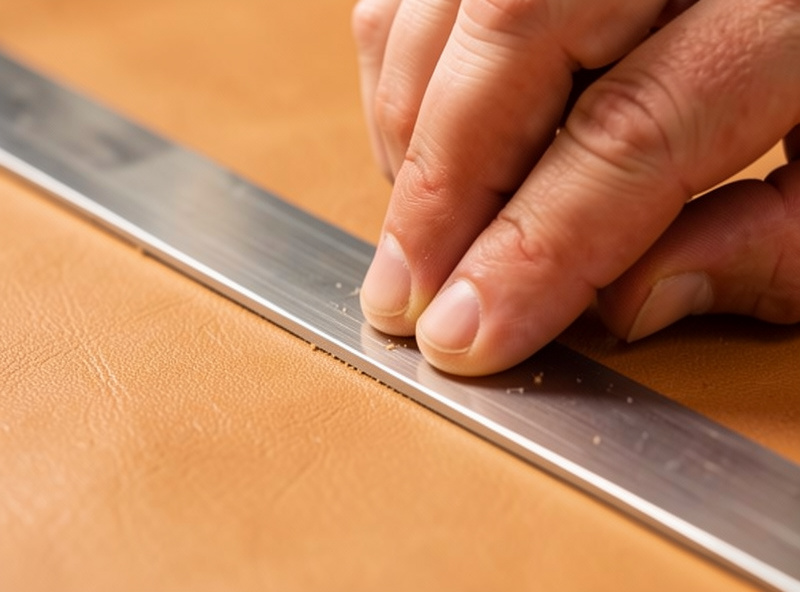
The technique habits are simple and worth making automatic. Always cut away from your body, or across it, never toward your holding hand. Keep your non-blade hand behind the blade’s path, fingers pressing the straightedge well back from the edge. Retract or sheath blades the moment you set them down, because a bench full of exposed edges is where the accidental cuts happen, reaching past a blade you forgot was there. And never try to catch a falling knife; step back and let it drop.
Punches, Awls, and Mauls
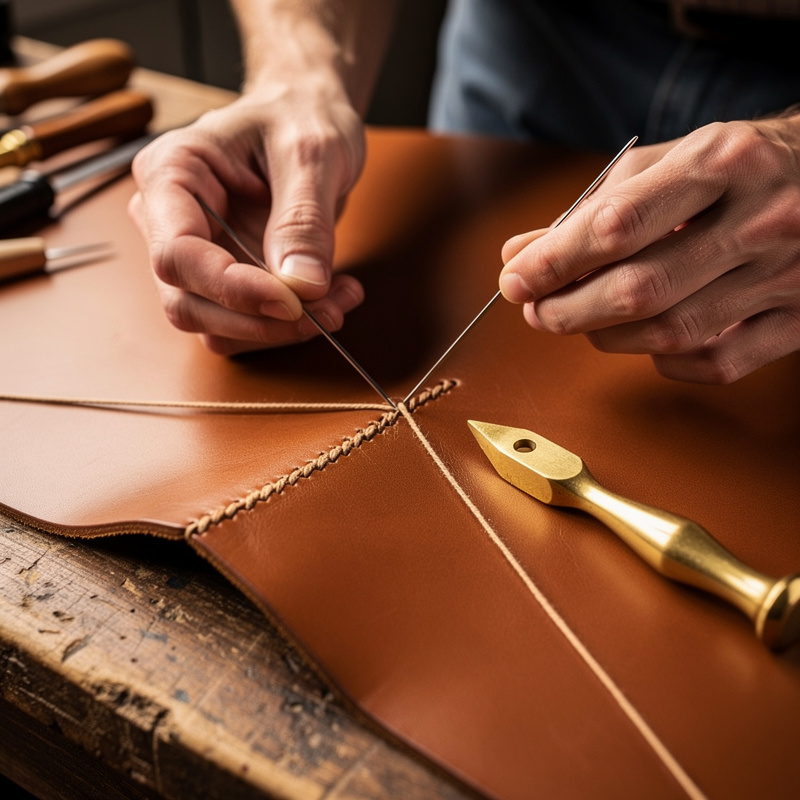
Punching tools combine a point with the force of a maul, which is its own small hazard. A diamond awl is needle-sharp and points straight at the hand holding the leather; push it through and it can carry on into your palm if the leather gives suddenly. Keep your supporting hand off the exit path, punch onto a hard surface so the leather does not unexpectedly collapse, and let the awl’s sharpness do the work rather than driving it with a lunge.
Setting hardware with a maul is loud and repetitive rather than acutely dangerous, but protect your hearing on long hardware sessions and watch your non-striking hand. The classic beginner injury here is a missed maul strike landing on the fingers steadying a punch. Position that hand low and to the side, gripping near the base, never near the top where the maul comes down.
Dyes, Solvents, and Fumes
This is the hazard beginners most underestimate, because it is invisible and cumulative rather than immediate. Spirit-based dyes, leather deglazer, dye reducer, antique finishes, and contact cement all release solvent vapour, and a small enclosed room with no airflow concentrates it fast. The symptoms, headache, lightheadedness, a chemical taste, are your cue that ventilation is inadequate, not a normal part of the craft.
The fix is airflow. Work near an open window with a fan moving air out of the room, not just stirring it around. For occasional dauber or sponge dyeing, cross-ventilation is usually enough. The moment you move to spraying, whether a rattle can finish or an airbrush atomising dye, the exposure jumps and a respirator rated for organic vapours becomes genuinely necessary, because atomised solvent hangs in the air and goes deep into the lungs. A dust mask does nothing against vapour; it has to be the right cartridge respirator.
Disclosure: LeatherCraftHaven is reader-supported. As an Amazon Associate I earn from qualifying purchases made through links in this article, at no extra cost to you. I only point to gear I actually use or would buy for my own bench.
The Short List of Protective Gear
You do not need much, and most of it is cheap. Nitrile gloves keep dye off your skin and out of your bloodstream, which matters because some dyes absorb readily; they also save you walking around with stained hands for a week. A pair of chemical-resistant nitrile gloves lives in my dye drawer and goes on before any colour work. For spray finishing, an organic-vapour respirator is the one piece I would not skip, because lung exposure is the hazard you cannot undo.
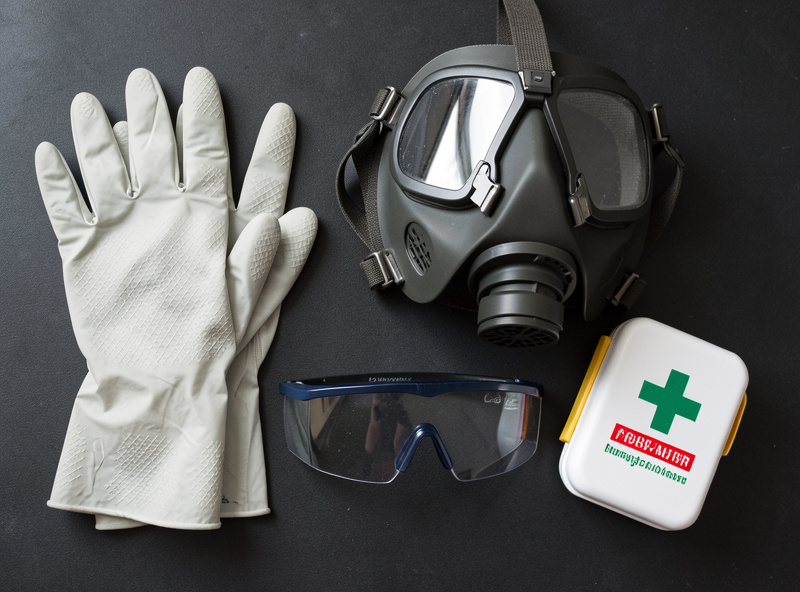
Beyond those: safety glasses when a snap or rivet could ping off under a maul, and a basic first-aid kit within reach of the cutting station, since that is statistically where you will need it. A few adhesive bandages and a way to apply pressure cover the realistic leatherwork injury.
Sanding Dust and the Mixed Workshop
Edge sanding throws fine leather dust, and dyed or finished leather dust is not something you want to be breathing through a long session. A dust mask while power-sanding edges, and a habit of sanding away from your finishing area, keeps it manageable. The dust also matters for the work itself, since it settles into wet finish and ruins it.
If your leather bench shares a space with metalworking, woodworking, or any grinding, the calculus changes, because now you have swarf and metal dust mingling with solvent fumes and leather dust, and that combination deserves real extraction and careful sequencing. I keep the two sides separated for exactly this reason; if you cannot, the mixed-workshop ventilation question is worth thinking through deliberately rather than hoping it works out.
Safe Storage and Disposal
Solvents and oily rags are the quiet fire risk. Rags soaked in neatsfoot oil or some finishes can self-heat as they oxidise, so never leave a pile of oily rags balled up; lay them flat to dry outdoors or store them in a sealed metal container. Keep dyes and solvents capped, upright, away from heat and out of reach of children and pets, and dispose of solvent waste as hazardous waste, not down the drain. None of this is dramatic, but it is the kind of overlooked detail that turns a tidy hobby into an incident, and it costs nothing to do right. For the broader list of habits that separate a clean bench from a frustrating one, my guide to common beginner mistakes covers the non-safety side.
Is leatherworking dangerous?
Leatherwork is relatively low-hazard, with risks concentrated in two areas: sharp blades that cause cuts and solvent-based dyes and cements that release fumes. Respect those two with sharp tools, safe cutting habits, and ventilation, and the rest of the craft is genuinely safe.
Are leather dyes toxic to breathe?
Spirit-based dyes, deglazers, and contact cement release solvent vapour that can cause headaches and lightheadedness in a closed room. Work near an open window with a fan exhausting air. When spraying or airbrushing, use a respirator rated for organic vapours, not a dust mask.
Why is a sharp knife safer than a dull one for leather?
A sharp blade goes where you aim it, while a dull one needs force, and that force makes it skip off the leather and into your hand. Keeping knives and awls stropped sharp removes the single biggest cause of cuts at the bench.
Do I need a respirator for leather dyeing?
For occasional dauber or sponge dyeing, cross-ventilation near an open window is usually enough. The moment you spray or airbrush dye or finish, atomised solvent hangs in the air, and an organic-vapour cartridge respirator becomes genuinely necessary to protect your lungs.
Should I wear gloves when dyeing leather?
Yes. Some leather dyes absorb readily through skin, so chemical-resistant nitrile gloves protect you and save you walking around with stained hands. Keep a pair in your dye drawer and put them on before any color work.
Are oily leather rags a fire risk?
Yes. Rags soaked in neatsfoot oil or some finishes can self-heat as they oxidize and ignite. Never ball up and pile oily rags; lay them flat to dry outdoors or store them in a sealed metal container, and dispose of solvent waste as hazardous waste.
Related Guides
- Leather Working for Beginners: A Complete Starter Guide
- Leathercraft Workspace Setup: Build a Working Bench Anywhere
- How to Cut Leather Straight: Clean Edges Every Time
- Common Leatherworking Mistakes Beginners Make