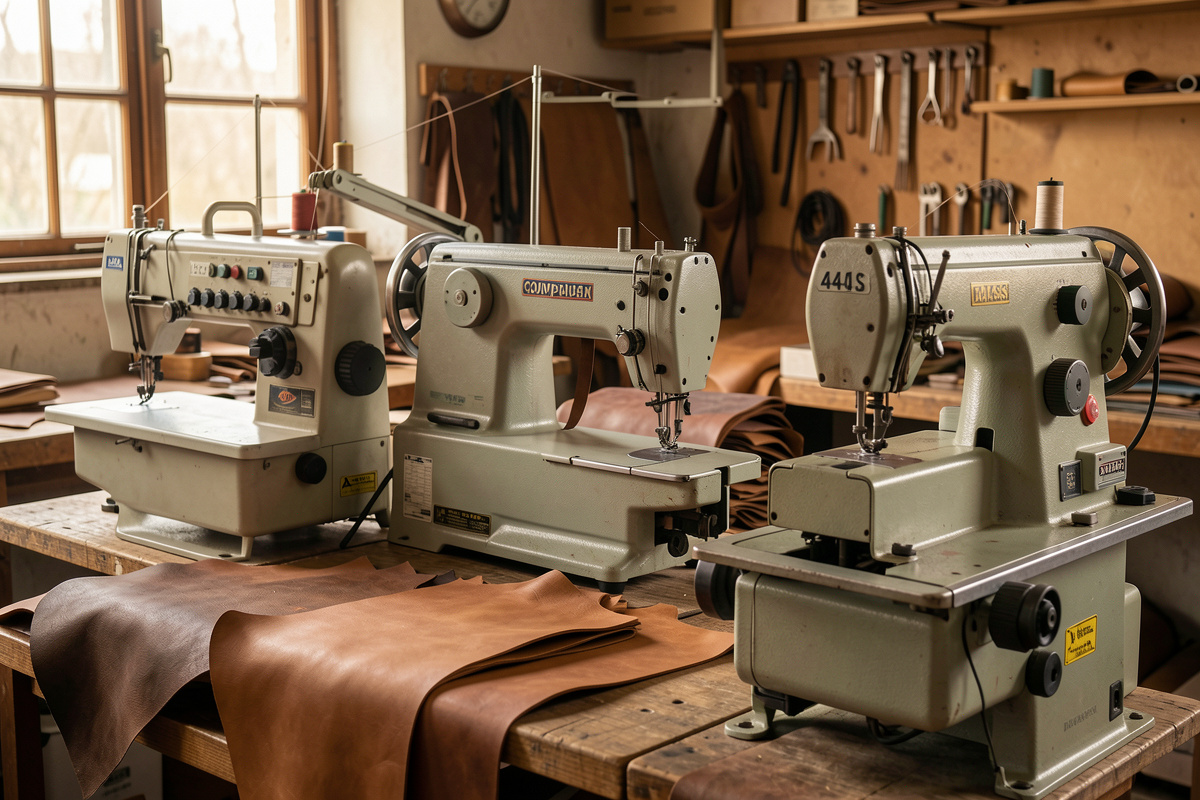
The best sewing machine for leather is the one matched to the heaviest leather you actually sew, and for most makers that’s a used compound-feed (triple-feed) industrial —…
The best sewing machine for leather is the one matched to the heaviest leather you actually sew, and for most makers that’s a used compound-feed (triple-feed) industrial — not a new “heavy-duty” home machine. A used industrial flatbed runs Tex 207 thread through 10–12 oz of stacked leather all day; the best home machine on the market quits around 3 oz.
I’ll say plainly what I always say: I saddle-stitch my own small goods by hand, so I’m not selling you a machine to be cool. I’m answering the question I get most — “what should I buy?” — the way I’d answer a friend who’s started sewing bags and is drowning in marketing copy. The picks below are organized by the job, because that’s the only thing that should decide it. Read the parent sewing machine for leather guide first if you haven’t, then come back here for the actual buying call.
How to Choose: Job First, Brand Last
Pick the machine by the heaviest leather and thickest thread you’ll regularly run, then by feed type, then by motor, and only then by brand. A machine’s name tells you almost nothing; its feed mechanism and thread ceiling tell you everything. Buy for the work you do, not the work you fantasize about.
The single most common mistake is buying a machine that’s a class too light because it’s cheaper, then fighting it forever, then buying the right machine anyway. The second most common is buying a 441-class beast to make wallets — it can’t make a stitch fine enough and you’ve spent belt money on a card-holder problem. Decide which of four jobs is yours: soft goods and linings, general bags and small goods, heavy belts and holsters, or a bit of everything on a budget. Each has a clear answer.
Best for Soft Goods and Linings: Heavy-Duty Domestic + Walking Foot
If you only sew thin chrome-tan, garment leather, and bag linings up to about 3 oz, a heavy-duty domestic machine with a walking-foot attachment and leather-point needles is the cheapest way in. Expect a Tex 70 thread ceiling and a hard limit at folded edges, but for linings and light panels it genuinely works.
Machines like the Singer Heavy Duty series or a comparable metal-frame domestic will sew soft leather if you fit a 130/705 H-LL leather needle, fit or clip on a walking foot, lengthen the stitch, and slow down. What it will never do is climb a turned bag mouth or sew veg-tan — the feed dogs polish the grain and the needle deflects. Be honest about your projects: if “leather” for you means soft garment hide and linings, this tier is fine and you can stop reading. If it means structured bags or anything veg-tan, skip straight to the next section.
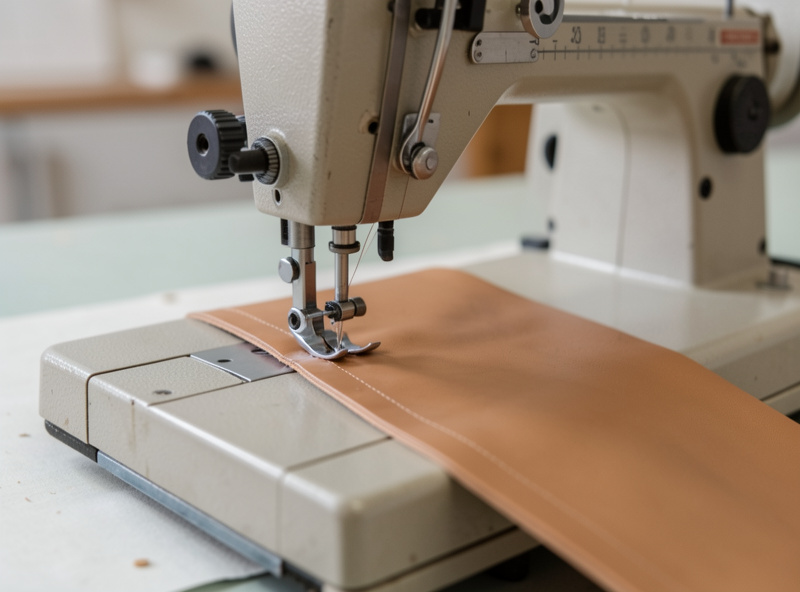
As an Amazon Associate I earn from qualifying purchases. The cheap upgrades that make a domestic actually sew soft leather are a snap-on walking foot and a pack of 130/705 H-LL leather-point needles — together they cost less than a meal out.
Best All-Rounder: Compound-Feed Industrial (What Most Makers Should Buy)
For the maker sewing bags, sheaths, medium straps, and lined small goods, a compound-feed industrial — flatbed for flat work, cylinder arm for bags and curved goods — is the right machine and the best value in the category. It runs Tex 138 to 207 thread through 4–16 oz of combined leather and will outlast you.
This is the tier the Consew 206RB, Juki DNU-1541 and LU-1508, and the various Techsew and Toledo cylinder-arm machines live in, and a clean used one is a better buy than almost anything new. The triple feed (needle, foot, and dogs all moving together) is what lets it sew slick chrome-tan and stacked veg-tan without the layers slipping. If you can only own one leather machine and you make a range of goods, this is it. A cylinder arm is the more versatile body style because you can sew tubes, gussets, and bag bodies that a flatbed can’t wrap, and you can add a flatbed attachment table when you need flat. For most readers of this site, the search ends here.
Best for Belts, Holsters, and Harness: 441-Class Cylinder Arm
If your work is heavy — gun belts, holsters, dog collars, harness, stacked sheaths — you want a 441-class machine: the Cobra Class 4, Cowboy CB4500, or Techsew 5100. These sew 10–30 oz of combined leather with Tex 277 to 415 thread and that fat, proud saddlery stitch nothing else can lay.
The 441 clones are all built on the same legendary Juki 441 pattern and they’re remarkably similar; pick on dealer support and price, not bragging specs. What you’re buying is brute capacity and a long cylinder arm, and what you’re giving up is finesse — the smallest needle and shortest stitch still read as heavy, so this is the wrong machine for wallets or anything delicate. Belt and holster makers happily own one of these and a lighter machine for everything else, because no single machine spans card wallets to gun belts. If you don’t sew genuinely thick leather, don’t buy this — you’ll have paid for capacity you can’t use and lost the fine control you actually need.
Best on a Budget: Used Industrial Beats New Domestic
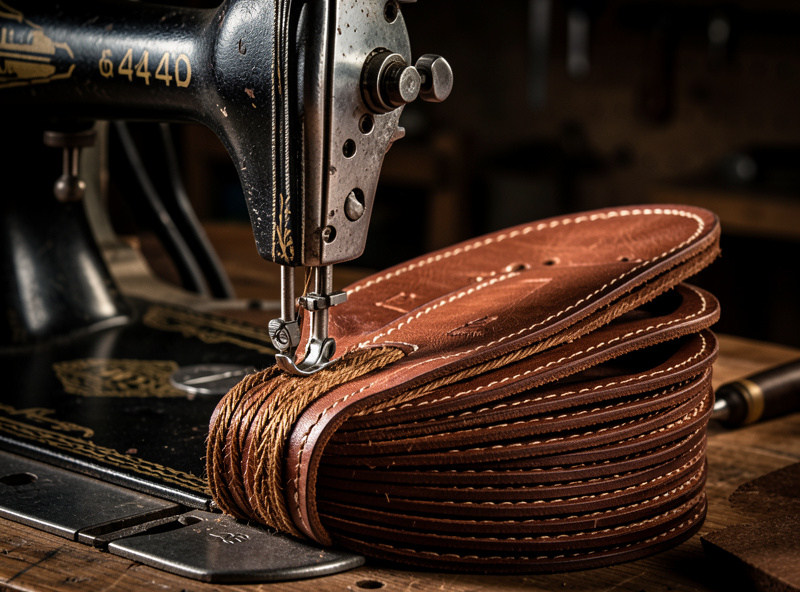
At any given price, a used industrial beats a new domestic for leather — every time. A thirty-year-old compound-feed head with a fresh servo motor will outsew the newest “sews leather” home machine on the market, because the feed and the iron underneath are built for the job. Buy the old workhorse, not the new toy.
The smart budget move is to find a tired-looking used industrial from a tailor or upholstery shop, expect to spend a little on a new servo motor and a needle plate, and ignore cosmetics entirely — these machines were built to run for decades in production. Swapping a clutch motor for a servo motor is the single best upgrade you can make for leather, giving you the slow, controllable speed that thick leather demands. I’d take a $400 used Consew with a $150 servo over a $700 new home machine without a second’s hesitation. The whole industrial-vs-domestic argument, with the spec-by-spec reasoning, is in industrial vs domestic sewing machine for leather.
The Picks, Side by Side
| Your work | Machine class | Representative models | Thread ceiling | Leather ceiling |
|---|---|---|---|---|
| Linings, soft garment leather | Heavy-duty domestic + walking foot | Singer Heavy Duty, metal-frame domestics | Tex 70 | ~3 oz soft |
| Bags, sheaths, small goods (the all-rounder) | Compound-feed industrial | Consew 206RB, Juki DNU-1541 / LU-1508 | Tex 207 | ~16 oz combined |
| Belts, holsters, harness | 441-class cylinder arm | Cobra Class 4, Cowboy CB4500, Techsew 5100 | Tex 415 | ~30 oz combined |
| Canvas + leather, sails, portable | Portable walking foot | Sailrite-style portables | Tex 135 | ~8 oz |
What to Check When Buying Used
Buying used is the right move, but check four things before money changes hands: that it sews a clean lockstitch on a leather test scrap, that reverse works and matches the forward stitch length, that the feed and presser foot move together with no slip, and that parts and needles are still available for that model. A machine that fails the test scrap is a project, not a bargain.
Bring your own leather and thread to a viewing and sew a real seam — not cloth. Listen for a healthy, even sound and watch the lockstitch knot bury itself. Hooks, feed dogs, and tension assemblies are all serviceable, but a cracked casting or an orphan model with no needle system is a trap. Get the needle system right for whatever you buy too; the points and sizes are covered in the leather sewing machine needles guide, and the thread to feed it is in sewing machine thread for leather. Once it’s home, the first-hour setup and the skiving prep that keeps it from choking on bulk are in the skiving for machine sewing guide and the main hub.
Frequently Asked Questions
What is the best sewing machine for leather for a beginner?
For a beginner sewing soft goods, a heavy-duty domestic with a walking foot and leather-point needles is the cheapest start, but it tops out near 3 oz. The better long-term buy is a used compound-feed industrial like a Consew 206RB, which handles real leather and lasts for decades. Match the machine to the heaviest leather you plan to sew.
Can I sew leather on a Singer Heavy Duty?
A Singer Heavy Duty sews thin soft leather and linings up to about 3 oz if you fit a 130/705 H-LL leather-point needle, use bonded thread no heavier than Tex 70, lengthen the stitch, and add a walking foot. It cannot sew veg-tan, thick stacks, or folded edges; for that you need an industrial walking-foot or compound-feed machine.
Do I need an industrial sewing machine for leather?
Only if you sew leather thicker than about 3 oz, veg-tan, or folded and stacked edges. Soft garment leather and linings can be sewn on a heavy-duty domestic with a walking foot. Bags, sheaths, belts, and holsters need an industrial walking-foot, compound-feed, or 441-class machine.
What is a compound-feed sewing machine?
Compound feed, also called triple feed, means the needle, presser foot, and feed dogs all move together to pull the leather as one. It prevents the layers from slipping on slick or thick leather, which is why compound-feed industrials like the Juki DNU-1541 are the best all-round choice for bags and small goods.
Is it better to buy a used industrial or a new home machine?
For leather, a used industrial beats a new home machine at the same price almost every time. A used compound-feed head with a fresh servo motor sews thicker leather, heavier thread, and lasts far longer than any new domestic. Test it on a leather scrap before buying and budget for a servo motor swap.
What is a 441-class sewing machine for?
A 441-class machine like the Cobra Class 4 or Cowboy CB4500 is built for heavy leather: gun belts, holsters, harness, and stacked sheaths up to about 30 oz combined with Tex 277 to 415 thread. It is overkill for wallets and bags because the needle and stitch are too large for fine work.
Related Guides
- Sewing Machine for Leather: A Maker’s Complete Guide
- Industrial vs Domestic Sewing Machine for Leather
- Leather Sewing Machine Needles Guide
- Sewing Machine Thread for Leather
- Saddle Stitch vs Machine Stitch