Leatherwork has its own vocabulary, and the jargon trips up beginners more than any technique does. When a tutorial says to “case the leather before you bevel and…
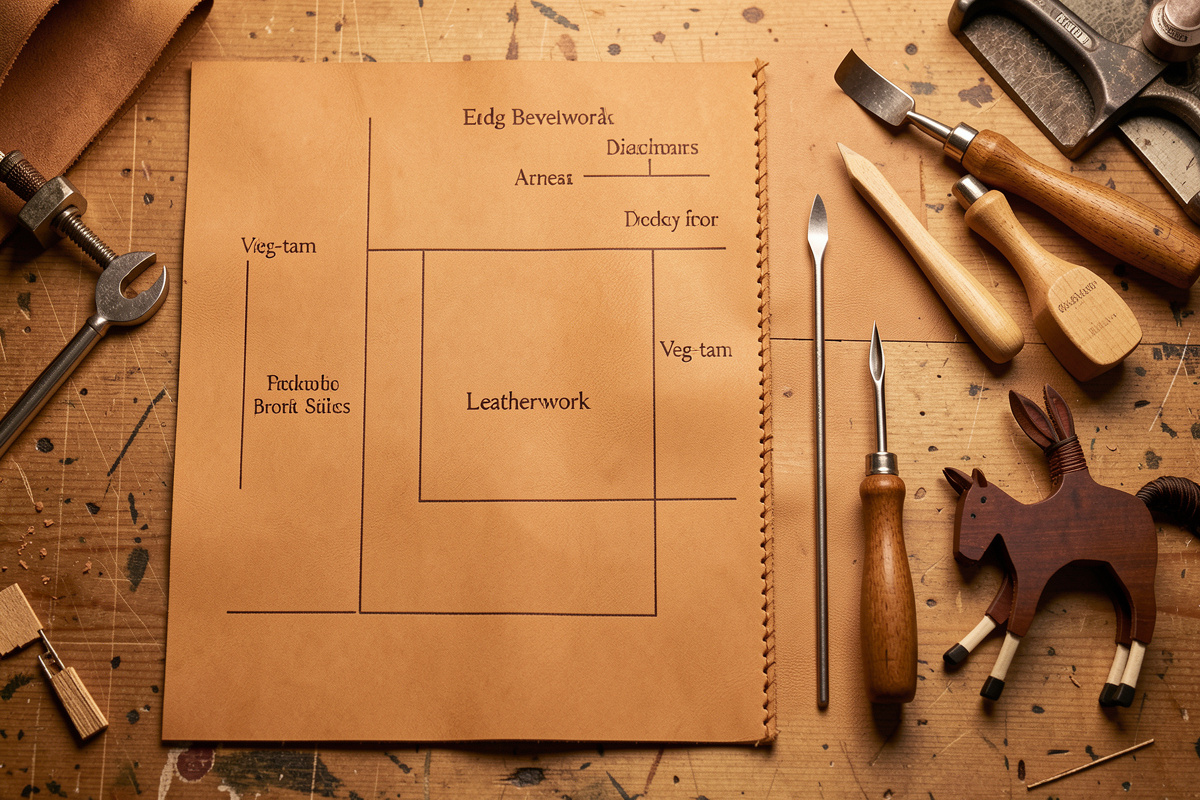
Leatherwork has its own vocabulary, and the jargon trips up beginners more than any technique does. When a tutorial says to “case the leather before you bevel and slick the edge,” that sentence is opaque until you know that casing means dampening, beveling means rounding the corner, and slicking means burnishing it smooth. Learn maybe two dozen core terms and suddenly every tutorial, supplier listing, and forum thread becomes readable. This is the glossary I would hand any beginner before their first project.
I have organised these the way they actually come up at the bench, grouped by what you are doing, leather itself, then cutting and prep, stitching, edges, and finishing, rather than alphabetically, because that is how the words make sense in context. The quick-reference table is alphabetical for looking one up fast.
Talking About the Leather Itself
Veg-tan (vegetable-tanned): Leather tanned with plant tannins. It is firm, tools and molds well, takes dye, and burnishes, the leather for structured goods, tooling, and wet-forming. The default for beginners.
Chrome-tan: Leather tanned with chromium salts. Soft, supple, water-resistant, and stays that way, the leather for bags and garments. It does not burnish or tool like veg-tan, so do not expect it to.
Grain side and flesh side: The grain is the smooth outer surface (where the hair was); the flesh side is the rougher inner surface. “Full-grain” means the natural grain is intact and untouched, the highest quality.
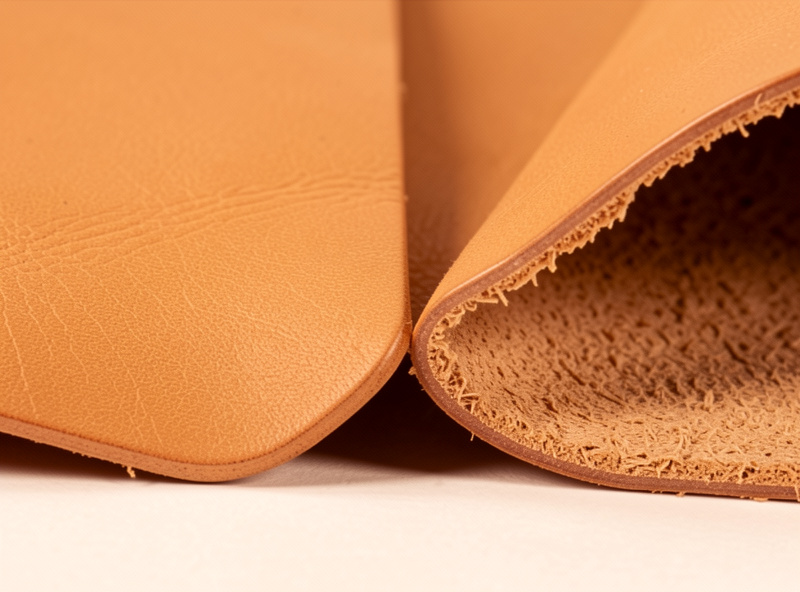
Weight (oz): How thickness is measured, where one ounce equals about 1/64 inch. A 5 oz piece is roughly 2 mm thick. It describes thickness, not literal weight, which catches every beginner out. The full thickness chart is worth bookmarking.
Temper: How firm or soft a piece of leather is, independent of its weight. The same 6 oz can come in firm or soft temper for different jobs.
Cutting and Prep
Casing: Dampening leather with water so it becomes pliable for tooling, molding, or burnishing. Properly cased leather is damp but not wet, and tools cleanly.
Skiving: Thinning a local area of leather with a sharp blade, usually at folds or overlaps, so seams do not become bulky. Splitting is the same idea applied to a whole piece to reduce its overall weight.
Wet-forming (wet-molding): Shaping cased veg-tan around a form (a knife, a mould) so it dries holding that shape. Only veg-tan does this.
Stitching
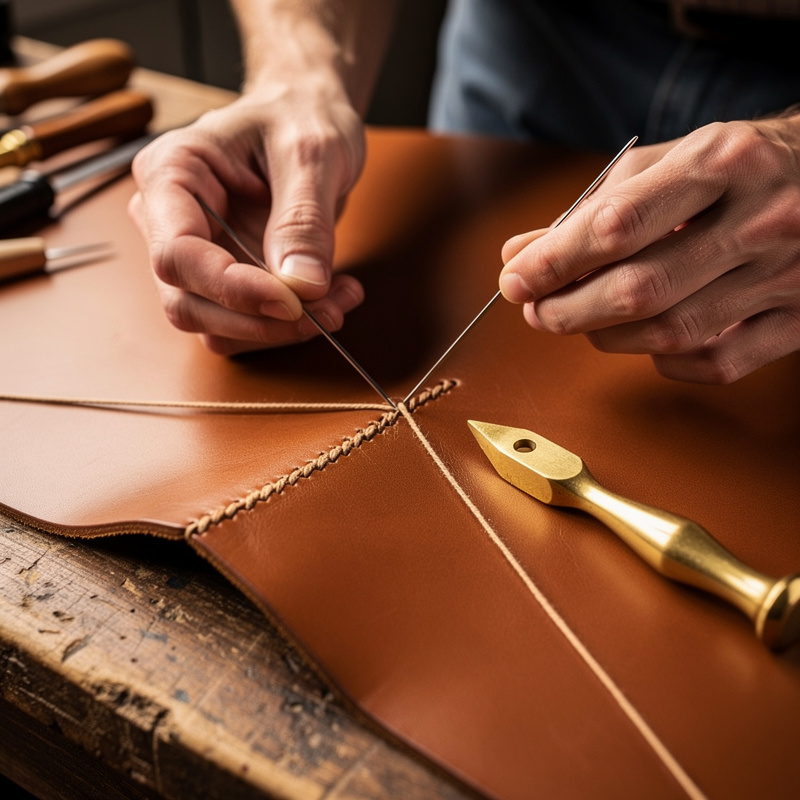
Saddle stitch: The traditional hand stitch using two needles on one thread, passing both through each hole from opposite sides. It is stronger than a machine lock stitch because it does not unravel if a thread breaks. This is the core hand-stitching skill.
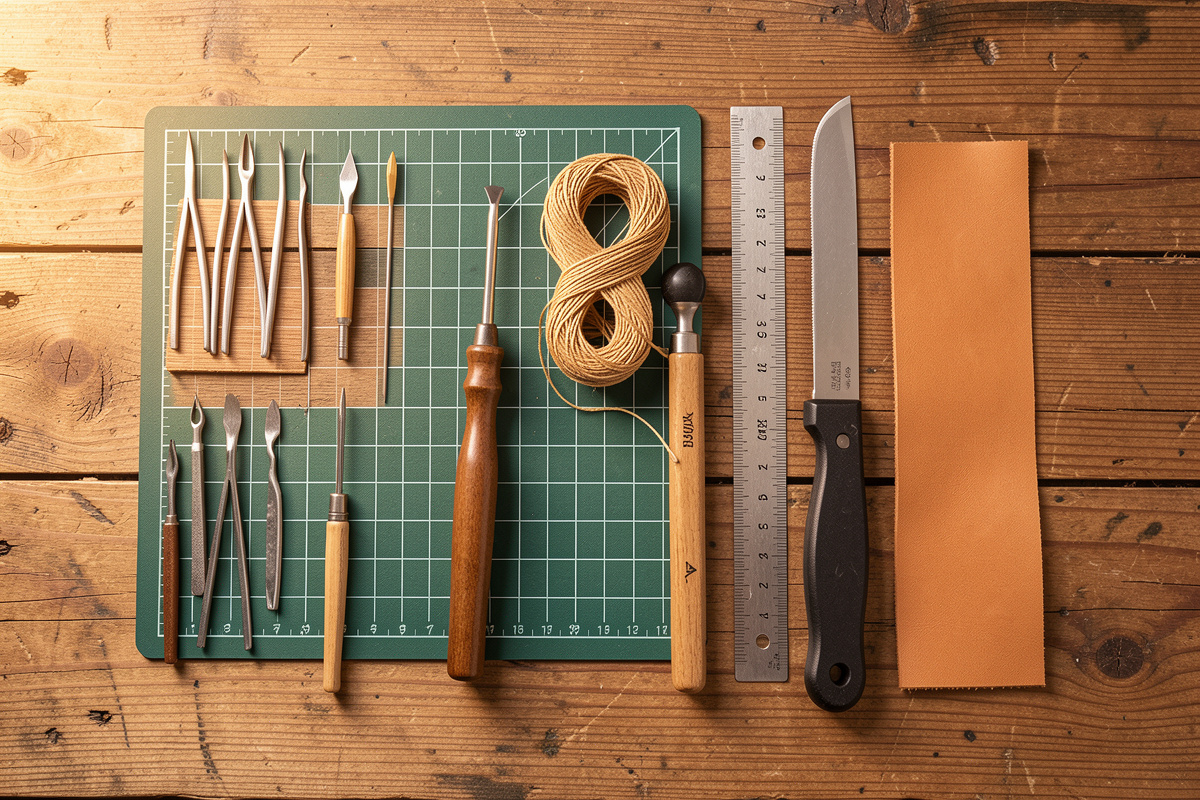
Pricking iron and stitching chisel: Toothed tools struck with a maul to mark or punch evenly spaced stitch holes. A pricking iron traditionally marks the holes (you open them with an awl); a chisel punches them through. SPI means stitches per inch, the spacing measure, and pitch is the same idea in millimetres.
Diamond awl: A sharp, diamond-cross-section blade used to pierce or open stitch holes at a consistent angle, kept stropped razor-sharp.
Edges and Finishing
Beveling: Shaving the sharp 90-degree corner off a cut edge with an edge beveler, rounding it so it can be sanded and slicked smooth.
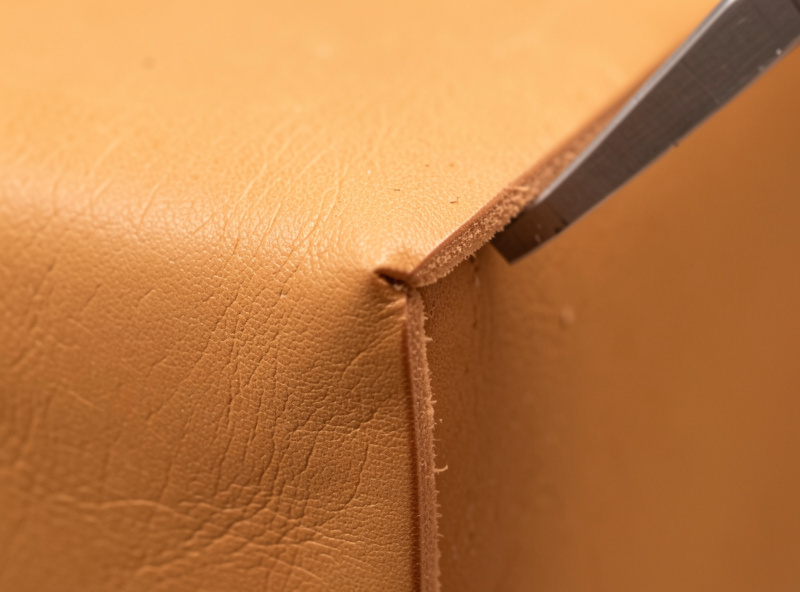
Burnishing (slicking): Rubbing an edge with friction (a slicker) plus water or a compound until the fibres compress to a smooth, glossy finish. The single biggest tell of made-versus-bought.
Tokonole and gum tragacanth: Burnishing compounds rubbed into an edge to help it slick down glossy. A slicker (or burnisher) is the grooved tool, wood or printed, you rub with.
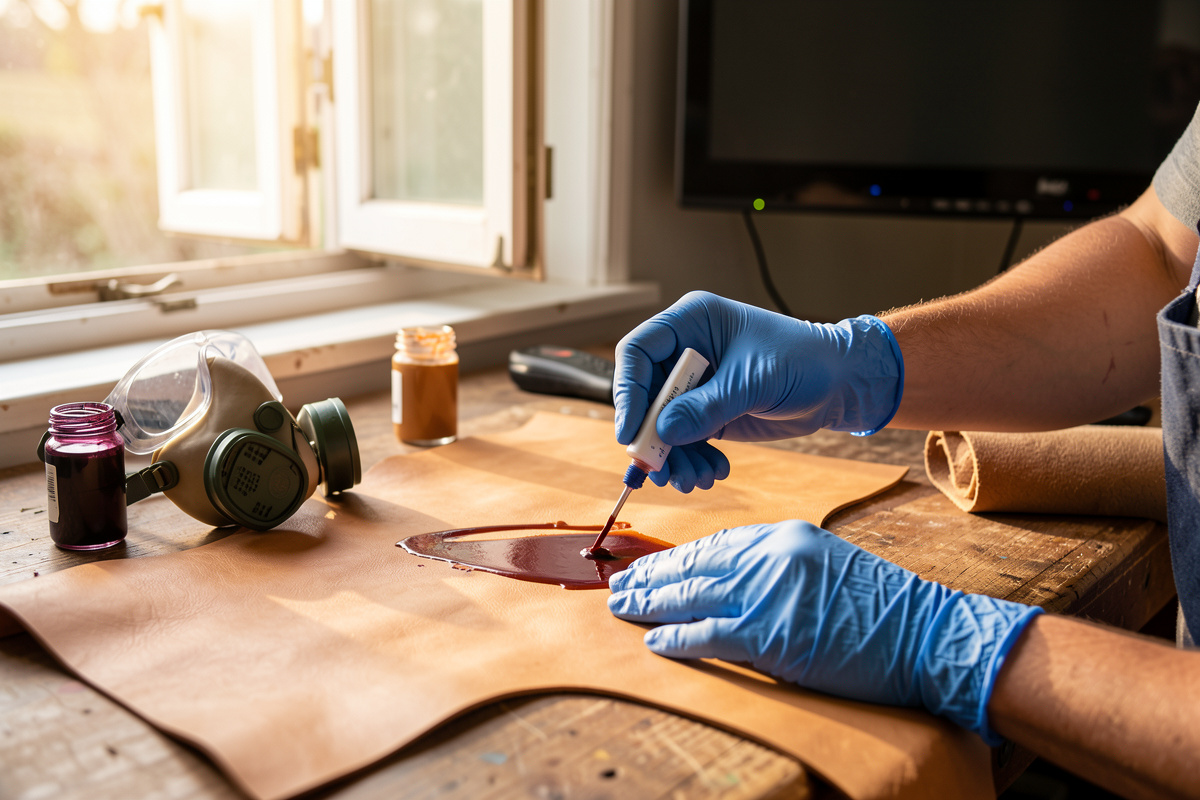
Resist and antique: A resist seals the surface so an antique finish (a pigmented paste wiped on and off) settles only into tooled recesses, creating an aged, shaded look.
Resolene and neatsfoot oil: Resolene is a common acrylic topcoat that seals and protects; neatsfoot oil is a conditioner that softens and darkens leather. Deglazer strips surface finish to prep for dye or to lift colour.
Hardware and Tool Words
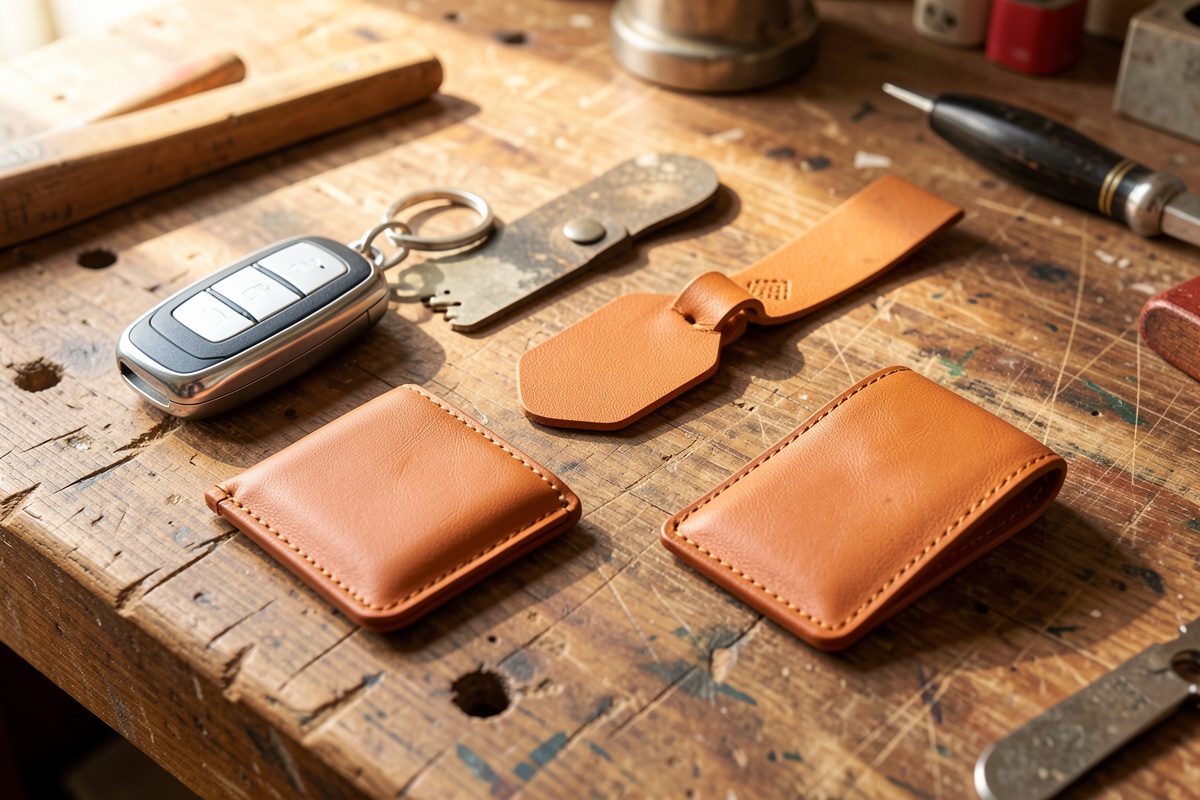
Rivet and burr: A two-part metal fastener that joins layers permanently; the cap sets over a post, or a copper rivet is peened over a washer-like burr. Chicago screw is a screw-together fastener you can undo.
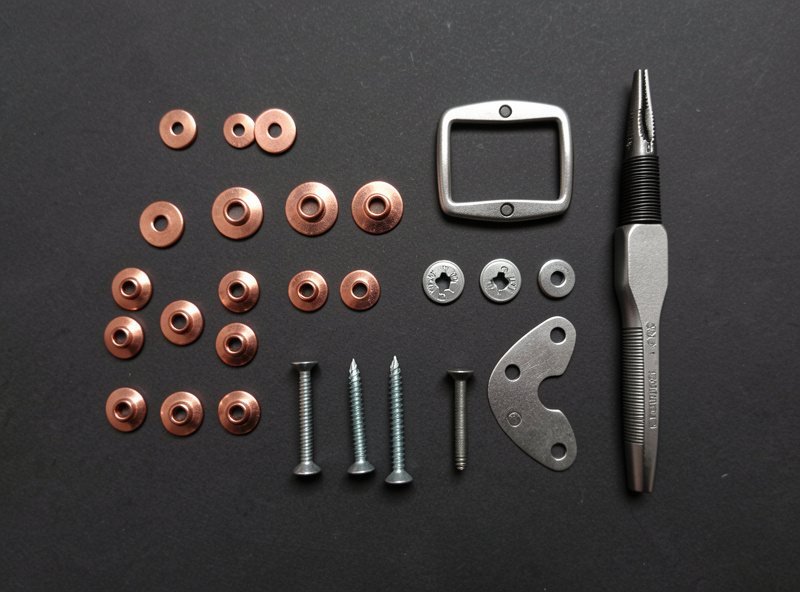
Snap and setter: A press-stud closure set with a matching setter tool and an anvil. The setter must match the snap line, which is the trap that catches beginners buying the two separately.
Strap end and buckle: The shaped tip of a belt or strap, and the frame it fastens through. Keeper is the loop that holds the loose end.
Strop and compound: A strop is a leather strip charged with abrasive compound used to keep blades and awls razor-sharp between sharpenings. Stropping is the maintenance that quietly fixes wandering cuts and ragged stitch holes.
Maul and mallet: The striking tools for punches and stamps. A maul has a cylindrical, often weighted head that rolls across the tool face; a mallet is the simpler hammer-style version.
Quick-Reference Glossary
For looking a term up fast, here are the essentials alphabetically.
| Term | What it means |
|---|---|
| Bevel | Round off a cut edge’s sharp corner |
| Burnish / slick | Rub an edge smooth and glossy with friction |
| Casing | Dampen leather to make it pliable for tooling or molding |
| Chrome-tan | Soft, supple leather for bags and garments |
| Flesh side | The rough inner surface of the hide |
| Grain side | The smooth outer surface of the hide |
| Saddle stitch | Two-needle hand stitch, stronger than machine lock stitch |
| Skiving | Thinning a local area of leather with a blade |
| SPI / pitch | Stitch spacing, per inch or in millimetres |
| Temper | How firm or soft a piece is, apart from its weight |
| Veg-tan | Firm plant-tanned leather that tools and burnishes |
| Weight (oz) | Thickness, where 1 oz is about 1/64 inch |
| Wet-forming | Shaping cased veg-tan around a mould to hold its form |
Reading a Tutorial With the Vocabulary
Once these terms click, a sentence like “case the veg-tan, bevel and slick the edges, then saddle-stitch at 7 SPI” reads as a clear instruction rather than a wall of jargon: dampen the firm plant-tanned leather, round and burnish the cut edges, then hand-stitch with two needles at seven stitches per inch. That is the whole point of learning the words, they are the compression that lets makers communicate precisely.
You do not need to memorise all of them at once. Keep this page handy, look terms up as they come up in your first few projects, and within a month the vocabulary will be second nature. The fastest way to internalise it is to actually do the operations the words describe, because a term you have lived is one you never forget.
What is the difference between veg-tan and chrome-tan leather?
Veg-tan is firm plant-tanned leather that tools, molds, dyes, and burnishes, ideal for structured goods. Chrome-tan is soft, supple, water-resistant leather for bags and garments. Veg-tan holds shape and takes finishing; chrome-tan stays soft and does not burnish the same way.
What does casing leather mean?
Casing means dampening leather with water until it is pliable but not wet, which prepares veg-tan for tooling, wet-forming, or burnishing. Properly cased leather tools cleanly and holds an impression. Only vegetable-tanned leather responds to casing this way.
What is a saddle stitch?
A saddle stitch is the traditional hand stitch using two needles on one thread, passing both through each hole from opposite sides. It is stronger than a machine lock stitch because it will not unravel if a single thread breaks, making it the core hand-stitching skill.
What does SPI mean in leatherwork?
SPI means stitches per inch, the spacing of your stitch holes. A higher SPI gives finer, tighter stitching; a lower SPI gives larger, faster stitches. Pitch is the same measurement expressed in millimetres, and it must match your iron, awl, and thread size.
Keep Building
- Leather Working for Beginners: A Complete Starter Guide
- Leather Thickness Chart: Ounces to MM for Every Project
- Leathercraft Startup Cost: What You Actually Need to Spend
- Weekend Leather Projects: Things You Can Actually Finish