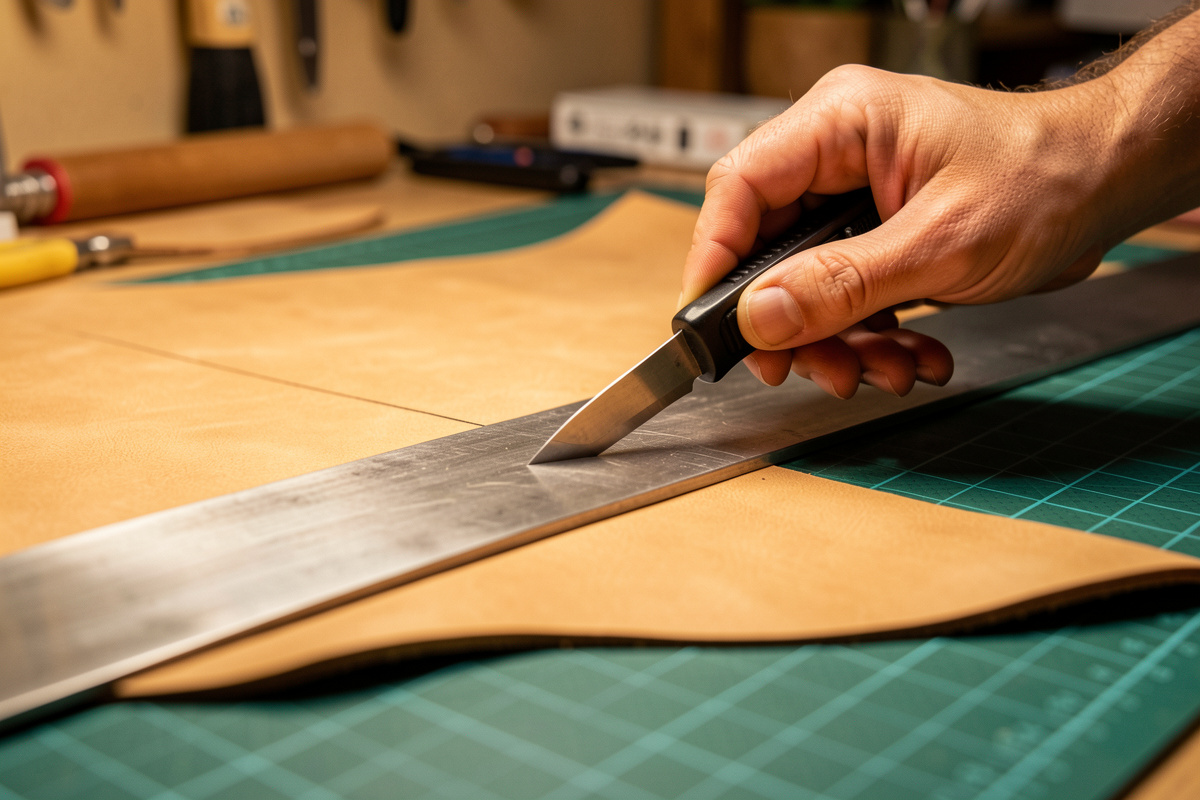
To cut leather straight, clamp a heavy steel straightedge along your marked line, keep your blade vertical and snug against the steel, and make several light passes instead…
To cut leather straight, clamp a heavy steel straightedge along your marked line, keep your blade vertical and snug against the steel, and make several light passes instead of one deep stroke. The straightedge guides the cut and protects your hand; the light passes keep the blade from wandering off line through thick leather. That is the whole technique, and it is the single skill that separates clean work from ragged work, because every project starts with a cut and a crooked edge cannot be stitched or burnished straight afterward.
Most beginners blame their knife when the real problem is the surface, the straightedge, or trying to power through in one pass. I have cut everything from 2 oz lining to 10 oz strap stock, and the method barely changes with weight, only the number of passes and the blade I reach for. Here is how to cut a straight, square edge every time.
Set Up Before You Cut
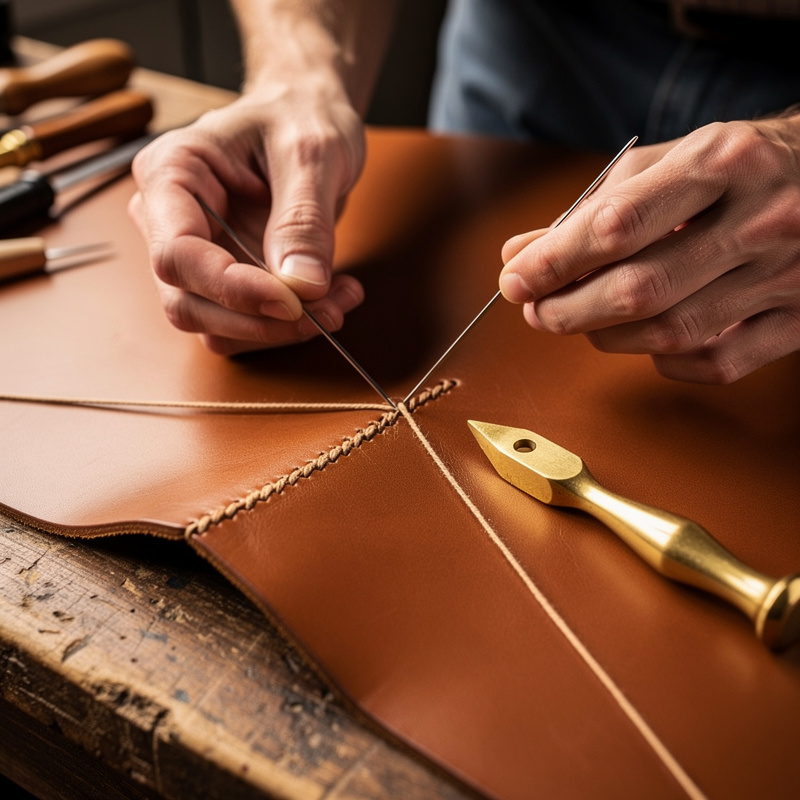
A straight cut is decided before the blade moves. Put a self-healing mat under the leather so the blade has something to bite into without dulling, and so the cut goes fully through the bottom. Mark your line with a fine awl scratch or a silver pen, not a ballpoint that smears. Then lay your straightedge exactly on the line, on the side you are keeping, so if the blade drifts it eats into the offcut, not your piece.
Hold the straightedge down hard. The most common cause of a wandering cut is a straightedge that creeps under blade pressure. A heavy steel rule with a cork or rubber backing grips far better than a light aluminium one, which slides and rides up over the blade. Spread your fingers wide on the steel and keep them clear of the cutting edge.
The Blade and Why Vertical Matters
Whatever blade you use, two things matter: it must be sharp, and it must be held vertical. A dull blade tears rather than slices and forces you to push harder, which is exactly when it skips off line and into a finger. A blade tilted off vertical cuts a beveled edge that looks fine from the top and is angled underneath, which then refuses to burnish square.
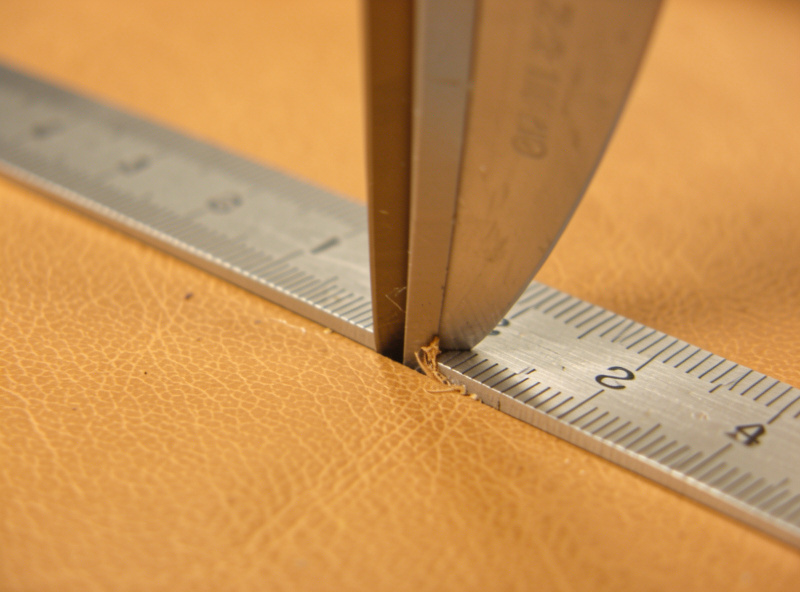
Drag the blade toward you in smooth passes, letting the steel guide it, and do not try to reach the bottom in one stroke on anything thicker than about 3 oz. Score the line first, then deepen it pass by pass. On heavy stock the first pass is just a guide groove the later passes ride in.
Which Knife for Which Cut
There is no single best blade, only the right one for the cut. Here is how I choose at the bench.
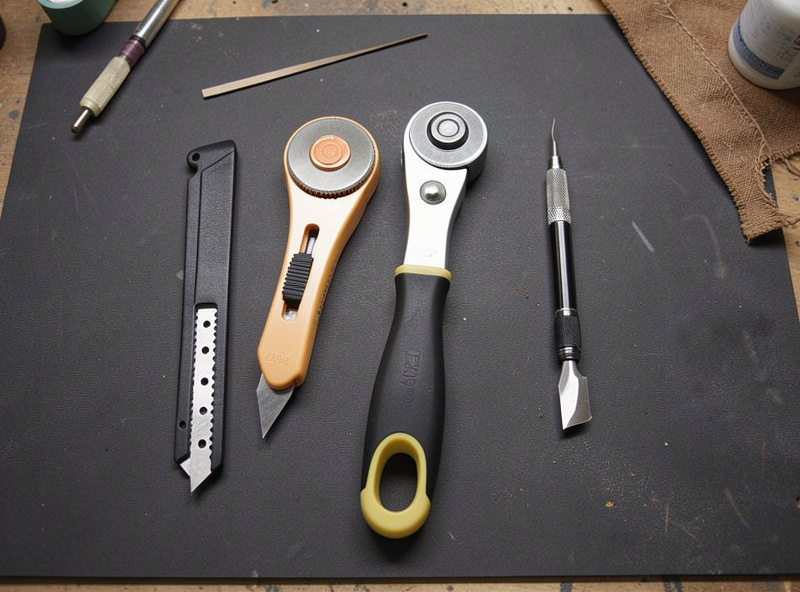
| Blade | Best for | Notes |
|---|---|---|
| Utility / box knife | Straight cuts, all weights | Cheap, snap-off blades stay sharp; the beginner workhorse |
| Rotary cutter | Long straight cuts, thin leather | Fast and clean on 2-5 oz against a steel rule; struggles on thick |
| Head knife / round knife | Long curves and straights, skilled hands | The traditional tool; superb once mastered, unforgiving while learning |
| Craft / hobby knife | Tight curves and detail | Too small for long straight cuts; reach for it on corners |
If you are starting out, a snap-off utility knife and a heavy steel straightedge will cut everything cleanly while you learn, and a fresh blade segment costs almost nothing. Sharpness beats blade type every time. Before buying any additional tools, the leathercraft startup cost guide breaks down the full first-year spend so you can prioritize without overspending on gear you do not need yet.
Cutting Thick Leather Straight
Heavy veg-tan, 8 oz and up, is where beginners struggle, because the blade wants to follow the leather’s grain and drift. The answer is patience and a fresh edge: score the full line lightly first, then make repeated passes letting the groove guide the blade, keeping the straightedge clamped the entire time. Never lift the straightedge between passes, because realigning it perfectly is nearly impossible and any shift shows as a step in the edge.
For very thick strap stock, a strap cutter or a draw gauge run against the leather’s own edge cuts parallel strips far straighter than freehanding against a rule, because it references the existing straight edge. That is the tool to add once you start making belts in quantity.
Disclosure: LeatherCraftHaven is reader-supported. As an Amazon Associate I earn from qualifying purchases made through links in this article, at no extra cost to you. I only point to gear I actually use or would buy for my own bench.
A Word on Curves and Corners
Straight cuts use the rule; curves do not. For curves, cut freehand in short controlled strokes following a traced line, or use a punch or a template to set the radius. Forcing a straightedge around a curve gives you a faceted edge, a series of tiny straight cuts pretending to be a curve, which then shows after burnishing. Corners are cleanest cut as two straight cuts meeting, not one dragged turn.
Keep your blade sharpest for curves, because freehand curved cuts have no guide rescuing a dull blade that skips. A strop and polishing compound kept by the bench means a thirty-second touch-up keeps every blade slicing instead of tearing.
Keep Your Fingers
Sharp blades are safer than dull ones because they go where you aim them, but the cut itself still demands respect. Keep your non-blade hand pressing the straightedge, fingers well back from the edge, and always cut away from your body or across it, never toward your holding hand. A blade that skips off a dull edge or a creeping rule travels fast. The cutting station is also where a basic first-aid kit earns its keep, since this is the most likely place to draw blood in the whole craft.
How do you cut leather in a straight line?
Clamp a heavy steel straightedge on your marked line, hold a sharp blade vertical against the steel, and make several light passes rather than one deep cut. Place the rule on the side you are keeping so any drift eats the offcut, not your piece.
What is the best knife for cutting leather?
A sharp snap-off utility knife handles straight cuts in all weights and is the best beginner choice. Rotary cutters excel on thin leather, head knives suit skilled hands, and craft knives handle tight curves. Sharpness matters more than blade type.
Why does my leather cut come out crooked?
Usually the straightedge creeps under blade pressure, the blade is dull and tearing, or you are forcing one deep pass. Hold the rule down hard, keep the blade sharp and vertical, and deepen the cut in light passes guided by the scored line.
Do I need a self-healing mat to cut leather?
Yes, a self-healing mat protects your table, keeps your blade sharp, and lets the cut pass fully through the leather. Cutting on a hard surface dulls the blade quickly, while cutting on a soft uneven one lets the blade wander.
How do you cut thick leather straight?
Score the full line lightly first, then make repeated passes letting the groove guide the blade, keeping the straightedge clamped the whole time. Never lift the rule between passes. For straps, a strap cutter referencing the existing edge cuts straighter than freehand.
Should I cut leather toward or away from myself?
Always cut away from your body or across it, never toward your holding hand. Keep your non-blade hand pressing the straightedge with fingers well back from the edge. A sharp blade is safer because it goes where you aim it instead of skipping.
Related Guides
- Leather Working for Beginners: A Complete Starter Guide
- Leather Thickness Chart: Ounces to MM for Every Project
- Leathercraft Workspace Setup: Build a Working Bench Anywhere