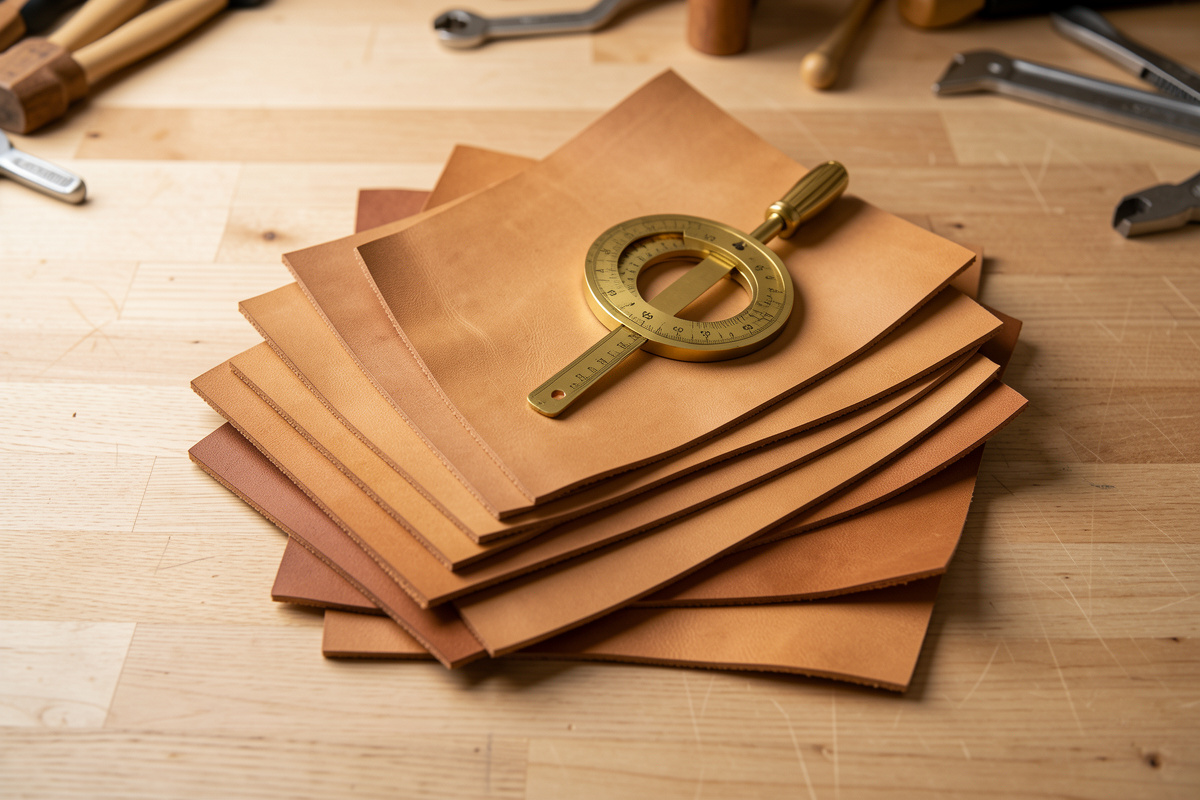
Leather thickness is measured in ounces, and one ounce equals roughly 1/64 inch (about 0.4 mm) of thickness. A 4 oz piece is about 1.6 mm thick; an…
Leather thickness is measured in ounces, and one ounce equals roughly 1/64 inch (about 0.4 mm) of thickness. A 4 oz piece is about 1.6 mm thick; an 8 oz piece is about 3.2 mm. That single conversion is the thing every beginner trips over, because the “ounce” here has nothing to do with weight you can feel in your hand and everything to do with how the leather will behave under your awl, your bevel, and your stitches.
I keep a thickness chart taped to the wall above my cutting mat, not because I can’t do the math, but because matching weight to project is the decision that quietly determines whether a wallet folds cleanly or fights you, whether a belt holds its shape or sags, whether a sheath protects an edge or splits at the seam. Buy the wrong weight and no amount of good stitching saves the piece. This is the reference I wish someone had handed me on day one.
How Leather Thickness Is Actually Measured
Tanneries sell leather by ounce-weight, where each ounce represents 1/64 inch of thickness across the hide. So a hide listed as “5 oz” is nominally 5/64 inch, or about 2.0 mm. The system is imperial and a little archaic, but every supplier uses it, so it pays to internalize the conversion rather than re-deriving it each time.
Two practical wrinkles. First, leather is a natural material, so a “5 oz” shoulder might measure anywhere from 4.5 to 5.5 oz across its area, the thickness drifting from the firm butt down to the looser belly. Second, most stock is sold in a range, written like “5-6 oz,” which simply means the piece falls somewhere in that band. When a project needs precision, I measure the actual spot I am about to cut with a caliper rather than trusting the label, especially for wallet interiors where half a millimetre changes the fold.
The Ounce-to-Millimetre-to-Inch Chart
This is the core reference. The millimetre and inch figures are the standard conversions tanneries use; treat them as nominal, since real hide varies by a few tenths.
| Weight (oz) | Inches | Millimetres | What it feels like |
|---|---|---|---|
| 1-2 oz | 1/64-1/32″ | 0.4-0.8 mm | Thin and floppy, like a postcard |
| 2-3 oz | 1/32-3/64″ | 0.8-1.2 mm | Soft, drapes, holds a fold |
| 3-4 oz | 3/64-1/16″ | 1.2-1.6 mm | Light but with body |
| 4-5 oz | 1/16-5/64″ | 1.6-2.0 mm | Firm card, slight spring |
| 5-6 oz | 5/64-3/32″ | 2.0-2.4 mm | Stiff, stands on its own |
| 6-7 oz | 3/32-7/64″ | 2.4-2.8 mm | Rigid, structural |
| 7-8 oz | 7/64-1/8″ | 2.8-3.2 mm | Belt-weight, very firm |
| 8-10 oz | 1/8-5/32″ | 3.2-4.0 mm | Heavy, hard to fold by hand |
| 10-12 oz | 5/32-3/16″ | 4.0-4.8 mm | Holster/saddle stock, needs power tools |
Which Weight for Which Project
Here is where the chart earns its place. The mistakes I see most often are belts cut from 4 oz that sag in a week, and wallet interiors cut from 6 oz that turn the finished wallet into a brick that will not close. Match the weight to the job and the piece almost makes itself.
Linings and wallet interiors (3-4 oz): Thin enough that two or three layers can be stitched and the wallet still folds. Veg-tan at this weight skives down beautifully where panels overlap. This is also the weight I reach for backing a card slot.
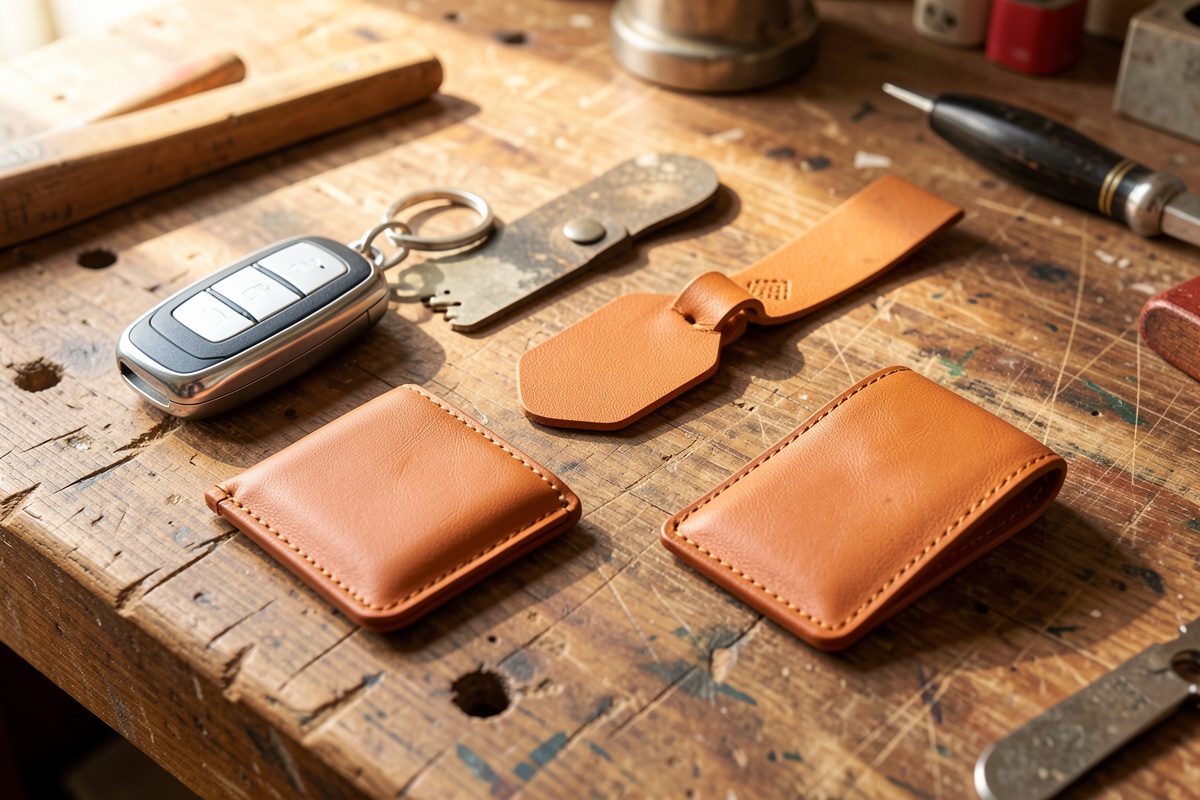
Wallet exteriors and small goods (4-6 oz): The everyday hobbyist weight. Firm enough to hold a crisp edge and burnish well, thin enough to fold and stitch by hand without a press. If I had to own one weight of veg-tan, it would be a 5 oz shoulder.
Belts and straps (8-10 oz): Belts need to resist stretch and hold their width under load. Anything under about 8 oz sags and rolls. Bridle leather in this range is purpose-made for straps because the wax and stuffing keep it firm.
Knife sheaths and tool cases (6-9 oz): Heavy enough to protect an edge and take a wet-form, but the welt and the body do not have to match. I often run a 7-8 oz body with a doubled welt. Veg-tan only here, because that is the leather that molds and holds the form.
Bags and soft goods (chrome-tan, weight by feel): For bag bodies I think in drape, not structure, and chrome-tan is the leather for the job. Weight matters less than hand; a soft 3-4 oz chrome-tan body with firmer veg-tan reinforcement at the stress points is a common build.
One note on choosing leather for a specific build: the weight is only half the decision. For wallets in particular, type and grain matter as much as ounce, which I cover separately in best leather for wallets.
When the Right Weight Does Not Exist: Skiving and Splitting
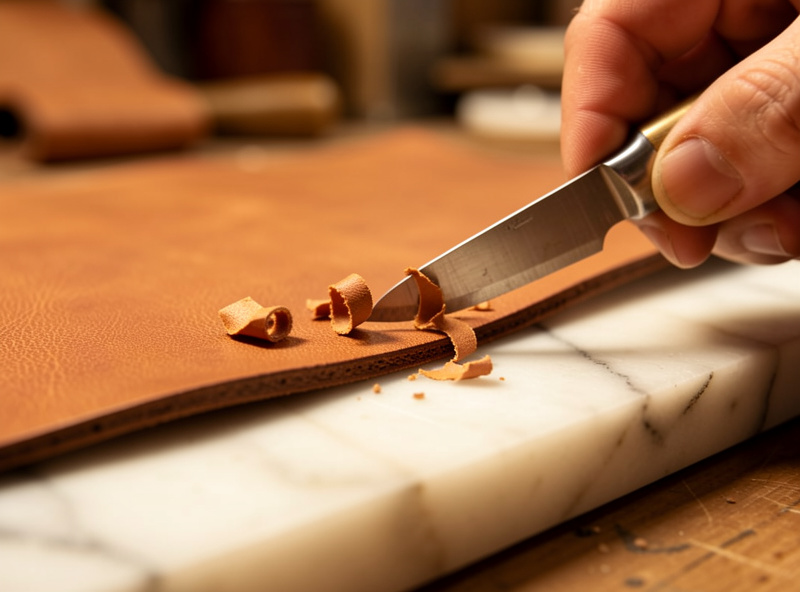
You will not always have the exact weight a project wants, and you do not need to. Two operations fix it. Skiving thins a local area, such as the edge of a panel that is about to be folded or where two pieces overlap, so the seam does not double up into a ridge. Splitting reduces an entire piece to a uniform thinner weight, which is what a leather splitter or a supplier’s split service does.
In practice I buy a touch thicker than the project’s target and skive down at the joins, because you can always remove leather and never add it back. A 5 oz shoulder skived to 3 oz at the fold gives a wallet that closes cleanly without buying two separate weights.
Reading a Supplier Listing Without Getting Burned
Suppliers list weight as a range and grade as a separate axis, and beginners conflate the two. “5-6 oz” tells you thickness; it says nothing about whether the hide is firm or spongy. Veg-tan from a quality tannery at 5-6 oz behaves completely differently from a soft import at the same nominal weight. When the listing matters, I want the tannery named and the temper described (firm, regular, soft) alongside the ounce range.
If you are buying online and cannot handle the hide first, a basic set of leather thickness gauges pays for itself the first time a “6 oz” piece shows up measuring closer to 5. Check what arrives against what you ordered.
Disclosure: LeatherCraftHaven is reader-supported. As an Amazon Associate I earn from qualifying purchases made through links in this article, at no extra cost to you. I only point to gear I actually use or would buy for my own bench.
Measuring Tools Worth Owning
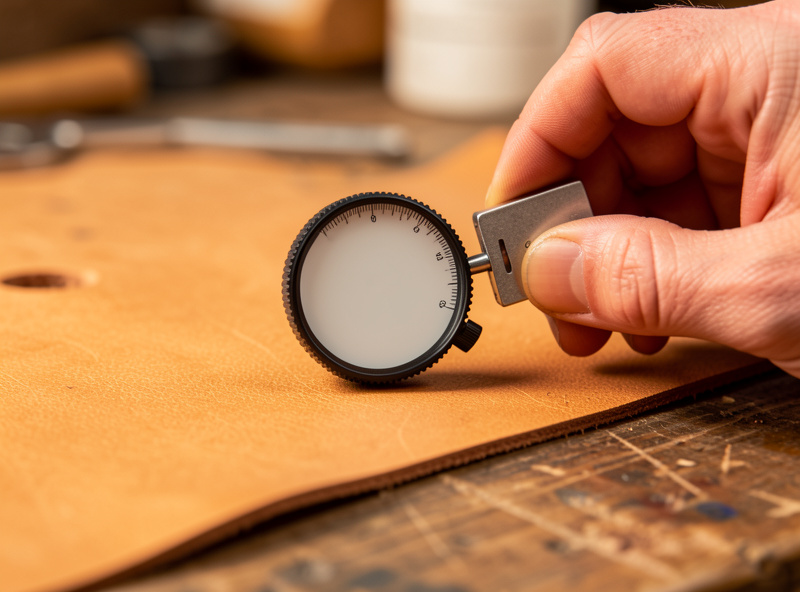
You do not need much. A dial thickness gauge made for leather reads weight directly and is the fastest way to settle a “is this 4 or 5 oz” question at the bench. A general-purpose digital caliper does the same job in millimetres if you keep the conversion handy. Between the two, the dedicated leather gauge is the one I actually reach for, because it reads in the units the supplier sold me.
What does oz mean in leather thickness?
In leather, one ounce equals about 1/64 inch (0.4 mm) of thickness, not weight. So 4 oz leather is roughly 1.6 mm thick and 8 oz is about 3.2 mm. The term describes how thick the hide is, measured across its surface.
What thickness of leather is best for wallets?
Use 3-4 oz for wallet interiors and linings, and 4-6 oz for exteriors and small goods. This keeps the wallet firm enough to hold an edge but thin enough to fold and stitch cleanly by hand. A 5 oz shoulder is the most versatile single choice.
What weight leather should I use for a belt?
Belts need 8-10 oz leather to resist stretch and hold their shape under load. Anything thinner sags and rolls within weeks. Bridle leather in this range is ideal because its waxed, stuffed temper keeps straps firm and durable.
Can I make thick leather thinner?
Yes. Skiving thins a local area such as a fold or overlap, while splitting reduces an entire piece to a uniform thinner weight. Buy slightly thicker than your target and skive down at the joins, since you can remove leather but never add it back.
Is leather thickness measured exactly?
No. Leather is natural, so a 5 oz hide may measure 4.5 to 5.5 oz across its area, drifting from the firm butt to the looser belly. For precision work, measure the exact spot you will cut with a caliper rather than trusting the label.
Keep Building
- Leather Working for Beginners: A Complete Starter Guide
- Best Leather for Wallets: Thickness, Type, and Grain Explained
- Leather Projects for Beginners: The Right First Three Builds