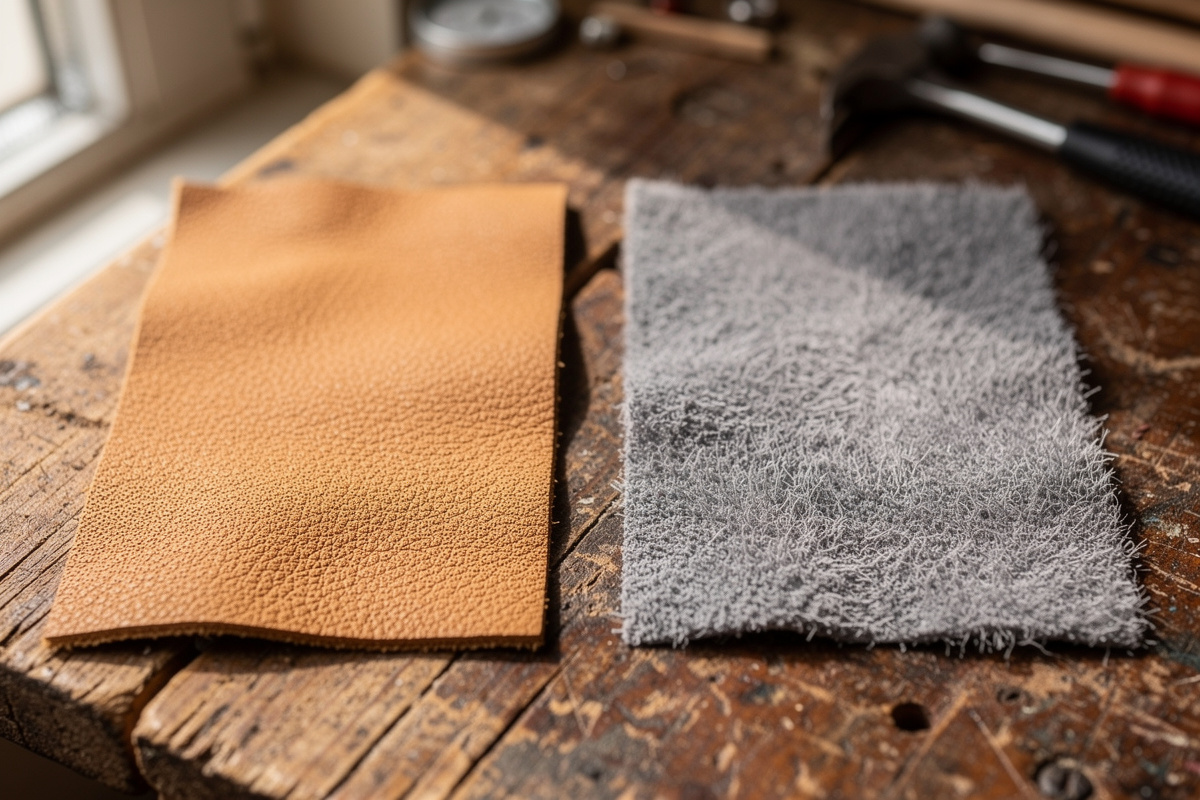
Suede and nubuck look like cousins and behave like very different animals — the difference is which side of the hide you are looking at. Nubuck is the…
Suede and nubuck look like cousins and behave like very different animals — the difference is which side of the hide you are looking at. Nubuck is the grain side sanded to a fine velvet; suede is the flesh side (or a split) brushed to a coarser nap. That sounds like a small distinction until you try to clean one, dye the other, or build something durable, at which point it decides everything. I work both for soft goods and linings, and I have ruined enough of each learning the hard way to tell you exactly where they differ and how to handle them without flattening the nap or staining the surface.
This guide sorts suede from nubuck for the leatherworker: what each actually is, how they wear and clean, when to choose which, and the handling rules that keep napped leather looking good.
The core difference: which surface, which layer
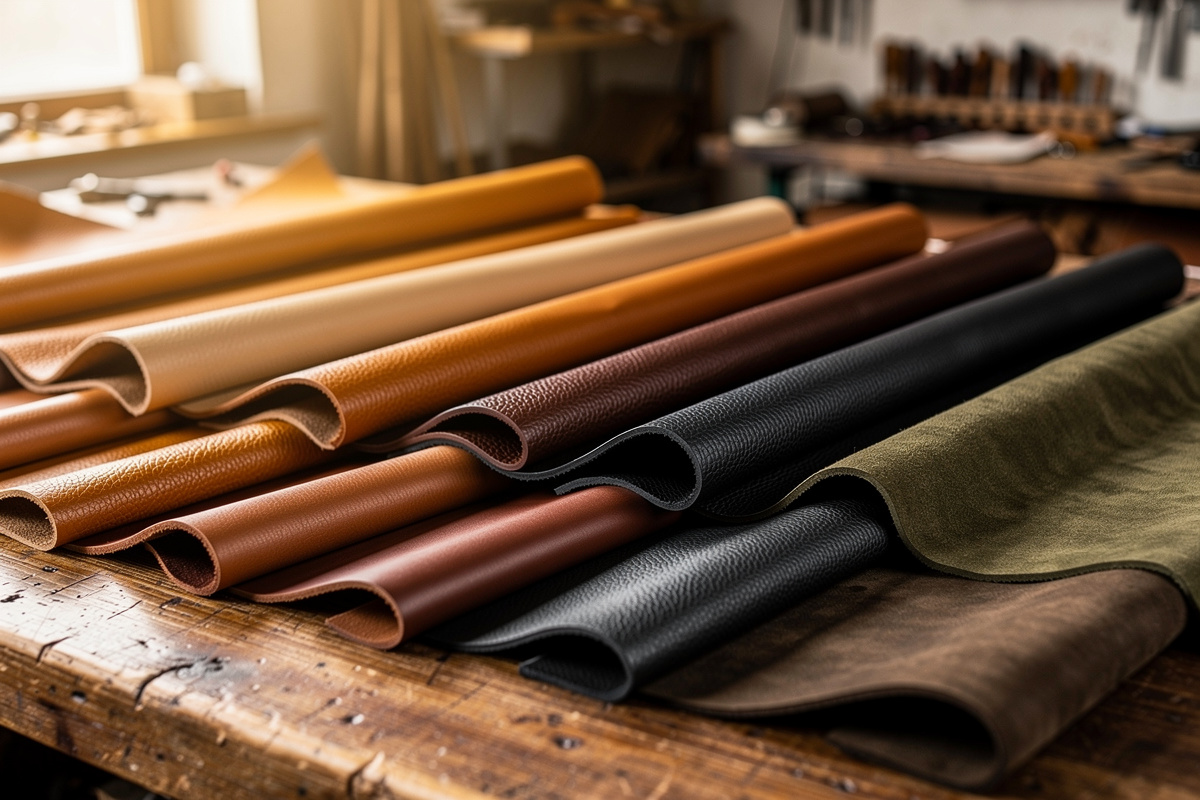
Both are napped leathers — they have that soft, fuzzy, brushed surface instead of a smooth grain — but they come from different parts of the hide:
- Nubuck is top-grain leather with the grain (outer) side lightly sanded or buffed to raise a very fine, tight, short nap. Because it is the strong grain layer underneath, nubuck keeps much of the durability of full-grain leather while gaining a velvety surface. It is the more expensive and more robust of the two.
- Suede is made from the flesh side of the hide, or from a split (the lower layer left after the grain is split off), brushed to raise a softer, longer, looser nap. Without the grain layer, suede is thinner, more flexible, less durable, and more open — which is why it soaks up water and stains so readily.
So the quick mental model: nubuck is sanded grain (strong, fine, costly); suede is brushed underside/split (soft, fuzzy, cheaper, more delicate). They feel similar at a quick touch, but nubuck’s nap is finer and tighter and the leather has more body, while suede is floppier and more obviously fuzzy.
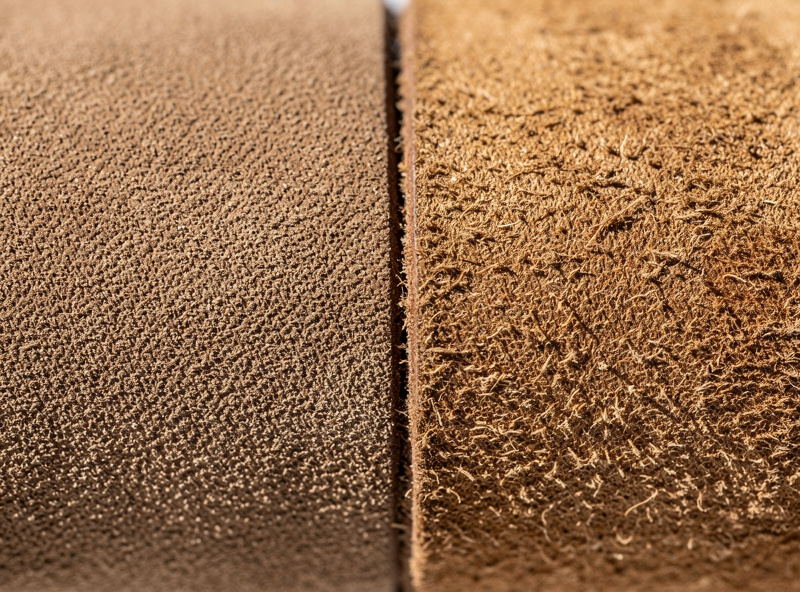
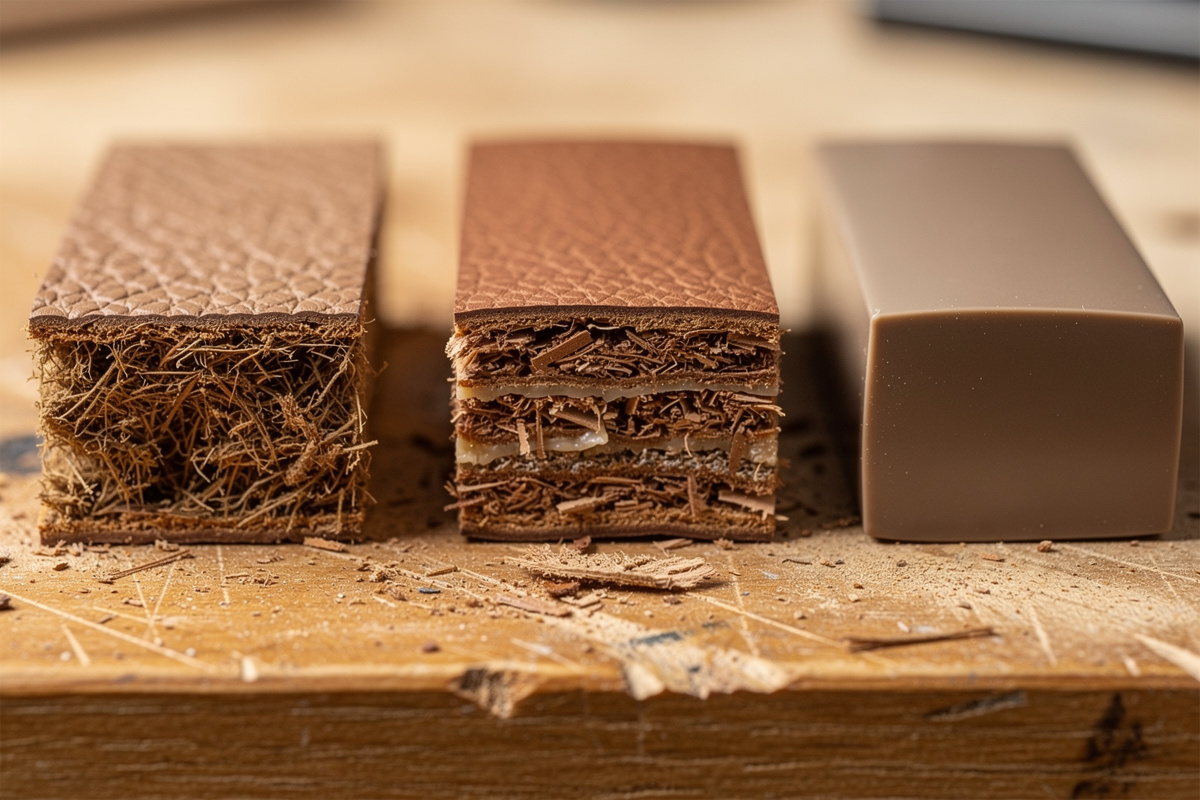
Telling them apart in a shop, when nothing is labeled: run your hand across the surface and look at how the nap responds. Nubuck’s fine, tight nap shows a subtle “writing” effect — drag a finger and you leave a faint lighter or darker trail that brushes out, because the short dense nap lays over uniformly. Suede’s longer nap is more obviously directional and velvety, with a coarser, more visible fuzz and more pronounced two-tone shading as it lays one way or the other. Nubuck also feels like it has more leather behind the surface — there is body and stiffness from the grain layer — whereas suede flops and feels thin. If you can see a cut edge, nubuck shows the dense grain at the top of the cross-section; suede is fuzzy more or less all the way through. None of these is a single-test guarantee, but together they sort the two reliably.
How they wear and what wrecks them
Both are vulnerable in ways smooth leather is not, because that open napped surface has nowhere to hide a stain and nothing sealing it:
- Water spots and darkens both, suede worse. Neither is happy in rain unprotected.
- Oils and grease from hands and food soak in and darken the nap, and they are hard to remove — this is the most common way suede shoes and nubuck get ruined.
- Crushing the nap from pressure or rubbing leaves shiny, matted patches; the fix is brushing the nap back up, not adding product.
- Dirt embeds in the nap and needs brushing out rather than wiping.
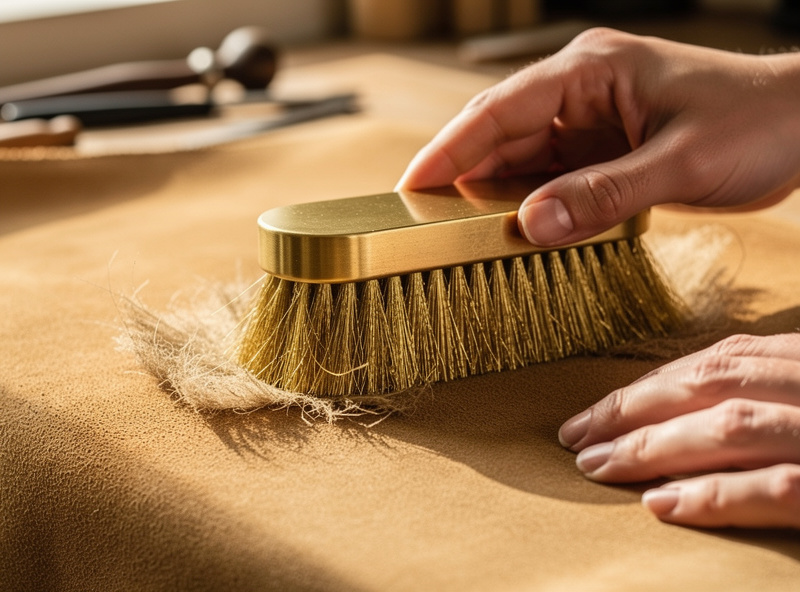
The single most important care tool for both is a brush — a suede/nubuck brush to lift the nap, sweep out dirt, and revive a crushed or matted area. Nine times out of ten, “my suede looks bad” is solved by brushing, not by reaching for a cleaner or conditioner that will mat it further. The second most important is a protector spray applied before first use, because prevention is the whole game with napped leather — once oil is in the nap, you are doing damage control.
Nubuck vs suede at a glance
| Property | Nubuck | Suede |
|---|---|---|
| Made from | Grain side, lightly sanded | Flesh side or a split, brushed |
| Nap | Fine, tight, short | Longer, looser, fuzzier |
| Durability | Higher (keeps grain strength) | Lower (no grain layer) |
| Body / thickness | More substantial | Thinner, more flexible |
| Cost | Higher | Lower |
| Water/stain resistance | Poor (better than suede) | Poor (worst of the two) |
| Best for | Footwear uppers, structured soft goods | Linings, garments, soft accents, fashion |
The takeaway: when you want the velvet look with real durability and are willing to pay for it, nubuck. When you want softness, flexibility and affordability and the piece will not take hard wear, suede. A boot upper is nubuck; a jacket lining or a soft pouch is suede.
Working napped leather at the bench
A few things change when you build with suede or nubuck versus smooth leather:
- Mark on the flesh side or with chalk. You cannot scribe a layout line into the nap and erase it; use tailor’s chalk or mark the back.
- Cutting can shed. Suede especially sheds fibers at cut edges; a sharp blade and a clean cut minimize fuzz.
- Edges do not burnish. There is no dense grain to slick, so napped-leather edges are usually turned (folded and stitched), bound, or simply left raw — not burnished like veg-tan.
- Glue carefully. Adhesive wicks into the open nap and stains it permanently, so I keep glue well back from any show surface and use it sparingly at seams.
- Nap direction matters. Like velvet, napped leather looks different brushed one way versus another; cut matching pieces with the nap running the same direction or they will read as different shades.
Cleaning and reviving napped leather
The routine that keeps mine looking right, and the order matters:
- Brush first, dry. Lift the nap and sweep out loose dirt with a suede brush before anything else.
- Rubber/eraser for marks. A suede eraser (or a clean pencil eraser) lifts scuffs and small stains by abrasion.
- Spot-clean sparingly. For stubborn marks, a dedicated suede cleaner and a light touch — never soak it.
- Re-brush to restore nap. After it dries, brush again to stand the nap back up.
- Re-protect. Reapply protector spray after a deep clean.
What I do not do is treat napped leather with conditioning oils or waxes meant for smooth leather — they mat the nap and darken it into a greasy patch. Napped leather is brushed and sprayed, not oiled. That single rule prevents most of the damage I see people do trying to “take care of” their suede.
Care kit for suede and nubuck
The kit is short and prevention-first.
Disclosure: LeatherCraftHaven is reader-supported. As an Amazon Associate I earn from qualifying purchases made through links in this article, at no extra cost to you. I only point to gear I actually use or would buy for my own bench.
The two essentials are a proper suede and nubuck brush kit (usually with a brass-bristle side and an eraser block) and a suede protector spray to apply before first use. For tougher marks, a dedicated suede cleaner handles spot stains without the matting you get from smooth-leather products.
Where napped leathers fit in
Suede and nubuck are finish-and-layer variations on leathers you already know from the grade and tannage side. My full grain vs top grain guide explains the grain layer that nubuck is sanded from and the splits suede comes from; the chrome tan vs veg tan guide covers the tannage underneath; and the types of leather overview puts the napped leathers in context with the rest.
Frequently Asked Questions
What is the difference between suede and nubuck?
Nubuck is top-grain leather with the grain side lightly sanded to a fine, tight nap, so it keeps much of the strength of full-grain leather. Suede is made from the flesh side or a split and brushed to a longer, looser nap, so it is thinner, softer, cheaper and less durable. The quick model: nubuck is sanded grain, suede is brushed underside.
Is nubuck more durable than suede?
Yes. Nubuck is the grain layer of the hide, lightly sanded, so it retains much of full-grain leather’s strength and body. Suede lacks that grain layer, which makes it thinner, more flexible, and more prone to wear and staining. That extra durability is why nubuck costs more and is used for footwear uppers while suede goes to linings and garments.
How do you clean suede and nubuck?
Brush first while dry to lift the nap and sweep out dirt, use a suede eraser for scuffs, spot-clean stubborn marks sparingly with a dedicated suede cleaner, then re-brush to stand the nap back up and reapply protector spray. Never use conditioning oils or waxes meant for smooth leather — they mat and darken the nap into a greasy patch.
Can you make suede or nubuck waterproof?
Not fully waterproof, but you can make them far more resistant with a suede/nubuck protector spray applied before first use and reapplied after cleaning. Both leathers spot and stain easily because the open nap soaks up water and oil, so prevention with a protector spray is the whole game — once oil is in the nap it is hard to remove.
Why won’t suede and nubuck edges burnish?
Because there is no dense grain layer to compress and polish — burnishing relies on the tight grain fiber that napped leathers either lack (suede) or have sanded open (nubuck). Instead of slicking the edge, napped-leather goods usually have turned edges (folded and stitched), bound edges, or simply raw edges, depending on the design.
Further Reading
- Types of Leather: Tannage, Grade and Weight
- Full Grain vs Top Grain Leather
- Chrome Tan vs Veg Tan Leather
- Pull-Up Leather Patina Guide