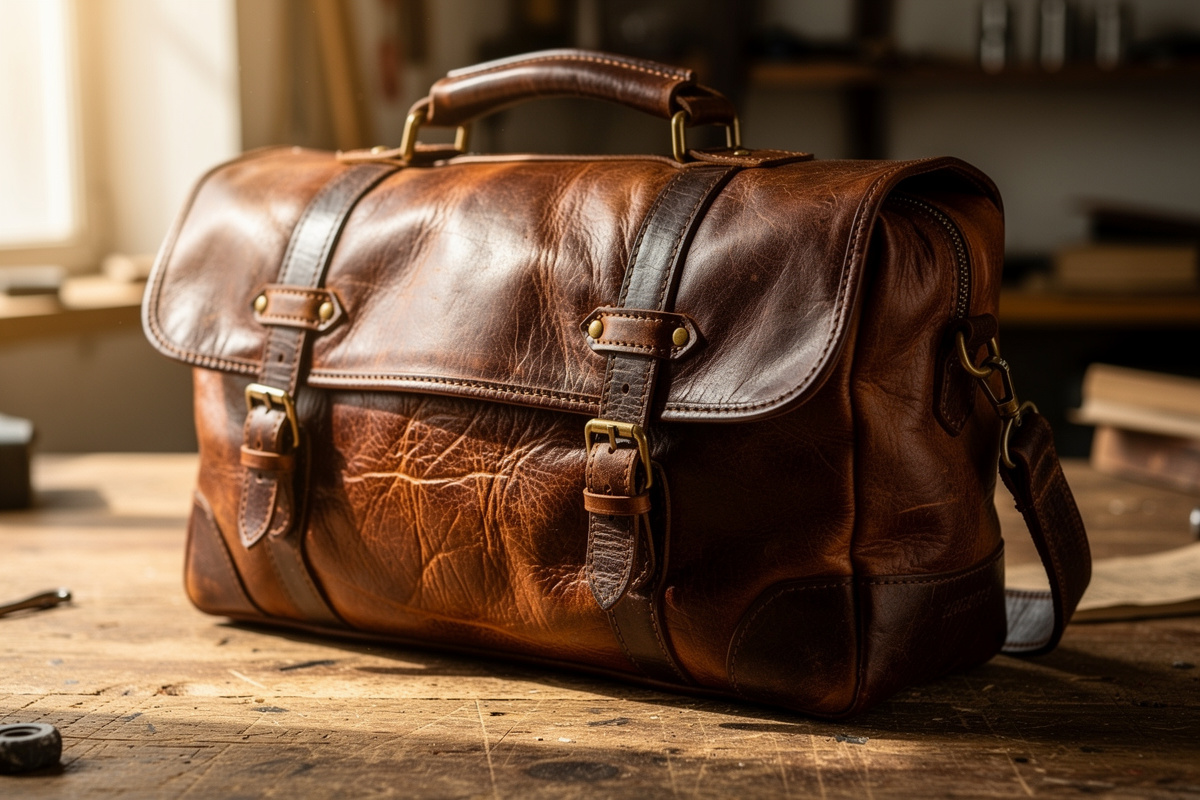
Pull-up leather is the one that lightens where you bend it. Press your thumb into a good pull-up hide and a pale halo blooms under the pressure, then…
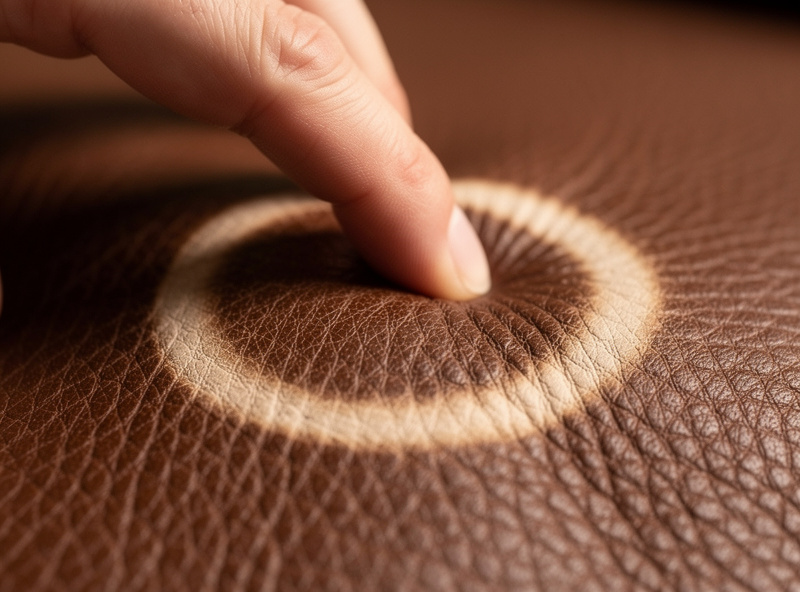
Pull-up leather is the one that lightens where you bend it. Press your thumb into a good pull-up hide and a pale halo blooms under the pressure, then fades back as the oils and waxes settle. That “pull-up effect” is not a defect and it is not wear — it is the entire point of the leather, and it is why pull-up develops some of the most honest, lived-in patina of anything on my rack. I work a lot of it for bags, knife rolls and strap goods where I want the piece to record its own history.
This guide is about how pull-up actually behaves on the bench and over years of use: what causes the effect, how the patina builds, what scuffs you should leave alone, and how to condition it without flattening the very thing that makes it special.
What “pull-up” actually is
Pull-up leather is leather — usually a chrome or combination tannage — that has been heavily stuffed with oils and waxes (the “fatliquor”) during finishing. When you flex, fold or stretch the leather, those oils migrate away from the stress point, and because the oils are what darken the surface, the stretched area momentarily goes lighter. Release the tension and the oils creep back and the color returns. That migrating-oil behavior is the pull-up effect.
The more heavily a hide is stuffed, the more dramatic the pull-up. Waxy pull-ups (sometimes sold as “waxed pull-up”) give a sharper, more matte color shift; oily pull-ups give a softer, glossier one. Neither is better — they age differently, and which you reach for depends on whether you want a piece that looks rugged and dry-handed or rich and oiled.
How patina builds on pull-up
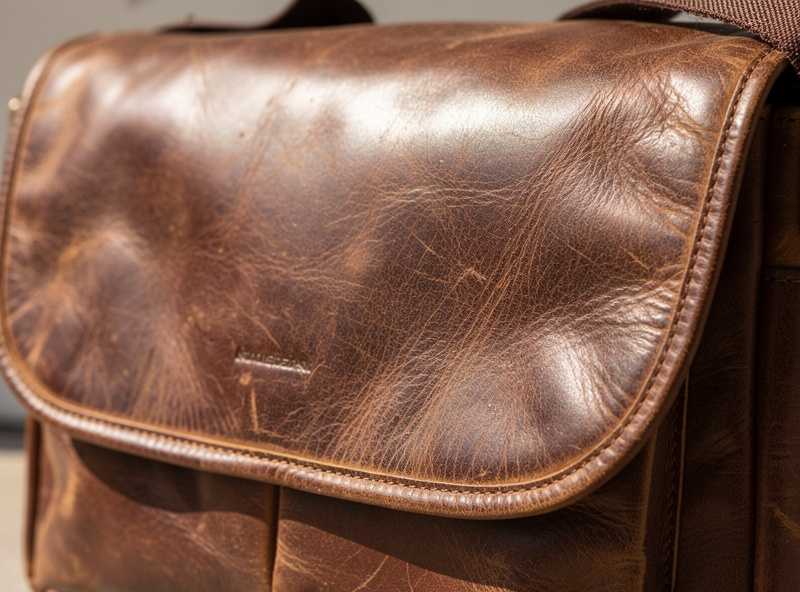
Patina on pull-up is the slow, permanent version of the temporary pull-up effect. Every fold line, every corner that rubs against a desk, every spot your hand rests on, gradually redistributes and works the oils and burnishes the surface. Over months the high-contact areas darken and gloss while the protected areas stay lighter, and you get a map of how the piece is actually used.
On a pull-up messenger flap I carried daily, the changes I expect and want:
- Fold lines lighten then settle into a permanent, slightly paler crease that reads as character, not damage.
- Hand-contact zones darken and gloss as skin oils add to the leather’s own.
- Edges and corners burnish from handling into a darker, polished line.
- Light scuffs self-heal — a quick rub with a finger or a soft cloth pulls oil back over a scratch and it largely vanishes.
That last point is the magic trick of pull-up, and the most common thing beginners panic about and then “fix” wrong. A scuff on pull-up is usually not a wound — it is a place where the surface oil got displaced. Warm it with your thumb, rub gently, and watch it blend back. Reaching for dye or heavy conditioner at the first scratch is how people flatten a hide that would have healed itself.
Conditioning without killing the effect
Here is the genuine tension with pull-up: conditioning is adding oil, and oil is what creates the pull-up effect and the patina. Over-condition and you can saturate the leather so evenly that the contrast — the whole appeal — flattens out, leaving a uniformly dark, slightly greasy piece with no pull. Under-condition and a waxy pull-up can eventually dry, crack at the fold lines, and lose its flex.
The way I handle mine:
- Condition rarely and lightly. Pull-up arrives heavily stuffed; it does not need much for a long time. I wait until the leather looks and feels dry-handed before I add anything.
- Thin coats, buffed in. A small amount of a neutral conditioner worked in with a cloth and then buffed, never a thick smear left to soak.
- Test on the back first. Conditioners can darken pull-up significantly and sometimes permanently — always try it on the flesh side or a hidden area before the show face.
- Skip silicone and heavy waterproofers unless you genuinely need weather resistance, because they sit on top and dull the living surface.
Working pull-up at the bench
Pull-up has a couple of quirks a maker needs to plan around. Because it is oil-stuffed, edges do not burnish to the hard, glassy veg-tan finish — there is too much oil in the fiber to slick cleanly. I finish pull-up edges either by burnishing lightly and accepting a softer, waxed result, or with edge paint where I want a crisp line. Gluing can also be fussy: the oils interfere with contact cement, so I rough up and sometimes wipe the glue area with a deglazer before bonding, then test the bond before committing a seam.
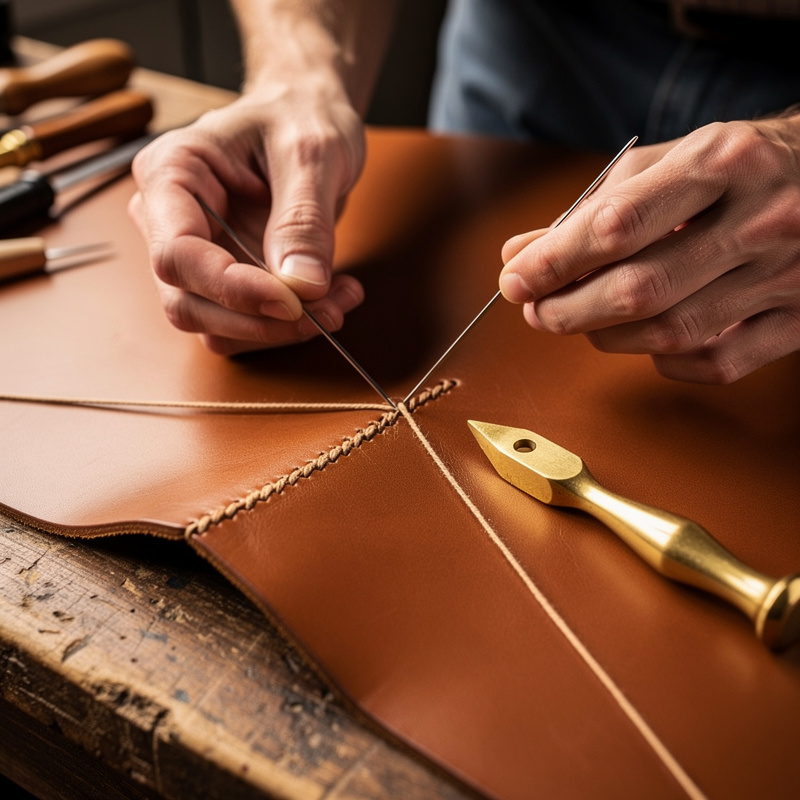
Pull-up also marks easily during construction — your stitching pony jaws, a slipped awl, a fingernail — so I keep my hands and tools clean and handle it gently until it is assembled. Those marks will partially heal, but deep ones during the build are forever.
One more sourcing quirk worth knowing: pull-up varies a lot batch to batch because the amount and type of stuffing differs between tanneries and even between hides in the same run. Two “brown waxed pull-up” panels from different orders can pull up to noticeably different degrees and settle to slightly different base colors. When a project needs matching panels — a bag front and back, a pair of straps — I cut them from the same hide rather than trusting that a reorder will match. I also lay out my pattern pieces to keep the heaviest pull-up areas where I want the most dramatic aging, because the effect is not perfectly uniform across a single hide either: the belly and looser areas often pull up more than the firm back.
Pull-up vs the leathers it gets confused with
People mix up pull-up with two neighbors. Crazy horse is a specific type of waxy pull-up — heavily waxed veg or combination leather that scratches to a pale line and is prized for exactly that distressed look; it is pull-up taken to an extreme. Oil-tanned leather is also oil-stuffed and soft, but it is finished for a uniform, less dramatic shift — a workwear leather more than a patina showpiece. If a hide lightens sharply when bent and a scratch shows pale, you are holding pull-up (or crazy horse); if it stays largely even, it is closer to a plain oil-tan.
Care kit for pull-up leather
You need very little, and using too much is the main risk, so the kit is deliberately short.
Disclosure: LeatherCraftHaven is reader-supported. As an Amazon Associate I earn from qualifying purchases made through links in this article, at no extra cost to you. I only point to gear I actually use or would buy for my own bench.
The two things that do almost everything are a neutral leather conditioner used sparingly and a soft horsehair buffing brush to work scuffs back and bring up the surface gloss. If you are buying pull-up to learn on, a crazy horse / pull-up leather piece is the cheapest way to feel the effect and watch a test patch patina over a few weeks before you cut into a full hide.
Where pull-up sits among leather types
Pull-up is a finish behavior more than a tannage category, which is why it crosses over with the soft-goods leathers. For the underlying tannage difference, my chrome tan vs veg tan breakdown explains why pull-up is usually a chrome or combination leather; the types of leather overview places it in the bigger picture; and if you are choosing a leather for a daily-carry build, the best leather for wallets guide covers when a patina leather is the right call.
Frequently Asked Questions
What is the pull-up effect in leather?
It is the temporary lightening you see when you bend, fold or press oil-stuffed leather. The oils and waxes worked into the hide during finishing migrate away from the stress point, and since those oils darken the surface, the stretched area goes paler until they settle back. The more heavily a hide is stuffed, the stronger the pull-up.
Should I fix scratches on pull-up leather?
Usually not with dye or product. Most scuffs on pull-up are just displaced surface oil, so warm the spot with your thumb and rub gently and the oils flow back over it and it largely disappears. Reaching for dye or heavy conditioner at the first scratch is the most common way people flatten a hide that would have healed itself.
How do I condition pull-up leather without darkening it?
Condition rarely, lightly, and only when it looks dry-handed, using thin coats of a neutral conditioner buffed in rather than a thick smear. Always test on the flesh side or a hidden area first, because conditioners can darken pull-up significantly and sometimes permanently. Over-conditioning saturates the leather evenly and flattens the contrast that makes pull-up appealing.
Is crazy horse leather the same as pull-up?
Crazy horse is a type of pull-up — heavily waxed veg or combination leather that scratches to a pale line and is prized for that distressed look. So all crazy horse is pull-up, but not all pull-up is crazy horse; plain oil-stuffed pull-ups give a softer, glossier shift than the sharp waxy contrast of crazy horse.
Can you burnish pull-up leather edges?
Not to the hard glassy finish you get on veg-tan, because there is too much oil in the fiber to slick cleanly. Either burnish lightly and accept a softer waxed edge, or finish with edge paint where you want a crisp line. The oil content is also why gluing pull-up often needs deglazing first for a reliable bond.
Further Reading
- Types of Leather: Tannage, Grade and Weight
- Chrome Tan vs Veg Tan Leather
- Best Leather for Wallets
- The Complete Leather Dyeing Guide