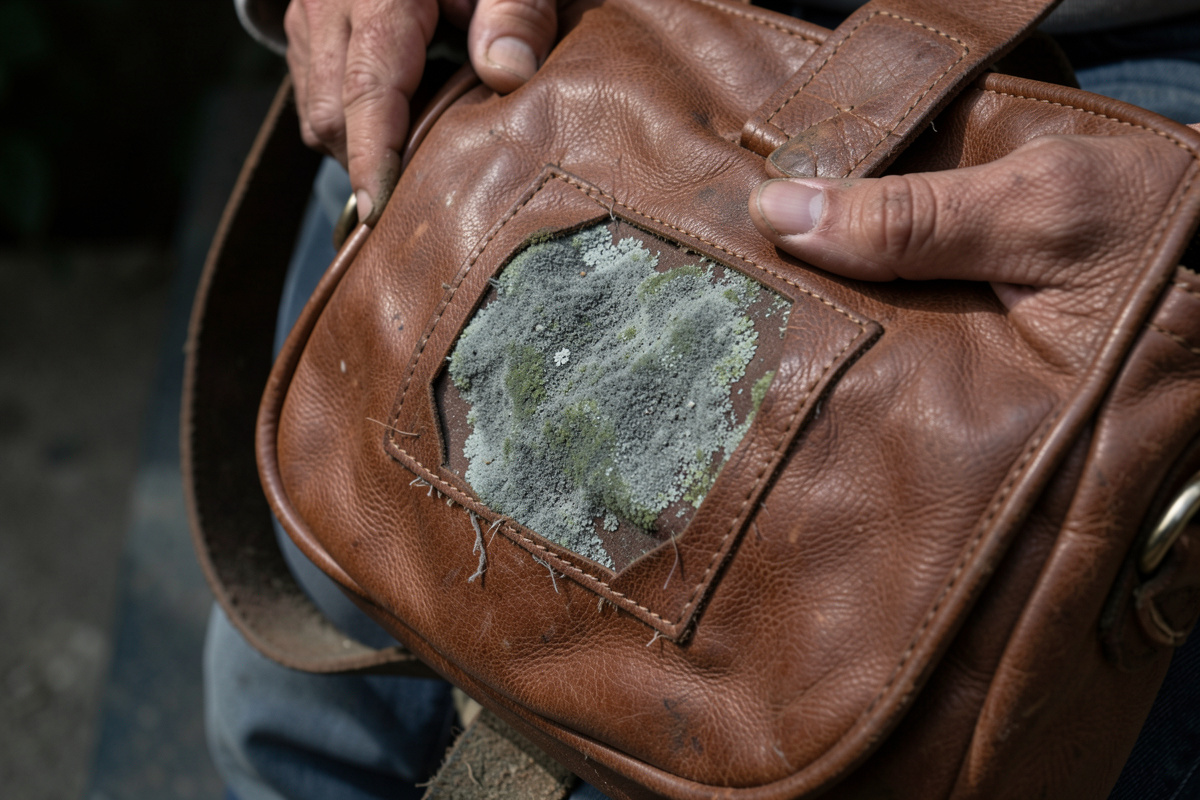
To remove mold from leather and keep it from coming back, brush the dry spores off outdoors, wipe the leather with a dilute solution that kills mold without…
To remove mold from leather and keep it from coming back, brush the dry spores off outdoors, wipe the leather with a dilute solution that kills mold without soaking the fibers, dry it thoroughly in shade, then fix the humidity and airflow that let it grow. Mold is the one stain that is alive — kill it wrong and it returns within weeks.
A mildew bloom is what happens when leather, moisture, and still air sit together long enough. I have opened a cupboard to find a fuzzy grey-green haze creeping across a bag that was fine three months earlier, and the reflex — grab a wet cloth and scrub — is exactly what spreads it. Because mold is a living, spreading problem and not just a mark, the method has to both remove what is there and remove the conditions that grew it. Skip the second half and you are just resetting the clock.
Why Leather Grows Mold
Mold needs three things: moisture, still air, and something to eat. Leather offers all three — it holds humidity, the oils and conditioners in it are food, and a closed closet or a stuffed drawer supplies the stagnant air. Veg-tan and heavily conditioned leather are especially prone because the very oils that keep them supple are a food source. That is why a well-loved, freshly conditioned bag put away damp is a prime candidate, while a piece kept in open, dry air almost never blooms.
Understanding that trio is the whole prevention strategy in one sentence: take away any one of the three and mold cannot establish. You cannot make leather inedible, but you absolutely can control moisture and airflow — which is why the fix ends at storage, not at cleaning.
The Mistake That Spreads It
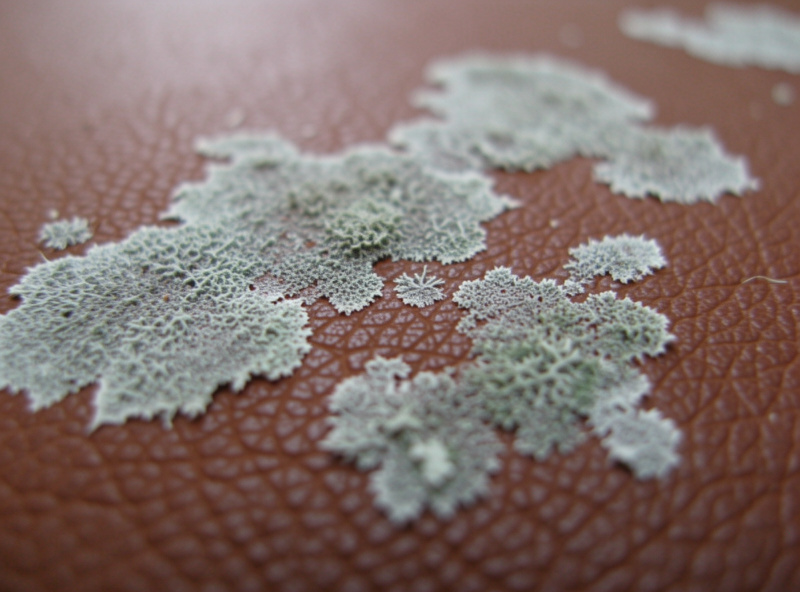
Wiping mold with a wet cloth indoors does three bad things at once: it plants spores deeper into the grain, it hands the mold the moisture it wants, and it flings spores into the air of your workspace to land on the next leather item. People also reach straight for undiluted bleach, which discolors and dries leather into a brittle patch far worse than the mold. And drying the piece by a radiator afterward, to be thorough, cracks the leather. Every one of these comes from treating mold like a smudge instead of a colony.
Step One: Dry-Remove the Spores Outdoors
Take the piece outside before you touch it with anything wet. Working in open air keeps you from seeding your workshop with spores. With a soft brush or a dry cloth, gently sweep the surface mold off — you are knocking the loose bloom away, not scrubbing. Brush away from yourself, and if you are sensitive, a dust mask is sensible because it is the airborne spores that trigger reactions and carry the musty smell. Get as much off dry as you can before any liquid touches the leather; less mold to kill means a gentler wet step.
Step Two: Wipe With a Dilute Solution
Now kill what is left. A solution of equal parts distilled water and white vinegar, or a well-diluted mild soap, on a cloth wrung nearly dry, wiped over the affected area is enough for most blooms — the point is a damp wipe, not a soak. Vinegar’s mild acidity kills mold without the harshness of bleach. Work outside-in so you do not spread the edge, rinse the cloth often, and change the water when it looks dirty. On finished leather this lifts the mold readily; on absorbent veg-tan keep the cloth drier still and accept that you may need a second light pass rather than one wet one.
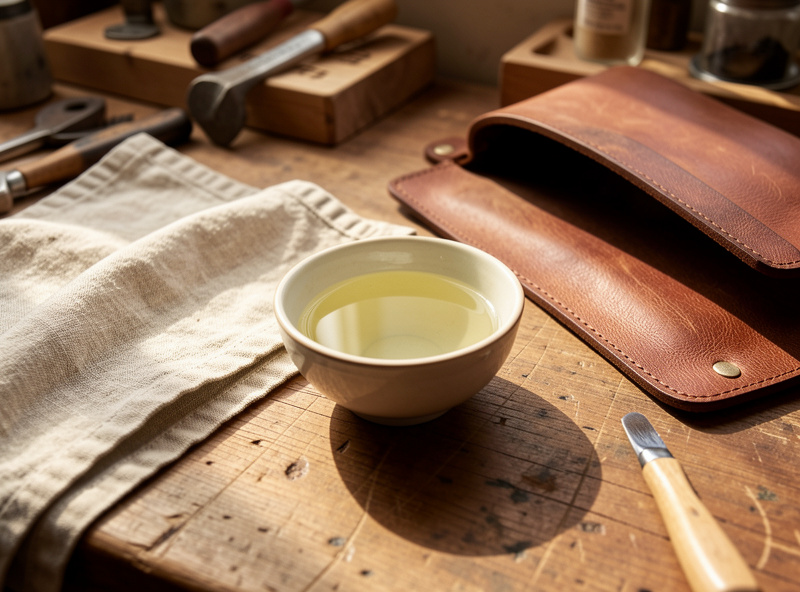
Test the solution on a hidden spot first, as vinegar can very slightly affect some dyes. If the piece is precious or the bloom is heavy, a purpose-made leather mold cleaner is a gentler alternative, but plain diluted vinegar handles the great majority of household cases.
Step Three: Dry Thoroughly in Shade
This step is non-negotiable, because leftover moisture is an open invitation for the mold to return. Let the piece air dry completely in a shaded, well-ventilated spot — never in direct sun, which fades and stiffens leather, and never by a heat source, which cracks it. A fan moving room-temperature air speeds things safely. Give it longer than you think it needs; the surface dries before the core, and it is core moisture that regrows mold. Only once it is fully dry do you move on.
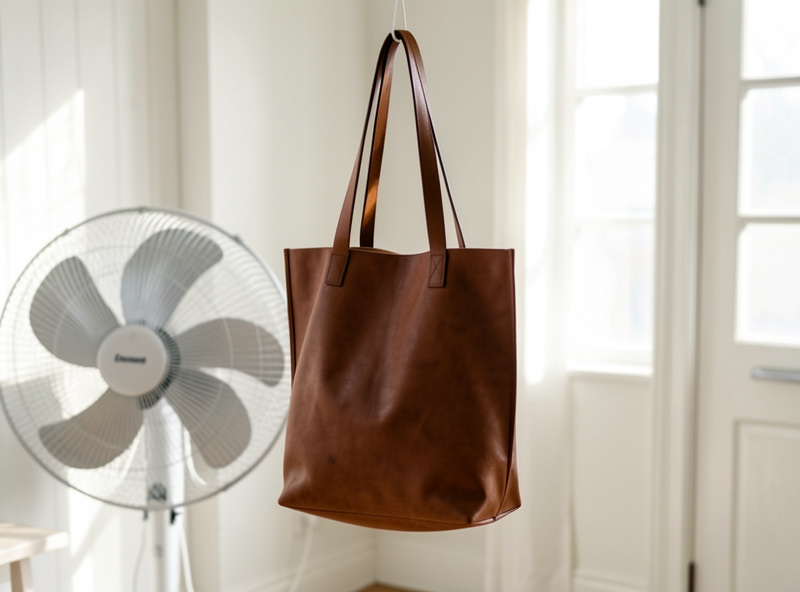
How long is “thoroughly”? For a thin wallet or belt, a full day in moving air is usually enough; for a lined bag or a thick structured piece, give it two to three days and resist putting it away early. If you own a small hygrometer, the piece is safe once it feels and reads the same as the ambient room rather than cool and slightly damp to the back of your hand. Putting a still-damp piece into storage is the single most common reason a bloom returns, so this is the step to be patient with.
Step Four: Condition, Then Fix the Storage
The vinegar wipe and thorough drying both strip oils, so finish with a light conditioning to restore suppleness — but wait until the leather is bone dry, or you seal moisture in. Then comes the part that actually keeps mold off: storage. Keep leather in a spot with airflow, not sealed in plastic, which traps humidity; use a breathable dust bag instead. Add a desiccant like silica gel packs to a closet that runs damp, keep pieces from pressing tight against each other, and bring the ambient humidity down if your space is chronically moist. My full approach is in storing leather goods long term, and the conditioning side is in conditioning leather.
The Smell That Lingers After
Even after the visible mold is gone, a musty smell often stays because odor-causing spores hide in the fiber. Airing the piece in shade for days pulls a lot of it, and a container with baking soda or activated charcoal draws out the rest. That whole job — and why you never mask it with fragrance — is its own guide in how to get smell out of leather. For where mold sits among the other stains and the read-the-leather-first logic behind all of them, start at the leather stains and damage fixes hub, and pair it with keeping water off the piece in the first place via waterproofing.
Frequently Asked Questions
What kills mold on leather?
A dilute solution of equal parts distilled water and white vinegar on a nearly-dry cloth kills most mold without the harshness of bleach. Brush dry spores off outdoors first, then wipe outside-in, dry thoroughly in shade, and condition once the leather is fully dry.
Can I use bleach to remove mold from leather?
No. Undiluted bleach discolors and dries leather into a brittle patch worse than the mold itself. Diluted white vinegar or a mild soap solution kills mold safely. Reserve stronger measures for a purpose-made leather mold cleaner, tested on a hidden spot first.
Why does mold keep coming back on my leather?
Because the conditions that grew it are still there. Mold needs moisture, still air, and the oils in leather as food. If you clean the bloom but store the piece damp or sealed in plastic, it returns. Fix airflow and humidity, and use a breathable dust bag.
Should I clean moldy leather indoors?
No, do the dry-brushing outdoors. Brushing mold indoors flings spores into the air to settle on other leather and can trigger reactions. Work outside, brush away from yourself, and only bring the piece in for the damp wipe once the loose spores are gone.
Does mold permanently damage leather?
Surface mold caught early usually cleans off with only a faint mark, if any. Long-established mold can etch dye and weaken fibers, leaving a permanent stain or soft spot. The sooner you treat a bloom and fix the storage, the less lasting damage it does.
Related Guides
- Leather Stains and Damage Fixes: The Complete Removal Guide
- How to Get Smell Out of Leather: Smoke, Mustiness, and New-Leather Odor
- Storing Leather Goods Long Term: A Bench Guide
- Conditioning Leather: Best Products and Technique
- Waterproofing Leather Goods: The Complete Guide