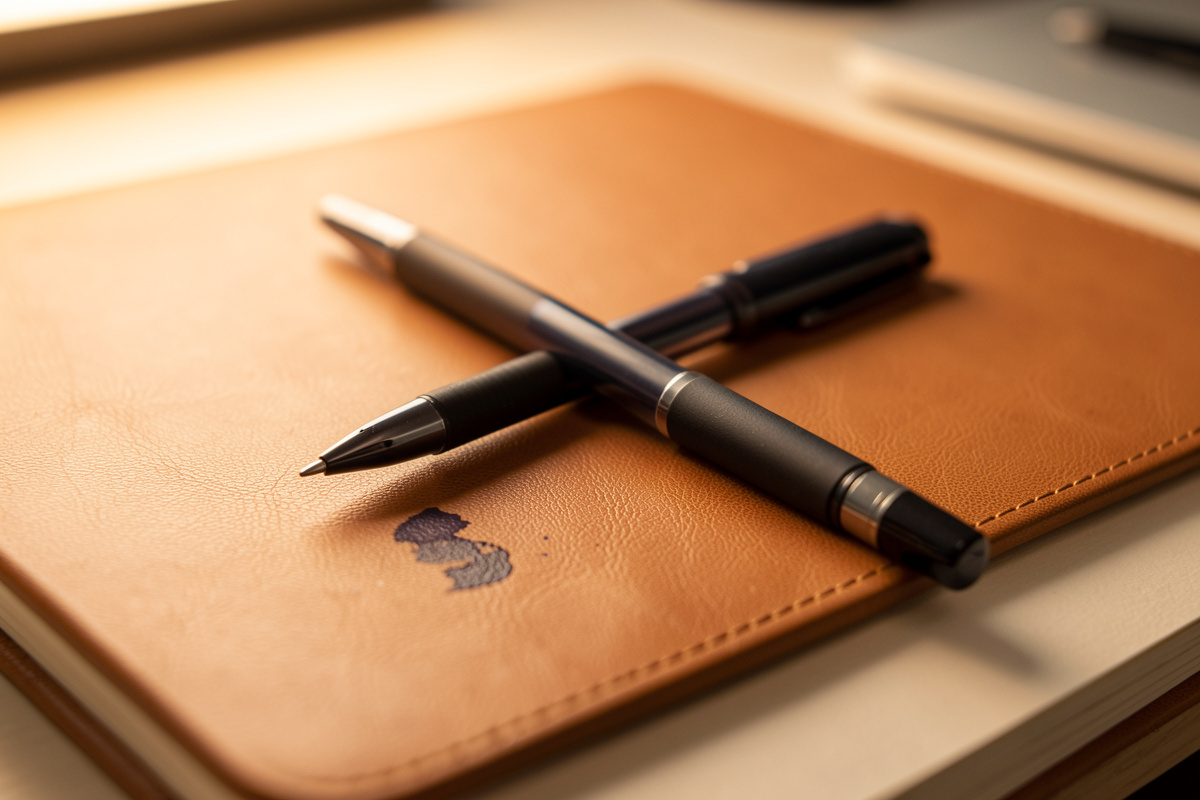
Getting ink out of leather comes down to two things: how fast you catch it, and what the leather is finished with. On sealed, pigmented leather a fresh…
Getting ink out of leather comes down to two things: how fast you catch it, and what the leather is finished with. On sealed, pigmented leather a fresh ballpoint mark often lifts with a mild cleaner or a dab of alcohol on a swab. On unfinished veg-tan the ink wicks into the fiber in seconds, and the honest goal shifts from removing it to lightening and disguising it.
Ink is the stain that tempts people into the harshest solvents, and that is exactly where pieces get ruined. Anything strong enough to dissolve dried ink is usually strong enough to strip the dye and finish underneath it, so you trade a blue line for a bald patch. I keep dyes and finishes on the same shelf as my deglazer, and I know firsthand how little acetone it takes to lift color off veg-tan. This guide walks the safe order of attack by leather type, from the ink you can beat to the ink you have to blend.
First, Know What You Are Working With
Two variables decide everything: the ink and the finish. Ballpoint (oil-based paste), gel and rollerball (water-based), and permanent marker (solvent-based dye) each respond to different things, and a fix for one can set another. More important is the leather’s finish. Pigmented and heavily finished leather — most sofas, car seats, and structured bags — wears a sealed topcoat that keeps ink sitting on the surface, giving you a real window to lift it. Aniline and unfinished veg-tan have no such barrier; the ink is absorbed into the leather itself almost immediately.
Do the drop-of-water test on a hidden spot if you are unsure. If water beads, you have a finished surface and good odds. If it soaks in and darkens, you have absorbent leather and you should reset your expectations toward lightening rather than full removal. That single distinction is the difference between a five-minute fix and a salvage job.
Ink on Finished, Pigmented Leather
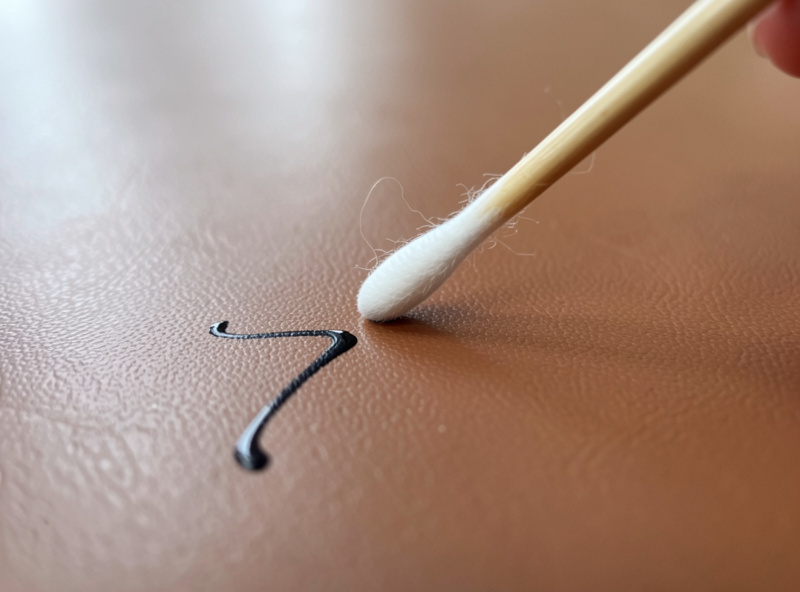
This is the winnable case. Start with the mildest option and escalate only if you must. A slightly damp cloth with a drop of gentle soap, worked from the outside of the mark inward, lifts a lot of fresh ballpoint. If that stalls, move to a cotton swab barely dampened with isopropyl alcohol — touch it to the ink, lift, and rotate to a clean part of the swab constantly so you are removing ink rather than smearing it. Alcohol dissolves the ink binder and, on a sealed surface, evaporates before it can do much to the finish.
Go in light, patient passes. The failure mode here is soaking the spot — too much alcohol dwelling too long eventually reaches the finish and can dull or lift it. Once the ink is gone, wipe with a clean damp cloth to remove any residue, let it dry, and condition, because alcohol is drying. On many finished pieces this fully removes a fresh mark with no trace.
Ink on Aniline and Unfinished Veg-Tan
Here you manage expectations. On absorbent leather the ink is in the fiber, and there is no solvent gentle enough to pull it out that will not also lift the dye and dry the leather to a chalky patch. Aggressive solvent work on veg-tan is how a small pen mark becomes a pale crater that looks worse than the ink did. The realistic play is to lighten what you can and then blend or disguise the rest.
A very light touch of alcohol on a swab may fade a fresh mark before it fully sets, but stop the moment you see dye lifting. For anything set into the fiber, the practical route is cosmetic: fade it as far as it will safely go, then even the area with matching dye or an antique finish so the remaining shadow disappears into the leather’s color. That overlaps directly with color-correction work — my guide to fixing leather dye mistakes covers spot re-dyeing, and antiquing is the trick for blending a fade into surrounding tone.
Permanent Marker and Gel Ink
Permanent marker is solvent-dyed and the most stubborn of the three — on finished leather, patient alcohol work sometimes lifts it, but on unfinished leather it is almost always a disguise job from the start. Gel and rollerball ink, being water-based, respond better to the mild-soap-and-water first step and worse to alcohol, which can spread the water-soluble dye into a bigger smear. Match the solvent to the ink: water-based problem, water-based first move; oil- or solvent-based problem, alcohol.
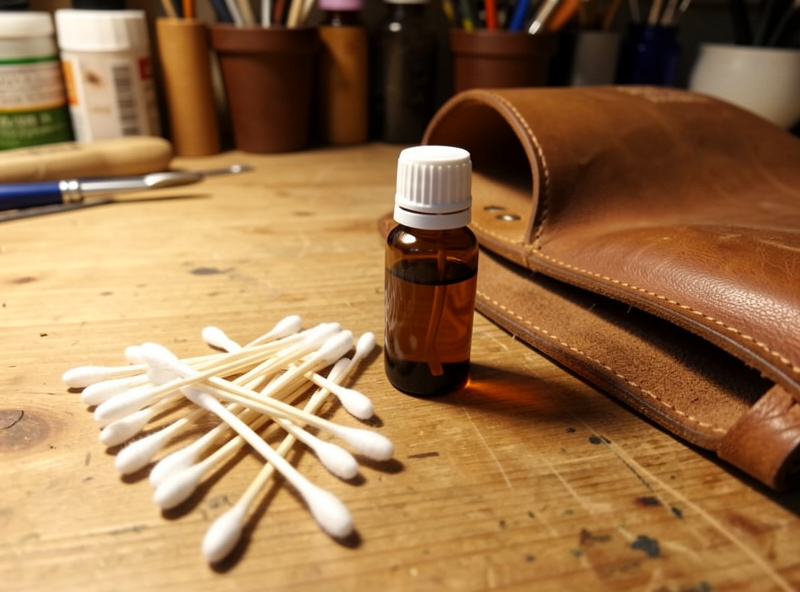
Whatever the ink, the discipline is identical: test hidden first, work outside-in, rotate to clean swab surfaces constantly, and stop at the first sign the finish or dye is coming with the ink. A partial removal you can blend beats a full removal that took the color with it.
Timing: Why Fresh Ink Is a Different Problem
The clock matters as much as the leather. Fresh ink still sits partly on or near the surface and has not fully bonded, so a prompt, gentle lift catches a large share of it. Ink that has been there for weeks has migrated and set into whatever it could reach, and on absorbent leather it has effectively become part of the color. Catch a pen mark the day it happens and finished leather usually comes fully clean; find it months later and even finished leather may hold a faint shadow. None of this argues for rushing the technique — you still go in with light patient passes — only for not letting a mark sit once you have spotted it.
Ink and Finish at a Glance
This is how I size up an ink mark before touching it — the finish sets the ceiling on what is possible, and the ink type sets the first move.
| Ink type | First move | Finished leather | Unfinished veg-tan |
|---|---|---|---|
| Ballpoint (oil-based) | Isopropyl alcohol on a rotated swab | Often fully removable if fresh | Lighten then blend |
| Gel / rollerball (water-based) | Mild soap and water, outside-in | Good odds, avoid alcohol first | Fades partially, expect a shadow |
| Permanent marker (solvent dye) | Patient alcohol, or go straight to disguise | Sometimes lifts, slowly | Disguise job from the start |
What to Never Reach For
Skip acetone and nail-polish remover — they strip dye and finish on contact and melt some pigmented coatings. Skip hairspray, the old internet trick; modern formulas are mostly not the alcohol they once were, and the added oils and fragrances leave their own mark. Skip aggressive scrubbing with a magic-eraser type pad on finished leather, which abrades the topcoat and leaves a dull scuff worse than the ink. The theme across all of these is the same: the cure is more damaging than the stain.
Close Out and Re-Protect
Any ink removal that used alcohol or soap has stripped oils, so condition the area once it is dry. If you had to re-dye or antique a spot on veg-tan, seal it afterward so the repair holds and does not rub — a topic that connects to stopping color transfer if the fresh dye is not fully locked down. A sealed finish is also your best defense against the next pen: on a properly finished piece, ink stays on top where you can beat it. For the wider set of stains and where ink sits among them, work from the leather stains and damage fixes hub, and keep the general routine from how to clean leather goods in rotation so marks get caught early.
Frequently Asked Questions
Does rubbing alcohol remove ink from leather?
On finished, pigmented leather, yes. A cotton swab barely dampened with isopropyl alcohol lifts fresh ballpoint ink because the alcohol dissolves the binder and evaporates before harming the sealed finish. On unfinished veg-tan it also lifts dye, so use it sparingly or not at all.
Can you get ink out of unfinished veg-tan leather?
Rarely completely. The ink wicks into the fiber within seconds and no solvent gentle enough to remove it will spare the dye. The realistic approach is to lighten the mark as far as it safely fades, then blend the remainder with matching dye or an antique finish.
Will acetone remove ink from leather?
It will, but it also strips the dye and finish and can melt some coatings, leaving a bald patch worse than the ink. Never use acetone or nail-polish remover on leather. Stick to mild soap for water-based ink and isopropyl alcohol for oil-based ink on finished leather.
How do I remove permanent marker from leather?
On finished leather, patient light passes with isopropyl alcohol on a rotated swab sometimes lift it. On unfinished leather it is almost always a disguise job: fade what you can, then re-dye or antique the spot to blend it into the surrounding color.
Why does ballpoint versus gel ink matter?
Ballpoint is oil-based and responds to alcohol; gel and rollerball are water-based and respond to mild soap and water, but smear when hit with alcohol. Matching the solvent to the ink type keeps you from spreading a water-soluble mark into a bigger stain.
Related Guides
- Leather Stains and Damage Fixes: The Complete Removal Guide
- How to Fix Leather Dye Mistakes: Salvage a Bad Job
- How to Stop Leather Color Transfer Onto Clothes and Skin
- How to Antique Leather: Aged Finish With Resist Control
- How to Clean Leather Goods: A Complete Guide